
×

Uruguay🇺🇾 | attractionsMuseo del Carnavalcostume displays, parade masks, candombe drums | things to do and best time to go

Explore Museo Andes 1972Explore Bodega Bouza

Backpacking in Museo del Carnaval
👌 Worth visitingattraction ranked #9
By Johan Kruseman 🇳🇱 | Updated June 6, 2026

You’re standing in a dim room, the air thick with the scent of old papier-mâché and face paint, your fingertips brushing the sequined edge of a battered carnival mask. Somewhere, a recording of candombe drums rattles your chest, and for a second, you’re not in a museum—you’re in the middle of Montevideo’s wildest street parade. That’s the Museo del Carnaval: tucked just off the old port in Uruguay’s capital, it’s a shrine to the country’s loudest, proudest party.

Let’s cut through the confetti. This isn’t a blockbuster museum with blockbuster crowds or blockbuster prices. You’ll pay a modest fee, dodge a few school groups, and wander through rooms that feel more like a backstage pass than a polished exhibit. The wow-factor isn’t in the square footage—it’s in the raw, hands-on history. If you want air-conditioned perfection, look elsewhere. But if you want to feel the pulse of Uruguay’s soul—messy, rhythmic, and fiercely alive—this place delivers what Instagram never could.

Discover everything you want to know in the 📖 Uruguay Travel Guide.


Get your Uruguay guide
64 ranked highlights, routes & tips, works offline (256 pages)
Loading the map 🌍
CLICK TO FILTER
cities
towns
villages
landmarks
national parks
hikes
beaches
attractions
festivals
regions
SHOW COUNTRY’S BESTSHOW ALL

✨ Why go?
Ranked #9 attraction in Uruguay
What makes it a must-see attraction

The Museo del Carnaval in Uruguay isn’t just another flashy stop for your Instagram feed—it’s a deep dive into the heart of a culture that lives and breathes celebration. Sure, you’ll find crowds, especially when carnival season kicks in, and yes, the entry fee isn’t dirt cheap by local standards. But here’s the kicker: this museum isn’t about glitz; it’s about grit. It captures the raw energy and history behind Uruguay’s most iconic festival, showcasing costumes, music, and stories that have shaped national identity for over a century.

Backpackers who make time for this spot aren’t just ticking a box—they’re tapping into a cultural milestone that’s a major waypoint on any serious Uruguay route. The effort to get here pays off with an adrenaline rush of understanding how carnival is more … read more 👉
The Museo del Carnaval in Uruguay isn’t just another flashy stop for your Instagram feed—it’s a deep dive into the heart of a culture that lives and breathes celebration. Sure, you’ll find crowds, especially when carnival season kicks in, and yes, the entry fee isn’t dirt cheap by local standards. But here’s the kicker: this museum isn’t about glitz; it’s about grit. It captures the raw energy and history behind Uruguay’s most iconic festival, showcasing costumes, music, and stories that have shaped national identity for over a century.

Backpackers who make time for this spot aren’t just ticking a box—they’re tapping into a cultural milestone that’s a major waypoint on any serious Uruguay route. The effort to get here pays off with an adrenaline rush of understanding how carnival is more than just a party; it’s a living, breathing tradition of resistance, creativity, and community. If you want to see Uruguay beyond the postcards, this museum is your gateway. It’s where history, art, and the pulse of the people collide, making it a rare, authentic experience worth every peso and every minute.
Want to include Museo del Carnaval in your Uruguay route?
Create a personalized Uruguay itinerary that includes Museo del Carnaval and the places that fit your trip — based on your travel style, budget, and available time. Get your route in seconds.

Generate my trip

💡 HighlightsTop highlights of Museo del Carnaval

The Costume Hall
Forget the sanitized, glass-case museum vibe. Here, you’re face-to-face with the real armor of Uruguay’s carnival warriors: sequined capes, feathered headdresses, and costumes that look like they’ve survived a hundred nights of sweat and confetti. These aren’t replicas—they’re the actual outfits worn by candombe drummers, murga singers, and parade queens. You can see the hand-stitched details, the wear and tear, the glitter that refuses to die. It’s a tactile, up-close reminder that carnival isn’t about perfection; it’s about energy, improvisation, and the wild joy of being seen.


The Murga Room
If you think carnival is just about dancing, you’re missing the punchline. Murga is Uruguay’s satirical musical theater—part protest, part comedy roast, all delivered in harmonies … read more 👉
The Costume Hall
Forget the sanitized, glass-case museum vibe. Here, you’re face-to-face with the real armor of Uruguay’s carnival warriors: sequined capes, feathered headdresses, and costumes that look like they’ve survived a hundred nights of sweat and confetti. These aren’t replicas—they’re the actual outfits worn by candombe drummers, murga singers, and parade queens. You can see the hand-stitched details, the wear and tear, the glitter that refuses to die. It’s a tactile, up-close reminder that carnival isn’t about perfection; it’s about energy, improvisation, and the wild joy of being seen.


The Murga Room
If you think carnival is just about dancing, you’re missing the punchline. Murga is Uruguay’s satirical musical theater—part protest, part comedy roast, all delivered in harmonies that hit harder than any meme. The museum’s Murga Room is a crash course in this tradition. You’ll hear recordings of legendary groups, see the props and painted faces, and—if you’re lucky—catch a live rehearsal or workshop. The wit is razor-sharp, the costumes are intentionally over-the-top, and the social commentary is as relevant today as it was a century ago. This is where carnival gets political, and it’s impossible to walk away without a grin and a new respect for Uruguay’s sense of humor.


The Candombe Drums
Candombe isn’t background music—it’s the heartbeat of Montevideo. The museum’s drum collection is a wall of raw percussion: chico, repique, piano drums, each battered from years of street parades. You can touch them, sometimes even play them, and you’ll feel the vibration in your bones. The staff doesn’t just explain the African roots of candombe—they show you how the rhythms work, how the dancers move, and why this music still rattles the city every February. It’s loud, it’s sweaty, and it’s the opposite of a quiet museum experience.


The Carnival Archive
This is the antidote to Instagram’s shallow scroll. The museum’s archive is a living scrapbook: old posters, handbills, black-and-white photos of parades from the 1930s, and video interviews with the legends who built Uruguay’s carnival scene. You’ll see how the festival survived dictatorship, censorship, and commercialization. The stories are messy, political, and deeply personal. If you want to understand why Uruguay’s carnival is different from Rio or New Orleans, this is where you find the soul—warts and all.


Interactive Workshops
This isn’t a look-but-don’t-touch operation. The Museo del Carnaval regularly runs workshops where you can try your hand at drumming, mask-making, or even singing a murga chorus. It’s not about being good—it’s about joining the chaos. You’ll leave with glitter on your hands and a rhythm stuck in your head. And for a brief, glorious moment, you’ll understand why carnival is less a performance and more a way of life.
Spotted a mistake or missing something? Contact us.

Things to do around Museo del Carnaval

Ratings based on Tripadvisor reviews. When you book through this link, you support our work at no extra cost to you.

🌤️ When to go?Seasonal considerations and timing


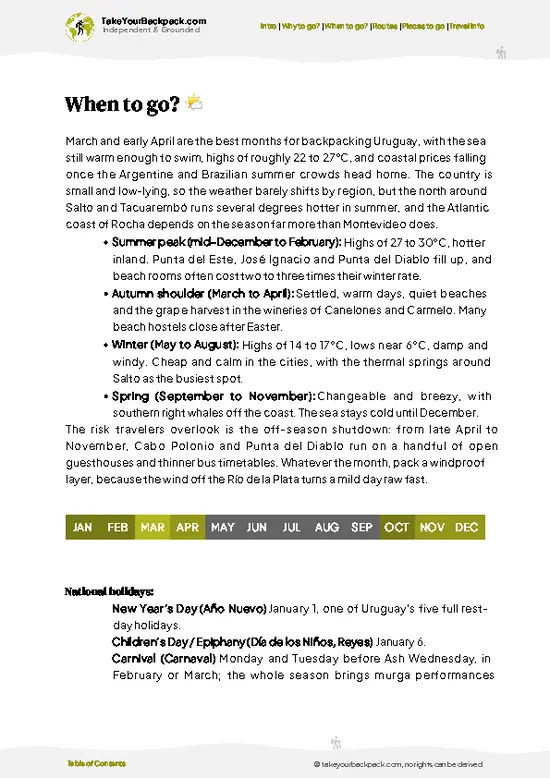
  • Weather: Uruguay’s summer (December to February) is hot and humid, with temperatures often hitting 30°C (86°F). If you’re not a fan of sweating through your shirt, avoid this peak heat when visiting Museo del Carnaval. Spring (September to November) and autumn (March to May) offer milder, more comfortable weather—think 15-22°C (59-72°F)—perfect for wandering without melting or freezing.

  • Daylight Hours: Summer days stretch long, giving you up to 14 hours of light, which is great if you want to soak in the museum and the city’s vibe after hours. Winter (June to August) cuts daylight to about 10 hours, making your visit feel rushed if you’re trying to cram in other sights.

  • Crowds: Carnaval season (late January to early March) floods the museum with visitors and locals alike. Expect lines,
read more 👉

  • Weather: Uruguay’s summer (December to February) is hot and humid, with temperatures often hitting 30°C (86°F). If you’re not a fan of sweating through your shirt, avoid this peak heat when visiting Museo del Carnaval. Spring (September to November) and autumn (March to May) offer milder, more comfortable weather—think 15-22°C (59-72°F)—perfect for wandering without melting or freezing.

  • Daylight Hours: Summer days stretch long, giving you up to 14 hours of light, which is great if you want to soak in the museum and the city’s vibe after hours. Winter (June to August) cuts daylight to about 10 hours, making your visit feel rushed if you’re trying to cram in other sights.

  • Crowds: Carnaval season (late January to early March) floods the museum with visitors and locals alike. Expect lines, noise, and a festive chaos that’s part spectacle, part headache. Off-season months like May or October offer a quieter, more intimate experience where you can actually hear the stories behind the costumes.

  • Seasonal Activities: The museum shines during Carnaval, showcasing live performances and workshops. Outside this window, it’s more about the exhibits themselves, which are rich but less dynamic. If you want the full cultural immersion, plan for late January, but brace for crowds and higher prices.

  • Price Fluctuations: Entry fees and local accommodation spike during Carnaval. Booking outside this period, especially in shoulder months like April or November, saves you cash and hassle. The museum itself is affordable year-round, but the surrounding tourist infrastructure isn’t.


Pro-tip: Visit in late November or early April to dodge the heat and crowds while catching the museum’s quieter, authentic pulse without paying a premium.


source: climatestotravel.comJANJanuary: good for travelingFEBFebruary: fair for travelingMARMarch: good for travelingAPRApril: highly recommended for travelingMAYMay: highly recommended for travelingJUNJune: fair for travelingJULJuly: fair for travelingAUGAugust: fair for travelingSEPSeptember: highly recommended for travelingOCTOctober: highly recommended for travelingNOVNovember: highly recommended for travelingDECDecember: fair for traveling
when-to-go

✈️ The backpacker research shortcutUruguay Travel Guide

An offline-friendly backpacking guide with optimized travel routes, ranked highlights, transport advice, and the best areas to stay.
example page 0 from our offline Travel Guide for Uruguay
example page 1 from our offline Travel Guide for Uruguay
example page 2 from our offline Travel Guide for Uruguay
example page 3 from our offline Travel Guide for Uruguay
example page 4 from our offline Travel Guide for Uruguay
example page 5 from our offline Travel Guide for Uruguay
example page 6 from our offline Travel Guide for Uruguay
example page 7 from our offline Travel Guide for Uruguay
The digital guide (256 pages) contains:
64 highlights, ranked by travel appeal
Optimized 5, 10 & 15-day travel routes
Cities, national parks, landmarks, beaches
How to get around
Offline-friendly for travel without Wi-Fi
👉 Click to see all 30+ guide features

📅 Plan smarter in minutes, not weeks
Month by month travel advice
Festivals & national holidays
Budget expectations

🗺️ Go to the right places, skip the overrated ones
Honest pros & cons of destinations
Top hikes, parks & viewpoints
Lesser-known places most travelers miss
Clear “worth it vs skip it” guidance

🛏️ Travel smoothly without rookie mistakes
Best areas to stay
Transport systems explained simply
Common scams & safety advice
SIM cards, money & practical tips

🌍 Understand the country, not just visit it
Culture & traditions
52 Essential phrases & customs
Festivals worth planning around
Traveler-friendly historical context
Insights that make places more meaningful

📱 Built for real travel conditions
Fully downloadable PDF
Works completely offline
Optimized for phone use
Useful in remote areas & buses
Everything in one place
Save weeks of stressful planning
Get instant access to your full guide. 30‑day money-back guarantee.


By proceeding you agree to our terms.
Sent to your inbox immediately after payment • 100% Secure Checkout
Best Backpacking Travel Advisor 2025 tourism awardBest Backpacking
Travel Advisor
2025
What others say about Take Your Backpack Guides:
⭐⭐⭐⭐⭐
Fantastic, amazing amount of information!
⭐⭐⭐⭐⭐
My goodness this is amazing, it's what I've been looking for hats off too you!
⭐⭐⭐⭐⭐
I think this is absolutely BRILLIANT
⭐⭐⭐⭐
Very complete and informative. It's still missing places, but I gotta to commend you
⭐⭐⭐⭐⭐
This is truly amazing, thank you, can't wait to explore it with my kids!
⭐⭐⭐⭐⭐
Awesome resource, thank you!
⭐⭐⭐⭐⭐
This is amazing! Can't wait to explore the ones I haven't seen
⭐⭐⭐⭐
I love this! Well done, great idea.
⭐⭐⭐⭐⭐
Thanks for taking the time to make this gem!
⭐⭐⭐⭐⭐
This might be the best website I've ever seen.
⭐⭐⭐⭐⭐
Congratulations, and thank you so much for your work; it's incredibly valuable.
⭐⭐⭐⭐
In all seriousness I think you did a great job pointing out the important spots
⭐⭐⭐⭐⭐
10/10 very good
⭐⭐⭐⭐⭐
As someone who's only just starting to visit regularly this is awesome, thank you.
⭐⭐⭐⭐
Thank you very much! I'm going to visit my dad, it's going to be very useful!
⭐⭐⭐⭐⭐
This is really cool! We'll be travelling for the first time and this definitely come in handy.
⭐⭐⭐⭐⭐
You are now our minister of culture, congratulations 👨‍💼
⭐⭐⭐⭐⭐
Just wanted to tell you that this is a pearl! Going to follow your recommendations.
⭐⭐⭐⭐⭐
This is so cool. I'll definitely be using the resource for my travels soon.
⭐⭐⭐⭐⭐
This is very impressive! Good work.
⭐⭐⭐⭐⭐
This is an amazing and informative site. Very well done!

🛏️ Where to stay?Best areas and accommodation options

If you’re aiming to soak up the real pulse of Montevideo near Museo del Carnaval, forget the tourist traps and zero in on the neighborhoods that actually live and breathe the city’s carnival spirit. Ciudad Vieja is your go-to. It’s the old town, packed with character, where the streets hum with local life and the nightlife spills out late. It’s safe enough if you stick to the main drags and well-lit areas, and it’s buzzing with fellow backpackers and solo travelers who want to swap stories over cheap drinks. The vibe here is social without the forced friendliness of tourist zones.

Just a short … read more 👉
If you’re aiming to soak up the real pulse of Montevideo near Museo del Carnaval, forget the tourist traps and zero in on the neighborhoods that actually live and breathe the city’s carnival spirit. Ciudad Vieja is your go-to. It’s the old town, packed with character, where the streets hum with local life and the nightlife spills out late. It’s safe enough if you stick to the main drags and well-lit areas, and it’s buzzing with fellow backpackers and solo travelers who want to swap stories over cheap drinks. The vibe here is social without the forced friendliness of tourist zones.

Just a short walk away, Barrio Sur offers a more authentic, working-class feel—less polished but rich in Afro-Uruguayan culture, which is the heartbeat of the carnival. It’s quieter at night but perfect for daytime explorations and meeting locals who keep the carnival traditions alive year-round. Both areas offer budget-friendly eats and easy access to the museum, so you’re not just visiting a spot on the map—you’re stepping into the carnival’s living history.

👛 Costs (as of 16 June 2026)Travel costs and budget guide for Museo del Carnaval

As of the most recent estimates, the general admission ticket to Museo del Carnaval in Montevideo, Uruguay, is priced at 200 Uruguayan pesos (UYU), approximately €5 to €6. Children under 12 years old receive free entry. The museum accepts Visa, MasterCard, and Maestro cards. Additional costs may include guided tours or workshops, which are available upon request.

source: museodelcarnaval.org
⚠️ Prices can change and everyone travels differently, so take this as a rough guide. Hope it helps you plan your adventure!

Other Uruguayan attractions near Museo del Carnaval

Explore more nearby:

  • Mercado del Puerto—iron market hall, parrilla grills, artisan stalls| 0 km away
  • Museo Andes 1972—survival artifacts, crash site relics, personal testimonies| 1 km away
  • Teatro Solís—neoclassical façade, grand auditorium, guided tours| 1 km away

💡 Not sure where to go next?
Create a personalized itinerary for Uruguay including Museo del Carnaval and the places that fit your trip.

Generate my itinerary

👉 Discover all attractions

Or checkout all Uruguay has to offer (think cities, towns, villages, national parks, hikes, beaches, festivals)
Country photo of Uruguay

We 💚 feedbackKey takeaways before you go

Museo del Carnaval isn’t your flashy, overhyped tourist stop. Expect a modest crowd, mostly locals who know their stuff, which means you get a genuine peek into Uruguay’s carnival soul without the usual tourist circus. The real magic? The costumes—handcrafted, vibrant, and heavy with history. They tell stories you won’t find in any guidebook. Heads-up: it’s small, so don’t expect a sprawling museum. But if you love culture that hits you in the gut, this place delivers in spades.

✍️ Help improve this page!
The information on this page is based on in-depth research, insights shared by experienced travelers, and feedback from the local travel community in Uruguay. While every effort is made to keep the information accurate and current, conditions can change — so if you spot anything incorrect or outdated, please get in touch.


🙋‍♂️ Give feedback

👋 Meet the founderWho’s Behind Take Your Backpack?

Johan, backpacker and founder of TakeYourBackpackHi, I’m Johan (Netherlands 🇳🇱), the creator of TakeYourBackpack. Over the past decade, I’ve backpacked through 80+ countries across six continents, gaining extensive experience with independent travel, long-term trips, and overland routes.

This site is built on a combination of firsthand travel experience and carefully curated insights from other backpackers. Many guides are based on places I’ve personally visited, while others bring together tips, observations, and practical advice shared by trusted travelers I’ve met along the way.

The goal is to provide realistic, experience-driven guidance — not generic itineraries — so you can explore destinations with better context, clearer expectations, and more confidence.

Get full Uruguay guide •
Instant download • 64 highlights • Full Offline guide