×

Uruguay🇺🇾 | attractionsMuseo Nacional de Artes Visualesnational art collection, modernist paintings, sculpture garden | things to do and best time to go

Explore Mercado del PuertoExplore Museo Andes 1972

Backpacking in Museo Nacional de Artes Visuales
👍 Recommendedattraction ranked #8
By Johan Kruseman 🇳🇱 | Updated May 22, 2026

Here’s what nobody tells you: Museo Nacional de Artes Visuales isn’t just a rainy-day backup or a box to tick for culture points—it’s where Montevideo’s creative pulse actually throbs, and you’ll find more locals than tourists on any given afternoon. Tucked into Parque Rodó, a leafy, lived-in neighborhood that’s more skateboards and mate thermoses than selfie sticks, this museum is the opposite of a sterile, hush-hush art mausoleum. The collection is a crash course in Uruguayan identity, with bold, sometimes bizarre works that punch way above their international reputation. Yes, you’ll dodge a few school groups and the odd art student sketching in the corner, but you won’t be elbowing through crowds like at the beach or Mercado del Puerto. Entry is cheap—sometimes free—and the vibe is refreshingly unpretentious. If you’re after adrenaline, look elsewhere, but if you want to actually understand Uruguay beyond the grill smoke and fútbol chants, this is the real magic.

Discover everything you want to know in the 📖 Uruguay Travel Guide.


Get your Uruguay guide
64 ranked highlights, routes & tips, works offline (256 pages)
Loading the map 🌍
CLICK TO FILTER
cities
towns
villages
landmarks
national parks
hikes
beaches
attractions
festivals
regions
SHOW COUNTRY’S BESTSHOW ALL

✨ Why go?
Ranked #8 attraction in Uruguay
Why Museo Nacional de Artes Visuales should be on your travel list

The Museo Nacional de Artes Visuales in Montevideo isn’t your typical tourist checkbox. Yes, it’s a magnet for culture vultures, but here’s the real deal: this museum is the heartbeat of Uruguay’s visual arts scene. It’s home to the country’s most comprehensive collection of national art, spanning from colonial times to contemporary works. If you think art museums are just about pretty paintings, think again. This place tells the story of Uruguay’s identity, struggles, and triumphs through brushstrokes and sculptures.

Crowds? Sure, you’ll find them, especially on weekends, but it’s never suffocating. The space is thoughtfully laid out, giving you room to breathe and actually absorb the work. The entry fee is modest, which is a relief compared to the inflated prices of other South American … read more 👉
The Museo Nacional de Artes Visuales in Montevideo isn’t your typical tourist checkbox. Yes, it’s a magnet for culture vultures, but here’s the real deal: this museum is the heartbeat of Uruguay’s visual arts scene. It’s home to the country’s most comprehensive collection of national art, spanning from colonial times to contemporary works. If you think art museums are just about pretty paintings, think again. This place tells the story of Uruguay’s identity, struggles, and triumphs through brushstrokes and sculptures.

Crowds? Sure, you’ll find them, especially on weekends, but it’s never suffocating. The space is thoughtfully laid out, giving you room to breathe and actually absorb the work. The entry fee is modest, which is a relief compared to the inflated prices of other South American cultural hotspots. For backpackers, it’s a major milestone—not just a pit stop. It’s where you get a real sense of the country’s soul, beyond the beaches and tango clichés. If you’re chasing authenticity, this museum delivers a punch of history and creativity that’s worth every minute and peso. Skip it, and you’re missing the core of Uruguay’s artistic legacy.
Want to include Museo Nacional de Artes Visuales in your Uruguay route?
Create a personalized Uruguay itinerary that includes Museo Nacional de Artes Visuales and the places that fit your trip — based on your travel style, budget, and available time. Get your route in seconds.

Generate my trip

💡 HighlightsDon't-miss highlights and experiences

Torres García’s Monumental Murals
Let’s cut through the hype: most people come here for Joaquín Torres García, Uruguay’s art heavyweight. His murals aren’t just “famous”—they’re a punch of modernist energy that’ll recalibrate your sense of what Latin American art can be. These aren’t polite little paintings. They’re wall-sized, geometric, and unapologetically bold. You’ll see the roots of his “Constructive Universalism” up close—think Mondrian, but with a South American soul. Skip the Instagram pose and actually stand in front of these. The scale and color hit differently in person, and you’ll get why Uruguayans treat Torres García like a national treasure, not just a museum mascot.


The Blanes Room
Juan Manuel Blanes is the other name you’ll see everywhere, but don’t expect dusty portraits. … read more 👉
Torres García’s Monumental Murals
Let’s cut through the hype: most people come here for Joaquín Torres García, Uruguay’s art heavyweight. His murals aren’t just “famous”—they’re a punch of modernist energy that’ll recalibrate your sense of what Latin American art can be. These aren’t polite little paintings. They’re wall-sized, geometric, and unapologetically bold. You’ll see the roots of his “Constructive Universalism” up close—think Mondrian, but with a South American soul. Skip the Instagram pose and actually stand in front of these. The scale and color hit differently in person, and you’ll get why Uruguayans treat Torres García like a national treasure, not just a museum mascot.


The Blanes Room
Juan Manuel Blanes is the other name you’ll see everywhere, but don’t expect dusty portraits. His epic canvases are cinematic—battle scenes, gauchos, and moments that shaped Uruguay’s identity. The Blanes Room is where you get a crash course in the country’s myth-making, minus the sugarcoating. The drama is real, the brushwork is wild, and the stories are bigger than any travel brochure will admit. If you want to understand Uruguay beyond the beach, this is your shortcut.


Rotating Contemporary Exhibitions
Here’s where the museum shakes off the “national gallery” stereotype. The temporary shows are a wild card—sometimes provocative, sometimes playful, always a window into what’s bubbling up in Uruguay’s art scene right now. I’ve seen everything from video installations that mess with your sense of time to street artists turning gallery walls into urban playgrounds. Don’t skip these. They’re the antidote to museum fatigue and proof that Montevideo isn’t stuck in the past.


The Sculpture Garden
Step outside. No, seriously—most visitors miss this. The garden is a low-key oasis, dotted with modern sculptures that invite you to touch, walk around, and see how art changes with the light and the breeze. It’s not Versailles, but that’s the point. This is where locals come to decompress, sketch, or just gossip on a bench surrounded by bronze and stone. If you want a slice of Montevideo’s real rhythm, linger here.


The Building Itself
The museum’s architecture is a lesson in “don’t judge a book by its cover.” From the street, it’s all clean lines and 1930s rationalism—no frills, no grand staircase. But inside, the natural light and open galleries make the art feel immediate and alive. It’s a space designed for looking, not just passing through. You’ll notice the difference if you’ve slogged through stuffy European palaces. This place respects your time and your feet.


Uruguayan Masters Beyond the Big Names
Dig a little deeper and you’ll find works by artists like Pedro Figari and Rafael Barradas. Figari’s dreamlike scenes of Afro-Uruguayan life and Barradas’ explosive color palettes are a crash course in the country’s creative DNA. These aren’t just “local flavor”—they’re world-class, and you’ll leave wondering why you haven’t heard their names before. That’s the real magic: discovery, not just checklist tourism.
Spotted a mistake or missing something? Contact us.

Things to do around Museo Nacional de Artes Visuales

Ratings based on Tripadvisor reviews. When you book through this link, you support our work at no extra cost to you.

🌤️ When to go?Best time to visit Museo Nacional de Artes Visuales


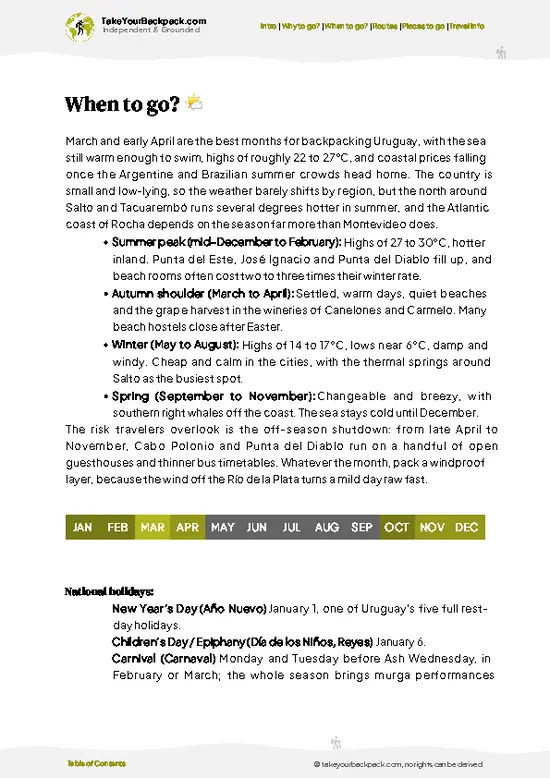
  • Weather: Montevideo’s climate is mild but can be unpredictable. The best weather for visiting Museo Nacional de Artes Visuales is from October to April when temperatures hover between 18°C and 28°C (64°F to 82°F). Winters (June to August) are cooler and damp, not ideal for wandering around.

  • Temperature: Summer months (December to February) can get warm, hitting 30°C (86°F), which might make indoor museum time a welcome break. Spring and autumn offer comfortable temps around 20°C to 25°C (68°F to 77°F), perfect for combining museum visits with outdoor exploring.

  • Daylight Hours: Longer days from November to February mean more time to soak in the art and stroll nearby parks. Shorter winter days limit your window, so plan accordingly if you want to hit other spots after the museum.

  • Crowds:
read more 👉

  • Weather: Montevideo’s climate is mild but can be unpredictable. The best weather for visiting Museo Nacional de Artes Visuales is from October to April when temperatures hover between 18°C and 28°C (64°F to 82°F). Winters (June to August) are cooler and damp, not ideal for wandering around.

  • Temperature: Summer months (December to February) can get warm, hitting 30°C (86°F), which might make indoor museum time a welcome break. Spring and autumn offer comfortable temps around 20°C to 25°C (68°F to 77°F), perfect for combining museum visits with outdoor exploring.

  • Daylight Hours: Longer days from November to February mean more time to soak in the art and stroll nearby parks. Shorter winter days limit your window, so plan accordingly if you want to hit other spots after the museum.

  • Crowds: Peak tourist season in January and February brings more visitors, especially on weekends. If you want to dodge the crowd and have a quieter experience, aim for shoulder months like October or March.

  • Seasonal Activities: The museum sometimes hosts special exhibitions and cultural events in spring and early summer (September to December), adding layers to your visit beyond the permanent collection.

  • Price Fluctuations: Entry fees stay fairly stable year-round, but accommodation and flights spike in summer. Visiting in shoulder seasons can save you money while still offering great weather and fewer tourists.


Pro-tip: Visit in late spring (October-November) for mild weather, fewer crowds, and a chance to catch special exhibits without the summer price hike.


source: climatestotravel.comJANJanuary: good for travelingFEBFebruary: good for travelingMARMarch: highly recommended for travelingAPRApril: highly recommended for travelingMAYMay: fair for travelingJUNJune: below average for travelingJULJuly: below average for travelingAUGAugust: fair for travelingSEPSeptember: highly recommended for travelingOCTOctober: excellent for travelingNOVNovember: excellent for travelingDECDecember: highly recommended for traveling
when-to-go

✈️ The backpacker research shortcutUruguay Travel Guide

An offline-friendly backpacking guide with optimized travel routes, ranked highlights, transport advice, and the best areas to stay.
example page 0 from our offline Travel Guide for Uruguay
example page 1 from our offline Travel Guide for Uruguay
example page 2 from our offline Travel Guide for Uruguay
example page 3 from our offline Travel Guide for Uruguay
example page 4 from our offline Travel Guide for Uruguay
example page 5 from our offline Travel Guide for Uruguay
example page 6 from our offline Travel Guide for Uruguay
example page 7 from our offline Travel Guide for Uruguay
The digital guide (256 pages) contains:
64 highlights, ranked by travel appeal
Optimized 5, 10 & 15-day travel routes
Cities, national parks, landmarks, beaches
How to get around
Offline-friendly for travel without Wi-Fi
👉 Click to see all 30+ guide features

📅 Plan smarter in minutes, not weeks
Month by month travel advice
Festivals & national holidays
Budget expectations

🗺️ Go to the right places, skip the overrated ones
Honest pros & cons of destinations
Top hikes, parks & viewpoints
Lesser-known places most travelers miss
Clear “worth it vs skip it” guidance

🛏️ Travel smoothly without rookie mistakes
Best areas to stay
Transport systems explained simply
Common scams & safety advice
SIM cards, money & practical tips

🌍 Understand the country, not just visit it
Culture & traditions
52 Essential phrases & customs
Festivals worth planning around
Traveler-friendly historical context
Insights that make places more meaningful

📱 Built for real travel conditions
Fully downloadable PDF
Works completely offline
Optimized for phone use
Useful in remote areas & buses
Everything in one place
Save weeks of stressful planning
Get instant access to your full guide. 30‑day money-back guarantee.


By proceeding you agree to our terms.
Sent to your inbox immediately after payment • 100% Secure Checkout
Best Backpacking Travel Advisor 2025 tourism awardBest Backpacking
Travel Advisor
2025
What others say about Take Your Backpack Guides:
⭐⭐⭐⭐⭐
Fantastic, amazing amount of information!
⭐⭐⭐⭐⭐
My goodness this is amazing, it's what I've been looking for hats off too you!
⭐⭐⭐⭐⭐
I think this is absolutely BRILLIANT
⭐⭐⭐⭐
Very complete and informative. It's still missing places, but I gotta to commend you
⭐⭐⭐⭐⭐
This is truly amazing, thank you, can't wait to explore it with my kids!
⭐⭐⭐⭐⭐
Awesome resource, thank you!
⭐⭐⭐⭐⭐
This is amazing! Can't wait to explore the ones I haven't seen
⭐⭐⭐⭐
I love this! Well done, great idea.
⭐⭐⭐⭐⭐
Thanks for taking the time to make this gem!
⭐⭐⭐⭐⭐
This might be the best website I've ever seen.
⭐⭐⭐⭐⭐
Congratulations, and thank you so much for your work; it's incredibly valuable.
⭐⭐⭐⭐
In all seriousness I think you did a great job pointing out the important spots
⭐⭐⭐⭐⭐
10/10 very good
⭐⭐⭐⭐⭐
As someone who's only just starting to visit regularly this is awesome, thank you.
⭐⭐⭐⭐
Thank you very much! I'm going to visit my dad, it's going to be very useful!
⭐⭐⭐⭐⭐
This is really cool! We'll be travelling for the first time and this definitely come in handy.
⭐⭐⭐⭐⭐
You are now our minister of culture, congratulations 👨‍💼
⭐⭐⭐⭐⭐
Just wanted to tell you that this is a pearl! Going to follow your recommendations.
⭐⭐⭐⭐⭐
This is so cool. I'll definitely be using the resource for my travels soon.
⭐⭐⭐⭐⭐
This is very impressive! Good work.
⭐⭐⭐⭐⭐
This is an amazing and informative site. Very well done!

🛏️ Where to stay?Best areas and accommodation options

Staying near Museo Nacional de Artes Visuales means planting yourself in the heart of Parque Rodó, a neighborhood that’s more than just a green space. It’s where Montevideo’s young, creative crowd hangs out, making it a magnet for solo travelers and backpackers who want to mix safety with social vibes. The streets here are calm enough to sleep well but lively enough to find a café or bar buzzing with locals and fellow travelers.

Forget the polished tourist zones; this area offers a rawer, more authentic slice of city life. You’ll find affordable spots that don’t sacrifice security—something … read more 👉
Staying near Museo Nacional de Artes Visuales means planting yourself in the heart of Parque Rodó, a neighborhood that’s more than just a green space. It’s where Montevideo’s young, creative crowd hangs out, making it a magnet for solo travelers and backpackers who want to mix safety with social vibes. The streets here are calm enough to sleep well but lively enough to find a café or bar buzzing with locals and fellow travelers.

Forget the polished tourist zones; this area offers a rawer, more authentic slice of city life. You’ll find affordable spots that don’t sacrifice security—something that’s non-negotiable when you’re carrying your life on your back. Plus, the proximity to the museum means you can soak in Uruguay’s visual arts scene without wasting time or money on transport.

If you want to meet people, the nearby plazas and weekend markets are natural gathering points. It’s not about flashy amenities but about connection and atmosphere. Parque Rodó is where the city’s pulse feels real, not packaged.

👛 Costs (as of 2 June 2026)Travel costs and budget guide for Museo Nacional de Artes Visuales

The Museo Nacional de Artes Visuales in Montevideo offers free general admission. However, for non-residents, there is a fee of 200 Uruguayan pesos (approximately €6) for a 48-hour pass, allowing access to multiple museums. ([museofigari.gub.uy](https://www.museofigari.gub.uy/innovaportal/v/128381/20/mecweb/venta-de-entradas?parentid=127716&utm_source=openai))

source: museos.gub.uy
⚠️ Prices can change and everyone travels differently, so take this as a rough guide. Hope it helps you plan your adventure!

Other Uruguayan attractions near Museo Nacional de Artes Visuales

Explore more nearby:


💡 Not sure where to go next?
Create a personalized itinerary for Uruguay including Museo Nacional de Artes Visuales and the places that fit your trip.

Generate my itinerary

👉 Discover all attractions

Or checkout all Uruguay has to offer (think cities, towns, villages, national parks, hikes, beaches, festivals)
Country photo of Uruguay

We 💚 feedbackKey takeaways before you go

The Museo Nacional de Artes Visuales isn’t some flashy, overhyped spot where you elbow through crowds for a selfie. It’s quieter, more thoughtful—like a secret handshake with Uruguay’s soul. The real magic hits when you stumble on a lesser-known local artist whose work feels raw and immediate, not polished for tourists. Heads up: it’s not a quick pop-in; give yourself time to soak in the layers. If you’re chasing Instagram moments, look elsewhere. But if you want to feel the pulse of Uruguayan art, this place quietly delivers.

✍️ Help improve this page!
The information on this page is based on in-depth research, insights shared by experienced travelers, and feedback from the local travel community in Uruguay. While every effort is made to keep the information accurate and current, conditions can change — so if you spot anything incorrect or outdated, please get in touch.


🙋‍♂️ Give feedback

👋 Meet the founderWho’s Behind Take Your Backpack?

Johan, backpacker and founder of TakeYourBackpackHi, I’m Johan (Netherlands 🇳🇱), the creator of TakeYourBackpack. Over the past decade, I’ve backpacked through 80+ countries across six continents, gaining extensive experience with independent travel, long-term trips, and overland routes.

This site is built on a combination of firsthand travel experience and carefully curated insights from other backpackers. Many guides are based on places I’ve personally visited, while others bring together tips, observations, and practical advice shared by trusted travelers I’ve met along the way.

The goal is to provide realistic, experience-driven guidance — not generic itineraries — so you can explore destinations with better context, clearer expectations, and more confidence.

Get full Uruguay guide •
Instant download • 64 highlights • Full Offline guide