


×

Uruguay🇺🇾 | townsTacuarembóGardel claim, gaucho museum, plane-tree plaza, Patria Gaucha fiesta | things to do and best time to go

Explore San JavierExplore Artigas

Backpacking in Tacuarembó
👌 Worth visitingtown ranked #7
By Johan Kruseman 🇳🇱 | Updated October 19, 2026

Tacuarembó works as a stop for travelers who want gaucho country without a ranch budget, and whether you stay one night or three depends on the calendar. The town sits in the north of Uruguay, and it is quiet for most of the year, then fills up in early March for the Fiesta de la Patria Gaucha. Streets are low, wide and shaded by plane trees, with a plaza worth an hour of coffee and people-watching. Hostels are few and evenings are slow, so meeting other backpackers takes luck. Bus links are straightforward, and the hills and valleys nearby suit day trips. A first day could mean a late breakfast on the plaza, a walk to the Museo del Indio y del Gaucho, then grilled meat at a corner parrilla.

Part of Backpacking in Uruguay: all 56 places on one map, with routes and the best time to go.
Discover everything you want to know in the 📖 Uruguay Travel Guide.


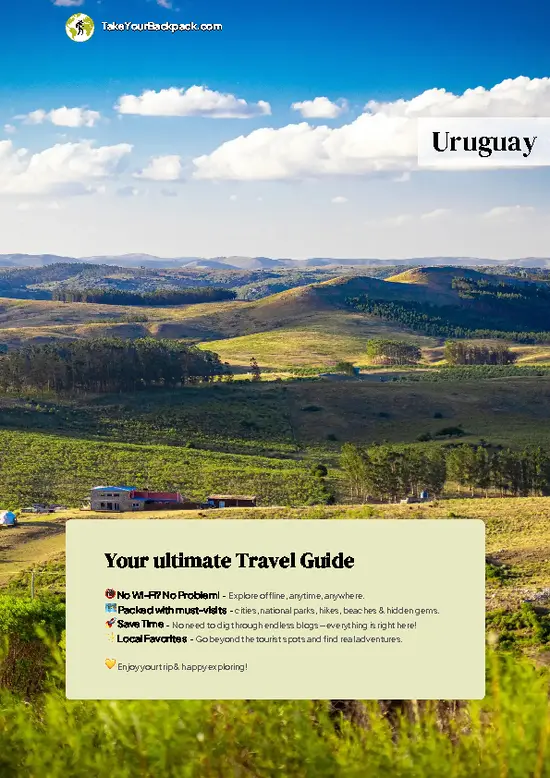
example page 0 from our offline Travel Guide for Uruguay
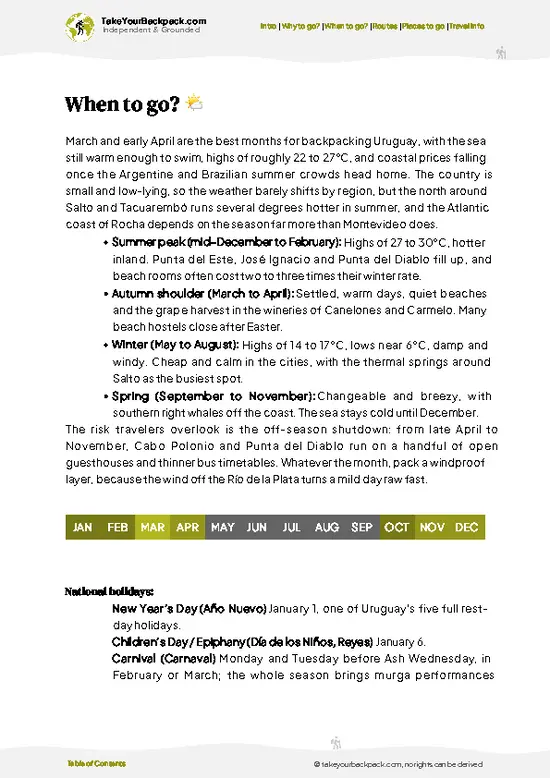
example page 1 from our offline Travel Guide for Uruguay
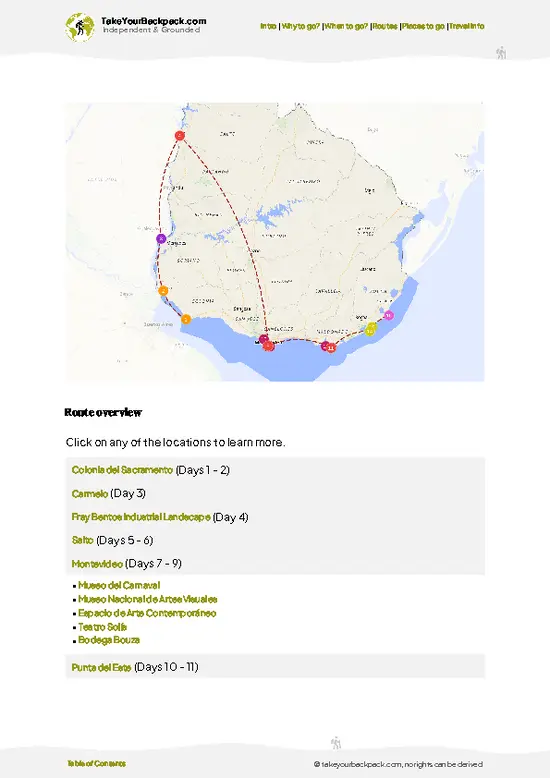
example page 2 from our offline Travel Guide for Uruguay
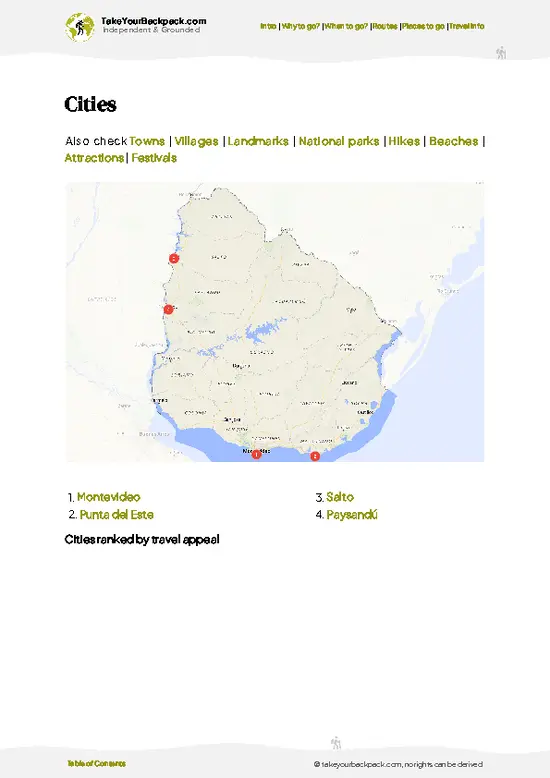
example page 3 from our offline Travel Guide for Uruguay
example page 4 from our offline Travel Guide for Uruguay
example page 5 from our offline Travel Guide for Uruguay
example page 6 from our offline Travel Guide for Uruguay
example page 7 from our offline Travel Guide for Uruguay
Loading the map 🌍
CLICK TO FILTER
cities
towns
villages
landmarks
national parks
hikes
beaches
attractions
festivals
SHOW COUNTRY’S BESTSHOW ALL

✨ Why go?
Ranked #7 town in Uruguay
The unique appeal for travelers

Tacuarembó is where you go to see rural Uruguay at work rather than on display. Cattle trucks share the road with motorbikes, and the Fiesta de la Patria Gaucha each March turns the town into a week of horseback parades, folk music and asado smoke. Outside that week, the pace is slow, and you can finish the main sights in a day and spend the rest at the plaza or in a cafe. The Valle Edén and the sandstone landscape of Valle del Lunarejo nearby give hikers and photographers a reason to linger. Solo travelers and slow travelers will like the easy walking and friendly locals who ask where you are from. Nightlife seldom goes past a beer, so party seekers should look elsewhere.

💡 HighlightsKey sights and experiences for travelers

  1. Museo Carlos Gardel: Uruguayans claim the tango singer was born near here, and this small museum in Valle Edén, about 25 km southwest of town, lays out the argument with photos, posters and records. Go on a weekday morning. Entry is free or about US$1, and 45 minutes is plenty.
  2. Plaza 19 de Abril: The central square has tall trees, benches and a steady stream of mate drinkers. Late afternoon is best, when the town comes out. It is free, and an hour with a coffee is easy to fill.
  3. Parque Rodó and the Laguna de las Lavanderas: A shaded park with walking paths and picnic spots that locals use on weekends. Morning or late afternoon is the best time. It is free, and a loop takes about an hour.
  4. Museo del Indio y del Gaucho: Displays of saddles, bolas, knives and tools explain the gaucho way of life and
… read more 👉
  1. Museo Carlos Gardel: Uruguayans claim the tango singer was born near here, and this small museum in Valle Edén, about 25 km southwest of town, lays out the argument with photos, posters and records. Go on a weekday morning. Entry is free or about US$1, and 45 minutes is plenty.
  2. Plaza 19 de Abril: The central square has tall trees, benches and a steady stream of mate drinkers. Late afternoon is best, when the town comes out. It is free, and an hour with a coffee is easy to fill.
  3. Parque Rodó and the Laguna de las Lavanderas: A shaded park with walking paths and picnic spots that locals use on weekends. Morning or late afternoon is the best time. It is free, and a loop takes about an hour.
  4. Museo del Indio y del Gaucho: Displays of saddles, bolas, knives and tools explain the gaucho way of life and the region’s Indigenous past. Visit midday when the sun is strongest. Entry is free or very cheap, and it takes about 45 minutes.
  5. Catedral San Fructuoso: The city’s main church has a calm interior that offers a cool break from the heat. Try a quiet weekday morning. It costs nothing, and a visit takes 15 to 20 minutes.
For day trips, Valle Edén, Valle del Lunarejo and the town of Paso de los Toros are all within reach, while the Tacuarembó area’s estancias offer horseback rides. Skip the cathedral if time is short.
Spotted a mistake or missing something? Contact us.

Things to do near Tacuarembó

Ratings based on Tripadvisor reviews. When you book through this link, you support our work at no extra cost to you.

🏘️ NeighborhoodsKey areas and districts to know

Tacuarembó is a compact departmental capital on the Ruta 5 corridor, and everything a backpacker needs sits within about twenty flat blocks of the main square.
  • Centro and Plaza 19 de Abril: Wide, flat streets of low houses and shade trees around the main square, with the cathedral and the Casa de la Cultura close by. Bakeries, parrilla restaurants and cafés cluster here, and you can walk everywhere. You leave with a chivito or a plate of grilled meat and a feel for how the town works at a slow pace.
  • Parque Rodó and the Rio Tacuarembó side: A few blocks from the center, with green space, sports fields and mate drinkers on weekend afternoons. Quiet and flat, easy on foot. You get a bench, a thermos of hot water and local company.
  • Barrio Ansina and the western avenues: Residential streets with corner
… read more 👉
Tacuarembó is a compact departmental capital on the Ruta 5 corridor, and everything a backpacker needs sits within about twenty flat blocks of the main square.
  • Centro and Plaza 19 de Abril: Wide, flat streets of low houses and shade trees around the main square, with the cathedral and the Casa de la Cultura close by. Bakeries, parrilla restaurants and cafés cluster here, and you can walk everywhere. You leave with a chivito or a plate of grilled meat and a feel for how the town works at a slow pace.
  • Parque Rodó and the Rio Tacuarembó side: A few blocks from the center, with green space, sports fields and mate drinkers on weekend afternoons. Quiet and flat, easy on foot. You get a bench, a thermos of hot water and local company.
  • Barrio Ansina and the western avenues: Residential streets with corner stores, small grocers and cheaper lunch counters serving milanesas and daily set plates. Little to see, but the walk is easy and prices are lower. You get a plain, filling meal among locals.
  • Paso de los Toros road and the Gaucho Museum area: The stretch toward the museum and the fairgrounds is where the gaucho tradition shows. Distances grow, so a bike or taxi helps. The payoff is the saddlery, the horsemanship displays and, in March, the Fiesta de la Patria Gaucha.

⌛️ 1 dayA smart one-day plan

This is a slow gaucho-country day, built around horse culture, leafy plazas and a cave outside town, with long pauses for mate.
8:00 AM: Plaza 25 de Agosto
Start under the plaza’s old trees with a coffee and medialunas at one of the cafés on the edge. Locals read the paper here and the pace sets itself. Walk a few minutes to the next stop.
9:30 AM: Museo del Indio y del Gaucho
This small museum covers the region’s cattle-ranching and rural life, with saddles, tools and historic objects. Allow about an hour. Then stroll back through the grid of low streets toward the center.
11:00 AM: Parque 18 de Julio
This big, shady park is where Tacuarembó spends its mornings, with walkers, mate thermoses and kids on bikes. Sit for a while. It is the easiest way to see how the town lives day to day.
1:00 PM: Lunch … read more 👉
This is a slow gaucho-country day, built around horse culture, leafy plazas and a cave outside town, with long pauses for mate.
8:00 AM: Plaza 25 de Agosto
Start under the plaza’s old trees with a coffee and medialunas at one of the cafés on the edge. Locals read the paper here and the pace sets itself. Walk a few minutes to the next stop.
9:30 AM: Museo del Indio y del Gaucho
This small museum covers the region’s cattle-ranching and rural life, with saddles, tools and historic objects. Allow about an hour. Then stroll back through the grid of low streets toward the center.
11:00 AM: Parque 18 de Julio
This big, shady park is where Tacuarembó spends its mornings, with walkers, mate thermoses and kids on bikes. Sit for a while. It is the easiest way to see how the town lives day to day.
1:00 PM: Lunch at a parrilla
Grilled beef is the point here, so order a mixed grill or a simple chivito and share if you are on a budget. Take a long lunch, because the afternoon heat is best spent sitting down.
3:30 PM: Gruta de los Cuervos
Take a taxi or a pre-arranged ride out to this cave and canyon area, which is an easy trip from town. Walk the paths above the Río Tacuarembó and look for the birds that give it its name. It sees few foreign backpackers and feels properly quiet. Stay about two hours.
6:30 PM: Back at the plaza
Return for an early evening of mate and people-watching, then find dinner nearby. Tacuarembó does not do wild nights, so a calm finish suits the town.

🌤️ When to go?Best time to visit Tacuarembó

Late spring to early autumn (October to April) is the easiest window, though March is the headline month for gaucho culture.
  • Summer (December to February): Hot and humid, highs of 30 to 35°C (86 to 95°F), with long evenings and thunderstorms. Fewer visitors, and prices stay flat.
  • Autumn (March to May): Highs of 20 to 27°C (68 to 81°F). The Patria Gaucha festival in March fills hotels and raises rates, so book ahead.
  • Winter (June to August): Highs of 13 to 17°C (55 to 63°F), lows near 3°C (37°F), occasional frost and short days of about 10 hours of daylight. Quiet and cheap, but countryside rides get cold and muddy.
  • Spring (September to November): Highs of 18 to 26°C (64 to 79°F), green hills, reasonable rain and the best hiking conditions.
Reserve a bed at least a month ahead if you plan to arrive during the March festival.

source: climatestotravel.comJANJanuary: fair for travelingFEBFebruary: fair for travelingMARMarch: highly recommended for travelingAPRApril: excellent for travelingMAYMay: highly recommended for travelingJUNJune: good for travelingJULJuly: good for travelingAUGAugust: good for travelingSEPSeptember: excellent for travelingOCTOctober: excellent for travelingNOVNovember: highly recommended for travelingDECDecember: fair for traveling
when-to-go

✈️ The backpacker research shortcutUruguay Travel Guide

What the free pages can't give you: ready-made routes, every place ranked, and it works offline. All in 1 guide.
example page 0 from our offline Travel Guide for Uruguay
example page 1 from our offline Travel Guide for Uruguay
example page 2 from our offline Travel Guide for Uruguay
example page 3 from our offline Travel Guide for Uruguay
example page 4 from our offline Travel Guide for Uruguay
example page 5 from our offline Travel Guide for Uruguay
example page 6 from our offline Travel Guide for Uruguay
example page 7 from our offline Travel Guide for Uruguay
The digital guide (198 pages) contains:-page digital guide:
✅ Ready-made 5, 10 & 15-day routes
✅ All 56 places ranked, so you skip the overrated ones
✅ Works offline, all in 1 guide
✅ Cities, national parks, landmarks, beaches
✅ How to get around
👉 Click to see all 30+ guide features

📅 Plan smarter in minutes, not weeks
✅ Month by month travel advice
✅ Festivals & national holidays
✅ Budget expectations

🗺️ Go to the right places, skip the overrated ones
✅ Honest pros & cons of destinations
✅ Top hikes, parks & viewpoints
✅ Lesser-known places most travelers miss
✅ Clear “worth it vs skip it” guidance

🛏️ Travel smoothly without rookie mistakes
✅ Best areas to stay
✅ Transport systems explained simply
✅ Common scams & safety advice
✅ SIM cards, money & practical tips

🌍 Understand the country, not just visit it
✅ Culture & traditions
✅ 52 Essential phrases & customs
✅ Festivals worth planning around
✅ Traveler-friendly historical context
✅ Insights that make places more meaningful

📱 Built for real travel conditions
✅ Fully downloadable PDF
✅ Works completely offline
✅ Optimized for phone use
✅ Useful in remote areas & buses
✅ All in 1 guide
Stop searching, start planning
Get instant access to your full guide. 30‑day money-back guarantee.


By proceeding you agree to our terms.
Sent to your inbox immediately after payment • 100% Secure Checkout
Best Backpacking Travel Advisor 2025 tourism awardBest Backpacking
Travel Advisor
2025
What others say about Take Your Backpack Guides:
⭐⭐⭐⭐⭐
Fantastic, amazing amount of information!
⭐⭐⭐⭐⭐
My goodness this is amazing, it's what I've been looking for hats off too you!
⭐⭐⭐⭐⭐
I think this is absolutely BRILLIANT
⭐⭐⭐⭐
Very complete and informative. It's still missing places, but I gotta to commend you
⭐⭐⭐⭐⭐
This is truly amazing, thank you, can't wait to explore it with my kids!
⭐⭐⭐⭐⭐
Awesome resource, thank you!
⭐⭐⭐⭐⭐
This is amazing! Can't wait to explore the ones I haven't seen
⭐⭐⭐⭐
I love this! Well done, great idea.
⭐⭐⭐⭐⭐
Thanks for taking the time to make this gem!
⭐⭐⭐⭐⭐
This might be the best website I've ever seen.
⭐⭐⭐⭐⭐
Congratulations, and thank you so much for your work; it's incredibly valuable.
⭐⭐⭐⭐
In all seriousness I think you did a great job pointing out the important spots
⭐⭐⭐⭐⭐
10/10 very good
⭐⭐⭐⭐⭐
As someone who's only just starting to visit regularly this is awesome, thank you.
⭐⭐⭐⭐
Thank you very much! I'm going to visit my dad, it's going to be very useful!
⭐⭐⭐⭐⭐
This is really cool! We'll be travelling for the first time and this definitely come in handy.
⭐⭐⭐⭐⭐
You are now our minister of culture, congratulations 👨‍💼
⭐⭐⭐⭐⭐
Just wanted to tell you that this is a pearl! Going to follow your recommendations.
⭐⭐⭐⭐⭐
This is so cool. I'll definitely be using the resource for my travels soon.
⭐⭐⭐⭐⭐
This is very impressive! Good work.
⭐⭐⭐⭐⭐
This is an amazing and informative site. Very well done!

🛏️ Where to stay?Best areas to stay in Uruguay

The center, within about six blocks of Plaza 19 de Abril, is the best place to sleep on a budget. Tacuarembó has only a handful of hostels and cheap guesthouses, so beds are limited and the center holds most of them, along with simple hotels at modest rates (roughly US$20 to 40 for a private double). Dorm-style options are rare, so book ahead, especially around the March gaucho festival.

Staying central means you walk to restaurants, ATMs, supermarkets and the bus terminal, with no need for taxis. Nights are quiet, with little street noise beyond a few bars and weekend traffic, and the streets … read more 👉
The center, within about six blocks of Plaza 19 de Abril, is the best place to sleep on a budget. Tacuarembó has only a handful of hostels and cheap guesthouses, so beds are limited and the center holds most of them, along with simple hotels at modest rates (roughly US$20 to 40 for a private double). Dorm-style options are rare, so book ahead, especially around the March gaucho festival.

Staying central means you walk to restaurants, ATMs, supermarkets and the bus terminal, with no need for taxis. Nights are quiet, with little street noise beyond a few bars and weekend traffic, and the streets feel safe after dark. A second option is the area near the terminal, which suits early departures and costs a touch less. It is a bit sleepier, with fewer restaurants after 9 pm, so you may end up walking back toward the center to eat. Bus links from the terminal run to the main departmental destinations. For stays near the countryside, estancia stays outside town cost more and need a car or arranged pickup.

🚌 Getting aroundTransportation options and practical tips

A city bus ride in Tacuarembó costs roughly US$0.80 to 1, paid in Uruguayan pesos in cash to the driver or with a local card. Most backpackers walk, since the center is flat and small, and traffic is light outside weekday mornings. Public transport is limited to a few city lines, and evening service thins out.
  • Walking: Free and the best option inside the center, where nearly everything sits within 10 to 20 minutes of the main square. You get shaded sidewalks and the chance to stop in a bakery.
  • City buses: US$0.80 to 1 a ride, running from early morning until about 9 or 10 pm. Useful for the terminal and outer neighborhoods, though frequencies are modest.
  • Taxis and remises: Short rides cost US$2 to 5, and a trip to the outskirts or the fairgrounds US$5 to 10. Phone a radio taxi at night and you
… read more 👉
A city bus ride in Tacuarembó costs roughly US$0.80 to 1, paid in Uruguayan pesos in cash to the driver or with a local card. Most backpackers walk, since the center is flat and small, and traffic is light outside weekday mornings. Public transport is limited to a few city lines, and evening service thins out.
  • Walking: Free and the best option inside the center, where nearly everything sits within 10 to 20 minutes of the main square. You get shaded sidewalks and the chance to stop in a bakery.
  • City buses: US$0.80 to 1 a ride, running from early morning until about 9 or 10 pm. Useful for the terminal and outer neighborhoods, though frequencies are modest.
  • Taxis and remises: Short rides cost US$2 to 5, and a trip to the outskirts or the fairgrounds US$5 to 10. Phone a radio taxi at night and you get a door-to-door ride on quiet streets.
  • Bicycle: Some hostels and guesthouses lend bikes, and the grid is gentle. Count on a pleasant 15 minute ride to the parks, with sun and little shade, so carry water.
  • Intercity buses: The terminal connects to Montevideo (about 4.5 to 5.5 hours, US$18 to 25), Rivera (about 1.5 hours, US$6 to 9) and Paysandú, Salto and Melo. Tickets are bought at the counter, and you get a reclining seat and a view of rolling grassland.

👛 Costs (as of 19 October 2026)Money, prices, and spending tips

A backpacker in Tacuarembó can expect to spend about US$43 to 65 a day in high season. Prices are lower than Montevideo or Punta del Este, though Uruguay is still among the pricier countries in South America.
CategoryBudget RangeLocal Reality
Dorm accommodationUS$18 to 25Dorms are scarce, so most budget travelers take a simple guesthouse room or a basic private room, with high season (March) at the top of the range.
MealsUS$15 to 20Bakery breakfast, a milanesa or chivito lunch, and a parrilla or pasta dinner at a modest restaurant. Supermarket cooking costs less.
Local transportUS$2 to 4City buses cost under US$1 a ride, and short taxi trips US$2 to 5.
Basic activities/entry feesUS$3 to 8Museums and parks are free or cheap, and a taxi to the Gruta de los Cuervos adds more on excursion days.
Miscellaneous
… read more 👉
A backpacker in Tacuarembó can expect to spend about US$43 to 65 a day in high season. Prices are lower than Montevideo or Punta del Este, though Uruguay is still among the pricier countries in South America.
CategoryBudget RangeLocal Reality
Dorm accommodationUS$18 to 25Dorms are scarce, so most budget travelers take a simple guesthouse room or a basic private room, with high season (March) at the top of the range.
MealsUS$15 to 20Bakery breakfast, a milanesa or chivito lunch, and a parrilla or pasta dinner at a modest restaurant. Supermarket cooking costs less.
Local transportUS$2 to 4City buses cost under US$1 a ride, and short taxi trips US$2 to 5.
Basic activities/entry feesUS$3 to 8Museums and parks are free or cheap, and a taxi to the Gruta de los Cuervos adds more on excursion days.
Miscellaneous expensesUS$5 to 8Water, yerba mate, coffee, and laundry.
Total Daily BudgetUS$43 to 65About US$50 to 55 for a typical day in high season, with the lower end reached by cooking.
Buy groceries and lunch specials (menú del día) at local lunch counters, which often run US$6 to 8 for a full plate.
⚠️ Prices can change and everyone travels differently, so take this as a rough guide. Hope it helps you plan your adventure!

🚌 Day tripsEasy escapes and nearby places

Tacuarembó works well as a base for countryside day trips, though most need a bus or hired car and some planning.Valle Edén: Valle Edén lies about 25 km southwest of town, a quiet valley with rock formations and a small museum tied to Carlos Gardel’s claimed birthplace. Without a car, a taxi round trip runs US$30 to 45 including waiting. Go in spring or autumn, and check that the museum is open since hours vary.
Gruta de los Cuervos: This is a cave named after the crows that once nested in the area, with a short trail. It lies about 11 km from town. A taxi costs US$40 to 60 round trip, or ask for a bus to the nearby road junction and walk the rest. First-timers often arrive in the heat of midday, so aim for morning.
Paso de los Toros and Lago Rincón del Bonete: A bus ride of about 130 km takes … read more 👉
Tacuarembó works well as a base for countryside day trips, though most need a bus or hired car and some planning.Valle Edén: Valle Edén lies about 25 km southwest of town, a quiet valley with rock formations and a small museum tied to Carlos Gardel’s claimed birthplace. Without a car, a taxi round trip runs US$30 to 45 including waiting. Go in spring or autumn, and check that the museum is open since hours vary.
Gruta de los Cuervos: This is a cave named after the crows that once nested in the area, with a short trail. It lies about 11 km from town. A taxi costs US$40 to 60 round trip, or ask for a bus to the nearby road junction and walk the rest. First-timers often arrive in the heat of midday, so aim for morning.
Paso de los Toros and Lago Rincón del Bonete: A bus ride of about 130 km takes you to the lake, where fishing, sunsets over the water and the Rincón del Bonete dam can be seen. It is best from October to April, when it is warm enough to sit by the shore. Bring food, as options are limited.
Rivera: Rivera sits on the Brazilian border and is reachable in about 1.5 hours for US$6 to 9 by bus. Shops, duty-free stores and a quick walk across to Santana do Livramento make it a cheap, easy outing. Bring your passport.

🛡️ SafetyScams, Hazards, and Annoyances

Tacuarembó is broadly safe, and most visitors find the center calm even after dark. Petty theft happens occasionally, so keep your phone and wallet out of sight at the bus terminal and in crowds during the March festival. Solo travelers, including women, generally walk the lit central streets without trouble in the evening, though quieter outer blocks and park edges are best skipped late at night. Call a radio taxi after about 11 pm instead of walking far. Scams are uncommon. The more common annoyances are siesta closures, when shops shut from about noon to 3 or 4 pm, and sunstroke or mosquito bites in summer. Carry some cash, since not every small place takes cards, and treat sudden summer storms with respect on country roads.

FAQCommon questions from travelers

Tacuarembó is worth a stop of a day or two if you are interested in gaucho culture, countryside and quiet small-town Uruguay, but it is not a headline destination. The Museo del Gaucho, the Valle Edén area and the Gruta de los Cuervos are the main draws, and the March Fiesta de la Patria Gaucha is the best time to see local traditions. Beaches and nightlife are elsewhere, so skip it if those are your priority.
Two days is enough for most travelers in Tacuarembó, with a day for the center, the Museo del Gaucho and parks, and a second for Valle Edén or the Gruta de los Cuervos, about 25 and 11 km out. Add a third day if you want to cross to Rivera (about 1.5 hours by bus, US$6 to 9) or visit Lago Rincón del Bonete. During the March festival, plan an extra day for the events.
Tacuarembó is too far from Montevideo for a comfortable day trip, since the bus takes about 4.5 to 5.5 hours each way and costs US$18 to 25. From Rivera, about 1.5 hours away by bus, it is much easier. The town itself is small enough to cover in a day, but staying at least one night means you can see the countryside sights at an unhurried pace.
⚠️ Things can change over time, so always validate details locally before you go.

Other Uruguayan towns near Tacuarembó

Explore more nearby:

  • Artigas—Amethyst and agate country, Río Cuareim promenade, Quaraí border walk, flat quiet streets| 153 km away
  • Melo—Cattle-town grid, Plaza Constitución, leather shops, Cerro Largo frontier history| 186 km away
  • San Javier—Russian settler village, Cyrillic gravestones, immigrants museum, Uruguay River banks| 228 km away

💡 Not sure where to go next?
Create a personalized itinerary for Uruguay including Tacuarembó and the places that fit your trip.

Generate my itinerary

👉 Discover all towns

Or checkout all Uruguay has to offer (think cities, towns, villages, national parks, hikes, beaches, festivals)
Country photo of Uruguay

We 💚 feedbackKey takeaways before you go

Tacuarembó suits slow travelers, horse lovers and anyone curious about gaucho culture beyond the souvenir stalls. Visit in early March for the festival, but book a bed well ahead. Otherwise, bring a book and an appetite, because the best moments here are long lunches and plaza evenings.

✍️ Help improve this page!
The information on this page is based on in-depth research, insights shared by experienced travelers, and feedback from the local travel community in Uruguay. While every effort is made to keep the information accurate and current, conditions can change — so if you spot anything incorrect or outdated, please get in touch.


🙋‍♂️ Give feedback

👋 Meet the founderWho’s Behind Take Your Backpack?

Johan, backpacker and founder of TakeYourBackpackHi, I’m Johan (Netherlands 🇳🇱), the creator of TakeYourBackpack. Over the past 30 years, I’ve backpacked through 88 countries across six continents, gaining extensive experience with independent travel, long-term trips, and overland routes.

This site is built on a combination of firsthand travel experience and carefully curated insights from other backpackers. Many guides are based on places I’ve personally visited, while others bring together tips, observations, and practical advice shared by trusted travelers I’ve met along the way.

The goal is to provide realistic, experience-driven guidance — not generic itineraries — so you can explore destinations with better context, clearer expectations, and more confidence.