
×

Uruguay🇺🇾 | best townsThe 9 Top towns in Uruguay

Uruguay’s towns offer a rich tapestry of culture and charm, each uniquely shaped by its region and history. From the coastal allure of Punta del Este to the rustic charm of Colonia del Sacramento, the choice of town significantly influences your backpacking experience. Coastal towns thrive in summer, bustling with energy, while inland areas like Tacuarembó provide a quieter, more authentic glimpse into local life.

Understanding these regional differences is crucial; they affect everything from budget and safety to ease of travel and cultural immersion. Selecting the right town not only enhances your journey but also deepens your connection to Uruguay’s vibrant communities.

By Johan Kruseman 🇳🇱 | Updated June 20, 2026
Explore the best villages in Uruguay

Why go?Why These town Stand Out

Uruguay’s towns matter because they embody a unique blend of cultural heritage and laid-back lifestyle that sets them apart from other countries in South America. Unlike its neighbors, Uruguay offers a tranquil pace of life that invites deeper exploration. The towns are often characterized by colonial architecture, vibrant local markets, and a strong sense of community, making them ideal for travelers seeking authentic experiences.

Geographically, Uruguay is compact, allowing for efficient travel between towns. However, this proximity can lead to a trade-off: while it’s easy to hop from one place to another, rushing through can dilute the experience. Spending more time in fewer towns often yields richer interactions with locals and a better understanding of regional customs.

Culturally, … read more 👉
Uruguay’s towns matter because they embody a unique blend of cultural heritage and laid-back lifestyle that sets them apart from other countries in South America. Unlike its neighbors, Uruguay offers a tranquil pace of life that invites deeper exploration. The towns are often characterized by colonial architecture, vibrant local markets, and a strong sense of community, making them ideal for travelers seeking authentic experiences.

Geographically, Uruguay is compact, allowing for efficient travel between towns. However, this proximity can lead to a trade-off: while it’s easy to hop from one place to another, rushing through can dilute the experience. Spending more time in fewer towns often yields richer interactions with locals and a better understanding of regional customs.

Culturally, Uruguay’s history of immigration has created a melting pot of influences, particularly in culinary traditions. The emphasis on asado and local wines reflects a lifestyle centered around food and social gatherings.

Climatically, the temperate weather makes year-round travel feasible, but peak seasons can lead to crowded towns, affecting the immersive experience. Understanding these dynamics is crucial for crafting an itinerary that balances accessibility with the depth of exploration, ensuring that the journey through Uruguay’s towns is both meaningful and memorable.
Our Approach to Ranking
The list of best towns in Uruguay is created based on charm, local culture, atmosphere, hidden gems, and visitor appeal. If you feel a town is missing in this list, please let us know.

When to go?Timing Your Visit for the Best Experience

Seasonality plays a crucial role in experiencing the towns of Uruguay. The country has a temperate climate, with distinct seasons that influence local life. Summer, from December to February, brings warm weather and vibrant activity. This is when towns come alive with festivals and events, attracting both locals and tourists. However, the heat can also mean larger crowds and higher prices.

Autumn and spring serve as shoulder seasons. March to May and September to November offer milder temperatures and fewer visitors. This is an ideal time for those seeking a more authentic experience. The towns are less crowded, allowing for deeper engagement with local culture. Prices for accommodations and activities often drop, making travel more budget-friendly.

Winter, from June to August, presents … read more 👉
Seasonality plays a crucial role in experiencing the towns of Uruguay. The country has a temperate climate, with distinct seasons that influence local life. Summer, from December to February, brings warm weather and vibrant activity. This is when towns come alive with festivals and events, attracting both locals and tourists. However, the heat can also mean larger crowds and higher prices.

Autumn and spring serve as shoulder seasons. March to May and September to November offer milder temperatures and fewer visitors. This is an ideal time for those seeking a more authentic experience. The towns are less crowded, allowing for deeper engagement with local culture. Prices for accommodations and activities often drop, making travel more budget-friendly.

Winter, from June to August, presents a different atmosphere. While temperatures can dip, many towns maintain a cozy charm. This season is quieter, with fewer tourists, which can enhance the experience of exploring local life. However, some attractions may have limited hours or be closed, so planning is essential.

Understanding these seasonal patterns helps in making informed decisions. Each season has its trade-offs, whether it’s the bustling energy of summer or the serene quiet of winter. Balancing weather conditions with personal preferences can unlock a richer experience in Uruguay’s towns.

town hoppingTips for Visiting Multiple Destinations

Travel Logic
To explore Uruguay’s best towns, start by clustering them regionally. The country is compact, making it easy to connect Montevideo, Colonia del Sacramento, and Punta del Este in one trip. Begin in the capital, where culture and cuisine thrive. Spend two days absorbing the local vibe before heading to Colonia, a UNESCO World Heritage site. Allocate a day here to wander its cobblestone streets and enjoy riverside views.

Next, move towards Punta del Este, known for its beaches and nightlife. A two-day stay allows for both relaxation and exploration. This routing minimizes backtracking and keeps travel time efficient.

Timing and Pacing
Aim for a realistic pace. Each town deserves attention, so avoid cramming too many stops into a single day. Typically, two days per major town … read more 👉
Travel Logic
To explore Uruguay’s best towns, start by clustering them regionally. The country is compact, making it easy to connect Montevideo, Colonia del Sacramento, and Punta del Este in one trip. Begin in the capital, where culture and cuisine thrive. Spend two days absorbing the local vibe before heading to Colonia, a UNESCO World Heritage site. Allocate a day here to wander its cobblestone streets and enjoy riverside views.

Next, move towards Punta del Este, known for its beaches and nightlife. A two-day stay allows for both relaxation and exploration. This routing minimizes backtracking and keeps travel time efficient.

Timing and Pacing
Aim for a realistic pace. Each town deserves attention, so avoid cramming too many stops into a single day. Typically, two days per major town strikes a balance between depth and travel fatigue.

Common Pitfalls
Many travelers underestimate travel times and overestimate their energy. Avoid the mistake of trying to see everything in a rush. Prioritize experiences over speed.

Trade-offs
Consider the trade-off between comfort and budget. Public transport is economical but may slow down your itinerary. Renting a car offers flexibility but comes with added costs. Weigh these factors against your travel goals to create a fulfilling journey.

The ListMust-Visit towns in Uruguay

1 Colonia del Sacramento

UNESCO quarter, cobbled lanes, ferry gateway

Step into a preserved riverside enclave where Portuguese and Spanish influences linger, and ferries connect Uruguay with Buenos Aires.

2 Piriápolis

hillside castle, promenade, early 1900s hotels

Climb forested slopes for panoramic views, walk the waterfront, and notice the faded grandeur of Uruguay’s first planned beach town.

3 Atlántida

modernist architecture, pine forests, seaside resort

Wander among unusual buildings and shady groves, then relax on accessible beaches popular with Montevideo weekenders and families.

4 Carmelo

vineyards, river port, colonial grid

Sample local wines near the Río de la Plata, stroll quiet streets, and watch boats come and go from the small-town marina.

5 Rocha

wild beaches, lagoons, rustic villages

Follow sandy tracks to remote Atlantic shores, where freshwater lagoons meet the sea and small settlements offer basic comforts and quiet.

6 San Javier

Russian heritage, sunflower fields, riverside park

Discover a Volga Russian community with unique traditions, surrounded by farmland and a tranquil stretch of the Uruguay River.

7 Tacuarembó

folklore festival, rolling grasslands, local museums

Join crowds for music and dance during festival season, or explore the town’s links to rural legends and gaucho history year-round.

8 Melo

gaucho heritage, rural markets, borderland

Experience a working town where cattle culture shapes daily life, and the proximity to Brazil influences food, language, and local events.

9 Artigas

amethyst mines, frontier town, stonework

Visit a northern outpost known for gemstone digging, cross-border trade, and a landscape marked by quarries and low hills.

Loading the map 🌍

Expert viewPro Tips for Exploring the Best

Regional Clustering
Uruguay’s towns can be grouped into clusters that reflect their unique character and cultural offerings. The coastal towns, for instance, are a world apart from the inland agricultural hubs. When planning your trip, consider visiting three to five towns to capture a well-rounded experience. This allows you to appreciate the coastal vibe, the rural charm, and the historical significance of each area without feeling rushed.

Traveling between these clusters is generally straightforward, thanks to a decent network of roads and public transport. However, be prepared for some stretches where services may be infrequent. If you’re relying on buses, check schedules in advance, especially during off-peak seasons. This will save you from unexpected delays and help you maintain … read more 👉
Regional Clustering
Uruguay’s towns can be grouped into clusters that reflect their unique character and cultural offerings. The coastal towns, for instance, are a world apart from the inland agricultural hubs. When planning your trip, consider visiting three to five towns to capture a well-rounded experience. This allows you to appreciate the coastal vibe, the rural charm, and the historical significance of each area without feeling rushed.

Traveling between these clusters is generally straightforward, thanks to a decent network of roads and public transport. However, be prepared for some stretches where services may be infrequent. If you’re relying on buses, check schedules in advance, especially during off-peak seasons. This will save you from unexpected delays and help you maintain a smooth travel rhythm.

Local Charm
Each town has its own flavor, shaped by local traditions and the people who call it home. In coastal areas, you’ll find a laid-back atmosphere, with beach culture dominating daily life. In contrast, inland towns often showcase a more agrarian lifestyle, where you can engage with local farmers and artisans. Prioritize towns that resonate with your interests—whether it’s art, food, or outdoor activities.

However, keep in mind that some towns may lack the amenities you’re used to. If you’re accustomed to bustling cafes and nightlife, you might find certain inland towns quieter than expected. Embrace this as an opportunity to slow down and immerse yourself in the local way of life.

Logistical Considerations
Transportation is generally reliable, but not all towns are equally accessible. Coastal towns often have more frequent bus services, while some inland locations may require a rental car for flexibility. If you’re on a budget, consider the trade-off between convenience and cost. Public transport is cheaper, but it may limit your ability to explore off-the-beaten-path areas.

Accommodations vary widely, from hostels to boutique hotels. Expect to pay more in tourist-heavy coastal areas, especially during peak season. If you’re looking to save, consider visiting during shoulder seasons when prices drop and crowds thin.

Safety & Cultural Considerations
Uruguay is generally safe for travelers, but it’s wise to stay aware of your surroundings, especially in busier towns. Petty crime can occur, so keep your belongings secure and avoid displaying valuables. Engaging with locals can enhance your experience, but be mindful of cultural norms. For example, dining customs may differ; it’s polite to wait for the host to begin eating before you dig in.

Understanding local customs can also help you navigate social situations more smoothly. In some towns, a simple greeting can go a long way in building rapport with residents. This connection can lead to richer interactions and insights into the local culture.

Planning & Prioritizing
When mapping out your journey, think about what you want to gain from your experience. If you’re drawn to nature, prioritize towns near national parks or coastal reserves. If history intrigues you, seek out towns with colonial architecture or significant historical sites.

Be realistic about your time and energy. Aiming for too many towns can lead to burnout. Instead, focus on quality over quantity. Spend a few days in each location to truly absorb the local atmosphere and engage with the community. This approach not only enriches your experience but also allows for spontaneous adventures that often become the highlights of your trip.

✈️ The backpacker research shortcutUruguay Travel Guide

An offline-friendly backpacking guide with optimized travel routes, ranked highlights, transport advice, and the best areas to stay.
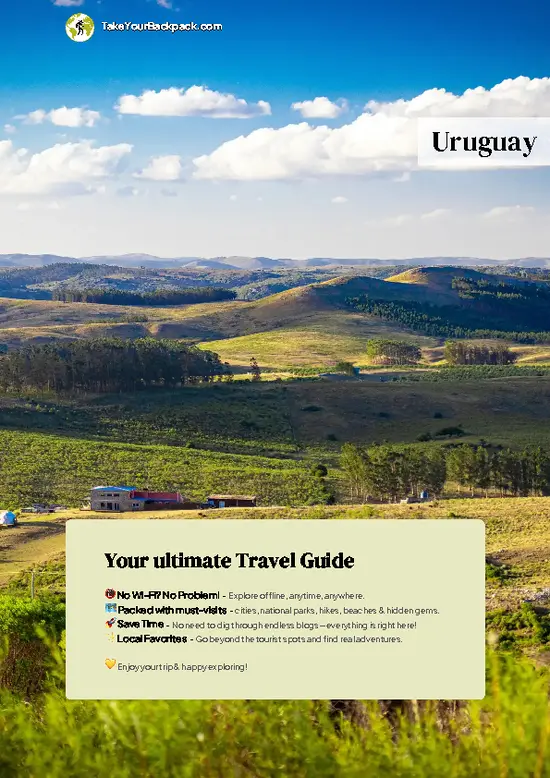
example page 0 from our offline Travel Guide for Uruguay
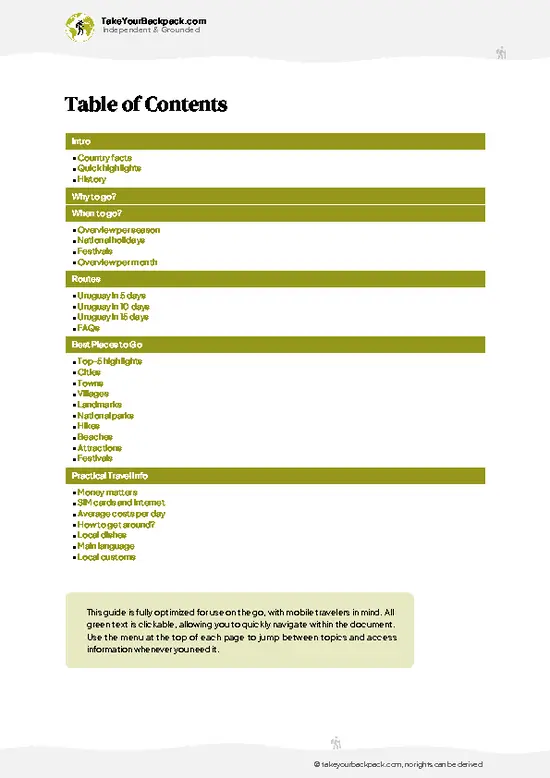
example page 1 from our offline Travel Guide for Uruguay
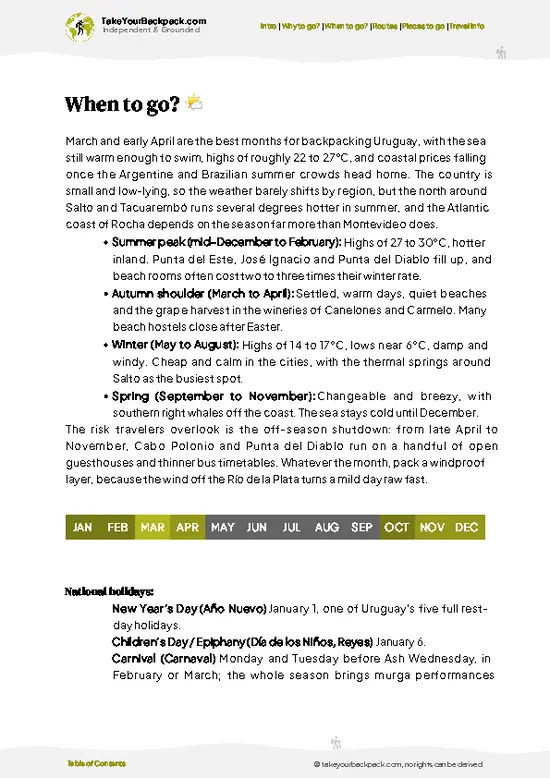
example page 2 from our offline Travel Guide for Uruguay
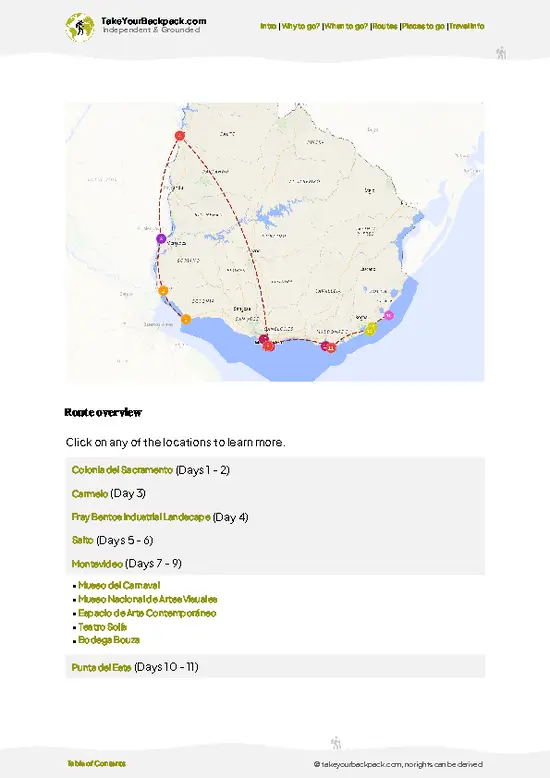
example page 3 from our offline Travel Guide for Uruguay
example page 4 from our offline Travel Guide for Uruguay
example page 5 from our offline Travel Guide for Uruguay
example page 6 from our offline Travel Guide for Uruguay
example page 7 from our offline Travel Guide for Uruguay
The digital guide (256 pages) contains:
64 highlights, ranked by travel appeal
Optimized 5, 10 & 15-day travel routes
Cities, national parks, landmarks, beaches
How to get around
Offline-friendly for travel without Wi-Fi
👉 Click to see all 30+ guide features

📅 Plan smarter in minutes, not weeks
Month by month travel advice
Festivals & national holidays
Budget expectations

🗺️ Go to the right places, skip the overrated ones
Honest pros & cons of destinations
Top hikes, parks & viewpoints
Lesser-known places most travelers miss
Clear “worth it vs skip it” guidance

🛏️ Travel smoothly without rookie mistakes
Best areas to stay
Transport systems explained simply
Common scams & safety advice
SIM cards, money & practical tips

🌍 Understand the country, not just visit it
Culture & traditions
52 Essential phrases & customs
Festivals worth planning around
Traveler-friendly historical context
Insights that make places more meaningful

📱 Built for real travel conditions
Fully downloadable PDF
Works completely offline
Optimized for phone use
Useful in remote areas & buses
Everything in one place
Save weeks of stressful planning
Get instant access to your full guide. 30‑day money-back guarantee.


By proceeding you agree to our terms.
Sent to your inbox immediately after payment • 100% Secure Checkout
Best Backpacking Travel Advisor 2025 tourism awardBest Backpacking
Travel Advisor
2025
What others say about Take Your Backpack Guides:
⭐⭐⭐⭐⭐
Fantastic, amazing amount of information!
⭐⭐⭐⭐⭐
My goodness this is amazing, it's what I've been looking for hats off too you!
⭐⭐⭐⭐⭐
I think this is absolutely BRILLIANT
⭐⭐⭐⭐
Very complete and informative. It's still missing places, but I gotta to commend you
⭐⭐⭐⭐⭐
This is truly amazing, thank you, can't wait to explore it with my kids!
⭐⭐⭐⭐⭐
Awesome resource, thank you!
⭐⭐⭐⭐⭐
This is amazing! Can't wait to explore the ones I haven't seen
⭐⭐⭐⭐
I love this! Well done, great idea.
⭐⭐⭐⭐⭐
Thanks for taking the time to make this gem!
⭐⭐⭐⭐⭐
This might be the best website I've ever seen.
⭐⭐⭐⭐⭐
Congratulations, and thank you so much for your work; it's incredibly valuable.
⭐⭐⭐⭐
In all seriousness I think you did a great job pointing out the important spots
⭐⭐⭐⭐⭐
10/10 very good
⭐⭐⭐⭐⭐
As someone who's only just starting to visit regularly this is awesome, thank you.
⭐⭐⭐⭐
Thank you very much! I'm going to visit my dad, it's going to be very useful!
⭐⭐⭐⭐⭐
This is really cool! We'll be travelling for the first time and this definitely come in handy.
⭐⭐⭐⭐⭐
You are now our minister of culture, congratulations 👨‍💼
⭐⭐⭐⭐⭐
Just wanted to tell you that this is a pearl! Going to follow your recommendations.
⭐⭐⭐⭐⭐
This is so cool. I'll definitely be using the resource for my travels soon.
⭐⭐⭐⭐⭐
This is very impressive! Good work.
⭐⭐⭐⭐⭐
This is an amazing and informative site. Very well done!

🛏️ Where to stay?Top Areas to Stay

Yes — hostels and budget accommodation are widely available across Uruguay, concentrated in Montevideo (Ciudad Vieja, Pocitos, Punta del Carretas), Colonia del Sacramento’s historic quarter, Punta del Este (Peninsula and La Barra) and the Rocha coast (Punta del Diablo, Cabo Polonio, La Paloma).
Montevideo neighborhoods offer the easiest transport links, museums and nightlife but vary from busy/noisy and more backpacker-focused (Ciudad Vieja, Centro) to safer/quieter stretches (Pocitos, Punta del Carretas); Colonia is compact and tranquil with fewer late-night options; Punta del Este has the most nightlife and seasonal price spikes.
Choose Montevideo or Punta del Este for transport and nightlife, … read more 👉
Yes — hostels and budget accommodation are widely available across Uruguay, concentrated in Montevideo (Ciudad Vieja, Pocitos, Punta del Carretas), Colonia del Sacramento’s historic quarter, Punta del Este (Peninsula and La Barra) and the Rocha coast (Punta del Diablo, Cabo Polonio, La Paloma).
Montevideo neighborhoods offer the easiest transport links, museums and nightlife but vary from busy/noisy and more backpacker-focused (Ciudad Vieja, Centro) to safer/quieter stretches (Pocitos, Punta del Carretas); Colonia is compact and tranquil with fewer late-night options; Punta del Este has the most nightlife and seasonal price spikes.
Choose Montevideo or Punta del Este for transport and nightlife, Colonia for historic calm, and Rocha towns for cheap rustic beach vibes while planning ahead for limited services, seasonal crowds and basic safety precautions in isolated areas.

If you enjoy meeting fellow travelers, consider choosing hostels with high ratings for atmosphere. On the other hand, if you prefer having your own space, a hotel might be a better option.

UruguayDiscover the Country

👋 Meet the founderWho’s Behind Take Your Backpack?

Johan, backpacker and founder of TakeYourBackpackHi, I’m Johan (Netherlands 🇳🇱), the creator of TakeYourBackpack. Over the past decade, I’ve backpacked through 80+ countries across six continents, gaining extensive experience with independent travel, long-term trips, and overland routes.

This site is built on a combination of firsthand travel experience and carefully curated insights from other backpackers. Many guides are based on places I’ve personally visited, while others bring together tips, observations, and practical advice shared by trusted travelers I’ve met along the way.

The goal is to provide realistic, experience-driven guidance — not generic itineraries — so you can explore destinations with better context, clearer expectations, and more confidence.

Get full Uruguay guide •
Instant download • 64 highlights • Full Offline guide