v2.webp)
The Tower’s Stark Isolation
Forget the Instagram drone shots that make Chilpiq qala look like a lost city. This is not a sprawling Silk Road metropolis. It’s a single, circular platform—a Zoroastrian dakhma—perched on a lonely hill above the Karakalpak steppe. The real magic is the emptiness. You stand on the edge of the platform, wind in your face, and it’s just you, the bones of ancient ritual, and a horizon that refuses to end. No crowds. No vendors. Just the raw, unfiltered silence of Central Asia. If you want to feel the scale of time, this is your stage.
The Zoroastrian “Tower of Silence” Ritual Site
Chilpiq isn’t just old; it’s a direct line to a vanished worldview. Zoroastrians built these towers to expose the dead to scavenging birds, a practice that’s both practical and deeply spiritual—earth, … read more 👉
Forget the Instagram drone shots that make Chilpiq qala look like a lost city. This is not a sprawling Silk Road metropolis. It’s a single, circular platform—a Zoroastrian dakhma—perched on a lonely hill above the Karakalpak steppe. The real magic is the emptiness. You stand on the edge of the platform, wind in your face, and it’s just you, the bones of ancient ritual, and a horizon that refuses to end. No crowds. No vendors. Just the raw, unfiltered silence of Central Asia. If you want to feel the scale of time, this is your stage.
The Zoroastrian “Tower of Silence” Ritual Site
Chilpiq isn’t just old; it’s a direct line to a vanished worldview. Zoroastrians built these towers to expose the dead to scavenging birds, a practice that’s both practical and deeply spiritual—earth, … read more 👉
The Tower’s Stark Isolation
Forget the Instagram drone shots that make Chilpiq qala look like a lost city. This is not a sprawling Silk Road metropolis. It’s a single, circular platform—a Zoroastrian dakhma—perched on a lonely hill above the Karakalpak steppe. The real magic is the emptiness. You stand on the edge of the platform, wind in your face, and it’s just you, the bones of ancient ritual, and a horizon that refuses to end. No crowds. No vendors. Just the raw, unfiltered silence of Central Asia. If you want to feel the scale of time, this is your stage.
The Zoroastrian “Tower of Silence” Ritual Site
Chilpiq isn’t just old; it’s a direct line to a vanished worldview. Zoroastrians built these towers to expose the dead to scavenging birds, a practice that’s both practical and deeply spiritual—earth, fire, and water were too sacred for burial or cremation. You can still see the low stone walls where bodies once lay, and if you know what you’re looking at, it’s a jolt: this is not a sanitized museum. It’s a place where the boundary between life and death was negotiated in the open air. There’s no velvet rope, no interpretive signage—just the stones and your imagination.
Panoramic Steppe Views
Climb to the top and you get a 360-degree sweep of the Amu Darya delta and the endless, sun-bleached plains. This isn’t the lush, overgrown “lost world” some travel blogs promise. It’s stark, almost lunar, and that’s the point. The view is a reminder of how exposed, how vulnerable, and how small you are out here. At sunset, the sky turns the color of old copper, and the steppe glows with a kind of haunted beauty you won’t find in any city.
Ancient Silk Road Context
Chilpiq isn’t just a relic; it’s a waypoint on the Silk Road’s northern arteries. Caravans would have seen this tower from miles away, a landmark as much as a warning. The site’s age—over 2,000 years—means you’re standing where traders, priests, and nomads all paused, each with their own reasons. There’s no ticket booth, no “official” path, just the sense that you’re walking in the footsteps of everyone who ever crossed this harsh landscape.
Zero Commercialization
Here’s the blunt truth: there’s nothing to buy, nothing to eat, and nowhere to sit except the ground. No souvenir stalls, no selfie sticks for sale, no “authentic” crafts. Chilpiq is gloriously, stubbornly unpolished. If you’re looking for curated experiences, you’ll be disappointed. But if you want to see a place that hasn’t been packaged for mass consumption, this is it. Bring your own water, bring your own curiosity, and leave with the kind of memory that doesn’t fit in a hashtag.
Forget the Instagram drone shots that make Chilpiq qala look like a lost city. This is not a sprawling Silk Road metropolis. It’s a single, circular platform—a Zoroastrian dakhma—perched on a lonely hill above the Karakalpak steppe. The real magic is the emptiness. You stand on the edge of the platform, wind in your face, and it’s just you, the bones of ancient ritual, and a horizon that refuses to end. No crowds. No vendors. Just the raw, unfiltered silence of Central Asia. If you want to feel the scale of time, this is your stage.
The Zoroastrian “Tower of Silence” Ritual Site
Chilpiq isn’t just old; it’s a direct line to a vanished worldview. Zoroastrians built these towers to expose the dead to scavenging birds, a practice that’s both practical and deeply spiritual—earth, fire, and water were too sacred for burial or cremation. You can still see the low stone walls where bodies once lay, and if you know what you’re looking at, it’s a jolt: this is not a sanitized museum. It’s a place where the boundary between life and death was negotiated in the open air. There’s no velvet rope, no interpretive signage—just the stones and your imagination.
Panoramic Steppe Views
Climb to the top and you get a 360-degree sweep of the Amu Darya delta and the endless, sun-bleached plains. This isn’t the lush, overgrown “lost world” some travel blogs promise. It’s stark, almost lunar, and that’s the point. The view is a reminder of how exposed, how vulnerable, and how small you are out here. At sunset, the sky turns the color of old copper, and the steppe glows with a kind of haunted beauty you won’t find in any city.
Ancient Silk Road Context
Chilpiq isn’t just a relic; it’s a waypoint on the Silk Road’s northern arteries. Caravans would have seen this tower from miles away, a landmark as much as a warning. The site’s age—over 2,000 years—means you’re standing where traders, priests, and nomads all paused, each with their own reasons. There’s no ticket booth, no “official” path, just the sense that you’re walking in the footsteps of everyone who ever crossed this harsh landscape.
Zero Commercialization
Here’s the blunt truth: there’s nothing to buy, nothing to eat, and nowhere to sit except the ground. No souvenir stalls, no selfie sticks for sale, no “authentic” crafts. Chilpiq is gloriously, stubbornly unpolished. If you’re looking for curated experiences, you’ll be disappointed. But if you want to see a place that hasn’t been packaged for mass consumption, this is it. Bring your own water, bring your own curiosity, and leave with the kind of memory that doesn’t fit in a hashtag.
Spotted a mistake or missing something? Contact us.

Discover The Aral Sea With Ayimtour

Nukus to Khiva: Transfer with Top 4 Fortresses & Akchakul Lake

2 Days Private Tour To Aral Sea from Nukus.

2-Day Small Group Jeep Adventure Tour to Aral Sea in Nukus

3-Day Small Group Jeep Adventure Tour to Aral Sea & Usturt Plateau in Nukus

Karakalpak Heritage Tour to Chimbay and Khalkabad Villages

2 Day Aral Sea Eco Tour with Yurt Stay from Nukus

Aral Sea - Lost Paradise

Experience a Breathtaking Sunset at Aral Sea with Friendly People

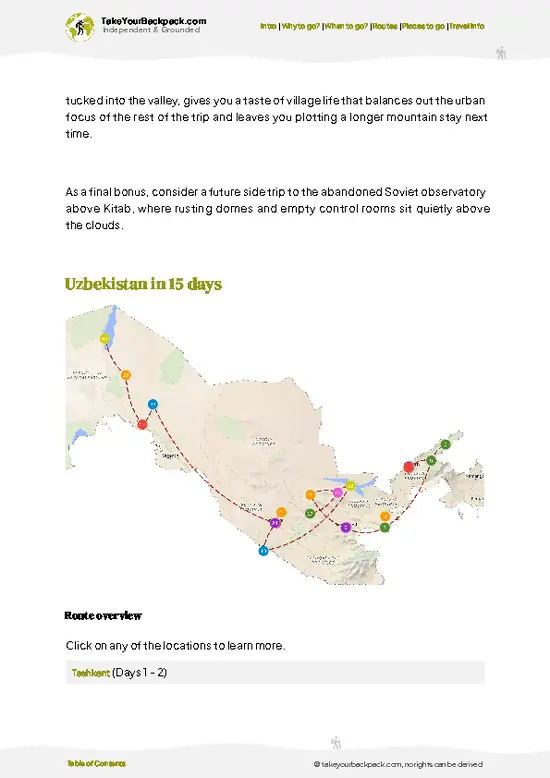

 Best Backpacking
.jpg) Hi, I’m Johan (Netherlands 🇳🇱), the creator of TakeYourBackpack. Over the past decade, I’ve backpacked through 80+ countries across six continents, gaining extensive experience with independent travel, long-term trips, and overland routes.
Hi, I’m Johan (Netherlands 🇳🇱), the creator of TakeYourBackpack. Over the past decade, I’ve backpacked through 80+ countries across six continents, gaining extensive experience with independent travel, long-term trips, and overland routes.