×

Uzbekistan🇺🇿 | landmarksChorsu BazaarBlue-domed hall, stamped non, qurut and spices, Kukeldash Madrasah | things to do and best time to go

Explore Shah-i-ZindaExplore Gyaur Kala

Backpacking in Chorsu Bazaar
👍 Recommendedunique site ranked #6
By Johan Kruseman 🇳🇱 | Updated October 15, 2026

Look up at the big blue dome and you’ll notice the sellers underneath barely glance at it. They’re busy with the older rhythm: bread is stacked in tall, patterned towers, each loaf stamped by its baker, and customers tap them to check freshness before they ever ask a price. Chorsu sits in the old town of Tashkent, Uzbekistan’s capital, just northwest of the center and across from the Kukeldash Madrasah. The wow-factor is real, the photo potential is huge, and entry is free. Skip the souvenir stalls on the edges, since the prices are inflated. Spend your time in the dome and the dried fruit aisles. Your first day should start around 8 a.m. with tea and fresh non, then a slow loop through the meat hall, spice rows and outdoor produce before the midday heat.

Discover everything you want to know in the 📖 Uzbekistan Travel Guide.


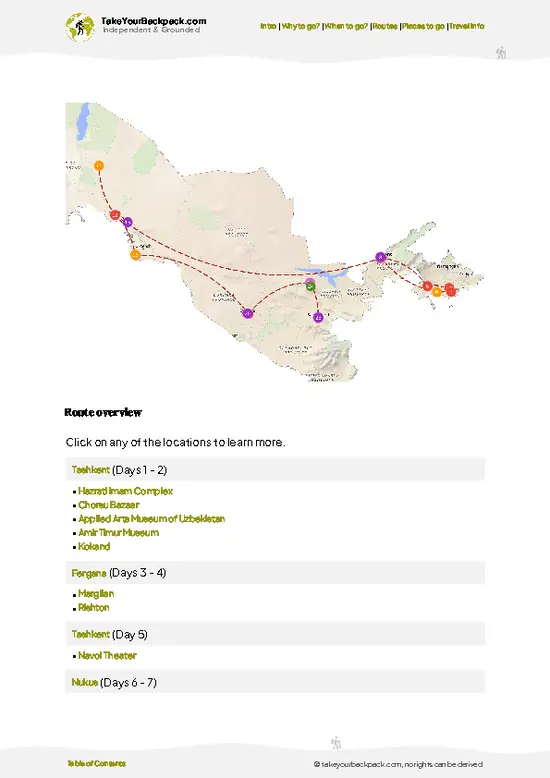
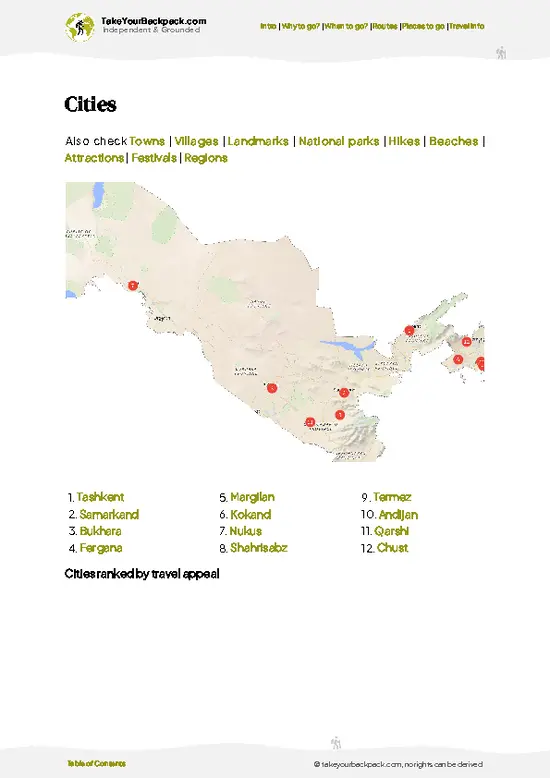
example page 0 from our offline Travel Guide for Uzbekistan
example page 1 from our offline Travel Guide for Uzbekistan
example page 2 from our offline Travel Guide for Uzbekistan
example page 3 from our offline Travel Guide for Uzbekistan
example page 4 from our offline Travel Guide for Uzbekistan
example page 5 from our offline Travel Guide for Uzbekistan
example page 6 from our offline Travel Guide for Uzbekistan
example page 7 from our offline Travel Guide for Uzbekistan
Loading the map 🌍
CLICK TO FILTER
cities
towns
villages
landmarks
national parks
hikes
beaches
attractions
festivals
regions
SHOW COUNTRY’S BESTSHOW ALL

✨ Why go?
Ranked #6 unique site in Uzbekistan
What makes it a must-see unique site

Chorsu is the quickest way to understand how Uzbekistan eats, trades and haggles, and you get it at no cost. The domed main hall, a Soviet-era circular building roughly 40 meters across, gathers dairy, meat, nuts and spices under one roof, so you can sample your way through a whole food culture in a morning. Vendors expect you to taste before buying, which makes it easy for first-timers to join in without feeling like they’re intruding.

It also fits neatly into a wider route. The bazaar sits beside the Kukeldash Madrasah and the old-town lanes, so one walk links a working market with sixteenth-century architecture. Many travelers arrive in Tashkent tired from long trains or flights, and this is a gentle, flat, walkable place to reset. Buy dried apricots, halva and a few bags of nuts for the … read more 👉
Chorsu is the quickest way to understand how Uzbekistan eats, trades and haggles, and you get it at no cost. The domed main hall, a Soviet-era circular building roughly 40 meters across, gathers dairy, meat, nuts and spices under one roof, so you can sample your way through a whole food culture in a morning. Vendors expect you to taste before buying, which makes it easy for first-timers to join in without feeling like they’re intruding.

It also fits neatly into a wider route. The bazaar sits beside the Kukeldash Madrasah and the old-town lanes, so one walk links a working market with sixteenth-century architecture. Many travelers arrive in Tashkent tired from long trains or flights, and this is a gentle, flat, walkable place to reset. Buy dried apricots, halva and a few bags of nuts for the long rides to Samarkand and Bukhara, and you’ll already have the road snacks covered.

💡 HighlightsEssential experiences to have while visiting Chorsu Bazaar

  1. The Blue-Domed Main Hall: the market’s landmark, a round hall where stalls ring the floor in neat sections. Go upstairs to the gallery for a view over the mounds of produce and dairy.
  2. Non Bread Rows: Uzbek round loaves stacked high, each with the baker’s own stamp pattern. Buy one still warm and tear it as you walk.
  3. Dried Fruit and Nut Aisles: apricots, raisins, walnuts, mulberries and almonds sold by the scoop. Taste freely and compare before you commit.
  4. Meat Hall: butchers cut lamb, beef and horse meat to order, a loud, honest look at where plov and kebabs begin.
  5. Spice Stalls: pyramids of cumin, barberry and dried herbs. Barberries are the small red berries used in plov, and they make a lightweight gift.
  6. Dairy Section: dried yogurt balls called qurut, plus fresh kaymak and bags of sour cream
… read more 👉
  1. The Blue-Domed Main Hall: the market’s landmark, a round hall where stalls ring the floor in neat sections. Go upstairs to the gallery for a view over the mounds of produce and dairy.
  2. Non Bread Rows: Uzbek round loaves stacked high, each with the baker’s own stamp pattern. Buy one still warm and tear it as you walk.
  3. Dried Fruit and Nut Aisles: apricots, raisins, walnuts, mulberries and almonds sold by the scoop. Taste freely and compare before you commit.
  4. Meat Hall: butchers cut lamb, beef and horse meat to order, a loud, honest look at where plov and kebabs begin.
  5. Spice Stalls: pyramids of cumin, barberry and dried herbs. Barberries are the small red berries used in plov, and they make a lightweight gift.
  6. Dairy Section: dried yogurt balls called qurut, plus fresh kaymak and bags of sour cream sold from large tubs. The salty balls are an acquired taste.
  7. Kukeldash Madrasah: a sixteenth-century religious school just across the way, with a courtyard that is quiet compared with the market.
If time is short, skip the souvenir stalls on the outer edge, where the same scarves and ceramics are pricier than elsewhere in the city.
Spotted a mistake or missing something? Contact us.

Things to do around Chorsu Bazaar

Ratings based on Tripadvisor reviews. When you book through this link, you support our work at no extra cost to you.

🌤️ When to go?Seasonal considerations and timing

  • Spring (April to May): Chorsu is at its best, with highs of 18 to 27°C (64 to 81°F), strawberries and cherries heaped on the stalls, and daylight lasting about 13 to 14 hours. Crowds are moderate and hostel prices sit mid-range.
  • Summer (June to August): Highs reach 35 to 40°C (95 to 104°F). The domed hall is shaded but heavy, so shop at opening time. Apricots, melons and watermelons are everywhere, and days run 14 to 15 hours.
  • Autumn (September to October): Pomegranates, grapes and dried fruit pile up at 15 to 28°C (59 to 82°F). This is peak season for travelers, so beds cost more.
  • Winter (December to February): Lows fall to -5 to 0°C (23 to 32°F) with about 9.5 hours of light. Stalls are quiet, bargains are easier, and hot bread smells better in the cold.
Arrive by 8 am, when the bread sellers … read more 👉
  • Spring (April to May): Chorsu is at its best, with highs of 18 to 27°C (64 to 81°F), strawberries and cherries heaped on the stalls, and daylight lasting about 13 to 14 hours. Crowds are moderate and hostel prices sit mid-range.
  • Summer (June to August): Highs reach 35 to 40°C (95 to 104°F). The domed hall is shaded but heavy, so shop at opening time. Apricots, melons and watermelons are everywhere, and days run 14 to 15 hours.
  • Autumn (September to October): Pomegranates, grapes and dried fruit pile up at 15 to 28°C (59 to 82°F). This is peak season for travelers, so beds cost more.
  • Winter (December to February): Lows fall to -5 to 0°C (23 to 32°F) with about 9.5 hours of light. Stalls are quiet, bargains are easier, and hot bread smells better in the cold.
Arrive by 8 am, when the bread sellers and meat hall are busiest and the aisles are still passable.


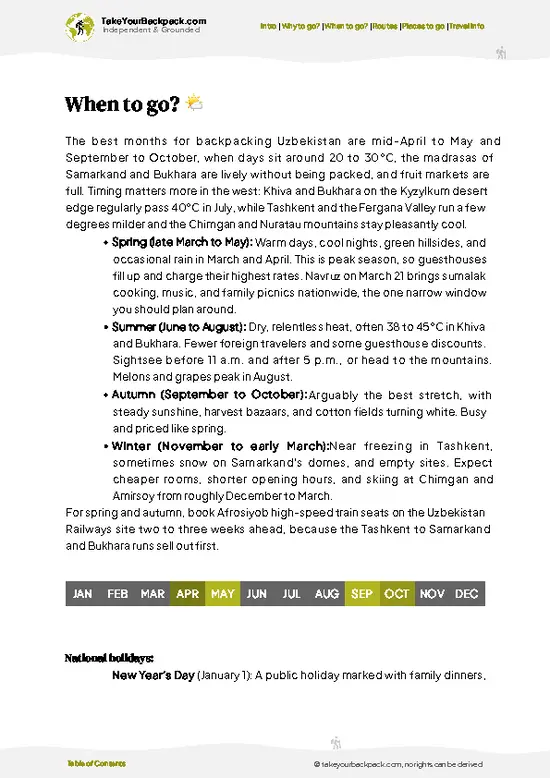
source: climatestotravel.comJANJanuary: fair for travelingFEBFebruary: fair for travelingMARMarch: good for travelingAPRApril: excellent for travelingMAYMay: excellent for travelingJUNJune: fair for travelingJULJuly: below average for travelingAUGAugust: below average for travelingSEPSeptember: excellent for travelingOCTOctober: excellent for travelingNOVNovember: good for travelingDECDecember: fair for traveling
when-to-go

✈️ The backpacker research shortcutUzbekistan Travel Guide

An offline-friendly backpacking guide with optimized travel routes, ranked highlights, transport advice, and the best areas to stay.
example page 0 from our offline Travel Guide for Uzbekistan
example page 1 from our offline Travel Guide for Uzbekistan
example page 2 from our offline Travel Guide for Uzbekistan
example page 3 from our offline Travel Guide for Uzbekistan
example page 4 from our offline Travel Guide for Uzbekistan
example page 5 from our offline Travel Guide for Uzbekistan
example page 6 from our offline Travel Guide for Uzbekistan
example page 7 from our offline Travel Guide for Uzbekistan
The digital guide (246 pages) contains:
✅ 74 highlights, ranked by travel appeal
✅ Optimized 5, 10 & 15-day travel routes
✅ Cities, national parks, landmarks, beaches
✅ How to get around
✅ Offline-friendly for travel without Wi-Fi
👉 Click to see all 30+ guide features

📅 Plan smarter in minutes, not weeks
✅ Month by month travel advice
✅ Festivals & national holidays
✅ Budget expectations

🗺️ Go to the right places, skip the overrated ones
✅ Honest pros & cons of destinations
✅ Top hikes, parks & viewpoints
✅ Lesser-known places most travelers miss
✅ Clear “worth it vs skip it” guidance

🛏️ Travel smoothly without rookie mistakes
✅ Best areas to stay
✅ Transport systems explained simply
✅ Common scams & safety advice
✅ SIM cards, money & practical tips

🌍 Understand the country, not just visit it
✅ Culture & traditions
✅ 52 Essential phrases & customs
✅ Festivals worth planning around
✅ Traveler-friendly historical context
✅ Insights that make places more meaningful

📱 Built for real travel conditions
✅ Fully downloadable PDF
✅ Works completely offline
✅ Optimized for phone use
✅ Useful in remote areas & buses
✅ Everything in one place
Stop searching, start planning
Get instant access to your full guide. 30‑day money-back guarantee.
+ Add another guide for just

By proceeding you agree to our terms.
Sent to your inbox immediately after payment • 100% Secure Checkout
Best Backpacking Travel Advisor 2025 tourism awardBest Backpacking
Travel Advisor
2025
What others say about Take Your Backpack Guides:
⭐⭐⭐⭐⭐
Fantastic, amazing amount of information!
⭐⭐⭐⭐⭐
My goodness this is amazing, it's what I've been looking for hats off too you!
⭐⭐⭐⭐⭐
I think this is absolutely BRILLIANT
⭐⭐⭐⭐
Very complete and informative. It's still missing places, but I gotta to commend you
⭐⭐⭐⭐⭐
This is truly amazing, thank you, can't wait to explore it with my kids!
⭐⭐⭐⭐⭐
Awesome resource, thank you!
⭐⭐⭐⭐⭐
This is amazing! Can't wait to explore the ones I haven't seen
⭐⭐⭐⭐
I love this! Well done, great idea.
⭐⭐⭐⭐⭐
Thanks for taking the time to make this gem!
⭐⭐⭐⭐⭐
This might be the best website I've ever seen.
⭐⭐⭐⭐⭐
Congratulations, and thank you so much for your work; it's incredibly valuable.
⭐⭐⭐⭐
In all seriousness I think you did a great job pointing out the important spots
⭐⭐⭐⭐⭐
10/10 very good
⭐⭐⭐⭐⭐
As someone who's only just starting to visit regularly this is awesome, thank you.
⭐⭐⭐⭐
Thank you very much! I'm going to visit my dad, it's going to be very useful!
⭐⭐⭐⭐⭐
This is really cool! We'll be travelling for the first time and this definitely come in handy.
⭐⭐⭐⭐⭐
You are now our minister of culture, congratulations 👨‍💼
⭐⭐⭐⭐⭐
Just wanted to tell you that this is a pearl! Going to follow your recommendations.
⭐⭐⭐⭐⭐
This is so cool. I'll definitely be using the resource for my travels soon.
⭐⭐⭐⭐⭐
This is very impressive! Good work.
⭐⭐⭐⭐⭐
This is an amazing and informative site. Very well done!

🛏️ Where to stay?Choosing the right base

The most convenient area is the old city streets around Chorsu itself, within a 5 to 15 minute walk of the dome, the Kukeldash Madrasah and the metro station that carries the same name. Hostels here are small, family-run and full of solo travelers, so it is easy to find someone to split a taxi to Samarkand with. You wake up to the market's morning noise and can eat plov at the nearby kitchens for a few dollars. The lanes are lively and fine by day, but they get dark and quiet late, so take a taxi back after dinner.

The second option is the Amir Timur Square and Mustaqillik Square area, about … read more 👉
The most convenient area is the old city streets around Chorsu itself, within a 5 to 15 minute walk of the dome, the Kukeldash Madrasah and the metro station that carries the same name. Hostels here are small, family-run and full of solo travelers, so it is easy to find someone to split a taxi to Samarkand with. You wake up to the market's morning noise and can eat plov at the nearby kitchens for a few dollars. The lanes are lively and fine by day, but they get dark and quiet late, so take a taxi back after dinner.

The second option is the Amir Timur Square and Mustaqillik Square area, about 3 to 4 km southeast. It has wide, well-lit streets, more cafes, bars and the Amir Temur Xiyoboni metro station, and it is where most newer social hostels cluster. Metro rides to Chorsu cost under US$0.20 and take about 10 minutes. This is the better pick if you want nightlife and a calmer, more polished base.

The Tashkent railway station area is practical for early trains to Samarkand, Bukhara and Khiva, though it has less atmosphere.

👛 Costs (as of 15 October 2026)What things cost and how to budget

A day around Chorsu Bazaar and Tashkent costs most backpackers about US$30 to 55, with a dorm bed, market meals and metro rides making up most of it. Prices are quoted in US dollars for comparison, but you pay in Uzbek som (UZS), and cards are accepted in many places but not in the market stalls.
CategoryBudget RangeLocal Reality
Accommodation (high season dorm)USD 10 to 20Dorm beds in the old city or near Amir Timur Square, with breakfast usually included. Private rooms start around USD 30.
Market entryUSD 0Entering Chorsu is free. Nearby Kukeldash Madrasah is an exterior sight.
FoodUSD 6 to 15Plov at lunch costs USD 2 to 4, samsa and fresh bread about USD 0.50 to 1, and a sit-down dinner USD 4 to 8.
Local transportUSD 1 to 6A metro ride is under USD 0.20. Yandex Go taxis across town run USD 1
… read more 👉
A day around Chorsu Bazaar and Tashkent costs most backpackers about US$30 to 55, with a dorm bed, market meals and metro rides making up most of it. Prices are quoted in US dollars for comparison, but you pay in Uzbek som (UZS), and cards are accepted in many places but not in the market stalls.
CategoryBudget RangeLocal Reality
Accommodation (high season dorm)USD 10 to 20Dorm beds in the old city or near Amir Timur Square, with breakfast usually included. Private rooms start around USD 30.
Market entryUSD 0Entering Chorsu is free. Nearby Kukeldash Madrasah is an exterior sight.
FoodUSD 6 to 15Plov at lunch costs USD 2 to 4, samsa and fresh bread about USD 0.50 to 1, and a sit-down dinner USD 4 to 8.
Local transportUSD 1 to 6A metro ride is under USD 0.20. Yandex Go taxis across town run USD 1 to 3.
Snacks and market shoppingUSD 3 to 8Dried fruit, nuts and spices are sold by weight, and haggling is normal and polite.
Sights and extrasUSD 3 to 8Museums and madrasahs in the city typically charge USD 1 to 5.
Total Daily BudgetUSD 30 to 55Cheaper if you eat at stalls and skip taxis.
⚠️ Prices can change and everyone travels differently, so take this as a rough guide. Hope it helps you plan your adventure!

FAQTraveler FAQ

Chorsu Bazaar is Tashkent's biggest traditional market, set under a large blue-green dome in the old city. Beneath and around it you find bread, spices, dried fruit, meat, dairy and household goods, plus the open-air stalls spreading outward. Entry is free, and it opens early, with the best activity from about 7 am to noon.
Plan 1.5 to 3 hours to walk the dome hall, bread section and outer stalls at an easy pace. Add another hour if you want to eat plov nearby or visit the Kukeldash Madrasah, a short walk away. Go in the morning for full stalls and cooler air, especially from June to August.
Take the metro to Chorsu station, which sits right beside the market and costs under US$0.20 per ride. From central Tashkent, Amir Timur Square is about 3 to 4 km away, a 10 minute metro ride or a taxi for roughly US$1 to 3. From the train station, it takes around 15 to 20 minutes by metro or taxi.
⚠️ Things can change over time, so always validate details locally before you go.

Other Uzbek landmarks near Chorsu Bazaar

Explore more nearby:

  • Shah-i-Zinda—Pilgrim stairway, glazed tomb lane, Qusam shrine, Timurid terracotta| 265 km away
  • Bibi-Khanym Mosque—Blue dome, marble Quran stand, half-restored arches, bazaar neighbor| 266 km away
  • Ark of Bukhara—Sloping gate ramp, emir’s court, Zindan cells, mud-brick walls| 442 km away

💡 Not sure where to go next?
Create a personalized itinerary for Uzbekistan including Chorsu Bazaar and the places that fit your trip.

Generate my itinerary

👉 Discover all landmarks

Or checkout all Uzbekistan has to offer (think cities, towns, villages, national parks, hikes, beaches, festivals)
Country photo of Uzbekistan

We 💚 feedbackFinal thoughts on visiting Chorsu Bazaar

Give Chorsu a solid half day. One hour feels rushed, and you’ll leave with only a snapshot. Three to four hours lets you eat, wander, circle back and buy your favorites after comparing prices. Arrive early for the best bread and fewer crowds. Carry small bills, keep your bag zipped in the crush, and save your biggest purchases for your last pass.

✍️ Help improve this page!
The information on this page is based on in-depth research, insights shared by experienced travelers, and feedback from the local travel community in Uzbekistan. While every effort is made to keep the information accurate and current, conditions can change — so if you spot anything incorrect or outdated, please get in touch.


🙋‍♂️ Give feedback

👋 Meet the founderWho’s Behind Take Your Backpack?

Johan, backpacker and founder of TakeYourBackpackHi, I’m Johan (Netherlands 🇳🇱), the creator of TakeYourBackpack. Over the past 3 decades, I’ve backpacked through 90+ countries across six continents, gaining extensive experience with independent travel, long-term trips, and overland routes.

This site is built on a combination of firsthand travel experience and carefully curated insights from other backpackers. Many guides are based on places I’ve personally visited, while others bring together tips, observations, and practical advice shared by trusted travelers I’ve met along the way.

The goal is to provide realistic, experience-driven guidance — not generic itineraries — so you can explore destinations with better context, clearer expectations, and more confidence.