×

Uzbekistan🇺🇿 | landmarksShah-i-ZindaPilgrim stairway, glazed tomb lane, Qusam shrine, Timurid terracotta | things to do and best time to go

Explore Bibi-Khanym MosqueExplore Chorsu Bazaar

Backpacking in Shah-i-Zinda
🏆 Top pickunique site ranked #3
By Johan Kruseman 🇳🇱 | Updated October 15, 2026

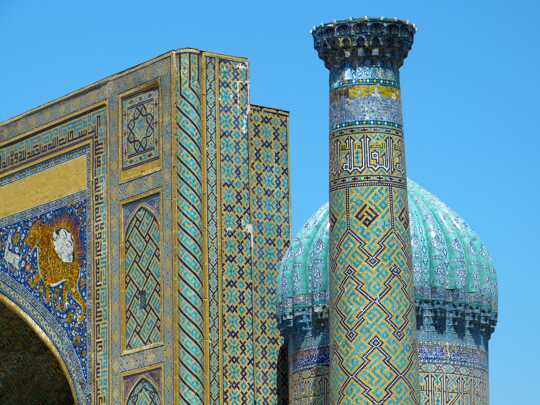
Listen for the counting. Pilgrims on the steep stairway murmur the steps under their breath, because local belief says a person free of sin counts the same number going up as coming down. Shah-i-Zinda sits in the northeast of Samarkand, on the southern edge of the old Afrosiyab settlement mound, a lane of tiled tombs climbing a slope. Spend your time here and skip nothing along the main lane. The blue facades are the whole point, and the alley is short enough that rushing it is a waste. Crowds thin out near sunset, when the glaze deepens and the lamps come on, so aim for then. Photos are superb, though the lane is narrow and group tours clog it by late morning. The vibe stays devout, with families praying at the tombs. At the far end, the last tomb has a wooden door worn smooth by hands.

Discover everything you want to know in the 📖 Uzbekistan Travel Guide.


example page 0 from our offline Travel Guide for Uzbekistan
example page 1 from our offline Travel Guide for Uzbekistan
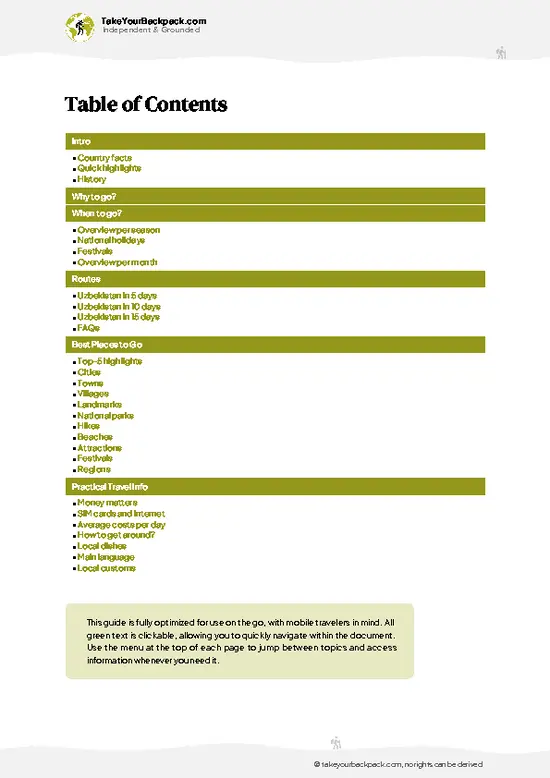
example page 2 from our offline Travel Guide for Uzbekistan
example page 3 from our offline Travel Guide for Uzbekistan
example page 4 from our offline Travel Guide for Uzbekistan
example page 5 from our offline Travel Guide for Uzbekistan
example page 6 from our offline Travel Guide for Uzbekistan
example page 7 from our offline Travel Guide for Uzbekistan
Loading the map 🌍
CLICK TO FILTER
cities
towns
villages
landmarks
national parks
hikes
beaches
attractions
festivals
regions
SHOW COUNTRY’S BESTSHOW ALL

✨ Why go?
Ranked #3 unique site in Uzbekistan
Reasons people choose to visit here

Come for the glaze. Few places pack so many centuries of Central Asian tilework into one walkable lane, and you can compare the work yourself. The Shadi Mulk Aka mausoleum, covered in carved glazed terracotta, sits on the same lane as the deep-blue majolica of Tuman Aka, and the difference in technique is obvious even if you have never studied ceramics. It is a rare chance to read the evolution of an art form with your own eyes rather than a plaque.

The site is also alive. This is a working pilgrimage place, so you watch Uzbek families recite prayers at the tombs and pass their palms over their faces. That gives it a texture the Registan, with its museum-like courtyards, cannot match.

It also fits easily into a Samarkand day. The necropolis lies beside the Afrosiyab museum and its Sogdian … read more 👉
Come for the glaze. Few places pack so many centuries of Central Asian tilework into one walkable lane, and you can compare the work yourself. The Shadi Mulk Aka mausoleum, covered in carved glazed terracotta, sits on the same lane as the deep-blue majolica of Tuman Aka, and the difference in technique is obvious even if you have never studied ceramics. It is a rare chance to read the evolution of an art form with your own eyes rather than a plaque.

The site is also alive. This is a working pilgrimage place, so you watch Uzbek families recite prayers at the tombs and pass their palms over their faces. That gives it a texture the Registan, with its museum-like courtyards, cannot match.

It also fits easily into a Samarkand day. The necropolis lies beside the Afrosiyab museum and its Sogdian murals, and a short walk or ride from the Registan and Bibi-Khanym Mosque. Pair it with those and you cover the city’s story from pre-Mongol ruins through Timurid splendor in one loop. Allow an hour for the lane, longer if you read the inscriptions.

💡 HighlightsDon't-miss highlights and experiences

  1. The Stairway of 36 Steps and Ulugh Beg’s Gate: The entrance is a portal built in the 1430s under Ulugh Beg, leading to a steep staircase that pilgrims count as they climb. The legend about a sinless climber getting the same count up and down gives every visitor something to do on the way.
  2. Qusam ibn Abbas Complex: The heart of the site, and the reason for the name “Living King.” Qusam, a cousin of the Prophet Muhammad, is said to have brought Islam here and to live on beneath the earth. The shrine is the oldest part, with a carved wooden door and a small mosque beside it. Expect worshippers and a hush.
  3. Tuman Aka Mausoleum: Built around 1405 for one of Timur’s wives, it has a tall portal in deep blues and turquoise. The interior is painted, and it rewards the extra minute it takes to step inside
… read more 👉
  1. The Stairway of 36 Steps and Ulugh Beg’s Gate: The entrance is a portal built in the 1430s under Ulugh Beg, leading to a steep staircase that pilgrims count as they climb. The legend about a sinless climber getting the same count up and down gives every visitor something to do on the way.
  2. Qusam ibn Abbas Complex: The heart of the site, and the reason for the name “Living King.” Qusam, a cousin of the Prophet Muhammad, is said to have brought Islam here and to live on beneath the earth. The shrine is the oldest part, with a carved wooden door and a small mosque beside it. Expect worshippers and a hush.
  3. Tuman Aka Mausoleum: Built around 1405 for one of Timur’s wives, it has a tall portal in deep blues and turquoise. The interior is painted, and it rewards the extra minute it takes to step inside and look up.
  4. Shirin Bika Aka Mausoleum: The tomb of Timur’s sister dates to the 1380s. Its facade is covered in fine mosaic tilework, and it sits close to the Shadi Mulk Aka mausoleum, the best place on the lane to see carved glazed terracotta.
  5. Kazi-zade Rumi Mausoleum: A 15th-century tomb of the astronomer and mathematician who taught Ulugh Beg. The tilework is fine and restrained, and the story fits Samarkand’s scientific past better than the usual conquerors’ tales.
  6. The Upper Lane and Mosque Area: At the top the passage opens up, with a 19th-century mosque and views over the modern cemetery and the city. It is the quietest stretch, and the best place to sit for a few minutes before descending.
The item most visitors miss is the Khoja Akhmad mausoleum, a 14th-century tomb tucked on the lane between the larger domes that tour groups walk right past.
Spotted a mistake or missing something? Contact us.

Things to do around Shah-i-Zinda

Ratings based on Tripadvisor reviews. When you book through this link, you support our work at no extra cost to you.

🌤️ When to go?Choosing the right time of year

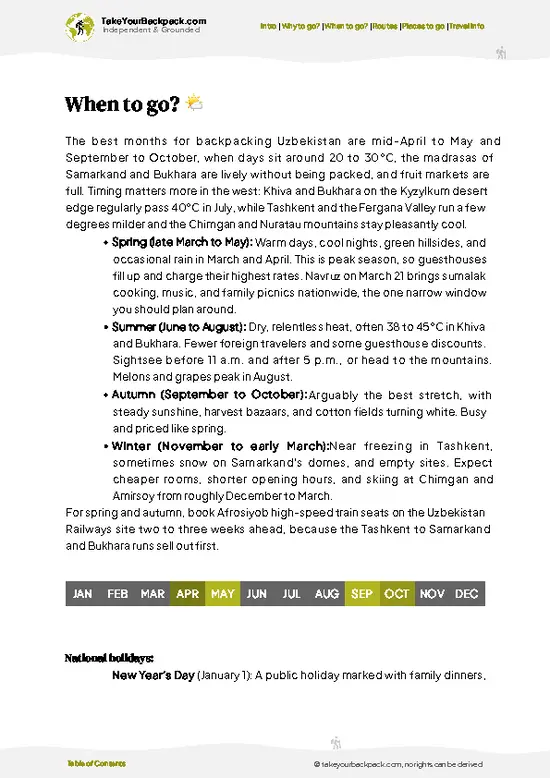
  • Spring (April to May): Daytime highs of 18 to 28°C (64 to 82°F) and green hills around the city make the cobbled stairway comfortable to climb. Rain comes in short bursts, and school groups fill the mausoleum lanes on weekdays.
  • Summer (June to August): Highs reach 35 to 40°C (95 to 104°F), and the blue-tiled alleys hold heat by noon. Daylight runs about 14.5 hours, so late evening visits are pleasant, and rooms are cheaper.
  • Autumn (September to October): Highs of 20 to 30°C (68 to 86°F) and dry skies. Tour groups and prices peak, especially around the early September Independence Day holidays.
  • Winter (December to February): Daytime temperatures of 2 to 9°C (36 to 48°F), with frost on the stone steps and about 9.5 hours of daylight. Crowds thin out and the turquoise domes look sharpest against
… read more 👉
  • Spring (April to May): Daytime highs of 18 to 28°C (64 to 82°F) and green hills around the city make the cobbled stairway comfortable to climb. Rain comes in short bursts, and school groups fill the mausoleum lanes on weekdays.
  • Summer (June to August): Highs reach 35 to 40°C (95 to 104°F), and the blue-tiled alleys hold heat by noon. Daylight runs about 14.5 hours, so late evening visits are pleasant, and rooms are cheaper.
  • Autumn (September to October): Highs of 20 to 30°C (68 to 86°F) and dry skies. Tour groups and prices peak, especially around the early September Independence Day holidays.
  • Winter (December to February): Daytime temperatures of 2 to 9°C (36 to 48°F), with frost on the stone steps and about 9.5 hours of daylight. Crowds thin out and the turquoise domes look sharpest against gray skies.
Arrive at opening time in any season to photograph the corridor of tombs before tour buses unload.


source: climatestotravel.comJANJanuary: fair for travelingFEBFebruary: fair for travelingMARMarch: good for travelingAPRApril: excellent for travelingMAYMay: highly recommended for travelingJUNJune: good for travelingJULJuly: below average for travelingAUGAugust: below average for travelingSEPSeptember: excellent for travelingOCTOctober: highly recommended for travelingNOVNovember: good for travelingDECDecember: fair for traveling
uzbekistan-unique-site-shah-i-zinda
© Google |

✈️ The backpacker research shortcutUzbekistan Travel Guide

An offline-friendly backpacking guide with optimized travel routes, ranked highlights, transport advice, and the best areas to stay.
example page 0 from our offline Travel Guide for Uzbekistan
example page 1 from our offline Travel Guide for Uzbekistan
example page 2 from our offline Travel Guide for Uzbekistan
example page 3 from our offline Travel Guide for Uzbekistan
example page 4 from our offline Travel Guide for Uzbekistan
example page 5 from our offline Travel Guide for Uzbekistan
example page 6 from our offline Travel Guide for Uzbekistan
example page 7 from our offline Travel Guide for Uzbekistan
The digital guide (246 pages) contains:
✅ 74 highlights, ranked by travel appeal
✅ Optimized 5, 10 & 15-day travel routes
✅ Cities, national parks, landmarks, beaches
✅ How to get around
✅ Offline-friendly for travel without Wi-Fi
👉 Click to see all 30+ guide features

📅 Plan smarter in minutes, not weeks
✅ Month by month travel advice
✅ Festivals & national holidays
✅ Budget expectations

🗺️ Go to the right places, skip the overrated ones
✅ Honest pros & cons of destinations
✅ Top hikes, parks & viewpoints
✅ Lesser-known places most travelers miss
✅ Clear “worth it vs skip it” guidance

🛏️ Travel smoothly without rookie mistakes
✅ Best areas to stay
✅ Transport systems explained simply
✅ Common scams & safety advice
✅ SIM cards, money & practical tips

🌍 Understand the country, not just visit it
✅ Culture & traditions
✅ 52 Essential phrases & customs
✅ Festivals worth planning around
✅ Traveler-friendly historical context
✅ Insights that make places more meaningful

📱 Built for real travel conditions
✅ Fully downloadable PDF
✅ Works completely offline
✅ Optimized for phone use
✅ Useful in remote areas & buses
✅ Everything in one place
Stop searching, start planning
Get instant access to your full guide. 30‑day money-back guarantee.
+ Add another guide for just

By proceeding you agree to our terms.
Sent to your inbox immediately after payment • 100% Secure Checkout
Best Backpacking Travel Advisor 2025 tourism awardBest Backpacking
Travel Advisor
2025
What others say about Take Your Backpack Guides:
⭐⭐⭐⭐⭐
Fantastic, amazing amount of information!
⭐⭐⭐⭐⭐
My goodness this is amazing, it's what I've been looking for hats off too you!
⭐⭐⭐⭐⭐
I think this is absolutely BRILLIANT
⭐⭐⭐⭐
Very complete and informative. It's still missing places, but I gotta to commend you
⭐⭐⭐⭐⭐
This is truly amazing, thank you, can't wait to explore it with my kids!
⭐⭐⭐⭐⭐
Awesome resource, thank you!
⭐⭐⭐⭐⭐
This is amazing! Can't wait to explore the ones I haven't seen
⭐⭐⭐⭐
I love this! Well done, great idea.
⭐⭐⭐⭐⭐
Thanks for taking the time to make this gem!
⭐⭐⭐⭐⭐
This might be the best website I've ever seen.
⭐⭐⭐⭐⭐
Congratulations, and thank you so much for your work; it's incredibly valuable.
⭐⭐⭐⭐
In all seriousness I think you did a great job pointing out the important spots
⭐⭐⭐⭐⭐
10/10 very good
⭐⭐⭐⭐⭐
As someone who's only just starting to visit regularly this is awesome, thank you.
⭐⭐⭐⭐
Thank you very much! I'm going to visit my dad, it's going to be very useful!
⭐⭐⭐⭐⭐
This is really cool! We'll be travelling for the first time and this definitely come in handy.
⭐⭐⭐⭐⭐
You are now our minister of culture, congratulations 👨‍💼
⭐⭐⭐⭐⭐
Just wanted to tell you that this is a pearl! Going to follow your recommendations.
⭐⭐⭐⭐⭐
This is so cool. I'll definitely be using the resource for my travels soon.
⭐⭐⭐⭐⭐
This is very impressive! Good work.
⭐⭐⭐⭐⭐
This is an amazing and informative site. Very well done!

🛏️ Where to stay?Where staying makes the most sense

The best base for Shah-i-Zinda is the old town around Registan Street and the Gur-e-Amir mausoleum, where most family-run guesthouses and budget hostels sit. From here the necropolis is a flat walk of about 20 to 30 minutes, or a short taxi ride of a few minutes. Dorm beds and courtyard guesthouses cluster on the lanes behind Registan, so you meet other travelers over shared breakfasts and rooftop tea. The streets are well lit, patrolled by tourist police, and comfortable for solo travelers after dark.

The quieter Gur-e-Amir side of the old town suits those who want less foot traffic. Guesthouses … read more 👉
The best base for Shah-i-Zinda is the old town around Registan Street and the Gur-e-Amir mausoleum, where most family-run guesthouses and budget hostels sit. From here the necropolis is a flat walk of about 20 to 30 minutes, or a short taxi ride of a few minutes. Dorm beds and courtyard guesthouses cluster on the lanes behind Registan, so you meet other travelers over shared breakfasts and rooftop tea. The streets are well lit, patrolled by tourist police, and comfortable for solo travelers after dark.

The quieter Gur-e-Amir side of the old town suits those who want less foot traffic. Guesthouses here are family-run, with courtyards where hosts often cook dinner for guests, and you can reach the Siyob Bazaar on foot for cheap meals and fresh bread.

The streets nearest the necropolis itself, toward the Afrosiyob area, have a few small guesthouses that put you within a five-minute walk of the entrance. They are less social, with fewer dorms, but they let you beat the crowds at opening time. Staying in the modern city center near the university gives more restaurants but little atmosphere, and it needs a taxi or bus to reach the sights.

👛 Costs (as of 15 October 2026)What things cost and how to budget

Budget about US$27 to 60 per day for Shah-i-Zinda and the surrounding old town, with the necropolis ticket itself a small part of that. Prices are quoted in US dollars, though you pay in Uzbek som at the counter.
CategoryBudget RangeLocal Reality
Shah-i-Zinda entryUS$2 to 4Foreign visitor ticket is paid at the gate, with a small extra charge for photography at some sites.
Other monumentsUS$3 to 8Registan, Gur-e-Amir and Bibi-Khanym each charge separate tickets, so a second site is a common add-on.
Accommodation (high season)US$12 to 25Dorm beds or simple guesthouse rooms with breakfast included, peaking in spring and autumn.
FoodUS$6 to 12Plov at a local canteen, bread and tea at Siyob Bazaar, and a sit-down dinner with kebab and salad.
Local transportUS$2 to 6Short taxi rides in town cost a few
… read more 👉
Budget about US$27 to 60 per day for Shah-i-Zinda and the surrounding old town, with the necropolis ticket itself a small part of that. Prices are quoted in US dollars, though you pay in Uzbek som at the counter.
CategoryBudget RangeLocal Reality
Shah-i-Zinda entryUS$2 to 4Foreign visitor ticket is paid at the gate, with a small extra charge for photography at some sites.
Other monumentsUS$3 to 8Registan, Gur-e-Amir and Bibi-Khanym each charge separate tickets, so a second site is a common add-on.
Accommodation (high season)US$12 to 25Dorm beds or simple guesthouse rooms with breakfast included, peaking in spring and autumn.
FoodUS$6 to 12Plov at a local canteen, bread and tea at Siyob Bazaar, and a sit-down dinner with kebab and salad.
Local transportUS$2 to 6Short taxi rides in town cost a few dollars, while buses and the Yandex Go app keep fares low.
Water and extrasUS$2 to 5Bottled water, souvenirs, and tips at the shrines.
Total Daily BudgetUS$27 to 60Lower end for dorm travelers who walk everywhere, upper end with a private room and taxis.
⚠️ Prices can change and everyone travels differently, so take this as a rough guide. Hope it helps you plan your adventure!

FAQCommon questions from travelers

Shah-i-Zinda is a necropolis of mausoleums in Samarkand, built along a single stairway from the 11th to the 19th centuries. It holds about 20 tombs, many linked to Timur’s family and court, covered in blue and turquoise tilework. The complex sits on the southern edge of the Afrosiyab hill, and the entrance fee is only a few US dollars.
Plan 1 to 1.5 hours to walk the main stairway and corridor of tombs at a relaxed pace. Photographers or history fans can stretch this to 2 hours, especially in the soft light just after opening. Combining it with the nearby Afrosiyab Museum and the ruins on the hill fills a half day.
From central Samarkand, take a taxi from Registan for roughly 10 minutes at about US$1 to 3, or walk 30 to 40 minutes along Tashkent Street. Local buses and minibuses running past the Siyob Bazaar area also stop within a short walk of the gate. Samarkand itself is reached by the Afrosiyob high-speed train from Tashkent in about 2 hours, with seats from around US$15 to 25.
⚠️ Things can change over time, so always validate details locally before you go.

Other Uzbek landmarks near Shah-i-Zinda

Explore more nearby:

  • Bibi-Khanym Mosque—Blue dome, marble Quran stand, half-restored arches, bazaar neighbor| 1 km away
  • Ark of Bukhara—Sloping gate ramp, emir’s court, Zindan cells, mud-brick walls| 221 km away
  • Samanid Mausoleum—Basket-weave brick, 9th-century tomb, Ismail Samani Park| 222 km away

💡 Not sure where to go next?
Create a personalized itinerary for Uzbekistan including Shah-i-Zinda and the places that fit your trip.

Generate my itinerary

👉 Discover all landmarks

Or checkout all Uzbekistan has to offer (think cities, towns, villages, national parks, hikes, beaches, festivals)
Country photo of Uzbekistan

We 💚 feedbackSumming up the experience

Most people rush up the stairs, snap the first blue dome and turn back, treating the lane like a photo stop. Do the opposite. Climb all the way to the top first, then walk down slowly, stopping at each doorway, because the small interiors are where the painted ceilings are. Cover your shoulders and knees, and keep your voice low near the shrine.

✍️ Help improve this page!
The information on this page is based on in-depth research, insights shared by experienced travelers, and feedback from the local travel community in Uzbekistan. While every effort is made to keep the information accurate and current, conditions can change — so if you spot anything incorrect or outdated, please get in touch.


🙋‍♂️ Give feedback

👋 Meet the founderWho’s Behind Take Your Backpack?

Johan, backpacker and founder of TakeYourBackpackHi, I’m Johan (Netherlands 🇳🇱), the creator of TakeYourBackpack. Over the past 3 decades, I’ve backpacked through 90+ countries across six continents, gaining extensive experience with independent travel, long-term trips, and overland routes.

This site is built on a combination of firsthand travel experience and carefully curated insights from other backpackers. Many guides are based on places I’ve personally visited, while others bring together tips, observations, and practical advice shared by trusted travelers I’ve met along the way.

The goal is to provide realistic, experience-driven guidance — not generic itineraries — so you can explore destinations with better context, clearer expectations, and more confidence.