×

Uzbekistan🇺🇿 | regionsJizzakhfoothill villages, fruit orchards, Silk Road traces | things to do and best time to go

Explore SurxondaryoExplore Khiva

Backpacking in Jizzakh
👀 For curious travelersregion ranked #7
By Johan Kruseman 🇳🇱 | Updated October 15, 2026

Most travelers hit Jizzakh as a pit stop between Tashkent and Samarkand, and the real decision is whether to stay a night or push on. Staying costs you a few hours and a little comfort, since the guesthouse choice is thin, but it buys you a quiet evening and the mountains the next morning, so for a backpacker the overnight wins. The region, with Jizzakh city as its capital, sits in the central part of the country, southwest of Tashkent, where the Hungry Steppe meets the Turkestan and Nuratau ranges. Go for Zaamin National Park, the Suffa radio telescope site, the shore of Lake Aydarkul, the Sangzor river valley and Soviet-era streets without a tour bus in sight. Skip it if you need nightlife, polished museums or a long list of landmarks. Hikers and slow travelers will love it; box-tickers won’t.

Discover everything you want to know in the 📖 Uzbekistan Travel Guide.


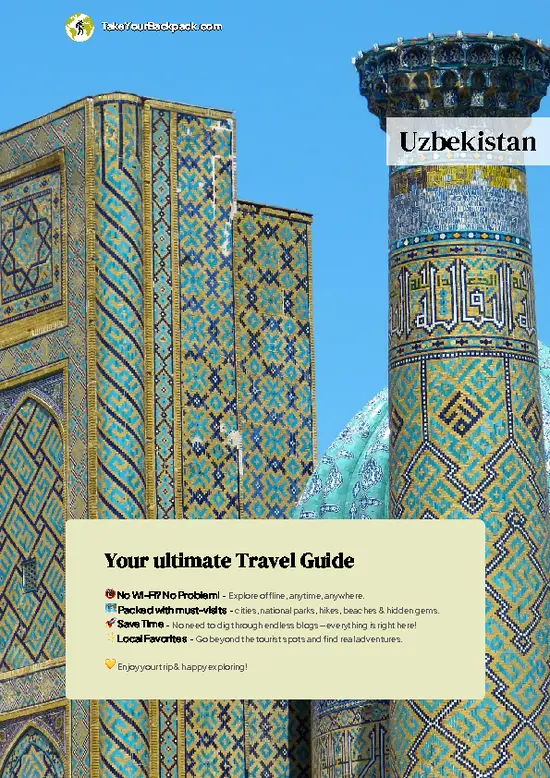
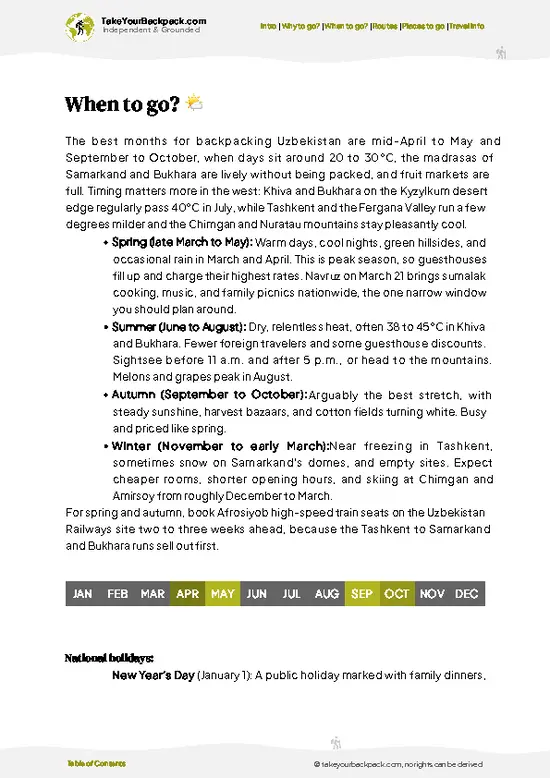
example page 0 from our offline Travel Guide for Uzbekistan
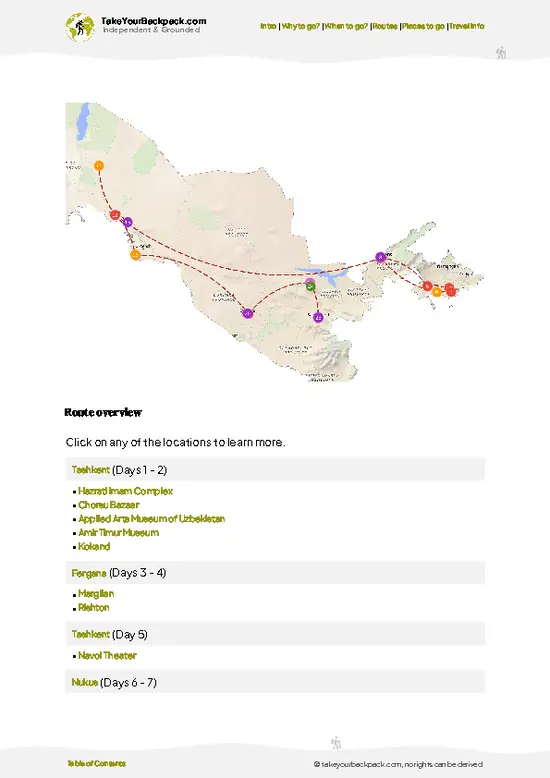
example page 1 from our offline Travel Guide for Uzbekistan
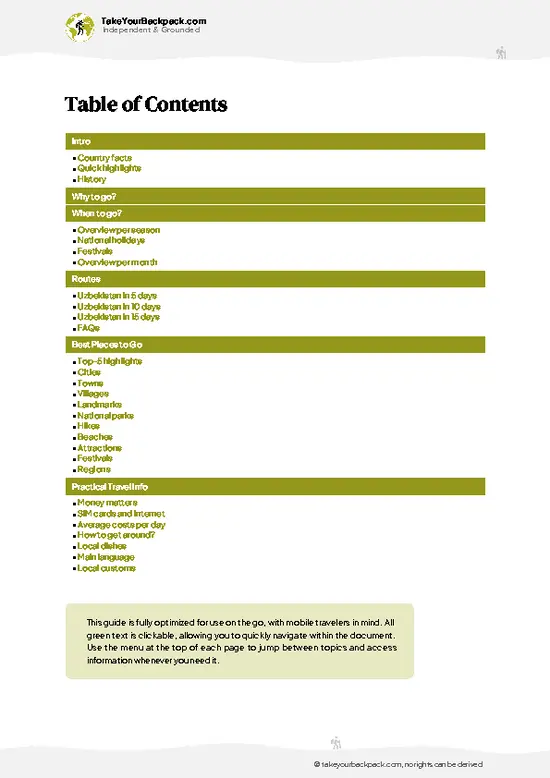
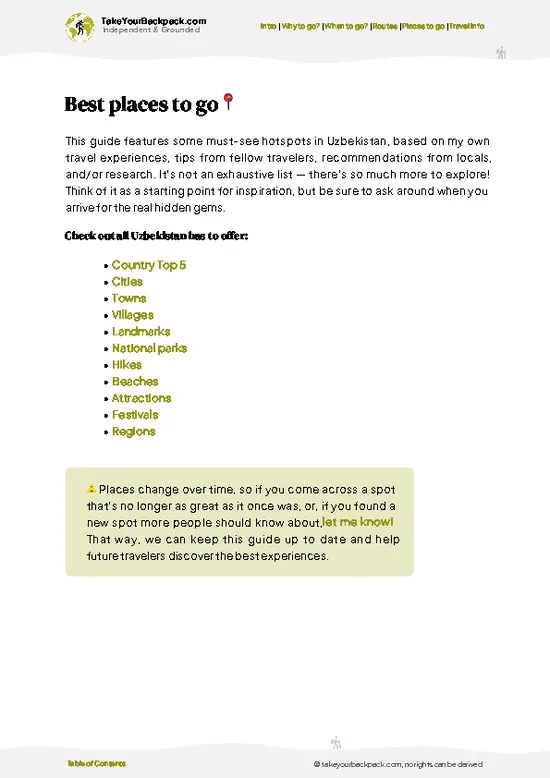
example page 2 from our offline Travel Guide for Uzbekistan
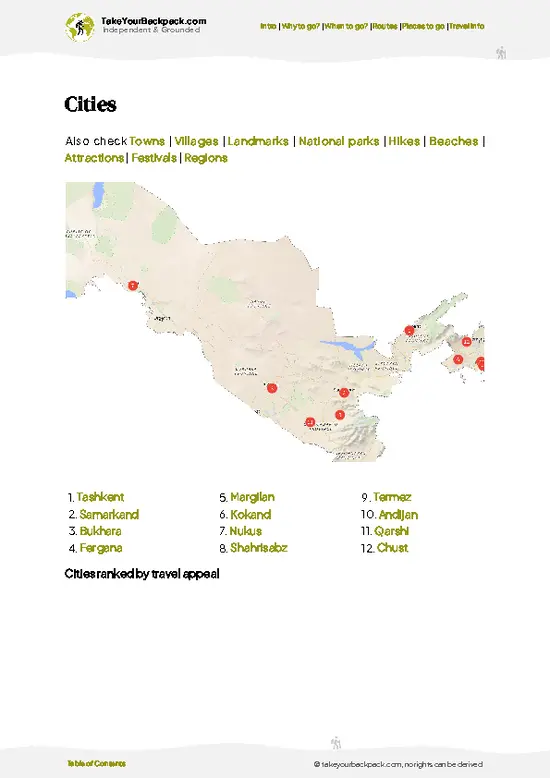
example page 3 from our offline Travel Guide for Uzbekistan
example page 4 from our offline Travel Guide for Uzbekistan
example page 5 from our offline Travel Guide for Uzbekistan
example page 6 from our offline Travel Guide for Uzbekistan
example page 7 from our offline Travel Guide for Uzbekistan
Loading the map 🌍
CLICK TO FILTER
cities
towns
villages
landmarks
national parks
hikes
beaches
attractions
festivals
regions
SHOW COUNTRY’S BESTSHOW ALL

✨ Why go?
Ranked #7 region in Uzbekistan
Reasons people choose to visit here

Jizzakh gives you mountain air without leaving the main corridor of the country. The Zaamin National Park juniper forests and the Forish lakes area sit within a day of the city, so you can hike, camp or just picnic on a ridge and be back for a hot dinner. That mix of steppe, foothills and alpine meadow shows up in one region, which saves you the constant repacking of a multi-stop itinerary.

The second reason is timing. Jizzakh lies on the rail and road line linking Tashkent and Samarkand, so it breaks up the journey instead of adding a detour. You can arrive in the afternoon, sleep, climb in the morning and move on by afternoon. Add a rural, unrehearsed feel, with farm villages and bazaars full of locals, and you get culture without the choreography found in the famous Silk Road cities.

💡 HighlightsThe experiences that define the visit

  1. Zaamin National Park: Juniper-covered slopes, clear streams and cool air in a protected mountain area; the classic reason to come, with hiking trails and sanatoriums nearby.
  2. Sangzor Valley: A green river valley with orchards and farm villages, good for slow walks and roadside tea.
  3. Forish and Lake Aydarkul: The Forish district in the north of the region reaches the Nuratau foothills and the Aydar-Arnasay lake system, with lakeside camps and fishing spots popular with locals and quiet outside weekends.
  4. Jizzakh Central Bazaar: A working market where you can taste local nuts, dried fruit and fresh bread among regional shoppers.
  5. Jizzakh Regional Museum: A modest collection covering archaeology and local history, useful for understanding the Hungry Steppe region.
  6. Suffa Radio Observatory: The unfinished
… read more 👉
  1. Zaamin National Park: Juniper-covered slopes, clear streams and cool air in a protected mountain area; the classic reason to come, with hiking trails and sanatoriums nearby.
  2. Sangzor Valley: A green river valley with orchards and farm villages, good for slow walks and roadside tea.
  3. Forish and Lake Aydarkul: The Forish district in the north of the region reaches the Nuratau foothills and the Aydar-Arnasay lake system, with lakeside camps and fishing spots popular with locals and quiet outside weekends.
  4. Jizzakh Central Bazaar: A working market where you can taste local nuts, dried fruit and fresh bread among regional shoppers.
  5. Jizzakh Regional Museum: A modest collection covering archaeology and local history, useful for understanding the Hungry Steppe region.
  6. Suffa Radio Observatory: The unfinished Soviet-era site for a 70-meter radio telescope on the Suffa plateau, at about 2,300 meters near the Zaamin sanatorium area, with wide mountain views.
  7. Temur Darvoza (Tamerlane’s Gate) pass: A historic mountain pass toward Samarkand, with rocky walls where inscriptions record past rulers.
  8. Bakhmal foothills: Quiet hill villages and rolling green slopes in spring, rarely visited by foreigners.
  9. Yangiabad village roads: Rural lanes with traditional homes and bread ovens, ideal for walking and meeting locals.
For a first visit, Zaamin National Park gives you the most in a single day.
Spotted a mistake or missing something? Contact us.

Things to do near Jizzakh

Ratings based on Tripadvisor reviews. When you book through this link, you support our work at no extra cost to you.

⌛️ 5 daysWhat you can realistically do in a week

Day 1: Zaamin National Park: Start in the mountains, because this is the stop not to skip. Head up early by shared taxi from the city, walk the juniper trails and eat lunch at a village teahouse. Public transport thins out here, so a pre-arranged driver sets your pace for the whole day.
Day 2: Sangzor Valley: Come down slowly through the valley. The road passes orchards and small villages, and you can stop wherever something catches your eye. Return to the city by evening, when the market and park are at their liveliest.
Day 3: Jizzakh City: Spend a calm day in town. Visit the museum, then wander the bazaar for fruit and bread. Taxis are cheap and short, so you can see everything without hurry.
Day 4: Forish Lakes: This is the detour. A long day trip north to the Nuratau foothills and the shore … read more 👉
Day 1: Zaamin National Park: Start in the mountains, because this is the stop not to skip. Head up early by shared taxi from the city, walk the juniper trails and eat lunch at a village teahouse. Public transport thins out here, so a pre-arranged driver sets your pace for the whole day.
Day 2: Sangzor Valley: Come down slowly through the valley. The road passes orchards and small villages, and you can stop wherever something catches your eye. Return to the city by evening, when the market and park are at their liveliest.
Day 3: Jizzakh City: Spend a calm day in town. Visit the museum, then wander the bazaar for fruit and bread. Taxis are cheap and short, so you can see everything without hurry.
Day 4: Forish Lakes: This is the detour. A long day trip north to the Nuratau foothills and the shore of Lake Aydarkul adds open water and steppe without changing your bed. Leave early and arrange the return ride in advance.
Day 5: Onward: Take a train or shared taxi toward Samarkand or Tashkent. Frequent departures keep your timing flexible. If one day justifies the trip, it is Day 1 in Zaamin, where cool air and open slopes feel a world away from the steppe heat.

🌤️ When to go?Seasonal considerations and timing

  • Spring (April to May): Daytime highs of 18 to 28°C (64 to 82°F), green steppe hills toward the Nurata range, and occasional rain showers. Prices stay flat because Jizzakh sees few tour groups.
  • Summer (June to August): Highs of 35 to 41°C (95 to 106°F) with almost no rain. Daylight lasts about 14 to 15 hours, but the midday hours are for shade and tea. Hiking in Zaamin is cooler at altitude.
  • Autumn (September to October): Highs fall from 30°C (86°F) to around 18°C (64°F). Fruit and melon markets overflow, and it is the easiest season for walking and village visits.
  • Winter (December to February): Daytime 0 to 8°C (32 to 46°F), nights below freezing, and strong winds across the Hungry Steppe. Daylight is about 9 to 10 hours. Guesthouse rates drop, and heating is not guaranteed.
Aim for late April … read more 👉
  • Spring (April to May): Daytime highs of 18 to 28°C (64 to 82°F), green steppe hills toward the Nurata range, and occasional rain showers. Prices stay flat because Jizzakh sees few tour groups.
  • Summer (June to August): Highs of 35 to 41°C (95 to 106°F) with almost no rain. Daylight lasts about 14 to 15 hours, but the midday hours are for shade and tea. Hiking in Zaamin is cooler at altitude.
  • Autumn (September to October): Highs fall from 30°C (86°F) to around 18°C (64°F). Fruit and melon markets overflow, and it is the easiest season for walking and village visits.
  • Winter (December to February): Daytime 0 to 8°C (32 to 46°F), nights below freezing, and strong winds across the Hungry Steppe. Daylight is about 9 to 10 hours. Guesthouse rates drop, and heating is not guaranteed.
Aim for late April or late September, and book a seat in a shared taxi early in the morning before heat or cold sets in.


source: climatestotravel.comJANJanuary: below average for travelingFEBFebruary: below average for travelingMARMarch: good for travelingAPRApril: excellent for travelingMAYMay: excellent for travelingJUNJune: highly recommended for travelingJULJuly: fair for travelingAUGAugust: fair for travelingSEPSeptember: excellent for travelingOCTOctober: highly recommended for travelingNOVNovember: good for travelingDECDecember: below average for traveling
when-to-go

✈️ The backpacker research shortcutUzbekistan Travel Guide

An offline-friendly backpacking guide with optimized travel routes, ranked highlights, transport advice, and the best areas to stay.
example page 0 from our offline Travel Guide for Uzbekistan
example page 1 from our offline Travel Guide for Uzbekistan
example page 2 from our offline Travel Guide for Uzbekistan
example page 3 from our offline Travel Guide for Uzbekistan
example page 4 from our offline Travel Guide for Uzbekistan
example page 5 from our offline Travel Guide for Uzbekistan
example page 6 from our offline Travel Guide for Uzbekistan
example page 7 from our offline Travel Guide for Uzbekistan
The digital guide (246 pages) contains:
✅ 74 highlights, ranked by travel appeal
✅ Optimized 5, 10 & 15-day travel routes
✅ Cities, national parks, landmarks, beaches
✅ How to get around
✅ Offline-friendly for travel without Wi-Fi
👉 Click to see all 30+ guide features

📅 Plan smarter in minutes, not weeks
✅ Month by month travel advice
✅ Festivals & national holidays
✅ Budget expectations

🗺️ Go to the right places, skip the overrated ones
✅ Honest pros & cons of destinations
✅ Top hikes, parks & viewpoints
✅ Lesser-known places most travelers miss
✅ Clear “worth it vs skip it” guidance

🛏️ Travel smoothly without rookie mistakes
✅ Best areas to stay
✅ Transport systems explained simply
✅ Common scams & safety advice
✅ SIM cards, money & practical tips

🌍 Understand the country, not just visit it
✅ Culture & traditions
✅ 52 Essential phrases & customs
✅ Festivals worth planning around
✅ Traveler-friendly historical context
✅ Insights that make places more meaningful

📱 Built for real travel conditions
✅ Fully downloadable PDF
✅ Works completely offline
✅ Optimized for phone use
✅ Useful in remote areas & buses
✅ Everything in one place
Stop searching, start planning
Get instant access to your full guide. 30‑day money-back guarantee.
+ Add another guide for just

By proceeding you agree to our terms.
Sent to your inbox immediately after payment • 100% Secure Checkout
Best Backpacking Travel Advisor 2025 tourism awardBest Backpacking
Travel Advisor
2025
What others say about Take Your Backpack Guides:
⭐⭐⭐⭐⭐
Fantastic, amazing amount of information!
⭐⭐⭐⭐⭐
My goodness this is amazing, it's what I've been looking for hats off too you!
⭐⭐⭐⭐⭐
I think this is absolutely BRILLIANT
⭐⭐⭐⭐
Very complete and informative. It's still missing places, but I gotta to commend you
⭐⭐⭐⭐⭐
This is truly amazing, thank you, can't wait to explore it with my kids!
⭐⭐⭐⭐⭐
Awesome resource, thank you!
⭐⭐⭐⭐⭐
This is amazing! Can't wait to explore the ones I haven't seen
⭐⭐⭐⭐
I love this! Well done, great idea.
⭐⭐⭐⭐⭐
Thanks for taking the time to make this gem!
⭐⭐⭐⭐⭐
This might be the best website I've ever seen.
⭐⭐⭐⭐⭐
Congratulations, and thank you so much for your work; it's incredibly valuable.
⭐⭐⭐⭐
In all seriousness I think you did a great job pointing out the important spots
⭐⭐⭐⭐⭐
10/10 very good
⭐⭐⭐⭐⭐
As someone who's only just starting to visit regularly this is awesome, thank you.
⭐⭐⭐⭐
Thank you very much! I'm going to visit my dad, it's going to be very useful!
⭐⭐⭐⭐⭐
This is really cool! We'll be travelling for the first time and this definitely come in handy.
⭐⭐⭐⭐⭐
You are now our minister of culture, congratulations 👨‍💼
⭐⭐⭐⭐⭐
Just wanted to tell you that this is a pearl! Going to follow your recommendations.
⭐⭐⭐⭐⭐
This is so cool. I'll definitely be using the resource for my travels soon.
⭐⭐⭐⭐⭐
This is very impressive! Good work.
⭐⭐⭐⭐⭐
This is an amazing and informative site. Very well done!

🛏️ Where to stay?How to pick the right area

Jizzakh city itself is the practical base for most backpackers, with the cheapest beds, a lively central bazaar and frequent trains and shared taxis to Samarkand and Tashkent. It is calm and safe at night, and you will meet few other travelers, which means more conversations with locals over tea. Staying in the central streets near the bazaar keeps meals and transport on foot.

For mountains and fresh air, Zaamin is the better pick. Small guesthouses and homestays sit near the national park, summers are 8 to 10°C cooler than the city, and you can walk straight onto forest trails and viewpoints. … read more 👉
Jizzakh city itself is the practical base for most backpackers, with the cheapest beds, a lively central bazaar and frequent trains and shared taxis to Samarkand and Tashkent. It is calm and safe at night, and you will meet few other travelers, which means more conversations with locals over tea. Staying in the central streets near the bazaar keeps meals and transport on foot.

For mountains and fresh air, Zaamin is the better pick. Small guesthouses and homestays sit near the national park, summers are 8 to 10°C cooler than the city, and you can walk straight onto forest trails and viewpoints. Arrange transport before arriving because evening minibuses thin out.

Gallaorol and the villages around Sangzor offer family homestays for travelers wanting rural life, home cooking and quiet nights, though English is limited and a few Russian or Uzbek phrases help. Many travelers also treat Jizzakh as a night stop between Tashkent and Samarkand, then move on the next morning toward either city.

🚌 Getting aroundMoving around without the hassle

The center of Jizzakh is compact enough to cover on foot in 20 to 30 minutes, with the bazaar, main square and most guesthouses within an easy stroll, but walking stops making sense once you head for the Zaamin mountains, Sangzor valley or Gallaorol, which sit 40 to 100 kilometers out. Most backpackers lean on the Tashkent to Samarkand corridor, where Jizzakh sits roughly midway, and this works reliably. Ask around over tea and you will hear the same advice: shared taxis beat everything else once you leave the rails.
  • Afrosiyob and Sharq trains: Jizzakh is on the Tashkent to Samarkand line. Tickets run about US$8 to 20 depending on class and train, and the ride to Samarkand takes roughly 1 hour on the fast train and 1.5 to 2 hours on slower ones. Cost is moderate, comfort is high, so for a long
… read more 👉
The center of Jizzakh is compact enough to cover on foot in 20 to 30 minutes, with the bazaar, main square and most guesthouses within an easy stroll, but walking stops making sense once you head for the Zaamin mountains, Sangzor valley or Gallaorol, which sit 40 to 100 kilometers out. Most backpackers lean on the Tashkent to Samarkand corridor, where Jizzakh sits roughly midway, and this works reliably. Ask around over tea and you will hear the same advice: shared taxis beat everything else once you leave the rails.
  • Afrosiyob and Sharq trains: Jizzakh is on the Tashkent to Samarkand line. Tickets run about US$8 to 20 depending on class and train, and the ride to Samarkand takes roughly 1 hour on the fast train and 1.5 to 2 hours on slower ones. Cost is moderate, comfort is high, so for a long hop this gives a backpacker the most. Buy on the Uzbekistan Railways app or at the station a day ahead, since the fast trains fill.
  • Shared taxis: Cars leave the bus stand when full for Samarkand (about 1.5 to 2 hours, roughly US$4 to 6 a seat) and Tashkent (about 3 hours, US$6 to 8). Mornings are the busiest, and you wait far less before 9 a.m. They are cramped but cheap and quick, so they are the best value for short trips.
  • Minibuses and marshrutkas: These run to Zaamin, Gallaorol and nearby villages for around US$1 to 3. They leave on a loose schedule, rattle along and stop often, so they cost the least money but the most patience.
  • Private driver: A day trip to Zaamin National Park or Sangzor typically costs US$40 to 70 for the car. It is pricey for one traveler, but split among three or four people it is the comfortable way to reach trailheads that public transport skips.
Pay in Uzbek som, carry small notes for fares, and settle the price before getting in a taxi.

🍲 FoodLocal Flavors for Backpackers

Jizzakh is famous for its melons, grapes and dried fruit, and the bazaar in late summer smells of warm rind and sugar. Sample Jizzakh non, round bread with a thick, stamped center baked in a clay tandoor, still hot from the oven. The area also leans toward lamb shashlik with onions and vinegar, manti dumplings in steam-fogged lids, and plov served at lunch from huge cauldrons, usually until it runs out. Hungry Steppe farms also supply kurt, salty dried yogurt balls, and tangy kimiz-style fermented drinks in some villages.

For eating, head to the central bazaar for samsa, fresh bread and fruit, to choyxona teahouses for green tea and set lunches, and to small roadside grills on the main highway. Meals usually cost US$2 to 6.

The customs are simple. Bread is never placed upside down, and tea … read more 👉
Jizzakh is famous for its melons, grapes and dried fruit, and the bazaar in late summer smells of warm rind and sugar. Sample Jizzakh non, round bread with a thick, stamped center baked in a clay tandoor, still hot from the oven. The area also leans toward lamb shashlik with onions and vinegar, manti dumplings in steam-fogged lids, and plov served at lunch from huge cauldrons, usually until it runs out. Hungry Steppe farms also supply kurt, salty dried yogurt balls, and tangy kimiz-style fermented drinks in some villages.

For eating, head to the central bazaar for samsa, fresh bread and fruit, to choyxona teahouses for green tea and set lunches, and to small roadside grills on the main highway. Meals usually cost US$2 to 6.

The customs are simple. Bread is never placed upside down, and tea is poured partway and topped up often, so pour for others first. Sharing from a central dish is normal, and eating with your right hand is polite. Alcohol is available but not central to meals.

FAQTraveler FAQ

Two days is enough for Jizzakh city and a short side trip, while three to four days lets you add Zaamin National Park and Sangzor valley hiking. The city sights, mainly the bazaar and local museum, take half a day. Zaamin is about 60 to 70 kilometers from the city, so allow a full day there, and Samarkand is only 1 to 2 hours away by train if you want a bigger stop.
Trains and shared taxis cover the main route without a car. Fast trains link Jizzakh with Samarkand and Tashkent for about US$8 to 20, taking 1 to 3 hours, while shared taxis cost roughly US$4 to 8 a seat. For Zaamin and nearby villages, take minibuses for US$1 to 3 or hire a driver for about US$40 to 70 a day.
Jizzakh is known for its position on the Tashkent to Samarkand route, its melons and grapes, and the nearby Zaamin mountains with juniper forests and hiking trails. The Hungry Steppe farmland and Sangzor valley define the landscape, and the city has a big bazaar and Soviet-era layout. It is also remembered as a stop on historic Silk Road routes, with Timur-era passes close by.
⚠️ Things can change over time, so always validate details locally before you go.

Other Uzbek regions near Jizzakh

Explore more nearby:

  • Western Tien-Shan—alpine meadows, juniper forests, highland trails| 210 km away
  • Surxondaryo—mountain passes, border bazaars, archaeological sites| 237 km away
  • Fergana Valley—craft workshops, fertile plains, multiethnic towns| 334 km away

💡 Not sure where to go next?
Create a personalized itinerary for Uzbekistan including Jizzakh and the places that fit your trip.

Generate my itinerary

👉 Discover all regions

Or checkout all Uzbekistan has to offer (think cities, towns, villages, national parks, hikes, beaches, festivals)
Country photo of Uzbekistan

We 💚 feedbackParting advice and final tips

Most people overlook an evening in one of the city’s parks. Around sunset, families fill the paths, kids race bikes and tea gets poured from thermoses. Sit down, say hello and you’ll usually end up with an invitation or at least a handful of nuts. Bring small bills for the bazaar and book your ride back from the mountains in advance.

✍️ Help improve this page!
The information on this page is based on in-depth research, insights shared by experienced travelers, and feedback from the local travel community in Uzbekistan. While every effort is made to keep the information accurate and current, conditions can change — so if you spot anything incorrect or outdated, please get in touch.


🙋‍♂️ Give feedback

👋 Meet the founderWho’s Behind Take Your Backpack?

Johan, backpacker and founder of TakeYourBackpackHi, I’m Johan (Netherlands 🇳🇱), the creator of TakeYourBackpack. Over the past 3 decades, I’ve backpacked through 90+ countries across six continents, gaining extensive experience with independent travel, long-term trips, and overland routes.

This site is built on a combination of firsthand travel experience and carefully curated insights from other backpackers. Many guides are based on places I’ve personally visited, while others bring together tips, observations, and practical advice shared by trusted travelers I’ve met along the way.

The goal is to provide realistic, experience-driven guidance — not generic itineraries — so you can explore destinations with better context, clearer expectations, and more confidence.