v2.webp)
- Ak-Saray Palace — The massive ruined façade and scattered tile fragments are the showstopper: you can still feel the scale Timur intended and get the best photo of Shahrisabz’s Timurid grandeur up close.
- Dorut Tilovat / Dorus Saodat ensemble — A compact cluster of mausoleums and a mosque where locals come to pray; visiting gives a real sense of the city’s spiritual and funerary architecture beyond the big palace remains.
- Kok-Gumbaz Mosque and Madrasa — The twin-domed mosque with its tiled domes and calm courtyard is quieter than the major tourist monuments and a good place to appreciate local tilework and mosque life.
- Jahangir’s Mausoleum (local attribution) — A small, atmospheric tomb traditionally linked to Timur’s lineage; it’s intimate and shows details of Timurid funerary design
- Ak-Saray Palace — The massive ruined façade and scattered tile fragments are the showstopper: you can still feel the scale Timur intended and get the best photo of Shahrisabz’s Timurid grandeur up close.
- Dorut Tilovat / Dorus Saodat ensemble — A compact cluster of mausoleums and a mosque where locals come to pray; visiting gives a real sense of the city’s spiritual and funerary architecture beyond the big palace remains.
- Kok-Gumbaz Mosque and Madrasa — The twin-domed mosque with its tiled domes and calm courtyard is quieter than the major tourist monuments and a good place to appreciate local tilework and mosque life.
- Jahangir’s Mausoleum (local attribution) — A small, atmospheric tomb traditionally linked to Timur’s lineage; it’s intimate and shows details of Timurid funerary design that don’t survive on larger sites.
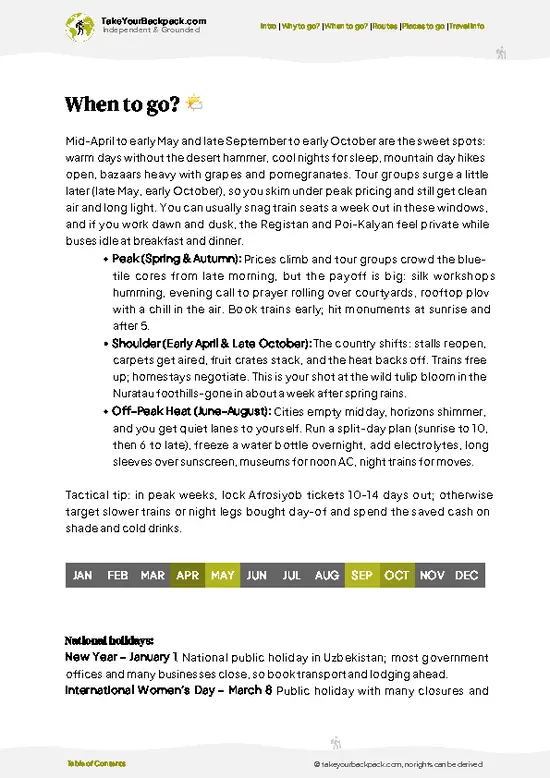
- Gumbazi Sultan Mausoleum — A lesser-known but beautifully proportioned domed tomb with colorful tiles; great for lingering, sketching, or just watching how residents use these sacred pockets of the old city.
- Shahrisabz Museum of Local History — Compact, with archaeological finds, local costumes, and exhibits about Timur’s connection to the town; useful for context before or after seeing the monuments.
- Old city gates and rampart remains — Scattered fragments and repaired gates around the old town give a tangible feel for the medieval urban layout and make for pleasant short walks between sites.
- Central Bazaar (Bozor) — Not a monument, but essential: a noisy, colorful market where you can try regional snacks, buy dried fruit, see craftsmen and feel the pulse of daily life.
- Crafts workshops and artisan streets — Woodcarvers, tile-makers and metalworkers still practice traditional trades in small workshops; watching or buying directly from them is one of the most authentic ways to connect with local culture.
- Neighborhood teahouses and plov stalls — Eating in a local chaikhana (tea house) or at a family-run plov spot is an experience in itself: simple food, long conversations, and a glimpse of modern life rooted in centuries-old routines.
Spotted a mistake or missing something? Contact us.

Private Samarkand City Tour With Transportation
✓ Free cancellation

Samarkand Private Guided Tour or walking (options avail)
✓ Free cancellation

Seven Lakes Tajikistan: All-Inclusive Day Tour
✓ Free cancellation

2 Days of Tour in Yurt Camp and Aydarkul All-Inclusive
✓ Free cancellation

Group tour from Samarkand to Explore Seven Lakes
✓ Free cancellation

Uzbekistan in 7 days Tashkent Samarkand Bukhara and Khiva
✓ Free cancellation

All-inclusive Daytrip to Seven Lakes and Panjakent from Samarkand
✓ Free cancellation

Samarkand private City Tour with Transport
✓ Free cancellation

Samarkand Walking Tour History Culture and Hidden Gems
✓ Free cancellation

Samarkand Capital of Amir Timur Private Tour with Transport
✓ Free cancellation

 Best Backpacking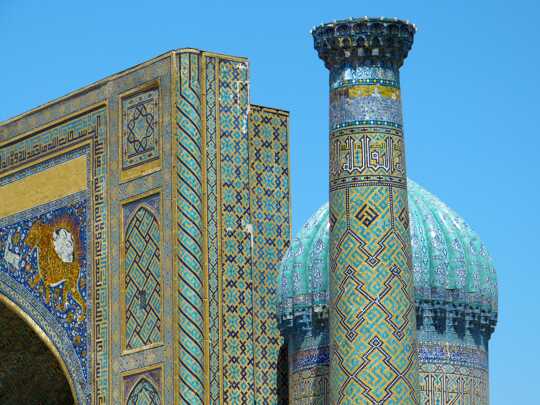
.jpg) Hi, I’m Johan (Netherlands 🇳🇱), the creator of TakeYourBackpack. Over the past decade, I’ve backpacked through 80+ countries across six continents, gaining extensive experience with independent travel, long-term trips, and overland routes.
Hi, I’m Johan (Netherlands 🇳🇱), the creator of TakeYourBackpack. Over the past decade, I’ve backpacked through 80+ countries across six continents, gaining extensive experience with independent travel, long-term trips, and overland routes.