v2.webp)
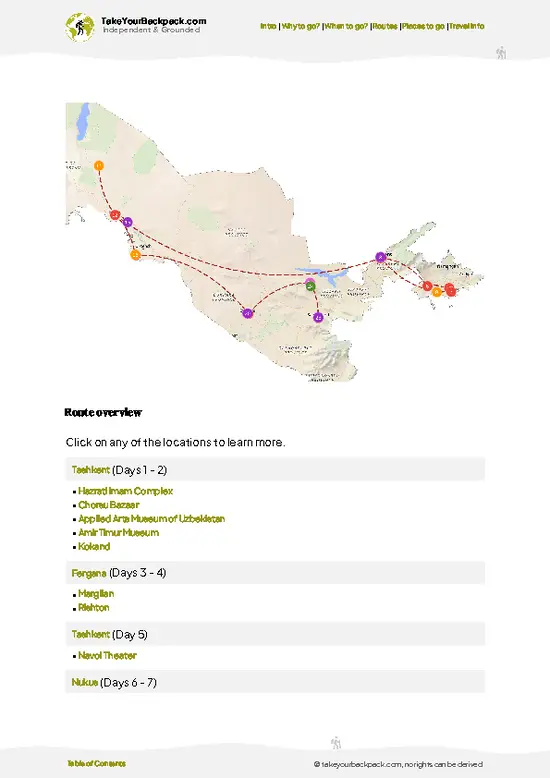
- Yodgorlik Silk Factory: The best-known stop in town. Workers boil cocoons, reel thread, dye with plant materials and weave ikat on wooden looms. Visit in the morning when the shop floor is busiest. Entry is around 30,000 to 50,000 UZS (about US$2.50 to 4) with a guide, and a visit takes 1 to 2 hours.
- Kumtepa Bazaar: A huge market held on Thursdays and Sundays, where people from the whole valley come to trade fabric, spices and knives. Sunday morning is best, and it is free to wander for 2 to 3 hours.
- Family Silk Workshops: Smaller family-run workshops where you can see khan-atlas ikat patterning up close and buy directly. Entry is free or very cheap, and the visit takes about 45 minutes.
- Pir Siddiq Complex: A tranquil religious complex with a mosque, minaret and shaded graves, set slightly outside
- Yodgorlik Silk Factory: The best-known stop in town. Workers boil cocoons, reel thread, dye with plant materials and weave ikat on wooden looms. Visit in the morning when the shop floor is busiest. Entry is around 30,000 to 50,000 UZS (about US$2.50 to 4) with a guide, and a visit takes 1 to 2 hours.
- Kumtepa Bazaar: A huge market held on Thursdays and Sundays, where people from the whole valley come to trade fabric, spices and knives. Sunday morning is best, and it is free to wander for 2 to 3 hours.
- Family Silk Workshops: Smaller family-run workshops where you can see khan-atlas ikat patterning up close and buy directly. Entry is free or very cheap, and the visit takes about 45 minutes.
- Pir Siddiq Complex: A tranquil religious complex with a mosque, minaret and shaded graves, set slightly outside the center. Go late in the afternoon when it is calm. It is free or a small donation, and 30 to 45 minutes is enough.
- Said Ahmad Khoja Madrasa and Mosque Ensemble: Old brick and carved wood from the 19th century, with quiet courtyards. A short stop of 30 minutes, usually free.
- Margilan Jome Mosque: A calm place with tall carved wooden columns and a pleasant courtyard. Visit between prayers, about 20 to 30 minutes, with a modest donation.
- Margilan Central Bazaar: The daily market for food, with piles of dried fruit, fresh bread and spices. Best before noon, and an hour is plenty. Free to enter.
Spotted a mistake or missing something? Contact us.


 Best Backpacking
.jpg) Hi, I’m Johan (Netherlands 🇳🇱), the creator of TakeYourBackpack. Over the past 3 decades, I’ve backpacked through 90+ countries across six continents, gaining extensive experience with independent travel, long-term trips, and overland routes.
Hi, I’m Johan (Netherlands 🇳🇱), the creator of TakeYourBackpack. Over the past 3 decades, I’ve backpacked through 90+ countries across six continents, gaining extensive experience with independent travel, long-term trips, and overland routes.