×

Uzbekistan🇺🇿 | attractionsUlugh Beg Observatoryastronomical sextant, hilltop ruins, scientific heritage | things to do and best time to go

Explore Hazrati Imam ComplexExplore Aral Sea

Backpacking in Ulugh Beg Observatory
👍 Recommendedattraction ranked #9
By Johan Kruseman 🇳🇱 | Updated May 18, 2026

Here’s what nobody tells you: Ulugh Beg Observatory is one of the rare historical sites in Uzbekistan where you can actually linger in peace—no elbowing through tour groups, no overpriced ticket lines. Tucked on a quiet hill just outside Samarkand’s city center, this place is a sharp detour from the Instagrammed chaos of Registan Square. The observatory itself is modest—don’t expect a grand palace—but the real punch comes from standing where 15th-century astronomers mapped the stars with mind-bending precision. It’s not flashy, but it’s deeply human: you’re literally walking in the footsteps of science geeks from 600 years ago. Entry is cheap, the vibe is contemplative, and you’ll leave with a sense of wonder that’s impossible to fake.

Discover everything you want to know in the 📖 Uzbekistan Travel Guide.
Loading the map 🌍
CLICK TO FILTER
cities
towns
villages
landmarks
national parks
hikes
beaches
attractions
festivals
regions
SHOW COUNTRY’S BESTSHOW ALL

✨ Why go?
Ranked #9 attraction in Uzbekistan
Reasons people choose to visit here

The Ulugh Beg Observatory isn’t just another dusty ruin to tick off your Uzbekistan itinerary—it’s a raw, unvarnished slice of scientific genius from the 15th century that still punches through the noise. Sure, it’s not a flashy theme park, and yes, the crowds are manageable, not overwhelming, but that’s part of its charm. This place was the brainchild of Ulugh Beg, a ruler who was more mathematician and astronomer than monarch, and his work here laid foundations that rivaled Europe’s best centuries ahead. Backpackers make time for it because it’s a rare chance to stand where history and intellect collided, not just where Instagram filters thrive. It’s a milestone on the Silk Road route, a reminder that Uzbekistan’s story isn’t just about grand mosques and madrasas but also about minds that … read more 👉
The Ulugh Beg Observatory isn’t just another dusty ruin to tick off your Uzbekistan itinerary—it’s a raw, unvarnished slice of scientific genius from the 15th century that still punches through the noise. Sure, it’s not a flashy theme park, and yes, the crowds are manageable, not overwhelming, but that’s part of its charm. This place was the brainchild of Ulugh Beg, a ruler who was more mathematician and astronomer than monarch, and his work here laid foundations that rivaled Europe’s best centuries ahead. Backpackers make time for it because it’s a rare chance to stand where history and intellect collided, not just where Instagram filters thrive. It’s a milestone on the Silk Road route, a reminder that Uzbekistan’s story isn’t just about grand mosques and madrasas but also about minds that shaped the cosmos. The effort to reach it pays off with a deep, unfiltered connection to a world-changing legacy.
Want to include Ulugh Beg Observatory in your Uzbekistan route?
Create a personalized Uzbekistan itinerary that includes Ulugh Beg Observatory and the places that fit your trip — based on your travel style, budget, and available time. Get your route in seconds.

Generate my trip

💡 HighlightsThe experiences that define the visit

The Ruins of the Giant Sextant
Forget the Instagrammed arches—this is the real reason you come. The remains of Ulugh Beg’s 15th-century sextant slice through the ground like the backbone of some ancient beast. It’s not just a relic; it’s a 40-meter-long, marble-lined arc that let astronomers measure the stars with a precision Europe wouldn’t match for centuries. Stand at the edge, and you’re staring at the tool that mapped the heavens before telescopes were even a rumor.


The Museum’s Astronomical Artifacts
The on-site museum is small but dense with the kind of artifacts that make you realize how advanced Samarkand was when most of Europe was still debating if the Earth was flat. You’ll see original manuscripts, intricate astrolabes, and models that look like props from a sci-fi film. The … read more 👉
The Ruins of the Giant Sextant
Forget the Instagrammed arches—this is the real reason you come. The remains of Ulugh Beg’s 15th-century sextant slice through the ground like the backbone of some ancient beast. It’s not just a relic; it’s a 40-meter-long, marble-lined arc that let astronomers measure the stars with a precision Europe wouldn’t match for centuries. Stand at the edge, and you’re staring at the tool that mapped the heavens before telescopes were even a rumor.


The Museum’s Astronomical Artifacts
The on-site museum is small but dense with the kind of artifacts that make you realize how advanced Samarkand was when most of Europe was still debating if the Earth was flat. You’ll see original manuscripts, intricate astrolabes, and models that look like props from a sci-fi film. The real entertainment is in the details: hand-inked star charts, Arabic calligraphy, and the kind of mathematical instruments that make you want to dust off your high school geometry.


Ulugh Beg’s Legacy—The Human Story
This isn’t just a pile of stones. Ulugh Beg was a mathematician, astronomer, and a ruler who valued science over conquest. The site’s displays and guides (if you get a good one) don’t sugarcoat his fate—murdered by his own son for being too much of a scholar, not enough of a tyrant. It’s a rare place where you can feel the tension between intellect and power, and realize that scientific brilliance doesn’t always win.


The View Over Samarkand
Climb the gentle hill behind the observatory and you get a panorama that’s pure Central Asia: blue domes, dusty rooftops, and the snow-capped Zerafshan mountains in the distance. It’s not a postcard-perfect view, but it’s honest—Samarkand as a living city, not a museum piece.


The Absence of Hype
Here’s the kicker: you won’t be jostling with busloads of tourists or dodging selfie sticks every three steps. The observatory is refreshingly quiet, especially compared to the Registan’s circus. You get space to think, to imagine, to actually feel the weight of history—no filter needed.
Spotted a mistake or missing something? Contact us.

Things to do near Ulugh Beg Observatory

Ratings based on Tripadvisor reviews. When you book through this link, you support our work at no extra cost to you.

🌤️ When to go?Best time to visit Ulugh Beg Observatory


  • Topic: Weather and Temperature – The best window is April to June and September to October. Spring and fall bring mild days around 20-25°C (68-77°F), perfect for wandering without sweating buckets or freezing your fingers off. Summers scorch at 35-40°C (95-104°F), brutal for exploring ruins, while winters dip below freezing, making the site less inviting.

  • Topic: Daylight Hours – From late March to early October, you get long days stretching 12 to 14 hours, giving you ample daylight to soak in the observatory’s details without rushing. Winter days shrink to 9-10 hours, cutting your exploration time short.

  • Topic: Crowds – Peak tourist season aligns with spring and fall, so expect more visitors from April to June and September. However, the crowds here are manageable compared to other
read more 👉

  • Topic: Weather and Temperature – The best window is April to June and September to October. Spring and fall bring mild days around 20-25°C (68-77°F), perfect for wandering without sweating buckets or freezing your fingers off. Summers scorch at 35-40°C (95-104°F), brutal for exploring ruins, while winters dip below freezing, making the site less inviting.

  • Topic: Daylight Hours – From late March to early October, you get long days stretching 12 to 14 hours, giving you ample daylight to soak in the observatory’s details without rushing. Winter days shrink to 9-10 hours, cutting your exploration time short.

  • Topic: Crowds – Peak tourist season aligns with spring and fall, so expect more visitors from April to June and September. However, the crowds here are manageable compared to other Uzbek landmarks, especially if you visit early morning or late afternoon.

  • Topic: Seasonal Activities – Spring and fall also coincide with local festivals and cultural events in Samarkand, adding layers to your visit beyond just the observatory itself. Summer’s heat limits outdoor events, and winter sees a lull in activities.

  • Topic: Price Fluctuations – Accommodation and tours tend to spike during the spring and fall tourist seasons. Visiting in shoulder months like March or November can save you money but expect colder weather and shorter days.


Pro-tip: Aim for early April or late September to catch the sweet spot of weather, daylight, and fewer crowds—this is when the observatory feels like it’s just for you.


source: climatestotravel.comJANJanuary: below average for travelingFEBFebruary: fair for travelingMARMarch: good for travelingAPRApril: excellent for travelingMAYMay: excellent for travelingJUNJune: highly recommended for travelingJULJuly: fair for travelingAUGAugust: fair for travelingSEPSeptember: excellent for travelingOCTOctober: highly recommended for travelingNOVNovember: good for travelingDECDecember: below average for traveling
when-to-go

✈️ The backpacker research shortcutUzbekistan Travel Guide

An offline-friendly backpacking guide with optimized travel routes, ranked highlights, transport advice, and the best areas to stay.
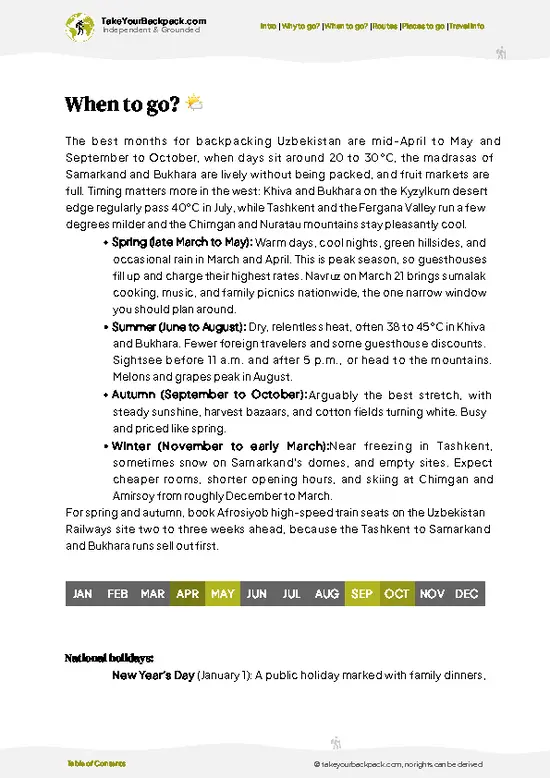
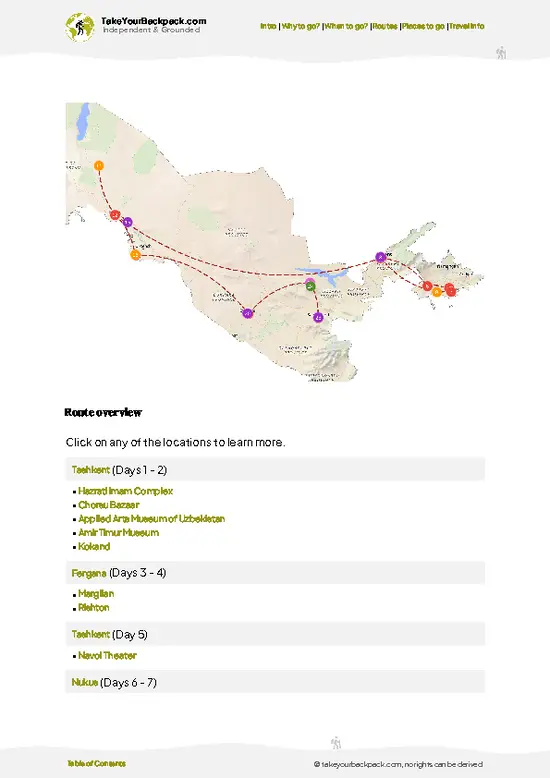
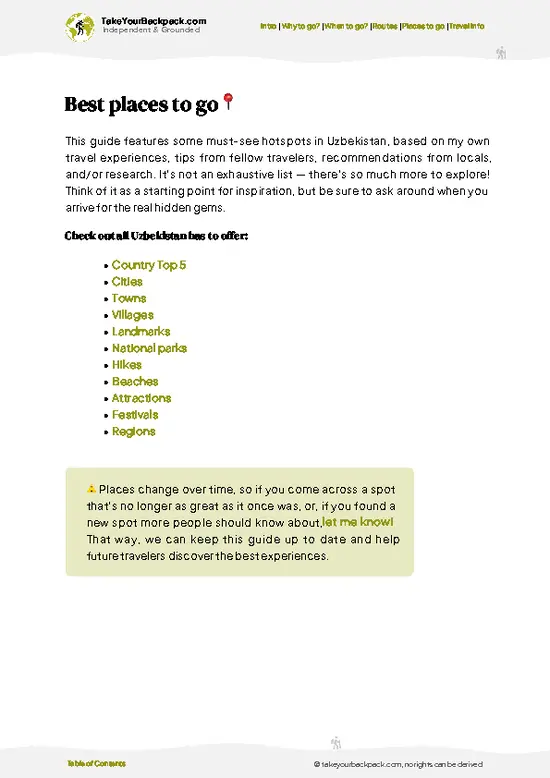
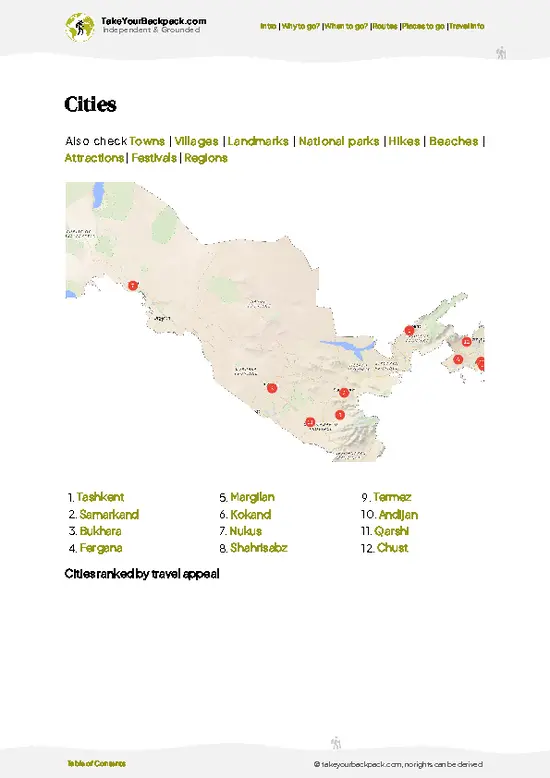
example page 0 from our offline Travel Guide for Uzbekistanexample page 1 from our offline Travel Guide for Uzbekistanexample page 2 from our offline Travel Guide for Uzbekistanexample page 3 from our offline Travel Guide for Uzbekistanexample page 4 from our offline Travel Guide for Uzbekistanexample page 5 from our offline Travel Guide for Uzbekistanexample page 6 from our offline Travel Guide for Uzbekistanexample page 7 from our offline Travel Guide for Uzbekistan
The digital guide (394 pages) contains:
110 highlights, ranked by travel appeal
Optimized 5, 10 & 15-day travel routes
Cities, national parks, landmarks, beaches
How to get around
Offline-friendly for travel without Wi-Fi
👉 Click to see all 30+ guide features

📅 Plan smarter in minutes, not weeks
Month by month travel advice
Festivals & national holidays
Budget expectations

🗺️ Go to the right places, skip the overrated ones
Honest pros & cons of destinations
Top hikes, parks & viewpoints
Lesser-known places most travelers miss
Clear “worth it vs skip it” guidance

🛏️ Travel smoothly without rookie mistakes
Best areas to stay
Transport systems explained simply
Common scams & safety advice
SIM cards, money & practical tips

🌍 Understand the country, not just visit it
Culture & traditions
52 Essential phrases & customs
Festivals worth planning around
Traveler-friendly historical context
Insights that make places more meaningful

📱 Built for real travel conditions
Fully downloadable PDF
Works completely offline
Optimized for phone use
Useful in remote areas & buses
Everything in one place
Save weeks of stressful planning
Get instant access to your full guide. 30‑day money-back guarantee.


By proceeding you agree to our terms.
Sent to your inbox immediately after payment • 100% Secure Checkout
Best Backpacking Travel Advisor 2025 tourism awardBest Backpacking
Travel Advisor
2025
What others say about Take Your Backpack Guides:
⭐⭐⭐⭐⭐
Fantastic, amazing amount of information!
⭐⭐⭐⭐⭐
My goodness this is amazing, it's what I've been looking for hats off too you!
⭐⭐⭐⭐⭐
I think this is absolutely BRILLIANT
⭐⭐⭐⭐
Very complete and informative. It's still missing places, but I gotta to commend you
⭐⭐⭐⭐⭐
This is truly amazing, thank you, can't wait to explore it with my kids!
⭐⭐⭐⭐⭐
Awesome resource, thank you!
⭐⭐⭐⭐⭐
This is amazing! Can't wait to explore the ones I haven't seen
⭐⭐⭐⭐
I love this! Well done, great idea.
⭐⭐⭐⭐⭐
Thanks for taking the time to make this gem!
⭐⭐⭐⭐⭐
This might be the best website I've ever seen.
⭐⭐⭐⭐⭐
Congratulations, and thank you so much for your work; it's incredibly valuable.
⭐⭐⭐⭐
In all seriousness I think you did a great job pointing out the important spots
⭐⭐⭐⭐⭐
10/10 very good
⭐⭐⭐⭐⭐
As someone who's only just starting to visit regularly this is awesome, thank you.
⭐⭐⭐⭐
Thank you very much! I'm going to visit my dad, it's going to be very useful!
⭐⭐⭐⭐⭐
This is really cool! We'll be travelling for the first time and this definitely come in handy.
⭐⭐⭐⭐⭐
You are now our minister of culture, congratulations 👨‍💼
⭐⭐⭐⭐⭐
Just wanted to tell you that this is a pearl! Going to follow your recommendations.
⭐⭐⭐⭐⭐
This is so cool. I'll definitely be using the resource for my travels soon.
⭐⭐⭐⭐⭐
This is very impressive! Good work.
⭐⭐⭐⭐⭐
This is an amazing and informative site. Very well done!

🛏️ Where to stay?Best areas to stay in Uzbekistan

The Ulugh Beg Observatory isn’t some Instagram-perfect, crowd-free sanctuary. Expect groups of tourists and local school trips, especially during peak hours. It’s not a flashy, polished site with endless amenities either—this is raw history, and that means basic facilities and a bit of dust. The real magic is in standing where a 15th-century astronomer once charted the stars, feeling the weight of centuries underfoot.

For backpackers, the best place to crash is in the nearby neighborhoods just outside the immediate tourist zone. These areas are safe, with a steady buzz of local life that’s far … read more 👉
The Ulugh Beg Observatory isn’t some Instagram-perfect, crowd-free sanctuary. Expect groups of tourists and local school trips, especially during peak hours. It’s not a flashy, polished site with endless amenities either—this is raw history, and that means basic facilities and a bit of dust. The real magic is in standing where a 15th-century astronomer once charted the stars, feeling the weight of centuries underfoot.

For backpackers, the best place to crash is in the nearby neighborhoods just outside the immediate tourist zone. These areas are safe, with a steady buzz of local life that’s far more interesting than the sanitized hotel strips. You’ll find guesthouses and small hostels where solo travelers gather, swapping stories over chai. It’s social without being overwhelming, and the prices won’t drain your wallet.

Staying here means you’re not just visiting the observatory—you’re living the city’s rhythm. You get to explore local markets, grab street food, and soak in the authentic vibe that no polished guidebook can capture. That’s the real reward.

👛 Costs (as of 9 June 2025)Travel costs and budget guide for Ulugh Beg Observatory

As of the most recent estimates, the entrance fee for the Ulugh Beg Observatory in Samarkand, Uzbekistan, ranges from approximately 15,000 to 50,000 Uzbek som (UZS) for foreign visitors, which is roughly €1.50 to €4. Additional fees may apply for photography, and cash payment in Uzbek som is typically required. ([tripadvisor.com.my](https://www.tripadvisor.com.my/FAQ_Answers-g298068-d485406-t5828839.html?utm_source=openai))

source: tripadvisor.com.my
⚠️ Prices can change and everyone travels differently, so take this as a rough guide. Hope it helps you plan your adventure!

Other Uzbek attractions near Ulugh Beg Observatory

Explore more nearby:


💡 Not sure where to go next?
Create a personalized itinerary for Uzbekistan including Ulugh Beg Observatory and the places that fit your trip.

Generate my itinerary

👉 Discover all attractions

Or checkout all Uzbekistan has to offer (think cities, towns, villages, national parks, hikes, beaches, festivals)
Country photo of Uzbekistan

We 💚 feedbackWhat to keep in mind

Ulugh Beg Observatory isn’t some polished tourist magnet—expect a bit of dust, a handful of curious locals, and the occasional stray goat. But that’s exactly why it hits differently. The real magic is standing where a 15th-century genius mapped the stars without modern tools. It’s quiet, raw, and humbling. Just don’t come expecting a flashy museum; come for the story that’s still written in the stones.

✍️ Help improve this page!
The information on this page is based on in-depth research, insights shared by experienced travelers, and feedback from the local travel community in Uzbekistan. While every effort is made to keep the information accurate and current, conditions can change — so if you spot anything incorrect or outdated, please get in touch.


🙋‍♂️ Give feedback

👋 Meet the founderWho’s Behind Take Your Backpack?

Johan, backpacker and founder of TakeYourBackpackHi, I’m Johan (Netherlands 🇳🇱), the creator of TakeYourBackpack. Over the past decade, I’ve backpacked through 80+ countries across six continents, gaining extensive experience with independent travel, long-term trips, and overland routes.

This site is built on a combination of firsthand travel experience and carefully curated insights from other backpackers. Many guides are based on places I’ve personally visited, while others bring together tips, observations, and practical advice shared by trusted travelers I’ve met along the way.

The goal is to provide realistic, experience-driven guidance — not generic itineraries — so you can explore destinations with better context, clearer expectations, and more confidence.

Get full Uzbekistan guide •
Instant download • 110 highlights • Full Offline guide