×

Venezuela🇻🇪 | attractionsTeleférico de MéridaFive-station cable car, 4,765 meters, Pico Bolívar views, frailejón páramo | things to do and best time to go

Explore Gran RoqueExplore Parque Zoológico y Botánico Bararida

Backpacking in Teleférico de Mérida
🏆 Top pickattraction ranked #1
By Johan Kruseman 🇳🇱 | Updated October 19, 2026

Somewhere above La Aguada the cabin goes quiet, your ears pop, and the cloud forest outside the window gives way to bare rock and frailejón plants furred in silver. Teleférico de Mérida climbs from the edge of Mérida city in the Andes of western Venezuela, and the ride is the point. Skip it if you hate heights or only have a gray, rainy morning; the upper stations vanish into cloud and you pay for a view of fog. Operations have also been interrupted over the years, so confirm it is running before you plan around it. Crowds build on weekends and holidays, and queues at the base can eat a morning. Go on a clear weekday and it is one of the best-value rides in South America: five stations, four sections, and a climb from about 1,600 to 4,765 meters. At the top, Pico Bolívar sits right across the gap.

Discover everything you want to know in the 📖 Venezuela Travel Guide.
Safety warning

The current risk level for Venezuela is high. Check the advice before going.


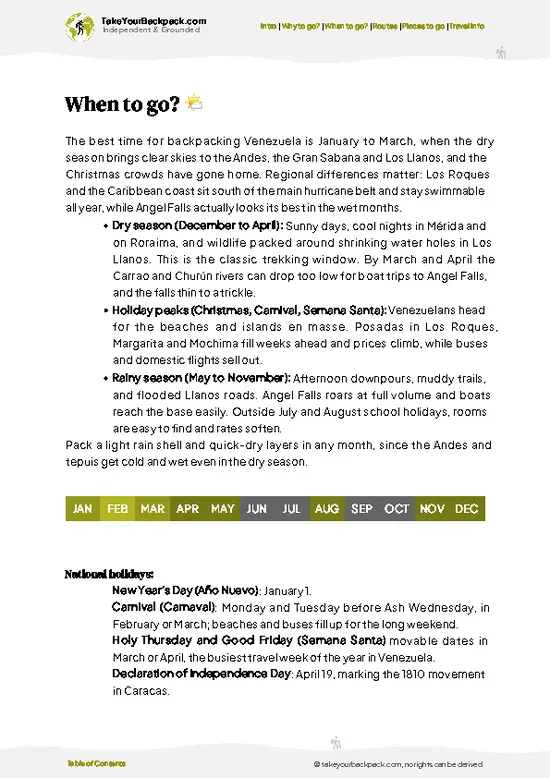
example page 0 from our offline Travel Guide for Venezuela
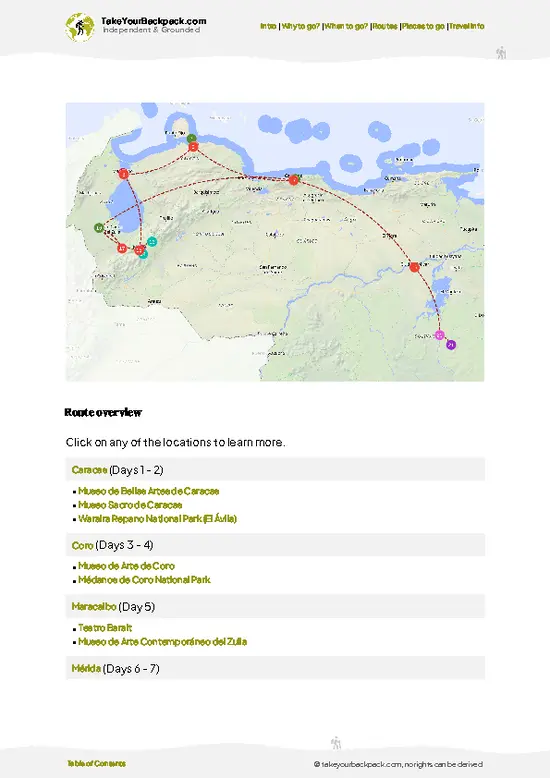
example page 1 from our offline Travel Guide for Venezuela
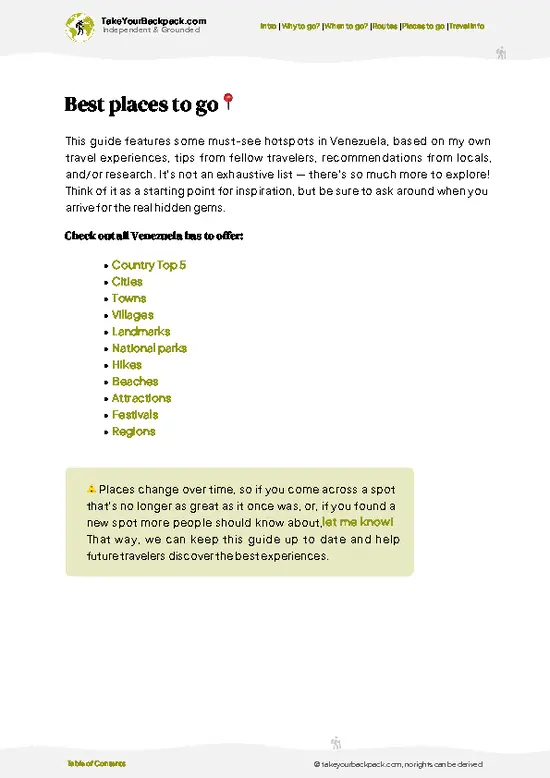
example page 2 from our offline Travel Guide for Venezuela
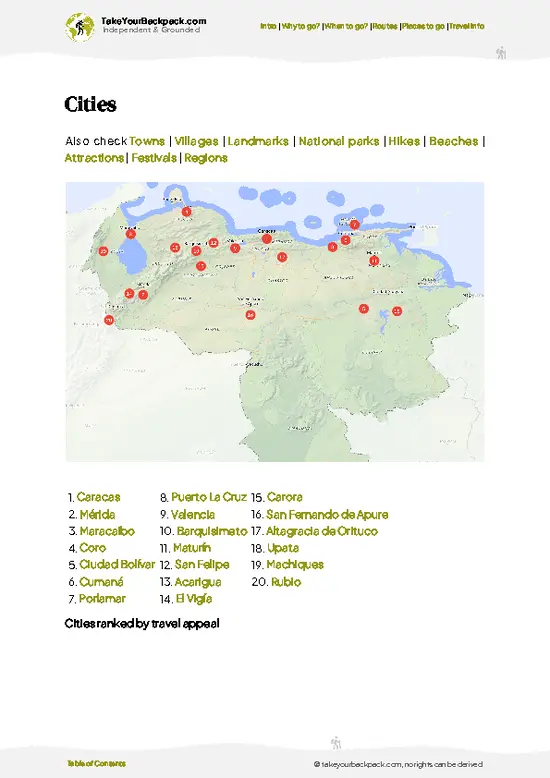
example page 3 from our offline Travel Guide for Venezuela
example page 4 from our offline Travel Guide for Venezuela
example page 5 from our offline Travel Guide for Venezuela
example page 6 from our offline Travel Guide for Venezuela
example page 7 from our offline Travel Guide for Venezuela
Loading the map 🌍
CLICK TO FILTER
cities
towns
villages
landmarks
national parks
hikes
beaches
attractions
festivals
regions
SHOW COUNTRY’S BESTSHOW ALL

✨ Why go?
Ranked #1 attraction in Venezuela
The unique appeal for travelers

Teleférico de Mérida is the easiest way in the Americas to go from a warm Andean city to a cold, thin-aired summit ridge in a single morning. The line covers roughly 12.6 kilometers and ends at Pico Espejo, at 4,765 meters, which puts you eye to eye with Pico Bolívar, Venezuela’s highest peak at 4,978 meters. You do no climbing, yet you stand in páramo terrain that normally takes days of trekking to reach. That is the first reason to go.

The second is the engineering and history. The original system opened in 1960 and was rebuilt with modern Doppelmayr cabins, so you are riding the descendant of one of the boldest lift projects ever attempted. The long final span between Loma Redonda and Pico Espejo is the moment people remember, with the ground dropping away beneath the cabin.

For a route … read more 👉
Teleférico de Mérida is the easiest way in the Americas to go from a warm Andean city to a cold, thin-aired summit ridge in a single morning. The line covers roughly 12.6 kilometers and ends at Pico Espejo, at 4,765 meters, which puts you eye to eye with Pico Bolívar, Venezuela’s highest peak at 4,978 meters. You do no climbing, yet you stand in páramo terrain that normally takes days of trekking to reach. That is the first reason to go.

The second is the engineering and history. The original system opened in 1960 and was rebuilt with modern Doppelmayr cabins, so you are riding the descendant of one of the boldest lift projects ever attempted. The long final span between Loma Redonda and Pico Espejo is the moment people remember, with the ground dropping away beneath the cabin.

For a route through Venezuela, it also anchors the Andes leg. It is the sort of milestone that gives a trip a clear high point, literally, and it makes a good acclimatization day before any serious hiking in the Sierra Nevada.

💡 HighlightsThe experiences that define the visit

  1. Pico Espejo summit station: The end of the line at 4,765 meters, a rocky platform with thin air and sharp cold even on sunny days. Pico Bolívar looms across the gap, its glaciers now gone. Walk slowly and sit if your head pounds.
  2. The final span to Pico Espejo: The last section is the longest and steepest leap, crossing a huge void between stations. Take a window spot and watch the terrain turn from scrub to bare stone.
  3. Virgen de las Nieves at Pico Espejo: A statue of the Virgin of the Snows stands near the summit station, and pilgrims make the trip to leave offerings. It adds a human note to an otherwise stark landscape.
  4. Views of Pico Bolívar, Humboldt and Bonpland: On clear mornings the Sierra Nevada’s main peaks line up in view. Pico Bolívar is the heavyweight, with Humboldt and Bonpland close
… read more 👉
  1. Pico Espejo summit station: The end of the line at 4,765 meters, a rocky platform with thin air and sharp cold even on sunny days. Pico Bolívar looms across the gap, its glaciers now gone. Walk slowly and sit if your head pounds.
  2. The final span to Pico Espejo: The last section is the longest and steepest leap, crossing a huge void between stations. Take a window spot and watch the terrain turn from scrub to bare stone.
  3. Virgen de las Nieves at Pico Espejo: A statue of the Virgin of the Snows stands near the summit station, and pilgrims make the trip to leave offerings. It adds a human note to an otherwise stark landscape.
  4. Views of Pico Bolívar, Humboldt and Bonpland: On clear mornings the Sierra Nevada’s main peaks line up in view. Pico Bolívar is the heavyweight, with Humboldt and Bonpland close beside it. Cloud usually rolls in by midday, so this is a morning show.
  5. La Aguada station: At 3,452 meters, this is the usual midpoint stop. The air is noticeably cooler and a short pause here helps you adjust before the higher stations. It has the views over the Chama valley that justify getting off.
  6. Loma Redonda station: At 4,045 meters, this is the last stop before the summit section. The vegetation is low páramo, and the landscape feels open and exposed. It is worth stepping off briefly for the change in light and wind.
  7. La Montaña station: At 2,442 meters, this is the first rise above the city, where the cloud forest begins and the view of Mérida spreads out below. The ride up here is gentle and a good warm-up for the height ahead.
  8. Barinitas station: The base station, at about 1,577 meters, sits in the city itself. It is where you buy tickets and board, and arriving early gives you the clearest air and the shortest queue.
Ride straight to Pico Espejo first thing in the morning, because the summit views are clearest before the clouds gather and you can stop at the middle stations on the way down.
Spotted a mistake or missing something? Contact us.

🌤️ When to go?Weather, crowds, and seasonal trade-offs

Dry season, December to April, is when the Teleférico de Mérida runs most reliably and the summit views of Pico Bolívar open up.
  • Dry Season (December to April): Mornings are clear, and valley temperatures in Mérida (1,600 m) sit around 18 to 26°C (64 to 79°F). Pico Espejo station at 4,765 m hovers near 0 to 5°C (32 to 41°F), sometimes colder with wind. Expect the biggest crowds at Carnival, Holy Week and Christmas.
  • Wet Season (May to November): Afternoon cloud and rain build early, so the upper sections often sit in fog by midday. Wind and storms can also pause operations. Lodging and tours are easier to find.
  • Daylight: Days stay close to 12 hours all year, and the cable car runs in the morning to early afternoon, so the first departure matters more than the month.
  • Prices: Rooms and transfers
… read more 👉
Dry season, December to April, is when the Teleférico de Mérida runs most reliably and the summit views of Pico Bolívar open up.
  • Dry Season (December to April): Mornings are clear, and valley temperatures in Mérida (1,600 m) sit around 18 to 26°C (64 to 79°F). Pico Espejo station at 4,765 m hovers near 0 to 5°C (32 to 41°F), sometimes colder with wind. Expect the biggest crowds at Carnival, Holy Week and Christmas.
  • Wet Season (May to November): Afternoon cloud and rain build early, so the upper sections often sit in fog by midday. Wind and storms can also pause operations. Lodging and tours are easier to find.
  • Daylight: Days stay close to 12 hours all year, and the cable car runs in the morning to early afternoon, so the first departure matters more than the month.
  • Prices: Rooms and transfers climb at national holidays and school breaks, and drop in the wet months.
Book the earliest slot on a weekday, since cloud usually rolls in after noon.


source: climatestotravel.comJANJanuary: excellent for travelingFEBFebruary: highly recommended for travelingMARMarch: highly recommended for travelingAPRApril: highly recommended for travelingMAYMay: fair for travelingJUNJune: fair for travelingJULJuly: fair for travelingAUGAugust: fair for travelingSEPSeptember: fair for travelingOCTOctober: fair for travelingNOVNovember: fair for travelingDECDecember: excellent for traveling
venezuela-attraction-teleferico-de-merida
© Google |

✈️ The backpacker research shortcutVenezuela Travel Guide

An offline-friendly backpacking guide with optimized travel routes, ranked highlights, transport advice, and the best areas to stay.
example page 0 from our offline Travel Guide for Venezuela
example page 1 from our offline Travel Guide for Venezuela
example page 2 from our offline Travel Guide for Venezuela
example page 3 from our offline Travel Guide for Venezuela
example page 4 from our offline Travel Guide for Venezuela
example page 5 from our offline Travel Guide for Venezuela
example page 6 from our offline Travel Guide for Venezuela
example page 7 from our offline Travel Guide for Venezuela
The digital guide (290 pages) contains:
✅ 91 highlights, ranked by travel appeal
✅ Optimized 5, 10 & 15-day travel routes
✅ Cities, national parks, landmarks, beaches
✅ How to get around
✅ Offline-friendly for travel without Wi-Fi
👉 Click to see all 30+ guide features

📅 Plan smarter in minutes, not weeks
✅ Month by month travel advice
✅ Festivals & national holidays
✅ Budget expectations

🗺️ Go to the right places, skip the overrated ones
✅ Honest pros & cons of destinations
✅ Top hikes, parks & viewpoints
✅ Lesser-known places most travelers miss
✅ Clear “worth it vs skip it” guidance

🛏️ Travel smoothly without rookie mistakes
✅ Best areas to stay
✅ Transport systems explained simply
✅ Common scams & safety advice
✅ SIM cards, money & practical tips

🌍 Understand the country, not just visit it
✅ Culture & traditions
✅ 52 Essential phrases & customs
✅ Festivals worth planning around
✅ Traveler-friendly historical context
✅ Insights that make places more meaningful

📱 Built for real travel conditions
✅ Fully downloadable PDF
✅ Works completely offline
✅ Optimized for phone use
✅ Useful in remote areas & buses
✅ Everything in one place
Stop searching, start planning
Get instant access to your full guide. 30‑day money-back guarantee.
+ Add another guide for just

By proceeding you agree to our terms.
Sent to your inbox immediately after payment • 100% Secure Checkout
Best Backpacking Travel Advisor 2025 tourism awardBest Backpacking
Travel Advisor
2025
What others say about Take Your Backpack Guides:
⭐⭐⭐⭐⭐
Fantastic, amazing amount of information!
⭐⭐⭐⭐⭐
My goodness this is amazing, it's what I've been looking for hats off too you!
⭐⭐⭐⭐⭐
I think this is absolutely BRILLIANT
⭐⭐⭐⭐
Very complete and informative. It's still missing places, but I gotta to commend you
⭐⭐⭐⭐⭐
This is truly amazing, thank you, can't wait to explore it with my kids!
⭐⭐⭐⭐⭐
Awesome resource, thank you!
⭐⭐⭐⭐⭐
This is amazing! Can't wait to explore the ones I haven't seen
⭐⭐⭐⭐
I love this! Well done, great idea.
⭐⭐⭐⭐⭐
Thanks for taking the time to make this gem!
⭐⭐⭐⭐⭐
This might be the best website I've ever seen.
⭐⭐⭐⭐⭐
Congratulations, and thank you so much for your work; it's incredibly valuable.
⭐⭐⭐⭐
In all seriousness I think you did a great job pointing out the important spots
⭐⭐⭐⭐⭐
10/10 very good
⭐⭐⭐⭐⭐
As someone who's only just starting to visit regularly this is awesome, thank you.
⭐⭐⭐⭐
Thank you very much! I'm going to visit my dad, it's going to be very useful!
⭐⭐⭐⭐⭐
This is really cool! We'll be travelling for the first time and this definitely come in handy.
⭐⭐⭐⭐⭐
You are now our minister of culture, congratulations 👨‍💼
⭐⭐⭐⭐⭐
Just wanted to tell you that this is a pearl! Going to follow your recommendations.
⭐⭐⭐⭐⭐
This is so cool. I'll definitely be using the resource for my travels soon.
⭐⭐⭐⭐⭐
This is very impressive! Good work.
⭐⭐⭐⭐⭐
This is an amazing and informative site. Very well done!

🛏️ Where to stay?Best areas and accommodation options

The best base for the Teleférico de Mérida is the center of Mérida city, around Plaza Bolívar and the streets toward Avenida 2 and 3, within a short taxi ride of the lower station at Barinitas.
This is where the hostels and budget posadas cluster, so you will meet other travelers over breakfast and can split tour costs with them. Plenty of small restaurants, bakeries, ATMs and tour agencies sit within a few blocks, and the streets feel lively and reasonably safe in daylight. After dark, stay on the busier central blocks and take a taxi instead of walking long distances.
The area around Plaza Las … read more 👉
The best base for the Teleférico de Mérida is the center of Mérida city, around Plaza Bolívar and the streets toward Avenida 2 and 3, within a short taxi ride of the lower station at Barinitas.
This is where the hostels and budget posadas cluster, so you will meet other travelers over breakfast and can split tour costs with them. Plenty of small restaurants, bakeries, ATMs and tour agencies sit within a few blocks, and the streets feel lively and reasonably safe in daylight. After dark, stay on the busier central blocks and take a taxi instead of walking long distances.
The area around Plaza Las Heroínas and the Avenida Las Américas side is a quieter option. It suits anyone wanting a calmer room, though fewer social spots are close by.
For a mountain feel, the village of Los Nevados is reached only by a long trip beyond the cable car's top stations. It makes sense for an overnight in a simple posada, not as a base for the lift.
Sleeping in Mérida city lets you catch the early departure with a short ride and keeps buses, markets and agencies close. Choose a place with hot water and a reliable host, and ask about the best way to pay, since cash in US dollars is common.

👛 Costs (as of 19 October 2026)Typical daily expenses

Plan on roughly US$45 to 98 per day for a Teleférico de Mérida visit, including the ride, transport, food and a bed.
CategoryBudget RangeLocal Reality
Cable car ticketUS$25 to 40Prices for foreigners are higher than for locals and change often, so confirm at the ticket office.
Transport to lower stationUS$2 to 5Short taxi ride from central Mérida to Barinitas.
Accommodation (high season)US$10 to 20Dorm bed or simple private room in central Mérida.
FoodUS$6 to 12Set lunches, arepas and empanadas at local spots.
Warm clothing or gear rentalUS$0 to 5Bring layers, gloves and a hat since the top is near freezing.
Snacks and drinks at stationsUS$2 to 6Hot drinks and basic food at the intermediate stops.
Guided extrasUS$0 to 10Optional photo stops or short guided help at the top.
Total Daily BudgetUS$45 to
… read more 👉
Plan on roughly US$45 to 98 per day for a Teleférico de Mérida visit, including the ride, transport, food and a bed.
CategoryBudget RangeLocal Reality
Cable car ticketUS$25 to 40Prices for foreigners are higher than for locals and change often, so confirm at the ticket office.
Transport to lower stationUS$2 to 5Short taxi ride from central Mérida to Barinitas.
Accommodation (high season)US$10 to 20Dorm bed or simple private room in central Mérida.
FoodUS$6 to 12Set lunches, arepas and empanadas at local spots.
Warm clothing or gear rentalUS$0 to 5Bring layers, gloves and a hat since the top is near freezing.
Snacks and drinks at stationsUS$2 to 6Hot drinks and basic food at the intermediate stops.
Guided extrasUS$0 to 10Optional photo stops or short guided help at the top.
Total Daily BudgetUS$45 to 98Cash in US dollars is widely used, and bolivars are also accepted.


source: venezuelatuya.com
⚠️ Prices can change and everyone travels differently, so take this as a rough guide. Hope it helps you plan your adventure!

FAQTraveler FAQ

Plan a full morning for Teleférico de Mérida, around 4 to 5 hours including the ride. The ascent runs through several stations up to Pico Espejo at 4,765 m, with stops at La Aguada, Loma Redonda and others. Allow extra time for ticket lines and a short acclimatization pause at the top.
Teleférico de Mérida is worth the ticket, roughly US$25 to 40 for foreigners, if you go on a clear morning. You climb from about 1,600 m to nearly 4,765 m, with views of Pico Bolívar in a single ride. In cloud or wind the top is often hidden, so choose a dry-season weekday when possible.
Reach Teleférico de Mérida by taxi from central Mérida to the Barinitas station, a ride of about 10 to 15 minutes costing roughly US$2 to 5. Mérida itself is reached by bus from Caracas in about 12 to 14 hours or by flight to Mérida airport. Get there early, since the first departures have the clearest skies.
⚠️ Things can change over time, so always validate details locally before you go.

Other Venezuelan attractions near Teleférico de Mérida

Explore more nearby:


💡 Not sure where to go next?
Create a personalized itinerary for Venezuela including Teleférico de Mérida and the places that fit your trip.

Generate my itinerary

👉 Discover all attractions

Or checkout all Venezuela has to offer (think cities, towns, villages, national parks, hikes, beaches, festivals)
Country photo of Venezuela

We 💚 feedbackIs it worth it?

Teleférico de Mérida pairs best with a few days in the city itself, since the altitude gain is easier after a night or two in the Andes. Follow it with a trip to the highland villages of the Sierra Nevada, or a hike in the páramo, and you have a proper Andean loop. I would go on a weekday morning and carry a warm layer, because the top is cold even on bright days.

✍️ Help improve this page!
The information on this page is based on in-depth research, insights shared by experienced travelers, and feedback from the local travel community in Venezuela. While every effort is made to keep the information accurate and current, conditions can change — so if you spot anything incorrect or outdated, please get in touch.


🙋‍♂️ Give feedback

👋 Meet the founderWho’s Behind Take Your Backpack?

Johan, backpacker and founder of TakeYourBackpackHi, I’m Johan (Netherlands 🇳🇱), the creator of TakeYourBackpack. Over the past 3 decades, I’ve backpacked through 90+ countries across six continents, gaining extensive experience with independent travel, long-term trips, and overland routes.

This site is built on a combination of firsthand travel experience and carefully curated insights from other backpackers. Many guides are based on places I’ve personally visited, while others bring together tips, observations, and practical advice shared by trusted travelers I’ve met along the way.

The goal is to provide realistic, experience-driven guidance — not generic itineraries — so you can explore destinations with better context, clearer expectations, and more confidence.