×

Venezuela🇻🇪 | regionsIsla MargaritaWind-sport beaches, mangrove lagoon, Spanish forts, dry Macanao | things to do and best time to go

Explore Andes venezolanosExplore Choroní

Backpacking in Isla Margarita
🏆 Top pickregion ranked #1
By Johan Kruseman 🇳🇱 | Updated October 19, 2026

Isla Margarita is really two landmasses stitched together by a narrow sandbar and lagoon, and the western half, Macanao, is dry, thorny and almost empty of visitors. The island lies in the Caribbean off the north coast of Venezuela, part of Nueva Esparta state. Skip the duty-free malls of Porlamar; they were the draw decades ago and now mostly sell things you can buy at home. Back the beaches instead. Playa El Yaque has steady wind for kitesurfing and windsurfing, which is why locals and instructors cluster there, while Playa Parguito suits surfers. Distances look short on a map, but beaches sit far apart, so do what experienced travelers do: use shared minibuses (por puestos) on the main roads and negotiate a taxi for the rest, because many beach roads have no regular service. Carry small US dollar bills, since cash is widely accepted. The island is relaxed, cheap by Caribbean standards and well suited to a slow week. Pampatar’s old fort still faces the harbor where fishing boats unload at dawn.

Discover everything you want to know in the 📖 Venezuela Travel Guide.
Safety warning

The current risk level for Venezuela is high. Check the advice before going.


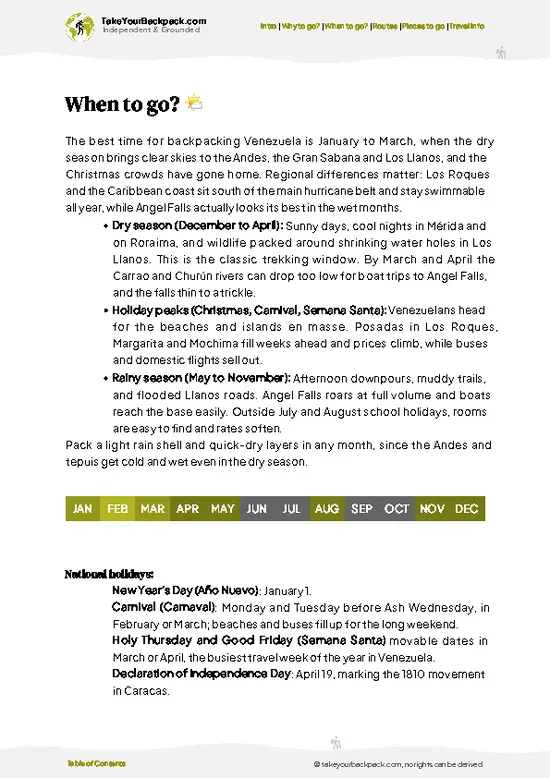
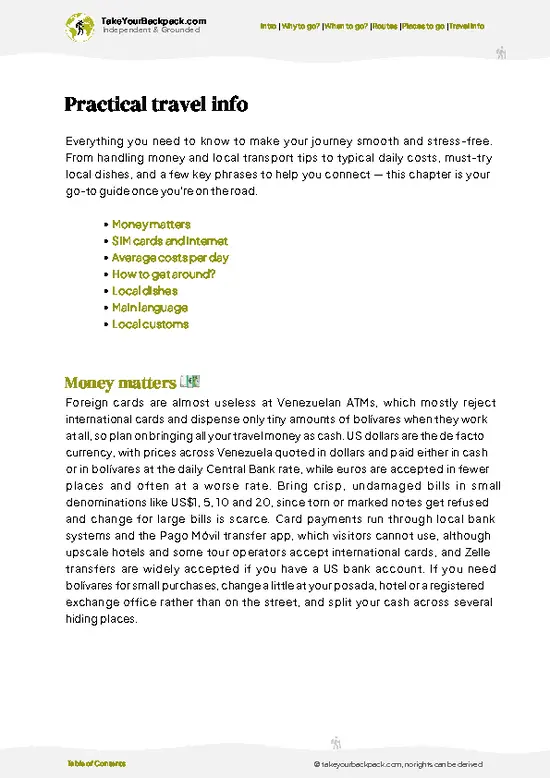
example page 0 from our offline Travel Guide for Venezuela
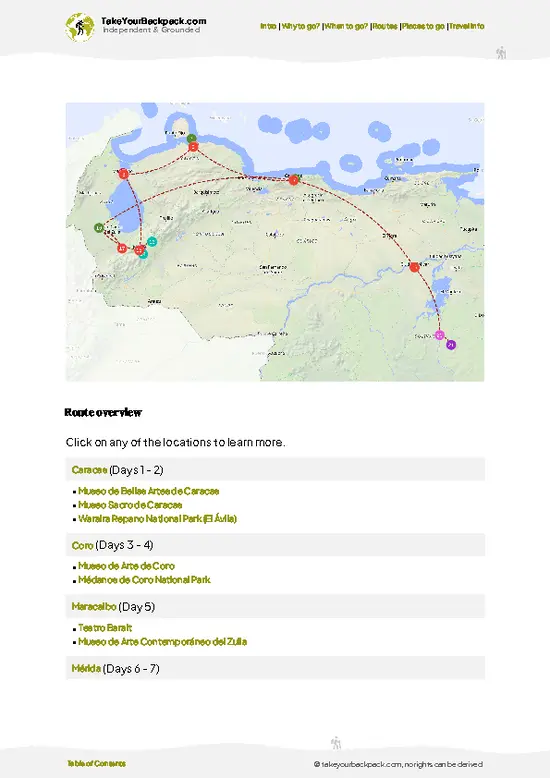
example page 1 from our offline Travel Guide for Venezuela
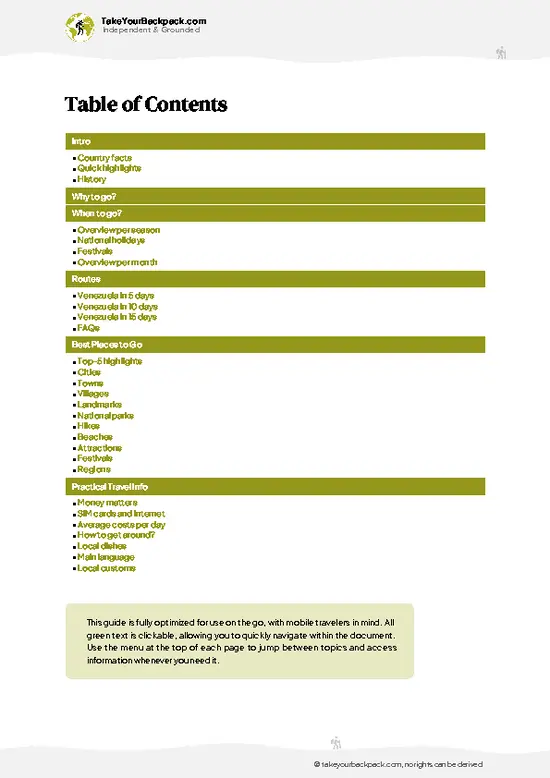
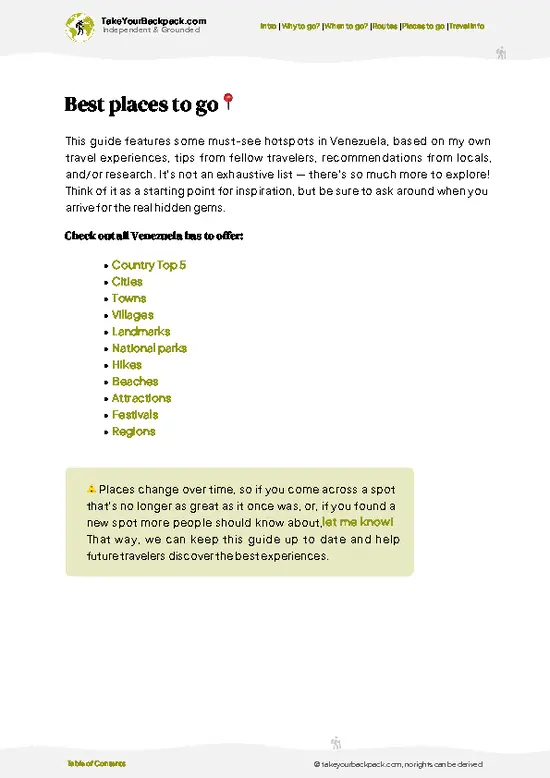
example page 2 from our offline Travel Guide for Venezuela
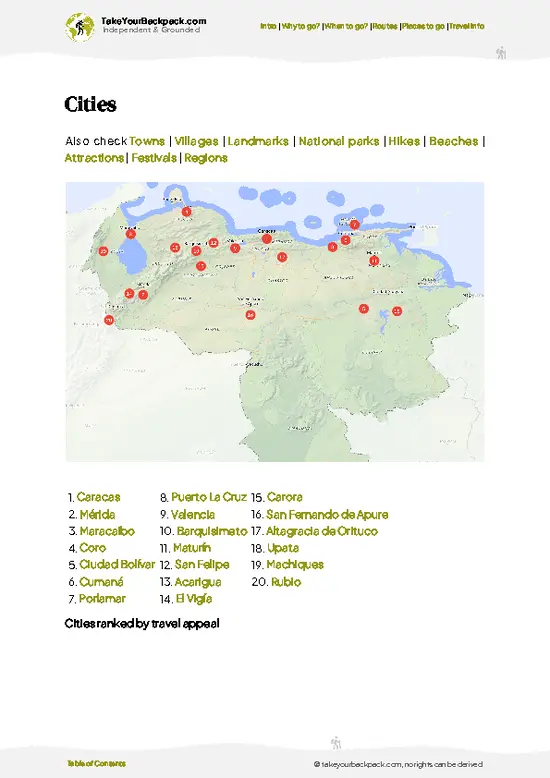
example page 3 from our offline Travel Guide for Venezuela
example page 4 from our offline Travel Guide for Venezuela
example page 5 from our offline Travel Guide for Venezuela
example page 6 from our offline Travel Guide for Venezuela
example page 7 from our offline Travel Guide for Venezuela
Loading the map 🌍
CLICK TO FILTER
cities
towns
villages
landmarks
national parks
hikes
beaches
attractions
festivals
regions
SHOW COUNTRY’S BESTSHOW ALL

✨ Why go?
Ranked #1 region in Venezuela
Why visitors keep coming back

Isla Margarita works for backpackers because one base covers very different coasts without long relocations. The Atlantic-facing east has the wide, loud surf of Playa Parguito, the north has calm Juangriego bay for sunsets, and the south has the wind of Playa El Yaque for lessons and rentals. You can sleep in one town for several nights and still change scenery daily using cheap shared minibuses and short taxi hops.

The island also pairs sand with history, which is rare in a place this compact. Spanish forts at Pampatar and La Asunción, the shrine at El Valle and colonial streets give a rainy-day plan that does not need a tour. Then there is La Restinga lagoon, a mangrove maze you drift through by boat, and the Macanao peninsula, where cacti replace palms and traffic thins out. Slow travel … read more 👉
Isla Margarita works for backpackers because one base covers very different coasts without long relocations. The Atlantic-facing east has the wide, loud surf of Playa Parguito, the north has calm Juangriego bay for sunsets, and the south has the wind of Playa El Yaque for lessons and rentals. You can sleep in one town for several nights and still change scenery daily using cheap shared minibuses and short taxi hops.

The island also pairs sand with history, which is rare in a place this compact. Spanish forts at Pampatar and La Asunción, the shrine at El Valle and colonial streets give a rainy-day plan that does not need a tour. Then there is La Restinga lagoon, a mangrove maze you drift through by boat, and the Macanao peninsula, where cacti replace palms and traffic thins out. Slow travel suits Isla Margarita: mornings at the beach, afternoons in a fort or market, evenings over fresh fish at a harbor.

💡 HighlightsKey sights and experiences for travelers

  1. Castillo de Santa Rosa, La Asunción: a hilltop Spanish fort with old cannons and a view over the island’s capital; it is the clearest introduction to the colonial past.
  2. Castillo San Carlos de Borromeo, Pampatar: a stone fortress beside the harbor, built to guard the anchorage, with thick walls you can walk around and a quiet seafront promenade next door.
  3. Parque Nacional Laguna de La Restinga: a mangrove lagoon explored by boat through narrow channels, ending at a long sand spit with fresh oysters sold by local families.
  4. Playa El Yaque: the island’s wind-sports beach, with shallow, steady water that suits beginner kitesurfers and windsurfers as well as experts.
  5. Playa Parguito: a long, open beach with reliable waves, the place to try surfing and to meet other travelers.
  6. Playa El Agua: a broad, palm-lined
… read more 👉
  1. Castillo de Santa Rosa, La Asunción: a hilltop Spanish fort with old cannons and a view over the island’s capital; it is the clearest introduction to the colonial past.
  2. Castillo San Carlos de Borromeo, Pampatar: a stone fortress beside the harbor, built to guard the anchorage, with thick walls you can walk around and a quiet seafront promenade next door.
  3. Parque Nacional Laguna de La Restinga: a mangrove lagoon explored by boat through narrow channels, ending at a long sand spit with fresh oysters sold by local families.
  4. Playa El Yaque: the island’s wind-sports beach, with shallow, steady water that suits beginner kitesurfers and windsurfers as well as experts.
  5. Playa Parguito: a long, open beach with reliable waves, the place to try surfing and to meet other travelers.
  6. Playa El Agua: a broad, palm-lined strip with beach bars and fried fish; go early, as it fills up quickly with day-trippers.
  7. Fortín La Galera, Juangriego: a small hilltop fort with the island’s best sunset view over the bay, where fishing boats rock below.
  8. Basílica Nuestra Señora del Valle, El Valle del Espíritu Santo: the pilgrimage church of the island’s patron virgin, with devotees leaving offerings and a lively plaza outside.
  9. Parque Nacional Cerro El Copey: a cooler, misty mountain park with cloud forest trails, a rare change from coastal heat and quiet on weekdays.
  10. Macanao Peninsula and Boca del Río: a dry western landscape with cactus scrub, empty beaches and a fishing village, almost untouched by tourism.
For a first visit, Playa El Yaque gives the strongest sense of what the island is about.
Spotted a mistake or missing something? Contact us.

⌛️ 5 days5-day itinerary for Isla Margarita

Day 1: Pampatar: Mornings and late afternoons are for walking, midday is for shade and water, and taxis fill in where shared minibuses stop. Start in Pampatar, where the fort and the harbor are close enough to explore on foot, then settle in with a beach swim as the heat peaks. The slow start matters because Isla Margarita’s transport is built around main roads, so you learn the por puesto rhythm before relying on it.

Day 2: La Asunción: Head inland to the capital for Castillo de Santa Rosa and the colonial plaza. Go early, before the stone gets hot, and return to the coast by minibus in the afternoon.

Day 3: Juangriego: Move north to the bay. Juangriego is a simple base, with beach time during the day and the fortín for sunset. A shared minibus gets you here, and evenings are easy on foot. … read more 👉
Day 1: Pampatar: Mornings and late afternoons are for walking, midday is for shade and water, and taxis fill in where shared minibuses stop. Start in Pampatar, where the fort and the harbor are close enough to explore on foot, then settle in with a beach swim as the heat peaks. The slow start matters because Isla Margarita’s transport is built around main roads, so you learn the por puesto rhythm before relying on it.

Day 2: La Asunción: Head inland to the capital for Castillo de Santa Rosa and the colonial plaza. Go early, before the stone gets hot, and return to the coast by minibus in the afternoon.

Day 3: Juangriego: Move north to the bay. Juangriego is a simple base, with beach time during the day and the fortín for sunset. A shared minibus gets you here, and evenings are easy on foot.

Day 4: El Yaque: Cross to the south for wind sports. Mornings are calmer for lessons, and the wind usually builds after midday, so do your rest hours then and watch the kites from the sand.

Detour: take a boat tour in La Restinga lagoon on the way, since it sits on the route between the two coasts and needs only half a day.

Day 5: Parguito: Finish on the Atlantic side, where surf lessons and long walks on the sand suit a last day without logistics.

If you can only keep one day, keep Day 3: the walk up to Juangriego’s fort at sunset delivers the island’s best view at almost no cost.

🌤️ When to go?Best time to visit Isla Margarita

December to April is the driest stretch on Isla Margarita, with almost no rain and steady trade winds that keep the beaches comfortable.
  • Dry Season (December to April): Highs of 29 to 32°C (84 to 90°F), nights around 23 to 25°C (73 to 77°F), and constant breeze at Playa El Yaque, which makes it the kite and windsurf peak. Domestic tourists fill the island at Carnival, Easter week and Christmas, so beds and flights cost more.
  • Wet Season (May to November): Short, heavy afternoon downpours, with highs of 31 to 34°C (88 to 93°F) and thick humidity. Rain is lighter than on the mainland, mornings are usually clear, and prices drop and beaches empty out.
  • Daylight: Days run roughly 11 to 13 hours all year, so you get early sunsets in winter and reliable beach time from morning on.
  • Wind and Water: Wind
… read more 👉
December to April is the driest stretch on Isla Margarita, with almost no rain and steady trade winds that keep the beaches comfortable.
  • Dry Season (December to April): Highs of 29 to 32°C (84 to 90°F), nights around 23 to 25°C (73 to 77°F), and constant breeze at Playa El Yaque, which makes it the kite and windsurf peak. Domestic tourists fill the island at Carnival, Easter week and Christmas, so beds and flights cost more.
  • Wet Season (May to November): Short, heavy afternoon downpours, with highs of 31 to 34°C (88 to 93°F) and thick humidity. Rain is lighter than on the mainland, mornings are usually clear, and prices drop and beaches empty out.
  • Daylight: Days run roughly 11 to 13 hours all year, so you get early sunsets in winter and reliable beach time from morning on.
  • Wind and Water: Wind is strongest from roughly June to August on the southern coast, and the sea stays warm at about 26 to 29°C (79 to 84°F).
Book Carnival and Easter weeks well ahead, or come in late April or May for lower rates and still-decent weather.


source: climatestotravel.comJANJanuary: excellent for travelingFEBFebruary: excellent for travelingMARMarch: excellent for travelingAPRApril: highly recommended for travelingMAYMay: highly recommended for travelingJUNJune: fair for travelingJULJuly: fair for travelingAUGAugust: fair for travelingSEPSeptember: fair for travelingOCTOctober: fair for travelingNOVNovember: highly recommended for travelingDECDecember: excellent for traveling
when-to-go

✈️ The backpacker research shortcutVenezuela Travel Guide

An offline-friendly backpacking guide with optimized travel routes, ranked highlights, transport advice, and the best areas to stay.
example page 0 from our offline Travel Guide for Venezuela
example page 1 from our offline Travel Guide for Venezuela
example page 2 from our offline Travel Guide for Venezuela
example page 3 from our offline Travel Guide for Venezuela
example page 4 from our offline Travel Guide for Venezuela
example page 5 from our offline Travel Guide for Venezuela
example page 6 from our offline Travel Guide for Venezuela
example page 7 from our offline Travel Guide for Venezuela
The digital guide (290 pages) contains:
✅ 91 highlights, ranked by travel appeal
✅ Optimized 5, 10 & 15-day travel routes
✅ Cities, national parks, landmarks, beaches
✅ How to get around
✅ Offline-friendly for travel without Wi-Fi
👉 Click to see all 30+ guide features

📅 Plan smarter in minutes, not weeks
✅ Month by month travel advice
✅ Festivals & national holidays
✅ Budget expectations

🗺️ Go to the right places, skip the overrated ones
✅ Honest pros & cons of destinations
✅ Top hikes, parks & viewpoints
✅ Lesser-known places most travelers miss
✅ Clear “worth it vs skip it” guidance

🛏️ Travel smoothly without rookie mistakes
✅ Best areas to stay
✅ Transport systems explained simply
✅ Common scams & safety advice
✅ SIM cards, money & practical tips

🌍 Understand the country, not just visit it
✅ Culture & traditions
✅ 52 Essential phrases & customs
✅ Festivals worth planning around
✅ Traveler-friendly historical context
✅ Insights that make places more meaningful

📱 Built for real travel conditions
✅ Fully downloadable PDF
✅ Works completely offline
✅ Optimized for phone use
✅ Useful in remote areas & buses
✅ Everything in one place
Stop searching, start planning
Get instant access to your full guide. 30‑day money-back guarantee.
+ Add another guide for just

By proceeding you agree to our terms.
Sent to your inbox immediately after payment • 100% Secure Checkout
Best Backpacking Travel Advisor 2025 tourism awardBest Backpacking
Travel Advisor
2025
What others say about Take Your Backpack Guides:
⭐⭐⭐⭐⭐
Fantastic, amazing amount of information!
⭐⭐⭐⭐⭐
My goodness this is amazing, it's what I've been looking for hats off too you!
⭐⭐⭐⭐⭐
I think this is absolutely BRILLIANT
⭐⭐⭐⭐
Very complete and informative. It's still missing places, but I gotta to commend you
⭐⭐⭐⭐⭐
This is truly amazing, thank you, can't wait to explore it with my kids!
⭐⭐⭐⭐⭐
Awesome resource, thank you!
⭐⭐⭐⭐⭐
This is amazing! Can't wait to explore the ones I haven't seen
⭐⭐⭐⭐
I love this! Well done, great idea.
⭐⭐⭐⭐⭐
Thanks for taking the time to make this gem!
⭐⭐⭐⭐⭐
This might be the best website I've ever seen.
⭐⭐⭐⭐⭐
Congratulations, and thank you so much for your work; it's incredibly valuable.
⭐⭐⭐⭐
In all seriousness I think you did a great job pointing out the important spots
⭐⭐⭐⭐⭐
10/10 very good
⭐⭐⭐⭐⭐
As someone who's only just starting to visit regularly this is awesome, thank you.
⭐⭐⭐⭐
Thank you very much! I'm going to visit my dad, it's going to be very useful!
⭐⭐⭐⭐⭐
This is really cool! We'll be travelling for the first time and this definitely come in handy.
⭐⭐⭐⭐⭐
You are now our minister of culture, congratulations 👨‍💼
⭐⭐⭐⭐⭐
Just wanted to tell you that this is a pearl! Going to follow your recommendations.
⭐⭐⭐⭐⭐
This is so cool. I'll definitely be using the resource for my travels soon.
⭐⭐⭐⭐⭐
This is very impressive! Good work.
⭐⭐⭐⭐⭐
This is an amazing and informative site. Very well done!

🛏️ Where to stay?Best areas to stay in Venezuela

Porlamar is the most practical base on Isla Margarita for backpackers, thanks to its por puesto hub, supermarkets, ATMs and the widest range of budget beds, usually US$10 to 25 for a dorm or simple private room. It is the island’s largest city, so it is busy and a bit gritty, but that also means cheap meals and easy onward transport. Stay in the central, well-lit areas near the main avenues and take taxis after dark.
Playa El Yaque, on the southern coast near the airport, is the social choice if you want to kitesurf or windsurf. Hostels and small guesthouses there mix surfers, instructors and long-stayers, … read more 👉
Porlamar is the most practical base on Isla Margarita for backpackers, thanks to its por puesto hub, supermarkets, ATMs and the widest range of budget beds, usually US$10 to 25 for a dorm or simple private room. It is the island’s largest city, so it is busy and a bit gritty, but that also means cheap meals and easy onward transport. Stay in the central, well-lit areas near the main avenues and take taxis after dark.
Playa El Yaque, on the southern coast near the airport, is the social choice if you want to kitesurf or windsurf. Hostels and small guesthouses there mix surfers, instructors and long-stayers, and the beachfront is walkable and relaxed. Prices run higher in peak wind months.
Juangriego, on the north coast, suits slower days. It has a small bay with fishing boats, a hilltop fort for sunset, and quieter guesthouses, often US$15 to 35 a night. It is easy to reach by por puesto from Porlamar and feels calmer in the evening.
Playa Parguito and Playa Guacuco are good for beach-focused stays with surf and warm water, though options are fewer. Pampatar is a pleasant, safer-feeling fishing town with a fortress and promenade, but it leans toward resorts, so budget stays are limited.

🚌 Getting aroundTransportation options and practical tips

Shared por puestos (minibuses) are the easiest way for a backpacker to get around Isla Margarita, because they run along every main road for pocket change and stop wherever you wave. They work well on the Porlamar, Pampatar, La Asunción and Juangriego routes. Outside those corridors, service thins out by late afternoon, so plan return trips early.
  • Por puestos and buses: Fares are typically under US$1 for most hops, and rides between Porlamar and Juangriego take about 45 minutes. Vehicles leave when full, so there is no timetable. Carry small bills in US dollars, since drivers often lack change and some prefer cash dollars or bolívares.
  • Taxis: A short city ride costs about US$3 to 8, and a run from Porlamar to Playa El Yaque or the airport is roughly US$10 to 20. Agree the fare before you get
… read more 👉
Shared por puestos (minibuses) are the easiest way for a backpacker to get around Isla Margarita, because they run along every main road for pocket change and stop wherever you wave. They work well on the Porlamar, Pampatar, La Asunción and Juangriego routes. Outside those corridors, service thins out by late afternoon, so plan return trips early.
  • Por puestos and buses: Fares are typically under US$1 for most hops, and rides between Porlamar and Juangriego take about 45 minutes. Vehicles leave when full, so there is no timetable. Carry small bills in US dollars, since drivers often lack change and some prefer cash dollars or bolívares.
  • Taxis: A short city ride costs about US$3 to 8, and a run from Porlamar to Playa El Yaque or the airport is roughly US$10 to 20. Agree the fare before you get in, because meters are rare. Skip taxis for routine beach hopping, as the costs add up fast.
  • Motorbike or scooter rental: Roughly US$15 to 30 a day, and it is the smart choice for the northern coast and Playa Parguito, where por puestos are sparse. Fuel is very cheap. Bring a license, ride in daylight and watch for potholes.
  • Ferry from the mainland: Ferries from Puerto La Cruz and Cumaná cross in about 4 to 5 hours at roughly US$25 to 60 depending on class. Flying is faster but tickets are often pricier. Overnight options exist, but I would skip anything with unclear schedules, and always confirm departure the day before.
  • Peñero boats: Fishermen run these small boats to Playa Parguito area coves and Laguna de La Restinga, about US$5 to 15 per person on group trips. Go with a licensed operator at the dock, not a freelancer who approaches you on the sand.
Base yourself near one road corridor and do day trips from there instead of switching beds every night, because moving across the island by por puesto often means changing vehicles in Porlamar.

🍲 FoodLocal Cuisine & Drinks

Fresh seafood defines Isla Margarita, and the best of it is simple: pargo (snapper) fried whole and crisp, pescado frito with tostones and a squeeze of lime, and pabellón on the side if you want the national plate. Look for empanadas de cazón, golden pockets filled with sweet, peppery baby shark meat, plus arepas stuffed with shredded fish. Ceviche is bright and cold, and sopa de mariscos arrives steaming with a briny, garlicky broth.
For a budget meal, go to the fish stalls at Juangriego, Pampatar and La Restinga, where plates cost about US$4 to 10 and the catch is hauled in that morning. Beach shacks serve cold Polar beer or fresh coconut water with plastic chairs in the sand. Porlamar’s markets and panaderías are good for breakfast: warm pan, cheese, strong café con leche and fresh jugo … read more 👉
Fresh seafood defines Isla Margarita, and the best of it is simple: pargo (snapper) fried whole and crisp, pescado frito with tostones and a squeeze of lime, and pabellón on the side if you want the national plate. Look for empanadas de cazón, golden pockets filled with sweet, peppery baby shark meat, plus arepas stuffed with shredded fish. Ceviche is bright and cold, and sopa de mariscos arrives steaming with a briny, garlicky broth.
For a budget meal, go to the fish stalls at Juangriego, Pampatar and La Restinga, where plates cost about US$4 to 10 and the catch is hauled in that morning. Beach shacks serve cold Polar beer or fresh coconut water with plastic chairs in the sand. Porlamar’s markets and panaderías are good for breakfast: warm pan, cheese, strong café con leche and fresh jugo de parchita (passion fruit juice).
Evenings bring rum and Coke or local ron by the glass, plus beachfront bars with music.
Meals run unhurried, and tipping is welcome if no service charge is added (often 10%). Prices may be quoted in US dollars, and carrying small bills makes paying easier. Shared plates are common, and ordering extra salsa or ají is always fine.

FAQFrequently asked questions about Isla Margarita

Four to five days cover Isla Margarita comfortably, with a week letting you add a kitesurf lesson or boat trips. Spend a day in Porlamar and Pampatar, a day at Juangriego’s fort and sunset, and a day at Laguna de La Restinga, where boat tours cost roughly US$5 to 15. Beach days at Playa El Yaque, Parguito or Guacuco fill the rest.
Por puestos (shared minibuses) link Porlamar with Pampatar, La Asunción, Juangriego and most beaches for under US$1 per ride. Taxis cost about US$3 to 20 depending on distance, and scooter rentals run roughly US$15 to 30 a day. Services thin out after late afternoon, so start early for northern beaches and return before dark.
Isla Margarita is known for its Caribbean beaches, duty-free shopping in Porlamar, and seafood such as fried pargo and empanadas de cazón. Playa El Yaque is among the Caribbean’s best wind sports spots, with steady winds and shallow, flat water for learners. The island also has Laguna de La Restinga’s mangrove channels, Juangriego’s sunsets and the 17th-century Castillo de Santa Rosa in La Asunción.
⚠️ Things can change over time, so always validate details locally before you go.

Other Venezuelan regions near Isla Margarita

Explore more nearby:

  • Gran Sabana—Red jasper creeks, tepui views, walk-behind waterfalls, Pemón villages| 668 km away
  • Andes venezolanos—Páramo lakes, cable car, stone chapels, frailejón passes| 808 km away

💡 Not sure where to go next?
Create a personalized itinerary for Venezuela including Isla Margarita and the places that fit your trip.

Generate my itinerary

👉 Discover all regions

Or checkout all Venezuela has to offer (think cities, towns, villages, national parks, hikes, beaches, festivals)
Country photo of Venezuela

We 💚 feedbackFinal thoughts on visiting Isla Margarita

Isla Margarita is best from late afternoon on a weekday outside school holidays, when beaches empty and fishermen come in. Dry months bring the steadiest wind for El Yaque. I would spend the hot midday in shade, stay out for the evening, and carry small US dollar bills for beach vendors, since change is often short.

✍️ Help improve this page!
The information on this page is based on in-depth research, insights shared by experienced travelers, and feedback from the local travel community in Venezuela. While every effort is made to keep the information accurate and current, conditions can change — so if you spot anything incorrect or outdated, please get in touch.


🙋‍♂️ Give feedback

👋 Meet the founderWho’s Behind Take Your Backpack?

Johan, backpacker and founder of TakeYourBackpackHi, I’m Johan (Netherlands 🇳🇱), the creator of TakeYourBackpack. Over the past 3 decades, I’ve backpacked through 90+ countries across six continents, gaining extensive experience with independent travel, long-term trips, and overland routes.

This site is built on a combination of firsthand travel experience and carefully curated insights from other backpackers. Many guides are based on places I’ve personally visited, while others bring together tips, observations, and practical advice shared by trusted travelers I’ve met along the way.

The goal is to provide realistic, experience-driven guidance — not generic itineraries — so you can explore destinations with better context, clearer expectations, and more confidence.