×

Venezuela🇻🇪 | national parksMédanos de Coro National ParkSand dunes, sandboarding, isthmus views, Coro edge | things to do and best time to go

Explore Cueva del Guácharo National ParkExplore Terepaima National Park

Backpacking in Médanos de Coro
🌟 Highlightnational park ranked #6
By Johan Kruseman 🇳🇱 | Updated October 19, 2026

The dunes sit on the edge of Coro, so you can walk to them from the city center area by taxi or a short ride and be sliding down sand within the hour. Médanos de Coro National Park lies in the north of Venezuela, on the narrow isthmus that links the Paraguaná Peninsula to the mainland, in Falcón state. The dunes rise to roughly 20 to 40 meters, and climbing one gives you a wide view of turquoise sea on one side and scrub on the other. There are no long hiking routes, so skip it if you want multi-day trekking. Wildlife is modest: lizards, birds and the odd fox track. Crowds stay thin on weekdays and swell on weekends with families and sandboarders. The vibe is relaxed and open. Go early, because midday sand burns bare feet and there is almost no shade.

Discover everything you want to know in the 📖 Venezuela Travel Guide.
Safety warning

The current risk level for Venezuela is high. Check the advice before going.


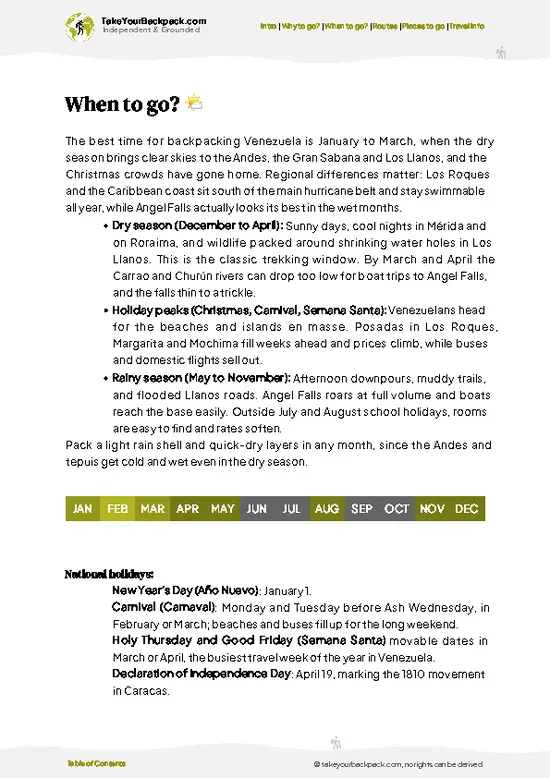
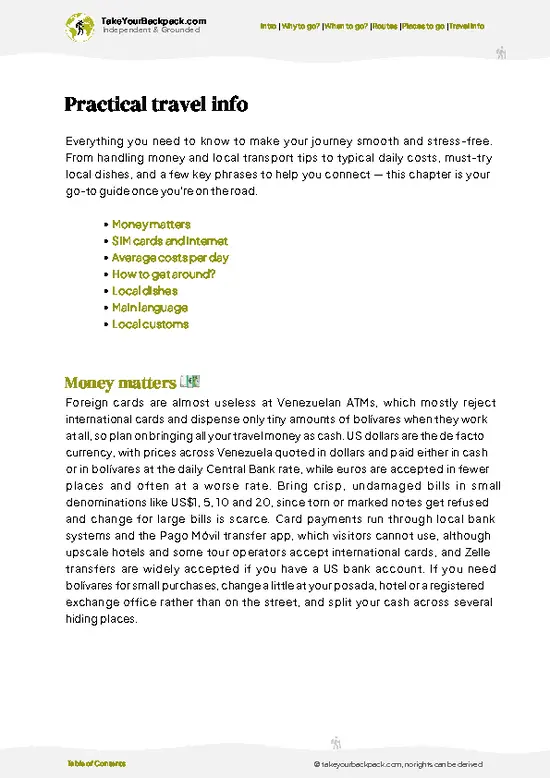
example page 0 from our offline Travel Guide for Venezuela
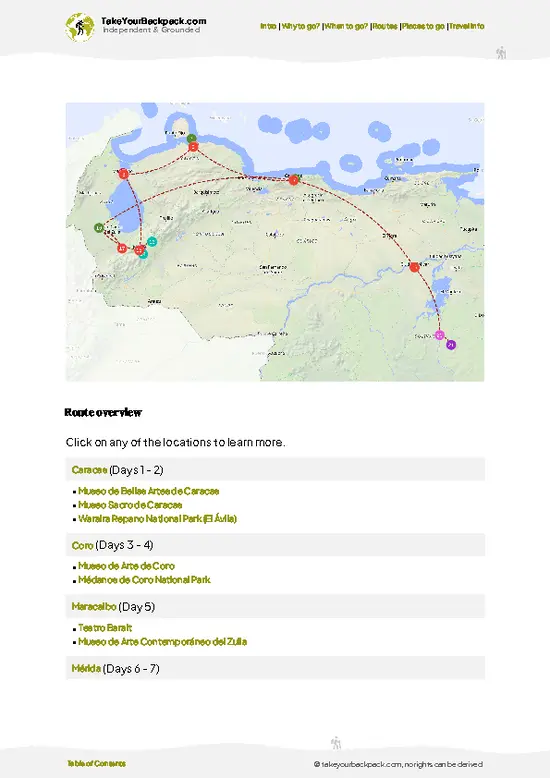
example page 1 from our offline Travel Guide for Venezuela
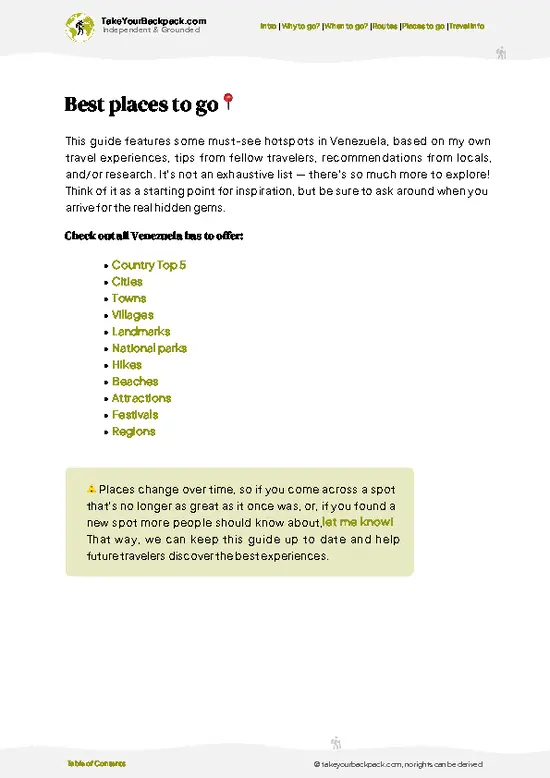
example page 2 from our offline Travel Guide for Venezuela
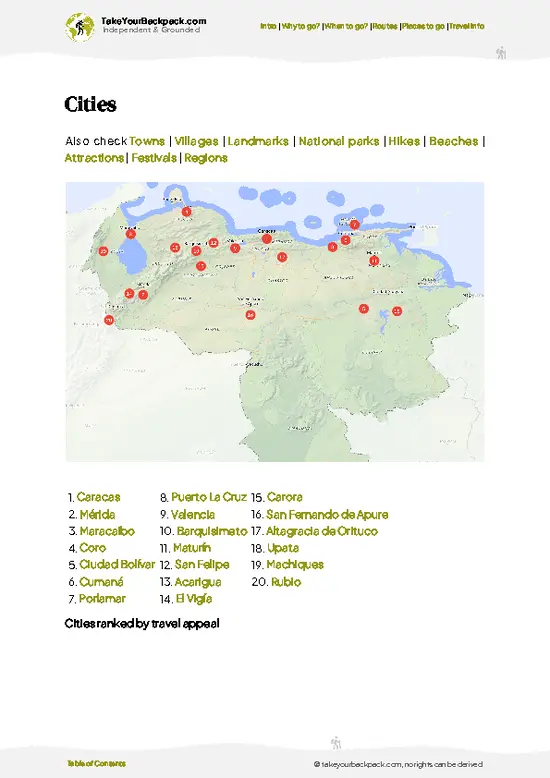
example page 3 from our offline Travel Guide for Venezuela
example page 4 from our offline Travel Guide for Venezuela
example page 5 from our offline Travel Guide for Venezuela
example page 6 from our offline Travel Guide for Venezuela
example page 7 from our offline Travel Guide for Venezuela
Loading the map 🌍
CLICK TO FILTER
cities
towns
villages
landmarks
national parks
hikes
beaches
attractions
festivals
regions
SHOW COUNTRY’S BESTSHOW ALL

✨ Why go?
Ranked #6 national park in Venezuela
What makes it a must-see national park

Médanos de Coro National Park works for backpackers because it asks for nothing but a pair of legs and a bottle of water. You roam freely across the dunes, pick your own ridge and walk until the city noise fades, with no guide required and no fixed route to follow. That freedom is the real pull. The park also sits beside Coro’s UNESCO-listed colonial center, so you can spend the morning on sand and the afternoon among old Caribbean-style adobe houses and churches. Cheap guesthouses in town make it easy to stay several nights and return at different hours, when the light and wind change the shapes of the dunes. Rent a board or simply use a piece of cardboard, as locals do, and slide down the steepest faces. The isthmus setting gives you sea on both sides at some points, a rare view for a dune walk. Self-guided is the right way here.

💡 HighlightsKey sights and experiences for travelers

  1. The main dune field: The big draw, with tall, wind-sculpted crests of pale sand that you can climb freely, and views that stretch to the sea.
  2. Sandboarding and sliding: Steep slip faces near the entrance suit boards or cardboard, and the climb back up is the workout.
  3. The isthmus viewpoints: From the higher crests you see the Caribbean on one side and the Gulf of Venezuela side on the other, a thin strip of land between them.
  4. Wind ripples at dawn: Early light picks out the fine ripple patterns before footprints cover them, a favorite for photographers.
  5. Desert scrub edge: Cactus, thorny shrubs and low brush mark where dunes meet scrubland, with lizards and birds active in the cooler hours.
  6. Coastal flats and shoreline: The dunes taper toward the water, where you can walk along the sandy margin and
… read more 👉
  1. The main dune field: The big draw, with tall, wind-sculpted crests of pale sand that you can climb freely, and views that stretch to the sea.
  2. Sandboarding and sliding: Steep slip faces near the entrance suit boards or cardboard, and the climb back up is the workout.
  3. The isthmus viewpoints: From the higher crests you see the Caribbean on one side and the Gulf of Venezuela side on the other, a thin strip of land between them.
  4. Wind ripples at dawn: Early light picks out the fine ripple patterns before footprints cover them, a favorite for photographers.
  5. Desert scrub edge: Cactus, thorny shrubs and low brush mark where dunes meet scrubland, with lizards and birds active in the cooler hours.
  6. Coastal flats and shoreline: The dunes taper toward the water, where you can walk along the sandy margin and watch shorebirds.
  7. Sunset ridge walk: Late afternoon brings softer heat, long shadows and the best color across the sand.
For a first visit, climb the main dune field in the early morning, because it gives you the full view, the best light and the coolest sand.
Spotted a mistake or missing something? Contact us.

🌤️ When to go?Best time to explore Médanos de Coro

  • Dry Season (December to April): Coro sits in one of Venezuela’s driest corners, so rain is rare all year, and these months bring steady trade winds that keep the dunes shifting and the heat bearable. Highs run 30 to 33°C (86 to 91°F), nights 23 to 25°C (73 to 77°F).
  • Carnival and Easter Weeks: Venezuelan holidaymakers fill the dunes, guesthouse rates rise by roughly 20 to 30 percent, and buses sell out early.
  • Hot Months (May to August): Highs reach 34 to 36°C (93 to 97°F) with little shade. Crowds thin out and beds are easy to find at the lowest prices.
  • Wetter Months (September to November): Short, sudden showers arrive, usually 50 to 100 mm a month at most. Sand packs firm and cooler for walking, though humidity climbs.
  • Daylight: Days stay near 11 to 13 hours across the year, so plan dune walks
… read more 👉
  • Dry Season (December to April): Coro sits in one of Venezuela’s driest corners, so rain is rare all year, and these months bring steady trade winds that keep the dunes shifting and the heat bearable. Highs run 30 to 33°C (86 to 91°F), nights 23 to 25°C (73 to 77°F).
  • Carnival and Easter Weeks: Venezuelan holidaymakers fill the dunes, guesthouse rates rise by roughly 20 to 30 percent, and buses sell out early.
  • Hot Months (May to August): Highs reach 34 to 36°C (93 to 97°F) with little shade. Crowds thin out and beds are easy to find at the lowest prices.
  • Wetter Months (September to November): Short, sudden showers arrive, usually 50 to 100 mm a month at most. Sand packs firm and cooler for walking, though humidity climbs.
  • Daylight: Days stay near 11 to 13 hours across the year, so plan dune walks for the first and last hours of light.
Go on a weekday outside holidays to have the dunes nearly to yourself.


source: climatestotravel.comJANJanuary: highly recommended for travelingFEBFebruary: excellent for travelingMARMarch: excellent for travelingAPRApril: highly recommended for travelingMAYMay: fair for travelingJUNJune: fair for travelingJULJuly: fair for travelingAUGAugust: fair for travelingSEPSeptember: fair for travelingOCTOctober: fair for travelingNOVNovember: fair for travelingDECDecember: good for traveling
venezuela-national-park-medanos-de-coro-national-park v1
© Google |

✈️ The backpacker research shortcutVenezuela Travel Guide

An offline-friendly backpacking guide with optimized travel routes, ranked highlights, transport advice, and the best areas to stay.
example page 0 from our offline Travel Guide for Venezuela
example page 1 from our offline Travel Guide for Venezuela
example page 2 from our offline Travel Guide for Venezuela
example page 3 from our offline Travel Guide for Venezuela
example page 4 from our offline Travel Guide for Venezuela
example page 5 from our offline Travel Guide for Venezuela
example page 6 from our offline Travel Guide for Venezuela
example page 7 from our offline Travel Guide for Venezuela
The digital guide (290 pages) contains:
✅ 91 highlights, ranked by travel appeal
✅ Optimized 5, 10 & 15-day travel routes
✅ Cities, national parks, landmarks, beaches
✅ How to get around
✅ Offline-friendly for travel without Wi-Fi
👉 Click to see all 30+ guide features

📅 Plan smarter in minutes, not weeks
✅ Month by month travel advice
✅ Festivals & national holidays
✅ Budget expectations

🗺️ Go to the right places, skip the overrated ones
✅ Honest pros & cons of destinations
✅ Top hikes, parks & viewpoints
✅ Lesser-known places most travelers miss
✅ Clear “worth it vs skip it” guidance

🛏️ Travel smoothly without rookie mistakes
✅ Best areas to stay
✅ Transport systems explained simply
✅ Common scams & safety advice
✅ SIM cards, money & practical tips

🌍 Understand the country, not just visit it
✅ Culture & traditions
✅ 52 Essential phrases & customs
✅ Festivals worth planning around
✅ Traveler-friendly historical context
✅ Insights that make places more meaningful

📱 Built for real travel conditions
✅ Fully downloadable PDF
✅ Works completely offline
✅ Optimized for phone use
✅ Useful in remote areas & buses
✅ Everything in one place
Stop searching, start planning
Get instant access to your full guide. 30‑day money-back guarantee.
+ Add another guide for just

By proceeding you agree to our terms.
Sent to your inbox immediately after payment • 100% Secure Checkout
Best Backpacking Travel Advisor 2025 tourism awardBest Backpacking
Travel Advisor
2025
What others say about Take Your Backpack Guides:
⭐⭐⭐⭐⭐
Fantastic, amazing amount of information!
⭐⭐⭐⭐⭐
My goodness this is amazing, it's what I've been looking for hats off too you!
⭐⭐⭐⭐⭐
I think this is absolutely BRILLIANT
⭐⭐⭐⭐
Very complete and informative. It's still missing places, but I gotta to commend you
⭐⭐⭐⭐⭐
This is truly amazing, thank you, can't wait to explore it with my kids!
⭐⭐⭐⭐⭐
Awesome resource, thank you!
⭐⭐⭐⭐⭐
This is amazing! Can't wait to explore the ones I haven't seen
⭐⭐⭐⭐
I love this! Well done, great idea.
⭐⭐⭐⭐⭐
Thanks for taking the time to make this gem!
⭐⭐⭐⭐⭐
This might be the best website I've ever seen.
⭐⭐⭐⭐⭐
Congratulations, and thank you so much for your work; it's incredibly valuable.
⭐⭐⭐⭐
In all seriousness I think you did a great job pointing out the important spots
⭐⭐⭐⭐⭐
10/10 very good
⭐⭐⭐⭐⭐
As someone who's only just starting to visit regularly this is awesome, thank you.
⭐⭐⭐⭐
Thank you very much! I'm going to visit my dad, it's going to be very useful!
⭐⭐⭐⭐⭐
This is really cool! We'll be travelling for the first time and this definitely come in handy.
⭐⭐⭐⭐⭐
You are now our minister of culture, congratulations 👨‍💼
⭐⭐⭐⭐⭐
Just wanted to tell you that this is a pearl! Going to follow your recommendations.
⭐⭐⭐⭐⭐
This is so cool. I'll definitely be using the resource for my travels soon.
⭐⭐⭐⭐⭐
This is very impressive! Good work.
⭐⭐⭐⭐⭐
This is an amazing and informative site. Very well done!

🛏️ Where to stay?Where staying makes the most sense

The best base is the city of Coro, a 10 to 15 minute drive from the dunes, because the park has no lodging inside and camping is not formally organized. Coro’s colonial center, a UNESCO World Heritage site, holds most of the budget posadas. Expect US$12 to 25 for a private room with fan or air conditioning in a family-run posada, and US$8 to 12 for the occasional basic bed. A few mid-range hotels near the center and along Avenida Los Médanos charge US$30 to 55, and some have pools that feel miraculous after a day on the sand. Staying in the old center puts you within walking distance of cafés, … read more 👉
The best base is the city of Coro, a 10 to 15 minute drive from the dunes, because the park has no lodging inside and camping is not formally organized. Coro’s colonial center, a UNESCO World Heritage site, holds most of the budget posadas. Expect US$12 to 25 for a private room with fan or air conditioning in a family-run posada, and US$8 to 12 for the occasional basic bed. A few mid-range hotels near the center and along Avenida Los Médanos charge US$30 to 55, and some have pools that feel miraculous after a day on the sand. Staying in the old center puts you within walking distance of cafés, the cathedral and the market, and shared taxis (por puestos) run to the park entrance along the avenue. Rooms along the main avenue are closer to the dunes but you will need transport at night. Book ahead for Carnival and Easter, since small posadas fill quickly. If you want a quieter option, the coastal town of Tucacas, about 160 km to the east, suits those combining the dunes with Morrocoy National Park beaches.

👛 Costs (as of 19 October 2026)How expensive it really is

A backpacker can expect to spend about US$37 a day around Médanos de Coro National Park, with a bed in Coro taking the largest share. The park is a short ride from town, so costs stay low.
CategoryBudget RangeLocal Reality
Entrance feeUS$0The dunes are open and free to walk, with no ticket booth at the main access points.
Accommodation (high season)US$15 to 25Private rooms in family-run posadas in Coro, with prices rising during Carnival and Easter.
Accommodation (low season)US$10 to 18Rooms are easy to negotiate in the hot months.
Local transportUS$2 to 8Shared taxis and buses to the dunes cost little, and a private taxi round trip runs more.
Food and suppliesUS$8 to 15Set lunches, arepas and empanadas are cheap, and bottled water is a daily cost.
ActivitiesUS$0 to 10Sandboarding or a photo-stop
… read more 👉
A backpacker can expect to spend about US$37 a day around Médanos de Coro National Park, with a bed in Coro taking the largest share. The park is a short ride from town, so costs stay low.
CategoryBudget RangeLocal Reality
Entrance feeUS$0The dunes are open and free to walk, with no ticket booth at the main access points.
Accommodation (high season)US$15 to 25Private rooms in family-run posadas in Coro, with prices rising during Carnival and Easter.
Accommodation (low season)US$10 to 18Rooms are easy to negotiate in the hot months.
Local transportUS$2 to 8Shared taxis and buses to the dunes cost little, and a private taxi round trip runs more.
Food and suppliesUS$8 to 15Set lunches, arepas and empanadas are cheap, and bottled water is a daily cost.
ActivitiesUS$0 to 10Sandboarding or a photo-stop guide costs a few dollars, and a walk is free.
Total Daily BudgetUS$37Based on the high-season bed at US$15 plus mid-range figures for the other rows, paying in bolívares or cash dollars.
⚠️ Prices can change and everyone travels differently, so take this as a rough guide. Hope it helps you plan your adventure!

🥾 TrailsHiking Médanos de Coro national park: highlights and difficulty

Médanos de Coro National Park has no formal marked trails, so the walks people actually do are open wanderings across the sand. Most start near the main entrance on the road toward the isthmus and head up the nearest crests.
  • Main dune ridge walk: Start at the entrance and climb the tallest crests for the broad views. Allow 1 to 2 hours, easy in distance but tiring because the sand is soft and the slopes steep.
  • Shoreline stroll: Follow the dunes toward the water and walk the sandy margin. About 1 hour, flat, with shorebirds and wind.
  • Scrub edge loop: Circle the vegetated border where cactus and thorn
… read more 👉
Médanos de Coro National Park has no formal marked trails, so the walks people actually do are open wanderings across the sand. Most start near the main entrance on the road toward the isthmus and head up the nearest crests.
  • Main dune ridge walk: Start at the entrance and climb the tallest crests for the broad views. Allow 1 to 2 hours, easy in distance but tiring because the sand is soft and the slopes steep.
  • Shoreline stroll: Follow the dunes toward the water and walk the sandy margin. About 1 hour, flat, with shorebirds and wind.
  • Scrub edge loop: Circle the vegetated border where cactus and thorn brush grow. Roughly 1 hour, easy, with lizards and small birds.
  • Terrain: Loose, fine sand that shifts underfoot, no shade, and strong wind that can blow grit into your face.
  • Wildlife: Mostly reptiles, birds and occasional small mammals, best seen early.
Bring a hat, sunglasses, a scarf for blowing sand and more water than seems necessary. The park is easy to reach from Coro by local bus or taxi, as the dunes lie right beside the city. Weekdays are quiet, while weekends bring families and sandboarders. Entry is usually free or very low cost, and any small fee is paid in local currency. Go early or late, as midday heat is intense and the sand can burn.
⚠️ Hiking info can sometimes be outdated or inaccurate. Before you hit the trail, check the latest conditions with locals. If you do spot anything that's off, I'd love to hear from you, so I can update it for fellow travelers.

🛡️ SafetySafety Tips and Common Scams in Médanos de Coro

Médanos de Coro is a flat, open dune field where the main hazards are heat, sun and wind rather than terrain. Shade is almost nonexistent, so walk early or late, wear a hat and long light sleeves, and carry at least 2 to 3 liters of water per person, as there are no reliable refreshments inside the dunes. Blowing sand gets into eyes and cameras, so sunglasses and a bag cover help. Dunes shift and look alike, so keep the road or the highway in sight and note your return direction before wandering far. Wildlife is minimal, mostly lizards, birds and the odd scorpion or snake in vegetation, so shake out shoes if you camp. Coro itself has the usual city petty-theft risks, so go in daylight, avoid displaying phones and valuables, and use registered taxis or arranged transport back after sunset.

FAQCommon questions from travelers

Half a day is enough for Médanos de Coro National Park, since the dune field is compact and best walked in the early morning or late afternoon. Most travelers add a day to see Coro’s colonial center and the nearby Paraguaná or Tucacas coast. Two nights in Coro covers everything comfortably.
Yes, Médanos de Coro National Park is easy to reach without a car because it sits on the edge of Coro, about 10 to 15 minutes from the center. Shared taxis and city buses along Avenida Los Médanos cost roughly US$0.50 to 1, and a private taxi is around US$3 to 6 each way. Walking from the central avenue to the sand takes about 30 to 40 minutes, but the heat makes transport wiser.
No, Médanos de Coro National Park has no entrance fee and no permit is normally required for day visits, since the dunes are open to the public beside the main road. Guides, sandboarding or refreshments from stalls cost a few dollars. Bring cash, as card payments are unreliable, and carry your own water.
⚠️ Things can change over time, so always validate details locally before you go.

Other Venezuelan national parks near Médanos de Coro

Explore more nearby:


💡 Not sure where to go next?
Create a personalized itinerary for Venezuela including Médanos de Coro and the places that fit your trip.

Generate my itinerary

👉 Discover all national parks

Or checkout all Venezuela has to offer (think cities, towns, villages, national parks, hikes, beaches, festivals)
Country photo of Venezuela

We 💚 feedbackParting advice and final tips

Médanos de Coro National Park is at its best in the first hour after dawn, when the sand is cool, the wind is soft and the ripples are still untouched. I would go then, bring a scarf for blowing grit, and be off the dunes before the heat settles in.

✍️ Help improve this page!
The information on this page is based on in-depth research, insights shared by experienced travelers, and feedback from the local travel community in Venezuela. While every effort is made to keep the information accurate and current, conditions can change — so if you spot anything incorrect or outdated, please get in touch.


🙋‍♂️ Give feedback

👋 Meet the founderWho’s Behind Take Your Backpack?

Johan, backpacker and founder of TakeYourBackpackHi, I’m Johan (Netherlands 🇳🇱), the creator of TakeYourBackpack. Over the past 3 decades, I’ve backpacked through 90+ countries across six continents, gaining extensive experience with independent travel, long-term trips, and overland routes.

This site is built on a combination of firsthand travel experience and carefully curated insights from other backpackers. Many guides are based on places I’ve personally visited, while others bring together tips, observations, and practical advice shared by trusted travelers I’ve met along the way.

The goal is to provide realistic, experience-driven guidance — not generic itineraries — so you can explore destinations with better context, clearer expectations, and more confidence.