×

Venezuela🇻🇪 | national parksCueva del Guácharo National ParkOilbird cave, Caripe valley, limestone galleries, coffee slopes | things to do and best time to go

Explore Sierra de La Culata National ParkExplore Médanos de Coro National Park

Backpacking in Cueva del Guácharo
🌟 Highlightnational park ranked #7
By Johan Kruseman 🇳🇱 | Updated October 19, 2026

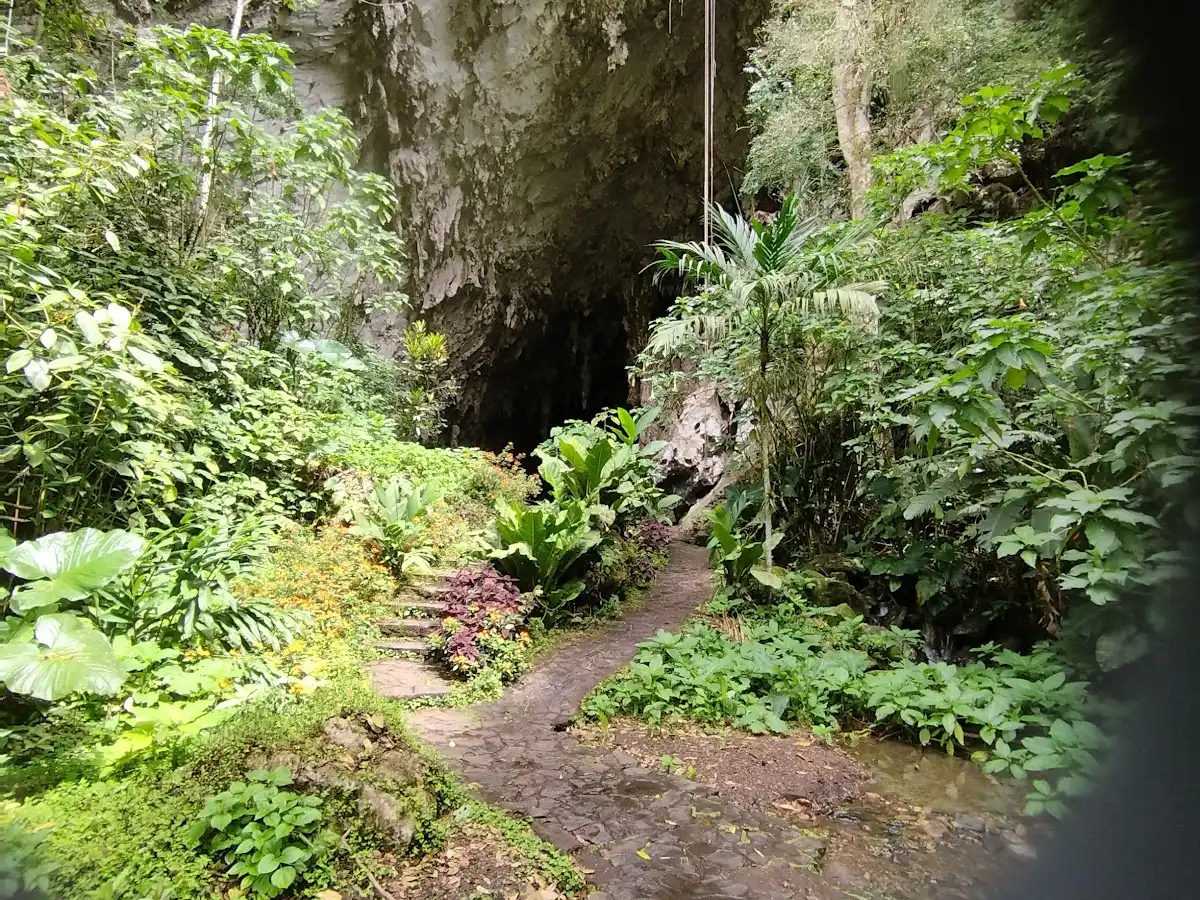
The cave is Venezuela's first national monument, declared in 1949, and the oilbirds inside it leave at dusk to forage, so the cave itself is only half the story. Cueva del Guácharo National Park sits in the mountains of Monagas state, in the east of Venezuela, near the town of Caripe. The cave is the draw: guided, cool, dripping, loud with bird shrieks. Hiking is limited and the guides keep you on a set route, so skip the idea of a multi-day trek. Wildlife is the strongest card, and the cloud forest around Caripe is green and quiet. Access takes a long road day from Cumaná or Maturín, and delays are common, so leave early and carry small bills in bolívares or dollars. Cameras are usually barred inside, so leave them in your bag. Day one: arrive in Caripe, drop your pack, tour the cave in the morning, then walk the forest edge.

Discover everything you want to know in the 📖 Venezuela Travel Guide.
Safety warning

The current risk level for Venezuela is high. Check the advice before going.


example page 0 from our offline Travel Guide for Venezuela
example page 1 from our offline Travel Guide for Venezuela
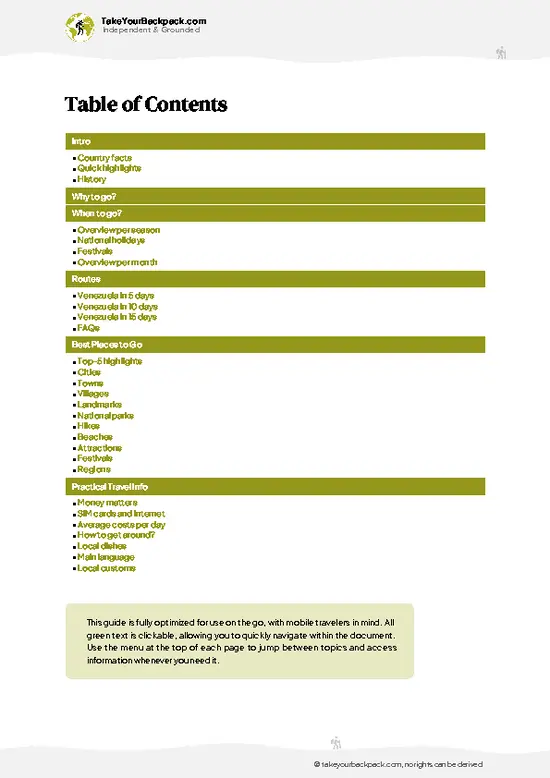
example page 2 from our offline Travel Guide for Venezuela
example page 3 from our offline Travel Guide for Venezuela
example page 4 from our offline Travel Guide for Venezuela
example page 5 from our offline Travel Guide for Venezuela
example page 6 from our offline Travel Guide for Venezuela
example page 7 from our offline Travel Guide for Venezuela
Loading the map 🌍
CLICK TO FILTER
cities
towns
villages
landmarks
national parks
hikes
beaches
attractions
festivals
regions
SHOW COUNTRY’S BESTSHOW ALL

✨ Why go?
Ranked #7 national park in Venezuela
What sets this place apart

Cueva del Guácharo National Park suits backpackers who like to assemble a trip themselves, because Caripe is a small, walkable highland town where a single guided cave visit, a few forest walks and a cheap local meal fill a day without any tour package. The headline is the colony of oilbirds, nocturnal fruit-eating birds that navigate by echolocation, and you hear them long before your eyes adjust. The cave runs more than 10 kilometers, though the public tour covers only the first stretch, with stalactite galleries that guides name and light up. The surrounding Caripe valley adds coffee farms, cool mountain air and easy day walks, so you are not locked into one activity. Pace is slow, prices are low, and the park works well as a mid-route pause between the coast and the interior. Self-guided … read more 👉
Cueva del Guácharo National Park suits backpackers who like to assemble a trip themselves, because Caripe is a small, walkable highland town where a single guided cave visit, a few forest walks and a cheap local meal fill a day without any tour package. The headline is the colony of oilbirds, nocturnal fruit-eating birds that navigate by echolocation, and you hear them long before your eyes adjust. The cave runs more than 10 kilometers, though the public tour covers only the first stretch, with stalactite galleries that guides name and light up. The surrounding Caripe valley adds coffee farms, cool mountain air and easy day walks, so you are not locked into one activity. Pace is slow, prices are low, and the park works well as a mid-route pause between the coast and the interior. Self-guided travel works for the area; only the cave itself requires a guide.

💡 HighlightsMust-see experiences and standout moments

  1. Cueva del Guácharo: the main attraction, a long limestone cave where guides lead you past formations, fossil-like shapes and a deafening oilbird colony. Entry is by guided group only.
  2. Oilbird colony: the guácharos nest on ledges inside, and their clicking calls fill the dark galleries. The park protects the species.
  3. Humboldt Hall: a chamber in the first stretch of the cave named for the naturalist Alexander von Humboldt, who explored here in 1799 and described the birds.
  4. Cave formations: stalactites and stalagmites in forms guides name aloud, such as the cathedral-like columns and the guácharo-shaped rocks.
  5. Cloud forest trail near the entrance: short paths under ferns and tall trees, with birdsong and mossy trunks and a cool, damp feel.
  6. Caripe town: a quiet mountain base with a small market, bakeries
… read more 👉
  1. Cueva del Guácharo: the main attraction, a long limestone cave where guides lead you past formations, fossil-like shapes and a deafening oilbird colony. Entry is by guided group only.
  2. Oilbird colony: the guácharos nest on ledges inside, and their clicking calls fill the dark galleries. The park protects the species.
  3. Humboldt Hall: a chamber in the first stretch of the cave named for the naturalist Alexander von Humboldt, who explored here in 1799 and described the birds.
  4. Cave formations: stalactites and stalagmites in forms guides name aloud, such as the cathedral-like columns and the guácharo-shaped rocks.
  5. Cloud forest trail near the entrance: short paths under ferns and tall trees, with birdsong and mossy trunks and a cool, damp feel.
  6. Caripe town: a quiet mountain base with a small market, bakeries and local cheese and coffee stalls.
  7. Coffee farms of the Caripe valley: farm visits and roadside views over terraces of coffee on steep slopes.
Combine the cave tour in the morning with the forest trail near the entrance in the afternoon, since both sit at the same gate.
Spotted a mistake or missing something? Contact us.
🌤️ When to go?When to go for the best experience

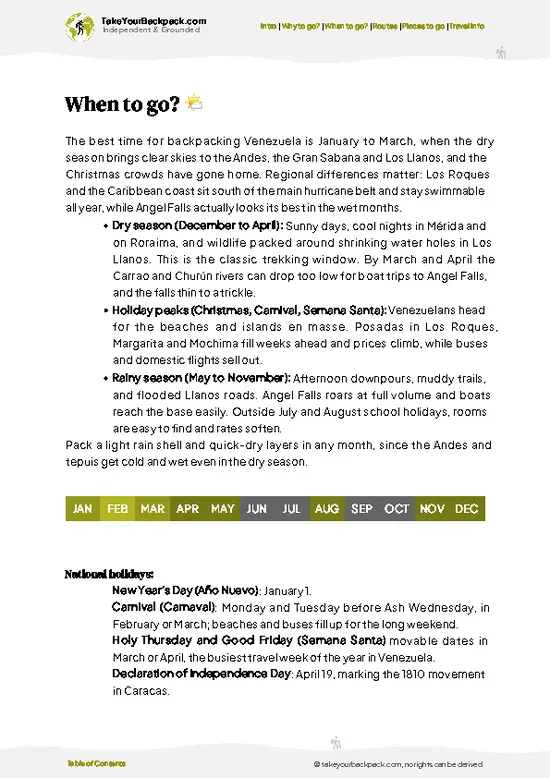
  • Dry Season (December to April): Drier trails and the easiest conditions for the cave and the nearby Cerro Negro road. Daytime highs run 24 to 28°C (75 to 82°F), nights 15 to 18°C (59 to 64°F) at the park’s roughly 1,000 m elevation.
  • Rainy Season (May to November): Afternoon downpours are common, the paths turn slick, and cave streams run higher. Expect 20 to 26°C (68 to 79°F) and heavy cloud that hides the valley views.
  • Holidays and Weekends: Carnival, Holy Week and Christmas fill the road to Caripe with Venezuelan families, and lodging prices rise. Midweek visits are quiet.
  • Daylight: Days stay close to 12 hours all year, so plan cave tours for the morning.
  • Oilbird Season: The oilbirds live in the cave year-round, so there is no wrong month for them.
Go midweek in February or March and you get dry paths with almost no crowds.

source: climatestotravel.comJANJanuary: excellent for travelingFEBFebruary: excellent for travelingMARMarch: excellent for travelingAPRApril: highly recommended for travelingMAYMay: fair for travelingJUNJune: fair for travelingJULJuly: fair for travelingAUGAugust: fair for travelingSEPSeptember: fair for travelingOCTOctober: fair for travelingNOVNovember: fair for travelingDECDecember: excellent for traveling
venezuela-national-park-cueva-del-guacharo-national-park
© Google |

✈️ The backpacker research shortcutVenezuela Travel Guide

An offline-friendly backpacking guide with optimized travel routes, ranked highlights, transport advice, and the best areas to stay.
example page 0 from our offline Travel Guide for Venezuela
example page 1 from our offline Travel Guide for Venezuela
example page 2 from our offline Travel Guide for Venezuela
example page 3 from our offline Travel Guide for Venezuela
example page 4 from our offline Travel Guide for Venezuela
example page 5 from our offline Travel Guide for Venezuela
example page 6 from our offline Travel Guide for Venezuela
example page 7 from our offline Travel Guide for Venezuela
The digital guide (290 pages) contains:
✅ 91 highlights, ranked by travel appeal
✅ Optimized 5, 10 & 15-day travel routes
✅ Cities, national parks, landmarks, beaches
✅ How to get around
✅ Offline-friendly for travel without Wi-Fi
👉 Click to see all 30+ guide features

📅 Plan smarter in minutes, not weeks
✅ Month by month travel advice
✅ Festivals & national holidays
✅ Budget expectations

🗺️ Go to the right places, skip the overrated ones
✅ Honest pros & cons of destinations
✅ Top hikes, parks & viewpoints
✅ Lesser-known places most travelers miss
✅ Clear “worth it vs skip it” guidance

🛏️ Travel smoothly without rookie mistakes
✅ Best areas to stay
✅ Transport systems explained simply
✅ Common scams & safety advice
✅ SIM cards, money & practical tips

🌍 Understand the country, not just visit it
✅ Culture & traditions
✅ 52 Essential phrases & customs
✅ Festivals worth planning around
✅ Traveler-friendly historical context
✅ Insights that make places more meaningful

📱 Built for real travel conditions
✅ Fully downloadable PDF
✅ Works completely offline
✅ Optimized for phone use
✅ Useful in remote areas & buses
✅ Everything in one place
Stop searching, start planning
Get instant access to your full guide. 30‑day money-back guarantee.
+ Add another guide for just

By proceeding you agree to our terms.
Sent to your inbox immediately after payment • 100% Secure Checkout
Best Backpacking Travel Advisor 2025 tourism awardBest Backpacking
Travel Advisor
2025
What others say about Take Your Backpack Guides:
⭐⭐⭐⭐⭐
Fantastic, amazing amount of information!
⭐⭐⭐⭐⭐
My goodness this is amazing, it's what I've been looking for hats off too you!
⭐⭐⭐⭐⭐
I think this is absolutely BRILLIANT
⭐⭐⭐⭐
Very complete and informative. It's still missing places, but I gotta to commend you
⭐⭐⭐⭐⭐
This is truly amazing, thank you, can't wait to explore it with my kids!
⭐⭐⭐⭐⭐
Awesome resource, thank you!
⭐⭐⭐⭐⭐
This is amazing! Can't wait to explore the ones I haven't seen
⭐⭐⭐⭐
I love this! Well done, great idea.
⭐⭐⭐⭐⭐
Thanks for taking the time to make this gem!
⭐⭐⭐⭐⭐
This might be the best website I've ever seen.
⭐⭐⭐⭐⭐
Congratulations, and thank you so much for your work; it's incredibly valuable.
⭐⭐⭐⭐
In all seriousness I think you did a great job pointing out the important spots
⭐⭐⭐⭐⭐
10/10 very good
⭐⭐⭐⭐⭐
As someone who's only just starting to visit regularly this is awesome, thank you.
⭐⭐⭐⭐
Thank you very much! I'm going to visit my dad, it's going to be very useful!
⭐⭐⭐⭐⭐
This is really cool! We'll be travelling for the first time and this definitely come in handy.
⭐⭐⭐⭐⭐
You are now our minister of culture, congratulations 👨‍💼
⭐⭐⭐⭐⭐
Just wanted to tell you that this is a pearl! Going to follow your recommendations.
⭐⭐⭐⭐⭐
This is so cool. I'll definitely be using the resource for my travels soon.
⭐⭐⭐⭐⭐
This is very impressive! Good work.
⭐⭐⭐⭐⭐
This is an amazing and informative site. Very well done!

🛏️ Where to stay?How to pick the right area

The best base is Caripe, a mountain town about 12 km from the cave, because the park has no lodging for backpackers. Posadas here run roughly US$15 to 40 a night for a private room, and a few have shared rooms or camping space for less. Most are family-run with hot water, breakfast and owners who know the local transport schedule.

A small camping area and picnic zone exist near the park entrance, but facilities are basic, so bring your own food and gear and check access when you arrive. Some guesthouses along the road between Caripe and the cave are a short walk or quick ride from the entrance, … read more 👉
The best base is Caripe, a mountain town about 12 km from the cave, because the park has no lodging for backpackers. Posadas here run roughly US$15 to 40 a night for a private room, and a few have shared rooms or camping space for less. Most are family-run with hot water, breakfast and owners who know the local transport schedule.

A small camping area and picnic zone exist near the park entrance, but facilities are basic, so bring your own food and gear and check access when you arrive. Some guesthouses along the road between Caripe and the cave are a short walk or quick ride from the entrance, which suits an early start for the first tour.

Maturín is the larger city to the south, about two to three hours away by road, and works as a transfer point with more hotels and bus links. Cumaná on the coast is the usual starting point from the north. Sleeping in Caripe saves you the long commute and puts restaurants, a market and local drivers within walking distance.

👛 Costs (as of 19 October 2026)Travel costs and budget guide for Cueva del Guácharo

A realistic daily budget for Cueva del Guácharo National Park is about US$28 to 56 per person, including a simple room in Caripe.
CategoryBudget RangeLocal Reality
Entrance and Cave TourUS$3 to 8Guided cave visits are required, and fees for foreigners are usually higher than for locals.
Accommodation (high season)US$15 to 25Simple posadas in Caripe; low season prices run a few dollars lower.
CampingUS$0 to 5Basic spots near the entrance, with limited facilities.
Local TransportUS$3 to 6Shared taxis or buses between Caripe and the cave entrance, plus occasional private rides.
Food and SuppliesUS$7 to 12Set lunches, arepas and empanadas in Caripe, plus snacks and water.
Total Daily BudgetUS$28 to 56About US$38 to 45 on a typical day, paying in cash.
⚠️ Prices can change and everyone travels differently, so take this as a rough guide. Hope it helps you plan your adventure!

🥾 TrailsBest hikes in Cueva del Guácharo national park

Cueva del Guácharo National Park is more about one superb guided cave walk than long trails, and the walking around it is gentle. The guided tour goes about 1 kilometer into the cave over uneven, damp, sometimes slippery stone, and usually takes 1 to 1.5 hours. The park has no long-distance route, so plan on short outings.
  • Cave tour: a guided walk of roughly 1 kilometer in and out, easy to moderate, with slick steps and low ceilings in places. Wear shoes with grip and bring a light layer, since the air is cool and wet.
  • Forest paths by the entrance: short, easy walks of 20 to 40 minutes through cloud
… read more 👉
Cueva del Guácharo National Park is more about one superb guided cave walk than long trails, and the walking around it is gentle. The guided tour goes about 1 kilometer into the cave over uneven, damp, sometimes slippery stone, and usually takes 1 to 1.5 hours. The park has no long-distance route, so plan on short outings.
  • Cave tour: a guided walk of roughly 1 kilometer in and out, easy to moderate, with slick steps and low ceilings in places. Wear shoes with grip and bring a light layer, since the air is cool and wet.
  • Forest paths by the entrance: short, easy walks of 20 to 40 minutes through cloud forest with ferns, bromeliads and birds. Good for a relaxed morning before or after the cave.
  • Caripe valley roads: gentle rural walks of 1 to 3 hours past coffee farms and small plots, with open views of the green mountains.
Wildlife is the highlight: oilbirds in the cave, and forest birds, butterflies and insects outside. Dusk is when the birds fly out, but visitors are not generally in the cave then.
Getting there takes a long day by road. Buses and shared cars run to Caripe from Cumaná, Maturín and Caracas, and then local transport or a short taxi covers the last stretch to the gate. The park is usually quiet on weekdays and busier at weekends and holidays, when groups fill tours. An entrance fee applies and is paid at the gate, often with a separate guide charge, so carry small bills. Cameras are typically not allowed inside the cave, so leave them at the entrance.
⚠️ Hiking info can sometimes be outdated or inaccurate. Before you hit the trail, check the latest conditions with locals. If you do spot anything that's off, I'd love to hear from you, so I can update it for fellow travelers.

🛡️ SafetyScams, Hazards, and Annoyances

The park is straightforward and well managed, and the main hazards are slippery footing and ordinary Venezuelan travel caution. Inside the cave, guides lead groups along a lit path, and the stone is wet and algae-slick, so wear shoes with real grip and not sandals. Flash photography and loud talking are discouraged because the oilbirds are light and noise sensitive, and you should follow your guide on this. Bring a small flashlight in case of delays but keep it pointed down.

Outside, rain makes the forest paths muddy, and afternoon storms arrive fast in the wet months, so start early. Carry water, a rain layer and insect repellent. On the road, travel in daylight, keep valuables out of sight, and use drivers arranged through your posada. Bring enough cash in dollars, as cards and ATMs are unreliable.

FAQCommon questions from travelers

Cueva del Guácharo National Park needs one full day for the cave tour and nearby paths, and two days if you want to add the Caripe area. The guided cave visit takes about 1.5 to 2 hours. Spend the afternoon on short walks or at the Caripe market, and stay one night in town.
Cueva del Guácharo National Park is reachable without a car by taking a bus to Caripe, then a shared taxi or short ride of roughly 12 km to the entrance. Buses connect from Maturín (about 2 to 3 hours) and Cumaná. Posadas in Caripe can arrange a driver for about US$3 to 8 each way.
Cueva del Guácharo National Park charges an entrance fee that includes the required guided cave tour, typically about US$3 to 8 for foreign visitors. No separate permit is needed for the standard cave visit. Bring cash, as card payments are unreliable, and arrive in the morning to join the first groups.
⚠️ Things can change over time, so always validate details locally before you go.

Other Venezuelan national parks near Cueva del Guácharo

Explore more nearby:


💡 Not sure where to go next?
Create a personalized itinerary for Venezuela including Cueva del Guácharo and the places that fit your trip.

Generate my itinerary

👉 Discover all national parks

Or checkout all Venezuela has to offer (think cities, towns, villages, national parks, hikes, beaches, festivals)
Country photo of Venezuela

We 💚 feedbackWhat to keep in mind

Give Cueva del Guácharo National Park one night in Caripe and two if you want a slow second morning among the coffee farms. The cave takes a couple of hours, so one night covers it. I would arrive early, leave the camera at the entrance, and bring shoes with real grip.

✍️ Help improve this page!
The information on this page is based on in-depth research, insights shared by experienced travelers, and feedback from the local travel community in Venezuela. While every effort is made to keep the information accurate and current, conditions can change — so if you spot anything incorrect or outdated, please get in touch.


🙋‍♂️ Give feedback

👋 Meet the founderWho’s Behind Take Your Backpack?

Johan, backpacker and founder of TakeYourBackpackHi, I’m Johan (Netherlands 🇳🇱), the creator of TakeYourBackpack. Over the past 3 decades, I’ve backpacked through 90+ countries across six continents, gaining extensive experience with independent travel, long-term trips, and overland routes.

This site is built on a combination of firsthand travel experience and carefully curated insights from other backpackers. Many guides are based on places I’ve personally visited, while others bring together tips, observations, and practical advice shared by trusted travelers I’ve met along the way.

The goal is to provide realistic, experience-driven guidance — not generic itineraries — so you can explore destinations with better context, clearer expectations, and more confidence.