×

Venezuela🇻🇪 | attractionsMuseo de Arte Contemporáneo del ZuliaSkylit halls, installation rooms, Zulia campus, prints and photography | things to do and best time to go

Explore Museo de Arte Moderno Jesús SotoExplore Teatro Teresa Carreño

Backpacking in Museo de Arte Contemporáneo del Zulia
🌟 Highlightattraction ranked #7
By Johan Kruseman 🇳🇱 | Updated October 19, 2026

Your sneakers squeak on polished concrete as a wall-sized canvas swallows the light from a skylit hall, and the air conditioning hits like a favor after Maracaibo’s heat. The Museo de Arte Contemporáneo del Zulia sits in the north of Venezuela, on the Universidad del Zulia campus in northern Maracaibo. It is big, about 13,000 square meters, so it rarely feels crowded. Expect quiet rooms and a few student groups, not queues. It is not a quick photo stop, and the surrounding campus avenues have little else to hold you. Inside, painting, sculpture, prints, photography and installations reward an unhurried hour or two, and entry has been cheap or free. Check that the galleries are open before you cross the city, because exhibition halls sometimes close between shows.

Discover everything you want to know in the 📖 Venezuela Travel Guide.
Safety warning

The current risk level for Venezuela is high. Check the advice before going.


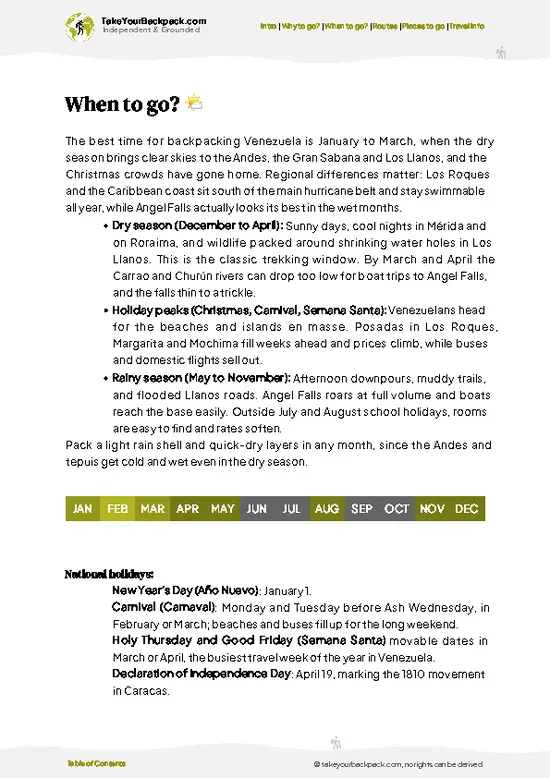
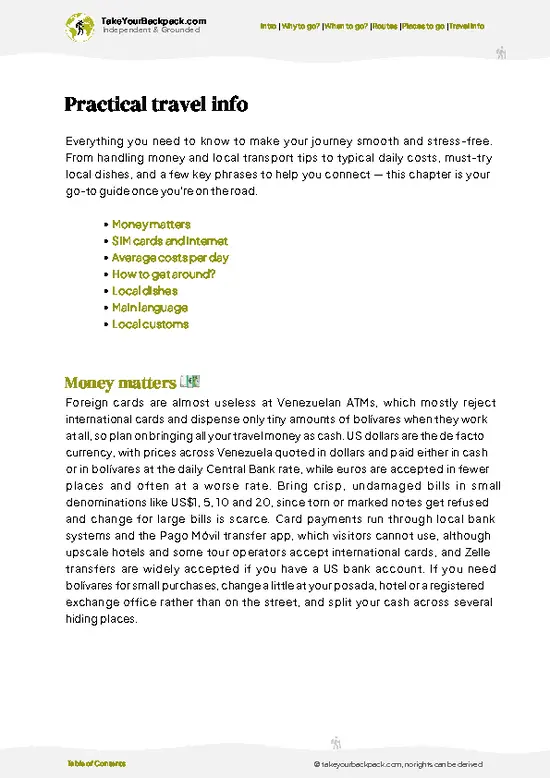
example page 0 from our offline Travel Guide for Venezuela
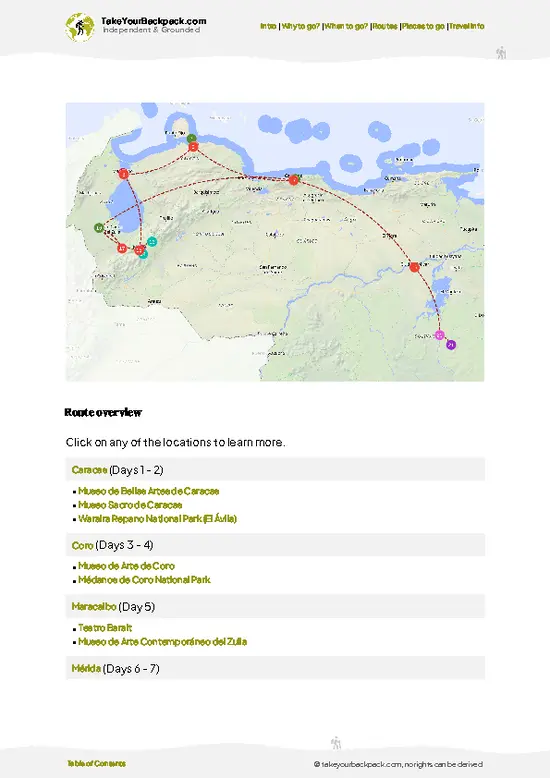
example page 1 from our offline Travel Guide for Venezuela
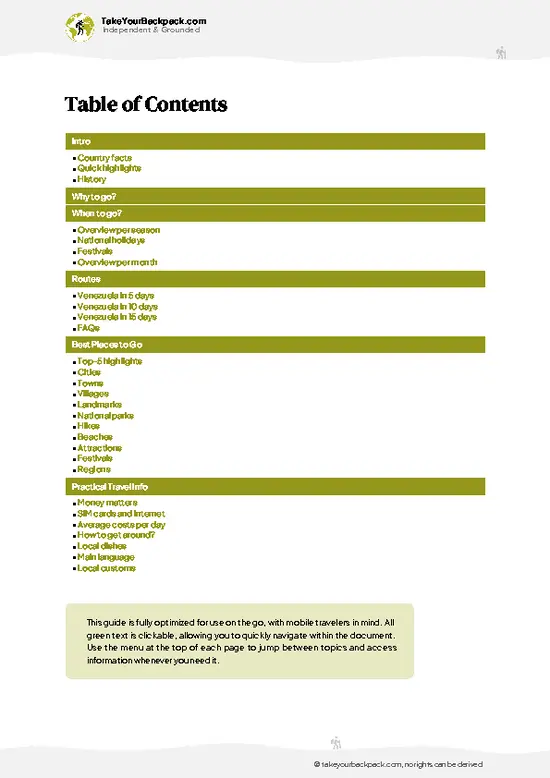
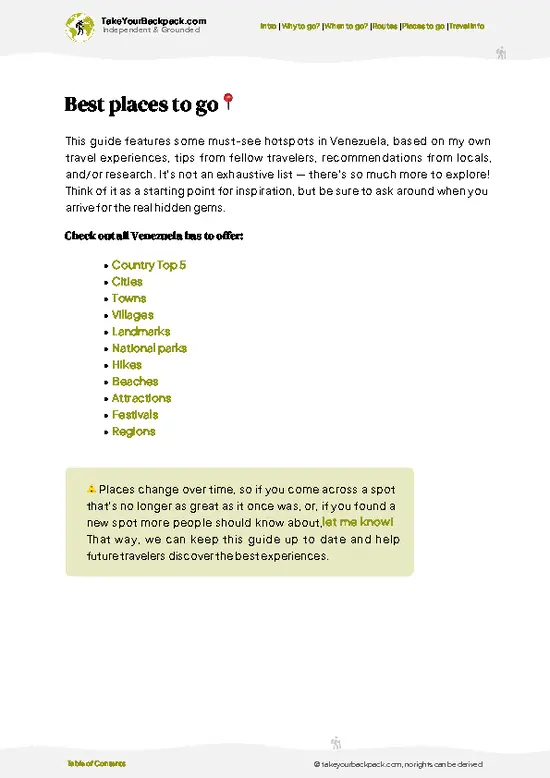
example page 2 from our offline Travel Guide for Venezuela
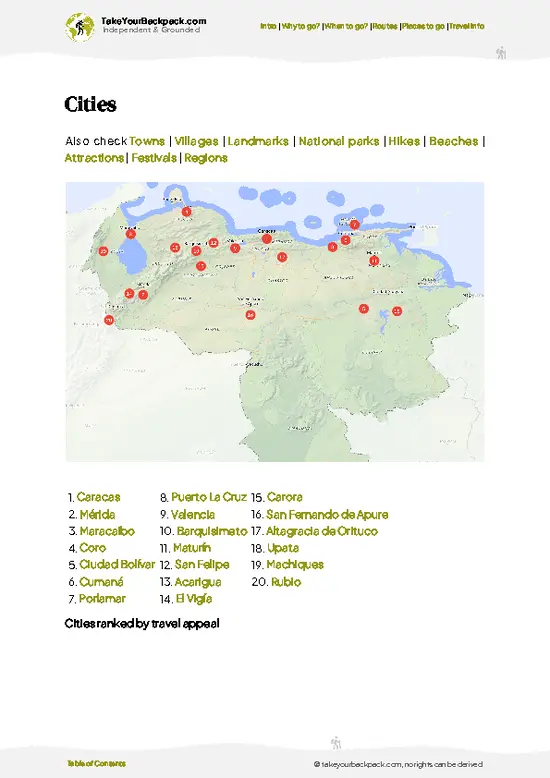
example page 3 from our offline Travel Guide for Venezuela
example page 4 from our offline Travel Guide for Venezuela
example page 5 from our offline Travel Guide for Venezuela
example page 6 from our offline Travel Guide for Venezuela
example page 7 from our offline Travel Guide for Venezuela
Loading the map 🌍
CLICK TO FILTER
cities
towns
villages
landmarks
national parks
hikes
beaches
attractions
festivals
regions
SHOW COUNTRY’S BESTSHOW ALL

✨ Why go?
Ranked #7 attraction in Venezuela
Why visitors keep coming back

The Museo de Arte Contemporáneo del Zulia is where Maracaibo shows its artistic side, away from the lake and the heat of the old streets. If your Venezuela route is mostly beaches, mountains and Angel Falls, this is the stop that adds a city with its own creative voice.

The 13,000 square meters of space let large installations and big sculptures breathe in a way cramped colonial museums cannot. The permanent collection covers painting, sculpture, prints, photography and installations, so one visit gives a wide look at modern Venezuelan art rather than a single style.

It also sits on the Universidad del Zulia campus, which means you share the grounds with students, cafeteria chatter and the daily rhythm of a working university. That is a side of Maracaibo most backpackers never see, and it … read more 👉
The Museo de Arte Contemporáneo del Zulia is where Maracaibo shows its artistic side, away from the lake and the heat of the old streets. If your Venezuela route is mostly beaches, mountains and Angel Falls, this is the stop that adds a city with its own creative voice.

The 13,000 square meters of space let large installations and big sculptures breathe in a way cramped colonial museums cannot. The permanent collection covers painting, sculpture, prints, photography and installations, so one visit gives a wide look at modern Venezuelan art rather than a single style.

It also sits on the Universidad del Zulia campus, which means you share the grounds with students, cafeteria chatter and the daily rhythm of a working university. That is a side of Maracaibo most backpackers never see, and it makes a cool, calm break from the city’s weather.

💡 HighlightsMust-see experiences and standout moments

  1. Permanent collection galleries: the core of the museum, with painting, sculpture, prints and photography. Walk it in order to see how contemporary work developed over decades.
  2. Installation rooms: large, open halls suit installations that would be squeezed elsewhere. You can walk around and through the pieces rather than peer at them.
  3. Sculpture displays: three-dimensional works get room to be circled, and the light changes how surfaces read as you move.
  4. Photography exhibits: a quieter corner where prints and photographs give a different view of Venezuelan life and image-making.
  5. Printmaking works: smaller, detailed pieces that reward close looking, ideal when the big halls start to blur.
  6. Temporary exhibitions: rotating shows change what you see, so a second visit can feel new. Ask at the entrance
… read more 👉
  1. Permanent collection galleries: the core of the museum, with painting, sculpture, prints and photography. Walk it in order to see how contemporary work developed over decades.
  2. Installation rooms: large, open halls suit installations that would be squeezed elsewhere. You can walk around and through the pieces rather than peer at them.
  3. Sculpture displays: three-dimensional works get room to be circled, and the light changes how surfaces read as you move.
  4. Photography exhibits: a quieter corner where prints and photographs give a different view of Venezuelan life and image-making.
  5. Printmaking works: smaller, detailed pieces that reward close looking, ideal when the big halls start to blur.
  6. Temporary exhibitions: rotating shows change what you see, so a second visit can feel new. Ask at the entrance what is on.
  7. The building and its entrance: the museum’s scale is part of the experience, and the large volumes make the architecture worth a slow lap.
  8. Universidad del Zulia campus stroll: after the galleries, wander the shaded paths and watch student life around you.
The Museo de Arte Contemporáneo del Zulia works best when you pair the permanent collection galleries with the campus stroll, since the walk cools you down between indoor hours and the outdoor air.
Spotted a mistake or missing something? Contact us.

🌤️ When to go?Best time to visit Museo de Arte Contemporáneo del Zulia

The best window for MACZUL is the drier stretch from December to March, when Maracaibo still runs hot but afternoon storms are rare.
  • Dry Season (December to March): Days reach 31 to 34°C (88 to 93°F), nights fall to 24 to 26°C (75 to 79°F). Galleries are air-conditioned, so this is the easiest time to linger. Daylight lasts about 11.5 to 12 hours.
  • Early Wet Season (April to June): Heat climbs to 33 to 36°C (91 to 97°F) with humid air and occasional late-day showers.
  • Peak Rains (September to November): Heavy afternoon storms can flood streets around the campus. Visit before noon.
  • School Holidays and Crowds: The museum is quiet most of the year, with students and school groups on weekdays. Prices do not change by season.
Arrive when doors open to beat both heat and rain.

source: climatestotravel.comJANJanuary: highly recommended for travelingFEBFebruary: excellent for travelingMARMarch: highly recommended for travelingAPRApril: highly recommended for travelingMAYMay: fair for travelingJUNJune: fair for travelingJULJuly: good for travelingAUGAugust: good for travelingSEPSeptember: good for travelingOCTOctober: fair for travelingNOVNovember: fair for travelingDECDecember: highly recommended for traveling
when-to-go

✈️ The backpacker research shortcutVenezuela Travel Guide

An offline-friendly backpacking guide with optimized travel routes, ranked highlights, transport advice, and the best areas to stay.
example page 0 from our offline Travel Guide for Venezuela
example page 1 from our offline Travel Guide for Venezuela
example page 2 from our offline Travel Guide for Venezuela
example page 3 from our offline Travel Guide for Venezuela
example page 4 from our offline Travel Guide for Venezuela
example page 5 from our offline Travel Guide for Venezuela
example page 6 from our offline Travel Guide for Venezuela
example page 7 from our offline Travel Guide for Venezuela
The digital guide (290 pages) contains:
✅ 91 highlights, ranked by travel appeal
✅ Optimized 5, 10 & 15-day travel routes
✅ Cities, national parks, landmarks, beaches
✅ How to get around
✅ Offline-friendly for travel without Wi-Fi
👉 Click to see all 30+ guide features

📅 Plan smarter in minutes, not weeks
✅ Month by month travel advice
✅ Festivals & national holidays
✅ Budget expectations

🗺️ Go to the right places, skip the overrated ones
✅ Honest pros & cons of destinations
✅ Top hikes, parks & viewpoints
✅ Lesser-known places most travelers miss
✅ Clear “worth it vs skip it” guidance

🛏️ Travel smoothly without rookie mistakes
✅ Best areas to stay
✅ Transport systems explained simply
✅ Common scams & safety advice
✅ SIM cards, money & practical tips

🌍 Understand the country, not just visit it
✅ Culture & traditions
✅ 52 Essential phrases & customs
✅ Festivals worth planning around
✅ Traveler-friendly historical context
✅ Insights that make places more meaningful

📱 Built for real travel conditions
✅ Fully downloadable PDF
✅ Works completely offline
✅ Optimized for phone use
✅ Useful in remote areas & buses
✅ Everything in one place
Stop searching, start planning
Get instant access to your full guide. 30‑day money-back guarantee.
+ Add another guide for just

By proceeding you agree to our terms.
Sent to your inbox immediately after payment • 100% Secure Checkout
Best Backpacking Travel Advisor 2025 tourism awardBest Backpacking
Travel Advisor
2025
What others say about Take Your Backpack Guides:
⭐⭐⭐⭐⭐
Fantastic, amazing amount of information!
⭐⭐⭐⭐⭐
My goodness this is amazing, it's what I've been looking for hats off too you!
⭐⭐⭐⭐⭐
I think this is absolutely BRILLIANT
⭐⭐⭐⭐
Very complete and informative. It's still missing places, but I gotta to commend you
⭐⭐⭐⭐⭐
This is truly amazing, thank you, can't wait to explore it with my kids!
⭐⭐⭐⭐⭐
Awesome resource, thank you!
⭐⭐⭐⭐⭐
This is amazing! Can't wait to explore the ones I haven't seen
⭐⭐⭐⭐
I love this! Well done, great idea.
⭐⭐⭐⭐⭐
Thanks for taking the time to make this gem!
⭐⭐⭐⭐⭐
This might be the best website I've ever seen.
⭐⭐⭐⭐⭐
Congratulations, and thank you so much for your work; it's incredibly valuable.
⭐⭐⭐⭐
In all seriousness I think you did a great job pointing out the important spots
⭐⭐⭐⭐⭐
10/10 very good
⭐⭐⭐⭐⭐
As someone who's only just starting to visit regularly this is awesome, thank you.
⭐⭐⭐⭐
Thank you very much! I'm going to visit my dad, it's going to be very useful!
⭐⭐⭐⭐⭐
This is really cool! We'll be travelling for the first time and this definitely come in handy.
⭐⭐⭐⭐⭐
You are now our minister of culture, congratulations 👨‍💼
⭐⭐⭐⭐⭐
Just wanted to tell you that this is a pearl! Going to follow your recommendations.
⭐⭐⭐⭐⭐
This is so cool. I'll definitely be using the resource for my travels soon.
⭐⭐⭐⭐⭐
This is very impressive! Good work.
⭐⭐⭐⭐⭐
This is an amazing and informative site. Very well done!

🛏️ Where to stay?Choosing the right base

The best bases are the northern Maracaibo neighborhoods around Avenida Bella Vista and Avenida 5 de Julio, roughly 10 to 15 minutes by taxi from the museum on the Universidad del Zulia campus.
Bella Vista is the most practical choice. It has restaurants, cafes, shops, ATMs and plenty of evening life, and the main avenue stays busy and well lit after dark, which matters for solo travelers. Guesthouses and small budget hotels here suit backpackers better than the downtown core, where streets empty quickly at night.
The area around 5 de Julio is a good second option, with a similar mix of food and … read more 👉
The best bases are the northern Maracaibo neighborhoods around Avenida Bella Vista and Avenida 5 de Julio, roughly 10 to 15 minutes by taxi from the museum on the Universidad del Zulia campus.
Bella Vista is the most practical choice. It has restaurants, cafes, shops, ATMs and plenty of evening life, and the main avenue stays busy and well lit after dark, which matters for solo travelers. Guesthouses and small budget hotels here suit backpackers better than the downtown core, where streets empty quickly at night.
The area around 5 de Julio is a good second option, with a similar mix of food and services and easy taxi access. Expect to meet other travelers mostly in shared common areas rather than in a hostel scene, since Maracaibo has few of those.
Staying near the university itself gives you a short walk to the museum, but evening options are thin. Use app-based or phone-booked taxis after dark instead of hailing cars on the street, and agree on the fare first.

👛 Costs (as of 19 October 2026)Travel costs and budget guide for Museo de Arte Contemporáneo del Zulia

Budget about US$27 to 57 per day for a visit to Museo de Arte Contemporáneo del Zulia, with the museum itself costing little or nothing.
CategoryBudget RangeLocal Reality
EntryUS$0 to 2Admission is free or a token amount. Special exhibitions or guided visits may differ.
Accommodation (high season)US$15 to 30Simple guesthouses and budget hotels in Bella Vista, often with air conditioning.
FoodUS$6 to 12Set lunches, empanadas, patacones and cafe meals near the campus and in Bella Vista.
Local TransportUS$4 to 8Taxis are the standard way to reach the campus. Fares are often agreed in US dollars.
ExtrasUS$2 to 5Bottled water, a coffee, and a small tip for guides.
Total Daily BudgetUS$27 to 57About US$40 for a typical day with a midrange guesthouse and a couple of taxi rides.


source: venezuelatuya.com
⚠️ Prices can change and everyone travels differently, so take this as a rough guide. Hope it helps you plan your adventure!

FAQCommon questions from travelers

Museo de Arte Contemporáneo del Zulia takes about 1.5 to 3 hours, depending on how many exhibition halls are open. The building covers roughly 13,000 m², so allow the longer end if you like to read labels. Combine it with lunch in Bella Vista and you have a comfortable half day.
Museo de Arte Contemporáneo del Zulia is good value because admission is free or only a token amount, roughly US$0 to 2. The permanent collection covers painting, sculpture, prints, photography and installations, and the air-conditioned halls are a relief from Maracaibo heat. Check which rooms are showing before you go, since exhibitions rotate.
Museo de Arte Contemporáneo del Zulia sits on the Universidad del Zulia campus at Avenida Universidad and Prolongación Cecilio Acosta in northern Maracaibo. A taxi from Bella Vista takes about 10 to 15 minutes and typically costs US$3 to 6. Buses and por puestos run along the main avenues, but taxis are simpler for first-timers.
⚠️ Things can change over time, so always validate details locally before you go.

Other Venezuelan attractions near Museo de Arte Contemporáneo del Zulia

Explore more nearby:

  • Teatro Baralt—Columned portico, Maracaibo stage, Plaza Baralt, lakefront breezes| 5 km away
  • Museo de Arte de Coro—Coro old center, iron-window house, adobe lanes, colonial galleries| 228 km away
  • Teleférico de Mérida—Five-station cable car, 4,765 meters, Pico Bolívar views, frailejón páramo| 238 km away

💡 Not sure where to go next?
Create a personalized itinerary for Venezuela including Museo de Arte Contemporáneo del Zulia and the places that fit your trip.

Generate my itinerary

👉 Discover all attractions

Or checkout all Venezuela has to offer (think cities, towns, villages, national parks, hikes, beaches, festivals)
Country photo of Venezuela

We 💚 feedbackKey takeaways before you go

Museo de Arte Contemporáneo del Zulia trips up travelers who treat it as a ten-minute stop on the way elsewhere. The halls are large, and rushing flattens them. Give it a proper couple of hours, start with the permanent collection, then wander the campus. I would also confirm the opening schedule first.

✍️ Help improve this page!
The information on this page is based on in-depth research, insights shared by experienced travelers, and feedback from the local travel community in Venezuela. While every effort is made to keep the information accurate and current, conditions can change — so if you spot anything incorrect or outdated, please get in touch.


🙋‍♂️ Give feedback

👋 Meet the founderWho’s Behind Take Your Backpack?

Johan, backpacker and founder of TakeYourBackpackHi, I’m Johan (Netherlands 🇳🇱), the creator of TakeYourBackpack. Over the past 3 decades, I’ve backpacked through 90+ countries across six continents, gaining extensive experience with independent travel, long-term trips, and overland routes.

This site is built on a combination of firsthand travel experience and carefully curated insights from other backpackers. Many guides are based on places I’ve personally visited, while others bring together tips, observations, and practical advice shared by trusted travelers I’ve met along the way.

The goal is to provide realistic, experience-driven guidance — not generic itineraries — so you can explore destinations with better context, clearer expectations, and more confidence.