
×

Vietnam🇻🇳 | townsDien Bien Phubattlefield relics, valley setting, French fortifications | things to do and best time to go

Explore Bac HaExplore Mu Cang Chai

Backpacking in Dien Bien Phu
👌 Worth visitingtown ranked #7
By Johan Kruseman 🇳🇱 | Updated June 4, 2026

Years ago, Dien Bien Phu felt like a remote frontier: one war museum, a few guesthouses, and long, bone-rattling bus rides that filtered out all but the history nerds. Today it’s still out of the way in Vietnam’s far northwest near the Lao border, but roads, cafés, and Wi‑Fi have caught up. You come here for the battlefield sites, the French bunkers, the surprisingly moving cemetery, not for nightlife or a hostel social scene. It’s cheaper and rougher than Sapa or Hanoi, with basic but decent food, friendly locals, and a calm, slightly melancholic vibe. Travel logistics can be slow and dusty, yet it feels safe and rewarding if you like your history heavy and your tourism low-key.

Discover everything you want to know in the 📖 Vietnam Travel Guide.


Get your Vietnam guide
122 ranked highlights, routes & tips, works offline (437 pages)
Loading the map 🌍
CLICK TO FILTER
cities
towns
villages
landmarks
national parks
hikes
beaches
attractions
festivals
regions
SHOW COUNTRY’S BESTSHOW ALL

✨ Why go?
Ranked #7 town in Vietnam
Why visitors keep coming back

Dien Bien Phu is a strategic stop for backpackers weaving through Vietnam. It offers a unique blend of history and culture, making it more than just a pit stop. The walkability of the city allows you to explore local markets and street food stalls without hassle. Affordable hostels provide a solid base for budget travelers, while the nightlife is laid-back yet engaging, perfect for unwinding after a day of exploration. Plus, it’s an excellent launchpad for day trips into the surrounding mountains. If you’re after a deeper connection to Vietnam’s past, this city is worth your time.
Want to include Dien Bien Phu in your Vietnam route?
Create a personalized Vietnam itinerary that includes Dien Bien Phu and the places that fit your trip — based on your travel style, budget, and available time. Get your route in seconds.

Generate my trip

💡 HighlightsDon't-miss highlights and experiences

  • Đồi A1 (A1 Hill) — The single most iconic spot: a giant flagpole, preserved trenches and tunnels, and one of the best viewpoints over the Muong Thanh valley where you can feel how the whole battle unfolded.
  • Đồi Him Lam (Him Lam Hill) — A close-up of the French defensive ring: earthen bunkers, carved emplacements and interpretive plaques. Quiet, stark and haunting at sunrise or late afternoon.
  • Đồi Éliane (Eliane Hills) — The cluster of Eliane positions (Éliane 1 & 2) where fierce fighting took place; visiting the concrete works and scarred slopes gives a real sense of the tactical map of the battle.
  • Bảo tàng Chiến thắng Điện Biên Phủ (Dien Bien Phu Victory Museum) — Small, focused museum with uniforms, weapons, maps and local eyewitness material that puts the landscape visits into human
read more 👉
  • Đồi A1 (A1 Hill) — The single most iconic spot: a giant flagpole, preserved trenches and tunnels, and one of the best viewpoints over the Muong Thanh valley where you can feel how the whole battle unfolded.
  • Đồi Him Lam (Him Lam Hill) — A close-up of the French defensive ring: earthen bunkers, carved emplacements and interpretive plaques. Quiet, stark and haunting at sunrise or late afternoon.
  • Đồi Éliane (Eliane Hills) — The cluster of Eliane positions (Éliane 1 & 2) where fierce fighting took place; visiting the concrete works and scarred slopes gives a real sense of the tactical map of the battle.
  • Bảo tàng Chiến thắng Điện Biên Phủ (Dien Bien Phu Victory Museum) — Small, focused museum with uniforms, weapons, maps and local eyewitness material that puts the landscape visits into human context.
  • Hầm chỉ huy De Castries (De Castries’ Bunker) — The preserved command bunker associated with the French commander’s last stand; it’s tangible, claustrophobic and worth seeing for the history nerd in you.
  • Tượng đài Chiến thắng / Quảng trường trung tâm (Victory Monument & Flag Plaza) — The civic heart of modern Dien Bien Phu; good for photos, local ceremonies and watching city life unfold against the memory of the battle.
  • Chợ Mường Thanh (Muong Thanh Market) — A properly local market where Thai and other highland peoples sell produce, textiles and snacks — excellent for people-watching, cheap food and small cultural exchanges.
  • Sân bay Mường Thanh / khu vực máy bay chiến tranh (Muong Thanh Airfield and wreck remnants) — The old airstrip at the valley floor still shows echoes of the air war and scattered relics; useful as an orientation stop to understand supply lines into the valley.
  • Nghĩa trang liệt sĩ Điện Biên (Dien Bien Phu Martyrs’ Cemetery) — A sober, well-maintained memorial space honoring Vietnamese dead; visiting here gives a different, reflective perspective on the cost of the battle.
  • Circuit chiến trường & trench-walks (Battlefield walking circuit) — An informal but well-trod loop that links A1, Him Lam, Eliane and various bunkers; walking the lines (with a local guide if you like) turns maps into a lived route you can actually follow.
A few good day trips just outside the city: Pá Khoang Lake (scenic reservoir with islands), the dramatic Pha Din Pass (mountain road and viewpoints), and rural ethnic villages around the Muong Thanh valley for homestays—Pá Khoang Lake is my personal favorite.
Spotted a mistake or missing something? Contact us.

Things to do around Dien Bien Phu

Ratings based on Tripadvisor reviews. When you book through this link, you support our work at no extra cost to you.

🏘️ NeighborhoodsKey areas and districts to know

Dien Bien Phu offers a unique blend of history and local culture, making it a fascinating stop for backpackers.

City Center: This is the heartbeat of Dien Bien Phu. It’s bustling, with affordable eateries and shops. Walkability is high, and you can easily explore historical sites like the Dien Bien Phu Museum. Nightlife is low-key, perfect for winding down after a day of exploration. Short stays work well here.

Muong Thanh District: A bit quieter, this area has a more local vibe. It’s slightly more upscale, with mid-range hotels and cafes. Transport access is decent, but you might need a taxi for longer distances. Ideal for longer stays if you want a more relaxed pace.

North Side: This area is less touristy, offering a glimpse into daily life. It’s walkable but requires some navigation. … read more 👉
Dien Bien Phu offers a unique blend of history and local culture, making it a fascinating stop for backpackers.

City Center: This is the heartbeat of Dien Bien Phu. It’s bustling, with affordable eateries and shops. Walkability is high, and you can easily explore historical sites like the Dien Bien Phu Museum. Nightlife is low-key, perfect for winding down after a day of exploration. Short stays work well here.

Muong Thanh District: A bit quieter, this area has a more local vibe. It’s slightly more upscale, with mid-range hotels and cafes. Transport access is decent, but you might need a taxi for longer distances. Ideal for longer stays if you want a more relaxed pace.

North Side: This area is less touristy, offering a glimpse into daily life. It’s walkable but requires some navigation. Expect a mix of local markets and street food. Great for those seeking authenticity, but nightlife is minimal. Perfect for a short, immersive experience.

⌛️ 1 daySeeing the highlights in 24 hours

Dien Bien Phu, a city steeped in history, is where the echoes of the past meet the vibrancy of daily life. It’s famous for its role in the First Indochina War, but beyond the battlefields, it offers a glimpse into local culture and stunning landscapes.

Start your morning at the Dien Bien Phu Museum. It’s not just a collection of artifacts; it’s a narrative of resilience. Spend an hour absorbing the stories, then stroll to the nearby A1 Hill. The climb is short but steep, rewarding you with panoramic views of the valley.

In the afternoon, head to the bustling market in Muong Thanh. Here, you can sample local dishes like “xoi” (sticky rice) and chat with friendly vendors. This is a slice of daily life that tourists often miss.

As evening falls, find a cozy spot along the river. Grab a bowl … read more 👉
Dien Bien Phu, a city steeped in history, is where the echoes of the past meet the vibrancy of daily life. It’s famous for its role in the First Indochina War, but beyond the battlefields, it offers a glimpse into local culture and stunning landscapes.

Start your morning at the Dien Bien Phu Museum. It’s not just a collection of artifacts; it’s a narrative of resilience. Spend an hour absorbing the stories, then stroll to the nearby A1 Hill. The climb is short but steep, rewarding you with panoramic views of the valley.

In the afternoon, head to the bustling market in Muong Thanh. Here, you can sample local dishes like “xoi” (sticky rice) and chat with friendly vendors. This is a slice of daily life that tourists often miss.

As evening falls, find a cozy spot along the river. Grab a bowl of pho from a local eatery and watch the sunset paint the sky. This day in Dien Bien Phu isn’t just about sights; it’s about connecting with the heart of Vietnam.
Turn your Dien Bien Phu visit into an Vietnam adventure
Build a complete Vietnam route with Dien Bien Phu, hidden gems, must-see destinations, and realistic travel times included.

Generate my trip

🌤️ When to go?Seasonal considerations and timing


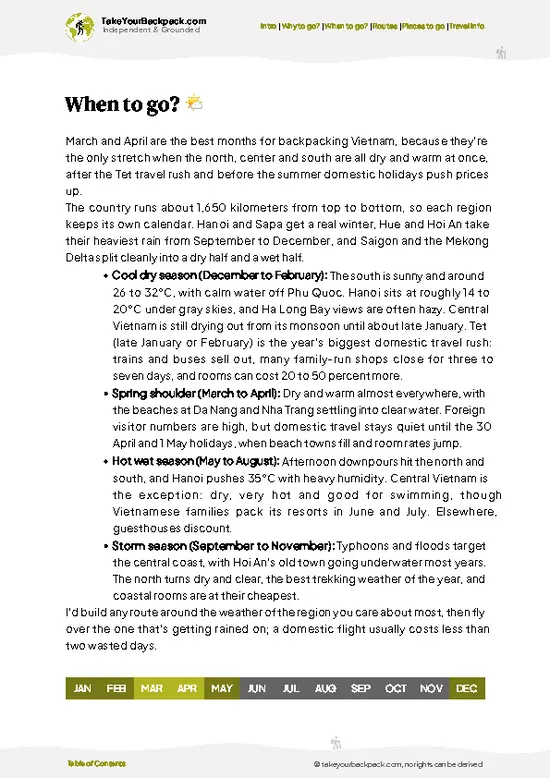
  • Weather: Dien Bien Phu’s dry season runs from November to April, offering clear skies and minimal rain—ideal for trekking and exploring. The wet season, May to October, brings heavy rains that can turn trails into mudslides and disrupt travel plans.

  • Temperature: Expect mild winters around 15-20°C (59-68°F) and hot summers hitting 30-35°C (86-95°F). The dry season’s cooler temps make hiking far more comfortable.

  • Daylight Hours: Roughly 11-12 hours year-round, but longer daylight in the dry season means more time to explore without rushing.

  • Crowds: Peak tourist flow aligns with the dry season, especially December and January. You’ll find more fellow travelers but also better infrastructure and open services.

  • Seasonal Activities: The dry season hosts local festivals and battlefield
read more 👉

  • Weather: Dien Bien Phu’s dry season runs from November to April, offering clear skies and minimal rain—ideal for trekking and exploring. The wet season, May to October, brings heavy rains that can turn trails into mudslides and disrupt travel plans.

  • Temperature: Expect mild winters around 15-20°C (59-68°F) and hot summers hitting 30-35°C (86-95°F). The dry season’s cooler temps make hiking far more comfortable.

  • Daylight Hours: Roughly 11-12 hours year-round, but longer daylight in the dry season means more time to explore without rushing.

  • Crowds: Peak tourist flow aligns with the dry season, especially December and January. You’ll find more fellow travelers but also better infrastructure and open services.

  • Seasonal Activities: The dry season hosts local festivals and battlefield commemorations, adding cultural depth to your visit.

  • Price Fluctuations: Accommodation and transport costs spike during the dry season’s peak months; the wet season offers bargains but at the cost of comfort and accessibility.


Pro-tip: Aim for late November or early April—sweet spots where you dodge the crowds and rain but still enjoy pleasant weather and decent prices.


source: climatestotravel.comJANJanuary: excellent for travelingFEBFebruary: excellent for travelingMARMarch: excellent for travelingAPRApril: highly recommended for travelingMAYMay: fair for travelingJUNJune: fair for travelingJULJuly: fair for travelingAUGAugust: fair for travelingSEPSeptember: fair for travelingOCTOctober: fair for travelingNOVNovember: highly recommended for travelingDECDecember: excellent for traveling
when-to-go

✈️ The backpacker research shortcutVietnam Travel Guide

An offline-friendly backpacking guide with optimized travel routes, ranked highlights, transport advice, and the best areas to stay.
example page 0 from our offline Travel Guide for Vietnam
example page 1 from our offline Travel Guide for Vietnam
example page 2 from our offline Travel Guide for Vietnam
example page 3 from our offline Travel Guide for Vietnam
example page 4 from our offline Travel Guide for Vietnam
example page 5 from our offline Travel Guide for Vietnam
example page 6 from our offline Travel Guide for Vietnam
example page 7 from our offline Travel Guide for Vietnam
The digital guide (437 pages) contains:
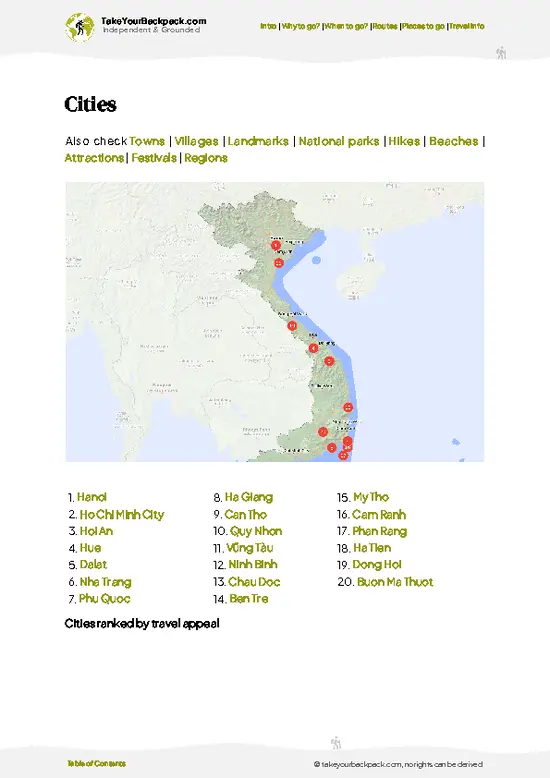
122 highlights, ranked by travel appeal
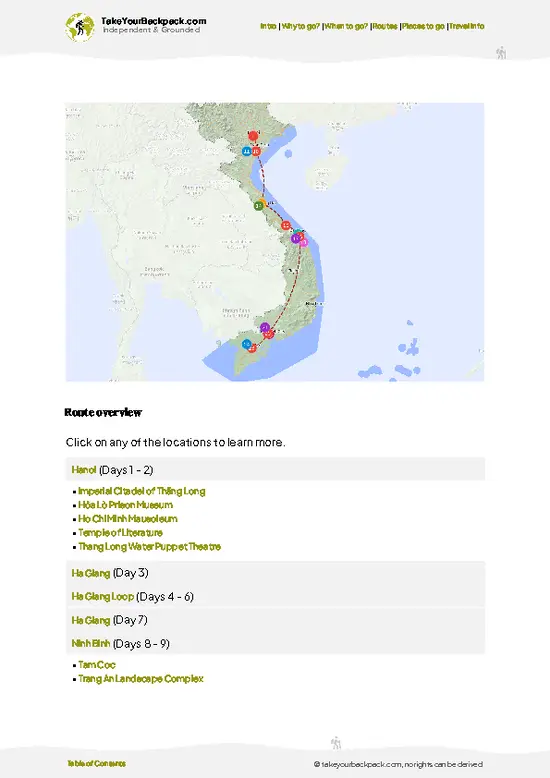
Optimized 7, 14 & 21-day travel routes
Cities, national parks, landmarks, beaches
How to get around
Offline-friendly for travel without Wi-Fi
👉 Click to see all 30+ guide features

📅 Plan smarter in minutes, not weeks
Month by month travel advice
Festivals & national holidays
Budget expectations

🗺️ Go to the right places, skip the overrated ones
Honest pros & cons of destinations
Top hikes, parks & viewpoints
Lesser-known places most travelers miss
Clear “worth it vs skip it” guidance

🛏️ Travel smoothly without rookie mistakes
Best areas to stay
Transport systems explained simply
Common scams & safety advice
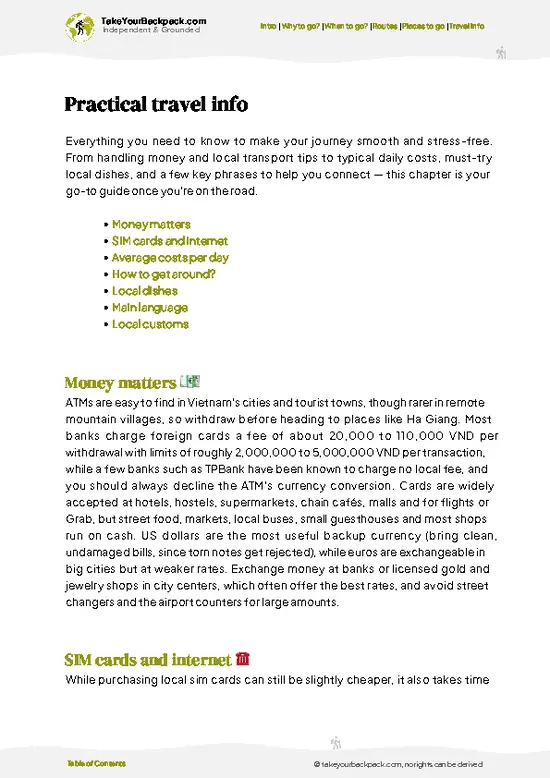
SIM cards, money & practical tips

🌍 Understand the country, not just visit it
Culture & traditions
52 Essential phrases & customs
Festivals worth planning around
Traveler-friendly historical context
Insights that make places more meaningful

📱 Built for real travel conditions
Fully downloadable PDF
Works completely offline
Optimized for phone use
Useful in remote areas & buses
Everything in one place
Save weeks of stressful planning
Get instant access to your full guide. 30‑day money-back guarantee.


By proceeding you agree to our terms.
Sent to your inbox immediately after payment • 100% Secure Checkout
Best Backpacking Travel Advisor 2025 tourism awardBest Backpacking
Travel Advisor
2025
What others say about Take Your Backpack Guides:
⭐⭐⭐⭐⭐
Fantastic, amazing amount of information!
⭐⭐⭐⭐⭐
My goodness this is amazing, it's what I've been looking for hats off too you!
⭐⭐⭐⭐⭐
I think this is absolutely BRILLIANT
⭐⭐⭐⭐
Very complete and informative. It's still missing places, but I gotta to commend you
⭐⭐⭐⭐⭐
This is truly amazing, thank you, can't wait to explore it with my kids!
⭐⭐⭐⭐⭐
Awesome resource, thank you!
⭐⭐⭐⭐⭐
This is amazing! Can't wait to explore the ones I haven't seen
⭐⭐⭐⭐
I love this! Well done, great idea.
⭐⭐⭐⭐⭐
Thanks for taking the time to make this gem!
⭐⭐⭐⭐⭐
This might be the best website I've ever seen.
⭐⭐⭐⭐⭐
Congratulations, and thank you so much for your work; it's incredibly valuable.
⭐⭐⭐⭐
In all seriousness I think you did a great job pointing out the important spots
⭐⭐⭐⭐⭐
10/10 very good
⭐⭐⭐⭐⭐
As someone who's only just starting to visit regularly this is awesome, thank you.
⭐⭐⭐⭐
Thank you very much! I'm going to visit my dad, it's going to be very useful!
⭐⭐⭐⭐⭐
This is really cool! We'll be travelling for the first time and this definitely come in handy.
⭐⭐⭐⭐⭐
You are now our minister of culture, congratulations 👨‍💼
⭐⭐⭐⭐⭐
Just wanted to tell you that this is a pearl! Going to follow your recommendations.
⭐⭐⭐⭐⭐
This is so cool. I'll definitely be using the resource for my travels soon.
⭐⭐⭐⭐⭐
This is very impressive! Good work.
⭐⭐⭐⭐⭐
This is an amazing and informative site. Very well done!

🛏️ Where to stay?Best areas to stay in Vietnam

Dien Bien Phu’s center around the main market and the nearby streets is the backpacker sweet spot. It’s where you’ll find a cluster of budget hostels, making it easy to meet fellow travelers without sacrificing safety or comfort. The vibe here is low-key but social—think casual cafes and street food stalls buzzing with locals and tourists alike. Compared to the quieter outskirts, this area offers better access to transport and local attractions, saving you time and hassle. It’s a practical choice that balances cost and convenience, giving you a foothold in the city’s pulse without the noise or inflated prices of more touristy zones.

🚌 Getting aroundHow to get around Dien Bien Phu

Dien Bien Phu moves at its own rhythm—less a clockwork machine and more a pulse you feel underfoot. The city’s tempo is a mix of laid-back rural pace and bursts of market-day hustle, where schedules are suggestions and intuition rules. Here, time bends around the needs of the moment, not the other way around. For a budget traveler, this means mastering the art of flexibility while knowing where to invest your time, money, and comfort to keep your trip smooth and memorable.


  • Walking: The most reliable and cost-free way to navigate Dien Bien Phu’s compact center. Expect uneven sidewalks and occasional street vendors, but walking lets you absorb the city’s texture at your own pace.

  • Local Buses: Runs roughly from 6 AM to 7 PM, fares under $1. Slow and crowded, but unbeatable for budget travelers
read more 👉
Dien Bien Phu moves at its own rhythm—less a clockwork machine and more a pulse you feel underfoot. The city’s tempo is a mix of laid-back rural pace and bursts of market-day hustle, where schedules are suggestions and intuition rules. Here, time bends around the needs of the moment, not the other way around. For a budget traveler, this means mastering the art of flexibility while knowing where to invest your time, money, and comfort to keep your trip smooth and memorable.


  • Walking: The most reliable and cost-free way to navigate Dien Bien Phu’s compact center. Expect uneven sidewalks and occasional street vendors, but walking lets you absorb the city’s texture at your own pace.

  • Local Buses: Runs roughly from 6 AM to 7 PM, fares under $1. Slow and crowded, but unbeatable for budget travelers who want to cover longer distances without breaking the bank.

  • Motorbike Taxis (Xe Om): Available all day, prices vary but usually under $3 for short trips. Fast and flexible, though comfort depends on your tolerance for open-air rides and local traffic chaos.

  • Shared Minivans: Depart when full, mostly between 7 AM and 6 PM. Costs around $5-$7. Faster than buses, more comfort, but less predictable timing—perfect if you value speed over strict schedules.

👛 Costs (as of 17 April 2026)How expensive it really is

Backpacking in Dien Bien Phu, Vietnam, offers a clear-cut trade-off between cost and comfort, with prices that let you stretch your budget without feeling like you’re roughing it.
  • Dorm Accommodation (High Season): Expect to pay around $6 to $10 per night. High season nudges prices up slightly due to demand, but dorms remain basic and clean, perfect for the no-frills traveler.
  • Dorm Accommodation (Off-Season): Prices drop to about $4 to $7 per night. Off-season is your chance to snag a quieter, cheaper bed with fewer tourists around.
  • Meals: Street food and local eateries dominate here, with meals typically costing between $1.50 and $3.50. You can eat well on a tight budget, but splurging on a nicer restaurant meal might push you closer to $5 or $6.
  • Local Transport: Motorbike taxis and short
read more 👉
Backpacking in Dien Bien Phu, Vietnam, offers a clear-cut trade-off between cost and comfort, with prices that let you stretch your budget without feeling like you’re roughing it.
  • Dorm Accommodation (High Season): Expect to pay around $6 to $10 per night. High season nudges prices up slightly due to demand, but dorms remain basic and clean, perfect for the no-frills traveler.
  • Dorm Accommodation (Off-Season): Prices drop to about $4 to $7 per night. Off-season is your chance to snag a quieter, cheaper bed with fewer tourists around.
  • Meals: Street food and local eateries dominate here, with meals typically costing between $1.50 and $3.50. You can eat well on a tight budget, but splurging on a nicer restaurant meal might push you closer to $5 or $6.
  • Local Transport: Motorbike taxis and short tuk-tuk rides usually run from $0.50 to $1.50 per trip. Walking is often the best option in the compact city center, saving you cash and giving you a closer look at daily life.
  • City Transport Pass: Dien Bien Phu doesn’t have a formal city transport pass system; instead, budget for individual rides or occasional motorbike rentals, which can cost around $7 to $10 per day if you want full mobility.
  • Basic Activities/Entry Fees: Visiting historical sites like the Dien Bien Phu Museum or the battlefield areas typically costs between $1 and $3. These are low-cost but rich in context, giving you a deep dive into Vietnam’s history without breaking the bank.
  • Miscellaneous Expenses: Budget around $1 to $3 daily for essentials like bottled water, snacks, or small souvenirs. Internet cafes and SIM cards are cheap, usually under $1 per day for basic connectivity.

Total daily costs for backpacking in Dien Bien Phu generally fall between $15 and $30, depending on how much you lean into comfort or cut corners. This city rewards those who balance smart spending with a willingness to embrace simplicity, turning every dollar saved into more time exploring the rich history and local culture.


source: vietnam.travel
⚠️ Prices can change and everyone travels differently, so take this as a rough guide. Hope it helps you plan your adventure!

🚌 Day tripsWhere to go beyond the main area

Dien Bien Phu is a strategic base for day trips that offer a rich blend of history, culture, and stunning landscapes. Here are some top picks:

Battlefield Tour
Dive into Vietnam’s history with a visit to the key battle sites from the First Indochina War. You’ll explore the bunkers, trenches, and memorials that tell the story of resilience. Expect a 30-minute ride to the sites, and budget around $5 for transport and entrance fees. The best time to go is during the dry season, from October to April. Many first-timers underestimate the emotional weight of these sites, so take your time to absorb the stories.


Muong Phang
Just an hour away, Muong Phang is where General Giap planned the famous siege. The lush landscapes are perfect for a leisurely hike, and you can visit local villages … read more 👉
Dien Bien Phu is a strategic base for day trips that offer a rich blend of history, culture, and stunning landscapes. Here are some top picks:

Battlefield Tour
Dive into Vietnam’s history with a visit to the key battle sites from the First Indochina War. You’ll explore the bunkers, trenches, and memorials that tell the story of resilience. Expect a 30-minute ride to the sites, and budget around $5 for transport and entrance fees. The best time to go is during the dry season, from October to April. Many first-timers underestimate the emotional weight of these sites, so take your time to absorb the stories.


Muong Phang
Just an hour away, Muong Phang is where General Giap planned the famous siege. The lush landscapes are perfect for a leisurely hike, and you can visit local villages to experience the culture firsthand. Total costs hover around $10, including transport and snacks. Aim for the early morning to avoid the heat and crowds. A common mistake is rushing through; savor the local food and chat with villagers for a richer experience.


Pa Khoang Lake
This serene lake is a hidden treasure for those seeking tranquility. It’s about a 40-minute drive, and you can rent a bike for around $2 to explore the area. Bring a picnic and enjoy the stunning views. The best time is early morning or late afternoon for the best light. Many backpackers miss out on the lakeside cafes, so don’t skip those for a refreshing drink.
Want to know what more Vietnam offers?
The Vietnam Travel Guide describes 122 highlights, from cities to national parks, from beaches to hikes

Get the Travel Guide -

🍲 FoodLocal Flavors for Backpackers

In **Dien Bien Phu**, the food scene is a vibrant tapestry of flavors. Don’t miss the **phở**, a fragrant noodle soup that warms the soul, or **bánh cuốn**, delicate rice rolls filled with savory goodness. Street vendors are your best friends here; they serve up these dishes fresh, often right on the sidewalk.

As for drinks, try the local **cà phê sữa đá**, a sweet, iced coffee that’s a daily ritual for many. Eating is a communal affair; locals often share dishes, so don’t hesitate to dive into a shared bowl. Embrace the lively atmosphere of the markets, where the air is thick with spices and laughter.

🛡️ SafetyScams, Hazards, and Annoyances

Dien Bien Phu is generally safe for backpackers, but a few practical tips can enhance your experience. Stay alert in crowded markets, where pickpockets might lurk. Solo travelers should avoid wandering too far at night; stick to well-lit areas and main streets.

Common scams include overly friendly locals offering unsolicited help, which can lead to inflated prices. Politely decline and keep your wits about you. Carry your belongings close and maintain a confident demeanor. This way, you’ll navigate the city smoothly and enjoy its rich history without unnecessary hassle.

Other Vietnamese towns near Dien Bien Phu

Explore more nearby:

  • Mu Cang Chai—terraced rice fields, mountain passes, Hmong villages| 119 km away
  • Sapa—alpine climate, ethnic markets, Fansipan views| 133 km away
  • Bac Ha—Sunday market, hill tribe textiles, highland plateau| 181 km away

💡 Not sure where to go next?
Create a personalized itinerary for Vietnam including Dien Bien Phu and the places that fit your trip.

Generate my itinerary

👉 Discover all towns

Or checkout all Vietnam has to offer (think cities, towns, villages, national parks, hikes, beaches, festivals)
Country photo of Vietnam

We 💚 feedbackWhat to keep in mind

Dien Bien Phu is a history buff’s playground, where the echoes of past battles linger in the air. But be ready for the heat and humidity; it can be relentless. Embrace the sweat, and you’ll find a deeper connection to Vietnam’s rich tapestry.

✈️ When did I visit Vietnam?
I have backpacked through the northern part of Vietnam all the way back in 1998.

✍️ Help improve this page!
The information on this page is based on my own backpacking experience in Vietnam, supplemented with up-to-date research and feedback from other travelers. Travel details can change, so if you notice anything outdated or incomplete, feel free to let me know.


🙋‍♂️ Give feedback

👋 Meet the founderWho’s Behind Take Your Backpack?

Johan, backpacker and founder of TakeYourBackpackHi, I’m Johan (Netherlands 🇳🇱), the creator of TakeYourBackpack. Over the past decade, I’ve backpacked through 80+ countries across six continents, gaining extensive experience with independent travel, long-term trips, and overland routes.

This site is built on a combination of firsthand travel experience and carefully curated insights from other backpackers. Many guides are based on places I’ve personally visited, while others bring together tips, observations, and practical advice shared by trusted travelers I’ve met along the way.

The goal is to provide realistic, experience-driven guidance — not generic itineraries — so you can explore destinations with better context, clearer expectations, and more confidence.

Get full Vietnam guide •
Instant download • 122 highlights • Full Offline guide