×

Vietnam🇻🇳 | best townsDiscover the 8 Best towns Across Vietnam

Vietnam stretches roughly 1,650 km from north to south, and its towns change character every few hundred kilometers. In the northern highlands, market towns sit in cool mountain valleys, with hill-tribe stalls, steep rice terraces and basic homestays. The central coast trades in old trading ports, lantern-lit streets and beach strips, with the heaviest tourist traffic in the country. Down in the Mekong Delta and the southern lowlands, towns run on water: floating markets, canal-side guesthouses and flat, humid cycling routes. Costs stay low everywhere, with beds from US$5 to 15, but crowds and prices climb sharply in the famous heritage towns. Backpacking here is easy thanks to sleeper buses, trains and a thick web of hostels, so you can chase your own pace. Pick a region, grab a motorbike or a bus seat, and start exploring.

By Johan Kruseman 🇳🇱 | Updated October 18, 2026
Explore the best villages in Vietnam

Why go?Key Factors That Shape the Experience

Vietnam suits town travel because its shape forces it. A long, narrow country squeezed between mountains and the South China Sea, it grew as a string of river ports, highland trading posts and coastal harbors, each tied to a different landscape. That geography produced towns with wildly different food, dialects and rhythms within a single day’s bus ride. Centuries of Chinese, French and indigenous influence layered on top, so you will find Confucian temples, colonial villas and Cham towers in the same country, often on the same street grid.

Infrastructure helps. The north-south railway and a huge network of sleeper buses and budget flights link almost every region cheaply, and hostels, homestays and street food make independent travel simple. Towns are compact, so you can walk or cycle the … read more 👉
Vietnam suits town travel because its shape forces it. A long, narrow country squeezed between mountains and the South China Sea, it grew as a string of river ports, highland trading posts and coastal harbors, each tied to a different landscape. That geography produced towns with wildly different food, dialects and rhythms within a single day’s bus ride. Centuries of Chinese, French and indigenous influence layered on top, so you will find Confucian temples, colonial villas and Cham towers in the same country, often on the same street grid.

Infrastructure helps. The north-south railway and a huge network of sleeper buses and budget flights link almost every region cheaply, and hostels, homestays and street food make independent travel simple. Towns are compact, so you can walk or cycle the center in an hour, then escape into rice fields, caves or hills on a rented scooter.

Know the limits before you commit. The climate splits the country: the north has four seasons, the center has a typhoon and flood season in autumn, and the south has just wet and dry. Popular heritage and beach towns fill up fast and can feel tour-driven, while smaller towns offer fewer English speakers and fewer ATMs. Traffic is relentless, with motorbikes streaming along even narrow lanes, so crossing streets takes confidence. Cash still rules in markets and rural areas, and a few words of Vietnamese earn warm responses everywhere. Go in with flexible plans and a taste for noodles at 7 a.m., and the country rewards you constantly.
Why These Made the Cut
The list of best towns in Vietnam is created based on charm, local culture, atmosphere, hidden gems, and visitor appeal. If you feel a town is missing in this list, please let us know.

When to go?When to Plan Your Trip

Best months for Vietnam’s towns: The best months for towns in Vietnam are March to April and October to November, when most regions avoid both extreme heat and heavy rain. That said, Vietnam’s length means seasons never match nationwide, so choose by region and chase the good weather.
North, center and south: The north is best in spring (March to May) and autumn (September to November), with temperatures of roughly 18 to 28°C. Winter (December to February) turns the highlands cold, often 5 to 12°C at night and sometimes near freezing on high ground, with mist that hides the views. Summer brings heat above 33°C and heavy rain from June to August.
The central coast is driest and sunniest from February to August, with beach weather of 28 to 35°C. September to December brings the rainy season, typhoon … read more 👉
Best months for Vietnam’s towns: The best months for towns in Vietnam are March to April and October to November, when most regions avoid both extreme heat and heavy rain. That said, Vietnam’s length means seasons never match nationwide, so choose by region and chase the good weather.
North, center and south: The north is best in spring (March to May) and autumn (September to November), with temperatures of roughly 18 to 28°C. Winter (December to February) turns the highlands cold, often 5 to 12°C at night and sometimes near freezing on high ground, with mist that hides the views. Summer brings heat above 33°C and heavy rain from June to August.
The central coast is driest and sunniest from February to August, with beach weather of 28 to 35°C. September to December brings the rainy season, typhoon risk and flooding, with the wettest months often October and November. Plan flexibility if you travel then.
The south has a dry season from December to April, with sunny days of 30 to 35°C. The wet season from May to November brings short, intense afternoon downpours, usually an hour or two, and travel remains very doable. Delta waterways run fullest in September to November.
Crowds and prices: Tet, the lunar new year in late January or February, is the one period that disrupts travel: transport sells out, many shops close for three to seven days, and prices rise. Summer holidays (June to August) fill coastal towns, with beds often 20 to 50 percent pricier. Shoulder months deliver cheaper rooms, calmer streets and easier bookings.

town hoppingOptimizing Your Multi-Stop Itinerary

How long a multi-town trip takes: A trip linking several towns in Vietnam needs 10 to 21 days, and three weeks lets you cover the whole country without rushing. With 10 days, stay in one or two regions instead of cramming everything.
Direction and grouping: Vietnam links naturally as a north-south line, and either direction works. Starting in the north in spring and finishing in the south works well, because you ride the warm, dry weather down the coast. Northern mountain towns cluster around Hanoi, the central heritage and beach towns cluster around Da Nang, and delta and lowland towns cluster around Ho Chi Minh City. Treat each hub as a base and connect nearby stops by local bus, shared minivan or hired scooter.
Time per stop and transit: Give each town 2 to 3 nights, with an extra night for … read more 👉
How long a multi-town trip takes: A trip linking several towns in Vietnam needs 10 to 21 days, and three weeks lets you cover the whole country without rushing. With 10 days, stay in one or two regions instead of cramming everything.
Direction and grouping: Vietnam links naturally as a north-south line, and either direction works. Starting in the north in spring and finishing in the south works well, because you ride the warm, dry weather down the coast. Northern mountain towns cluster around Hanoi, the central heritage and beach towns cluster around Da Nang, and delta and lowland towns cluster around Ho Chi Minh City. Treat each hub as a base and connect nearby stops by local bus, shared minivan or hired scooter.
Time per stop and transit: Give each town 2 to 3 nights, with an extra night for highland trekking areas where roads are slow. Between regions, expect long hauls: Hanoi to Da Nang runs about 1.5 hours by plane or 15 to 17 hours by train, and Da Nang to Ho Chi Minh City takes around 1.5 hours by plane or 16 to 20 hours by train. Sleeper buses between hubs usually take 8 to 16 hours. Hanoi to northern towns typically takes 4 to 8 hours by bus or sleeper van, and Ho Chi Minh City to delta towns takes 2 to 4 hours.
Planning mistakes to avoid: The classic error is packing in too many stops and spending half the trip on buses. Choose three to five towns and slow down. Another is ignoring the typhoon season on the central coast, so leave buffer days there between September and December. Travelers also book every night in advance, then feel trapped. Pre-book only the first and last nights plus overnight trains, which sell out, and keep the rest loose. Finally, night buses save a hotel bill but wreck the next morning, so mix them with daytime rides.

The ListHighly Recommended towns of Vietnam

1 Sapa

alpine climate, ethnic markets, Fansipan views

Trek between misty valleys, encounter diverse minority groups, and take in panoramic vistas from Vietnam’s highest mountain.

2 Cat Ba

limestone cliffs, island bays, national park trails

Hike through dense forest, kayak among karst islands, and spot wildlife unique to this northern island off the coast of Ha Long.

3 Phong Nha

cave systems, karst mountains, rural riverside

Venture underground in vast caves, cycle quiet lanes beside the Son River, and stay in guesthouses surrounded by limestone peaks.

vietnam-city-phong-nha
© Google |

4 Mui Ne

sand dunes, fishing harbor, windsurfing spots

Experience shifting dunes at sunrise, sample fresh seafood along the shore, and watch kitesurfers ride the afternoon winds.

5 Bac Ha

Sunday market, hill tribe textiles, highland plateau

Visit on market day to see ethnic groups trading goods, taste local corn wine, and experience a remote upland atmosphere.

vietnam-city-bac-ha
© Google |

6 Mu Cang Chai

terraced rice fields, mountain passes, Hmong villages

Travel during harvest to witness layered rice terraces, interact with local farmers, and trek between remote settlements.

7 Dien Bien Phu

battlefield relics, valley setting, French fortifications

Walk through a town shaped by military history, with museums and memorials set against a backdrop of green rice fields.

8 Phước Hải

coastal fishing village, seafood markets, quiet beaches

Stroll along undeveloped coastline, observe daily fish auctions, and relax on sandy stretches away from major tourist routes.

Loading the map 🌍

Expert viewPro Tips for Exploring the Best

How many towns to visit: Visit four to six towns in two to three weeks. That number gives you two or three nights in each, enough for a morning market, a long lunch and a day trip, without eating your trip in transit. More than that and you collect bus stations instead of places. Fewer, and you may miss the contrast between regions that makes Vietnam so rewarding.
Choosing between kinds of towns: Pick by what you want to do. If you love hiking and cool air, choose highland market towns, where the payoff is a ridge walk through terraced paddies and a bowl of hot pho at dusk. For history and photogenic streets, choose the old trading ports, where you wander lantern-lit lanes, tailor shops and riverside cafes. If you crave sand and nightlife, take a beach town, though expect more tourists and … read more 👉
How many towns to visit: Visit four to six towns in two to three weeks. That number gives you two or three nights in each, enough for a morning market, a long lunch and a day trip, without eating your trip in transit. More than that and you collect bus stations instead of places. Fewer, and you may miss the contrast between regions that makes Vietnam so rewarding.
Choosing between kinds of towns: Pick by what you want to do. If you love hiking and cool air, choose highland market towns, where the payoff is a ridge walk through terraced paddies and a bowl of hot pho at dusk. For history and photogenic streets, choose the old trading ports, where you wander lantern-lit lanes, tailor shops and riverside cafes. If you crave sand and nightlife, take a beach town, though expect more tourists and higher prices. For slow, local life, choose delta towns, where you drift through canals on a small boat and eat fruit straight from the orchard. First-timers usually do well mixing one of each type. Experienced travelers can skip the busiest heritage towns for lesser-known provincial centers, where you may be the only foreigner at the night market.
What it costs: Budget US$25 to 45 a day for a comfortable backpacker pace: dorm beds US$5 to 10, private rooms US$15 to 30, street meals US$1.50 to 4, and a coffee under US$1.50. Add scooter rental at US$6 to 10 a day plus fuel of about US$2. Entry fees are modest: ancient town tickets and pagoda sites commonly run US$2 to 10, while some heritage zones sell combined passes around US$5 to 12. Guides for trekking or boat trips cost US$15 to 40 per day, often split across a group. Local buses cost US$2 to 8 per ride, sleeper buses US$10 to 25 for long hauls. Cash in dong is smoother in markets, so withdraw at bank ATMs in larger towns before heading to remote ones.
Safety and etiquette: Vietnam is safe for solo travelers, and violent crime is rare. The real risks are traffic and scooters. Rent only if you have riding experience and a valid license (an international permit matters for insurance), wear a helmet, and avoid riding at night or in heavy rain on mountain roads. Bag snatching from passing motorbikes happens in busier towns, so carry your phone on the side away from the street. Agree on prices before you board a taxi, or use a ride-hailing app such as Grab, which shows the fare upfront.
Culture matters too. Dress modestly at pagodas and temples: cover shoulders and knees, and remove shoes at the door. Take a small gift or bow slightly when visiting a homestay. Ask before photographing people, especially in highland communities, where some villagers dislike cameras. Bargain politely at markets, smiling, and stop when you reach a fair price. Don’t touch someone’s head, and hand things over with both hands. These small moves earn real warmth, and you may end up with a free cup of tea.

✈️ The backpacker research shortcutVietnam Travel Guide

An offline-friendly backpacking guide with optimized travel routes, ranked highlights, transport advice, and the best areas to stay.
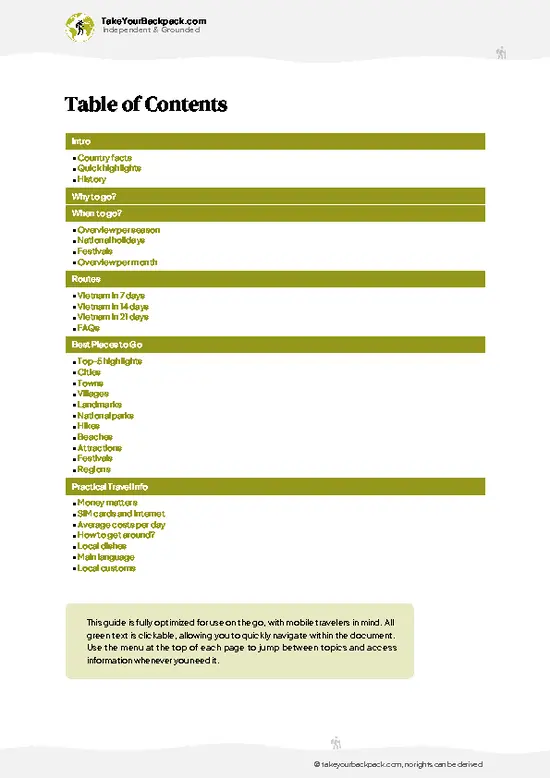
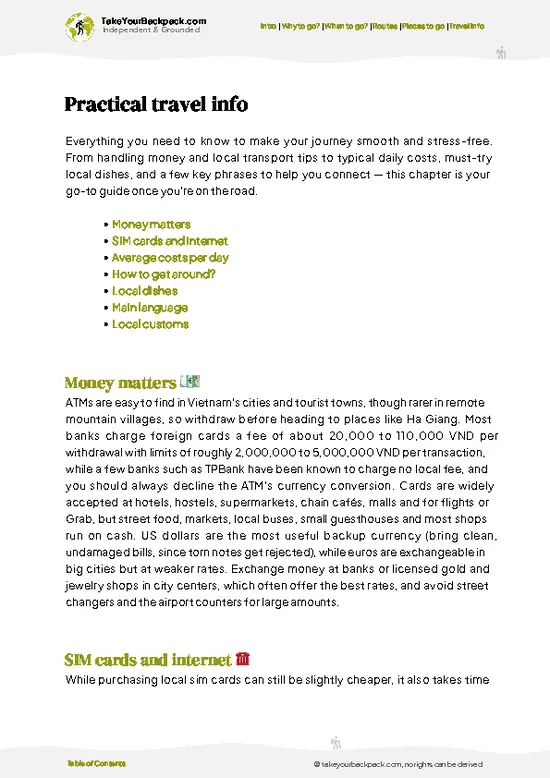
example page 0 from our offline Travel Guide for Vietnam
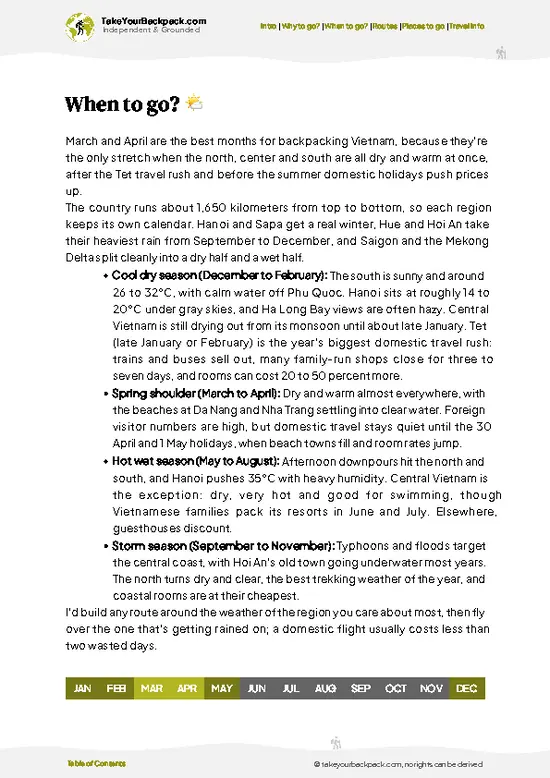
example page 1 from our offline Travel Guide for Vietnam
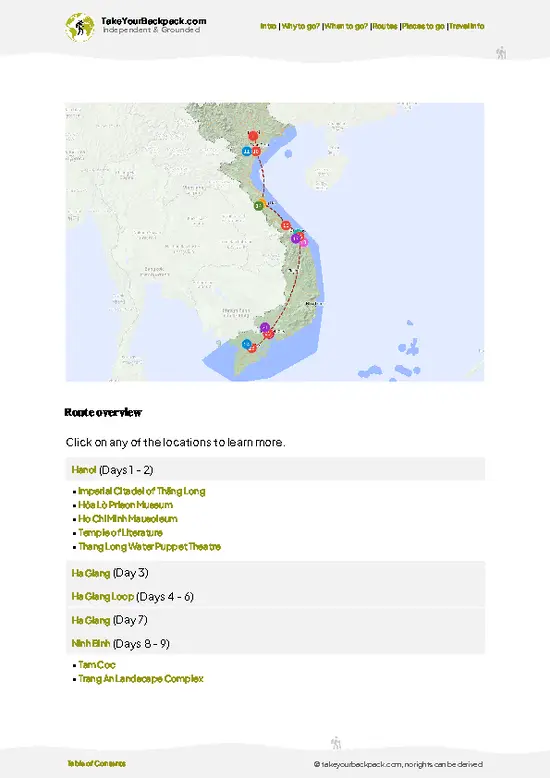
example page 2 from our offline Travel Guide for Vietnam
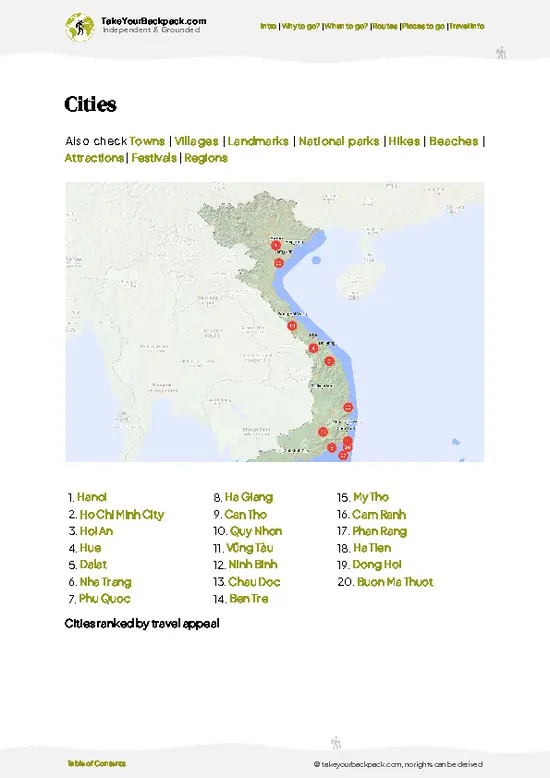
example page 3 from our offline Travel Guide for Vietnam
example page 4 from our offline Travel Guide for Vietnam
example page 5 from our offline Travel Guide for Vietnam
example page 6 from our offline Travel Guide for Vietnam
example page 7 from our offline Travel Guide for Vietnam
The digital guide (422 pages) contains:
✅ 118 highlights, ranked by travel appeal
✅ Optimized 7, 14 & 21-day travel routes
✅ Cities, national parks, landmarks, beaches
✅ How to get around
✅ Offline-friendly for travel without Wi-Fi
👉 Click to see all 30+ guide features

📅 Plan smarter in minutes, not weeks
✅ Month by month travel advice
✅ Festivals & national holidays
✅ Budget expectations

🗺️ Go to the right places, skip the overrated ones
✅ Honest pros & cons of destinations
✅ Top hikes, parks & viewpoints
✅ Lesser-known places most travelers miss
✅ Clear “worth it vs skip it” guidance

🛏️ Travel smoothly without rookie mistakes
✅ Best areas to stay
✅ Transport systems explained simply
✅ Common scams & safety advice
✅ SIM cards, money & practical tips

🌍 Understand the country, not just visit it
✅ Culture & traditions
✅ 52 Essential phrases & customs
✅ Festivals worth planning around
✅ Traveler-friendly historical context
✅ Insights that make places more meaningful

📱 Built for real travel conditions
✅ Fully downloadable PDF
✅ Works completely offline
✅ Optimized for phone use
✅ Useful in remote areas & buses
✅ Everything in one place
Stop searching, start planning
Get instant access to your full guide. 30‑day money-back guarantee.
+ Add another guide for just

By proceeding you agree to our terms.
Sent to your inbox immediately after payment • 100% Secure Checkout
Best Backpacking Travel Advisor 2025 tourism awardBest Backpacking
Travel Advisor
2025
What others say about Take Your Backpack Guides:
⭐⭐⭐⭐⭐
Fantastic, amazing amount of information!
⭐⭐⭐⭐⭐
My goodness this is amazing, it's what I've been looking for hats off too you!
⭐⭐⭐⭐⭐
I think this is absolutely BRILLIANT
⭐⭐⭐⭐
Very complete and informative. It's still missing places, but I gotta to commend you
⭐⭐⭐⭐⭐
This is truly amazing, thank you, can't wait to explore it with my kids!
⭐⭐⭐⭐⭐
Awesome resource, thank you!
⭐⭐⭐⭐⭐
This is amazing! Can't wait to explore the ones I haven't seen
⭐⭐⭐⭐
I love this! Well done, great idea.
⭐⭐⭐⭐⭐
Thanks for taking the time to make this gem!
⭐⭐⭐⭐⭐
This might be the best website I've ever seen.
⭐⭐⭐⭐⭐
Congratulations, and thank you so much for your work; it's incredibly valuable.
⭐⭐⭐⭐
In all seriousness I think you did a great job pointing out the important spots
⭐⭐⭐⭐⭐
10/10 very good
⭐⭐⭐⭐⭐
As someone who's only just starting to visit regularly this is awesome, thank you.
⭐⭐⭐⭐
Thank you very much! I'm going to visit my dad, it's going to be very useful!
⭐⭐⭐⭐⭐
This is really cool! We'll be travelling for the first time and this definitely come in handy.
⭐⭐⭐⭐⭐
You are now our minister of culture, congratulations 👨‍💼
⭐⭐⭐⭐⭐
Just wanted to tell you that this is a pearl! Going to follow your recommendations.
⭐⭐⭐⭐⭐
This is so cool. I'll definitely be using the resource for my travels soon.
⭐⭐⭐⭐⭐
This is very impressive! Good work.
⭐⭐⭐⭐⭐
This is an amazing and informative site. Very well done!

🛏️ Where to stay?Accommodation Highlights

Vietnam has one of Southeast Asia’s densest hostel scenes, with dorm beds typically running 120,000 to 250,000 VND (about US$5 to 10) a night and private rooms in family-run guesthouses from around 300,000 VND (US$12). In Hanoi, the Old Quarter puts you within walking distance of Hoan Kiem Lake and the Ta Hien beer street, but scooter horns and late bars carry on well past midnight. In Ho Chi Minh City, Pham Ngu Lao around Bui Vien in District 1 is the cheapest and loudest base, where you should keep a hand on your phone, while Hoi An’s rice-field homestays near An Bang beach and Da Nang’s An Thuong area by My Khe beach trade nightlife for quiet nights and a short bike or Grab ride to the sights. … read more 👉
Vietnam has one of Southeast Asia’s densest hostel scenes, with dorm beds typically running 120,000 to 250,000 VND (about US$5 to 10) a night and private rooms in family-run guesthouses from around 300,000 VND (US$12). In Hanoi, the Old Quarter puts you within walking distance of Hoan Kiem Lake and the Ta Hien beer street, but scooter horns and late bars carry on well past midnight. In Ho Chi Minh City, Pham Ngu Lao around Bui Vien in District 1 is the cheapest and loudest base, where you should keep a hand on your phone, while Hoi An’s rice-field homestays near An Bang beach and Da Nang’s An Thuong area by My Khe beach trade nightlife for quiet nights and a short bike or Grab ride to the sights.

If you enjoy meeting fellow travelers, consider choosing hostels with high ratings for atmosphere. On the other hand, if you prefer having your own space, a hotel might be a better option.

VietnamSee More of Vietnam

👋 Meet the founderWho’s Behind Take Your Backpack?

Johan, backpacker and founder of TakeYourBackpackHi, I’m Johan (Netherlands 🇳🇱), the creator of TakeYourBackpack. Over the past 3 decades, I’ve backpacked through 90+ countries across six continents, gaining extensive experience with independent travel, long-term trips, and overland routes.

This site is built on a combination of firsthand travel experience and carefully curated insights from other backpackers. Many guides are based on places I’ve personally visited, while others bring together tips, observations, and practical advice shared by trusted travelers I’ve met along the way.

The goal is to provide realistic, experience-driven guidance — not generic itineraries — so you can explore destinations with better context, clearer expectations, and more confidence.