
×

Western Sahara🇪🇭 | best villagesYour Guide to the 2 Best villages in Western Sahara

In Western Sahara, villages are defined by their stark landscapes and resilient cultures. Each region offers a unique experience, from the coastal towns like Dakhla to the arid interiors near Smara. Seasonal variations influence village life; summer heat can drive locals indoors, while winter brings vibrant markets and festivals. Choosing the right village impacts your backpacking journey significantly, affecting vibe, safety, and cultural immersion. Understanding these nuances is essential for independent travelers seeking authenticity.

By Johan Kruseman 🇳🇱 | Updated June 6, 2026
Explore the best landmarks in Western Sahara

Why go?What Makes Them Special

Villages in Western Sahara offer a unique glimpse into a culture shaped by resilience and tradition. Unlike other regions, these communities are often isolated, providing an authentic experience that feels untouched by modern tourism. The geographic expanse of the Sahara means that travel can be challenging, with limited infrastructure and long distances between settlements. This can lead to a trade-off: the more time spent traveling, the deeper the exploration into local customs and daily life.

Seasonal accessibility plays a crucial role; the harsh summer heat can deter visits, while the milder winter months invite exploration. However, this also means that travelers must plan carefully to avoid the extremes. The cultural richness found in these villages, from traditional crafts to communal … read more 👉
Villages in Western Sahara offer a unique glimpse into a culture shaped by resilience and tradition. Unlike other regions, these communities are often isolated, providing an authentic experience that feels untouched by modern tourism. The geographic expanse of the Sahara means that travel can be challenging, with limited infrastructure and long distances between settlements. This can lead to a trade-off: the more time spent traveling, the deeper the exploration into local customs and daily life.

Seasonal accessibility plays a crucial role; the harsh summer heat can deter visits, while the milder winter months invite exploration. However, this also means that travelers must plan carefully to avoid the extremes. The cultural richness found in these villages, from traditional crafts to communal gatherings, is a reward for those willing to navigate the complexities of rural travel. Understanding these factors is essential for anyone looking to immerse themselves in the heart of Western Sahara.
Evaluating the Top Choices
The list of best villages in Western Sahara is created based on authenticity, scenic beauty, community spirit, traditions, and overall character. If you feel a village is missing in this list, please let us know.

When to go?Best Time to Visit Western Sahara for villages

Seasonality plays a crucial role in the experience of visiting villages in Western Sahara. The harsh climate can be a significant factor. Summers are scorching, with temperatures soaring, making outdoor activities uncomfortable. Winter months offer milder weather, ideal for exploring rural life and engaging with local communities.

Optimal months for visits generally fall between late fall and early spring. This period allows for more pleasant temperatures and vibrant agricultural activities, enhancing the authenticity of village life.

Shoulder seasons can provide a balance between fewer crowds and manageable weather, but travelers may encounter some limitations in local activities or services.

Peak periods coincide with harvest seasons, where the vibrancy of village life is at its height, … read more 👉
Seasonality plays a crucial role in the experience of visiting villages in Western Sahara. The harsh climate can be a significant factor. Summers are scorching, with temperatures soaring, making outdoor activities uncomfortable. Winter months offer milder weather, ideal for exploring rural life and engaging with local communities.

Optimal months for visits generally fall between late fall and early spring. This period allows for more pleasant temperatures and vibrant agricultural activities, enhancing the authenticity of village life.

Shoulder seasons can provide a balance between fewer crowds and manageable weather, but travelers may encounter some limitations in local activities or services.

Peak periods coincide with harvest seasons, where the vibrancy of village life is at its height, but expect larger crowds and potentially higher costs. Understanding these patterns is essential for planning a rewarding visit.

village hoppingHow to Combine villages Into One Trip

Routing Logic
Travelers should cluster villages by region to minimize travel time. Start in the north, moving southward, or vice versa, depending on entry points. Each village offers unique insights into local culture, so plan to spend at least a few hours in each.

Typical Time Needed
Allocate a half-day for smaller villages and a full day for those with more attractions or activities. This pacing allows for exploration without feeling rushed.

Common Planning Mistakes
Avoid cramming too many stops into a short timeframe. This leads to superficial experiences. Instead, prioritize depth over speed.

Trade-offs and Constraints
Consider the balance between budget and comfort; local transport can be basic but offers a genuine experience. Flexibility is key; weather and seasonal access can … read more 👉
Routing Logic
Travelers should cluster villages by region to minimize travel time. Start in the north, moving southward, or vice versa, depending on entry points. Each village offers unique insights into local culture, so plan to spend at least a few hours in each.

Typical Time Needed
Allocate a half-day for smaller villages and a full day for those with more attractions or activities. This pacing allows for exploration without feeling rushed.

Common Planning Mistakes
Avoid cramming too many stops into a short timeframe. This leads to superficial experiences. Instead, prioritize depth over speed.

Trade-offs and Constraints
Consider the balance between budget and comfort; local transport can be basic but offers a genuine experience. Flexibility is key; weather and seasonal access can affect routes. Embrace the journey, as the effort often leads to rewarding encounters and stunning landscapes.

The ListTop villages of Western Sahara

1 Bir Lehlou

desert outpost, administrative center, Sahrawi government presence

Experience a remote hub where political life and desert landscapes intersect, offering insight into the region’s ongoing story and daily realities.

western-sahara-city-bir-lehlou
© Google |

2 Oum Dreyga

military zone, meteorite site, arid plains

Travel through a sparsely populated area marked by military presence and the legacy of a famous meteorite fall on the open plains.

Loading the map 🌍

Expert viewPro Tips for Exploring the Best

Accessibility
Traveling through Western Sahara requires a solid understanding of its infrastructure. Villages are often remote, connected by unpaved roads that can become impassable during the rainy season. Expect to spend a fair amount of time on the road, with travel times varying significantly based on conditions. Aim for three to five villages to get a genuine feel for the region. This allows you to experience the diversity of local cultures without feeling rushed.

Seasonal Variation
Timing is crucial. The best months to visit are typically from late fall to early spring when temperatures are milder. Summer can be brutally hot, making outdoor activities uncomfortable and sometimes unsafe. If you’re planning to trek or explore, consider the cooler months for a more enjoyable experience. … read more 👉
Accessibility
Traveling through Western Sahara requires a solid understanding of its infrastructure. Villages are often remote, connected by unpaved roads that can become impassable during the rainy season. Expect to spend a fair amount of time on the road, with travel times varying significantly based on conditions. Aim for three to five villages to get a genuine feel for the region. This allows you to experience the diversity of local cultures without feeling rushed.

Seasonal Variation
Timing is crucial. The best months to visit are typically from late fall to early spring when temperatures are milder. Summer can be brutally hot, making outdoor activities uncomfortable and sometimes unsafe. If you’re planning to trek or explore, consider the cooler months for a more enjoyable experience. However, visiting in the off-season can offer a unique perspective on daily life, albeit with the trade-off of harsher weather conditions.

Authenticity
Each village has its own character, shaped by local traditions and lifestyles. Engage with the community; this is where the real value lies. However, be prepared for cultural differences. Dress modestly and respect local customs to foster goodwill. Some villages may have limited amenities, so plan accordingly. The authenticity you seek often comes with a lack of modern conveniences, which can be both a challenge and a reward.

Pacing Between Rural Stops
Plan your itinerary to allow for downtime. The distances between villages can be deceptive; what looks like a short drive may take hours. Factor in time to soak in the surroundings, whether it’s a sunset over the dunes or a shared meal with locals. This pacing is essential for truly appreciating the landscape and culture.

Safety & Cultural Considerations
While Western Sahara is generally safe for travelers, always stay informed about local conditions. Be aware of your surroundings and travel with a local guide when possible. This not only enhances your experience but also supports the local economy. Respecting cultural norms is key; it opens doors and fosters connections that enrich your journey.

✈️ The backpacker research shortcutWestern Sahara Travel Guide

An offline-friendly backpacking guide with optimized travel routes, ranked highlights, transport advice, and the best areas to stay.
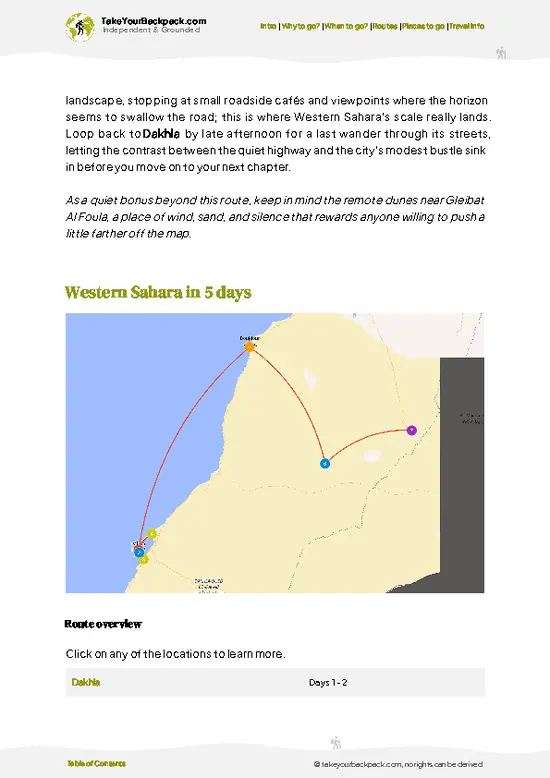
example page 0 from our offline Travel Guide for Western Sahara
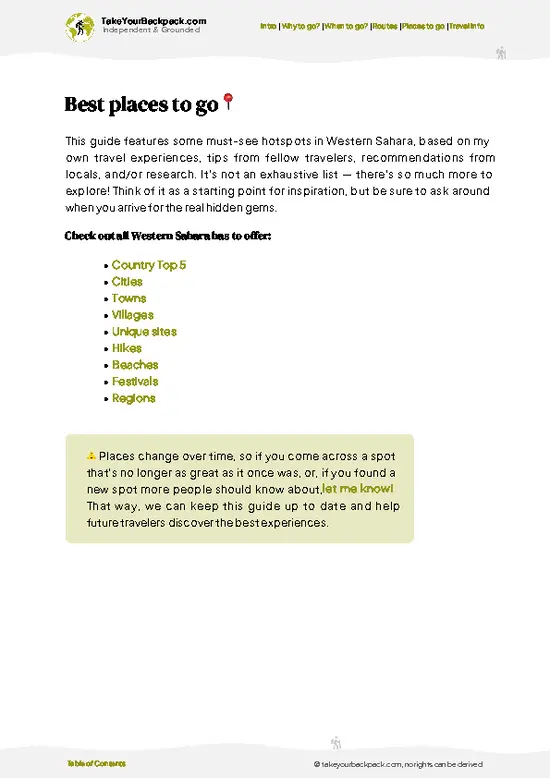
example page 1 from our offline Travel Guide for Western Sahara
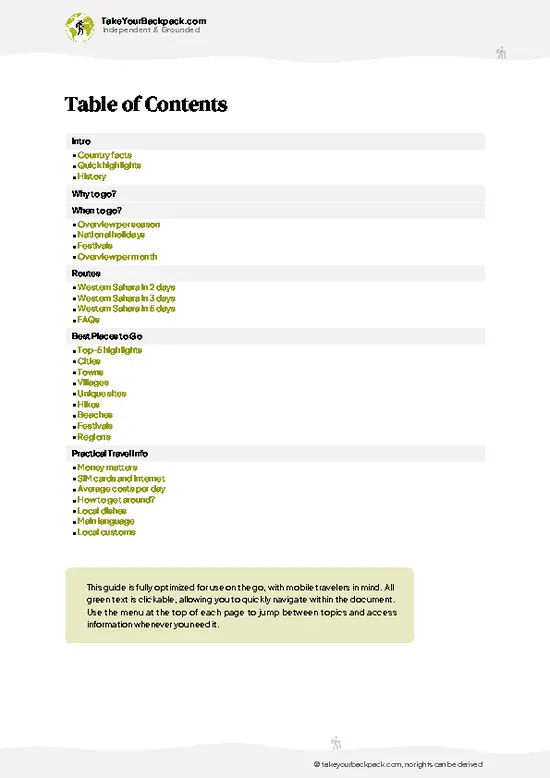
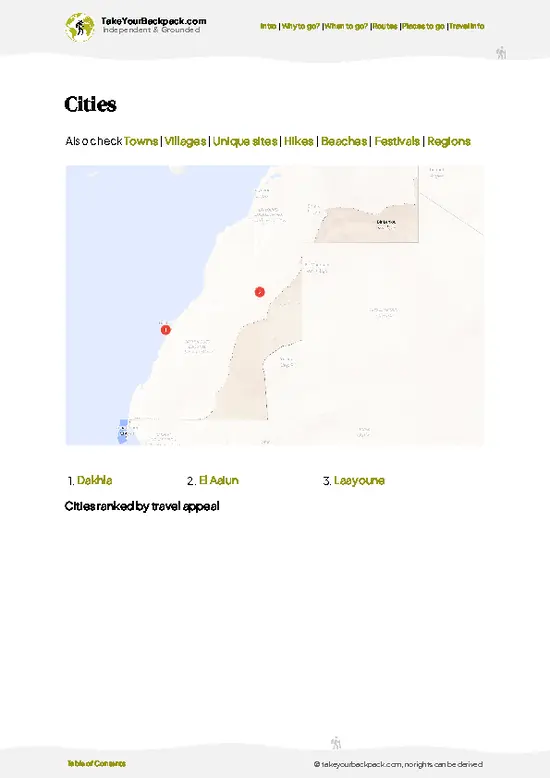
example page 2 from our offline Travel Guide for Western Sahara
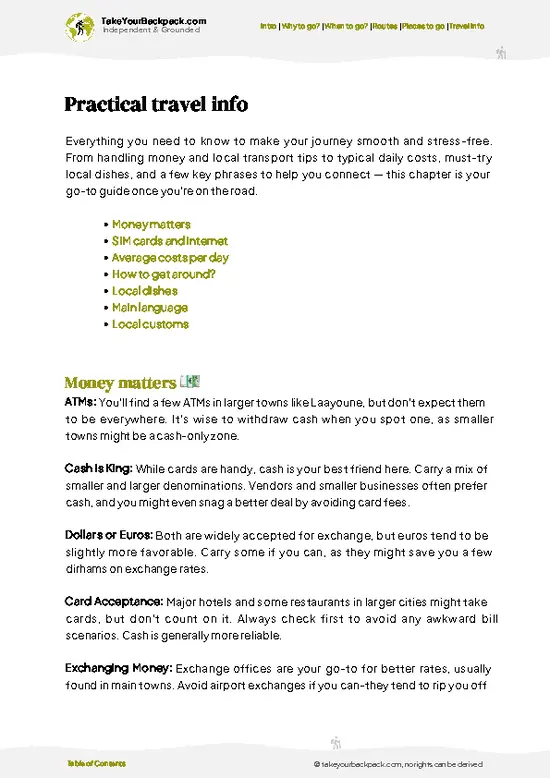
example page 3 from our offline Travel Guide for Western Sahara
example page 4 from our offline Travel Guide for Western Sahara
example page 5 from our offline Travel Guide for Western Sahara
example page 6 from our offline Travel Guide for Western Sahara
example page 7 from our offline Travel Guide for Western Sahara
The digital guide (117 pages) contains:
22 highlights, ranked by travel appeal
Optimized 2, 3 & 5-day travel routes
Cities, national parks, landmarks, beaches
How to get around
Offline-friendly for travel without Wi-Fi
👉 Click to see all 30+ guide features

📅 Plan smarter in minutes, not weeks
Month by month travel advice
Festivals & national holidays
Budget expectations

🗺️ Go to the right places, skip the overrated ones
Honest pros & cons of destinations
Top hikes, parks & viewpoints
Lesser-known places most travelers miss
Clear “worth it vs skip it” guidance

🛏️ Travel smoothly without rookie mistakes
Best areas to stay
Transport systems explained simply
Common scams & safety advice
SIM cards, money & practical tips

🌍 Understand the country, not just visit it
Culture & traditions
52 Essential phrases & customs
Festivals worth planning around
Traveler-friendly historical context
Insights that make places more meaningful

📱 Built for real travel conditions
Fully downloadable PDF
Works completely offline
Optimized for phone use
Useful in remote areas & buses
Everything in one place
Save weeks of stressful planning
Get instant access to your full guide. 30‑day money-back guarantee.


By proceeding you agree to our terms.
Sent to your inbox immediately after payment • 100% Secure Checkout
Best Backpacking Travel Advisor 2025 tourism awardBest Backpacking
Travel Advisor
2025
What others say about Take Your Backpack Guides:
⭐⭐⭐⭐⭐
Fantastic, amazing amount of information!
⭐⭐⭐⭐⭐
My goodness this is amazing, it's what I've been looking for hats off too you!
⭐⭐⭐⭐⭐
I think this is absolutely BRILLIANT
⭐⭐⭐⭐
Very complete and informative. It's still missing places, but I gotta to commend you
⭐⭐⭐⭐⭐
This is truly amazing, thank you, can't wait to explore it with my kids!
⭐⭐⭐⭐⭐
Awesome resource, thank you!
⭐⭐⭐⭐⭐
This is amazing! Can't wait to explore the ones I haven't seen
⭐⭐⭐⭐
I love this! Well done, great idea.
⭐⭐⭐⭐⭐
Thanks for taking the time to make this gem!
⭐⭐⭐⭐⭐
This might be the best website I've ever seen.
⭐⭐⭐⭐⭐
Congratulations, and thank you so much for your work; it's incredibly valuable.
⭐⭐⭐⭐
In all seriousness I think you did a great job pointing out the important spots
⭐⭐⭐⭐⭐
10/10 very good
⭐⭐⭐⭐⭐
As someone who's only just starting to visit regularly this is awesome, thank you.
⭐⭐⭐⭐
Thank you very much! I'm going to visit my dad, it's going to be very useful!
⭐⭐⭐⭐⭐
This is really cool! We'll be travelling for the first time and this definitely come in handy.
⭐⭐⭐⭐⭐
You are now our minister of culture, congratulations 👨‍💼
⭐⭐⭐⭐⭐
Just wanted to tell you that this is a pearl! Going to follow your recommendations.
⭐⭐⭐⭐⭐
This is so cool. I'll definitely be using the resource for my travels soon.
⭐⭐⭐⭐⭐
This is very impressive! Good work.
⭐⭐⭐⭐⭐
This is an amazing and informative site. Very well done!

🛏️ Where to stay?Top Areas to Stay

Hostels are rare in Western Sahara; budget accommodation is mainly small guesthouses and low-cost hotels concentrated in Dakhla (the main tourist hub) and Laayoune, with only a handful of basic options in Smara and Boujdour.
In Dakhla the lagoon/waterfront area gives best access to kitesurfing, nightlife and tourism services but costs more and gets crowded; in Laayoune the city/market neighborhoods offer cheaper, more numerous rooms and easier transit but limited tourist infrastructure and quieter nights; Smara and Boujdour provide desert access and peace but very limited facilities and longer travel times.
Book ahead for peak seasons, carry cash because card acceptance is spotty, expect … read more 👉
Hostels are rare in Western Sahara; budget accommodation is mainly small guesthouses and low-cost hotels concentrated in Dakhla (the main tourist hub) and Laayoune, with only a handful of basic options in Smara and Boujdour.
In Dakhla the lagoon/waterfront area gives best access to kitesurfing, nightlife and tourism services but costs more and gets crowded; in Laayoune the city/market neighborhoods offer cheaper, more numerous rooms and easier transit but limited tourist infrastructure and quieter nights; Smara and Boujdour provide desert access and peace but very limited facilities and longer travel times.
Book ahead for peak seasons, carry cash because card acceptance is spotty, expect sparse public transport outside main towns, and allow extra time for remote travel and local logistics.

If you enjoy meeting fellow travelers, consider choosing hostels with high ratings for atmosphere. On the other hand, if you prefer having your own space, a hotel might be a better option.

Western SaharaDiscover the Country

👋 Meet the founderWho’s Behind Take Your Backpack?

Johan, backpacker and founder of TakeYourBackpackHi, I’m Johan (Netherlands 🇳🇱), the creator of TakeYourBackpack. Over the past decade, I’ve backpacked through 80+ countries across six continents, gaining extensive experience with independent travel, long-term trips, and overland routes.

This site is built on a combination of firsthand travel experience and carefully curated insights from other backpackers. Many guides are based on places I’ve personally visited, while others bring together tips, observations, and practical advice shared by trusted travelers I’ve met along the way.

The goal is to provide realistic, experience-driven guidance — not generic itineraries — so you can explore destinations with better context, clearer expectations, and more confidence.

Get full country guide •
Instant download • 22 highlights • Full Offline guide