v2.webp)
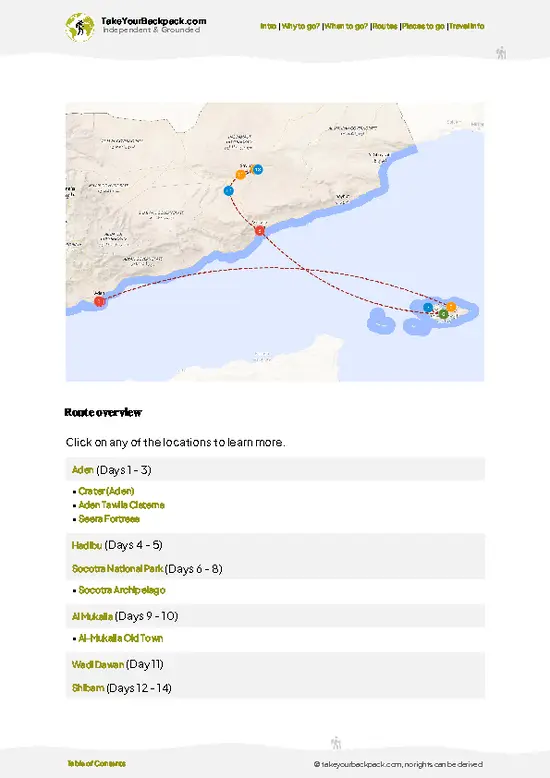
- Hajjah Old Quarter (Al-Madina al-Qadima) — Narrow lanes, stacked stone and mud-brick houses, and families who’ve lived here for generations. Walking the old quarter is the best way to read the city’s history in its doorways, mashrabiyas and rooftop views.
- Hajjah Central Souq — The working-market heart of the city: spices, textiles, basic hardware, and daily produce all piled together. It’s where you see everyday Hajjah life, bargain with a shopkeeper and sample local snacks.
- Hilltop Citadel / Fortress Ruins — A small fortification or fortified hilltop overlooking the town. The remains and terraces give a feel for Hajjah’s tactical geography and offer good city panoramas at sunset.
- Grand Friday Mosque (the main jama’a) — The mosque that anchors Friday prayers; architecturally modest but
- Hajjah Old Quarter (Al-Madina al-Qadima) — Narrow lanes, stacked stone and mud-brick houses, and families who’ve lived here for generations. Walking the old quarter is the best way to read the city’s history in its doorways, mashrabiyas and rooftop views.
- Hajjah Central Souq — The working-market heart of the city: spices, textiles, basic hardware, and daily produce all piled together. It’s where you see everyday Hajjah life, bargain with a shopkeeper and sample local snacks.
- Hilltop Citadel / Fortress Ruins — A small fortification or fortified hilltop overlooking the town. The remains and terraces give a feel for Hajjah’s tactical geography and offer good city panoramas at sunset.
- Grand Friday Mosque (the main jama’a) — The mosque that anchors Friday prayers; architecturally modest but socially central. Observing (or respectfully listening from outside during services) shows how religion and community rhythms shape the city.
- Traditional Tower Houses and Courtyard Dwellings — Scattered through the old neighborhoods are vertical stone houses and inner courtyards typical of northern Yemeni building traditions. They’re quieter than the market and great for photography and study of vernacular craft.
- Qat Stalls and Coffeehouses — Not a single spot but a circuit of local gatherings where qat-chewing and coffee conversations happen. These places are the pulse of local social life—watching, listening, and buying a cup is its own cultural immersion.
- Artisans’ Alleys and Handicraft Stalls — Small workshops and stalls where you’ll find basic metalwork, woven goods, and household crafts. They’re low-key but rewarding if you want to see traditional skills in action and pick up a handcrafted souvenir.
- Weekly Livestock or Produce Market — On specific market days the outskirts of the central market fill with animals, carts and traders. It’s noisy, colorful and an honest window into the rural-urban trade that sustains Hajjah.
- Public Squares and Municipal Walkways — The city’s main squares act as informal theaters for daily life—vendors, kids playing, evening promenades. Good for people-watching and sensing the city’s tempo after dark.
- Historic Cemetery and Memorial Stones — Local graveyards with carved headstones and family plots give insight into genealogy, local inscriptions and regional funerary styles. They’re contemplative spots that reveal layers of local history.
Spotted a mistake or missing something? Contact us.

 Best Backpacking
.jpg) Hi, I’m Johan (Netherlands 🇳🇱), the creator of TakeYourBackpack. Over the past 3 decades, I’ve backpacked through 90+ countries across six continents, gaining extensive experience with independent travel, long-term trips, and overland routes.
Hi, I’m Johan (Netherlands 🇳🇱), the creator of TakeYourBackpack. Over the past 3 decades, I’ve backpacked through 90+ countries across six continents, gaining extensive experience with independent travel, long-term trips, and overland routes.