×

Yemen🇾🇪 | citiesSana’atower houses, UNESCO old city, souq labyrinth | things to do and best time to go

Explore MaribExplore Ta’izz

Backpacking in Sana’a
UNESCO World Heritage site
🏆 Top pickcity ranked #1
By Johan Kruseman 🇳🇱 | Updated June 15, 2026

Most people only realize after leaving Sana’a that it’s one of the cheapest places on earth to “buy time”: long, slow days of wandering, talking, and tea-drinking cost almost nothing, so your budget stretches absurdly far if you’re willing to trade comfort for immersion. Sana’a sits high in Yemen’s western mountains, roughly in the country’s north‑west, and feels like a self-contained world. For backpackers, the Old City’s tower houses and qat markets are jaw-dropping, the National Museum is solid if you like context, and just walking between mosques and squares is the real highlight. Travel logistics are hard: security risks, checkpoints, and shifting rules make independent movement tricky, and nightlife is minimal outside qat sessions and low-key cafés. It’s cheap, deeply social, and more intense than coastal cities like Aden, but also less relaxed and far less safe than most regional capitals. The vibe: ancient, wired on qat, and heavy with history.

Discover everything you want to know in the 📖 Yemen Travel Guide.
Safety warning

The current risk level for Yemen is high. Check the advice before going.


Get your Yemen guide
72 ranked highlights, routes & tips, works offline (290 pages)
Loading the map 🌍
CLICK TO FILTER
cities
towns
landmarks
national parks
hikes
beaches
attractions
festivals
regions
SHOW COUNTRY’S BESTSHOW ALL

✨ Why go?
Ranked #1 city in Yemen
Why visitors keep coming back

Sana’a is a backpacker’s hub that offers a unique blend of cultural richness and practical advantages. First off, the highlights are plentiful, from its medieval architecture to the vibrant souks. You’ll find that the city serves as an excellent basecamp for day trips into the surrounding mountains and historical sites, making it a strategic stop on your route.

Accommodations are affordable, with several hostels that cater to budget travelers, providing a chance to meet fellow adventurers. The food scene is a delightful mix of local flavors, and you can easily grab a meal without breaking the bank.

Sana’a is also walkable, allowing you to soak in the atmosphere without the hassle of transportation. While the nightlife may not rival larger cities, there are cozy spots to unwind after a … read more 👉
Sana’a is a backpacker’s hub that offers a unique blend of cultural richness and practical advantages. First off, the highlights are plentiful, from its medieval architecture to the vibrant souks. You’ll find that the city serves as an excellent basecamp for day trips into the surrounding mountains and historical sites, making it a strategic stop on your route.

Accommodations are affordable, with several hostels that cater to budget travelers, providing a chance to meet fellow adventurers. The food scene is a delightful mix of local flavors, and you can easily grab a meal without breaking the bank.

Sana’a is also walkable, allowing you to soak in the atmosphere without the hassle of transportation. While the nightlife may not rival larger cities, there are cozy spots to unwind after a day of exploration.

Finally, onward travel is straightforward, with connections to other parts of Yemen and beyond. If you’re looking for a city that balances character with convenience, Sana’a is worth more than just a fleeting visit; it’s a place to immerse yourself in a different world while keeping your travel plans flexible.
Want to include Sana’a in your Yemen route?
Create a personalized Yemen itinerary that includes Sana’a and the places that fit your trip — based on your travel style, budget, and available time. Get your route in seconds.

Generate my trip

💡 HighlightsKey sights and experiences for travelers

  1. Old City of Sana’a (UNESCO World Heritage) — A maze of multi-story mud-brick tower-houses with white gypsum decoration and painted qamariya windows. Walking its alleys is the single best way to feel the city’s centuries-deep layering of daily life, architecture and craft.
  2. Bab al-Yemen (Yemen Gate) — The picture-postcard gateway into the Old City. Crowded, noisy and full of stalls; great for people-watching, rooftop photos and to orient yourself before getting lost in the lanes.
  3. The Great Mosque of Sana’a (Al-Jami’ al-Kabir) — One of the oldest mosques in the region with ancient foundations and a calm courtyard. You won’t need to be an architecture nerd to appreciate how the building anchors the Old City’s spiritual and historical identity.
  4. Al-Saleh Mosque — A modern, monumental mosque
read more 👉
  1. Old City of Sana’a (UNESCO World Heritage) — A maze of multi-story mud-brick tower-houses with white gypsum decoration and painted qamariya windows. Walking its alleys is the single best way to feel the city’s centuries-deep layering of daily life, architecture and craft.
  2. Bab al-Yemen (Yemen Gate) — The picture-postcard gateway into the Old City. Crowded, noisy and full of stalls; great for people-watching, rooftop photos and to orient yourself before getting lost in the lanes.
  3. The Great Mosque of Sana’a (Al-Jami’ al-Kabir) — One of the oldest mosques in the region with ancient foundations and a calm courtyard. You won’t need to be an architecture nerd to appreciate how the building anchors the Old City’s spiritual and historical identity.
  4. Al-Saleh Mosque — A modern, monumental mosque complex with polished stone, broad plazas and good city views. It’s a striking contrast to the Old City’s mud towers and shows contemporary Yemeni civic architecture.
  5. Souk al-Milh and the Old City markets — Spice piles, silver smiths, cloth, and dagger (jambiya) stalls. Markets are where you’ll smell, taste and haggle your way into local rhythms — and find small, real souvenirs.
  6. Jewish Quarter (Harat al-Yahud) — Narrow alleys and distinct house forms testifying to Sana’a’s multi-religious past. It’s compact, atmospheric and worth a slow walk to see different masonry styles and quiet courtyards.
  7. Qamariya windows & rooftop viewpoints — The painted stained-glass panels that catch late light are everywhere; find a rooftop tea spot at dusk for the best views of the city’s patterned facades and minarets.
  8. Ghumdan Tower site (historic hill) — The legendary site of an ancient palace/tower, now a viewpoint over the Old City. Even if much is gone, the hill and ruins give a good sense of Sana’a’s layered past and offer solid photo angles.
  9. Traditional craft workshops — Small family-run silversmiths, copper workers, textile dyeing and jambiya makers tucked into side-streets. Watching (and sometimes trying) craft work is one of the most direct ways to connect with local skills and stories.
  10. Qat cafés and social benches — A cultural experience more than a single site: sitting in a local qahwa or qat circle shows how conversation, politics and gossip unfurl in everyday Sana’a life. Observing (or joining, if invited) is memorable and revealing.
A few great day trips close to Sana’a: the dramatic Dar al-Hajar ”Rock Palace” in Wadi Dhahr, the mountain town of Kawkaban with its clifftop houses, and the fortified old town of Thula — all visitable from the city in a day.
Spotted a mistake or missing something? Contact us.

🏘️ NeighborhoodsKey areas and districts to know

Sana’a is a city where history and modern life collide, offering backpackers a unique tapestry of experiences. Here’s how to navigate its neighborhoods for maximum value.

Old City: This UNESCO World Heritage site is the heart of Sana’a. The vibe is rich with history, and you’ll find traditional architecture and bustling souks. Costs here can vary; budget hostels are available, but splurging on a local guesthouse can enhance your experience. Walkability is excellent, making it easy to explore on foot. The nightlife is low-key, with cafes and tea houses rather than bars, perfect for a quiet evening. Ideal for both short and longer stays, as you can immerse yourself in the local culture.

Al-Sabeen: A more modern area, Al-Sabeen offers a different flavor. It’s quieter and less touristy, with … read more 👉
Sana’a is a city where history and modern life collide, offering backpackers a unique tapestry of experiences. Here’s how to navigate its neighborhoods for maximum value.

Old City: This UNESCO World Heritage site is the heart of Sana’a. The vibe is rich with history, and you’ll find traditional architecture and bustling souks. Costs here can vary; budget hostels are available, but splurging on a local guesthouse can enhance your experience. Walkability is excellent, making it easy to explore on foot. The nightlife is low-key, with cafes and tea houses rather than bars, perfect for a quiet evening. Ideal for both short and longer stays, as you can immerse yourself in the local culture.

Al-Sabeen: A more modern area, Al-Sabeen offers a different flavor. It’s quieter and less touristy, with a mix of local eateries and shops. Costs are generally lower here, making it a good choice for budget travelers. The area is walkable, but you might need to rely on taxis for longer distances. Nightlife is minimal, focusing more on family-friendly venues. This neighborhood suits longer stays, especially if you want a more local experience.

Al-Mahwit: A bit further out, this area is known for its stunning views and cooler climate. It’s less frequented by tourists, which means lower prices and a more authentic feel. Walkability is limited, so be prepared for some transport. The vibe is peaceful, ideal for those seeking a break from the city hustle. Best for longer stays, as it allows you to explore the surrounding nature and villages.

Each neighborhood offers a distinct experience, allowing you to choose based on your priorities of time, money, and comfort.

⌛️ 1 daySeeing the highlights in 24 hours

Sana’a, Yemen, is a city where ancient history meets vibrant culture, a place where the architecture tells stories of centuries past. Its mud-brick buildings, some over a thousand years old, rise like a time capsule, while the bustling souks pulse with life. You’ll find a blend of tradition and modernity that’s hard to resist.

Start your day in the Old City, a UNESCO World Heritage site. The morning light casts a warm glow on the intricate designs of the Al-Saleh Mosque, a stunning example of contemporary Islamic architecture. After soaking in the mosque’s beauty, wander through the narrow streets of the Old City. Stop by the Souk Al-Milh, where you can sample local spices and perhaps pick up some saffron or frankincense. The aromas alone are worth the visit.

As the sun climbs higher, make … read more 👉
Sana’a, Yemen, is a city where ancient history meets vibrant culture, a place where the architecture tells stories of centuries past. Its mud-brick buildings, some over a thousand years old, rise like a time capsule, while the bustling souks pulse with life. You’ll find a blend of tradition and modernity that’s hard to resist.

Start your day in the Old City, a UNESCO World Heritage site. The morning light casts a warm glow on the intricate designs of the Al-Saleh Mosque, a stunning example of contemporary Islamic architecture. After soaking in the mosque’s beauty, wander through the narrow streets of the Old City. Stop by the Souk Al-Milh, where you can sample local spices and perhaps pick up some saffron or frankincense. The aromas alone are worth the visit.

As the sun climbs higher, make your way to the Bab al-Yemen, the iconic gate that serves as a gateway to the heart of Sana’a. Grab a quick lunch at a nearby café, where you can try traditional dishes like saltah, a hearty stew that’s a local favorite. The casual atmosphere allows you to chat with locals, who are often eager to share stories about their city.

In the afternoon, head to the Al-Mahwit neighborhood, a less-traveled area that offers a glimpse into everyday life in Sana’a. Here, you can visit the ancient ruins of the Al-Qasr Palace, which are often overlooked by tourists. The views from the palace are breathtaking, providing a panoramic perspective of the city and its surrounding mountains.

As evening approaches, return to the Old City for dinner. Choose a rooftop restaurant to enjoy the sunset over the skyline, where the buildings seem to glow. Savor a plate of grilled lamb or chicken, paired with fresh bread and a cup of sweet Yemeni tea.

This day in Sana’a isn’t just about ticking off sights; it’s about immersing yourself in a culture that thrives on connection and history. You’ll leave with a deeper understanding of this remarkable city, feeling like you’ve truly experienced its soul.
Turn your Sana’a visit into an Yemen adventure
Build a complete Yemen route with Sana’a, hidden gems, must-see destinations, and realistic travel times included.

Generate my trip

🌤️ When to go?Weather, crowds, and seasonal trade-offs


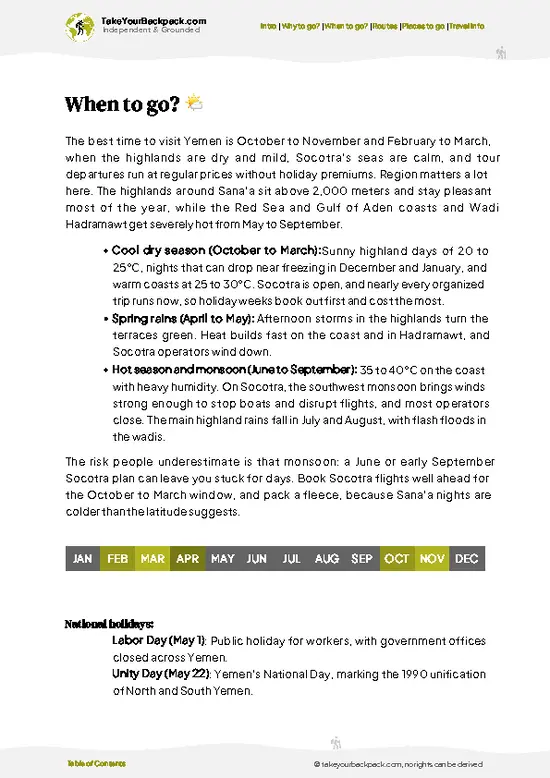
  • Topic: Weather and Temperature — Sana’a sits high at about 2,300 meters, which means cooler temperatures than you’d expect for Yemen. From November to February, expect daytime highs around 18-22°C (64-72°F) and chilly nights dropping to 5-8°C (41-46°F). Summers (June to August) can hit 28-32°C (82-90°F), but the dry heat is less oppressive than lowland deserts.

  • Topic: Daylight Hours — Sana’a enjoys roughly 11 to 13 hours of daylight year-round, with longer days in summer. This steady rhythm means you can plan hikes or city strolls without worrying about early nightfall, but winter evenings come early enough to encourage early dinners and rest.

  • Topic: Crowds — Tourism in Yemen is minimal due to political instability, so crowds are rarely a factor. However, local holidays like Eid can
read more 👉

  • Topic: Weather and Temperature — Sana’a sits high at about 2,300 meters, which means cooler temperatures than you’d expect for Yemen. From November to February, expect daytime highs around 18-22°C (64-72°F) and chilly nights dropping to 5-8°C (41-46°F). Summers (June to August) can hit 28-32°C (82-90°F), but the dry heat is less oppressive than lowland deserts.

  • Topic: Daylight Hours — Sana’a enjoys roughly 11 to 13 hours of daylight year-round, with longer days in summer. This steady rhythm means you can plan hikes or city strolls without worrying about early nightfall, but winter evenings come early enough to encourage early dinners and rest.

  • Topic: Crowds — Tourism in Yemen is minimal due to political instability, so crowds are rarely a factor. However, local holidays like Eid can swell city activity, making some spots busier and prices higher.

  • Topic: Seasonal Activities — The cooler months are perfect for exploring Sana’a’s ancient architecture and markets without sweating through your clothes. Spring brings blooming landscapes nearby, ideal for day trips. Avoid the hottest months if you want to trek outside the city.

  • Topic: Price Fluctuations — Prices for accommodation and guides tend to be more stable than in typical tourist hubs but can spike slightly during religious festivals or local events. Off-peak winter months often offer the best value, combining comfort and cost-efficiency.


Pro-tip: Aim for late autumn or early spring to balance mild weather, fewer crowds, and wallet-friendly prices—this is when Sana’a’s character shines without the extremes.


source: climatestotravel.comJANJanuary: excellent for travelingFEBFebruary: excellent for travelingMARMarch: highly recommended for travelingAPRApril: highly recommended for travelingMAYMay: good for travelingJUNJune: fair for travelingJULJuly: fair for travelingAUGAugust: fair for travelingSEPSeptember: good for travelingOCTOctober: highly recommended for travelingNOVNovember: excellent for travelingDECDecember: excellent for traveling
when-to-go

✈️ The backpacker research shortcutYemen Travel Guide

An offline-friendly backpacking guide with optimized travel routes, ranked highlights, transport advice, and the best areas to stay.
example page 0 from our offline Travel Guide for Yemen
example page 1 from our offline Travel Guide for Yemen
example page 2 from our offline Travel Guide for Yemen
example page 3 from our offline Travel Guide for Yemen
example page 4 from our offline Travel Guide for Yemen
example page 5 from our offline Travel Guide for Yemen
example page 6 from our offline Travel Guide for Yemen
example page 7 from our offline Travel Guide for Yemen
The digital guide (290 pages) contains:
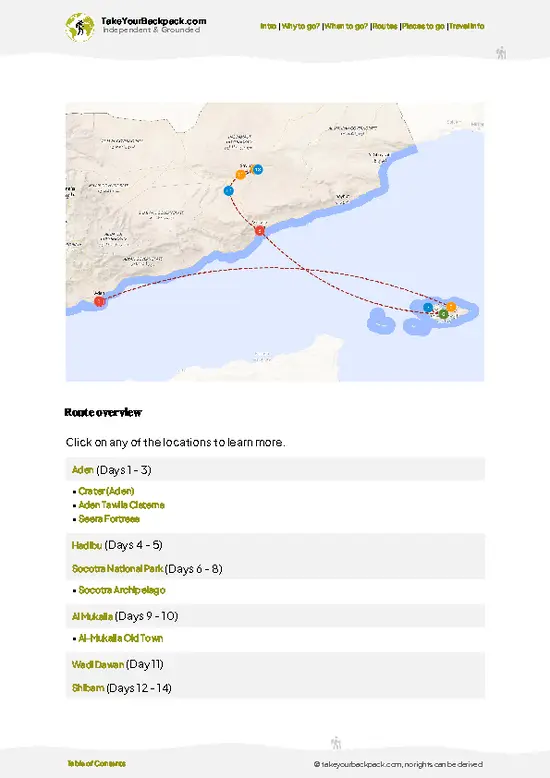
72 highlights, ranked by travel appeal
Optimized 5, 10 & 15-day travel routes
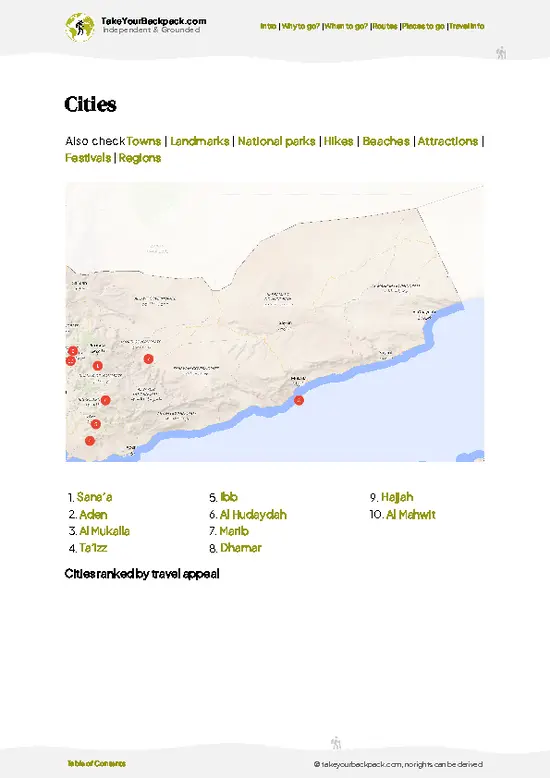
Cities, national parks, landmarks, beaches
How to get around
Offline-friendly for travel without Wi-Fi
👉 Click to see all 30+ guide features

📅 Plan smarter in minutes, not weeks
Month by month travel advice
Festivals & national holidays
Budget expectations

🗺️ Go to the right places, skip the overrated ones
Honest pros & cons of destinations
Top hikes, parks & viewpoints
Lesser-known places most travelers miss
Clear “worth it vs skip it” guidance

🛏️ Travel smoothly without rookie mistakes
Best areas to stay
Transport systems explained simply
Common scams & safety advice
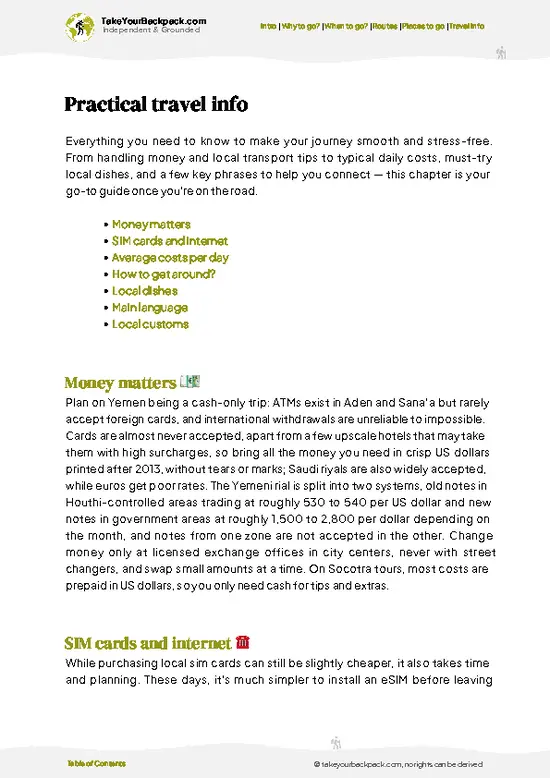
SIM cards, money & practical tips

🌍 Understand the country, not just visit it
Culture & traditions
52 Essential phrases & customs
Festivals worth planning around
Traveler-friendly historical context
Insights that make places more meaningful

📱 Built for real travel conditions
Fully downloadable PDF
Works completely offline
Optimized for phone use
Useful in remote areas & buses
Everything in one place
Save weeks of stressful planning
Get instant access to your full guide. 30‑day money-back guarantee.


By proceeding you agree to our terms.
Sent to your inbox immediately after payment • 100% Secure Checkout
Best Backpacking Travel Advisor 2025 tourism awardBest Backpacking
Travel Advisor
2025
What others say about Take Your Backpack Guides:
⭐⭐⭐⭐⭐
Fantastic, amazing amount of information!
⭐⭐⭐⭐⭐
My goodness this is amazing, it's what I've been looking for hats off too you!
⭐⭐⭐⭐⭐
I think this is absolutely BRILLIANT
⭐⭐⭐⭐
Very complete and informative. It's still missing places, but I gotta to commend you
⭐⭐⭐⭐⭐
This is truly amazing, thank you, can't wait to explore it with my kids!
⭐⭐⭐⭐⭐
Awesome resource, thank you!
⭐⭐⭐⭐⭐
This is amazing! Can't wait to explore the ones I haven't seen
⭐⭐⭐⭐
I love this! Well done, great idea.
⭐⭐⭐⭐⭐
Thanks for taking the time to make this gem!
⭐⭐⭐⭐⭐
This might be the best website I've ever seen.
⭐⭐⭐⭐⭐
Congratulations, and thank you so much for your work; it's incredibly valuable.
⭐⭐⭐⭐
In all seriousness I think you did a great job pointing out the important spots
⭐⭐⭐⭐⭐
10/10 very good
⭐⭐⭐⭐⭐
As someone who's only just starting to visit regularly this is awesome, thank you.
⭐⭐⭐⭐
Thank you very much! I'm going to visit my dad, it's going to be very useful!
⭐⭐⭐⭐⭐
This is really cool! We'll be travelling for the first time and this definitely come in handy.
⭐⭐⭐⭐⭐
You are now our minister of culture, congratulations 👨‍💼
⭐⭐⭐⭐⭐
Just wanted to tell you that this is a pearl! Going to follow your recommendations.
⭐⭐⭐⭐⭐
This is so cool. I'll definitely be using the resource for my travels soon.
⭐⭐⭐⭐⭐
This is very impressive! Good work.
⭐⭐⭐⭐⭐
This is an amazing and informative site. Very well done!

🛏️ Where to stay?How to pick the right area

In Sana’a, the real backpacker sweet spot is the Old City area, especially around Bab al-Yemen. This neighborhood is the heartbeat of the city, where the ancient architecture and bustling souks create a sensory overload that’s both thrilling and manageable. It’s where you get the most bang for your buck: affordable guesthouses and a handful of hostels cater to budget travelers and solo adventurers. The vibe here is social without being overwhelming—think small communal spaces where you can swap stories over Yemeni coffee or freshly baked bread.

Compared to newer districts, the Old City offers … read more 👉
In Sana’a, the real backpacker sweet spot is the Old City area, especially around Bab al-Yemen. This neighborhood is the heartbeat of the city, where the ancient architecture and bustling souks create a sensory overload that’s both thrilling and manageable. It’s where you get the most bang for your buck: affordable guesthouses and a handful of hostels cater to budget travelers and solo adventurers. The vibe here is social without being overwhelming—think small communal spaces where you can swap stories over Yemeni coffee or freshly baked bread.

Compared to newer districts, the Old City offers a compact, walkable environment that naturally encourages interaction. You’re not just passing through; you’re embedded in a living museum with locals who are curious but respectful of travelers. Safety-wise, this area benefits from a strong community presence and a steady flow of visitors, which keeps things relatively secure for backpackers who stay alert.

Other parts of Sana’a, like the more modern neighborhoods, tend to be quieter and less social, with fewer budget options and a more isolated feel. They’re better for short business stays or those prioritizing comfort over cultural immersion. But if you want to maximize your time, money, and the authentic pulse of Sana’a, the Old City around Bab al-Yemen is your strategic base camp. It’s where the trade-offs between comfort and authenticity lean heavily in your favor.

🚌 Getting aroundGetting around like a local

Sana’a moves to a rhythm that’s part old-world pulse, part improvisational jazz. The city’s flow isn’t about strict timetables or neat schedules; it’s a dance of honking horns, shouted directions, and the occasional pause to sip sweet Yemeni coffee. Here, time bends around the human element—expect delays, expect detours, but also expect moments where everything clicks perfectly. Understanding this flow is your first win. It’s not about fighting the system but playing it smart, knowing when to push and when to glide.


  • Walking: The ultimate budget option and the best way to soak in Sana’a’s character. The Old City’s narrow alleys and historic architecture demand slow feet. It’s free, obviously, and often faster than vehicles stuck in traffic jams. Just watch your step—some streets are uneven,
read more 👉
Sana’a moves to a rhythm that’s part old-world pulse, part improvisational jazz. The city’s flow isn’t about strict timetables or neat schedules; it’s a dance of honking horns, shouted directions, and the occasional pause to sip sweet Yemeni coffee. Here, time bends around the human element—expect delays, expect detours, but also expect moments where everything clicks perfectly. Understanding this flow is your first win. It’s not about fighting the system but playing it smart, knowing when to push and when to glide.


  • Walking: The ultimate budget option and the best way to soak in Sana’a’s character. The Old City’s narrow alleys and historic architecture demand slow feet. It’s free, obviously, and often faster than vehicles stuck in traffic jams. Just watch your step—some streets are uneven, and the heat can be intense midday.


  • Shared Taxis (Service Taxis): These are minibuses or cars running fixed routes but without strict schedules. They leave when full, so timing is unpredictable. Fares are dirt cheap—usually under 100 Yemeni rials (a few cents). Comfort is minimal, and expect crowding, but they’re the fastest way to cover longer distances across the city.


  • Regular Taxis: Metered taxis are rare; most drivers negotiate fares upfront. Prices vary widely, so bargaining skills pay off. They offer more comfort and flexibility than shared taxis but cost more—still affordable for short hops. Ideal if you’re carrying gear or traveling late when shared taxis thin out.


  • Motorcycle Taxis (Bajaj): These three-wheelers zip through traffic with ease. They’re cheap and quick for short distances, but safety standards are low. Helmets are rare, and the ride can be bumpy. Use them when you’re in a hurry and the roads are congested, but keep your wits about you.


  • Intercity Buses: For trips outside Sana’a, buses depart from main terminals without fixed schedules—leave when full. They’re slow and basic but extremely cheap. Comfort is minimal, and delays are common, so factor in extra time if you’re catching a connection.


In Sana’a, every transit choice is a trade-off between your wallet, your watch, and your patience. Walking costs nothing but demands time and stamina. Shared taxis save money and time but sacrifice comfort and predictability. Regular taxis buy you comfort and flexibility at a higher price. Motorcycle taxis offer speed but come with risk. Understanding these trade-offs lets you navigate the city like a strategist, turning what could be chaos into a game you’re winning.

👛 Costs (as of 4 March 2025)Money, prices, and spending tips

Backpacking in Sana’a, Yemen, demands a sharp eye on your budget because every dollar spent is a choice between time, comfort, and experience. Here’s how the daily costs typically break down for an independent traveler navigating this complex city.
  • Dorm Accommodation (High Season): Expect to pay around $15 to $25 per night. High season sees a slight bump due to limited availability and increased demand, especially in safer, more central guesthouses.
  • Dorm Accommodation (Off-Season): Prices drop to about $10 to $18 per night. Off-season offers more bargaining power but fewer options, and the quality can vary significantly.
  • Meals: Local Yemeni food from street vendors or small eateries costs roughly $3 to $7 per day. This covers three simple meals, focusing on staples like flatbreads, lentils,
read more 👉
Backpacking in Sana’a, Yemen, demands a sharp eye on your budget because every dollar spent is a choice between time, comfort, and experience. Here’s how the daily costs typically break down for an independent traveler navigating this complex city.
  • Dorm Accommodation (High Season): Expect to pay around $15 to $25 per night. High season sees a slight bump due to limited availability and increased demand, especially in safer, more central guesthouses.
  • Dorm Accommodation (Off-Season): Prices drop to about $10 to $18 per night. Off-season offers more bargaining power but fewer options, and the quality can vary significantly.
  • Meals: Local Yemeni food from street vendors or small eateries costs roughly $3 to $7 per day. This covers three simple meals, focusing on staples like flatbreads, lentils, and spiced meat dishes. Eating at tourist-oriented restaurants will push this higher.
  • Local Transport: Shared minibuses and taxis run about $0.20 to $0.50 per trip within the city. Frequent use adds up but remains affordable if you’re flexible with timing and routes.
  • City Transport Pass: Sana’a doesn’t have a formal city transport pass system. Budget travelers rely on cash fares for each trip, so plan accordingly.
  • Basic Activities/Entry Fees: Visiting historical sites or museums typically costs between $2 and $5. Some sites may be closed or have restricted access due to ongoing security concerns, so factor in occasional unpredictability.
  • Miscellaneous Expenses: This includes bottled water, snacks, SIM cards, and small tips, averaging around $2 to $5 daily. Essentials like water are non-negotiable for health, so don’t skimp here.

Balancing these costs, a realistic daily budget for backpacking in Sana’a ranges from about $22 on the leanest days to $45 if you lean toward more comfort or convenience. Each dollar saved on accommodation or transport can be reinvested in meals or experiences, but the key is knowing what you’re trading off—time, comfort, or the richness of your adventure.


source: yemenembassy.org
⚠️ Prices can change and everyone travels differently, so take this as a rough guide. Hope it helps you plan your adventure!

🚌 Day tripsShort trips worth adding

Sana’a is a fantastic base for day trips, offering a blend of history, culture, and stunning landscapes. Here are some worthwhile excursions that will enrich your experience without draining your wallet.

Wadi Dhahr
Just a short drive from Sana’a, Wadi Dhahr is a breathtaking valley known for its dramatic cliffs and lush greenery. The highlight is the iconic Dar al-Hajar, a palace perched on a rock, which looks like something out of a fairy tale. You can hike around the wadi, explore local villages, and enjoy a picnic by the river. The trip takes about 30 minutes by taxi, costing around $10. Best visited in spring or fall, when the weather is mild, this trip is a perfect escape from the city hustle. A common mistake is underestimating the hike; wear sturdy shoes and bring plenty of water. … read more 👉
Sana’a is a fantastic base for day trips, offering a blend of history, culture, and stunning landscapes. Here are some worthwhile excursions that will enrich your experience without draining your wallet.

Wadi Dhahr
Just a short drive from Sana’a, Wadi Dhahr is a breathtaking valley known for its dramatic cliffs and lush greenery. The highlight is the iconic Dar al-Hajar, a palace perched on a rock, which looks like something out of a fairy tale. You can hike around the wadi, explore local villages, and enjoy a picnic by the river. The trip takes about 30 minutes by taxi, costing around $10. Best visited in spring or fall, when the weather is mild, this trip is a perfect escape from the city hustle. A common mistake is underestimating the hike; wear sturdy shoes and bring plenty of water.
👉 Explore Wadi Dhahr

Al-Hajjarah
This ancient mountain village is a must-see for anyone interested in Yemen’s rich history. About an hour from Sana’a, Al-Hajjarah is famous for its mud-brick architecture and stunning views. You can wander through narrow streets, visit the local market, and even chat with friendly locals. Expect to spend around $15 for transportation and snacks. The best time to visit is early morning to avoid the heat and catch the sunrise illuminating the mountains. Many first-timers miss the chance to explore the surrounding trails, which offer incredible vistas.


Thula
Thula is another gem, known for its well-preserved medieval architecture and scenic surroundings. Located about 2 hours from Sana’a, this village is less touristy, giving you a more authentic experience. You can explore ancient ruins, visit the local museum, and enjoy panoramic views from the hilltop. The total cost for the day, including transport, is around $20. Late autumn or early spring is ideal for visiting, as the weather is pleasant. A common pitfall is rushing through; take your time to soak in the atmosphere.
👉 Explore Thula

Shibam
Often referred to as the “Manhattan of the Desert,” Shibam is famous for its towering mud-brick skyscrapers. It’s about a 3-hour drive from Sana’a, but the unique architecture makes it worth the trek. You can stroll through the narrow alleys and marvel at the buildings that have stood for centuries. Budget around $25 for the trip. The best time to visit is during the cooler months, from October to March. Many travelers overlook the local guides who can provide fascinating insights into the history and culture.
👉 Explore Shibam
Want to know what more Yemen offers?
The Yemen Travel Guide describes 72 highlights, from cities to national parks, from beaches to hikes

Get the Travel Guide -

🍲 FoodLocal Cuisine & Drinks

In Sana’a, **food** isn’t just sustenance; it’s a vibrant part of the culture. You’ll want to dive into **salta**, a hearty stew made with lamb, vegetables, and a unique blend of spices, topped with a frothy layer of fenugreek. It’s often served with **flatbread** for dipping, making every bite a communal experience.

Street food is where the magic happens. Stroll through the bustling **markets**, and you’ll find vendors grilling **shai** (spiced tea) and serving **fahsa**, a dish of shredded meat and spices that’s perfect for sharing. The aroma of grilled **kebabs** wafts through the air, drawing you in.

Don’t miss out on **qishr**, a traditional drink made from coffee husks, ginger, and spices. It’s a local favorite, often enjoyed in small cafés where you can sit and soak in the atmosphere. … read more 👉
In Sana’a, **food** isn’t just sustenance; it’s a vibrant part of the culture. You’ll want to dive into **salta**, a hearty stew made with lamb, vegetables, and a unique blend of spices, topped with a frothy layer of fenugreek. It’s often served with **flatbread** for dipping, making every bite a communal experience.

Street food is where the magic happens. Stroll through the bustling **markets**, and you’ll find vendors grilling **shai** (spiced tea) and serving **fahsa**, a dish of shredded meat and spices that’s perfect for sharing. The aroma of grilled **kebabs** wafts through the air, drawing you in.

Don’t miss out on **qishr**, a traditional drink made from coffee husks, ginger, and spices. It’s a local favorite, often enjoyed in small cafés where you can sit and soak in the atmosphere.

Etiquette is key here. When eating, it’s customary to use your right hand, and sharing food is a sign of friendship. Expect lively conversations around you; meals are often lengthy, filled with laughter and storytelling. Embrace the **slow pace**—it’s part of the experience.

In Sana’a, every meal is a chance to connect, so savor the flavors and the company.

🛡️ SafetyStaying Safe: What Travelers Should Know

Sana’a is generally safe for travelers, but awareness is key. Stick to well-trodden paths, especially in the Old City, where the stunning architecture can distract you. Keep your belongings close; petty theft can happen in crowded markets.

Solo travelers should be mindful after dark. While the city has a friendly vibe, it’s wise to avoid wandering alone at night. If you need to move around, consider hiring a local guide who knows the ins and outs.

Scams are rare, but a few exist. Be cautious of overly friendly locals who might offer unsolicited help, especially in markets. They may expect a tip or try to steer you toward shops where they earn a commission.

Everyday annoyances include the occasional aggressive taxi driver. Agree on a fare before getting in to avoid surprises. Carry yourself … read more 👉
Sana’a is generally safe for travelers, but awareness is key. Stick to well-trodden paths, especially in the Old City, where the stunning architecture can distract you. Keep your belongings close; petty theft can happen in crowded markets.

Solo travelers should be mindful after dark. While the city has a friendly vibe, it’s wise to avoid wandering alone at night. If you need to move around, consider hiring a local guide who knows the ins and outs.

Scams are rare, but a few exist. Be cautious of overly friendly locals who might offer unsolicited help, especially in markets. They may expect a tip or try to steer you toward shops where they earn a commission.

Everyday annoyances include the occasional aggressive taxi driver. Agree on a fare before getting in to avoid surprises. Carry yourself confidently, engage with locals, and you’ll find that most interactions are genuine and enriching.

Other Yemeni cities near Sana’a

Explore more nearby:

  • Amran—stone towers, agricultural valley, pre-Islamic ruins| 44 km away
  • Al Mahwit—misty highlands, stone houses, qat farms| 72 km away
  • Hajjah—mountain ridges, terraced fields, hilltop villages| 75 km away

💡 Not sure where to go next?
Create a personalized itinerary for Yemen including Sana’a and the places that fit your trip.

Generate my itinerary

👉 Discover all cities

Or checkout all Yemen has to offer (think cities, towns, villages, national parks, hikes, beaches, festivals)
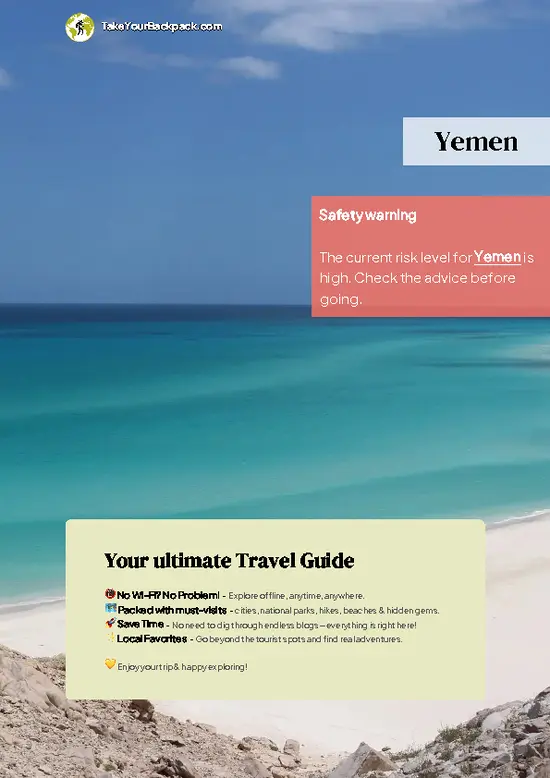
Country photo of Yemen

We 💚 feedbackSumming up the experience

Sana’a is a world apart. The ancient architecture feels alive, whispering stories of centuries past. You’ll be surprised by the warmth of the locals; they’re genuinely curious about you. But tread carefully—political tensions can shift quickly. Stick to the old city and savor the street food; the lamb sandwiches are a must. Just remember, this isn’t a place for a rushed itinerary. Embrace the slow pace, and let the city reveal its secrets. You’ll leave with more than just memories; you’ll carry a piece of its soul.

✍️ Help improve this page!
The information on this page is based on in-depth research, insights shared by experienced travelers, and feedback from the local travel community in Yemen. While every effort is made to keep the information accurate and current, conditions can change — so if you spot anything incorrect or outdated, please get in touch.


🙋‍♂️ Give feedback

👋 Meet the founderWho’s Behind Take Your Backpack?

Johan, backpacker and founder of TakeYourBackpackHi, I’m Johan (Netherlands 🇳🇱), the creator of TakeYourBackpack. Over the past decade, I’ve backpacked through 80+ countries across six continents, gaining extensive experience with independent travel, long-term trips, and overland routes.

This site is built on a combination of firsthand travel experience and carefully curated insights from other backpackers. Many guides are based on places I’ve personally visited, while others bring together tips, observations, and practical advice shared by trusted travelers I’ve met along the way.

The goal is to provide realistic, experience-driven guidance — not generic itineraries — so you can explore destinations with better context, clearer expectations, and more confidence.

Get full Yemen guide •
Instant download • 72 highlights • Full Offline guide