×

Yemen🇾🇪 | townsThulabasalt walls, ancient gates, stepped alleys | things to do and best time to go

Explore ShibamExplore Zabid

Backpacking in Thula
👍 Recommendedtown ranked #5
By Johan Kruseman 🇳🇱 | Updated September 4, 2026

Most people only realize after leaving that Thula is where you should have slowed down. It’s a compact, stone-built town in the highlands of northern Yemen, west of Sana’a on the road toward Kawkaban and Shibam, and it rewards anyone who gives it a full day instead of a rushed photo stop. The air is thin and dry, the alleys smell of dust and baking bread, and the fortified old town feels almost stage-set quiet compared with Sana’a’s chaos. As a backpacker stop, it works best as a scenic pause between bigger hubs, or as a base for short walks into the surrounding terraces and cliffs. You can cross the center on foot in minutes; shared cars or hired drivers get you in and out. It’s cheaper and calmer than Sana’a, but also lonelier: few guesthouses, almost no nightlife, and you’re unlikely to bump into other foreigners. Safety and access can change fast in Yemen, so Thula is for patient, prepared travelers who value stone walls, mountain light, and early nights over convenience.

Discover everything you want to know in the 📖 Yemen Travel Guide.
Safety warning

The current risk level for Yemen is high. Check the advice before going.


Get your Yemen guide
67 ranked highlights, routes & tips, works offline (264 pages)
Loading the map 🌍
CLICK TO FILTER
cities
towns
landmarks
national parks
hikes
beaches
attractions
festivals
regions
SHOW COUNTRY’S BESTSHOW ALL

✨ Why go?
Ranked #5 town in Yemen
The unique appeal for travelers

Thula, Yemen, draws backpackers for its strategic location within a stunning landscape. Nestled between hiking trails and cultural sites, it’s a perfect launchpad for adventures. The walkable streets invite exploration, where you can stumble upon local eateries serving hearty dishes that warm you from the inside out.

Accommodations range from small-scale hostels to cozy guesthouses, fostering a friendly social atmosphere. Here, you’ll find a mix of slow travelers and solo adventurers who appreciate the chance to linger, soaking in the rich history and vibrant culture. Most stay a few days, enjoying the balance of quiet reflection and casual conversations with fellow travelers. If you’re looking for a place that feels like a stepping stone rather than a bustling hub, Thula offers a meaningful prelude to the beauty of Yemen’s landscapes.
Want to include Thula in your Yemen route?
Create a personalized Yemen itinerary that includes Thula and the places that fit your trip — based on your travel style, budget, and available time. Get your route in seconds.

Generate my trip

💡 HighlightsPlaces and moments you shouldn't skip

  • The Citadel (Qal’at Thula) — The hilltop fortress that dominates the village; great for close-up study of ancient stonework, defensive masonry and for panoramic views over the surrounding terraces.
  • The Old City Walls and Towers — Thick stone ramparts and watchtowers still ring parts of Thula, offering a vivid sense of how the settlement was defended and how streets were organized around fortifications.
  • Traditional Stone Tower Houses — The tightly packed multi-storey homes built of dressed stone and mortar are the town’s signature; climbing narrow alleys and rooftop paths shows how people lived vertically for centuries.
  • The Great Mosque and its Courtyard — A quietly atmospheric place where local religious life and traditional architectural details (minarets, wooden doors, carved plaster)
read more 👉
  • The Citadel (Qal’at Thula) — The hilltop fortress that dominates the village; great for close-up study of ancient stonework, defensive masonry and for panoramic views over the surrounding terraces.
  • The Old City Walls and Towers — Thick stone ramparts and watchtowers still ring parts of Thula, offering a vivid sense of how the settlement was defended and how streets were organized around fortifications.
  • Traditional Stone Tower Houses — The tightly packed multi-storey homes built of dressed stone and mortar are the town’s signature; climbing narrow alleys and rooftop paths shows how people lived vertically for centuries.
  • The Great Mosque and its Courtyard — A quietly atmospheric place where local religious life and traditional architectural details (minarets, wooden doors, carved plaster) are visible up close.
  • Narrow Stepped Alleys and Roof Walks — Not a single monument, but walking these lanes is the best way to experience Thula’s scale and craftsmanship: stairs, niches, small carved lintels and glimpses into daily life.
  • Historic Market Area (Local Souq) — A small, authentic trading cluster where you can buy local staples, see craftsmen at work and watch the rhythms of village commerce without tourist gloss.
  • Ancient Wells and Cisterns — The old water installations that supported the village are physically visitable and reveal traditional water management and communal life in this arid landscape.
  • Carved Doors and Masonry Details — A slower, detail-focused stop: doors, lintels, and carved stones scattered through the old quarter tell stories about family lineage, craftsmanship and local aesthetics.
  • Small Hammams and Household Interiors (where open to visitors) — If you get invited or allowed inside, traditional bathhouses and preserved interiors offer a rare look at social spaces and domestic architecture.
  • Sunset/Sunrise Viewpoints on the Village Rim — Simple terraces and outer walls give clean, memorable light on the stone village and surrounding terraces; excellent for photos and quiet reflection.
A few real, visitable highlights just outside Thula that work well as day trips are the Old City of Sana’a, the regional markets and archaeological sites around Amran, and the terraced mountain villages of Jabal Haraz.
Spotted a mistake or missing something? Contact us.
🏘️ NeighborhoodsKey areas and districts to know

Thula, Yemen, is a captivating blend of history and culture, offering backpackers a unique experience. Here’s how to navigate its neighborhoods for the best adventure.

Old Thula: This is where the magic happens. The narrow, winding streets are lined with ancient stone buildings that whisper stories of the past. The vibe is tranquil, perfect for soaking in the atmosphere. Costs here are low, with budget-friendly guesthouses. It’s walkable, but be prepared for some steep climbs. Ideal for short stays, you can easily explore the local markets and enjoy quiet evenings.

Al-Mahjar: A bit more modern, this area has a lively feel. Cafés and shops buzz with energy, making it great for socializing. Prices are slightly higher, but you’ll find more amenities. It’s walkable, though public transport options … read more 👉
Thula, Yemen, is a captivating blend of history and culture, offering backpackers a unique experience. Here’s how to navigate its neighborhoods for the best adventure.

Old Thula: This is where the magic happens. The narrow, winding streets are lined with ancient stone buildings that whisper stories of the past. The vibe is tranquil, perfect for soaking in the atmosphere. Costs here are low, with budget-friendly guesthouses. It’s walkable, but be prepared for some steep climbs. Ideal for short stays, you can easily explore the local markets and enjoy quiet evenings.

Al-Mahjar: A bit more modern, this area has a lively feel. Cafés and shops buzz with energy, making it great for socializing. Prices are slightly higher, but you’ll find more amenities. It’s walkable, though public transport options are available for longer distances. Perfect for those looking to balance relaxation with nightlife, you can enjoy a drink and mingle with locals.

Al-Qasr: This neighborhood is quieter, ideal for longer stays. The atmosphere is serene, with beautiful views of the surrounding mountains. Costs are reasonable, and it’s less touristy, giving you a more authentic experience. While it’s less walkable, taxis are readily available. Perfect for those wanting to immerse themselves in local life.

⌛️ 1 dayWhat you can realistically do in a day

Thula, Yemen, is a treasure trove of history and culture, perched high in the mountains with its ancient stone buildings and stunning views. The air is crisp, filled with the earthy scent of the surrounding landscape. Start your day early, as the soft morning light casts a golden hue over the town.

Begin at the iconic Al-Qahira Castle, where you can soak in panoramic views of the terraced fields below. The climb is steep, but the reward is a breathtaking vista that makes every step worthwhile. Afterward, wander through the narrow streets of the old town, where the architecture tells stories of centuries past. Stop by a local café for a traditional breakfast of flatbread and honey, mingling with friendly locals who are eager to share their stories.

In the afternoon, head to the lesser-known … read more 👉
Thula, Yemen, is a treasure trove of history and culture, perched high in the mountains with its ancient stone buildings and stunning views. The air is crisp, filled with the earthy scent of the surrounding landscape. Start your day early, as the soft morning light casts a golden hue over the town.

Begin at the iconic Al-Qahira Castle, where you can soak in panoramic views of the terraced fields below. The climb is steep, but the reward is a breathtaking vista that makes every step worthwhile. Afterward, wander through the narrow streets of the old town, where the architecture tells stories of centuries past. Stop by a local café for a traditional breakfast of flatbread and honey, mingling with friendly locals who are eager to share their stories.

In the afternoon, head to the lesser-known neighborhood of Al-Hamra. This area is often overlooked by tourists, but its vibrant community and colorful markets offer an authentic glimpse into daily life. Explore the bustling souk, where spices and textiles create a sensory feast. Don’t miss the chance to chat with artisans crafting traditional handicrafts.

As evening approaches, find a spot to watch the sunset over the mountains. The sky transforms into a canvas of oranges and purples, a perfect backdrop for reflection. For dinner, seek out a local eatery serving hearty stews and fresh bread, where the warmth of the food mirrors the hospitality of the people. This day in Thula isn’t just about sights; it’s about connecting with the heart of Yemen.
Turn your Thula visit into an Yemen adventure
Build a complete Yemen route with Thula, hidden gems, must-see destinations, and realistic travel times included.

Generate my trip

🌤️ When to go?Seasonal considerations and timing


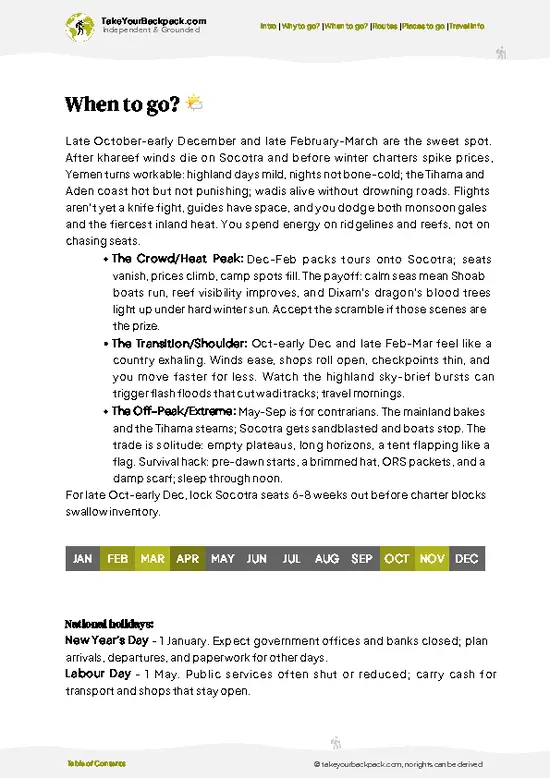
  • Topic: Weather — Thula’s highland climate means mild summers with temperatures around 25-30°C (77-86°F), perfect for hiking without overheating. Winters dip to 5-10°C (41-50°F), which can feel sharp in the evenings, so pack layers.

  • Topic: Temperature — Daytime warmth contrasts with chilly nights, especially from November to February. Spring and autumn offer the best balance, with comfortable highs near 22°C (72°F) and cool, crisp mornings.

  • Topic: Daylight Hours — Expect roughly 11-12 hours of daylight year-round, but the sun sets earlier in winter, around 5 PM, limiting late afternoon exploration. Longer days in summer stretch until 6:30 PM, giving you more light to roam.

  • Topic: Crowds — Tourist traffic is minimal year-round, but local festivals in spring bring a lively buzz. Visiting
read more 👉

  • Topic: Weather — Thula’s highland climate means mild summers with temperatures around 25-30°C (77-86°F), perfect for hiking without overheating. Winters dip to 5-10°C (41-50°F), which can feel sharp in the evenings, so pack layers.

  • Topic: Temperature — Daytime warmth contrasts with chilly nights, especially from November to February. Spring and autumn offer the best balance, with comfortable highs near 22°C (72°F) and cool, crisp mornings.

  • Topic: Daylight Hours — Expect roughly 11-12 hours of daylight year-round, but the sun sets earlier in winter, around 5 PM, limiting late afternoon exploration. Longer days in summer stretch until 6:30 PM, giving you more light to roam.

  • Topic: Crowds — Tourist traffic is minimal year-round, but local festivals in spring bring a lively buzz. Visiting outside these times means quieter streets and more authentic interactions with residents.

  • Topic: Seasonal Activities — Spring hosts traditional markets and cultural events, adding layers to your experience beyond the architecture. Summer’s heat discourages long treks, so plan shorter, shaded walks then.

  • Topic: Price Fluctuations — Prices for lodging and guides stay steady most of the year, but spring festivals can push rates up slightly. Booking ahead during these periods secures better deals.


Pro-tip: Aim for late March to early May when the air smells fresh from recent rains, the light softens the stone walls beautifully, and the town hums with local life—this is when Thula’s soul truly opens up.


source: climatestotravel.comJANJanuary: good for travelingFEBFebruary: good for travelingMARMarch: highly recommended for travelingAPRApril: excellent for travelingMAYMay: excellent for travelingJUNJune: good for travelingJULJuly: fair for travelingAUGAugust: fair for travelingSEPSeptember: good for travelingOCTOctober: highly recommended for travelingNOVNovember: good for travelingDECDecember: good for traveling
when-to-go

✈️ The backpacker research shortcutYemen Travel Guide

An offline-friendly backpacking guide with optimized travel routes, ranked highlights, transport advice, and the best areas to stay.
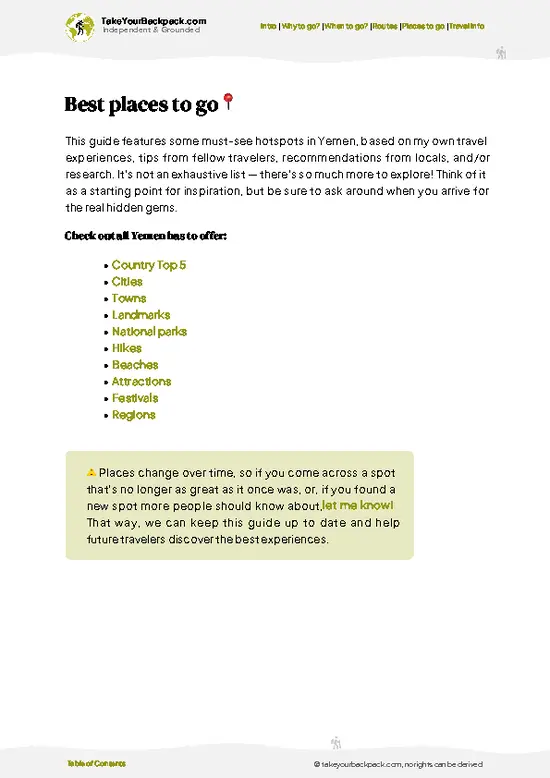
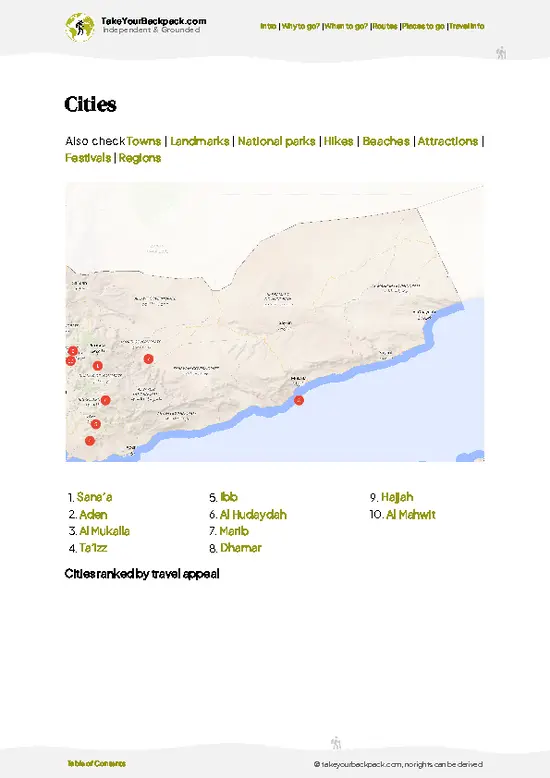
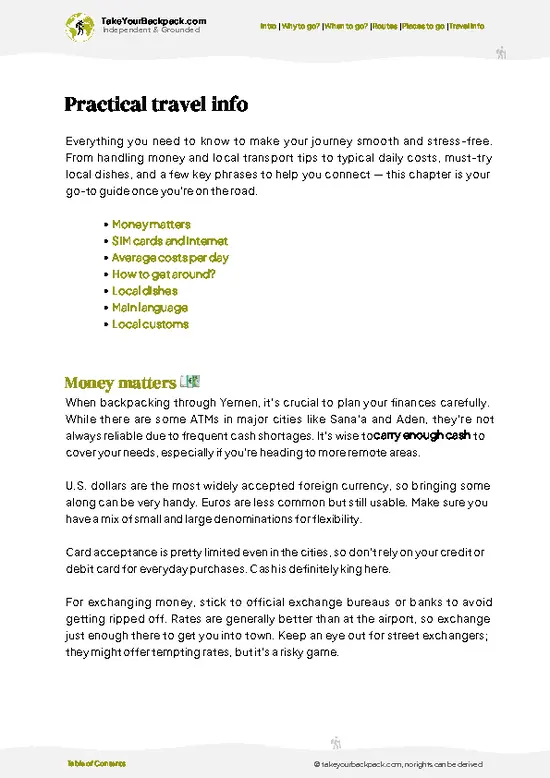
example page 0 from our offline Travel Guide for Yemen
example page 1 from our offline Travel Guide for Yemen
example page 2 from our offline Travel Guide for Yemen
example page 3 from our offline Travel Guide for Yemen
example page 4 from our offline Travel Guide for Yemen
example page 5 from our offline Travel Guide for Yemen
example page 6 from our offline Travel Guide for Yemen
example page 7 from our offline Travel Guide for Yemen
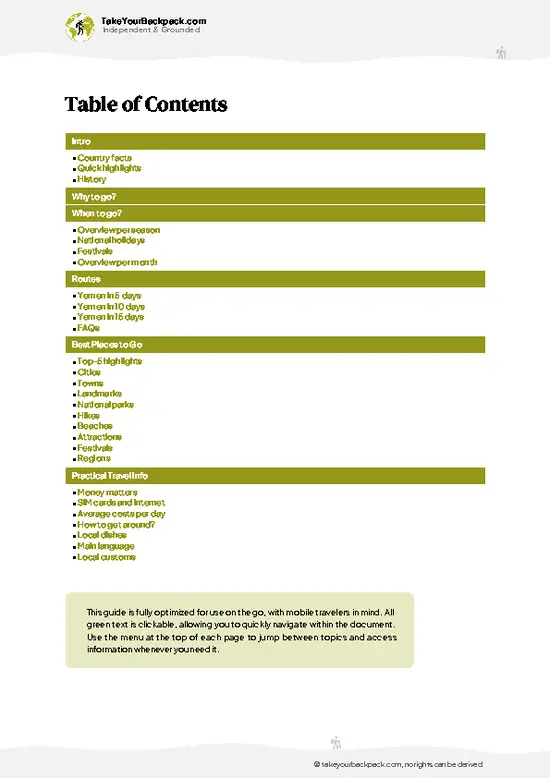
The digital guide (264 pages) contains:
67 highlights, ranked by travel appeal
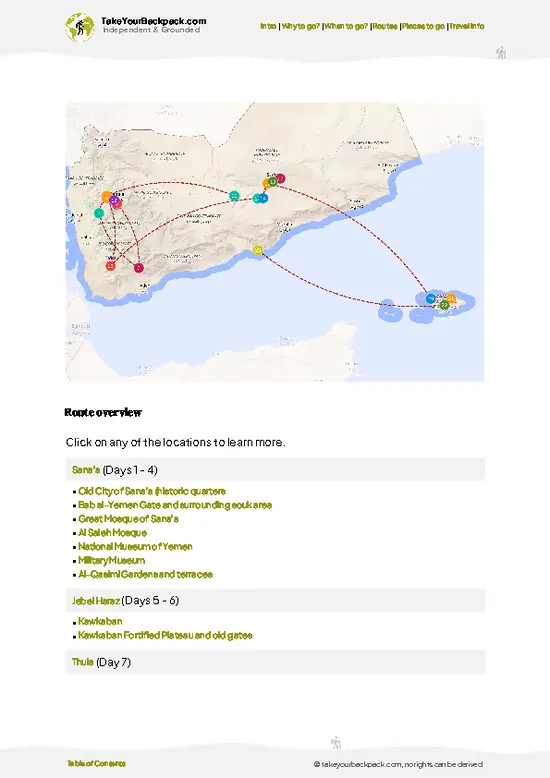
Optimized 5, 10 & 15-day travel routes
Cities, national parks, landmarks, beaches
How to get around
Offline-friendly for travel without Wi-Fi
👉 Click to see all 30+ guide features

📅 Plan smarter in minutes, not weeks
Month by month travel advice
Festivals & national holidays
Budget expectations

🗺️ Go to the right places, skip the overrated ones
Honest pros & cons of destinations
Top hikes, parks & viewpoints
Lesser-known places most travelers miss
Clear “worth it vs skip it” guidance

🛏️ Travel smoothly without rookie mistakes
Best areas to stay
Transport systems explained simply
Common scams & safety advice
SIM cards, money & practical tips

🌍 Understand the country, not just visit it
Culture & traditions
52 Essential phrases & customs
Festivals worth planning around
Traveler-friendly historical context
Insights that make places more meaningful

📱 Built for real travel conditions
Fully downloadable PDF
Works completely offline
Optimized for phone use
Useful in remote areas & buses
Everything in one place
Save weeks of stressful planning
Get instant access to your full guide. 30‑day money-back guarantee.
+ Add another guide for just R$44.25

By proceeding you agree to our terms.
Sent to your inbox immediately after payment • 100% Secure Checkout
Best Backpacking Travel Advisor 2025 tourism awardBest Backpacking
Travel Advisor
2025
What others say about Take Your Backpack Guides:
⭐⭐⭐⭐⭐
Fantastic, amazing amount of information!
⭐⭐⭐⭐⭐
My goodness this is amazing, it's what I've been looking for hats off too you!
⭐⭐⭐⭐⭐
I think this is absolutely BRILLIANT
⭐⭐⭐⭐
Very complete and informative. It's still missing places, but I gotta to commend you
⭐⭐⭐⭐⭐
This is truly amazing, thank you, can't wait to explore it with my kids!
⭐⭐⭐⭐⭐
Awesome resource, thank you!
⭐⭐⭐⭐⭐
This is amazing! Can't wait to explore the ones I haven't seen
⭐⭐⭐⭐
I love this! Well done, great idea.
⭐⭐⭐⭐⭐
Thanks for taking the time to make this gem!
⭐⭐⭐⭐⭐
This might be the best website I've ever seen.
⭐⭐⭐⭐⭐
Congratulations, and thank you so much for your work; it's incredibly valuable.
⭐⭐⭐⭐
In all seriousness I think you did a great job pointing out the important spots
⭐⭐⭐⭐⭐
10/10 very good
⭐⭐⭐⭐⭐
As someone who's only just starting to visit regularly this is awesome, thank you.
⭐⭐⭐⭐
Thank you very much! I'm going to visit my dad, it's going to be very useful!
⭐⭐⭐⭐⭐
This is really cool! We'll be travelling for the first time and this definitely come in handy.
⭐⭐⭐⭐⭐
You are now our minister of culture, congratulations 👨‍💼
⭐⭐⭐⭐⭐
Just wanted to tell you that this is a pearl! Going to follow your recommendations.
⭐⭐⭐⭐⭐
This is so cool. I'll definitely be using the resource for my travels soon.
⭐⭐⭐⭐⭐
This is very impressive! Good work.
⭐⭐⭐⭐⭐
This is an amazing and informative site. Very well done!

🛏️ Where to stay?How to pick the right area

In Thula, Yemen, the best spot for backpackers is the Old Town district. This area pulses with history—stone houses stacked like ancient puzzles, narrow alleys that catch the warm, dusty light just right. It’s where you’ll find the most authentic vibe, away from the newer, quieter parts of town. The Old Town’s maze-like streets naturally invite exploration and chance encounters with locals, making it easier to connect and share stories over a cup of strong Yemeni coffee.

Safety here feels tangible because the community is tight-knit; locals watch out for each other and visitors alike. It’s not … read more 👉
In Thula, Yemen, the best spot for backpackers is the Old Town district. This area pulses with history—stone houses stacked like ancient puzzles, narrow alleys that catch the warm, dusty light just right. It’s where you’ll find the most authentic vibe, away from the newer, quieter parts of town. The Old Town’s maze-like streets naturally invite exploration and chance encounters with locals, making it easier to connect and share stories over a cup of strong Yemeni coffee.

Safety here feels tangible because the community is tight-knit; locals watch out for each other and visitors alike. It’s not about flashy hostels but small guesthouses that offer simple, clean rooms with a communal feel—perfect for solo travelers craving social interaction without the touristy gloss. The air carries the scent of baked bread and spices from nearby markets, grounding you in the daily rhythm of life.

Compared to the outskirts or newer neighborhoods, which can feel disconnected and quieter after dusk, the Old Town keeps you in the heart of activity. Staying here means embracing the sensory layers of Thula—the rough stone underfoot, the call to prayer echoing off walls, the chatter spilling from doorways—making your stay more than just a stop, but a lived experience.

🚌 Getting aroundGetting around like a local

Thula moves at its own rhythm—less a clock-driven town and more a place where the sun’s position and the chatter of locals set the pace. The air carries a mix of wood smoke and fresh earth, hinting at a community still deeply connected to its roots. Streets don’t hum with honking cars but with the shuffle of feet and the occasional rumble of a motorbike. Here, schedules are suggestions, not laws. You’ll find that patience isn’t just a virtue; it’s your best tool. The town’s flow rewards those who lean into its slower, more intuitive beat, where every step reveals layers of history and daily life that a rushed visit would miss.


  • Walking: The heart of Thula is best explored on foot. Narrow, uneven lanes wind through the old town, making walking not just practical but essential. Expect to
read more 👉
Thula moves at its own rhythm—less a clock-driven town and more a place where the sun’s position and the chatter of locals set the pace. The air carries a mix of wood smoke and fresh earth, hinting at a community still deeply connected to its roots. Streets don’t hum with honking cars but with the shuffle of feet and the occasional rumble of a motorbike. Here, schedules are suggestions, not laws. You’ll find that patience isn’t just a virtue; it’s your best tool. The town’s flow rewards those who lean into its slower, more intuitive beat, where every step reveals layers of history and daily life that a rushed visit would miss.


  • Walking: The heart of Thula is best explored on foot. Narrow, uneven lanes wind through the old town, making walking not just practical but essential. Expect to cover most sights within a 30-minute stroll, with the added bonus of catching spontaneous street scenes and local markets. No cost, just comfortable shoes and a readiness to slow down.


  • Shared Minibuses: These are the budget traveler’s lifeline for reaching nearby villages or the busier town center. They don’t run on a strict timetable—departures happen when full, which means waiting can vary from a few minutes to nearly an hour. Fares hover around a few local currency units, making them cheap but sometimes cramped and noisy.


  • Motorbike Taxis: If you want to cut through the town’s winding paths faster, motorbike taxis are your go-to. They’re everywhere, weaving through traffic with ease. Prices are negotiable but generally affordable for short hops. They operate from dawn until dusk, offering a quick, if slightly bumpy, ride through the town’s pulse.


  • Bicycle Rentals: For those who want more control over their pace without relying on schedules, renting a bicycle is a smart move. The terrain is mostly gentle, with some cobbled streets that demand careful handling. Rentals are inexpensive, and cycling lets you cover more ground while still soaking in the scents and sounds of the town’s quieter corners.


  • Local Buses: For longer trips beyond Thula, local buses connect to regional hubs. They have set departure times, usually early morning and late afternoon, so planning ahead is key. Tickets are cheap, but expect basic comfort and occasional delays. These buses offer a window into rural life, with stops dictated by passenger needs rather than strict schedules.

👛 Costs (as of 4 September 2026)How expensive it really is

Backpacking in Thula, Yemen, is a raw, immersive experience where every dollar stretches against a backdrop of ancient stone streets and the scent of spices in the air. Here’s what you can expect to spend daily as an independent traveler navigating this unique town.
  • Dorm Accommodation: Options are limited and basic, often in guesthouses rather than formal hostels. Expect to pay around $10 to $15 per night for a shared room. The facilities are simple—think stone walls, minimal furnishings, and a fan rather than air conditioning—but the atmosphere is authentic and quiet.
  • Meals: Eating local is both a necessity and a highlight. Street food and small local eateries serve hearty Yemeni staples like saltah or flatbread with dips for about $3 to $6 per meal. If you opt for something more substantial
read more 👉
Backpacking in Thula, Yemen, is a raw, immersive experience where every dollar stretches against a backdrop of ancient stone streets and the scent of spices in the air. Here’s what you can expect to spend daily as an independent traveler navigating this unique town.
  • Dorm Accommodation: Options are limited and basic, often in guesthouses rather than formal hostels. Expect to pay around $10 to $15 per night for a shared room. The facilities are simple—think stone walls, minimal furnishings, and a fan rather than air conditioning—but the atmosphere is authentic and quiet.
  • Meals: Eating local is both a necessity and a highlight. Street food and small local eateries serve hearty Yemeni staples like saltah or flatbread with dips for about $3 to $6 per meal. If you opt for something more substantial or a Western-style meal, prices can rise to $8 or $10, but these are rare and usually in more tourist-oriented spots.
  • Local Transport: Thula is compact, so walking is your best bet and costs nothing. For longer trips or to nearby villages, shared taxis or minibuses run around $1 to $3 per ride. The roads are rugged, so travel can be slow, but the views of terraced hillsides and ancient architecture make it worthwhile.
  • Basic Activities/Entry Fees: Most of Thula’s charm is free to explore—wandering the old town, markets, and historic sites. Some specific sites or guided tours might charge a small fee, typically under $5. Hiring a local guide for a day to unlock the history and stories behind the stone houses can cost around $10 to $15, which is well worth it for the depth it adds.
  • Miscellaneous Expenses: This includes bottled water, snacks, and occasional phone credit or SIM cards. Budget around $2 to $5 daily. Keep in mind that reliable internet is scarce, so plan accordingly.

All told, you’re looking at roughly $20 to $40 per day to backpack through Thula comfortably but without luxury. The modest costs reflect the town’s slow pace and basic infrastructure, but they also open the door to an unfiltered experience where every moment feels earned.
⚠️ Prices can change and everyone travels differently, so take this as a rough guide. Hope it helps you plan your adventure!

🚌 Day tripsEasy escapes and nearby places

Thula, Yemen, is a backpacker’s dream base, offering a rich tapestry of history and culture just waiting to be explored. The town itself, with its ancient mud-brick architecture and the scent of spices wafting through the air, sets the stage for unforgettable day trips.

Trip to Al-Mahwit
Just an hour away, Al-Mahwit is a charming town perched on a mountain ridge. The journey is a winding road that reveals stunning vistas of terraced fields and rugged peaks. Once there, you can wander through the bustling souk, where the vibrant colors of textiles and the aroma of freshly ground coffee create a sensory feast. Budget around $5 for transport and a few extra dollars for snacks. The best time to visit is during the cooler months, from October to March, when the weather is pleasant. A common … read more 👉
Thula, Yemen, is a backpacker’s dream base, offering a rich tapestry of history and culture just waiting to be explored. The town itself, with its ancient mud-brick architecture and the scent of spices wafting through the air, sets the stage for unforgettable day trips.

Trip to Al-Mahwit
Just an hour away, Al-Mahwit is a charming town perched on a mountain ridge. The journey is a winding road that reveals stunning vistas of terraced fields and rugged peaks. Once there, you can wander through the bustling souk, where the vibrant colors of textiles and the aroma of freshly ground coffee create a sensory feast. Budget around $5 for transport and a few extra dollars for snacks. The best time to visit is during the cooler months, from October to March, when the weather is pleasant. A common mistake? Underestimating the altitude; bring layers to stay comfortable.


Trip to the Old City of Sana’a
Sana’a, the capital, is about a two-hour drive from Thula. The city’s ancient skyline, punctuated by its unique tower houses, is a sight to behold. Explore the UNESCO World Heritage site, where the air is thick with history and the sounds of daily life. Expect to spend around $10 for transport and a few more for a local meal. Aim for early morning to beat the crowds and the heat. Many first-timers miss the chance to visit the National Museum, which offers a deep dive into Yemen’s rich heritage.
👉 Explore Sana’a

Trip to the Haraz Mountains
The Haraz Mountains are a must-see, just a couple of hours from Thula. The landscape shifts dramatically, with lush greenery and dramatic cliffs. Hiking here is rewarding, with trails leading to ancient villages and breathtaking viewpoints. Budget around $15 for transport and snacks. The best time to hike is in the spring when wildflowers bloom. A common rookie mistake is not carrying enough water; the sun can be relentless.


Trip to the Al-Saleh Mosque
This stunning mosque, about an hour from Thula, showcases modern Islamic architecture blended with traditional elements. The intricate designs and serene atmosphere make it a peaceful retreat. Entry is free, but consider a small donation. Visit in the late afternoon to catch the golden light filtering through the arches. Many overlook the nearby park, which offers a lovely spot to relax and reflect after your visit.
Want to know what more Yemen offers?
The Yemen Travel Guide describes 67 highlights, from cities to national parks, from beaches to hikes

Get the Travel Guide -

🛡️ SafetyStaying Safe: What Travelers Should Know

Thula, Yemen, is generally safe, but a few practical tips can enhance your experience. Stay alert in crowded markets; pickpockets can thrive in busy areas. When wandering solo, especially after dark, stick to well-lit streets and avoid isolated paths.

You might encounter locals eager to guide you; while many are genuine, some may expect payment for unsolicited help. A friendly smile and a firm “no, thank you” usually suffice.

Annoyances can arise from persistent vendors, but a polite refusal often clears the air. Carry yourself confidently, engage with locals, and embrace the rich culture. This approach not only keeps you safe but also deepens your connection to Thula’s vibrant spirit.

FAQFrequently asked questions about Thula

Yes, Thula is worth visiting for its well-preserved medieval architecture and historic significance, not just as a stopover. The town offers unique stone houses and ancient fortifications that attract history enthusiasts and cultural travelers.
Two days are sufficient to explore Thula thoroughly, including its old town, fortress, and local markets. This allows time to appreciate the architecture and the surrounding mountainous landscape without rushing.
Yes, Thula can be visited as a day trip from Sana'a, which is about 70 kilometers away. The drive takes approximately 2 hours each way, making it feasible for a full-day excursion if started early.
⚠️ Things can change over time, so always validate details locally before you go.

Other Yemeni towns near Thula

Explore more nearby:

  • Kawkaban—clifftop town, stone ramparts, panoramic views| 9 km away
  • Bura’a—nature reserve, cloud forest, endemic plants| 92 km away
  • Zabid—medieval mosques, brick alleys, university town| 165 km away

💡 Not sure where to go next?
Create a personalized itinerary for Yemen including Thula and the places that fit your trip.

Generate my itinerary

👉 Discover all towns

Or checkout all Yemen has to offer (think cities, towns, villages, national parks, hikes, beaches, festivals)
Country photo of Yemen

We 💚 feedbackSumming up the experience

Thula’s charm sneaks up on you. The ancient stone buildings whisper stories as the sun casts long shadows, and the air carries hints of spice and earth. Don’t miss the local coffee; it’s a revelation. Just be ready for the altitude—take it slow. Embrace the pace, and let the magic unfold. You’ll leave with a piece of its soul in your heart.

✍️ Help improve this page!
The information on this page is based on in-depth research, insights shared by experienced travelers, and feedback from the local travel community in Yemen. While every effort is made to keep the information accurate and current, conditions can change — so if you spot anything incorrect or outdated, please get in touch.


🙋‍♂️ Give feedback

👋 Meet the founderWho’s Behind Take Your Backpack?

Johan, backpacker and founder of TakeYourBackpackHi, I’m Johan (Netherlands 🇳🇱), the creator of TakeYourBackpack. Over the past decade, I’ve backpacked through 80+ countries across six continents, gaining extensive experience with independent travel, long-term trips, and overland routes.

This site is built on a combination of firsthand travel experience and carefully curated insights from other backpackers. Many guides are based on places I’ve personally visited, while others bring together tips, observations, and practical advice shared by trusted travelers I’ve met along the way.

The goal is to provide realistic, experience-driven guidance — not generic itineraries — so you can explore destinations with better context, clearer expectations, and more confidence.

Get full Yemen guide •
Instant download • 67 highlights • Full Offline guide