×

Zambia🇿🇲 | citiesChingolaNchanga pit, jacaranda avenues, shift-worker grills | things to do and best time to go

Explore ChililabombweExplore Luanshya

Backpacking in Chingola
🌟 Highlightcity ranked #7
By Johan Kruseman 🇳🇱 | Updated October 22, 2026

Chingola suits overlanders and copper-curious travelers who like working towns more than tourist strips, and anyone heading to the Congo border or the Copperbelt who wants a calm, tidy place to regroup. Those after hostels, nightlife and ready-made sightseeing will find it thin. Chingola sits in the north of Zambia, on the Copperbelt, a short hop from the Democratic Republic of the Congo frontier. Here is how it works: the town grew around mining, so sights are spread out and shared minibuses mostly serve commuter routes. An experienced traveler uses short taxi hops between areas and asks locals for the best lunch spot instead of looking for tourist signs. Lodging is mostly guesthouses and business hotels, so book ahead on mine shift change days. Look for the enormous open pit at Nchanga, one of the biggest in Africa.

Discover everything you want to know in the 📖 Zambia Travel Guide.


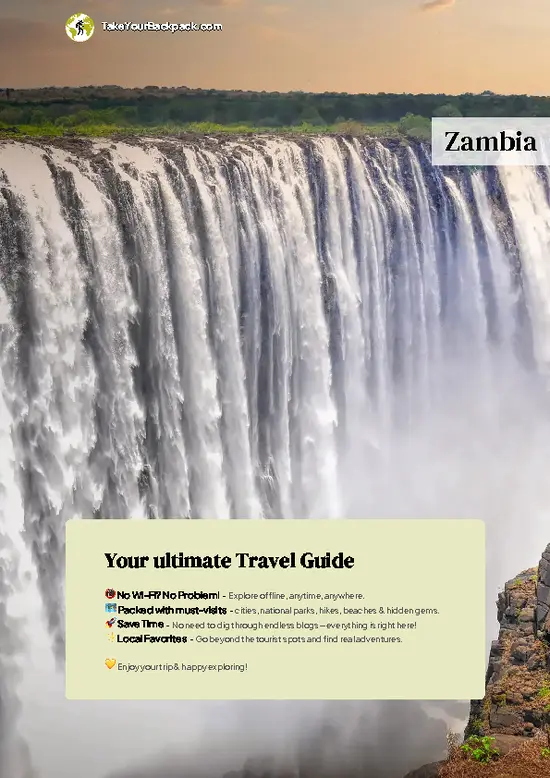
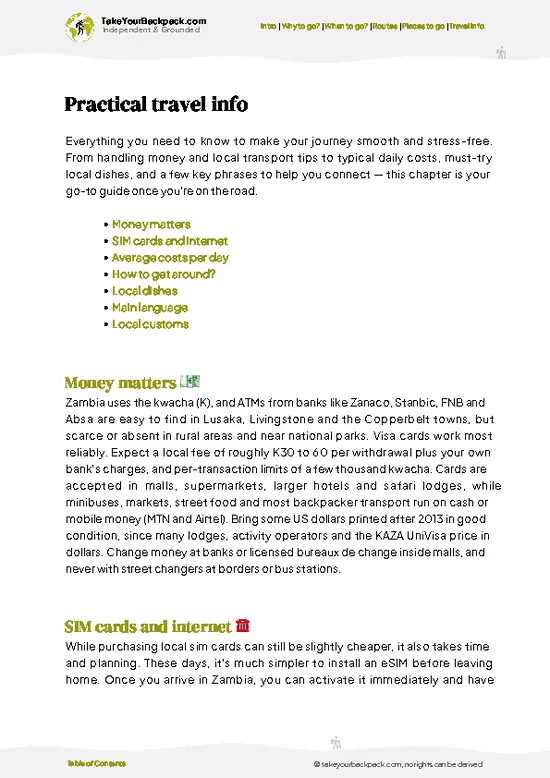
example page 0 from our offline Travel Guide for Zambia
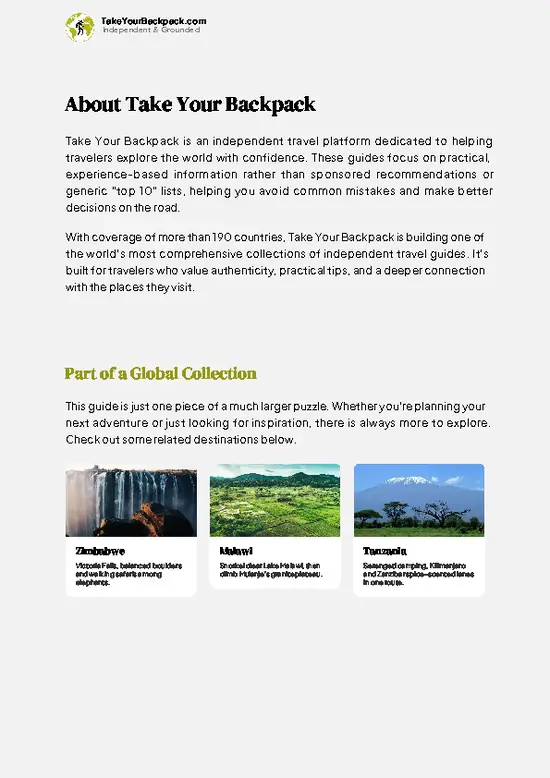
example page 1 from our offline Travel Guide for Zambia
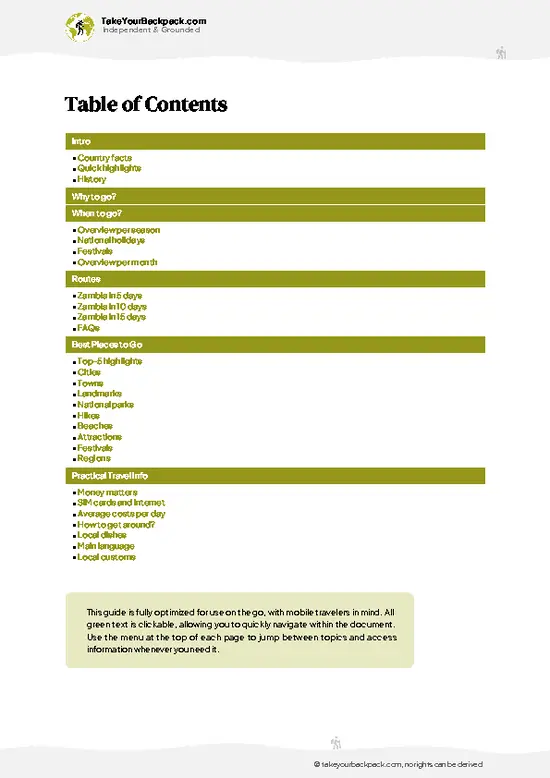
example page 2 from our offline Travel Guide for Zambia
example page 3 from our offline Travel Guide for Zambia
example page 4 from our offline Travel Guide for Zambia
example page 5 from our offline Travel Guide for Zambia
example page 6 from our offline Travel Guide for Zambia
example page 7 from our offline Travel Guide for Zambia
Loading the map 🌍
CLICK TO FILTER
cities
towns
landmarks
national parks
hikes
beaches
attractions
festivals
regions
SHOW COUNTRY’S BESTSHOW ALL

✨ Why go?
Ranked #7 city in Zambia
Reasons people choose to visit here

Chingola earns its place on a route as a practical Copperbelt stop, not a checklist city. You come for the Nchanga open pit mine, one of the largest open-cast copper operations on the continent, plus a handful of green, quiet spots you rarely find in a mining town. It also works as a calm base for the border area with the DRC, with road links to Kitwe, Chililabombwe and Solwezi. Food is local and filling, with nshima joints and grills that feed shift workers, and you can walk the central streets easily in a morning. Nightlife is modest, so this suits a slow day or two of recovery, supplies, banking and onward planning. If you need hostel dorms and a social scene, push on. If you like seeing how a country actually earns its living, stay.

💡 HighlightsMust-see experiences and standout moments

  1. Nchanga Open Pit viewpoint: the town’s defining sight, a vast stepped crater of copper ore with trucks that look like toys from the rim. Access is controlled by the mine, so ask at your guesthouse about arranging permission. Go in the morning for clearer light. Allow 1 to 2 hours, with costs depending on any arranged visit (often free to around US$20).
  2. Chingola Botanical Gardens: a shady, green stretch of lawns and mature trees, good for a picnic and birdwatching after dusty days on the road. Mornings are coolest. Entry is usually US$1 to 3 and a visit takes 1 to 2 hours.
  3. Central market: the best place to see everyday Copperbelt life, with stacked vegetables, dried fish, chitenge fabric and phone repair stalls. Go before noon when stock is fresh. Browsing is free and 1 hour is plenty.
  4. Nchanga
… read more 👉
  1. Nchanga Open Pit viewpoint: the town’s defining sight, a vast stepped crater of copper ore with trucks that look like toys from the rim. Access is controlled by the mine, so ask at your guesthouse about arranging permission. Go in the morning for clearer light. Allow 1 to 2 hours, with costs depending on any arranged visit (often free to around US$20).
  2. Chingola Botanical Gardens: a shady, green stretch of lawns and mature trees, good for a picnic and birdwatching after dusty days on the road. Mornings are coolest. Entry is usually US$1 to 3 and a visit takes 1 to 2 hours.
  3. Central market: the best place to see everyday Copperbelt life, with stacked vegetables, dried fish, chitenge fabric and phone repair stalls. Go before noon when stock is fresh. Browsing is free and 1 hour is plenty.
  4. Nchanga Golf Club: an old mining-era course where visitors can sometimes drink on the terrace and watch the fairways. Late afternoon is pleasant. Drinks cost US$1 to 3, with 1 to 2 hours a good length.
  5. Chingola Heritage and old mine town streets: a walk through leafy older neighborhoods with colonial-era mine housing and wide avenues planted with jacarandas. Morning or late afternoon is best. It is free and takes about 1 hour.
  6. Local nshima grills: eating with shift workers at simple grills is an experience in itself, with grilled chicken, beef, kapenta and relish. Lunchtime is liveliest. Meals cost US$2 to 5 and take about 45 minutes.
From Chingola you can reach Chililabombwe near the Congo border, the Kitwe museums and markets, and the Lufwanyama and Kafue River areas as day trips.
All of this fits comfortably into one full day, or a relaxed day and a half.
Spotted a mistake or missing something? Contact us.

Things to do near Chingola

Ratings based on Tripadvisor reviews. When you book through this link, you support our work at no extra cost to you.

🏘️ NeighborhoodsWhere things are and how it's laid out

Chingola is a Copperbelt mining town laid out in a spread-out grid, so you cover it in short taxi hops and a few good walks. Here is how the main areas work and how to handle each.
  • Town Centre: The grid around Kabundi Road and the main shopping streets holds banks with ATMs, supermarkets, phone shops and bus-stop chaos. It exists because the town grew around the mine, so everything practical sits in one tight cluster. Walk it in daylight, grab cash early and move on.
  • Nchanga: The huge open-pit copper mine dominates the west side. Pits are working industrial sites, so you can't just wander in. Ask locally about viewpoints and arrange any visit through the mine or a local contact, then watch the haul trucks crawl the benches.
  • Kabundi: A dense, lively township area east of the center, with roadside
… read more 👉
Chingola is a Copperbelt mining town laid out in a spread-out grid, so you cover it in short taxi hops and a few good walks. Here is how the main areas work and how to handle each.
  • Town Centre: The grid around Kabundi Road and the main shopping streets holds banks with ATMs, supermarkets, phone shops and bus-stop chaos. It exists because the town grew around the mine, so everything practical sits in one tight cluster. Walk it in daylight, grab cash early and move on.
  • Nchanga: The huge open-pit copper mine dominates the west side. Pits are working industrial sites, so you can't just wander in. Ask locally about viewpoints and arrange any visit through the mine or a local contact, then watch the haul trucks crawl the benches.
  • Kabundi: A dense, lively township area east of the center, with roadside grills, mini-markets and barbershops. Go in daytime with a local guide or a taxi driver you trust, order nshima and grilled chicken, and soak up the noise.
  • Chiwempala and Nchanga North: Residential districts with busy markets for fresh produce and secondhand clothes. Distances are long and shade is thin, so take a taxi there and walk the market lanes on foot.
  • Suburbs and golf club area: Quiet, leafy streets with a few bars and social clubs where mine staff gather. Evenings here are calm, so this is where you go for a relaxed drink.

⌛️ 1 day1-day itinerary for Chingola

A working-town day, built around copper, markets and green shade.
8:00 AM: Central market. Start with a breakfast of fritters and sweet tea from the stalls, then wander the produce rows and fabric sellers. It is the clearest way to feel the town before the heat arrives. Take a short taxi to the old mine streets.
9:30 AM: Old mine town streets. Walk the shaded avenues past colonial-era mine houses and jacaranda trees. Few visitors come here, yet it explains how the town was planned around the pit. Continue by taxi toward the mine.
11:00 AM: Nchanga Open Pit viewpoint. If you have arranged permission, look into the crater and watch the haul trucks. The scale is hard to grasp until you spot a truck crawling along a bench. Head back toward town for lunch.
1:00 PM: Local nshima grill. Order nshima … read more 👉
A working-town day, built around copper, markets and green shade.
8:00 AM: Central market. Start with a breakfast of fritters and sweet tea from the stalls, then wander the produce rows and fabric sellers. It is the clearest way to feel the town before the heat arrives. Take a short taxi to the old mine streets.
9:30 AM: Old mine town streets. Walk the shaded avenues past colonial-era mine houses and jacaranda trees. Few visitors come here, yet it explains how the town was planned around the pit. Continue by taxi toward the mine.
11:00 AM: Nchanga Open Pit viewpoint. If you have arranged permission, look into the crater and watch the haul trucks. The scale is hard to grasp until you spot a truck crawling along a bench. Head back toward town for lunch.
1:00 PM: Local nshima grill. Order nshima with grilled chicken or kapenta and relish, and eat by hand with the lunch crowd. Take a taxi to the gardens afterward.
3:00 PM: Chingola Botanical Gardens. Rest under the trees and walk the paths. Birdlife picks up as the heat fades.
5:30 PM: Nchanga Golf Club terrace. Finish with a cold drink while the course empties out and the evening cools.

🌤️ When to go?Weather, crowds, and seasonal trade-offs

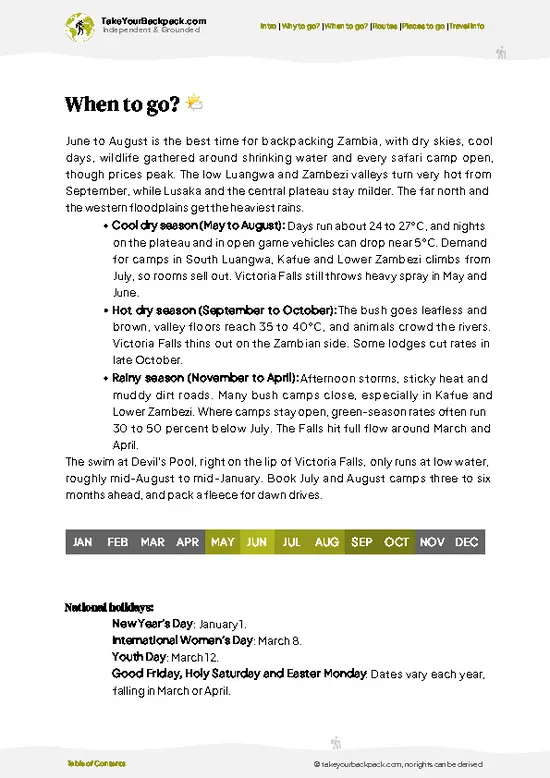
May to August is the most comfortable window for Chingola, with dry, sunny days of roughly 24 to 27°C (75 to 81°F) and cool nights that can fall to 7 to 10°C (45 to 50°F).
  • Cool Dry Season (May to August): Mornings are crisp, so bring a fleece. Roads are firm, dust is moderate and prices stay flat because tourism is thin.
  • Hot Dry Season (September to October): Heat climbs to 30 to 34°C (86 to 93°F), the air turns hazy and bush fires can smoke the horizon.
  • Rainy Season (November to April): Expect afternoon downpours, highs of 25 to 28°C (77 to 82°F), green hills and slick dirt roads. January and February are wettest, and day trips on unpaved tracks get difficult.
Book onward buses a day ahead around Christmas and Easter, when Zambians travel home and seats vanish.

source: climatestotravel.comJANJanuary: fair for travelingFEBFebruary: fair for travelingMARMarch: fair for travelingAPRApril: fair for travelingMAYMay: excellent for travelingJUNJune: excellent for travelingJULJuly: excellent for travelingAUGAugust: excellent for travelingSEPSeptember: excellent for travelingOCTOctober: excellent for travelingNOVNovember: fair for travelingDECDecember: fair for traveling
when-to-go

✈️ The backpacker research shortcutZambia Travel Guide

An offline-friendly backpacking guide with optimized travel routes, ranked highlights, transport advice, and the best areas to stay.
example page 0 from our offline Travel Guide for Zambia
example page 1 from our offline Travel Guide for Zambia
example page 2 from our offline Travel Guide for Zambia
example page 3 from our offline Travel Guide for Zambia
example page 4 from our offline Travel Guide for Zambia
example page 5 from our offline Travel Guide for Zambia
example page 6 from our offline Travel Guide for Zambia
example page 7 from our offline Travel Guide for Zambia
The digital guide (351 pages) contains:
✅ 89 highlights, ranked by travel appeal
✅ Optimized 5, 10 & 15-day travel routes
✅ Cities, national parks, landmarks, beaches
✅ How to get around
✅ Offline-friendly for travel without Wi-Fi
👉 Click to see all 30+ guide features

📅 Plan smarter in minutes, not weeks
✅ Month by month travel advice
✅ Festivals & national holidays
✅ Budget expectations

🗺️ Go to the right places, skip the overrated ones
✅ Honest pros & cons of destinations
✅ Top hikes, parks & viewpoints
✅ Lesser-known places most travelers miss
✅ Clear “worth it vs skip it” guidance

🛏️ Travel smoothly without rookie mistakes
✅ Best areas to stay
✅ Transport systems explained simply
✅ Common scams & safety advice
✅ SIM cards, money & practical tips

🌍 Understand the country, not just visit it
✅ Culture & traditions
✅ 52 Essential phrases & customs
✅ Festivals worth planning around
✅ Traveler-friendly historical context
✅ Insights that make places more meaningful

📱 Built for real travel conditions
✅ Fully downloadable PDF
✅ Works completely offline
✅ Optimized for phone use
✅ Useful in remote areas & buses
✅ Everything in one place
Stop searching, start planning
Get instant access to your full guide. 30‑day money-back guarantee.
+ Add another guide for just

By proceeding you agree to our terms.
Sent to your inbox immediately after payment • 100% Secure Checkout
Best Backpacking Travel Advisor 2025 tourism awardBest Backpacking
Travel Advisor
2025
What others say about Take Your Backpack Guides:
⭐⭐⭐⭐⭐
Fantastic, amazing amount of information!
⭐⭐⭐⭐⭐
My goodness this is amazing, it's what I've been looking for hats off too you!
⭐⭐⭐⭐⭐
I think this is absolutely BRILLIANT
⭐⭐⭐⭐
Very complete and informative. It's still missing places, but I gotta to commend you
⭐⭐⭐⭐⭐
This is truly amazing, thank you, can't wait to explore it with my kids!
⭐⭐⭐⭐⭐
Awesome resource, thank you!
⭐⭐⭐⭐⭐
This is amazing! Can't wait to explore the ones I haven't seen
⭐⭐⭐⭐
I love this! Well done, great idea.
⭐⭐⭐⭐⭐
Thanks for taking the time to make this gem!
⭐⭐⭐⭐⭐
This might be the best website I've ever seen.
⭐⭐⭐⭐⭐
Congratulations, and thank you so much for your work; it's incredibly valuable.
⭐⭐⭐⭐
In all seriousness I think you did a great job pointing out the important spots
⭐⭐⭐⭐⭐
10/10 very good
⭐⭐⭐⭐⭐
As someone who's only just starting to visit regularly this is awesome, thank you.
⭐⭐⭐⭐
Thank you very much! I'm going to visit my dad, it's going to be very useful!
⭐⭐⭐⭐⭐
This is really cool! We'll be travelling for the first time and this definitely come in handy.
⭐⭐⭐⭐⭐
You are now our minister of culture, congratulations 👨‍💼
⭐⭐⭐⭐⭐
Just wanted to tell you that this is a pearl! Going to follow your recommendations.
⭐⭐⭐⭐⭐
This is so cool. I'll definitely be using the resource for my travels soon.
⭐⭐⭐⭐⭐
This is very impressive! Good work.
⭐⭐⭐⭐⭐
This is an amazing and informative site. Very well done!

🛏️ Where to stay?Where staying makes the most sense

Stay in or just beside the town center, where budget guesthouses and lodges cluster within a short walk of the bus stops, banks and supermarkets. Chingola has no dedicated hostel scene, so expect simple guesthouses and small lodges with private rooms, often at US$20 to 40 a night. Dorm beds are rare, which means solo travelers should book a single room and ask about fans or air conditioning, since the heat before the rains is real.

The quiet suburbs near the golf club are the second option. Streets are leafy and calm after dark, and noise is lower than near the main road, where trucks and minibuses … read more 👉
Stay in or just beside the town center, where budget guesthouses and lodges cluster within a short walk of the bus stops, banks and supermarkets. Chingola has no dedicated hostel scene, so expect simple guesthouses and small lodges with private rooms, often at US$20 to 40 a night. Dorm beds are rare, which means solo travelers should book a single room and ask about fans or air conditioning, since the heat before the rains is real.

The quiet suburbs near the golf club are the second option. Streets are leafy and calm after dark, and noise is lower than near the main road, where trucks and minibuses run early. Taxis are the only link from there, so you will pay a few dollars each way, and walking at night is not wise. Choose the town center if you rely on buses and want to eat out on foot before dusk. Pick the suburbs if you want sleep and have a car or reliable driver. Book ahead when mine contractors are in town, because lodges fill with business travelers on weekdays. Weekends are easier.

🚌 Getting aroundTransportation options and practical tips

Hopping into the first unmarked taxi without agreeing a fare is the quickest way to overpay in Chingola, so settle the price before you sit down. The town is spread out, the sun is hot and sidewalks stop abruptly, which means walking works only inside the central grid. Public transport is frequent but informal, and you will pay in kwacha, so carry small notes.
  • Walking: Fine for the town center, banks and markets in daylight. Distances to the mine and outer suburbs are too long, so don't try them on foot.
  • Shared minibuses: Blue-and-white minibuses run set routes and cost about US$0.30 to 0.60 a ride. They fill up before leaving, so expect a short wait, and they thin out after dark, around 19:00.
  • Taxis: Short hops in town run about US$1.50 to 4. Fares are negotiated, drivers have no meters, and
… read more 👉
Hopping into the first unmarked taxi without agreeing a fare is the quickest way to overpay in Chingola, so settle the price before you sit down. The town is spread out, the sun is hot and sidewalks stop abruptly, which means walking works only inside the central grid. Public transport is frequent but informal, and you will pay in kwacha, so carry small notes.
  • Walking: Fine for the town center, banks and markets in daylight. Distances to the mine and outer suburbs are too long, so don't try them on foot.
  • Shared minibuses: Blue-and-white minibuses run set routes and cost about US$0.30 to 0.60 a ride. They fill up before leaving, so expect a short wait, and they thin out after dark, around 19:00.
  • Taxis: Short hops in town run about US$1.50 to 4. Fares are negotiated, drivers have no meters, and asking your accommodation what a ride should cost gives you a fair benchmark. Many drivers will also quote a half-day rate of roughly US$25 to 40 for the mine and surroundings.
  • Intercity buses: Coaches leave from the main bus station to Kitwe (about 1 hour, US$3 to 5), Ndola (about 2 hours, US$5 to 8) and Lusaka (about 7 to 8 hours, US$15 to 25). Most depart early morning, and the earliest fill fastest, so arrive 30 minutes ahead.
  • Motorbike taxis: They exist on outer routes and cost little, but they carry real risk and helmets are rare, so I would stick to cars.
Buy bus tickets directly at the station counter, not from touts on the street, and keep your bag on your lap or at your feet.

👛 Costs (as of 22 October 2026)How expensive it really is

Chingola costs about US$55 to 75 a day for a backpacker, and the total below is US$63. Costs are lower than in Lusaka or Livingstone, but beds are scarce and pricier than in many African towns.
CategoryBudget RangeLocal Reality
Accommodation, high seasonUS$25 to 40Simple private room in a guesthouse, as dorms are rare (US$30 counted).
Accommodation, off-seasonUS$20 to 30Slightly lower rates in the rainy months, but weekdays stay busy with contractors.
MealsUS$8 to 15Nshima and relish at local spots US$2 to 4, with supermarket snacks for breakfast.
Local transportUS$3 to 8Minibuses US$0.30 to 0.60, short taxi rides US$1.50 to 4.
City transport passUS$0No pass exists, so you pay per ride.
Basic activities and entry feesUS$5 to 15Markets are free, while trips such as a guided mine view or nearby parks
… read more 👉
Chingola costs about US$55 to 75 a day for a backpacker, and the total below is US$63. Costs are lower than in Lusaka or Livingstone, but beds are scarce and pricier than in many African towns.
CategoryBudget RangeLocal Reality
Accommodation, high seasonUS$25 to 40Simple private room in a guesthouse, as dorms are rare (US$30 counted).
Accommodation, off-seasonUS$20 to 30Slightly lower rates in the rainy months, but weekdays stay busy with contractors.
MealsUS$8 to 15Nshima and relish at local spots US$2 to 4, with supermarket snacks for breakfast.
Local transportUS$3 to 8Minibuses US$0.30 to 0.60, short taxi rides US$1.50 to 4.
City transport passUS$0No pass exists, so you pay per ride.
Basic activities and entry feesUS$5 to 15Markets are free, while trips such as a guided mine view or nearby parks cost more.
MiscellaneousUS$3 to 6Water, SIM data, small tips.
Total Daily BudgetUS$63Mid-range comfort for one person.
Share taxis with other passengers and eat where workers eat at lunchtime, as portions are large and prices low.


source: zambiatourism.com
⚠️ Prices can change and everyone travels differently, so take this as a rough guide. Hope it helps you plan your adventure!

🚌 Day tripsBest day trips from Chingola

Chingola sits in the middle of the Copperbelt, so day trips work well if you start early and use buses or a hired taxi.
Kitwe:
The region's biggest city has big markets, a lively center and good shopping for supplies. Minibuses take about 1 hour and cost US$3 to 5 each way. Go on a weekday morning, when markets are busy. First-timers often arrive late and leave in the dark, when transport thins.
👉 Explore Kitwe
Ndola:
A calmer, tree-lined city with colonial-era streets and the Copperbelt Museum. Buses take roughly 2 hours and cost about US$5 to 8. Budget US$20 to 30 for the day with food and entry. Dry season is easiest, and leaving by 07:00 gives you time to see everything before heading back.
👉 Explore Ndola
Lake Kashiba:
A deep, clear, spring-fed lake near Ndola, surrounded by forest, with swimming … read more 👉
Chingola sits in the middle of the Copperbelt, so day trips work well if you start early and use buses or a hired taxi.
Kitwe:
The region's biggest city has big markets, a lively center and good shopping for supplies. Minibuses take about 1 hour and cost US$3 to 5 each way. Go on a weekday morning, when markets are busy. First-timers often arrive late and leave in the dark, when transport thins.
👉 Explore Kitwe
Ndola:
A calmer, tree-lined city with colonial-era streets and the Copperbelt Museum. Buses take roughly 2 hours and cost about US$5 to 8. Budget US$20 to 30 for the day with food and entry. Dry season is easiest, and leaving by 07:00 gives you time to see everything before heading back.
👉 Explore Ndola
Lake Kashiba:
A deep, clear, spring-fed lake near Ndola, surrounded by forest, with swimming and picnic spots. Reaching it takes a bus to Ndola and a taxi onward, about 3 hours in total, and a day costs US$25 to 40. Go in the dry months, as dirt roads turn slippery in rain. Many people forget to pack food and water, and there is little to buy nearby.

Chimfunshi Wildlife Orphanage:
A chimpanzee sanctuary in the bush west of Chingola, where you can watch large groups of rescued chimps from viewing areas. A hired car takes about 1.5 to 2 hours each way. Entry and a driver can run US$60 to 100. Arrange it in advance, because access is by appointment, and avoid going in heavy rain.

🍲 FoodLocal Flavors for Backpackers

Chingola's food is Copperbelt cooking: nshima with kapenta (small dried lake fish fried with tomato and onion) is the staple here, and you will often see it with ifisashi, greens stewed in groundnut paste. Roadside grills sell chicken and beef with relish for roughly US$2 to 4 a plate, and charcoal smoke over the Kabundi lanes is your cue to stop.

For snacks, look for fritters called vitumbuwa and roasted maize at markets and bus stops. Fresh produce markets in the suburbs sell tomatoes, mangoes in season and bags of groundnuts. Supermarkets in the center handle bread, cheese and supplies for longer trips.

To drink, locals favor Mosi lager, usually served very cold in social clubs and bars, around US$1.50 to 2.50. Some bars offer traditional chibuku, a sour, cloudy maize beer sold in cartons … read more 👉
Chingola's food is Copperbelt cooking: nshima with kapenta (small dried lake fish fried with tomato and onion) is the staple here, and you will often see it with ifisashi, greens stewed in groundnut paste. Roadside grills sell chicken and beef with relish for roughly US$2 to 4 a plate, and charcoal smoke over the Kabundi lanes is your cue to stop.

For snacks, look for fritters called vitumbuwa and roasted maize at markets and bus stops. Fresh produce markets in the suburbs sell tomatoes, mangoes in season and bags of groundnuts. Supermarkets in the center handle bread, cheese and supplies for longer trips.

To drink, locals favor Mosi lager, usually served very cold in social clubs and bars, around US$1.50 to 2.50. Some bars offer traditional chibuku, a sour, cloudy maize beer sold in cartons that you shake before opening. Locals share a table over a bottle, and joining in is welcome.

🛡️ SafetyStaying Safe: What Travelers Should Know

Chingola is a working mining town and feels calm in daytime, with ordinary urban risks. Phones and bags are the usual targets in crowded bus stations and markets, so carry only what you need and keep valuables in front pockets or a zipped bag. After dark, take a taxi instead of walking, even short distances, since streets are poorly lit and pavements break up. Solo travelers, including women, do fine with these habits and by choosing lodging near the center. Withdraw cash at ATMs inside banks or supermarkets in daytime, and hide it before leaving. Taxi drivers may quote inflated prices to visitors, so agree on a fare first. Police checkpoints on roads are routine, so carry a photocopy of your passport. Photographing the mine or officials without permission can cause trouble, so ask first.

FAQTraveler FAQ

Two days is enough for Chingola itself, which has the Nchanga open-pit mine, local markets and the Kabundi neighborhood. A third day lets you add a trip to Kitwe (about 1 hour by minibus, US$3 to 5) or Chimfunshi Wildlife Orphanage. Most travelers use Chingola as a Copperbelt base rather than a long stay.
Yes, Chingola is manageable for solo backpackers who use common sense. Stick to the town center in daylight, take taxis after dark and avoid flashing phones at bus stations. Agree on taxi fares in advance, which usually run US$1.50 to 4 in town, and keep a passport copy for police checkpoints.
Chingola is known for the Nchanga copper mine, one of Africa's largest open-pit mines, which shaped the whole Copperbelt economy. Visitors also come for its proximity to Chimfunshi Wildlife Orphanage, roughly 1.5 to 2 hours by road. Local flavor includes nshima with kapenta and cold Mosi lager in social clubs, with meals from about US$2 to 4.
⚠️ Things can change over time, so always validate details locally before you go.

Other Zambian cities near Chingola

Explore more nearby:

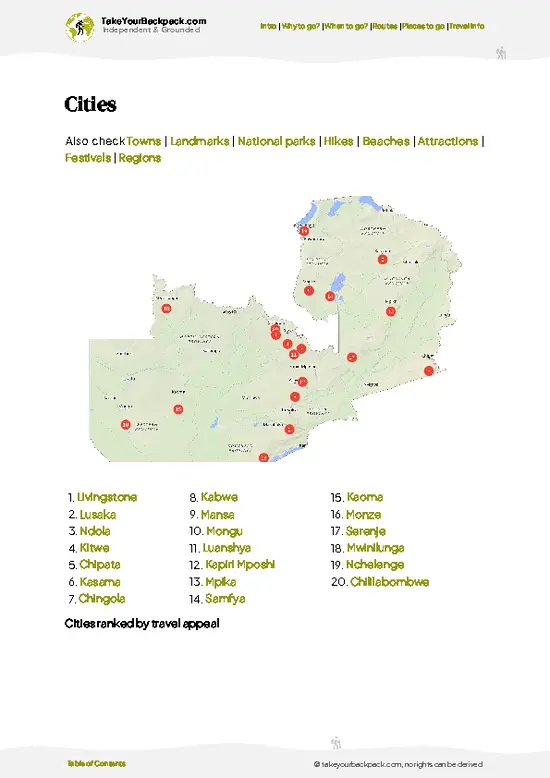
  • Chililabombwe—Konkola headframes, Kasumbalesa road, border trade| 19 km away
  • Kitwe—Nkana headframes, neighborhood markets, mall ATMs| 50 km away
  • Luanshya—Roan headframes, company quarter, Mpatamatu| 90 km away

💡 Not sure where to go next?
Create a personalized itinerary for Zambia including Chingola and the places that fit your trip.

Generate my itinerary

👉 Discover all cities

Or checkout all Zambia has to offer (think cities, towns, villages, national parks, hikes, beaches, festivals)
Country photo of Zambia

We 💚 feedbackFinal thoughts on visiting Chingola

Chingola is best in the cooler, drier months from May to August, when mornings are crisp and the gardens and golf course are at their best. Go early in the day for the market and mine views, and stay in a guesthouse with a reliable generator. I would bring small bills for taxis and meals.

✍️ Help improve this page!
The information on this page is based on in-depth research, insights shared by experienced travelers, and feedback from the local travel community in Zambia. While every effort is made to keep the information accurate and current, conditions can change — so if you spot anything incorrect or outdated, please get in touch.


🙋‍♂️ Give feedback

👋 Meet the founderWho’s Behind Take Your Backpack?

Johan, backpacker and founder of TakeYourBackpackHi, I’m Johan (Netherlands 🇳🇱), the creator of TakeYourBackpack. Over the past 3 decades, I’ve backpacked through 90+ countries across six continents, gaining extensive experience with independent travel, long-term trips, and overland routes.

This site is built on a combination of firsthand travel experience and carefully curated insights from other backpackers. Many guides are based on places I’ve personally visited, while others bring together tips, observations, and practical advice shared by trusted travelers I’ve met along the way.

The goal is to provide realistic, experience-driven guidance — not generic itineraries — so you can explore destinations with better context, clearer expectations, and more confidence.