×

Zambia🇿🇲 | citiesNdolaHammarskjöld memorial, Masala Market, trade fair, tree-lined avenues | things to do and best time to go

Explore NchelengeExplore Mpika

Backpacking in Ndola
🏆 Top pickcity ranked #3
By Johan Kruseman 🇳🇱 | Updated October 24, 2026

Ndola is the easiest place on the Copperbelt to restock, regroup and keep moving. Banks, supermarkets and a huge central market sit within a short walk of each other, so sort your cash and supplies here. You’ll find it in the north of Zambia, east-southeast of Kitwe, close to the border with the DR Congo. Don’t expect a backpacker strip. Hostels are scarce because the city serves business travelers and mining contractors, so book a guesthouse ahead and ask the owner to call you a taxi, since fixed-price metered cabs are rare and negotiating before you climb in is the norm. Minibuses are cheap and everywhere, but they leave when full, so start early. Ndola suits curious travelers who like real working towns, history and wide, tree-lined streets. It won’t suit anyone chasing wildlife or waterfalls. Compared with Kitwe, it is greener, calmer and more spread out, with less traffic chaos.

Discover everything you want to know in the 📖 Zambia Travel Guide.


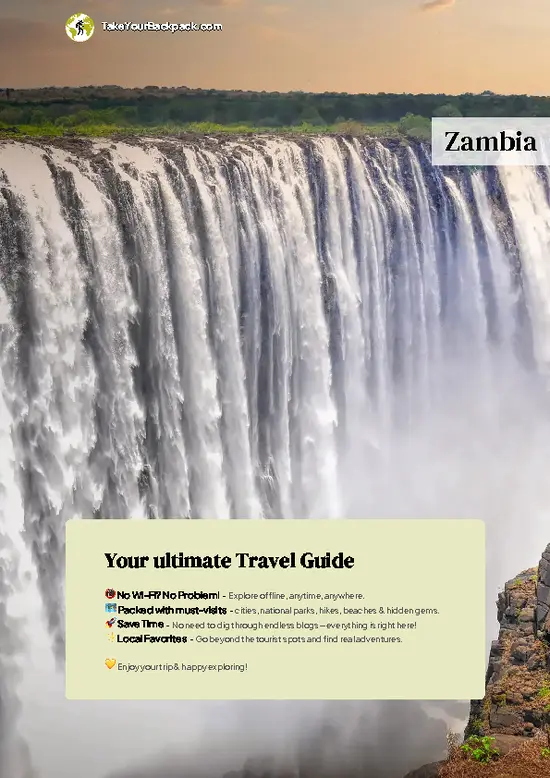
example page 0 from our offline Travel Guide for Zambia
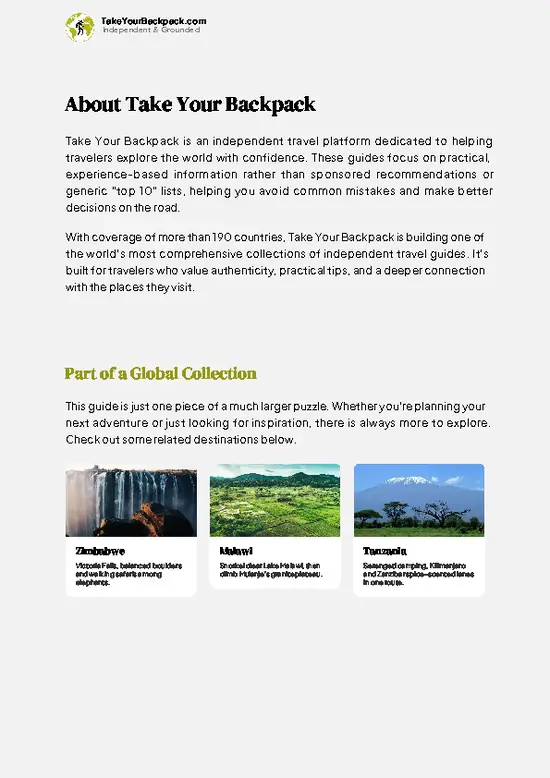
example page 1 from our offline Travel Guide for Zambia
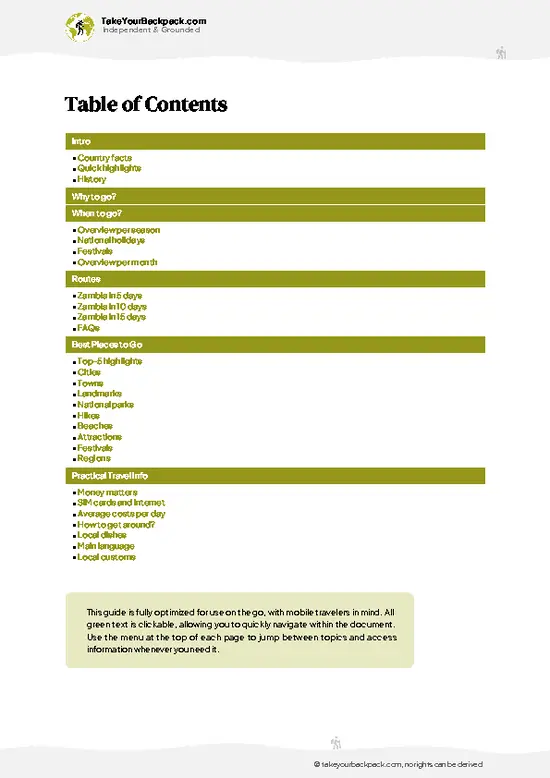
example page 2 from our offline Travel Guide for Zambia
example page 3 from our offline Travel Guide for Zambia
example page 4 from our offline Travel Guide for Zambia
example page 5 from our offline Travel Guide for Zambia
example page 6 from our offline Travel Guide for Zambia
example page 7 from our offline Travel Guide for Zambia
Loading the map 🌍
CLICK TO FILTER
cities
towns
landmarks
national parks
hikes
beaches
attractions
festivals
regions
SHOW COUNTRY’S BESTSHOW ALL

✨ Why go?
Ranked #3 city in Zambia
What makes this city worth visiting

Ndola earns a place on a route because it is the practical heart of the Copperbelt. Roads fan out toward Lusaka, Kitwe, Luanshya and the Congolese border, so you can arrive on one bus and leave on another the same day without any drama. The city rewards a night or two rather than a week. It has proper supermarkets, working ATMs, and a lively Masala Market where you can eat grilled chicken, fried fish and nshima alongside office workers. Evenings are low-key, centered on a few bars and restaurants, so don’t plan on a hostel party scene. Where Ndola really helps is as a Copperbelt base: staying here lets you explore the region’s lakes, sanctuaries and mining towns without paying capital-city prices. History fans also get something specific, since the 1961 plane crash that killed a UN Secretary-General … read more 👉
Ndola earns a place on a route because it is the practical heart of the Copperbelt. Roads fan out toward Lusaka, Kitwe, Luanshya and the Congolese border, so you can arrive on one bus and leave on another the same day without any drama. The city rewards a night or two rather than a week. It has proper supermarkets, working ATMs, and a lively Masala Market where you can eat grilled chicken, fried fish and nshima alongside office workers. Evenings are low-key, centered on a few bars and restaurants, so don’t plan on a hostel party scene. Where Ndola really helps is as a Copperbelt base: staying here lets you explore the region’s lakes, sanctuaries and mining towns without paying capital-city prices. History fans also get something specific, since the 1961 plane crash that killed a UN Secretary-General happened in the forest outside town. Treat Ndola as a short, useful stop and a launchpad.

💡 HighlightsDon't-miss highlights and experiences

  1. Dag Hammarskjöld Memorial: This is what Ndola is best known for. A quiet clearing in the forest marks where the UN Secretary-General’s plane came down in September 1961, with a stone memorial, a path through the trees and a small display. Go on a weekday morning for birdsong and cooler air. Entry is roughly US$2 to 5, and you need 45 minutes to an hour. Take a taxi and agree on a waiting fee.
  2. Copperbelt Museum: A compact museum covering mining, ethnography and the colonial era, with tools, masks and old photographs that explain how copper shaped the region. Go in the morning when it’s coolest. Expect to pay about US$2 to 4 and spend 1 to 1.5 hours. It makes a good primer before you visit any mining town.
  3. Masala Market: The city’s main market is a maze of stalls selling chitenge cloth, secondhand
… read more 👉
  1. Dag Hammarskjöld Memorial: This is what Ndola is best known for. A quiet clearing in the forest marks where the UN Secretary-General’s plane came down in September 1961, with a stone memorial, a path through the trees and a small display. Go on a weekday morning for birdsong and cooler air. Entry is roughly US$2 to 5, and you need 45 minutes to an hour. Take a taxi and agree on a waiting fee.
  2. Copperbelt Museum: A compact museum covering mining, ethnography and the colonial era, with tools, masks and old photographs that explain how copper shaped the region. Go in the morning when it’s coolest. Expect to pay about US$2 to 4 and spend 1 to 1.5 hours. It makes a good primer before you visit any mining town.
  3. Masala Market: The city’s main market is a maze of stalls selling chitenge cloth, secondhand clothes, charcoal, vegetables and dried kapenta. The food stalls serve some of the cheapest hot meals in town. Arrive before 10 AM to avoid the midday crush. Entry is free, and you should allow 1 to 2 hours. Keep your phone in a front pocket and your bag zipped.
  4. Zambia International Trade Fair Grounds: Every year around the end of June and start of July, the show grounds fill with company stands, livestock, food vendors and live music, and Zambians come from across the country. It is the best single day of people-watching in Ndola. Day tickets run about US$3 to 8, and you should plan 3 to 4 hours. Outside the fair, the grounds are mostly closed.
  5. Independence Avenue stroll: The city’s central streets show Ndola’s planned layout, with broad avenues, jacaranda and flame trees, and old colonial-era shopfronts next to modern banks. Walk it in the late afternoon when the light is softer and the heat eases. It costs nothing and takes about an hour. Stop for a cold drink at one of the cafés.
Beyond the city, Ndola works well as a base for day trips to Lake Kashiba near Mpongwe, Chimfunshi Wildlife Orphanage near Chingola, and the mining town of Luanshya. The Hammarskjöld Memorial and Copperbelt Museum charge a small entry fee at the gate, and the Trade Fair needs a ticket bought on the day or in advance.
Spotted a mistake or missing something? Contact us.

Things to do near Ndola

Ratings based on Tripadvisor reviews. When you book through this link, you support our work at no extra cost to you.

🏘️ NeighborhoodsWhere things are and how it's laid out

Ndola is a compact Copperbelt city, and you can feel out its personality by hopping between a handful of very different districts. Here is how to read them.
  • City Centre: Ndola’s grid of broad, jacaranda-lined avenues around Broadway and Buteko Road packs in banks, supermarkets, pharmacies and ATMs. Walk it in the morning when shops are open, because it empties fast after about 17:00. Grab a quick lunch of chicken and nshima, then move on.
  • Masala Market area: This is the noisy, sweaty heart of local trade. Vendors sell fresh vegetables, dried kapenta, secondhand clothes and phone repairs. Go early, keep your phone in a front pocket and you will eat and shop for a fraction of mall prices. Minibuses jam the surrounding streets, so expect to dodge and weave.
  • Kansenshi: A leafy, upscale suburb of
… read more 👉
Ndola is a compact Copperbelt city, and you can feel out its personality by hopping between a handful of very different districts. Here is how to read them.
  • City Centre: Ndola’s grid of broad, jacaranda-lined avenues around Broadway and Buteko Road packs in banks, supermarkets, pharmacies and ATMs. Walk it in the morning when shops are open, because it empties fast after about 17:00. Grab a quick lunch of chicken and nshima, then move on.
  • Masala Market area: This is the noisy, sweaty heart of local trade. Vendors sell fresh vegetables, dried kapenta, secondhand clothes and phone repairs. Go early, keep your phone in a front pocket and you will eat and shop for a fraction of mall prices. Minibuses jam the surrounding streets, so expect to dodge and weave.
  • Kansenshi: A leafy, upscale suburb of walled homes, cafés and a few bars. Evenings here are calm and the food is the most varied in town. It spreads out, so grab a taxi between spots rather than walking.
  • Northrise: A quiet residential neighborhood near the Dag Hammarskjöld memorial road out toward the airport. Come for the tranquility and a short ride to Kansenshi’s eateries. It rewards a taxi rather than a stroll.
  • Chifubu and Itawa: Working-class districts with lively bars, roadside braai stands and live music on weekends. Take a taxi both ways at night, since streets are dark and unlit in places.

⌛️ 1 daySeeing the highlights in 24 hours

Ndola is a driving city, so plan the day around short taxi hops with a long lunch break to dodge the midday heat, and walk only where the streets are shaded and calm.
8:00 AM: Ndola Main Market area
Start where the city wakes up first. Stalls of vegetables, secondhand clothes and charcoal fill the lanes, and you can grab a hot fritter and sweet tea for pocket change. Keep your phone in a front pocket and wander for about an hour. A short taxi ride takes you onward.
9:30 AM: Copperbelt Museum
This small museum covers the mining story that built the region, plus local crafts and ethnographic displays. Give it an hour. It makes the rest of the day make sense, because the city's layout and its wealth both trace back to copper.
11:00 AM: Lake Chilengwa
This is the quiet one, a deep sinkhole lake ringed … read more 👉
Ndola is a driving city, so plan the day around short taxi hops with a long lunch break to dodge the midday heat, and walk only where the streets are shaded and calm.
8:00 AM: Ndola Main Market area
Start where the city wakes up first. Stalls of vegetables, secondhand clothes and charcoal fill the lanes, and you can grab a hot fritter and sweet tea for pocket change. Keep your phone in a front pocket and wander for about an hour. A short taxi ride takes you onward.
9:30 AM: Copperbelt Museum
This small museum covers the mining story that built the region, plus local crafts and ethnographic displays. Give it an hour. It makes the rest of the day make sense, because the city's layout and its wealth both trace back to copper.
11:00 AM: Lake Chilengwa
This is the quiet one, a deep sinkhole lake ringed by forest outside the usual route. Hire a taxi for the round trip and ask the driver to wait. The water is a startling dark blue, local belief treats it as a spiritual place, and the path is short and shady. Stay about 45 minutes.
1:00 PM: Lunch in the city center
Back in town, sit down for nshima with grilled chicken or beans at a local eatery. This is your break from the heat. Spend two hours here or at your guesthouse, charging devices and resting.
3:30 PM: Dag Hammarskjöld Memorial
Take a taxi out to the crash site memorial in the woods, where the UN Secretary-General's plane went down in 1961. The clearing is hushed, with a small museum-like display, and the bird noise carries. Allow an hour.
5:30 PM: Sundowner at Kansenshi
Finish in this leafy suburb with a cold Mosi on a terrace as the light softens. Order dinner there, then have the bar call a taxi back, since walking after dark is not smart.

🌤️ When to go?When to go for the best experience

  • Cool Dry Season (May to August): Mornings can start around 7 to 10°C (45 to 50°F) and afternoons reach 24 to 27°C (75 to 81°F). Rain is basically absent, the air is crisp, and hiking or walking the city is comfortable. Daylight lasts roughly 11 hours.
  • Hot Dry Season (September to November): Heat builds quickly, with afternoons of 29 to 34°C (84 to 93°F) and dusty, hazy air. October is the hottest month. Smoke from bush fires sometimes hangs in the sky.
  • Rainy Season (December to March): Expect 25 to 28°C (77 to 82°F) with humid, heavy afternoon downpours. Everything turns green, dirt roads get muddy, and day trips to rural areas become slow. Daylight stretches to about 13 hours.
  • Prices and Crowds: Ndola is a business town, so there is no tourist peak. Hotel rates rise a little when trade fairs
… read more 👉
  • Cool Dry Season (May to August): Mornings can start around 7 to 10°C (45 to 50°F) and afternoons reach 24 to 27°C (75 to 81°F). Rain is basically absent, the air is crisp, and hiking or walking the city is comfortable. Daylight lasts roughly 11 hours.
  • Hot Dry Season (September to November): Heat builds quickly, with afternoons of 29 to 34°C (84 to 93°F) and dusty, hazy air. October is the hottest month. Smoke from bush fires sometimes hangs in the sky.
  • Rainy Season (December to March): Expect 25 to 28°C (77 to 82°F) with humid, heavy afternoon downpours. Everything turns green, dirt roads get muddy, and day trips to rural areas become slow. Daylight stretches to about 13 hours.
  • Prices and Crowds: Ndola is a business town, so there is no tourist peak. Hotel rates rise a little when trade fairs run in late summer, especially around the Copperbelt agricultural show period.
Aim for May to August for the easiest walking and travel, then book ahead if your dates match a trade show.


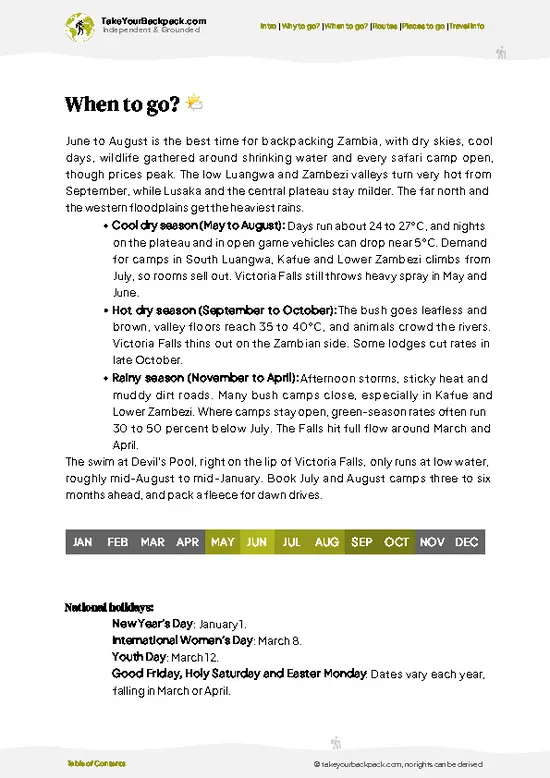
source: climatestotravel.comJANJanuary: fair for travelingFEBFebruary: fair for travelingMARMarch: fair for travelingAPRApril: good for travelingMAYMay: highly recommended for travelingJUNJune: highly recommended for travelingJULJuly: excellent for travelingAUGAugust: excellent for travelingSEPSeptember: highly recommended for travelingOCTOctober: highly recommended for travelingNOVNovember: fair for travelingDECDecember: fair for traveling
when-to-go

✈️ The backpacker research shortcutZambia Travel Guide

An offline-friendly backpacking guide with optimized travel routes, ranked highlights, transport advice, and the best areas to stay.
example page 0 from our offline Travel Guide for Zambia
example page 1 from our offline Travel Guide for Zambia
example page 2 from our offline Travel Guide for Zambia
example page 3 from our offline Travel Guide for Zambia
example page 4 from our offline Travel Guide for Zambia
example page 5 from our offline Travel Guide for Zambia
example page 6 from our offline Travel Guide for Zambia
example page 7 from our offline Travel Guide for Zambia
The digital guide (351 pages) contains:
✅ 89 highlights, ranked by travel appeal
✅ Optimized 5, 10 & 15-day travel routes
✅ Cities, national parks, landmarks, beaches
✅ How to get around
✅ Offline-friendly for travel without Wi-Fi
👉 Click to see all 30+ guide features

📅 Plan smarter in minutes, not weeks
✅ Month by month travel advice
✅ Festivals & national holidays
✅ Budget expectations

🗺️ Go to the right places, skip the overrated ones
✅ Honest pros & cons of destinations
✅ Top hikes, parks & viewpoints
✅ Lesser-known places most travelers miss
✅ Clear “worth it vs skip it” guidance

🛏️ Travel smoothly without rookie mistakes
✅ Best areas to stay
✅ Transport systems explained simply
✅ Common scams & safety advice
✅ SIM cards, money & practical tips

🌍 Understand the country, not just visit it
✅ Culture & traditions
✅ 52 Essential phrases & customs
✅ Festivals worth planning around
✅ Traveler-friendly historical context
✅ Insights that make places more meaningful

📱 Built for real travel conditions
✅ Fully downloadable PDF
✅ Works completely offline
✅ Optimized for phone use
✅ Useful in remote areas & buses
✅ Everything in one place
Stop searching, start planning
Get instant access to your full guide. 30‑day money-back guarantee.
+ Add another guide for just

By proceeding you agree to our terms.
Sent to your inbox immediately after payment • 100% Secure Checkout
Best Backpacking Travel Advisor 2025 tourism awardBest Backpacking
Travel Advisor
2025
What others say about Take Your Backpack Guides:
⭐⭐⭐⭐⭐
Fantastic, amazing amount of information!
⭐⭐⭐⭐⭐
My goodness this is amazing, it's what I've been looking for hats off too you!
⭐⭐⭐⭐⭐
I think this is absolutely BRILLIANT
⭐⭐⭐⭐
Very complete and informative. It's still missing places, but I gotta to commend you
⭐⭐⭐⭐⭐
This is truly amazing, thank you, can't wait to explore it with my kids!
⭐⭐⭐⭐⭐
Awesome resource, thank you!
⭐⭐⭐⭐⭐
This is amazing! Can't wait to explore the ones I haven't seen
⭐⭐⭐⭐
I love this! Well done, great idea.
⭐⭐⭐⭐⭐
Thanks for taking the time to make this gem!
⭐⭐⭐⭐⭐
This might be the best website I've ever seen.
⭐⭐⭐⭐⭐
Congratulations, and thank you so much for your work; it's incredibly valuable.
⭐⭐⭐⭐
In all seriousness I think you did a great job pointing out the important spots
⭐⭐⭐⭐⭐
10/10 very good
⭐⭐⭐⭐⭐
As someone who's only just starting to visit regularly this is awesome, thank you.
⭐⭐⭐⭐
Thank you very much! I'm going to visit my dad, it's going to be very useful!
⭐⭐⭐⭐⭐
This is really cool! We'll be travelling for the first time and this definitely come in handy.
⭐⭐⭐⭐⭐
You are now our minister of culture, congratulations 👨‍💼
⭐⭐⭐⭐⭐
Just wanted to tell you that this is a pearl! Going to follow your recommendations.
⭐⭐⭐⭐⭐
This is so cool. I'll definitely be using the resource for my travels soon.
⭐⭐⭐⭐⭐
This is very impressive! Good work.
⭐⭐⭐⭐⭐
This is an amazing and informative site. Very well done!

🛏️ Where to stay?Best areas to stay in Zambia

The most practical place to sleep in Ndola is the city centre or the leafy suburb of Kansenshi. Ndola has a small hostel scene, so most budget beds are in guesthouses and basic lodges with private rooms rather than dorms. Expect to pay roughly US$15 to 35 a night for a simple double.
The centre works best if you arrive by bus. You stay within walking distance of the main station, supermarkets, ATMs and the market, and minibuses pass the doors in daylight. Noise is the main downside. Trucks, generators and street sellers start early, so bring earplugs and ask for a room at the back. After dark the … read more 👉
The most practical place to sleep in Ndola is the city centre or the leafy suburb of Kansenshi. Ndola has a small hostel scene, so most budget beds are in guesthouses and basic lodges with private rooms rather than dorms. Expect to pay roughly US$15 to 35 a night for a simple double.
The centre works best if you arrive by bus. You stay within walking distance of the main station, supermarkets, ATMs and the market, and minibuses pass the doors in daylight. Noise is the main downside. Trucks, generators and street sellers start early, so bring earplugs and ask for a room at the back. After dark the streets empty and the lighting is patchy, so a short taxi ride is wiser than a walk.
Kansenshi is quieter, greener and feels safer after sunset. Many guesthouses sit behind walls with guards, and you have restaurants and a few bars within a short ride. The tradeoff is distance. You need a taxi to reach the market or bus terminal, which adds up to about US$2 to 4 per trip.
Book ahead in mid-week when business travelers fill rooms, and confirm that your room has a working fan, reliable water and backup power for the frequent outages.

🚌 Getting aroundMoving around without the hassle

From Ndola’s main bus station near Masala Market, the city centre is about a 15 to 20 minute walk, or a US$1 to 2 shared taxi hop that saves your legs when you carry a pack. The grid is flat and simple, but pavements break up quickly outside the centre, and traffic gets heavy along the main roads at rush hour. Public transport is informal rather than scheduled, so you will get around by sharing rides and leaving when vehicles fill.
  • Walking: Free and fastest in the centre, where banks, markets and food stops sit within a few blocks. Go in daylight, because streetlights fail in many areas and uneven ground makes dusk risky. Beyond the centre, distances stretch, so switch to a ride.
  • Minibuses: The blue and white vans are the cheapest way across town, usually US$0.30 to 0.60 a ride. They run from
… read more 👉
From Ndola’s main bus station near Masala Market, the city centre is about a 15 to 20 minute walk, or a US$1 to 2 shared taxi hop that saves your legs when you carry a pack. The grid is flat and simple, but pavements break up quickly outside the centre, and traffic gets heavy along the main roads at rush hour. Public transport is informal rather than scheduled, so you will get around by sharing rides and leaving when vehicles fill.
  • Walking: Free and fastest in the centre, where banks, markets and food stops sit within a few blocks. Go in daylight, because streetlights fail in many areas and uneven ground makes dusk risky. Beyond the centre, distances stretch, so switch to a ride.
  • Minibuses: The blue and white vans are the cheapest way across town, usually US$0.30 to 0.60 a ride. They run from roughly 6:00 until early evening and leave when full, so board at the main station for the best chance of a seat. Ask the conductor your stop name loudly, since routes are not posted.
  • Taxis: Plain cars with a roof sign are everywhere and carry no meters. Fix the fare before you get in, since a short city hop typically costs US$2 to 4 and a ride to the airport US$6 to 10. Taxis fill the gap after dark, when minibuses thin out.
  • Ride-hailing apps: Where available, apps give you a set price and a record of your trip, which helps if you arrive at night or carry bags. Fares often match taxi rates, so compare with a quick haggle.
  • Intercity buses: Long-distance coaches to Lusaka, Kitwe and Solwezi leave from the main terminal. Lusaka takes about 5 to 6 hours for roughly US$12 to 18, and Kitwe about 1 hour for US$2 to 4. Book your seat the day before, because the morning buses fill first.

👛 Costs (as of 24 October 2026)How expensive it really is

Ndola costs backpackers about US$38 a day if you stay in basic guesthouses and eat local. Dorm beds are rare, so the figures below use the cheapest private rooms and shared lodging.
CategoryBudget RangeLocal Reality
Dorm/Budget Bed (high season)US$15 to 22Simple guesthouse room, often with fan and shared bathroom.
Dorm/Budget Bed (off-season)US$12 to 18Rates dip slightly in the rainy months, with room for haggling.
MealsUS$6 to 10Nshima plates at market stalls cost US$1.50 to 3, café meals US$6 to 12.
Local TransportUS$2 to 4Minibuses US$0.30 to 0.60 a ride, taxis US$2 to 4.
City Transport PassNot availableNo pass exists, you pay per ride in cash.
Basic Activities/Entry FeesUS$3 to 8Museums, local parks and small attractions cost little.
MiscellaneousUS$3 to 5Data bundle, water, snacks and the occasional
… read more 👉
Ndola costs backpackers about US$38 a day if you stay in basic guesthouses and eat local. Dorm beds are rare, so the figures below use the cheapest private rooms and shared lodging.
CategoryBudget RangeLocal Reality
Dorm/Budget Bed (high season)US$15 to 22Simple guesthouse room, often with fan and shared bathroom.
Dorm/Budget Bed (off-season)US$12 to 18Rates dip slightly in the rainy months, with room for haggling.
MealsUS$6 to 10Nshima plates at market stalls cost US$1.50 to 3, café meals US$6 to 12.
Local TransportUS$2 to 4Minibuses US$0.30 to 0.60 a ride, taxis US$2 to 4.
City Transport PassNot availableNo pass exists, you pay per ride in cash.
Basic Activities/Entry FeesUS$3 to 8Museums, local parks and small attractions cost little.
MiscellaneousUS$3 to 5Data bundle, water, snacks and the occasional Mosi beer.
Total Daily BudgetUS$38Roughly US$30 to 50 depending on comfort.
Eat where locals eat and buy fruit and vegetables at Masala Market, which cuts your food costs by half compared with café meals. Travelers pay in Zambian kwacha, and ATMs in the centre dispense it.


source: zambiatourism.com
⚠️ Prices can change and everyone travels differently, so take this as a rough guide. Hope it helps you plan your adventure!

🚌 Day tripsEasy escapes and nearby places

Ndola sits in the middle of the Copperbelt, so day trips lean toward nature and border-region history rather than famous sights. Most are easy by public transport or a shared taxi.Kitwe: Kitwe, about an hour away, is the Copperbelt’s largest city and gives you a look at mining life, big markets and a bigger choice of restaurants. Minibuses and coaches cost US$2 to 4 each way. First-timers often leave it too late, so go early and plan to be back before dark.
👉 Explore KitweChingola and Nchanga Mine Viewpoint: Chingola is roughly 2 hours by road and has an enormous open-pit copper mine you can view from a lookout. A bus costs about US$4 to 7 each way. The dry months from May to October give clearer views. Mine visits need advance permission, so ask rather than turn up at the gate.
👉 Explore ChingolaKafubu … read more 👉
Ndola sits in the middle of the Copperbelt, so day trips lean toward nature and border-region history rather than famous sights. Most are easy by public transport or a shared taxi.Kitwe: Kitwe, about an hour away, is the Copperbelt’s largest city and gives you a look at mining life, big markets and a bigger choice of restaurants. Minibuses and coaches cost US$2 to 4 each way. First-timers often leave it too late, so go early and plan to be back before dark.
👉 Explore KitweChingola and Nchanga Mine Viewpoint: Chingola is roughly 2 hours by road and has an enormous open-pit copper mine you can view from a lookout. A bus costs about US$4 to 7 each way. The dry months from May to October give clearer views. Mine visits need advance permission, so ask rather than turn up at the gate.
👉 Explore ChingolaKafubu and Lake Chilengwa area: Lake Chilengwa is a rare sinkhole lake south of Ndola with a quiet, local feel for a picnic or a swim. Count on US$10 to 20 for a taxi there and back with waiting time, and go in the dry season when tracks are dry. People often leave without checking road conditions, so ask a driver first.
Mufulira: Mufulira lies roughly 1.5 hours from Ndola near the Congo border. It is a working mining town with a lively market and cheaper food. Minibuses run for about US$3 to 6 return. Carry your passport for roadblocks and avoid photographing mine property.

🍲 FoodWhat to Eat & Drink

Ndola’s food is Copperbelt cooking at its most down to earth. Start with nshima served with kapenta, tiny dried lake fish fried with tomato and onion, which turns up at every market stall. Look for village chicken, tougher and tastier than farmed birds, and ifisashi, a peanut-based vegetable stew with a rich, nutty smell that you will find at local eateries.
For drinks, try Chibuku, a thick, sour sorghum beer sold in cartons at neighborhood taverns. It is cheap, around US$0.60 to 1, and best sipped with locals. Mosi lager is the safer bar choice.
For cheap eating, head to Masala Market and the stands around the bus station for plates at US$1.50 to 3. Roadside braai grills in areas like Chifubu serve grilled meat with nshima as the sun goes down. Kansenshi has cafés and sit-down restaurants for … read more 👉
Ndola’s food is Copperbelt cooking at its most down to earth. Start with nshima served with kapenta, tiny dried lake fish fried with tomato and onion, which turns up at every market stall. Look for village chicken, tougher and tastier than farmed birds, and ifisashi, a peanut-based vegetable stew with a rich, nutty smell that you will find at local eateries.
For drinks, try Chibuku, a thick, sour sorghum beer sold in cartons at neighborhood taverns. It is cheap, around US$0.60 to 1, and best sipped with locals. Mosi lager is the safer bar choice.
For cheap eating, head to Masala Market and the stands around the bus station for plates at US$1.50 to 3. Roadside braai grills in areas like Chifubu serve grilled meat with nshima as the sun goes down. Kansenshi has cafés and sit-down restaurants for a break from street food, with meals around US$6 to 12. A local custom worth copying is washing your hands from a jug before eating nshima with your fingers.

🛡️ SafetySafety Tips and Common Scams in Ndola

Ndola is calm by Zambian standards, and most problems are petty. Phone snatching and bag theft happen around Masala Market and the main bus station, so keep valuables in front pockets and leave anything flashy at your lodging. After dark, take a taxi rather than walking, since many streets are poorly lit and pavements are broken. Solo travelers, including women, do fine in daylight, and the main nuisance is persistent attention from touts and drivers, which a firm, friendly no deals with. Confirm taxi fares before you board to avoid inflated prices. Police roadblocks are routine on roads out of town. Carry a copy of your passport and stay polite. Power cuts are common, so keep a headlamp handy and charge your phone when you can.

FAQTraveler FAQ

Two days is enough for Ndola itself, which has a handful of sights like the Copperbelt Museum and the Dag Hammarskjöld memorial. Add a third day for a trip to Kitwe (about 1 hour away) or Lake Chilengwa. Most travelers use Ndola as a stopover between Lusaka, about 5 to 6 hours by bus, and the Congo border.
Ndola is reasonably safe for solo backpackers during the day, and most problems are petty theft near Masala Market and the main bus station. Take a taxi after dark, costing US$2 to 4 for a short ride, since pavements are broken and streets are poorly lit. Keep your phone in a front pocket and carry a passport copy for police roadblocks.
Ndola is known as a Copperbelt commercial and industrial hub, with a major airport and a long mining and trade history. It is also the site of the 1961 plane crash that killed UN Secretary-General Dag Hammarskjöld, marked by a memorial outside the city. Visitors also come for the Copperbelt Museum, Chibuku beer and cheap nshima with kapenta at the market.
⚠️ Things can change over time, so always validate details locally before you go.

Other Zambian cities near Ndola

Explore more nearby:

  • Luanshya—Roan headframes, company quarter, Mpatamatu| 32 km away
  • Kitwe—Nkana headframes, neighborhood markets, mall ATMs| 50 km away
  • Chingola—Nchanga pit, jacaranda avenues, shift-worker grills| 98 km away

💡 Not sure where to go next?
Create a personalized itinerary for Zambia including Ndola and the places that fit your trip.

Generate my itinerary

👉 Discover all cities

Or checkout all Zambia has to offer (think cities, towns, villages, national parks, hikes, beaches, festivals)
Country photo of Zambia

We 💚 feedbackIs it worth it?

Ndola is best for curious overlanders, history fans and anyone heading to or from the Congo border who wants a day of calm preparation. I would book the guesthouse ahead, spend one night, and use the day to visit the memorial and the market. Skip it if you want hostel buzz or big sights. Bring small notes for taxis and market food, and don’t be shy about chatting with locals.

✍️ Help improve this page!
The information on this page is based on in-depth research, insights shared by experienced travelers, and feedback from the local travel community in Zambia. While every effort is made to keep the information accurate and current, conditions can change — so if you spot anything incorrect or outdated, please get in touch.


🙋‍♂️ Give feedback

👋 Meet the founderWho’s Behind Take Your Backpack?

Johan, backpacker and founder of TakeYourBackpackHi, I’m Johan (Netherlands 🇳🇱), the creator of TakeYourBackpack. Over the past 3 decades, I’ve backpacked through 90+ countries across six continents, gaining extensive experience with independent travel, long-term trips, and overland routes.

This site is built on a combination of firsthand travel experience and carefully curated insights from other backpackers. Many guides are based on places I’ve personally visited, while others bring together tips, observations, and practical advice shared by trusted travelers I’ve met along the way.

The goal is to provide realistic, experience-driven guidance — not generic itineraries — so you can explore destinations with better context, clearer expectations, and more confidence.