×

Zambia🇿🇲 | townsSenangaZambezi bridge, dugout canoes, Mongu–Sesheke road, riverside beer | things to do and best time to go

Explore LundaziExplore Shangombo

Backpacking in Senanga
🌟 Highlighttown ranked #8
By Johan Kruseman 🇳🇱 | Updated October 22, 2026

The Senanga Bridge over the Zambezi is the town’s signature, a long span that opened the western bank to road traffic and still sets the pace of the day. Senanga sits in Western Province in the south-west of Zambia, on the Zambezi’s east bank along the Mongu to Sesheke road. The river is the draw. Dugout mbundas slide past at dawn, and you can watch fishing and market life from the waterfront. It works as an overnight stop between Mongu and Livingstone, not a base for big sightseeing. Buses and minibuses pass through, so arrive early since services thin out by afternoon. Lodges are few, so evenings are quiet and you meet travelers over a riverside beer, not in dorms. It suits slow travelers and river lovers. If you want nightlife or ticked-off sights, skip it.

Discover everything you want to know in the 📖 Zambia Travel Guide.


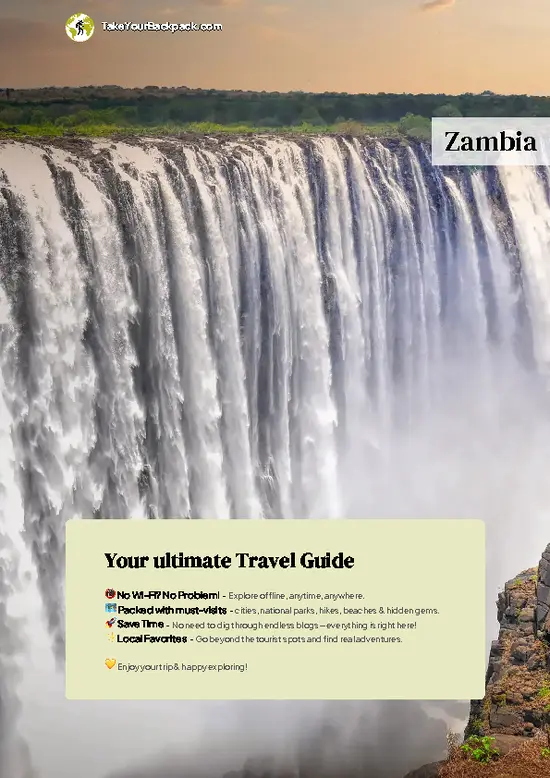
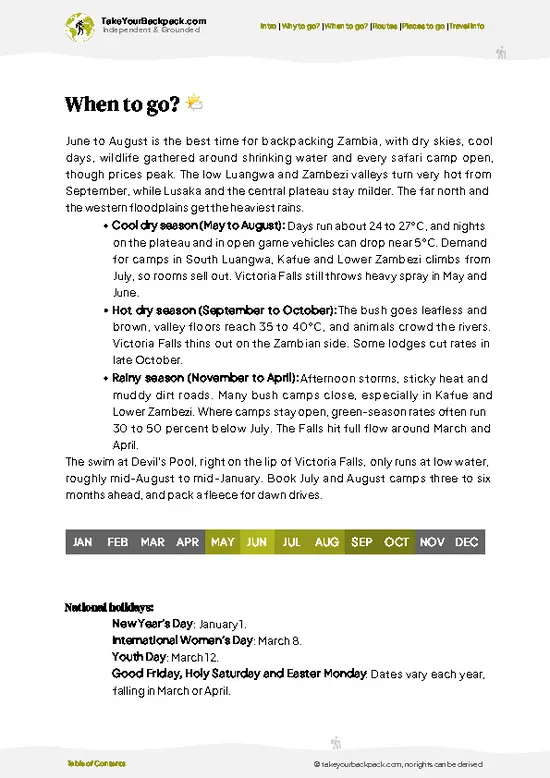
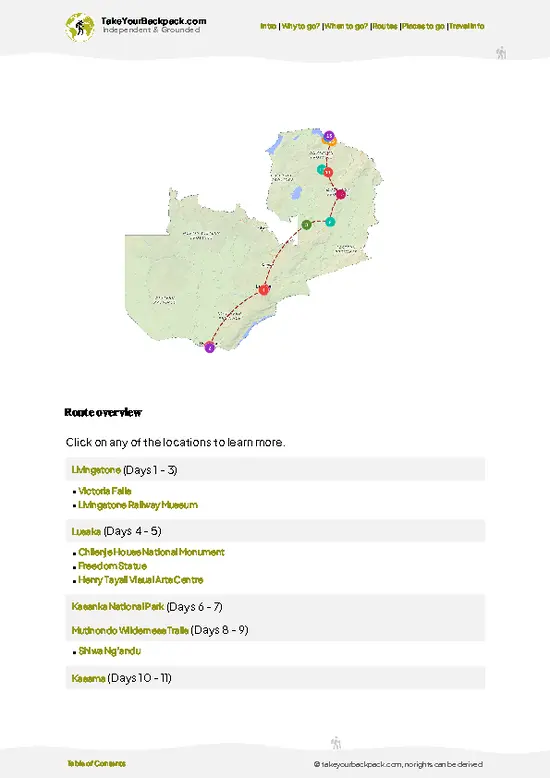
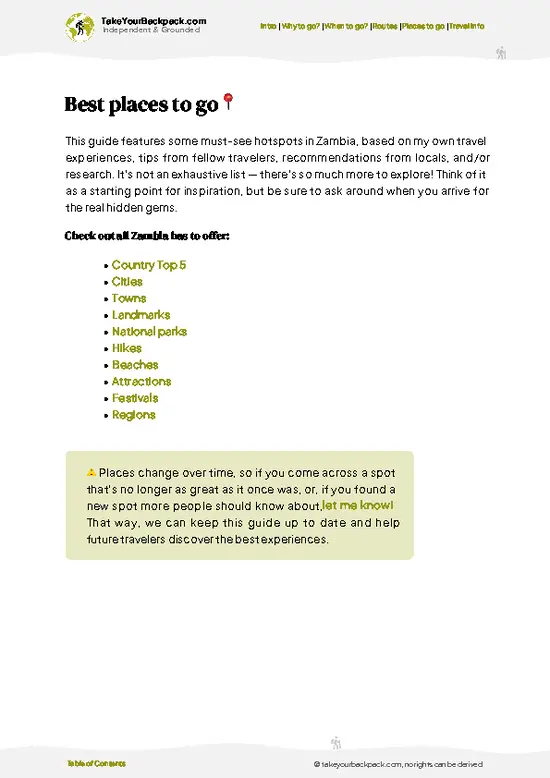
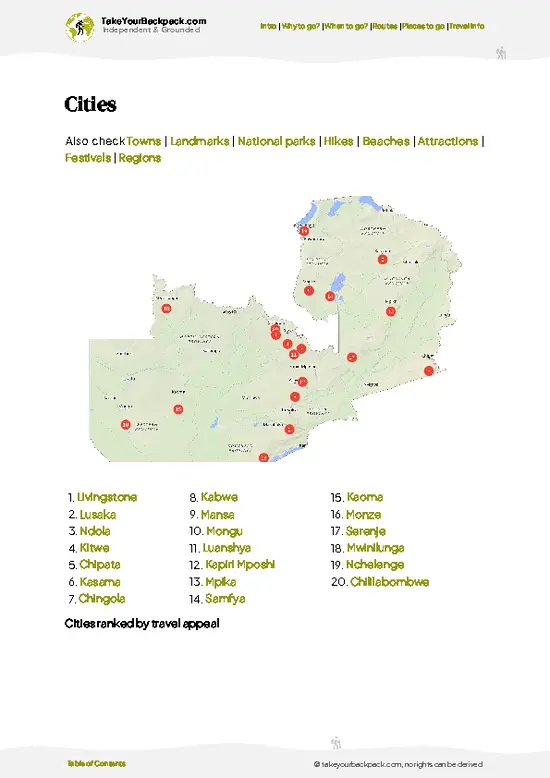
example page 0 from our offline Travel Guide for Zambia
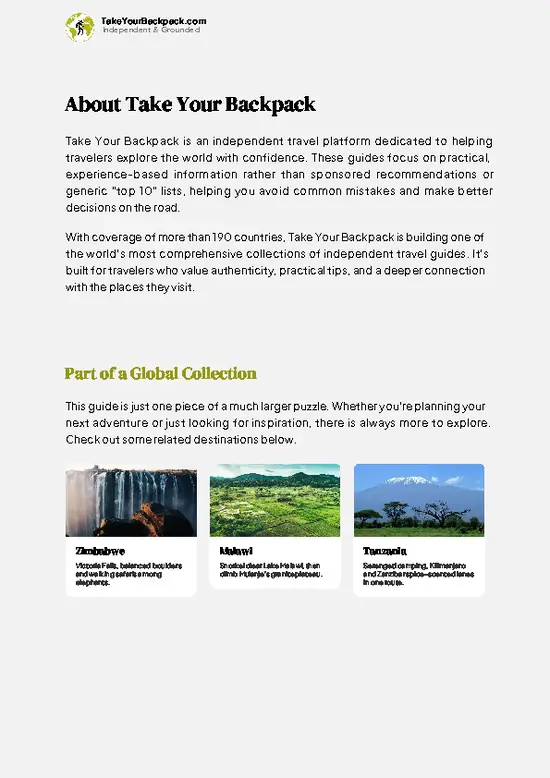
example page 1 from our offline Travel Guide for Zambia
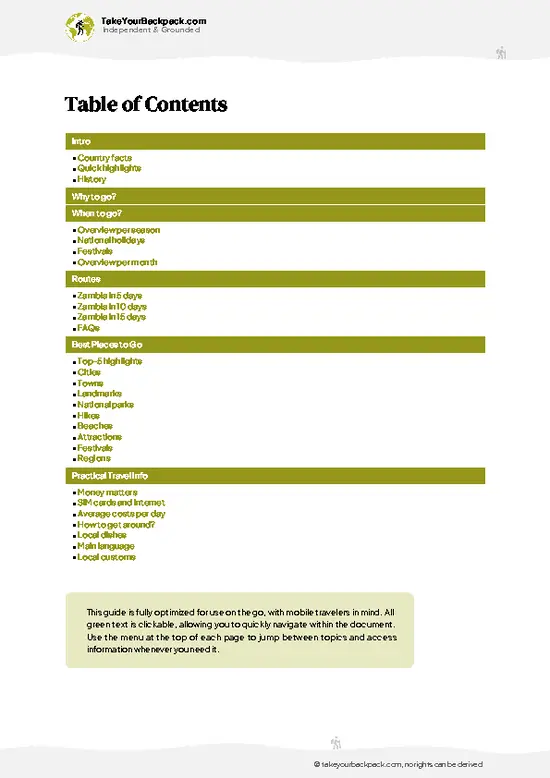
example page 2 from our offline Travel Guide for Zambia
example page 3 from our offline Travel Guide for Zambia
example page 4 from our offline Travel Guide for Zambia
example page 5 from our offline Travel Guide for Zambia
example page 6 from our offline Travel Guide for Zambia
example page 7 from our offline Travel Guide for Zambia
Loading the map 🌍
CLICK TO FILTER
cities
towns
landmarks
national parks
hikes
beaches
attractions
festivals
regions
SHOW COUNTRY’S BESTSHOW ALL

✨ Why go?
Ranked #8 town in Zambia
Reasons people choose to visit here

Senanga earns its place on a western Zambia route as the town where the Zambezi is close enough to touch. You stay one night, maybe two, and the reason is simple: the river here is wide, working and free of tour crowds. Local fishers launch dugout canoes at the banks, and the Senanga Bridge gives you an easy walk to watch the water change through the day. Nearby Sioma Ngwezi National Park and the Ngonye Falls sit down the road, so the town makes a practical pause on the way south. Guesthouses are small and owner-run, and the market is the best place to eat what locals eat. Expect quiet evenings, not parties. Solo travelers, overlanders on the Mongu to Sesheke road and anyone who likes unhurried river towns will be content. Short-stop people who need nightlife should keep moving.

💡 HighlightsThe experiences that define the visit

  1. Senanga Bridge and Zambezi waterfront: The span across the river is the town’s defining landmark, and the banks beside it are where the action happens. Go at early morning or late afternoon when the light is soft and the canoes are out. Free, 1 hour.
  2. Dugout canoe watching at the riverbank: Fishers launch and return along the shore, and you can see nets, catches and boat repairs up close. Best at first light. Free, 30 to 60 minutes. Ask before photographing people.
  3. Senanga Market: Dried fish, cassava, vegetables, basic goods and secondhand clothing fill the stalls. Morning is liveliest. Entry is free, and a snack costs US$1 to 2. Allow 45 minutes.
  4. Riverside sunset viewing: Find a spot on the east bank as the sky behind the water turns orange and the day’s boats come home. A cold drink at a riverside
… read more 👉
  1. Senanga Bridge and Zambezi waterfront: The span across the river is the town’s defining landmark, and the banks beside it are where the action happens. Go at early morning or late afternoon when the light is soft and the canoes are out. Free, 1 hour.
  2. Dugout canoe watching at the riverbank: Fishers launch and return along the shore, and you can see nets, catches and boat repairs up close. Best at first light. Free, 30 to 60 minutes. Ask before photographing people.
  3. Senanga Market: Dried fish, cassava, vegetables, basic goods and secondhand clothing fill the stalls. Morning is liveliest. Entry is free, and a snack costs US$1 to 2. Allow 45 minutes.
  4. Riverside sunset viewing: Find a spot on the east bank as the sky behind the water turns orange and the day’s boats come home. A cold drink at a riverside lodge costs about US$1 to 2. Allow 1 hour.
  5. Boma area and town walk: The administrative center of the old district shows the colonial-era layout and everyday life in Barotseland. Walk it in the morning when it is cooler. Free, about 1 hour.
Senanga offers a good base for Ngonye Falls, Sioma Ngwezi National Park and the Mongu area as day trips. Together the five stops fit comfortably into half a day, or a relaxed full one.
Spotted a mistake or missing something? Contact us.

🏘️ NeighborhoodsNeighborhood guide to Senanga

Senanga is small enough to cover on foot in a morning, and each corner has a clear job. Walk it with that in mind and you will waste no time.
  • Riverfront and the Zambezi bank: Start here, because the river is why the town exists. Fishermen launch dugout mitumba canoes at dawn, and the water is wide and slow. Go early, since the heat sends everyone indoors by midday. Skip swimming, as crocodiles and hippos use this stretch.
  • Main road and market area: Senanga’s trading heart runs along the Mongu-Livingstone road. Stalls sell dried and fresh bream, cassava, tomatoes and airtime. Cash is king because few vendors take cards, so carry small notes. Fried fish and nshima come cheap here at lunchtime.
  • Boma and government quarter: Quieter and leafier, with district offices, the bank and the clinic. Walk
… read more 👉
Senanga is small enough to cover on foot in a morning, and each corner has a clear job. Walk it with that in mind and you will waste no time.
  • Riverfront and the Zambezi bank: Start here, because the river is why the town exists. Fishermen launch dugout mitumba canoes at dawn, and the water is wide and slow. Go early, since the heat sends everyone indoors by midday. Skip swimming, as crocodiles and hippos use this stretch.
  • Main road and market area: Senanga’s trading heart runs along the Mongu-Livingstone road. Stalls sell dried and fresh bream, cassava, tomatoes and airtime. Cash is king because few vendors take cards, so carry small notes. Fried fish and nshima come cheap here at lunchtime.
  • Boma and government quarter: Quieter and leafier, with district offices, the bank and the clinic. Walk through for errands, not sights. ATMs are limited, so withdraw what you need on the first try.
  • Sandy residential lanes: Houses spread off the main road along sand tracks. Walking is slow in loose sand, so wear closed shoes. Greet people first, because a Lozi greeting opens doors and conversation.
Nightlife means a few bars with music and cold Mosi lager, and it winds down early.

⌛️ 1 dayA smart one-day plan

Start at the Senanga Bridge at first light, because the Zambezi is calmest and the fishers are heading out in their dugouts. Watch from the east bank for about an hour, then stroll downstream along the shore.
7:00 AM, Senanga Bridge: Stand near the approach and watch the canoes slide under the span. Walk the bank afterward.
8:30 AM, Riverbank landing: Wander to where boats are pulled up and nets are mended. Ask permission before taking photos, and say hello in Lozi if you can.
10:00 AM, Senanga Market: Walk uphill into town. Browse the stalls, try fried fish or a fresh bun, and buy water for later.
12:00 PM, Boma area: Wander the older administrative streets away from the main road. This quiet corner is skipped by most passing buses and shows the town’s colonial layout.
1:30 PM, Lunch: Eat nshima … read more 👉
Start at the Senanga Bridge at first light, because the Zambezi is calmest and the fishers are heading out in their dugouts. Watch from the east bank for about an hour, then stroll downstream along the shore.
7:00 AM, Senanga Bridge: Stand near the approach and watch the canoes slide under the span. Walk the bank afterward.
8:30 AM, Riverbank landing: Wander to where boats are pulled up and nets are mended. Ask permission before taking photos, and say hello in Lozi if you can.
10:00 AM, Senanga Market: Walk uphill into town. Browse the stalls, try fried fish or a fresh bun, and buy water for later.
12:00 PM, Boma area: Wander the older administrative streets away from the main road. This quiet corner is skipped by most passing buses and shows the town’s colonial layout.
1:30 PM, Lunch: Eat nshima with fish or chicken at a local eatery, then rest in the heat.
4:30 PM, Riverside sunset spot: Head back to the water for the last light. Find a bank-side seat, order a cold drink and watch the boats return.

🌤️ When to go?Seasonal considerations and timing

  • Cool dry season (May to August): Days reach about 25 to 28°C (77 to 82°F) and nights drop to 5 to 10°C (41 to 50°F). Skies are dry, mosquitoes are fewer and daylight runs roughly 11 hours. This is the busiest window, though Senanga stays quiet.
  • Hot dry season (September to October): Expect 32 to 38°C (90 to 100°F) and dusty air. River levels are low, and midday is for shade.
  • Rainy season (November to April): Highs of 28 to 33°C (82 to 91°F), humid, with downpours that flood sand tracks and Barotse floodplain roads. Long days of about 13 hours. Lodging prices barely shift, but access suffers.
  • Kuomboka period (March or April): The floodplain ceremony near Mongu draws crowds, so book transport early.
Aim for June or July to pair easy road travel with cool mornings.

source: climatestotravel.comJANJanuary: fair for travelingFEBFebruary: fair for travelingMARMarch: fair for travelingAPRApril: fair for travelingMAYMay: highly recommended for travelingJUNJune: excellent for travelingJULJuly: excellent for travelingAUGAugust: excellent for travelingSEPSeptember: excellent for travelingOCTOctober: highly recommended for travelingNOVNovember: fair for travelingDECDecember: fair for traveling
when-to-go

✈️ The backpacker research shortcutZambia Travel Guide

An offline-friendly backpacking guide with optimized travel routes, ranked highlights, transport advice, and the best areas to stay.
example page 0 from our offline Travel Guide for Zambia
example page 1 from our offline Travel Guide for Zambia
example page 2 from our offline Travel Guide for Zambia
example page 3 from our offline Travel Guide for Zambia
example page 4 from our offline Travel Guide for Zambia
example page 5 from our offline Travel Guide for Zambia
example page 6 from our offline Travel Guide for Zambia
example page 7 from our offline Travel Guide for Zambia
The digital guide (351 pages) contains:
✅ 89 highlights, ranked by travel appeal
✅ Optimized 5, 10 & 15-day travel routes
✅ Cities, national parks, landmarks, beaches
✅ How to get around
✅ Offline-friendly for travel without Wi-Fi
👉 Click to see all 30+ guide features

📅 Plan smarter in minutes, not weeks
✅ Month by month travel advice
✅ Festivals & national holidays
✅ Budget expectations

🗺️ Go to the right places, skip the overrated ones
✅ Honest pros & cons of destinations
✅ Top hikes, parks & viewpoints
✅ Lesser-known places most travelers miss
✅ Clear “worth it vs skip it” guidance

🛏️ Travel smoothly without rookie mistakes
✅ Best areas to stay
✅ Transport systems explained simply
✅ Common scams & safety advice
✅ SIM cards, money & practical tips

🌍 Understand the country, not just visit it
✅ Culture & traditions
✅ 52 Essential phrases & customs
✅ Festivals worth planning around
✅ Traveler-friendly historical context
✅ Insights that make places more meaningful

📱 Built for real travel conditions
✅ Fully downloadable PDF
✅ Works completely offline
✅ Optimized for phone use
✅ Useful in remote areas & buses
✅ Everything in one place
Stop searching, start planning
Get instant access to your full guide. 30‑day money-back guarantee.
+ Add another guide for just

By proceeding you agree to our terms.
Sent to your inbox immediately after payment • 100% Secure Checkout
Best Backpacking Travel Advisor 2025 tourism awardBest Backpacking
Travel Advisor
2025
What others say about Take Your Backpack Guides:
⭐⭐⭐⭐⭐
Fantastic, amazing amount of information!
⭐⭐⭐⭐⭐
My goodness this is amazing, it's what I've been looking for hats off too you!
⭐⭐⭐⭐⭐
I think this is absolutely BRILLIANT
⭐⭐⭐⭐
Very complete and informative. It's still missing places, but I gotta to commend you
⭐⭐⭐⭐⭐
This is truly amazing, thank you, can't wait to explore it with my kids!
⭐⭐⭐⭐⭐
Awesome resource, thank you!
⭐⭐⭐⭐⭐
This is amazing! Can't wait to explore the ones I haven't seen
⭐⭐⭐⭐
I love this! Well done, great idea.
⭐⭐⭐⭐⭐
Thanks for taking the time to make this gem!
⭐⭐⭐⭐⭐
This might be the best website I've ever seen.
⭐⭐⭐⭐⭐
Congratulations, and thank you so much for your work; it's incredibly valuable.
⭐⭐⭐⭐
In all seriousness I think you did a great job pointing out the important spots
⭐⭐⭐⭐⭐
10/10 very good
⭐⭐⭐⭐⭐
As someone who's only just starting to visit regularly this is awesome, thank you.
⭐⭐⭐⭐
Thank you very much! I'm going to visit my dad, it's going to be very useful!
⭐⭐⭐⭐⭐
This is really cool! We'll be travelling for the first time and this definitely come in handy.
⭐⭐⭐⭐⭐
You are now our minister of culture, congratulations 👨‍💼
⭐⭐⭐⭐⭐
Just wanted to tell you that this is a pearl! Going to follow your recommendations.
⭐⭐⭐⭐⭐
This is so cool. I'll definitely be using the resource for my travels soon.
⭐⭐⭐⭐⭐
This is very impressive! Good work.
⭐⭐⭐⭐⭐
This is an amazing and informative site. Very well done!

🛏️ Where to stay?How to pick the right area

Stay along the main road area or near the riverfront, because both put you within a short walk of food, the market and the transport stops. Senanga has a small supply of guesthouses and lodges rather than a true hostel scene. Dorm beds are rare, so budget travelers usually take a basic private room, often with fan and shared or simple en suite facilities. Rooms near the main road are convenient for early minibuses but pick up truck noise and early-morning bustle, so earplugs help.

Riverfront stays are calmer, with breezes and sunset views over the Zambezi, though a few sit a short walk from shops, … read more 👉
Stay along the main road area or near the riverfront, because both put you within a short walk of food, the market and the transport stops. Senanga has a small supply of guesthouses and lodges rather than a true hostel scene. Dorm beds are rare, so budget travelers usually take a basic private room, often with fan and shared or simple en suite facilities. Rooms near the main road are convenient for early minibuses but pick up truck noise and early-morning bustle, so earplugs help.

Riverfront stays are calmer, with breezes and sunset views over the Zambezi, though a few sit a short walk from shops, so bring a torch for walking at night. Power cuts happen, so a headlamp and a charged power bank help. In busy periods, such as around the Kuomboka ceremony season, book ahead by phone since rooms are limited. Camping is possible at a few riverside lodges and suits those with a tent. Pay in cash, because card machines are unreliable.

🚌 Getting aroundGetting around like a local

Senanga hands out its biggest time-wasters to people who wait for a bus that never reaches a set schedule, or who hire a private taxi for a distance a shared minibus covers for a fraction of the price. Understand how it works and you move freely. The town is compact, traffic is light, and public transport is informal and fills before it leaves.
  • Walking: Free, and it covers everything in town in 20 to 30 minutes end to end. Go early or late, as midday sun is brutal and sand slows you.
  • Minibuses and buses on the Mongu-Livingstone road: Senanga sits on this main route, so vehicles pass through during daylight. Mongu is roughly 1.5 to 2 hours and costs about US$4 to 6. Livingstone takes about 6 to 8 hours for US$15 to 25. Minibuses leave when full, so arrive by about 7 am for the best choice.
  • Shared
… read more 👉
Senanga hands out its biggest time-wasters to people who wait for a bus that never reaches a set schedule, or who hire a private taxi for a distance a shared minibus covers for a fraction of the price. Understand how it works and you move freely. The town is compact, traffic is light, and public transport is informal and fills before it leaves.
  • Walking: Free, and it covers everything in town in 20 to 30 minutes end to end. Go early or late, as midday sun is brutal and sand slows you.
  • Minibuses and buses on the Mongu-Livingstone road: Senanga sits on this main route, so vehicles pass through during daylight. Mongu is roughly 1.5 to 2 hours and costs about US$4 to 6. Livingstone takes about 6 to 8 hours for US$15 to 25. Minibuses leave when full, so arrive by about 7 am for the best choice.
  • Shared taxis: Short hops around town and to nearby villages cost about US$1 to 3. Agree on the price before you climb in, since there are no meters.
  • Motorbike and local taxis: Handy for outlying spots or the river crossing at about US$2 to 5 per ride. Ask for a helmet and ride slowly on sand.
  • Boat transfers: Local boatmen run river trips on the Zambezi for roughly US$10 to 30 depending on length. Negotiate in advance, and confirm there are life jackets.
Keep small notes for fares, since drivers rarely have change. Last services thin out by mid-afternoon, so plan to arrive and leave in daylight.

👛 Costs (as of 22 October 2026)Travel costs and budget guide for Senanga

Senanga costs about US$28 to 68 per day for a backpacker, and nearly everything is paid in cash.
CategoryBudget RangeLocal Reality
Dorm accommodationUS$12 to 25Few true dorms exist, so expect a basic private room or a campsite at the low end.
MealsUS$6 to 12Nshima with fish or chicken at local eateries costs about US$2 to 4, while lodge dinners cost more.
Local transportUS$2 to 8Shared taxis and short rides cost US$1 to 3, and a minibus to Mongu is US$4 to 6.
Basic activities/entry feesUS$5 to 15Boat trips on the Zambezi start around US$10, and walking around town is free.
Miscellaneous expensesUS$3 to 8Airtime, water, toiletries and tips.
Total Daily BudgetUS$28 to 68About US$48 on a typical day.
Buy fish and vegetables at the market and cook where your lodge allows it, which saves several dollars a day.

source: zambiatourism.com
⚠️ Prices can change and everyone travels differently, so take this as a rough guide. Hope it helps you plan your adventure!

🚌 Day tripsShort trips worth adding

Senanga works as a base for short, simple excursions, mostly by minibus or boat, with limited public transport so an early start matters.
Mongu and the Barotse floodplain: Mongu is the regional capital, about 1.5 to 2 hours north by minibus for US$4 to 6 each way. Check out the busy market and the Litunga’s area, then catch a return minibus before mid-afternoon. A common first-timer mistake is leaving too late, when seats vanish. Visit May to August for dry roads.
👉 Explore Mongu
Zambezi river boat trip: Hire a local boatman for a morning on the water, at roughly US$10 to 30 for a small boat. You glide past fishing camps, reed beds and birdlife, including African skimmers and kingfishers. Go in the dry season when channels are clear, and settle the price and duration first.

Sioma Ngwezi National … read more 👉
Senanga works as a base for short, simple excursions, mostly by minibus or boat, with limited public transport so an early start matters.
Mongu and the Barotse floodplain: Mongu is the regional capital, about 1.5 to 2 hours north by minibus for US$4 to 6 each way. Check out the busy market and the Litunga’s area, then catch a return minibus before mid-afternoon. A common first-timer mistake is leaving too late, when seats vanish. Visit May to August for dry roads.
👉 Explore Mongu
Zambezi river boat trip: Hire a local boatman for a morning on the water, at roughly US$10 to 30 for a small boat. You glide past fishing camps, reed beds and birdlife, including African skimmers and kingfishers. Go in the dry season when channels are clear, and settle the price and duration first.

Sioma Ngwezi National Park: The park lies to the south, with a half-day to full-day trip by hired vehicle or lift, costing about US$30 to 60 split between people plus entry fees. Roads are sandy, so only go in dry months and confirm conditions first. Wildlife is sparse compared with bigger parks, so expect elephants only by luck.
👉 Explore Sioma Ngwezi National Park
Ngonye Falls: Ngonye Falls, near Sioma about 1 to 1.5 hours south by road, is a broad horseshoe of rapids on the Zambezi. Transport is the hard part, so hire a driver for about US$30 to 50 round trip. Water is highest after the rains, around April and May.

🛡️ SafetyTraveler Safety Guide

Senanga is a calm, low-crime town where everyday hassle is mostly limited to opportunistic petty theft and touts at transport stops. Keep phones and cash tucked away in the market and when boarding minibuses. After dark, street lighting is patchy and sand lanes are uneven, so carry a torch and avoid walking alone late. Solo travelers, including women, generally find locals friendly, but dress modestly and greet people. Agree on taxi and boat prices before you set off to avoid disputes. The real physical risks come from the Zambezi, where hippos and crocodiles live, so never swim or walk riverbanks at night. Malaria is present, so use repellent and sleep under a net.

FAQFrequently asked questions about Senanga

Senanga is worth a short stop rather than a long stay, especially if you want a quiet Zambezi riverside town away from tourist crowds. You can watch fishermen at dawn, eat fresh bream at the market and use it as a springboard for Ngonye Falls, about 1 to 1.5 hours south. Facilities are basic, so go for the atmosphere rather than a list of attractions.
One to two days is enough in Senanga for the river, the market and a boat outing. Add a third day if you want to hire a driver for Ngonye Falls or Sioma Ngwezi National Park, at about US$30 to 60 split between travelers. Dry months from May to August make the sandy roads easier.
Senanga can be done as a day trip from Mongu, which is about 1.5 to 2 hours away by minibus for US$4 to 6 each way. You can see the riverfront and market in a few hours and head back before mid-afternoon, when seats get scarce. Staying overnight is better if you want a river trip at dawn, and Livingstone is too far for a day trip at 6 to 8 hours each way.
⚠️ Things can change over time, so always validate details locally before you go.

Other Zambian towns near Senanga

Explore more nearby:

  • Shangombo—Angola border traffic, Lozi village lanes, fish stalls, sandy outskirts| 129 km away
  • Kalabo—Pontoon crossing, Luanda floodplain, dugout canoes, grilled bream| 141 km away
  • Lukulu—Zambezi east bank, pontoon, floodplain birds, river sunsets| 190 km away

💡 Not sure where to go next?
Create a personalized itinerary for Zambia including Senanga and the places that fit your trip.

Generate my itinerary

👉 Discover all towns

Or checkout all Zambia has to offer (think cities, towns, villages, national parks, hikes, beaches, festivals)
Country photo of Zambia

We 💚 feedbackSumming up the experience

Senanga is for travelers who like quiet rivers and unhurried evenings. I would arrive in the morning, walk the bank at dawn the next day, and leave after the canoes are out. Bring cash in small notes, since card machines are rare.

✍️ Help improve this page!
The information on this page is based on in-depth research, insights shared by experienced travelers, and feedback from the local travel community in Zambia. While every effort is made to keep the information accurate and current, conditions can change — so if you spot anything incorrect or outdated, please get in touch.


🙋‍♂️ Give feedback

👋 Meet the founderWho’s Behind Take Your Backpack?

Johan, backpacker and founder of TakeYourBackpackHi, I’m Johan (Netherlands 🇳🇱), the creator of TakeYourBackpack. Over the past 3 decades, I’ve backpacked through 90+ countries across six continents, gaining extensive experience with independent travel, long-term trips, and overland routes.

This site is built on a combination of firsthand travel experience and carefully curated insights from other backpackers. Many guides are based on places I’ve personally visited, while others bring together tips, observations, and practical advice shared by trusted travelers I’ve met along the way.

The goal is to provide realistic, experience-driven guidance — not generic itineraries — so you can explore destinations with better context, clearer expectations, and more confidence.