×

Zambia🇿🇲 | townsKalaboPontoon crossing, Luanda floodplain, dugout canoes, grilled bream | things to do and best time to go

Explore MfuweExplore Isoka

Backpacking in Kalabo
🌟 Highlighttown ranked #7
By Johan Kruseman 🇳🇱 | Updated October 22, 2026

Kalabo puts you at the doorstep of the Barotse Floodplain and Liuwa Plain National Park without the Mongu crowds, and the pontoon crossing is a story in itself. It sits in the west of Zambia, on the Luanda road near the Luanda River's floodplain edge. Sand tracks and seasonal flooding explain why everything here takes longer than the map suggests, so build in slack and ask locals about current water levels before you commit. Expect a dusty market, a few simple guesthouses, grilled fish and nshima, and very few other backpackers. Evenings are quiet, which suits people who like talking with locals over a plate of food. Self-reliant, patient explorers will love it. Anyone wanting nightlife, polish or fixed schedules will not.

Discover everything you want to know in the 📖 Zambia Travel Guide.


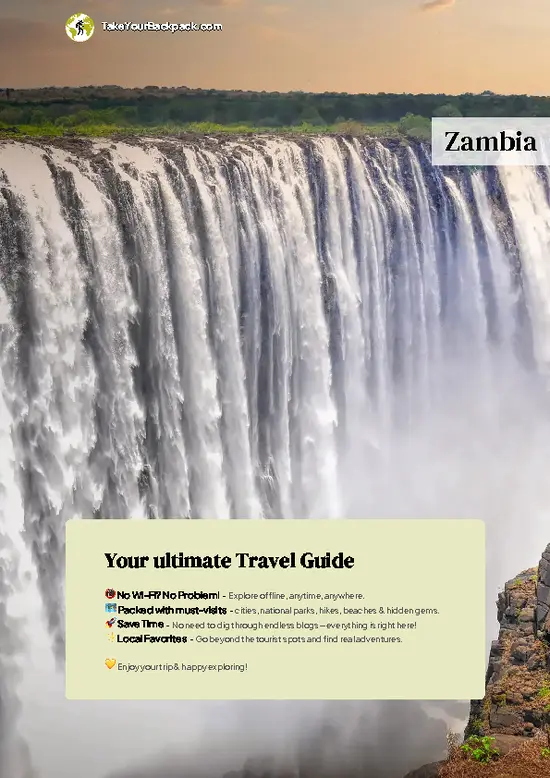
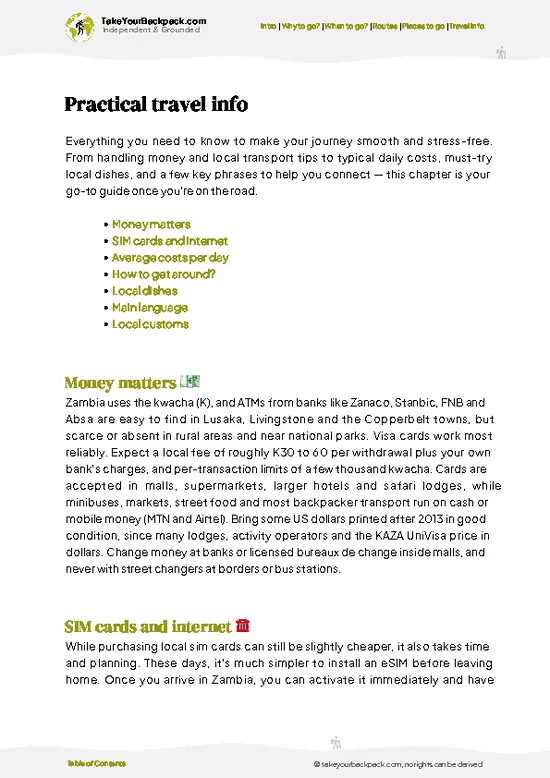
example page 0 from our offline Travel Guide for Zambia
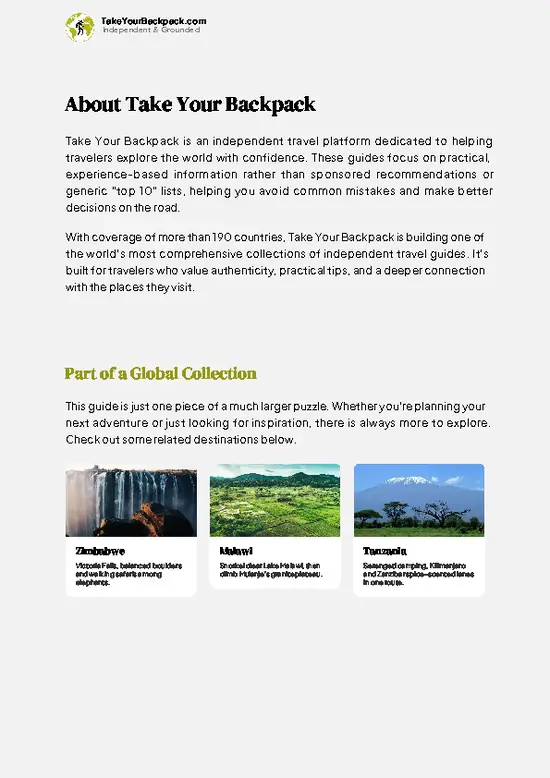
example page 1 from our offline Travel Guide for Zambia
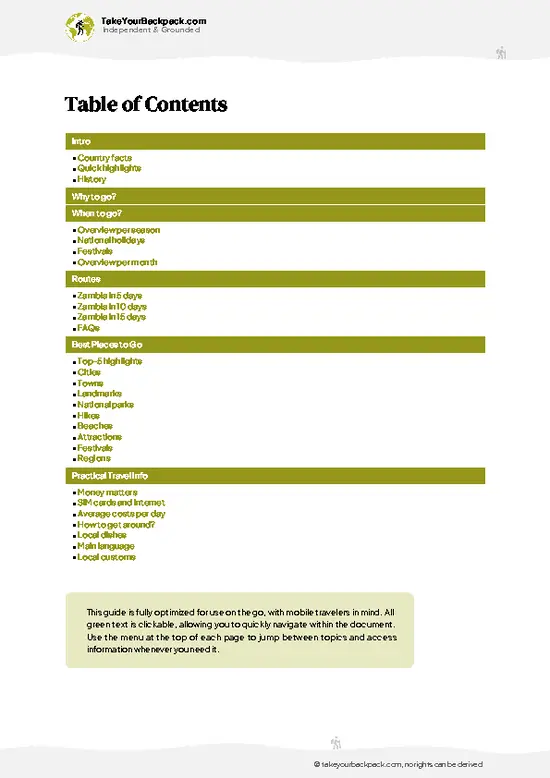
example page 2 from our offline Travel Guide for Zambia
example page 3 from our offline Travel Guide for Zambia
example page 4 from our offline Travel Guide for Zambia
example page 5 from our offline Travel Guide for Zambia
example page 6 from our offline Travel Guide for Zambia
example page 7 from our offline Travel Guide for Zambia
Loading the map 🌍
CLICK TO FILTER
cities
towns
landmarks
national parks
hikes
beaches
attractions
festivals
regions
SHOW COUNTRY’S BESTSHOW ALL

✨ Why go?
Ranked #7 town in Zambia
Reasons people choose to visit here

Kalabo is the practical gateway to Liuwa Plain, where the second-largest wildebeest migration in Africa gathers each year, and that single fact shapes who comes. Most travelers pass through for a night or two, sorting supplies, fuel and permits before pushing west across the sand, then return to rest afterward. The town itself is small and flat, easy to walk in an hour, with a lively central market where you can stock up on fruit, tomatoes and bread. Stays are in plain guesthouses, so you will meet drivers, researchers and the occasional overlander rather than a hostel crowd. The Luanda River floodplain around town changes dramatically with the seasons, giving even a short stay a sense of place. Slow travelers, birdwatchers, self-drivers and solo adventurers who enjoy chatting with villagers … read more 👉
Kalabo is the practical gateway to Liuwa Plain, where the second-largest wildebeest migration in Africa gathers each year, and that single fact shapes who comes. Most travelers pass through for a night or two, sorting supplies, fuel and permits before pushing west across the sand, then return to rest afterward. The town itself is small and flat, easy to walk in an hour, with a lively central market where you can stock up on fruit, tomatoes and bread. Stays are in plain guesthouses, so you will meet drivers, researchers and the occasional overlander rather than a hostel crowd. The Luanda River floodplain around town changes dramatically with the seasons, giving even a short stay a sense of place. Slow travelers, birdwatchers, self-drivers and solo adventurers who enjoy chatting with villagers will get the most out of it. If you only want a quick tick-box stop, you will be underwhelmed.

💡 HighlightsMust-see experiences and standout moments

  1. Kalabo Market: The town's daily heartbeat, with piles of dried fish, cassava, onions and cheap chitenge cloth. Go in the morning when stock is fresh. Entry is free, and an hour is plenty.
  2. Luanda River floodplain edge: Walk the grassy banks at the edge of town to watch fishermen in dugout canoes and flocks of egrets and storks. Early morning or late afternoon is best, especially in the flood season. It is free and takes 1 to 2 hours.
  3. Kalabo pontoon and river crossing: Watching vehicles and people cross on the hand-guided river crossing gives a real sense of how the region moves. Allow 30 to 60 minutes. Costs are small, around US$1 to 5 for a vehicle, and foot passengers pay little.
  4. Kalabo Boma area and old administrative buildings: A quiet wander past the colonial-era government buildings shows
… read more 👉
  1. Kalabo Market: The town's daily heartbeat, with piles of dried fish, cassava, onions and cheap chitenge cloth. Go in the morning when stock is fresh. Entry is free, and an hour is plenty.
  2. Luanda River floodplain edge: Walk the grassy banks at the edge of town to watch fishermen in dugout canoes and flocks of egrets and storks. Early morning or late afternoon is best, especially in the flood season. It is free and takes 1 to 2 hours.
  3. Kalabo pontoon and river crossing: Watching vehicles and people cross on the hand-guided river crossing gives a real sense of how the region moves. Allow 30 to 60 minutes. Costs are small, around US$1 to 5 for a vehicle, and foot passengers pay little.
  4. Kalabo Boma area and old administrative buildings: A quiet wander past the colonial-era government buildings shows how the place developed as a district center. Visit in the cooler morning. It is free and takes about 30 minutes.
  5. Evening riverside fish stalls: Local vendors grill bream and serve it with nshima, a chance to eat where townspeople eat. Go around dusk. A meal costs roughly US$2 to 5, and you should allow an hour.
Day trips from Kalabo can take you to Liuwa Plain National Park, the Barotse Floodplain near Mongu, and the Lealui area where the Litunga's traditional ceremonies take place. Kalabo itself needs no ticket, though Liuwa Plain entry fees and camping must be arranged in advance with the park operator.
Spotted a mistake or missing something? Contact us.

🏘️ NeighborhoodsWhere things are and how it's laid out

Kalabo is compact enough that you can cover every corner on foot in a morning, so lace up and roam. Sand is the rule here, and it drags at your legs, which is why locals walk the firmer tracks near the road edges and so should you.
  • Town Center and Market: The market is the pulse. Stalls sell dried and fresh fish from the Zambezi floodplain, cassava, groundnuts and cheap phone credit. Eat nshima with fish or relish at small stalls, and go in the morning when stock is fresh. Evenings fade quickly, so plan to be done by dusk.
  • Government and Boma Area: Offices, the district hospital, banks and a few shops sit here. The banking is limited, so carry cash from Mongu rather than expecting a reliable ATM. Quiet and flat, it suits an easy stroll.
  • Riverside and Luanginga Edge: Head toward the water to watch
… read more 👉
Kalabo is compact enough that you can cover every corner on foot in a morning, so lace up and roam. Sand is the rule here, and it drags at your legs, which is why locals walk the firmer tracks near the road edges and so should you.
  • Town Center and Market: The market is the pulse. Stalls sell dried and fresh fish from the Zambezi floodplain, cassava, groundnuts and cheap phone credit. Eat nshima with fish or relish at small stalls, and go in the morning when stock is fresh. Evenings fade quickly, so plan to be done by dusk.
  • Government and Boma Area: Offices, the district hospital, banks and a few shops sit here. The banking is limited, so carry cash from Mongu rather than expecting a reliable ATM. Quiet and flat, it suits an easy stroll.
  • Riverside and Luanginga Edge: Head toward the water to watch dugout canoes, fishers and the pontoon crossings. Mornings and late afternoons are best for photos and conversation. The ground gets soggy in the rains, so wear shoes you can wash.
  • Bars and Roadside Strips: A handful of local bars play loud Zambian and Congolese music on weekends. Go with a local contact, drink the bottled beer, and expect nightlife to wrap up early.

⌛️ 1 dayA smart one-day plan

7:00 AM: Kalabo Ferry Landing on the Luanja River
Start where the town’s life actually happens. Dugout canoes and the pontoon cross the floodplain channels, and women with basins of cassava and dried fish wait for the first crossing. Watch for twenty minutes, then walk back up the sandy lane toward the center.

8:30 AM: Breakfast at the Main Market
Grab fritters (vitumbuwa) or a mug of sweet tea from the stalls near the market. Kalabo is a Lozi-speaking town, so a simple “muli buanji” (hello) gets smiles. Browse for woven reed baskets and fresh fish from the Zambezi floodplain.

10:00 AM: Walk the Boma Area and Town Streets
Stroll the sandy streets past the district offices and the old colonial-era buildings. Everything is flat, shaded in patches by mango trees, and you will pass cyclists hauling … read more 👉
7:00 AM: Kalabo Ferry Landing on the Luanja River
Start where the town’s life actually happens. Dugout canoes and the pontoon cross the floodplain channels, and women with basins of cassava and dried fish wait for the first crossing. Watch for twenty minutes, then walk back up the sandy lane toward the center.

8:30 AM: Breakfast at the Main Market
Grab fritters (vitumbuwa) or a mug of sweet tea from the stalls near the market. Kalabo is a Lozi-speaking town, so a simple “muli buanji” (hello) gets smiles. Browse for woven reed baskets and fresh fish from the Zambezi floodplain.

10:00 AM: Walk the Boma Area and Town Streets
Stroll the sandy streets past the district offices and the old colonial-era buildings. Everything is flat, shaded in patches by mango trees, and you will pass cyclists hauling firewood and sacks. Carry water, because the sun gets hot fast.

12:30 PM: Lunch of Nshima and Bream
Sit down at a simple local eatery for nshima with grilled or stewed river fish. It is filling, cheap, and the best way to taste the floodplain.

2:00 PM: Village Lane and Floodplain Edge
This is the off-route stop. Follow a track out of town to the edge of the Barotse floodplain, where reed homesteads, cattle and fishing traps sit on low ground. Greet people first, ask before taking photos, and go in the cooler early afternoon rather than midday.

4:30 PM: Return and Watch the Evening Light
Head back to the river for the late-day crossing traffic. Dust and woodsmoke hang in the air as boats come in, and it is the nicest hour to simply sit and talk with locals.

6:30 PM: Dinner and Early Night
Eat at your guesthouse or a roadside grill, then turn in. Evenings are quiet, so plan on stars and conversation rather than bars.

🌤️ When to go?Weather, crowds, and seasonal trade-offs

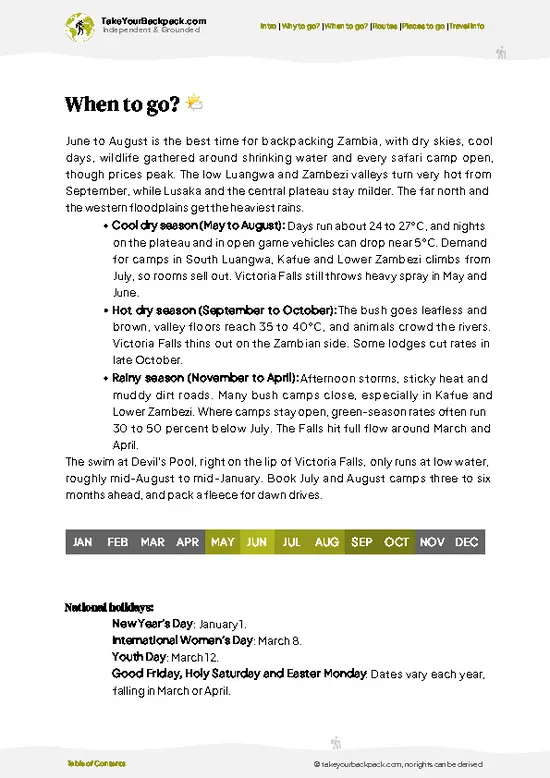
May to August is the easiest window, with dry roads, cool mornings and no mud on the floodplain tracks.
  • Cool Dry Season (May to August): Days reach 25 to 28°C (77 to 82°F), nights can drop to 5 to 8°C (41 to 46°F), and the sand tracks firm up. Daylight runs about 11 hours.
  • Hot Dry Season (September to October): Heat climbs to 33 to 36°C (91 to 97°F), dust rises and the water is low. Prices stay steady since few tourists come.
  • Rainy Season (November to April): Afternoon storms, humid 28 to 32°C (82 to 90°F) days, and flooded tracks that make transport slow and sometimes impossible. Daylight stretches to about 13 hours.
  • Kuomboka Season (usually March to April): The Lozi ceremony near Mongu draws crowds, and beds in the region fill and cost more.
Book onward transport a day ahead in the rains, because river crossings can change plans.

source: climatestotravel.comJANJanuary: fair for travelingFEBFebruary: fair for travelingMARMarch: fair for travelingAPRApril: fair for travelingMAYMay: highly recommended for travelingJUNJune: excellent for travelingJULJuly: excellent for travelingAUGAugust: excellent for travelingSEPSeptember: excellent for travelingOCTOctober: excellent for travelingNOVNovember: fair for travelingDECDecember: fair for traveling
when-to-go

✈️ The backpacker research shortcutZambia Travel Guide

An offline-friendly backpacking guide with optimized travel routes, ranked highlights, transport advice, and the best areas to stay.
example page 0 from our offline Travel Guide for Zambia
example page 1 from our offline Travel Guide for Zambia
example page 2 from our offline Travel Guide for Zambia
example page 3 from our offline Travel Guide for Zambia
example page 4 from our offline Travel Guide for Zambia
example page 5 from our offline Travel Guide for Zambia
example page 6 from our offline Travel Guide for Zambia
example page 7 from our offline Travel Guide for Zambia
The digital guide (351 pages) contains:
✅ 89 highlights, ranked by travel appeal
✅ Optimized 5, 10 & 15-day travel routes
✅ Cities, national parks, landmarks, beaches
✅ How to get around
✅ Offline-friendly for travel without Wi-Fi
👉 Click to see all 30+ guide features

📅 Plan smarter in minutes, not weeks
✅ Month by month travel advice
✅ Festivals & national holidays
✅ Budget expectations

🗺️ Go to the right places, skip the overrated ones
✅ Honest pros & cons of destinations
✅ Top hikes, parks & viewpoints
✅ Lesser-known places most travelers miss
✅ Clear “worth it vs skip it” guidance

🛏️ Travel smoothly without rookie mistakes
✅ Best areas to stay
✅ Transport systems explained simply
✅ Common scams & safety advice
✅ SIM cards, money & practical tips

🌍 Understand the country, not just visit it
✅ Culture & traditions
✅ 52 Essential phrases & customs
✅ Festivals worth planning around
✅ Traveler-friendly historical context
✅ Insights that make places more meaningful

📱 Built for real travel conditions
✅ Fully downloadable PDF
✅ Works completely offline
✅ Optimized for phone use
✅ Useful in remote areas & buses
✅ Everything in one place
Stop searching, start planning
Get instant access to your full guide. 30‑day money-back guarantee.
+ Add another guide for just

By proceeding you agree to our terms.
Sent to your inbox immediately after payment • 100% Secure Checkout
Best Backpacking Travel Advisor 2025 tourism awardBest Backpacking
Travel Advisor
2025
What others say about Take Your Backpack Guides:
⭐⭐⭐⭐⭐
Fantastic, amazing amount of information!
⭐⭐⭐⭐⭐
My goodness this is amazing, it's what I've been looking for hats off too you!
⭐⭐⭐⭐⭐
I think this is absolutely BRILLIANT
⭐⭐⭐⭐
Very complete and informative. It's still missing places, but I gotta to commend you
⭐⭐⭐⭐⭐
This is truly amazing, thank you, can't wait to explore it with my kids!
⭐⭐⭐⭐⭐
Awesome resource, thank you!
⭐⭐⭐⭐⭐
This is amazing! Can't wait to explore the ones I haven't seen
⭐⭐⭐⭐
I love this! Well done, great idea.
⭐⭐⭐⭐⭐
Thanks for taking the time to make this gem!
⭐⭐⭐⭐⭐
This might be the best website I've ever seen.
⭐⭐⭐⭐⭐
Congratulations, and thank you so much for your work; it's incredibly valuable.
⭐⭐⭐⭐
In all seriousness I think you did a great job pointing out the important spots
⭐⭐⭐⭐⭐
10/10 very good
⭐⭐⭐⭐⭐
As someone who's only just starting to visit regularly this is awesome, thank you.
⭐⭐⭐⭐
Thank you very much! I'm going to visit my dad, it's going to be very useful!
⭐⭐⭐⭐⭐
This is really cool! We'll be travelling for the first time and this definitely come in handy.
⭐⭐⭐⭐⭐
You are now our minister of culture, congratulations 👨‍💼
⭐⭐⭐⭐⭐
Just wanted to tell you that this is a pearl! Going to follow your recommendations.
⭐⭐⭐⭐⭐
This is so cool. I'll definitely be using the resource for my travels soon.
⭐⭐⭐⭐⭐
This is very impressive! Good work.
⭐⭐⭐⭐⭐
This is an amazing and informative site. Very well done!

🛏️ Where to stay?Best areas and accommodation options

Stay near the town center and market, where the few budget guesthouses and lodges sit within walking distance of food, water and the morning transport. Dedicated hostels and dorm beds are essentially absent, so budget travelers rely on simple guesthouse rooms, usually priced around US$10 to 25 a night. The central area is the practical choice for transport links, since vehicles to Mongu gather there and you can walk to them with your bag. Noise is mostly roosters, generators and weekend music, so earplugs help.

The second option is the quieter edge toward the river, which suits anyone wanting … read more 👉
Stay near the town center and market, where the few budget guesthouses and lodges sit within walking distance of food, water and the morning transport. Dedicated hostels and dorm beds are essentially absent, so budget travelers rely on simple guesthouse rooms, usually priced around US$10 to 25 a night. The central area is the practical choice for transport links, since vehicles to Mongu gather there and you can walk to them with your bag. Noise is mostly roosters, generators and weekend music, so earplugs help.

The second option is the quieter edge toward the river, which suits anyone wanting calm evenings and a short walk to the water. Lights are sparse after dark, so bring a headlamp, and expect to rely on a bucket of water if the supply is down. Reserve ahead by phone where you can, because rooms can be taken during government visits or festival periods. Carry cash, as card payment is uncommon.

🚌 Getting aroundGetting around like a local

Your own feet are the easiest way around Kalabo, because the town is small, flat and everything useful sits within about 2 kilometers (1.2 miles) of the market. Traffic is light, but the sand is deep, so allow extra time and carry water. Beyond town, vehicles are scarce and schedules loose, which is why experienced travelers ask the day before and stay flexible.
  • Walking: Free and quickest for the market, boma and riverbank. Start early, before the midday heat builds.
  • Motorbike Taxis: Short hops cost about US$1 to 2. Agree the price first, since there are no meters, and ask the rider to slow down on the soft sand.
  • Minibuses and Shared Vehicles: Rough shared transport runs toward the Mongu road, with fares around US$5 to 10 depending on conditions. Vehicles leave when full, usually in the morning,
… read more 👉
Your own feet are the easiest way around Kalabo, because the town is small, flat and everything useful sits within about 2 kilometers (1.2 miles) of the market. Traffic is light, but the sand is deep, so allow extra time and carry water. Beyond town, vehicles are scarce and schedules loose, which is why experienced travelers ask the day before and stay flexible.
  • Walking: Free and quickest for the market, boma and riverbank. Start early, before the midday heat builds.
  • Motorbike Taxis: Short hops cost about US$1 to 2. Agree the price first, since there are no meters, and ask the rider to slow down on the soft sand.
  • Minibuses and Shared Vehicles: Rough shared transport runs toward the Mongu road, with fares around US$5 to 10 depending on conditions. Vehicles leave when full, usually in the morning, so arrive by 7 or 8 am. In the rains the trip can take noticeably longer, because the road crosses sandy and flooded stretches.
  • Pontoon and Boat Crossings: Crossings over the Luanginga and surrounding channels cost a small fee, often under US$1 for foot passengers. Pontoons wait for loads and stop at dusk, so do not plan a late crossing.
  • Chartered Vehicle or Boat: Hiring a 4WD or a dugout with a local driver runs roughly US$40 to 100 a day, plus fuel. Ask in the market or at the district offices, and settle the route in advance.
Expect delays and treat them as part of the adventure. Carry cash in small bills, snacks and a flexible plan, and you will keep moving even when the schedule does not.

👛 Costs (as of 22 October 2026)What things cost and how to budget

Kalabo costs about US$37 to 60 a day for a backpacker, mainly because accommodation is simple and options are limited.
CategoryBudget RangeLocal Reality
Dorm accommodationUS$10 to 25No true dorms, so a basic guesthouse room is the norm. Prices do not move much between seasons.
MealsUS$6 to 12Nshima with fish or relish at local stalls costs a few dollars, while a restaurant plate costs more.
Local transportUS$2 to 6Motorbike hops cost about US$1 to 2, and walking covers most of the town.
Basic activities/entry feesUS$5 to 15Market visits are free, and boat rides or guides run about US$5 to 15.
Miscellaneous expensesUS$3 to 8Water, phone credit and snacks, since shops stock limited goods.
Total Daily BudgetUS$37 to 60Based on one night in high season.
Buy supplies and withdraw cash in Mongu before you … read more 👉
Kalabo costs about US$37 to 60 a day for a backpacker, mainly because accommodation is simple and options are limited.
CategoryBudget RangeLocal Reality
Dorm accommodationUS$10 to 25No true dorms, so a basic guesthouse room is the norm. Prices do not move much between seasons.
MealsUS$6 to 12Nshima with fish or relish at local stalls costs a few dollars, while a restaurant plate costs more.
Local transportUS$2 to 6Motorbike hops cost about US$1 to 2, and walking covers most of the town.
Basic activities/entry feesUS$5 to 15Market visits are free, and boat rides or guides run about US$5 to 15.
Miscellaneous expensesUS$3 to 8Water, phone credit and snacks, since shops stock limited goods.
Total Daily BudgetUS$37 to 60Based on one night in high season.
Buy supplies and withdraw cash in Mongu before you come, since Kalabo has limited banking and prices for imported goods run higher.


source: zambiatourism.com
⚠️ Prices can change and everyone travels differently, so take this as a rough guide. Hope it helps you plan your adventure!

🚌 Day tripsShort trips worth adding

Kalabo works as a base for day trips only if you arrange transport the day before, as public vehicles are few and roads are sandy.
Liuwa Plain National Park Edge: Liuwa Plain lies to the north and west of town, and famous for its wildebeest migration around November. A day return by chartered 4WD takes most of the day each way on sand tracks, so many go with an operator. Costs reach US$100 or more including park fees, so share the vehicle. First-timers often underestimate the travel time and arrive when light is fading.
👉 Explore Liuwa Plain National Park
Sioma and Luanginga Riverbank Villages: Shorter outings follow the floodplain to nearby fishing villages, where dugouts glide through reed channels. Allow 1 to 3 hours each way, and budget roughly US$10 to 30 for a motorbike or small boat. Go … read more 👉
Kalabo works as a base for day trips only if you arrange transport the day before, as public vehicles are few and roads are sandy.
Liuwa Plain National Park Edge: Liuwa Plain lies to the north and west of town, and famous for its wildebeest migration around November. A day return by chartered 4WD takes most of the day each way on sand tracks, so many go with an operator. Costs reach US$100 or more including park fees, so share the vehicle. First-timers often underestimate the travel time and arrive when light is fading.
👉 Explore Liuwa Plain National Park
Sioma and Luanginga Riverbank Villages: Shorter outings follow the floodplain to nearby fishing villages, where dugouts glide through reed channels. Allow 1 to 3 hours each way, and budget roughly US$10 to 30 for a motorbike or small boat. Go in the dry months, when tracks hold. Pay for any boat before you board only if you know the owner.

Mongu and the Barotse Floodplain: Mongu has a larger market, supplies, banks and the Litunga’s palace landscape at Lealui. The road trip takes a few hours each way, and a shared ride costs about US$5 to 10. Leave early to get back before vehicles stop running.
👉 Explore Mongu

🛡️ SafetyScams, Hazards, and Annoyances

Kalabo is a quiet, low-crime town where most problems are practical rather than criminal. Petty theft is uncommon, but keep your phone and cash out of sight in the market and avoid flashing electronics. After dark, streets are poorly lit and uneven, so walk with a headlamp or take a motorbike, especially if you are alone. Solo travelers, including women, usually find people curious and friendly, though dress modestly and decline unwanted attention firmly and politely. Agree prices before motorbike rides and boat crossings to avoid disputes. The bigger concerns are health and logistics: malaria is present, so use repellent and preventive medication, drink treated water, and carry spare cash since ATMs and card payment are unreliable. Be careful near the riverbank, where crocodiles and hippos live.

FAQFrequently asked questions about Kalabo

Kalabo is worth a visit if you want a remote Western Province stop rather than a quick stopover. It sits near Liuwa Plain National Park, famous for its wildebeest migration around November, and it offers a real look at Lozi floodplain life with canoe crossings and an everyday market. Services are basic, and rooms cost about US$10 to 25 a night.
Kalabo needs two to three days if you want to absorb the market, the riverbank and one outing. Add a third or fourth day if you go toward Liuwa Plain, since sandy tracks make the trip long and a chartered 4WD costs about US$100 or more. In the rains, add buffer days for slow travel.
Kalabo is hard to do as a day trip from Mongu because the road is sandy and public vehicles are scarce and leave in the morning. The trip takes a few hours each way, and a shared ride costs roughly US$5 to 10. If you only have a day, hire a vehicle or stay one night to avoid rushing back.
⚠️ Things can change over time, so always validate details locally before you go.

Other Zambian towns near Kalabo

Explore more nearby:

  • Lukulu—Zambezi east bank, pontoon, floodplain birds, river sunsets| 90 km away
  • Senanga—Zambezi bridge, dugout canoes, Mongu–Sesheke road, riverside beer| 141 km away
  • Shangombo—Angola border traffic, Lozi village lanes, fish stalls, sandy outskirts| 160 km away

💡 Not sure where to go next?
Create a personalized itinerary for Zambia including Kalabo and the places that fit your trip.

Generate my itinerary

👉 Discover all towns

Or checkout all Zambia has to offer (think cities, towns, villages, national parks, hikes, beaches, festivals)
Country photo of Zambia

We 💚 feedbackParting advice and final tips

Kalabo suits patient, self-sufficient travelers who enjoy simple towns, river life and long conversations more than sights. If that is you, linger an extra evening by the floodplain. Bring cash, snacks and a flexible schedule, and skip it if you need tight timetables or reliable comforts.

✍️ Help improve this page!
The information on this page is based on in-depth research, insights shared by experienced travelers, and feedback from the local travel community in Zambia. While every effort is made to keep the information accurate and current, conditions can change — so if you spot anything incorrect or outdated, please get in touch.


🙋‍♂️ Give feedback

👋 Meet the founderWho’s Behind Take Your Backpack?

Johan, backpacker and founder of TakeYourBackpackHi, I’m Johan (Netherlands 🇳🇱), the creator of TakeYourBackpack. Over the past 3 decades, I’ve backpacked through 90+ countries across six continents, gaining extensive experience with independent travel, long-term trips, and overland routes.

This site is built on a combination of firsthand travel experience and carefully curated insights from other backpackers. Many guides are based on places I’ve personally visited, while others bring together tips, observations, and practical advice shared by trusted travelers I’ve met along the way.

The goal is to provide realistic, experience-driven guidance — not generic itineraries — so you can explore destinations with better context, clearer expectations, and more confidence.