×

Zimbabwe🇿🇼 | beachesBumi Hills BeachElephant shoreline, tigerfish, drowned forest, Matusadona views | things to do and best time to go

Explore Reps TheatreExplore Chivero Beach

Backpacking in Bumi Hills Beach
🏆 Top pickbeach ranked #1
By Johan Kruseman 🇳🇱 | Updated October 22, 2026

Elephants, buffalo and hippos graze the green fringe along the Bumi Hills shoreline, and that grazing is the whole show. Bumi Hills Beach sits on the southern edge of Lake Kariba in northern Zimbabwe, west of Kariba town, facing the Matusadona wilderness. Come for wildlife, drowned-tree views and tigerfish. Skip it if you want a swim, because crocodiles and hippos make the water off limits, and don’t expect nightlife or a cheap food strip. Access is the real hurdle, since this is remote lodge country and not a roadside stop. I once strolled the waterline alone at dusk to photograph the dead trees, and a hippo grunted from the grass a few steps behind me. Lesson learned: walk here only with a guide, and treat the shore as their living room. A good first day starts with a boat out among the stumps, then a slow watch from the bank while the herds come down to drink.

Discover everything you want to know in the 📖 Zimbabwe Travel Guide.


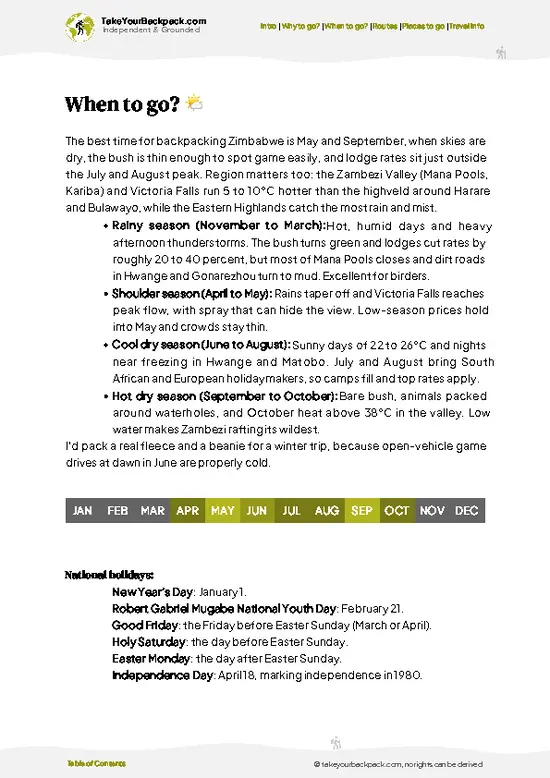
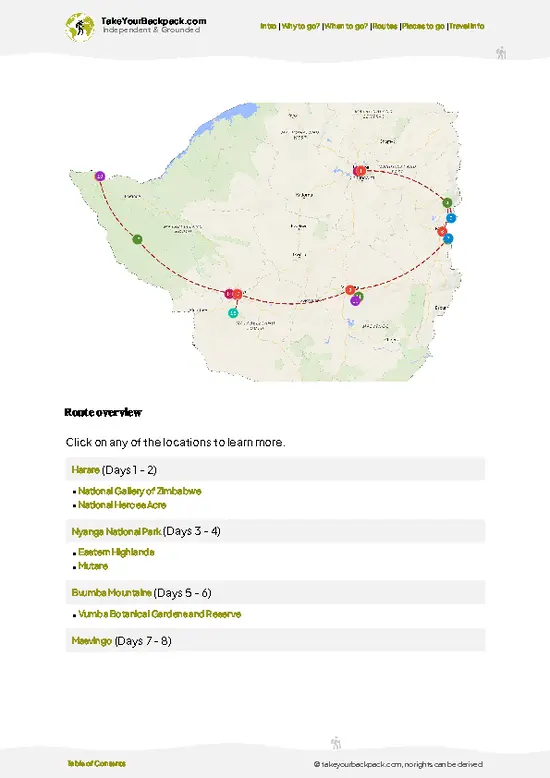
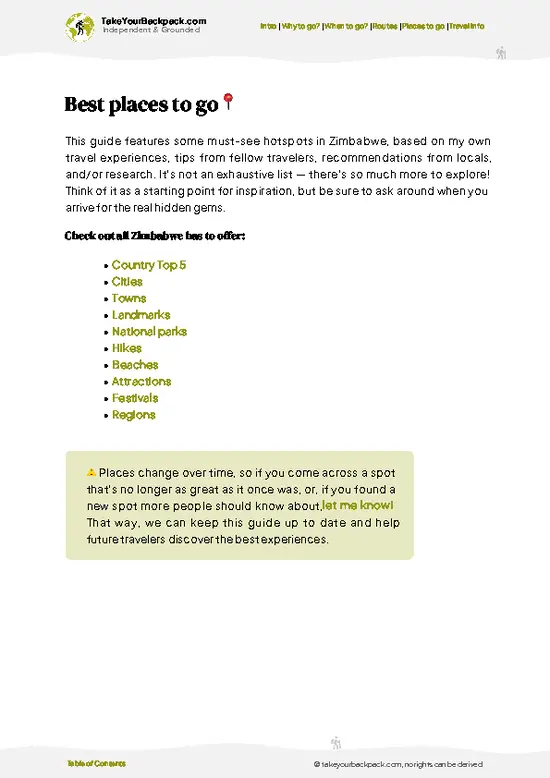
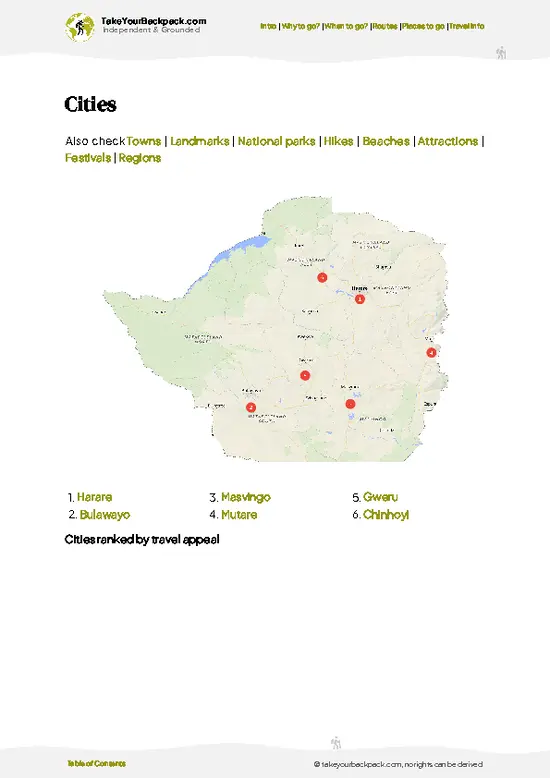
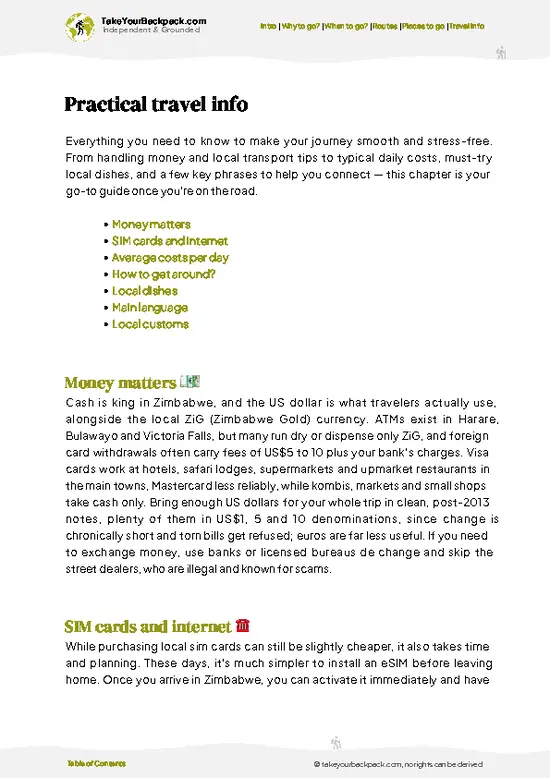
example page 0 from our offline Travel Guide for Zimbabwe
example page 1 from our offline Travel Guide for Zimbabwe
example page 2 from our offline Travel Guide for Zimbabwe
example page 3 from our offline Travel Guide for Zimbabwe
example page 4 from our offline Travel Guide for Zimbabwe
example page 5 from our offline Travel Guide for Zimbabwe
example page 6 from our offline Travel Guide for Zimbabwe
example page 7 from our offline Travel Guide for Zimbabwe
Loading the map 🌍
CLICK TO FILTER
cities
towns
landmarks
national parks
hikes
beaches
attractions
festivals
regions
SHOW COUNTRY’S BESTSHOW ALL

✨ Why go?
Ranked #1 beach in Zimbabwe
What makes this beach worth visiting

Bumi Hills Beach earns its stop because it puts you on the edge of Matusadona National Park without the crowds of Zimbabwe’s bigger parks. Wildlife walks to you here. Elephants wade the shallows, fish eagles call over the water, and the flooded mopane stumps poke out like a ghost forest, which is a photographer’s dream with a bit of patience.

The lake is the second draw. Anglers come for tigerfish, and even if you never cast a line, a boat is how you reach the best views, so water access here means wildlife access. Bring a camera, binoculars and a taste for quiet.

The third reason is route logic. Bumi Hills sits on the quieter southern shore of Lake Kariba, so it works as a deliberate detour from the usual Kariba town loop, a few days of real remoteness before you head back toward the Zambezi … read more 👉
Bumi Hills Beach earns its stop because it puts you on the edge of Matusadona National Park without the crowds of Zimbabwe’s bigger parks. Wildlife walks to you here. Elephants wade the shallows, fish eagles call over the water, and the flooded mopane stumps poke out like a ghost forest, which is a photographer’s dream with a bit of patience.

The lake is the second draw. Anglers come for tigerfish, and even if you never cast a line, a boat is how you reach the best views, so water access here means wildlife access. Bring a camera, binoculars and a taste for quiet.

The third reason is route logic. Bumi Hills sits on the quieter southern shore of Lake Kariba, so it works as a deliberate detour from the usual Kariba town loop, a few days of real remoteness before you head back toward the Zambezi Valley or the highway south. Budget travelers should know this is not a hostel-and-hammock beach. People come to spend a small chunk of the trip on one rare, wild stretch of shoreline, and then they move on.

💡 HighlightsMust-see experiences and standout moments

  1. Shoreline wildlife watching: The lakeshore grass is the main event. Herds of elephant and buffalo graze down to the water, hippos haul out near the bank, and waterbirds work the shallows. Sit still with binoculars and let the animals set the pace. You get a front-row seat without needing to chase anything.
  2. Tigerfishing on Lake Kariba: This is the fish that put Kariba on the angling map, a hard-fighting predator with serious teeth. Guides run boats to the drop-offs and the flooded timber where tigerfish ambush bait. Beginners can try with a guide, and experienced anglers get proper sport. Catch-and-release is common, so the fun is in the fight.
  3. Boat cruise through the drowned forest: Out on the water the skeleton trees of the flooded valley stand in rows, with cormorants and fish eagles perched
… read more 👉
  1. Shoreline wildlife watching: The lakeshore grass is the main event. Herds of elephant and buffalo graze down to the water, hippos haul out near the bank, and waterbirds work the shallows. Sit still with binoculars and let the animals set the pace. You get a front-row seat without needing to chase anything.
  2. Tigerfishing on Lake Kariba: This is the fish that put Kariba on the angling map, a hard-fighting predator with serious teeth. Guides run boats to the drop-offs and the flooded timber where tigerfish ambush bait. Beginners can try with a guide, and experienced anglers get proper sport. Catch-and-release is common, so the fun is in the fight.
  3. Boat cruise through the drowned forest: Out on the water the skeleton trees of the flooded valley stand in rows, with cormorants and fish eagles perched on them. The boat gets you close to elephants bathing along the shore, and the light on the water at the end of the day makes the best photographs of the trip. Keep your hands inside the boat near hippos.
  4. Guided walks and drives in Matusadona National Park: The park borders the lake and reaches back into hills and mopane woodland. A guide can take you on foot where the terrain allows, which is the way to read tracks, dung and bird calls. Lion, buffalo and elephant are the big names, and black rhino live in the park too, though they are rarely seen.
  5. Bumi Hills viewpoint and night sky: The high ground above the shoreline gives a wide view over the water and the Matusadona escarpment. After dark, with little light pollution, the stars are thick overhead, and the night soundtrack is hippo grunts, frogs and the odd distant lion. Stay near camp and use a guide or escort when moving around in the dark.
Bumi Hills Beach works best over two or three days, with one day on the water, one on the park, and spare hours for sitting on the bank.
Spotted a mistake or missing something? Contact us.

🌤️ When to go?Choosing the right time of year

  • Cool Dry Season (May to August): Days reach 26 to 29°C (79 to 84°F) and nights fall to 12 to 16°C (54 to 61°F). Daylight lasts about 11 hours. Game drives and boat trips are comfortable, and the shoreline draws elephants and buffalo.
  • Hot Season (September to October): Temperatures hit 35 to 40°C (95 to 104°F). The shrinking bush brings the most wildlife to the water. You will want the lake for swimming, though shade is scarce.
  • Rainy Season (November to March): Expect 24 to 34°C (75 to 93°F), humid air and afternoon storms. Roads toward the shore can turn to mud. Daylight stretches to about 13 hours, lodges cut rates, and fewer visitors share the shoreline.
  • Peak Crowds and Prices: July to October is busiest. Fishing around Kariba tends to be strongest in the warmer months, and tigerfish tournaments
… read more 👉
  • Cool Dry Season (May to August): Days reach 26 to 29°C (79 to 84°F) and nights fall to 12 to 16°C (54 to 61°F). Daylight lasts about 11 hours. Game drives and boat trips are comfortable, and the shoreline draws elephants and buffalo.
  • Hot Season (September to October): Temperatures hit 35 to 40°C (95 to 104°F). The shrinking bush brings the most wildlife to the water. You will want the lake for swimming, though shade is scarce.
  • Rainy Season (November to March): Expect 24 to 34°C (75 to 93°F), humid air and afternoon storms. Roads toward the shore can turn to mud. Daylight stretches to about 13 hours, lodges cut rates, and fewer visitors share the shoreline.
  • Peak Crowds and Prices: July to October is busiest. Fishing around Kariba tends to be strongest in the warmer months, and tigerfish tournaments fill local accommodation.
Arrive in May or early June, when the bush is still green and rates have not yet climbed.


source: climatestotravel.comJANJanuary: fair for travelingFEBFebruary: fair for travelingMARMarch: fair for travelingAPRApril: fair for travelingMAYMay: highly recommended for travelingJUNJune: highly recommended for travelingJULJuly: highly recommended for travelingAUGAugust: highly recommended for travelingSEPSeptember: highly recommended for travelingOCTOctober: good for travelingNOVNovember: below average for travelingDECDecember: below average for traveling
when-to-go

✈️ The backpacker research shortcutZimbabwe Travel Guide

An offline-friendly backpacking guide with optimized travel routes, ranked highlights, transport advice, and the best areas to stay.
example page 0 from our offline Travel Guide for Zimbabwe
example page 1 from our offline Travel Guide for Zimbabwe
example page 2 from our offline Travel Guide for Zimbabwe
example page 3 from our offline Travel Guide for Zimbabwe
example page 4 from our offline Travel Guide for Zimbabwe
example page 5 from our offline Travel Guide for Zimbabwe
example page 6 from our offline Travel Guide for Zimbabwe
example page 7 from our offline Travel Guide for Zimbabwe
The digital guide (265 pages) contains:
✅ 67 highlights, ranked by travel appeal
✅ Optimized 5, 10 & 15-day travel routes
✅ Cities, national parks, landmarks, beaches
✅ How to get around
✅ Offline-friendly for travel without Wi-Fi
👉 Click to see all 30+ guide features

📅 Plan smarter in minutes, not weeks
✅ Month by month travel advice
✅ Festivals & national holidays
✅ Budget expectations

🗺️ Go to the right places, skip the overrated ones
✅ Honest pros & cons of destinations
✅ Top hikes, parks & viewpoints
✅ Lesser-known places most travelers miss
✅ Clear “worth it vs skip it” guidance

🛏️ Travel smoothly without rookie mistakes
✅ Best areas to stay
✅ Transport systems explained simply
✅ Common scams & safety advice
✅ SIM cards, money & practical tips

🌍 Understand the country, not just visit it
✅ Culture & traditions
✅ 52 Essential phrases & customs
✅ Festivals worth planning around
✅ Traveler-friendly historical context
✅ Insights that make places more meaningful

📱 Built for real travel conditions
✅ Fully downloadable PDF
✅ Works completely offline
✅ Optimized for phone use
✅ Useful in remote areas & buses
✅ Everything in one place
Stop searching, start planning
Get instant access to your full guide. 30‑day money-back guarantee.
+ Add another guide for just

By proceeding you agree to our terms.
Sent to your inbox immediately after payment • 100% Secure Checkout
Best Backpacking Travel Advisor 2025 tourism awardBest Backpacking
Travel Advisor
2025
What others say about Take Your Backpack Guides:
⭐⭐⭐⭐⭐
Fantastic, amazing amount of information!
⭐⭐⭐⭐⭐
My goodness this is amazing, it's what I've been looking for hats off too you!
⭐⭐⭐⭐⭐
I think this is absolutely BRILLIANT
⭐⭐⭐⭐
Very complete and informative. It's still missing places, but I gotta to commend you
⭐⭐⭐⭐⭐
This is truly amazing, thank you, can't wait to explore it with my kids!
⭐⭐⭐⭐⭐
Awesome resource, thank you!
⭐⭐⭐⭐⭐
This is amazing! Can't wait to explore the ones I haven't seen
⭐⭐⭐⭐
I love this! Well done, great idea.
⭐⭐⭐⭐⭐
Thanks for taking the time to make this gem!
⭐⭐⭐⭐⭐
This might be the best website I've ever seen.
⭐⭐⭐⭐⭐
Congratulations, and thank you so much for your work; it's incredibly valuable.
⭐⭐⭐⭐
In all seriousness I think you did a great job pointing out the important spots
⭐⭐⭐⭐⭐
10/10 very good
⭐⭐⭐⭐⭐
As someone who's only just starting to visit regularly this is awesome, thank you.
⭐⭐⭐⭐
Thank you very much! I'm going to visit my dad, it's going to be very useful!
⭐⭐⭐⭐⭐
This is really cool! We'll be travelling for the first time and this definitely come in handy.
⭐⭐⭐⭐⭐
You are now our minister of culture, congratulations 👨‍💼
⭐⭐⭐⭐⭐
Just wanted to tell you that this is a pearl! Going to follow your recommendations.
⭐⭐⭐⭐⭐
This is so cool. I'll definitely be using the resource for my travels soon.
⭐⭐⭐⭐⭐
This is very impressive! Good work.
⭐⭐⭐⭐⭐
This is an amazing and informative site. Very well done!

🛏️ Where to stay?Where staying makes the most sense

Kariba town, about 70 km by road and boat from Bumi Hills Beach, is where backpackers realistically sleep. The Bumi Hills peninsula itself is dominated by a few high-end safari lodges on the escarpment above the lake, and there is no real budget scene on the shore. Plan on making Kariba your base and treating Bumi as a trip out.

The Kariba Heights area, on the hill above town, has the best mix of cooler air, lake views and a mix of guesthouses and budget lodging. It is quiet, but you can walk to a few shops and restaurants, and shared transfers and boat bookings are easy to arrange from here. … read more 👉
Kariba town, about 70 km by road and boat from Bumi Hills Beach, is where backpackers realistically sleep. The Bumi Hills peninsula itself is dominated by a few high-end safari lodges on the escarpment above the lake, and there is no real budget scene on the shore. Plan on making Kariba your base and treating Bumi as a trip out.

The Kariba Heights area, on the hill above town, has the best mix of cooler air, lake views and a mix of guesthouses and budget lodging. It is quiet, but you can walk to a few shops and restaurants, and shared transfers and boat bookings are easy to arrange from here.

The harbor area around Andora and the Kariba waterfront is where fishing operators, houseboat agents and day-cruise sellers are concentrated. Staying close means you can compare boat prices in person and meet other travelers waiting for the same trips. It is also the easiest place to organize transport toward Matusadona and Bumi.

Mica Point and the lakeshore camps near town suit people with a tent or a hired vehicle. Pitches are cheap, usually around US$10 to 20 per person, and the lakefront sunsets are the draw. Expect a sociable crowd of overlanders and Zimbabwean weekenders rather than a party hostel scene.

If you want to sleep close to Bumi itself, booking a shared boat-in camping trip into Matusadona National Park is the most affordable route.

🛡️ SafetyTraveler Safety Guide

Swimming at Bumi Hills Beach is the main thing to think carefully about, because this is the shore of Lake Kariba and not a managed resort beach. Crocodiles and hippos live along the water, and both are more active around dawn, dusk and at night. Locals and lodge guides tend not to swim from open shoreline, and I would follow their lead: if you want a dip, use a lodge pool or a designated swimming spot and ask staff first. There are no rips or tides, but afternoon winds can whip up short, steep waves for small boats.

Bilharzia is present in many Zimbabwean lakes, so avoid wading in reedy, shallow water. Elephants and buffalo often walk the shoreline, so keep your distance and stay on foot only with a guide. The sun is fierce from September to November, so carry a hat, plenty of water and … read more 👉
Swimming at Bumi Hills Beach is the main thing to think carefully about, because this is the shore of Lake Kariba and not a managed resort beach. Crocodiles and hippos live along the water, and both are more active around dawn, dusk and at night. Locals and lodge guides tend not to swim from open shoreline, and I would follow their lead: if you want a dip, use a lodge pool or a designated swimming spot and ask staff first. There are no rips or tides, but afternoon winds can whip up short, steep waves for small boats.

Bilharzia is present in many Zimbabwean lakes, so avoid wading in reedy, shallow water. Elephants and buffalo often walk the shoreline, so keep your distance and stay on foot only with a guide. The sun is fierce from September to November, so carry a hat, plenty of water and strong sunscreen. Theft is rare, but keep valuables out of sight in vehicles and boats.

FAQFrequently asked questions about Bumi Hills Beach

Bumi Hills Beach is reached from Kariba town, which is roughly 365 km and 4 to 5 hours by road from Harare, with buses and shared minibuses costing about US$15 to 25. From Kariba, most visitors take a lodge boat transfer of 2 to 3 hours across the lake, or a 4x4 over a rough gravel road in the dry season. Small charter flights to the Bumi airstrip also run from Kariba and Harare.
Bumi Hills Beach is better for boating, fishing and wildlife watching than swimming, surfing or snorkeling. Crocodiles and hippos live along the Lake Kariba shore, so most people swim only in lodge pools, and there are no surf waves. Tigerfishing trips cost roughly US$50 to 150 per person, and boat safaris along the nearby Matusadona coast are the best way to see elephants and buffalo at the water.
Bumi Hills Beach has no ticket booth, but the shoreline lies on lodge and conservation land, so access usually means booking a lodge stay, a day visit or a guided boat trip. Matusadona National Park, next door, charges foreign visitors roughly US$15 to 20 per day plus vehicle fees. Day visits to lodges commonly cost about US$30 to 80 including a meal, so ask when you book.
⚠️ Things can change over time, so always validate details locally before you go.

Other Zimbabwean beaches near Bumi Hills Beach

Explore more nearby:

  • Chivero Beach—Harare weekend braai, fish eagles, granite kopjes, viewing beach| 287 km away
  • Mutirikwi Beach—Calm shallows, Kyle park, bass and bream, Great Zimbabwe nearby| 470 km away

💡 Not sure where to go next?
Create a personalized itinerary for Zimbabwe including Bumi Hills Beach and the places that fit your trip.

Generate my itinerary

👉 Discover all beaches

Or checkout all Zimbabwe has to offer (think cities, towns, villages, national parks, hikes, beaches, festivals)
Country photo of Zimbabwe

We 💚 feedbackParting advice and final tips

Bumi Hills Beach is a remote lake edge made for wildlife, not sunbathing, and I would give it two or three nights rather than squeeze it into a day. Pair it with a few days in Kariba town before it and Mana Pools afterward, so the trip moves from lake to river wilderness. Bring binoculars, a good hat and patience for slow mornings.

✈️ When did I visit Zimbabwe?
I have backpacked Zimbabwe all the way back in 2001.

✍️ Help improve this page!
The information on this page is based on my own backpacking experience in Zimbabwe, supplemented with up-to-date research and feedback from other travelers. Travel details can change, so if you notice anything outdated or incomplete, feel free to let me know.


🙋‍♂️ Give feedback

👋 Meet the founderWho’s Behind Take Your Backpack?

Johan, backpacker and founder of TakeYourBackpackHi, I’m Johan (Netherlands 🇳🇱), the creator of TakeYourBackpack. Over the past 3 decades, I’ve backpacked through 90+ countries across six continents, gaining extensive experience with independent travel, long-term trips, and overland routes.

This site is built on a combination of firsthand travel experience and carefully curated insights from other backpackers. Many guides are based on places I’ve personally visited, while others bring together tips, observations, and practical advice shared by trusted travelers I’ve met along the way.

The goal is to provide realistic, experience-driven guidance — not generic itineraries — so you can explore destinations with better context, clearer expectations, and more confidence.