

×

Zimbabwe🇿🇼 | attractionsEpworth Balancing RocksBanknote boulders, granite domes, stone corridors, community guides | things to do and best time to go

Explore National Heroes AcreExplore Chiremba Balancing Rocks

Backpacking in Epworth Balancing Rocks
🌟 Highlightattraction ranked #7
By Johan Kruseman 🇳🇱 | Updated October 22, 2026

Epworth Balancing Rocks is free to walk around, so you can wander the boulders without a ticket and without a guide queue. The rocks sit in Epworth, a suburb southeast of Harare, in Zimbabwe’s capital region. Go with a local guide from the settlement, because the paths weave between houses and nobody posts signs, and a guide knows which gaps lead to the best stacks. I tucked a few small coins into my pocket for the kids who point the way, and it turned a confusing maze into a quick scramble. Climb the low granite domes, hunt for the angles that make a boulder look ready to topple, and keep moving. The last stack I reached held a flat slab perched on a single rounded stone no wider than a dinner plate.

Discover everything you want to know in the 📖 Zimbabwe Travel Guide.


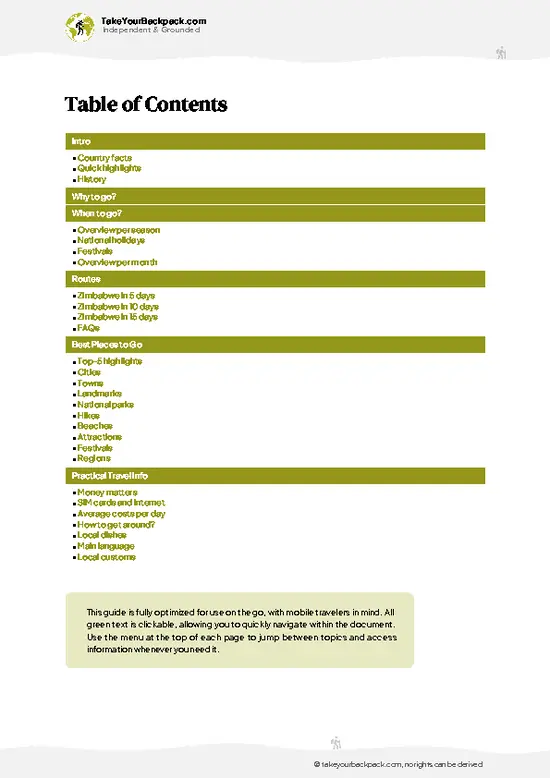
example page 0 from our offline Travel Guide for Zimbabwe
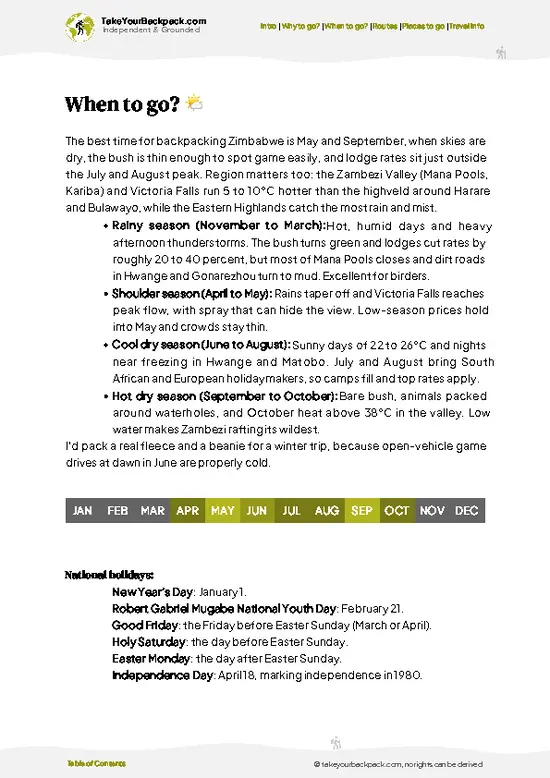
example page 1 from our offline Travel Guide for Zimbabwe
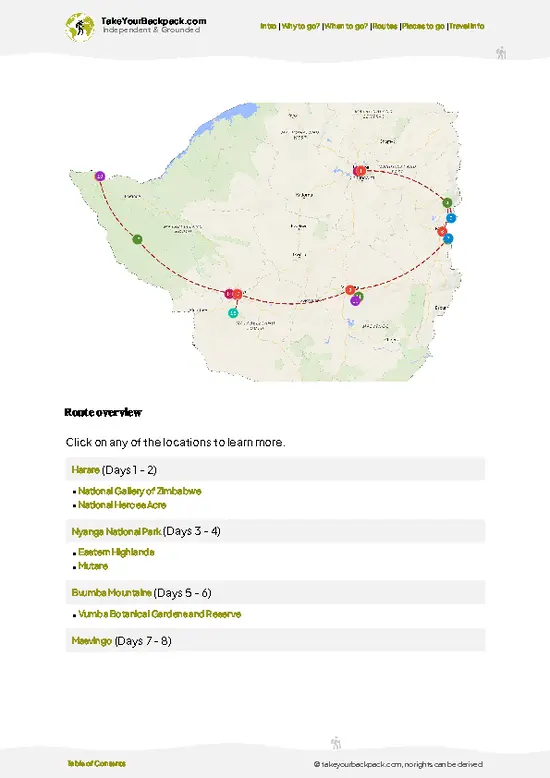
example page 2 from our offline Travel Guide for Zimbabwe
example page 3 from our offline Travel Guide for Zimbabwe
example page 4 from our offline Travel Guide for Zimbabwe
example page 5 from our offline Travel Guide for Zimbabwe
example page 6 from our offline Travel Guide for Zimbabwe
example page 7 from our offline Travel Guide for Zimbabwe
Loading the map 🌍
CLICK TO FILTER
cities
towns
landmarks
national parks
hikes
beaches
attractions
festivals
regions
SHOW COUNTRY’S BESTSHOW ALL

✨ Why go?
Ranked #7 attraction in Zimbabwe
What makes it a must-see attraction

Epworth Balancing Rocks is the most photographed granite formation near Harare, and it is the one that ended up on the Zimbabwean banknote. Seeing the real thing beside the printed version is a small thrill for anyone who has handled local cash. The rocks are also a quick, cheap break from the city. Granite boulders balance in stacks that seem to defy gravity, shaped by millions of years of weathering that stripped away the softer surrounding rock.

The setting matters too. The formations rise out of a living suburb, so you see washing lines, small gardens and church groups next to the stones, which gives a truer picture of everyday Harare than most sights. If you are passing through the capital with a spare half day, this is an easy way to touch the country’s landscape without a long journey. … read more 👉
Epworth Balancing Rocks is the most photographed granite formation near Harare, and it is the one that ended up on the Zimbabwean banknote. Seeing the real thing beside the printed version is a small thrill for anyone who has handled local cash. The rocks are also a quick, cheap break from the city. Granite boulders balance in stacks that seem to defy gravity, shaped by millions of years of weathering that stripped away the softer surrounding rock.

The setting matters too. The formations rise out of a living suburb, so you see washing lines, small gardens and church groups next to the stones, which gives a truer picture of everyday Harare than most sights. If you are passing through the capital with a spare half day, this is an easy way to touch the country’s landscape without a long journey. Climb, photograph, then chat with your guide about the stories tied to the boulders.

💡 HighlightsMust-see experiences and standout moments

  1. The Banknote Stacks: The balanced boulders that appeared on the old Zimbabwean currency are the reason most people come. Look for the slab resting on a narrow pedestal and compare it with the note in your wallet.
  2. The Tallest Balanced Tower: A pile of rounded boulders stacked three or four high, with a small contact point that looks impossible. Walk a full circle, because the silhouette changes from every side.
  3. Granite Dome Scramble: Low, smooth domes let you climb up for views over the rooftops of Epworth and toward the Harare skyline. Wear shoes with grip, as the rock is slick when damp.
  4. Sunset Ridge Viewpoint: A broad flat boulder gives a clear outlook over the stacks, ideal for wide photos with the rocks in the foreground.
  5. Narrow Boulder Passages: Gaps between huge rounded stones form short
… read more 👉
  1. The Banknote Stacks: The balanced boulders that appeared on the old Zimbabwean currency are the reason most people come. Look for the slab resting on a narrow pedestal and compare it with the note in your wallet.
  2. The Tallest Balanced Tower: A pile of rounded boulders stacked three or four high, with a small contact point that looks impossible. Walk a full circle, because the silhouette changes from every side.
  3. Granite Dome Scramble: Low, smooth domes let you climb up for views over the rooftops of Epworth and toward the Harare skyline. Wear shoes with grip, as the rock is slick when damp.
  4. Sunset Ridge Viewpoint: A broad flat boulder gives a clear outlook over the stacks, ideal for wide photos with the rocks in the foreground.
  5. Narrow Boulder Passages: Gaps between huge rounded stones form short natural corridors. They are fun to squeeze through and show how the formations were once a single mass.
  6. Local Guide Storytelling: Guides from the community explain the spiritual meaning of certain rocks and point out shapes that resemble animals or faces. It adds character you would never get alone.
  7. Epworth Community Life: Houses, small shops and children playing sit right beside the formations. A slow walk through the lanes shows how residents live with the stones.
Epworth Balancing Rocks starts best at the banknote stacks, because the guides usually head there first and the light is good for your opening photos before you scatter onto the domes.
Spotted a mistake or missing something? Contact us.

Things to do near Epworth Balancing Rocks

Ratings based on Tripadvisor reviews. When you book through this link, you support our work at no extra cost to you.

🌤️ When to go?Weather, crowds, and seasonal trade-offs

  • Cool Dry Season (May to August): Days reach 20 to 25°C (68 to 77°F) and nights drop to 6 to 10°C (43 to 50°F). Rock surfaces are dry, the grass turns golden and photos come out crisp. This is the busiest stretch, with school groups and weekend picnickers.
  • Hot Dry Season (September to October): Afternoons climb to 28 to 32°C (82 to 90°F) with almost no shade among the boulders. Visit early and the walk is pleasant. Crowds thin out.
  • Rainy Season (November to March): Expect 24 to 28°C (75 to 82°F), afternoon storms and slippery granite. The surrounding grass is green and the light is soft. Daylight stretches longest here, about 13 hours in December.
  • Shoulder Months (April): Rains fade, temperatures ease to the mid-20s°C (high 70s°F) and the site is quiet.
Entry prices stay the same all year, so aim … read more 👉
  • Cool Dry Season (May to August): Days reach 20 to 25°C (68 to 77°F) and nights drop to 6 to 10°C (43 to 50°F). Rock surfaces are dry, the grass turns golden and photos come out crisp. This is the busiest stretch, with school groups and weekend picnickers.
  • Hot Dry Season (September to October): Afternoons climb to 28 to 32°C (82 to 90°F) with almost no shade among the boulders. Visit early and the walk is pleasant. Crowds thin out.
  • Rainy Season (November to March): Expect 24 to 28°C (75 to 82°F), afternoon storms and slippery granite. The surrounding grass is green and the light is soft. Daylight stretches longest here, about 13 hours in December.
  • Shoulder Months (April): Rains fade, temperatures ease to the mid-20s°C (high 70s°F) and the site is quiet.
Entry prices stay the same all year, so aim for a weekday in May or September to have the rocks nearly to yourself.


source: climatestotravel.comJANJanuary: below average for travelingFEBFebruary: below average for travelingMARMarch: fair for travelingAPRApril: fair for travelingMAYMay: highly recommended for travelingJUNJune: excellent for travelingJULJuly: excellent for travelingAUGAugust: excellent for travelingSEPSeptember: highly recommended for travelingOCTOctober: fair for travelingNOVNovember: below average for travelingDECDecember: below average for traveling
when-to-go

✈️ The backpacker research shortcutZimbabwe Travel Guide

An offline-friendly backpacking guide with optimized travel routes, ranked highlights, transport advice, and the best areas to stay.
example page 0 from our offline Travel Guide for Zimbabwe
example page 1 from our offline Travel Guide for Zimbabwe
example page 2 from our offline Travel Guide for Zimbabwe
example page 3 from our offline Travel Guide for Zimbabwe
example page 4 from our offline Travel Guide for Zimbabwe
example page 5 from our offline Travel Guide for Zimbabwe
example page 6 from our offline Travel Guide for Zimbabwe
example page 7 from our offline Travel Guide for Zimbabwe
The digital guide (265 pages) contains:
✅ 67 highlights, ranked by travel appeal
✅ Optimized 5, 10 & 15-day travel routes
✅ Cities, national parks, landmarks, beaches
✅ How to get around
✅ Offline-friendly for travel without Wi-Fi
👉 Click to see all 30+ guide features

📅 Plan smarter in minutes, not weeks
✅ Month by month travel advice
✅ Festivals & national holidays
✅ Budget expectations

🗺️ Go to the right places, skip the overrated ones
✅ Honest pros & cons of destinations
✅ Top hikes, parks & viewpoints
✅ Lesser-known places most travelers miss
✅ Clear “worth it vs skip it” guidance

🛏️ Travel smoothly without rookie mistakes
✅ Best areas to stay
✅ Transport systems explained simply
✅ Common scams & safety advice
✅ SIM cards, money & practical tips

🌍 Understand the country, not just visit it
✅ Culture & traditions
✅ 52 Essential phrases & customs
✅ Festivals worth planning around
✅ Traveler-friendly historical context
✅ Insights that make places more meaningful

📱 Built for real travel conditions
✅ Fully downloadable PDF
✅ Works completely offline
✅ Optimized for phone use
✅ Useful in remote areas & buses
✅ Everything in one place
Stop searching, start planning
Get instant access to your full guide. 30‑day money-back guarantee.
+ Add another guide for just

By proceeding you agree to our terms.
Sent to your inbox immediately after payment • 100% Secure Checkout
Best Backpacking Travel Advisor 2025 tourism awardBest Backpacking
Travel Advisor
2025
What others say about Take Your Backpack Guides:
⭐⭐⭐⭐⭐
Fantastic, amazing amount of information!
⭐⭐⭐⭐⭐
My goodness this is amazing, it's what I've been looking for hats off too you!
⭐⭐⭐⭐⭐
I think this is absolutely BRILLIANT
⭐⭐⭐⭐
Very complete and informative. It's still missing places, but I gotta to commend you
⭐⭐⭐⭐⭐
This is truly amazing, thank you, can't wait to explore it with my kids!
⭐⭐⭐⭐⭐
Awesome resource, thank you!
⭐⭐⭐⭐⭐
This is amazing! Can't wait to explore the ones I haven't seen
⭐⭐⭐⭐
I love this! Well done, great idea.
⭐⭐⭐⭐⭐
Thanks for taking the time to make this gem!
⭐⭐⭐⭐⭐
This might be the best website I've ever seen.
⭐⭐⭐⭐⭐
Congratulations, and thank you so much for your work; it's incredibly valuable.
⭐⭐⭐⭐
In all seriousness I think you did a great job pointing out the important spots
⭐⭐⭐⭐⭐
10/10 very good
⭐⭐⭐⭐⭐
As someone who's only just starting to visit regularly this is awesome, thank you.
⭐⭐⭐⭐
Thank you very much! I'm going to visit my dad, it's going to be very useful!
⭐⭐⭐⭐⭐
This is really cool! We'll be travelling for the first time and this definitely come in handy.
⭐⭐⭐⭐⭐
You are now our minister of culture, congratulations 👨‍💼
⭐⭐⭐⭐⭐
Just wanted to tell you that this is a pearl! Going to follow your recommendations.
⭐⭐⭐⭐⭐
This is so cool. I'll definitely be using the resource for my travels soon.
⭐⭐⭐⭐⭐
This is very impressive! Good work.
⭐⭐⭐⭐⭐
This is an amazing and informative site. Very well done!

🛏️ Where to stay?Choosing the right base

Stay in Harare, not at Epworth Balancing Rocks itself, since the site lies about 12 km southeast of the city center and sits inside a densely populated suburb. Harare’s best backpacker bases are Avondale, Belgravia and Milton Park. Avondale is the most walkable, with cafes, a shopping center and plenty of restaurants, and it feels safe enough for evening strolls. Belgravia and Milton Park are quieter, leafy residential areas with guesthouses and small lodges, handy for solo travelers who want calm streets and easy taxi pickups. Social travelers will find the most hostel-style company and overland … read more 👉
Stay in Harare, not at Epworth Balancing Rocks itself, since the site lies about 12 km southeast of the city center and sits inside a densely populated suburb. Harare’s best backpacker bases are Avondale, Belgravia and Milton Park. Avondale is the most walkable, with cafes, a shopping center and plenty of restaurants, and it feels safe enough for evening strolls. Belgravia and Milton Park are quieter, leafy residential areas with guesthouses and small lodges, handy for solo travelers who want calm streets and easy taxi pickups. Social travelers will find the most hostel-style company and overland crowds in the northern suburbs, where shared kitchens and garden bars make it simple to split a taxi to the rocks. Rides from these areas take 25 to 40 minutes depending on traffic. Epworth has a few community-run guesthouses, but they are limited, so most visitors treat the site as a half-day trip from the capital. Book ahead from June to August, when overlanders fill beds.

👛 Costs (as of 22 October 2026)Travel costs and budget guide for Epworth Balancing Rocks

Epworth Balancing Rocks costs roughly US$37 to 60 per day for a backpacker based in Harare, with the entry fee itself being very small. Prices change with the exchange rate and many places quote in US dollars.
CategoryBudget RangeLocal Reality
Entry feeUS$2 to 5Paid at the gate to a caretaker; foreigners pay more than locals
Local guideUS$3 to 10Optional tip-based guide who explains the rock legends and points out the best angles
Transport (round trip)US$8 to 18Private taxi or ride-hailing from central Harare; minibuses are cheaper but crowded
Accommodation (low season)US$12 to 20Dorm bed or basic room in Harare
Accommodation (high season)US$15 to 25Prices rise from June to August with overlanders
FoodUS$6 to 12Sadza meals at local eateries cost less than cafe lunches
Drinks and snacksUS$1 to 3Water
… read more 👉
Epworth Balancing Rocks costs roughly US$37 to 60 per day for a backpacker based in Harare, with the entry fee itself being very small. Prices change with the exchange rate and many places quote in US dollars.
CategoryBudget RangeLocal Reality
Entry feeUS$2 to 5Paid at the gate to a caretaker; foreigners pay more than locals
Local guideUS$3 to 10Optional tip-based guide who explains the rock legends and points out the best angles
Transport (round trip)US$8 to 18Private taxi or ride-hailing from central Harare; minibuses are cheaper but crowded
Accommodation (low season)US$12 to 20Dorm bed or basic room in Harare
Accommodation (high season)US$15 to 25Prices rise from June to August with overlanders
FoodUS$6 to 12Sadza meals at local eateries cost less than cafe lunches
Drinks and snacksUS$1 to 3Water and soft drinks from roadside vendors
Total Daily BudgetUS$43Based on high-season accommodation and a taxi ride
⚠️ Prices can change and everyone travels differently, so take this as a rough guide. Hope it helps you plan your adventure!

FAQTraveler FAQ

Epworth Balancing Rocks needs only 1 to 2 hours on site, which is enough to walk among the formations and take photos. A half-day covers the round trip from Harare with a stop for a snack. Add another hour if you hire a local guide for the stories behind the rocks.
Epworth Balancing Rocks is worth the small entry fee of roughly US$2 to 5, especially with a guide at US$3 to 10. The granite stacks sit in odd, gravity-defying poses and the cost is far below most Zimbabwean attractions. It is a short visit, so combine it with other Harare sights for better value.
Epworth Balancing Rocks lies about 12 km southeast of central Harare, and a taxi or ride-hailing car takes 25 to 40 minutes for US$4 to 9 each way. Minibuses run toward Epworth from the city center for under US$1, but you will need a short walk or local ride at the end. Self-drivers can follow the Chiremba Road, and drivers should keep valuables out of sight.
⚠️ Things can change over time, so always validate details locally before you go.

Other Zimbabwean attractions near Epworth Balancing Rocks

Explore more nearby:


💡 Not sure where to go next?
Create a personalized itinerary for Zimbabwe including Epworth Balancing Rocks and the places that fit your trip.

Generate my itinerary

👉 Discover all attractions

Or checkout all Zimbabwe has to offer (think cities, towns, villages, national parks, hikes, beaches, festivals)
Country photo of Zimbabwe

We 💚 feedbackFinal thoughts on visiting Epworth Balancing Rocks

Epworth Balancing Rocks looks best from a distance most visitors never try. Walk to the edge of the stacks and view them against open sky, where the narrow contact points show clearly. I would hire a local guide, bring small change and keep the visit to a couple of relaxed hours.

✈️ When did I visit Zimbabwe?
I have backpacked Zimbabwe all the way back in 2001.

✍️ Help improve this page!
The information on this page is based on my own backpacking experience in Zimbabwe, supplemented with up-to-date research and feedback from other travelers. Travel details can change, so if you notice anything outdated or incomplete, feel free to let me know.


🙋‍♂️ Give feedback

👋 Meet the founderWho’s Behind Take Your Backpack?

Johan, backpacker and founder of TakeYourBackpackHi, I’m Johan (Netherlands 🇳🇱), the creator of TakeYourBackpack. Over the past 3 decades, I’ve backpacked through 90+ countries across six continents, gaining extensive experience with independent travel, long-term trips, and overland routes.

This site is built on a combination of firsthand travel experience and carefully curated insights from other backpackers. Many guides are based on places I’ve personally visited, while others bring together tips, observations, and practical advice shared by trusted travelers I’ve met along the way.

The goal is to provide realistic, experience-driven guidance — not generic itineraries — so you can explore destinations with better context, clearer expectations, and more confidence.