×

Zimbabwe🇿🇼 | best attractionsDiscover the 10 Best attractions Across Zimbabwe

Zimbabwe’s best attractions demand more than a checklist approach—they require a strategic balance of time, money, and comfort. From the thunderous roar of Victoria Falls in the east to the remote wilderness of Matobo Hills in the south, each region shapes your backpacking experience differently. Seasonal shifts, like the dry winter months, open up wildlife viewing but can tighten budgets as lodges fill. Independent travelers must weigh the trade-offs: opting for rugged safaris means embracing rough roads and basic camps, while guided tours offer ease at a higher cost. Your choice here directly influences safety, cultural immersion, and the vibe you carry through Zimbabwe’s diverse landscapes.

By Johan Kruseman 🇳🇱 | Updated June 5, 2026
Explore the best festivals in Zimbabwe

Why go?Understanding Their Importance

Zimbabwe’s attractions demand a clear-eyed approach to the trade-offs between time, money, and comfort. The country’s raw, expansive landscapes and rich cultural tapestry offer experiences that few places can match, but accessing them often requires patience and a willingness to embrace rugged conditions. Unlike destinations with polished infrastructure and seamless transport, Zimbabwe’s roads and services can slow your pace, turning travel time into part of the adventure rather than a mere inconvenience. This means you sacrifice speed and ease for depth and authenticity.

The geographic diversity—from savannah plains to dramatic escarpments—creates opportunities for immersive exploration, but it also means that reaching these environments can be physically demanding and logistically complex. … read more 👉
Zimbabwe’s attractions demand a clear-eyed approach to the trade-offs between time, money, and comfort. The country’s raw, expansive landscapes and rich cultural tapestry offer experiences that few places can match, but accessing them often requires patience and a willingness to embrace rugged conditions. Unlike destinations with polished infrastructure and seamless transport, Zimbabwe’s roads and services can slow your pace, turning travel time into part of the adventure rather than a mere inconvenience. This means you sacrifice speed and ease for depth and authenticity.

The geographic diversity—from savannah plains to dramatic escarpments—creates opportunities for immersive exploration, but it also means that reaching these environments can be physically demanding and logistically complex. Travelers must weigh the value of spending hours on bumpy roads against the payoff of encountering wildlife and communities largely untouched by mass tourism. Zimbabwe’s climate, with distinct wet and dry seasons, further shapes when and how comfortably you can explore, forcing choices between peak wildlife viewing and manageable weather conditions.

Culturally and historically, Zimbabwe offers profound insights into African heritage and resilience, but these experiences often require engaging with local guides and communities in less commercialized settings. This trade-off challenges visitors to forgo the polished comfort of tourist hubs in favor of meaningful, sometimes unpredictable encounters. In essence, Zimbabwe’s attractions reward those who accept slower rhythms and rougher edges, trading convenience for a richer, more grounded journey.
How the List Was Created
The list of best attractions in Zimbabwe is created based on cultural significance or entertainment value. If you feel a attraction is missing in this list, please let us know.

When to go?Optimal Periods for Travel

Timing Your Visit: Weather, Crowds, and Costs


Zimbabwe’s climate swings between two main seasons, shaping how you experience its attractions. The dry season delivers crisp, clear days and cooler nights, making it the prime window for wildlife spotting and outdoor adventures. Vegetation thins out, water sources shrink, and animals gather in predictable spots—perfect for those who want to see nature in action without battling mud or rain. This period also draws the biggest crowds, pushing up prices and booking competition.

The wet season flips the script. It brings lush landscapes, dramatic skies, and a burst of life as flora and fauna thrive. However, heavy rains can make some roads impassable and certain activities less accessible. Wildlife disperses widely, so spotting animals requires … read more 👉

Timing Your Visit: Weather, Crowds, and Costs


Zimbabwe’s climate swings between two main seasons, shaping how you experience its attractions. The dry season delivers crisp, clear days and cooler nights, making it the prime window for wildlife spotting and outdoor adventures. Vegetation thins out, water sources shrink, and animals gather in predictable spots—perfect for those who want to see nature in action without battling mud or rain. This period also draws the biggest crowds, pushing up prices and booking competition.

The wet season flips the script. It brings lush landscapes, dramatic skies, and a burst of life as flora and fauna thrive. However, heavy rains can make some roads impassable and certain activities less accessible. Wildlife disperses widely, so spotting animals requires more patience and luck. On the plus side, fewer tourists mean lower costs and a quieter, more intimate experience.

Shoulder seasons straddle these extremes, offering a middle ground. Early dry months might still carry some residual greenery and occasional showers, while late dry months edge toward the first rains. These transitional periods balance fewer crowds and moderate prices with variable weather and wildlife visibility.

Choosing when to visit Zimbabwe means weighing what matters most: the sharp clarity and predictability of dry months, the vibrant renewal of the wet season, or the compromise of shoulder periods. Each choice trades off comfort, cost, and the kind of adventure you want to chase.

attraction hoppingPlanning Your Route Efficiently

Mapping Your Route Through Zimbabwe’s Highlights

Zimbabwe’s attractions cluster into distinct regions, making a logical loop or linear path essential to avoid backtracking. Start by grouping sites geographically—Victoria Falls and Hwange National Park in the northwest, the Eastern Highlands in the east, and the cultural hubs around Harare centrally. This regional clustering slashes travel time and maximizes immersion.

Balancing Time and Depth

Allocate at least two full days per major stop to absorb the essence without rushing. Wildlife safaris demand patience; a single afternoon won’t reveal the full drama of Hwange’s ecosystem. Cultural and historical sites often reward a half-day to a full day, depending on interest. Pacing is key: too many stops in a short span dilute the experience, … read more 👉

Mapping Your Route Through Zimbabwe’s Highlights

Zimbabwe’s attractions cluster into distinct regions, making a logical loop or linear path essential to avoid backtracking. Start by grouping sites geographically—Victoria Falls and Hwange National Park in the northwest, the Eastern Highlands in the east, and the cultural hubs around Harare centrally. This regional clustering slashes travel time and maximizes immersion.

Balancing Time and Depth

Allocate at least two full days per major stop to absorb the essence without rushing. Wildlife safaris demand patience; a single afternoon won’t reveal the full drama of Hwange’s ecosystem. Cultural and historical sites often reward a half-day to a full day, depending on interest. Pacing is key: too many stops in a short span dilute the experience, while too few might leave you wondering if you missed something.

Common Pitfalls in Multi-Stop Planning

A frequent mistake is overloading the itinerary with distant attractions, forcing long drives that sap energy and cut into exploration time. Another is underestimating road conditions and transport logistics, which can turn a short hop into a day-long ordeal.

Trade-Offs: Speed, Comfort, and Budget

Choosing faster transport options like charter flights saves time but inflates costs. Overland travel offers budget relief but demands stamina and flexibility. Comfort often competes with authenticity; rustic lodges immerse you in nature but sacrifice some amenities. Prioritize what matters most—whether it’s squeezing in more sites or savoring fewer places deeply—and plan buffer days to absorb delays or spontaneous detours.

Strategic routing, realistic timing, and clear priorities transform Zimbabwe’s diverse attractions from a checklist into a cohesive, rewarding journey.

The ListThe Best attractions of Zimbabwe

1 Mosi-oa-Tunya / Victoria Falls Rainforest Viewing Area

mist forest, waterfall viewpoints, constant spray

Walk rainforest trails kept lush by the falls’ spray, pausing at platforms for close-up views of plunging water and rainbows.

2 Great Zimbabwe Monument

stone ruins, ancient city, UNESCO site

Climb through centuries-old walls and towers, exploring the remnants of a medieval civilization that shaped southern African history.

3 Matobo Hills Rock Art Sites (designated cultural sites

painted caves, granite kopjes, spiritual sites

View ancient rock paintings hidden in caves, surrounded by dramatic hills that have long served as sacred ground for local communities.

4 Khami Ruins National Monument

terraced stonework, riverbank site, archaeological remains

Wander among layered platforms and passageways, discovering the architectural legacy of a post-Great Zimbabwe kingdom.

5 Victoria Falls Bridge

steel arch, border crossing, bungee jump site

Walk or drive across a historic bridge spanning the Zambezi Gorge, with views of the falls and adrenaline activities nearby.

6 Chiremba Balancing Rocks

granite formations, geological oddities, Harare outskirts

Stand among massive, naturally balanced stones and observe the unique landscape that has become a national symbol and photographic subject.

7 Epworth Balancing Rocks

weathered boulders, sculpted landscapes, urban proximity

Walk through a maze of precariously stacked rocks shaped by erosion, offering panoramic views near the capital’s edge.

8 Bulawayo Railway Museum

steam locomotives, colonial-era carriages, railway memorabilia

Trace the evolution of Zimbabwe’s railways by viewing preserved engines, vintage carriages, and artifacts in a hands-on, open-air setting.

9 Natural History Museum of Zimbabwe

taxidermy displays, mineral collections, scientific exhibits

Survey Zimbabwe’s biodiversity and geology through detailed dioramas, fossil finds, and interactive educational displays.

12 Zimbabwe Museum of Human Sciences

archaeological finds, ethnographic displays, prehistoric artifacts

Explore human history in Zimbabwe through ancient tools, cultural objects, and exhibits tracing the region’s earliest inhabitants.

13 Nesbitt Castle

mock-medieval architecture, turreted mansion, garden grounds

Tour a quirky, castle-inspired residence set among manicured lawns, offering a glimpse of eccentric colonial-era design.

14 National Heroes Acre

monumental sculpture, national cemetery, panoramic hilltop

Reflect on Zimbabwe’s modern history at a memorial complex honoring liberation figures, with sweeping city views from the site.

15 Reps Theatre

live performances, community stage, intimate auditorium

Attend plays and musical events in a small venue known for its active local troupe and diverse seasonal programming.

Think you know Zimbabwe?

Prove you’re a true local — uncover 5 lesser-known attractions in Zimbabwe that locals tend to keep to themselves.
Loading the map 🌍

Expert viewInsights from Locals and Experts

Expert Commentary


Zimbabwe demands a clear-eyed approach to its attractions because the country’s vastness and varied infrastructure mean you can’t do it all without paying a price in time, money, or comfort. The sweet spot? Aim for three to five major experiences. This range lets you dive deep enough to feel the country’s pulse without burning out or stretching your resources too thin. Trying to cram more risks turning your trip into a checklist, losing the immersive quality that makes Zimbabwe’s offerings resonate.

Time is the first currency you’ll spend. Distances between key sites are often long and roads can be rough, especially outside main corridors. If you’re chasing efficiency, expect to dedicate several days just to transit between attractions. This isn’t a place for rapid-fire … read more 👉

Expert Commentary


Zimbabwe demands a clear-eyed approach to its attractions because the country’s vastness and varied infrastructure mean you can’t do it all without paying a price in time, money, or comfort. The sweet spot? Aim for three to five major experiences. This range lets you dive deep enough to feel the country’s pulse without burning out or stretching your resources too thin. Trying to cram more risks turning your trip into a checklist, losing the immersive quality that makes Zimbabwe’s offerings resonate.

Time is the first currency you’ll spend. Distances between key sites are often long and roads can be rough, especially outside main corridors. If you’re chasing efficiency, expect to dedicate several days just to transit between attractions. This isn’t a place for rapid-fire sightseeing. Instead, lean into the rhythm of slower travel—each journey segment is part of the adventure, revealing landscapes and local life that vanish from the window if you fly over them. The trade-off here is clear: fewer stops, more depth. If you want to hit more spots, you’ll sacrifice time on the ground and risk superficial encounters.

Money is the second lever, and it’s tightly linked to your comfort threshold. Zimbabwe offers a spectrum from budget camping and basic lodges to high-end safari camps. The catch is that the best wildlife experiences and natural wonders often come with a premium price tag, especially when factoring in park fees and guided tours. If you skimp too much, you might end up with logistical headaches or miss out on knowledgeable guides who transform a walk or game drive into a story-rich encounter. Conversely, splurging on luxury accommodations can smooth out travel discomfort but may isolate you from authentic local interactions. Balancing budget and comfort means deciding what kind of experience you want: rugged and raw, or polished and pampered.

Effort is the third dimension, and it’s where physical stamina and mental flexibility come into play. Zimbabwe’s attractions often require active participation—hiking, walking safaris, or enduring bumpy rides. This isn’t a country for passive sightseeing from a bus window. If your energy reserves are limited, prioritize fewer sites with more accessible terrain and infrastructure. On the other hand, pushing your limits can unlock moments that linger long after the trip ends. I’ve seen travelers who underestimated the effort and ended up frustrated, but those who embraced the challenge found a richer connection to the land and its stories.

Safety and cultural respect are non-negotiable factors shaping your itinerary. Zimbabwe is generally safe for travelers who stay alert and respect local customs, but infrastructure gaps mean you should avoid night travel on rural roads and always secure reliable transport. Understanding local etiquette—like greeting customs and dress codes—opens doors and smooths interactions. Ignoring these can cost you goodwill and diminish your experience. The trade-off here is between convenience and cultural immersion: the more you engage respectfully, the more rewarding your journey becomes, but it requires preparation and openness.

Planning your trip means weaving these threads together. Start by identifying what excites you most—wildlife, landscapes, cultural encounters—and then map out a realistic number of attractions that fit your time and budget. Factor in travel times and the effort each site demands. Don’t underestimate the value of downtime; Zimbabwe’s pace rewards those who pause to absorb rather than rush. Remember, the country’s charm often lies in the unexpected moments between destinations—the roadside chats, the sudden wildlife sightings, the quiet dawns.

In short, Zimbabwe’s best attractions are not a buffet to sample quickly but a curated menu to savor thoughtfully. Your choices will define the texture of your trip, so trade-offs aren’t just constraints—they’re the levers that shape an unforgettable journey.

✈️ The backpacker research shortcutZimbabwe Travel Guide

An offline-friendly backpacking guide with optimized travel routes, ranked highlights, transport advice, and the best areas to stay.
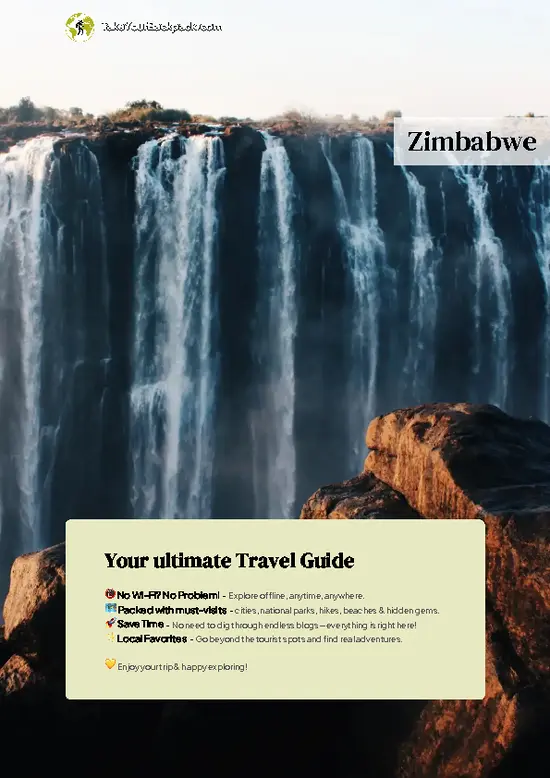
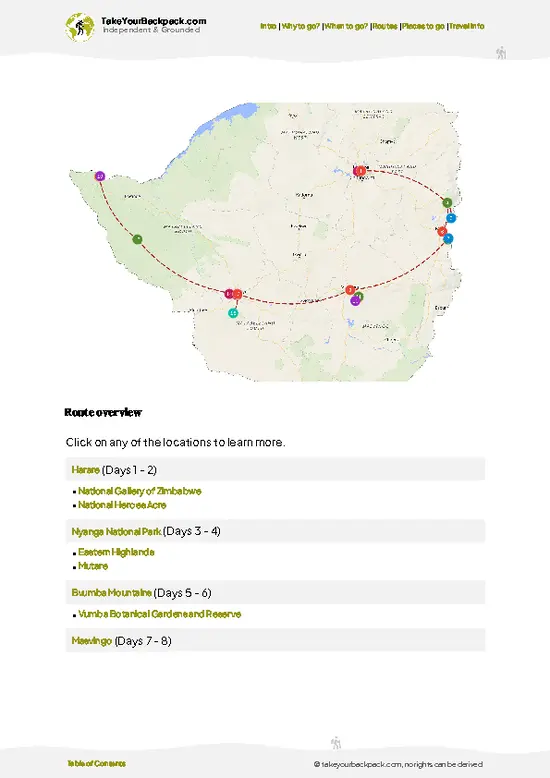
example page 0 from our offline Travel Guide for Zimbabwe
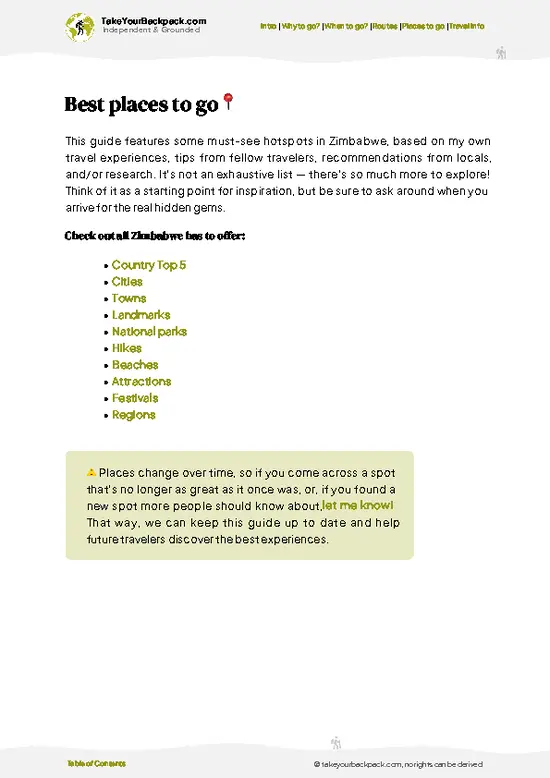
example page 1 from our offline Travel Guide for Zimbabwe
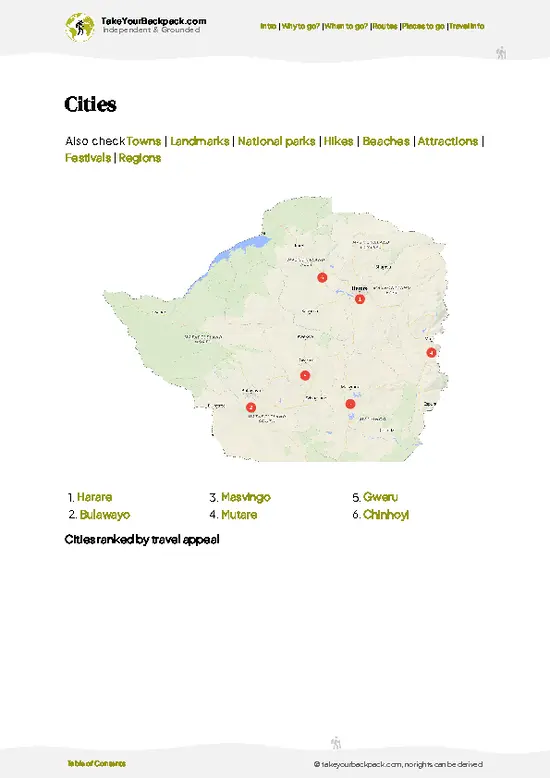
example page 2 from our offline Travel Guide for Zimbabwe
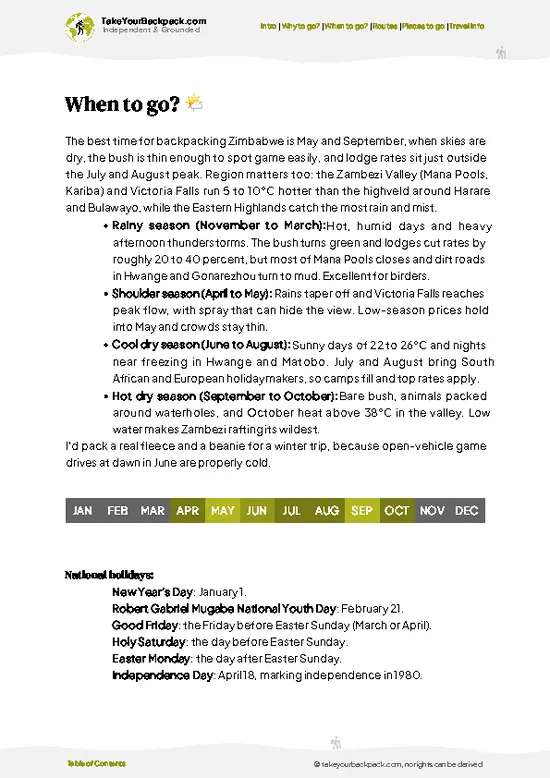
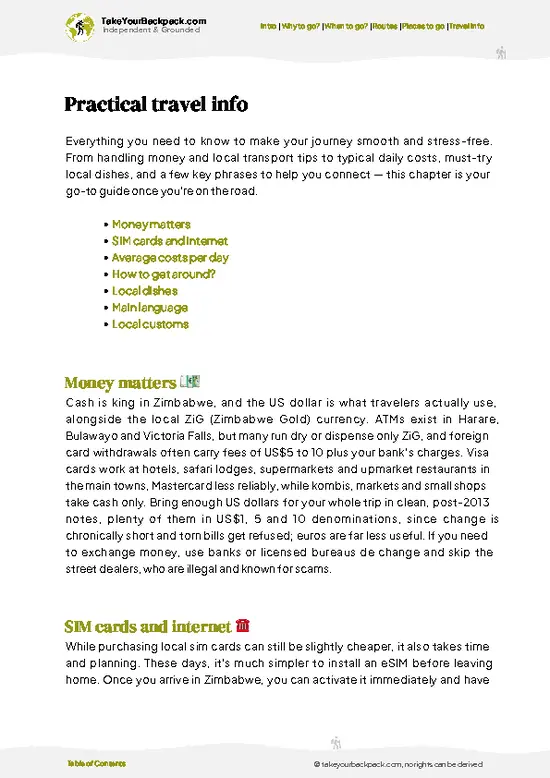
example page 3 from our offline Travel Guide for Zimbabwe
example page 4 from our offline Travel Guide for Zimbabwe
example page 5 from our offline Travel Guide for Zimbabwe
example page 6 from our offline Travel Guide for Zimbabwe
example page 7 from our offline Travel Guide for Zimbabwe
The digital guide (356 pages) contains:
90 highlights, ranked by travel appeal
Optimized 5, 10 & 15-day travel routes
Cities, national parks, landmarks, beaches
How to get around
Offline-friendly for travel without Wi-Fi
👉 Click to see all 30+ guide features

📅 Plan smarter in minutes, not weeks
Month by month travel advice
Festivals & national holidays
Budget expectations

🗺️ Go to the right places, skip the overrated ones
Honest pros & cons of destinations
Top hikes, parks & viewpoints
Lesser-known places most travelers miss
Clear “worth it vs skip it” guidance

🛏️ Travel smoothly without rookie mistakes
Best areas to stay
Transport systems explained simply
Common scams & safety advice
SIM cards, money & practical tips

🌍 Understand the country, not just visit it
Culture & traditions
52 Essential phrases & customs
Festivals worth planning around
Traveler-friendly historical context
Insights that make places more meaningful

📱 Built for real travel conditions
Fully downloadable PDF
Works completely offline
Optimized for phone use
Useful in remote areas & buses
Everything in one place
Save weeks of stressful planning
Get instant access to your full guide. 30‑day money-back guarantee.


By proceeding you agree to our terms.
Sent to your inbox immediately after payment • 100% Secure Checkout
Best Backpacking Travel Advisor 2025 tourism awardBest Backpacking
Travel Advisor
2025
What others say about Take Your Backpack Guides:
⭐⭐⭐⭐⭐
Fantastic, amazing amount of information!
⭐⭐⭐⭐⭐
My goodness this is amazing, it's what I've been looking for hats off too you!
⭐⭐⭐⭐⭐
I think this is absolutely BRILLIANT
⭐⭐⭐⭐
Very complete and informative. It's still missing places, but I gotta to commend you
⭐⭐⭐⭐⭐
This is truly amazing, thank you, can't wait to explore it with my kids!
⭐⭐⭐⭐⭐
Awesome resource, thank you!
⭐⭐⭐⭐⭐
This is amazing! Can't wait to explore the ones I haven't seen
⭐⭐⭐⭐
I love this! Well done, great idea.
⭐⭐⭐⭐⭐
Thanks for taking the time to make this gem!
⭐⭐⭐⭐⭐
This might be the best website I've ever seen.
⭐⭐⭐⭐⭐
Congratulations, and thank you so much for your work; it's incredibly valuable.
⭐⭐⭐⭐
In all seriousness I think you did a great job pointing out the important spots
⭐⭐⭐⭐⭐
10/10 very good
⭐⭐⭐⭐⭐
As someone who's only just starting to visit regularly this is awesome, thank you.
⭐⭐⭐⭐
Thank you very much! I'm going to visit my dad, it's going to be very useful!
⭐⭐⭐⭐⭐
This is really cool! We'll be travelling for the first time and this definitely come in handy.
⭐⭐⭐⭐⭐
You are now our minister of culture, congratulations 👨‍💼
⭐⭐⭐⭐⭐
Just wanted to tell you that this is a pearl! Going to follow your recommendations.
⭐⭐⭐⭐⭐
This is so cool. I'll definitely be using the resource for my travels soon.
⭐⭐⭐⭐⭐
This is very impressive! Good work.
⭐⭐⭐⭐⭐
This is an amazing and informative site. Very well done!

🛏️ Where to stay?Best Places to Stay in Zimbabwe

Yes. Hostels, backpacker lodges, budget guesthouses and campsites are common in major centres — Harare, Bulawayo and Victoria Falls — with limited basic options near national parks for camping or safari tents.

Harare — CBD gives the cheapest central options but can be noisy and less secure at night while northern residential suburbs are quieter, safer and better for cafes and transport; Bulawayo — city centre offers budget rooms with easy access to sights and buses but has quieter nightlife and mixed street safety; Victoria Falls — town centre and accommodation near the park put you closest to the falls, tours and lively nightlife yet are pricier in peak season; near parks (Hwange, Mana Pools) … read more 👉
Yes. Hostels, backpacker lodges, budget guesthouses and campsites are common in major centres — Harare, Bulawayo and Victoria Falls — with limited basic options near national parks for camping or safari tents.

Harare — CBD gives the cheapest central options but can be noisy and less secure at night while northern residential suburbs are quieter, safer and better for cafes and transport; Bulawayo — city centre offers budget rooms with easy access to sights and buses but has quieter nightlife and mixed street safety; Victoria Falls — town centre and accommodation near the park put you closest to the falls, tours and lively nightlife yet are pricier in peak season; near parks (Hwange, Mana Pools) expect remote, seasonal camps or basic safari camps and plan transfers and timing accordingly.

If you enjoy meeting fellow travelers, consider choosing hostels with high ratings for atmosphere. On the other hand, if you prefer having your own space, a hotel might be a better option.

ZimbabweExplore Zimbabwe

👋 Meet the founderWho’s Behind Take Your Backpack?

Johan, backpacker and founder of TakeYourBackpackHi, I’m Johan (Netherlands 🇳🇱), the creator of TakeYourBackpack. Over the past decade, I’ve backpacked through 80+ countries across six continents, gaining extensive experience with independent travel, long-term trips, and overland routes.

This site is built on a combination of firsthand travel experience and carefully curated insights from other backpackers. Many guides are based on places I’ve personally visited, while others bring together tips, observations, and practical advice shared by trusted travelers I’ve met along the way.

The goal is to provide realistic, experience-driven guidance — not generic itineraries — so you can explore destinations with better context, clearer expectations, and more confidence.

Get full Zimbabwe guide •
Instant download • 90 highlights • Full Offline guide