×

Zimbabwe🇿🇼 | attractionsZimbabwe Museum of Human SciencesHuman origins casts, San rock art copies, mbira instruments, Shona and Ndebele cases | things to do and best time to go

Explore Bulawayo Railway MuseumExplore Natural History Museum of Zimbabwe

Backpacking in Zimbabwe Museum of Human Sciences
👍 Recommendedattraction ranked #10
By Johan Kruseman 🇳🇱 | Updated October 22, 2026

The Zimbabwe Museum of Human Sciences is a working natural history and anthropology museum, and travelers often treat it as a quick photo stop when it rewards a proper hour or two. It sits in Harare, Zimbabwe’s capital, a short walk from the city center near Civic Centre Gardens. Crowds are thin, entry is cheap, and the displays are dated in places, but that is part of the character. The stuffed animals, rock art copies and ethnographic cases give you a fast education in the country’s deep past. I grabbed a printed floor plan at the desk and ticked off rooms in order, which kept me moving. Do the same, then spend your first day here in the morning and wander the nearby gardens and markets after.

Discover everything you want to know in the 📖 Zimbabwe Travel Guide.


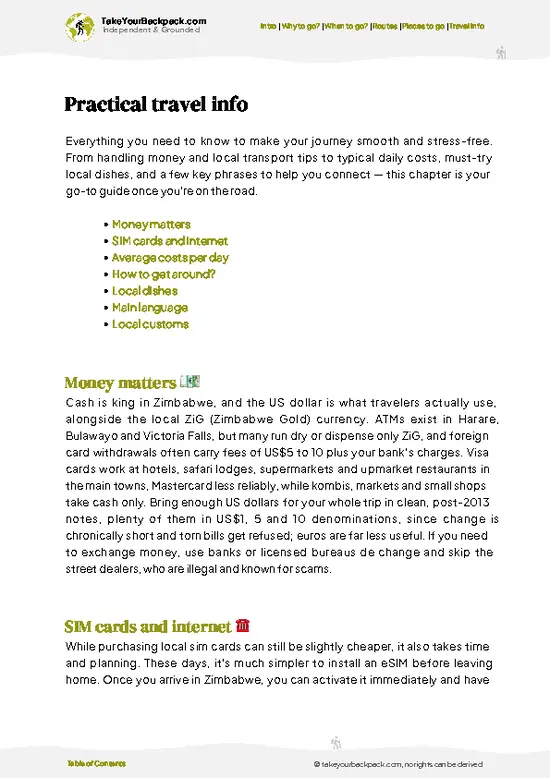
example page 0 from our offline Travel Guide for Zimbabwe
example page 1 from our offline Travel Guide for Zimbabwe
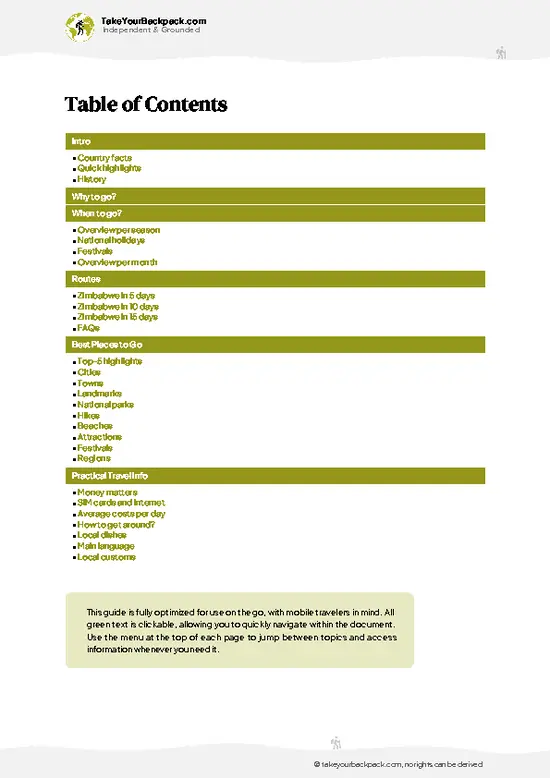
example page 2 from our offline Travel Guide for Zimbabwe
example page 3 from our offline Travel Guide for Zimbabwe
example page 4 from our offline Travel Guide for Zimbabwe
example page 5 from our offline Travel Guide for Zimbabwe
example page 6 from our offline Travel Guide for Zimbabwe
example page 7 from our offline Travel Guide for Zimbabwe
Loading the map 🌍
CLICK TO FILTER
cities
towns
landmarks
national parks
hikes
beaches
attractions
festivals
regions
SHOW COUNTRY’S BESTSHOW ALL

✨ Why go?
Ranked #10 attraction in Zimbabwe
What sets this place apart

Zimbabwe Museum of Human Sciences gives you the backstory that makes the rest of the country click. Before you stand inside the stone walls of Great Zimbabwe or squint at San paintings in the Matobo Hills, you can see how those people lived, what they made and how archaeologists read their traces. The displays on Stone Age tools and the Shona and Ndebele cultural collections turn abstract ruins into something you can picture. It is also a calm break from Harare traffic, with space to read at your own pace and rarely a tour group in sight. For a backpacker on a route through the country, it works as a cheap, compact primer, and the natural history hall adds a wildlife preview before any safari.

💡 HighlightsThe experiences that define the visit

  1. Human Origins and Archaeology Displays: Casts, tools and panels trace early humans in southern Africa, the museum’s core strength and the clearest link to the country’s oldest history.
  2. Stone Age Tool Collections: Hand axes and scrapers laid out in cases show how technology changed across tens of thousands of years.
  3. Rock Art Reproductions: Copies of San paintings let you study figures and animals up close, useful if you plan to visit the real sites later.
  4. Shona Cultural Exhibits: Everyday objects, carvings and instruments explain traditions of the largest cultural group in the country.
  5. Ndebele Cultural Exhibits: Beadwork and household items show a different heritage from the south-west, and the contrast with the Shona displays is instructive.
  6. Mbira and Musical Instruments: The thumb pianos on show
… read more 👉
  1. Human Origins and Archaeology Displays: Casts, tools and panels trace early humans in southern Africa, the museum’s core strength and the clearest link to the country’s oldest history.
  2. Stone Age Tool Collections: Hand axes and scrapers laid out in cases show how technology changed across tens of thousands of years.
  3. Rock Art Reproductions: Copies of San paintings let you study figures and animals up close, useful if you plan to visit the real sites later.
  4. Shona Cultural Exhibits: Everyday objects, carvings and instruments explain traditions of the largest cultural group in the country.
  5. Ndebele Cultural Exhibits: Beadwork and household items show a different heritage from the south-west, and the contrast with the Shona displays is instructive.
  6. Mbira and Musical Instruments: The thumb pianos on show are the sound of Zimbabwean ceremony, and seeing their construction makes live music easier to appreciate.
  7. Natural History Hall: Mounted mammals, birds and insects give you a close look at species that are hard to spot in the wild.
Start with the human origins displays, because they set the timeline that every other room builds on.
Spotted a mistake or missing something? Contact us.

Things to do around Zimbabwe Museum of Human Sciences

Ratings based on Tripadvisor reviews. When you book through this link, you support our work at no extra cost to you.

🌤️ When to go?When to go for the best experience

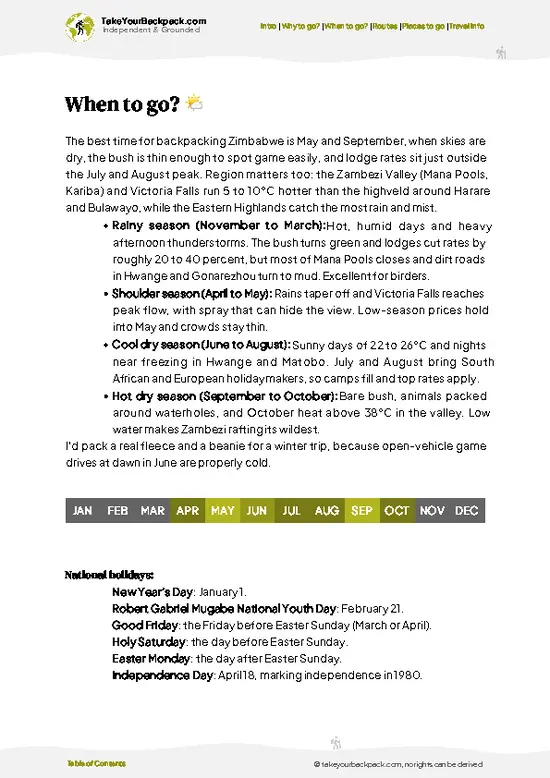
  • Cool Dry Season (May to August): Harare’s highlands give sunny days around 20 to 25°C (68 to 77°F) and chilly nights near 7 to 10°C (45 to 50°F), and the galleries stay comfortable all day. Days are shorter, with roughly 11 hours of light. Hotel prices stay steady.
  • Hot Dry Season (September to October): Highs climb to 28 to 32°C (82 to 90°F) and the jacaranda trees bloom purple along the streets. Walking between sights gets sweaty by midday.
  • Rainy Season (November to March): Expect 18 to 27°C (64 to 81°F) with afternoon downpours. Mornings are usually dry enough to visit, and crowds are thin.
Visit on a weekday morning, when school groups are least likely and the rooms are quiet.

source: climatestotravel.comJANJanuary: fair for travelingFEBFebruary: fair for travelingMARMarch: fair for travelingAPRApril: fair for travelingMAYMay: highly recommended for travelingJUNJune: highly recommended for travelingJULJuly: good for travelingAUGAugust: good for travelingSEPSeptember: highly recommended for travelingOCTOctober: highly recommended for travelingNOVNovember: fair for travelingDECDecember: fair for traveling
when-to-go

✈️ The backpacker research shortcutZimbabwe Travel Guide

An offline-friendly backpacking guide with optimized travel routes, ranked highlights, transport advice, and the best areas to stay.
example page 0 from our offline Travel Guide for Zimbabwe
example page 1 from our offline Travel Guide for Zimbabwe
example page 2 from our offline Travel Guide for Zimbabwe
example page 3 from our offline Travel Guide for Zimbabwe
example page 4 from our offline Travel Guide for Zimbabwe
example page 5 from our offline Travel Guide for Zimbabwe
example page 6 from our offline Travel Guide for Zimbabwe
example page 7 from our offline Travel Guide for Zimbabwe
The digital guide (265 pages) contains:
✅ 67 highlights, ranked by travel appeal
✅ Optimized 5, 10 & 15-day travel routes
✅ Cities, national parks, landmarks, beaches
✅ How to get around
✅ Offline-friendly for travel without Wi-Fi
👉 Click to see all 30+ guide features

📅 Plan smarter in minutes, not weeks
✅ Month by month travel advice
✅ Festivals & national holidays
✅ Budget expectations

🗺️ Go to the right places, skip the overrated ones
✅ Honest pros & cons of destinations
✅ Top hikes, parks & viewpoints
✅ Lesser-known places most travelers miss
✅ Clear “worth it vs skip it” guidance

🛏️ Travel smoothly without rookie mistakes
✅ Best areas to stay
✅ Transport systems explained simply
✅ Common scams & safety advice
✅ SIM cards, money & practical tips

🌍 Understand the country, not just visit it
✅ Culture & traditions
✅ 52 Essential phrases & customs
✅ Festivals worth planning around
✅ Traveler-friendly historical context
✅ Insights that make places more meaningful

📱 Built for real travel conditions
✅ Fully downloadable PDF
✅ Works completely offline
✅ Optimized for phone use
✅ Useful in remote areas & buses
✅ Everything in one place
Stop searching, start planning
Get instant access to your full guide. 30‑day money-back guarantee.
+ Add another guide for just

By proceeding you agree to our terms.
Sent to your inbox immediately after payment • 100% Secure Checkout
Best Backpacking Travel Advisor 2025 tourism awardBest Backpacking
Travel Advisor
2025
What others say about Take Your Backpack Guides:
⭐⭐⭐⭐⭐
Fantastic, amazing amount of information!
⭐⭐⭐⭐⭐
My goodness this is amazing, it's what I've been looking for hats off too you!
⭐⭐⭐⭐⭐
I think this is absolutely BRILLIANT
⭐⭐⭐⭐
Very complete and informative. It's still missing places, but I gotta to commend you
⭐⭐⭐⭐⭐
This is truly amazing, thank you, can't wait to explore it with my kids!
⭐⭐⭐⭐⭐
Awesome resource, thank you!
⭐⭐⭐⭐⭐
This is amazing! Can't wait to explore the ones I haven't seen
⭐⭐⭐⭐
I love this! Well done, great idea.
⭐⭐⭐⭐⭐
Thanks for taking the time to make this gem!
⭐⭐⭐⭐⭐
This might be the best website I've ever seen.
⭐⭐⭐⭐⭐
Congratulations, and thank you so much for your work; it's incredibly valuable.
⭐⭐⭐⭐
In all seriousness I think you did a great job pointing out the important spots
⭐⭐⭐⭐⭐
10/10 very good
⭐⭐⭐⭐⭐
As someone who's only just starting to visit regularly this is awesome, thank you.
⭐⭐⭐⭐
Thank you very much! I'm going to visit my dad, it's going to be very useful!
⭐⭐⭐⭐⭐
This is really cool! We'll be travelling for the first time and this definitely come in handy.
⭐⭐⭐⭐⭐
You are now our minister of culture, congratulations 👨‍💼
⭐⭐⭐⭐⭐
Just wanted to tell you that this is a pearl! Going to follow your recommendations.
⭐⭐⭐⭐⭐
This is so cool. I'll definitely be using the resource for my travels soon.
⭐⭐⭐⭐⭐
This is very impressive! Good work.
⭐⭐⭐⭐⭐
This is an amazing and informative site. Very well done!

🛏️ Where to stay?Best areas and accommodation options

Avondale and the leafy northern suburbs around it are the best bases, roughly 10 to 15 minutes by taxi from the museum. Budget travelers get the most for their money here, with a handful of backpacker-style lodges and guesthouses, secure walled compounds, and shared kitchens where you meet other travelers heading to Great Zimbabwe, Victoria Falls or the Eastern Highlands. Cafes, supermarkets and ATMs sit close at hand, so the area feels easy for a first night in the country.
The city center puts you within walking distance of the museum, which sits beside the Harare Gardens. Rooms there are cheaper, … read more 👉
Avondale and the leafy northern suburbs around it are the best bases, roughly 10 to 15 minutes by taxi from the museum. Budget travelers get the most for their money here, with a handful of backpacker-style lodges and guesthouses, secure walled compounds, and shared kitchens where you meet other travelers heading to Great Zimbabwe, Victoria Falls or the Eastern Highlands. Cafes, supermarkets and ATMs sit close at hand, so the area feels easy for a first night in the country.
The city center puts you within walking distance of the museum, which sits beside the Harare Gardens. Rooms there are cheaper, but the streets empty after dark, so use a taxi in the evening and keep valuables out of sight. Borrowdale is a pricier, quiet alternative with good restaurants and strong security, handy if you want rest rather than company. For most solo backpackers, Avondale is the pick.

👛 Costs (as of 22 October 2026)Travel costs and budget guide for Zimbabwe Museum of Human Sciences

Zimbabwe Museum of Human Sciences costs most backpackers about US$29 to 58 a day in Harare, including a bed, meals and local transport. Entry is small compared with everything else you spend.
CategoryBudget RangeLocal Reality
Museum entryUS$1 to 5Foreign visitors pay more than residents, and a camera permit may cost extra.
Accommodation (high season)US$15 to 25Dorm beds and basic guesthouse rooms in Avondale. Low season runs about US$12 to 20.
FoodUS$8 to 15Sadza meals at local eateries cost US$3 to 5, while cafes in Avondale charge more.
Local transportUS$3 to 8Minibus rides (kombis) cost under US$1, and a short taxi ride across town runs US$3 to 8.
ExtrasUS$2 to 5Carvings and crafts at nearby stalls, plus a drink in the Harare Gardens area.
Total Daily BudgetUS$29 to 58Cash in small US dollar notes helps, because card use is patchy.
⚠️ Prices can change and everyone travels differently, so take this as a rough guide. Hope it helps you plan your adventure!

FAQFrequently asked questions about Zimbabwe Museum of Human Sciences

Plan on 1.5 to 2 hours at Zimbabwe Museum of Human Sciences, which is small enough to cover in a single morning. The exhibits on archaeology, ethnography and natural history are compact, so a quick pass takes about an hour. Pair it with a stroll through the neighboring Harare Gardens and you fill half a day.
For most travelers Zimbabwe Museum of Human Sciences is worth the entrance fee, which is roughly US$1 to 5. It gives useful context on the region’s early peoples and traditions before you head to sites like Great Zimbabwe. If you only have a few hours in Harare, it is a cheap way to spend a rainy afternoon.
Zimbabwe Museum of Human Sciences sits in central Harare beside the Harare Gardens, about a 15 to 25 minute taxi ride from Avondale (US$3 to 8). From downtown hotels you can walk there in 10 to 15 minutes in daylight. Minibuses (kombis) running along Herbert Chitepo Avenue cost under US$1, and the airport is about 30 minutes away by road.
⚠️ Things can change over time, so always validate details locally before you go.

Other Zimbabwean attractions near Zimbabwe Museum of Human Sciences

Explore more nearby:

  • National Gallery of Zimbabwe—Serpentine figures, entrance lawn sculptures, contemporary canvases, Harare Gardens| 1 km away
  • Reps Theatre—Volunteer-run stage, amateur casts, foyer bar, local plays| 4 km away
  • National Heroes Acre—Unknown Soldier bronzes, eternal flame, granite murals, hilltop tower| 5 km away

💡 Not sure where to go next?
Create a personalized itinerary for Zimbabwe including Zimbabwe Museum of Human Sciences and the places that fit your trip.

Generate my itinerary

👉 Discover all attractions

Or checkout all Zimbabwe has to offer (think cities, towns, villages, national parks, hikes, beaches, festivals)
Country photo of Zimbabwe

We 💚 feedbackSumming up the experience

Zimbabwe Museum of Human Sciences is easy to rush, yet the small labels beside the tools and rock art copies carry the best detail. I would slow down there and skip the rest if time is short. Bring a notebook, then match what you learned to Great Zimbabwe later.

✈️ When did I visit Zimbabwe?
I have backpacked Zimbabwe all the way back in 2001.

✍️ Help improve this page!
The information on this page is based on my own backpacking experience in Zimbabwe, supplemented with up-to-date research and feedback from other travelers. Travel details can change, so if you notice anything outdated or incomplete, feel free to let me know.


🙋‍♂️ Give feedback

👋 Meet the founderWho’s Behind Take Your Backpack?

Johan, backpacker and founder of TakeYourBackpackHi, I’m Johan (Netherlands 🇳🇱), the creator of TakeYourBackpack. Over the past 3 decades, I’ve backpacked through 90+ countries across six continents, gaining extensive experience with independent travel, long-term trips, and overland routes.

This site is built on a combination of firsthand travel experience and carefully curated insights from other backpackers. Many guides are based on places I’ve personally visited, while others bring together tips, observations, and practical advice shared by trusted travelers I’ve met along the way.

The goal is to provide realistic, experience-driven guidance — not generic itineraries — so you can explore destinations with better context, clearer expectations, and more confidence.