×

Zimbabwe🇿🇼 | townsHwangenational park gateway, safari lodges, coal mining | things to do and best time to go

Explore KaribaExplore Chiredzi

Backpacking in Hwange
🏆 Top picktown ranked #3
By Johan Kruseman 🇳🇱 | Updated June 11, 2026

The first real fork in the road at Hwange is whether you’ll stay in the town itself or head straight for the national park’s lodges and camps. This isn’t just a question of comfort—your choice shapes the entire rhythm of your trip. Hwange sits in western Zimbabwe, a few hours’ drive south of Victoria Falls, and the town is more functional than charming. Picture a grid of sun-baked streets, a handful of shops, and the low hum of coal trains in the distance. For backpackers, Hwange town is a launchpad, not a destination: it’s where you catch your breath, stock up on basics, and arrange the real adventure—game drives, bush walks, or a night under canvas in the park. The town itself is quiet, with a couple of basic guesthouses and the odd bar where you might swap stories with other travelers, but don’t expect a lively hostel scene or a parade of cafés. Getting here is straightforward by bus or train, but you’ll need local transport to reach the park gates. Costs are lower than Victoria Falls, but so is the energy. Safety is generally solid, though the town winds down early. Compared to the bustle of Vic Falls or the tourist polish of Bulawayo, Hwange is stripped-back and utilitarian—best for those who want to get close to the wild, not the nightlife.

Discover everything you want to know in the 📖 Zimbabwe Travel Guide.


Get your Zimbabwe guide
90 ranked highlights, routes & tips, works offline (356 pages)
Loading the map 🌍
CLICK TO FILTER
cities
towns
landmarks
national parks
hikes
beaches
attractions
festivals
regions
SHOW COUNTRY’S BESTSHOW ALL

✨ Why go?
Ranked #3 town in Zimbabwe
Why Hwange should be on your travel list

Backpackers flock to Hwange not just for its proximity to the national park, but for the way it serves as a gateway to authentic Zimbabwean experiences. The town is a convenient base for those eager to explore nearby hikes and cultural sites. You’ll find small-scale hostels and guesthouses that offer a cozy atmosphere, perfect for solo travelers or small groups looking to connect. The walkable streets are lined with local eateries where the aroma of grilled meats and spices fills the air, inviting you to savor the flavors of the region.

Most travelers tend to stay a few days, soaking in the laid-back vibe and friendly interactions with locals. It’s not a party town, so if you’re seeking a vibrant nightlife, you might want to keep moving. Instead, expect a social atmosphere where stories are … read more 👉
Backpackers flock to Hwange not just for its proximity to the national park, but for the way it serves as a gateway to authentic Zimbabwean experiences. The town is a convenient base for those eager to explore nearby hikes and cultural sites. You’ll find small-scale hostels and guesthouses that offer a cozy atmosphere, perfect for solo travelers or small groups looking to connect. The walkable streets are lined with local eateries where the aroma of grilled meats and spices fills the air, inviting you to savor the flavors of the region.

Most travelers tend to stay a few days, soaking in the laid-back vibe and friendly interactions with locals. It’s not a party town, so if you’re seeking a vibrant nightlife, you might want to keep moving. Instead, expect a social atmosphere where stories are shared over a communal meal or during a sunset chat. This is a place for slow travelers and hikers who appreciate the journey as much as the destination. In Hwange, the hard parts of travel—like navigating local transport—become part of the adventure, leading to richer experiences and deeper connections.
Want to include Hwange in your Zimbabwe route?
Create a personalized Zimbabwe itinerary that includes Hwange and the places that fit your trip — based on your travel style, budget, and available time. Get your route in seconds.

Generate my trip

💡 HighlightsThe experiences that define the visit

  • Hwange Town Market — the real heart of the town: stalls selling fresh produce, charcoal, second-hand clothes and small curios; best place to hear local gossip, practice a few Ndebele phrases and watch everyday life up close.
  • Hwange Railway Station — an old station on the Bulawayo-Victoria Falls line where you can photograph colonial-era architecture, watch long freight trains and feel the town’s link to Zimbabwe’s rail history.
  • Hwange Colliery area (mine township & heritage buildings) — walking among the colliery offices, miner housing and industrial relics gives a clear sense of why Hwange exists and how coal shaped the community.
  • Hwange Thermal Power Station (viewpoint) — Zimbabwe’s largest power plant sits on the town’s edge; while tours aren’t common, viewpoints around the perimeter
read more 👉
  • Hwange Town Market — the real heart of the town: stalls selling fresh produce, charcoal, second-hand clothes and small curios; best place to hear local gossip, practice a few Ndebele phrases and watch everyday life up close.
  • Hwange Railway Station — an old station on the Bulawayo-Victoria Falls line where you can photograph colonial-era architecture, watch long freight trains and feel the town’s link to Zimbabwe’s rail history.
  • Hwange Colliery area (mine township & heritage buildings) — walking among the colliery offices, miner housing and industrial relics gives a clear sense of why Hwange exists and how coal shaped the community.
  • Hwange Thermal Power Station (viewpoint) — Zimbabwe’s largest power plant sits on the town’s edge; while tours aren’t common, viewpoints around the perimeter tell an important story about industry, jobs and the national grid.
  • Miners’ cemetery and memorial spots — humble, quiet sites that honor the lives and sacrifices of generations of colliery workers; important for context and reflection, especially with a local guide.
  • Main Street / Commercial Road — a short stroll will show you old shopfronts, local bars and everyday commerce; ideal for people-watching, grabbing a cheap meal and chatting with shopkeepers.
  • Local churches and mission buildings — community anchors with history and character; if you time it right a Sunday service or a polite visit reveals a lot about social life in Hwange.
  • Hwange Sports Ground & Social Club — catch a football match, a community event or just sit with locals over a drink; it’s where the town lets off steam and you’ll meet people faster than anywhere else.
  • Community craft stalls and small workshops — tucked around the market and near the railway, these are where local woodcarvers, beaders and metalworkers sell affordable, hand-made souvenirs and tell the stories behind them.
  • Old railway workshops and engine sheds — rusty, atmospheric and great for photography; they speak to Hwange’s industrial past and are best visited with a local who can point out interesting details and safety considerations.
For day trips from Hwange you can’t go wrong with Hwange National Park (Main Camp game drives and waterholes), short cultural visits to nearby communal villages and craft markets, or a longer run up to Victoria Falls (about 1.5-2 hours); my personal favorite is an early-morning game drive into Hwange National Park to watch elephants at the waterholes.
Spotted a mistake or missing something? Contact us.

Things to do near Hwange

Ratings based on Tripadvisor reviews. When you book through this link, you support our work at no extra cost to you.

🏘️ NeighborhoodsUnderstanding the local layout

Hwange is a gateway to adventure, blending wildlife encounters with local culture. Here’s how to navigate its neighborhoods for an optimal experience.

Hwange Town
This is the heart of the area, buzzing with local life. You’ll find affordable accommodations and eateries that serve up hearty Zimbabwean fare. The vibe is laid-back, making it easy to stroll between shops and markets. Transport options are plentiful, with taxis and buses connecting you to the national park. Perfect for short stays, but you might want to linger longer to soak in the local rhythm.

Dete
Just a short drive from Hwange Town, Dete offers a quieter atmosphere. It’s ideal for those seeking a more relaxed pace. The area is less touristy, which means lower prices and a chance to connect with locals. Walkability is … read more 👉
Hwange is a gateway to adventure, blending wildlife encounters with local culture. Here’s how to navigate its neighborhoods for an optimal experience.

Hwange Town
This is the heart of the area, buzzing with local life. You’ll find affordable accommodations and eateries that serve up hearty Zimbabwean fare. The vibe is laid-back, making it easy to stroll between shops and markets. Transport options are plentiful, with taxis and buses connecting you to the national park. Perfect for short stays, but you might want to linger longer to soak in the local rhythm.

Dete
Just a short drive from Hwange Town, Dete offers a quieter atmosphere. It’s ideal for those seeking a more relaxed pace. The area is less touristy, which means lower prices and a chance to connect with locals. Walkability is decent, but you’ll need a vehicle for longer excursions. This is a great spot for longer stays, especially if you want to explore the nearby park without the hustle.

Victoria Falls Road
This area is a bit more upscale, catering to those looking for a touch of comfort. While it’s pricier, the proximity to the park makes it worth it. Nightlife is limited, but you’ll find cozy lodges and bars where you can unwind after a day of adventure. Transport is straightforward, with shuttles to the park. Ideal for those who want a balance of comfort and accessibility, especially for a longer visit.

National Park Entrance
For the hardcore wildlife enthusiasts, staying near the park entrance is a must. The atmosphere is electric with the sounds of nature. Accommodations here can be pricier, but the convenience of being steps away from the action is unbeatable. Walkability is limited, but you’ll have direct access to guided tours. Perfect for short, intense stays focused on wildlife experiences.

⌛️ 1 dayA smart one-day plan

Hwange, Zimbabwe, is a town that pulses with the spirit of the wild. It’s the gateway to Hwange National Park, but beyond the safari chatter, the town itself has a charm that’s often overlooked. The air is thick with the scent of earth after a morning rain, and the sounds of local life create a vibrant backdrop.

Start your day with a visit to the Hwange Main Camp area. The early morning light filters through the trees, casting playful shadows as you sip a strong cup of local coffee at a small café. The locals are friendly, and you might find yourself chatting with a resident about their life here. This connection sets the tone for your day.

After fueling up, head to the nearby Hwange Colliery Company, a site not typically on the tourist radar. Here, you can witness the juxtaposition of … read more 👉
Hwange, Zimbabwe, is a town that pulses with the spirit of the wild. It’s the gateway to Hwange National Park, but beyond the safari chatter, the town itself has a charm that’s often overlooked. The air is thick with the scent of earth after a morning rain, and the sounds of local life create a vibrant backdrop.

Start your day with a visit to the Hwange Main Camp area. The early morning light filters through the trees, casting playful shadows as you sip a strong cup of local coffee at a small café. The locals are friendly, and you might find yourself chatting with a resident about their life here. This connection sets the tone for your day.

After fueling up, head to the nearby Hwange Colliery Company, a site not typically on the tourist radar. Here, you can witness the juxtaposition of industry and nature. The sight of coal trucks rumbling past the backdrop of acacia trees is a reminder of the town’s history and its ongoing relationship with the land. It’s a gritty, real experience that adds depth to your understanding of the area.

In the afternoon, make your way to the Hwange National Park entrance. While the park itself is a must-see, consider taking a guided walking tour instead of the usual game drive. The thrill of tracking animals on foot, feeling the crunch of twigs underfoot, and hearing the distant calls of wildlife is exhilarating. You’ll gain insights into the ecosystem that you wouldn’t get from a vehicle.

As evening approaches, return to town and visit a local eatery. The aroma of grilled meats wafts through the air, and you can savor traditional dishes like sadza and stew. The atmosphere is lively, with laughter and music filling the space.

Spending a day in Hwange is about embracing the rhythm of life here, where every moment, from the mundane to the extraordinary, tells a story.
Turn your Hwange visit into an Zimbabwe adventure
Build a complete Zimbabwe route with Hwange, hidden gems, must-see destinations, and realistic travel times included.

Generate my trip

🌤️ When to go?Best time to visit Hwange


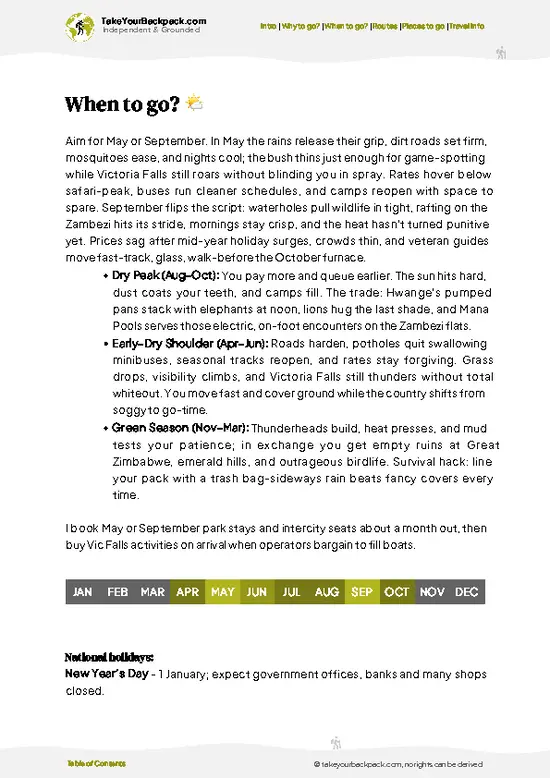
  • Topic: Weather and Temperature: The dry season from May to October is prime for backpacking in Hwange. Daytime highs hover around 25-30°C (77-86°F), perfect for long treks without the oppressive heat of summer. Nights can dip to 10°C (50°F), so pack layers. The wet season, November to April, brings heavy rains and humidity, turning trails into mud traps and making wildlife spotting tougher.

  • Topic: Daylight Hours: Around the dry season, you get roughly 11 to 12 hours of daylight—enough to squeeze in early morning game drives and late afternoon walks. The light has a golden quality that sharpens the landscape’s textures, making every moment outside feel vivid and alive.

  • Topic: Crowds and Price Fluctuations: July and August draw the most visitors, pushing prices up and campsites filling
read more 👉

  • Topic: Weather and Temperature: The dry season from May to October is prime for backpacking in Hwange. Daytime highs hover around 25-30°C (77-86°F), perfect for long treks without the oppressive heat of summer. Nights can dip to 10°C (50°F), so pack layers. The wet season, November to April, brings heavy rains and humidity, turning trails into mud traps and making wildlife spotting tougher.

  • Topic: Daylight Hours: Around the dry season, you get roughly 11 to 12 hours of daylight—enough to squeeze in early morning game drives and late afternoon walks. The light has a golden quality that sharpens the landscape’s textures, making every moment outside feel vivid and alive.

  • Topic: Crowds and Price Fluctuations: July and August draw the most visitors, pushing prices up and campsites filling fast. If you want the same dry-season perks but with fewer people and better deals, aim for May, June, or September. You’ll still catch the tail end of the dry spell but with a quieter vibe and friendlier rates.

  • Topic: Seasonal Activities: The dry months concentrate wildlife around waterholes, turning Hwange into a natural theater of elephants, lions, and buffalo. Birdwatchers will find the early wet season (November) rewarding, but for pure game viewing, the dry season’s clarity and concentration can’t be beat.


Pro-tip: Arrive just before the dry season peaks—May or September—when the air is crisp, the crowds are thin, and the wildlife is already gathering, setting you up for a backpacking experience that feels both intimate and epic.


source: climatestotravel.comJANJanuary: fair for travelingFEBFebruary: fair for travelingMARMarch: fair for travelingAPRApril: fair for travelingMAYMay: excellent for travelingJUNJune: excellent for travelingJULJuly: highly recommended for travelingAUGAugust: highly recommended for travelingSEPSeptember: excellent for travelingOCTOctober: highly recommended for travelingNOVNovember: good for travelingDECDecember: fair for traveling
when-to-go

✈️ The backpacker research shortcutZimbabwe Travel Guide

An offline-friendly backpacking guide with optimized travel routes, ranked highlights, transport advice, and the best areas to stay.
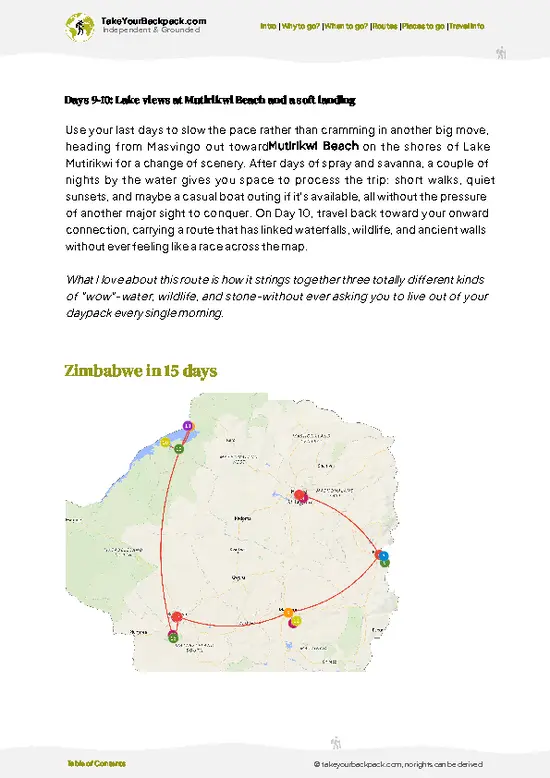
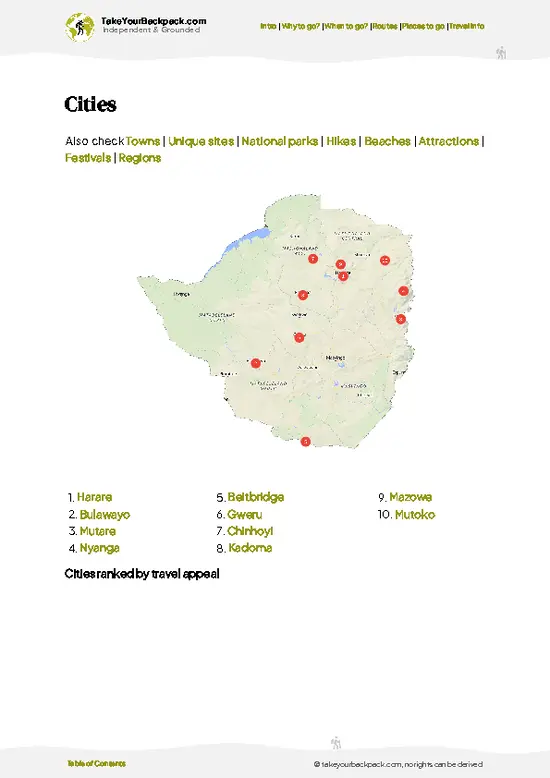
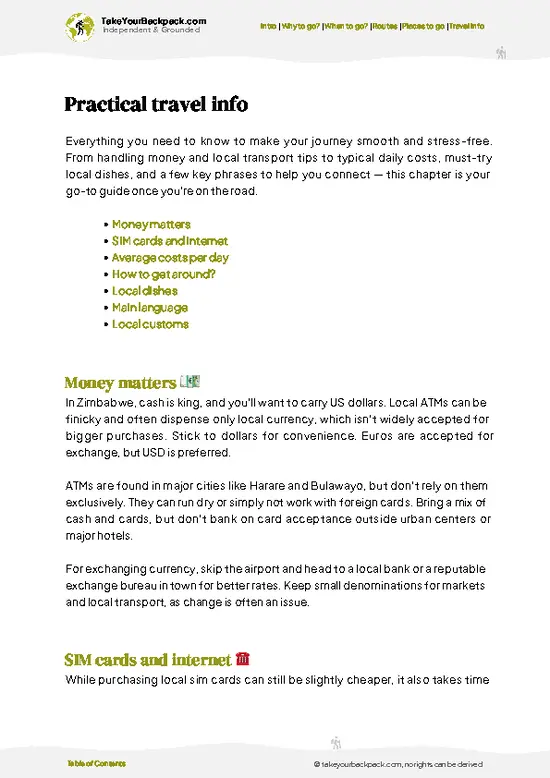
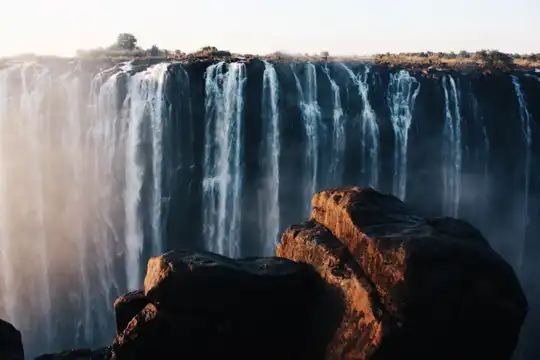
example page 0 from our offline Travel Guide for Zimbabwe
example page 1 from our offline Travel Guide for Zimbabwe
example page 2 from our offline Travel Guide for Zimbabwe
example page 3 from our offline Travel Guide for Zimbabwe
example page 4 from our offline Travel Guide for Zimbabwe
example page 5 from our offline Travel Guide for Zimbabwe
example page 6 from our offline Travel Guide for Zimbabwe
example page 7 from our offline Travel Guide for Zimbabwe
The digital guide (356 pages) contains:
90 highlights, ranked by travel appeal
Optimized 5, 10 & 15-day travel routes
Cities, national parks, landmarks, beaches
How to get around
Offline-friendly for travel without Wi-Fi
👉 Click to see all 30+ guide features

📅 Plan smarter in minutes, not weeks
Month by month travel advice
Festivals & national holidays
Budget expectations

🗺️ Go to the right places, skip the overrated ones
Honest pros & cons of destinations
Top hikes, parks & viewpoints
Lesser-known places most travelers miss
Clear “worth it vs skip it” guidance

🛏️ Travel smoothly without rookie mistakes
Best areas to stay
Transport systems explained simply
Common scams & safety advice
SIM cards, money & practical tips

🌍 Understand the country, not just visit it
Culture & traditions
52 Essential phrases & customs
Festivals worth planning around
Traveler-friendly historical context
Insights that make places more meaningful

📱 Built for real travel conditions
Fully downloadable PDF
Works completely offline
Optimized for phone use
Useful in remote areas & buses
Everything in one place
Save weeks of stressful planning
Get instant access to your full guide. 30‑day money-back guarantee.


By proceeding you agree to our terms.
Sent to your inbox immediately after payment • 100% Secure Checkout
Best Backpacking Travel Advisor 2025 tourism awardBest Backpacking
Travel Advisor
2025
What others say about Take Your Backpack Guides:
⭐⭐⭐⭐⭐
Fantastic, amazing amount of information!
⭐⭐⭐⭐⭐
My goodness this is amazing, it's what I've been looking for hats off too you!
⭐⭐⭐⭐⭐
I think this is absolutely BRILLIANT
⭐⭐⭐⭐
Very complete and informative. It's still missing places, but I gotta to commend you
⭐⭐⭐⭐⭐
This is truly amazing, thank you, can't wait to explore it with my kids!
⭐⭐⭐⭐⭐
Awesome resource, thank you!
⭐⭐⭐⭐⭐
This is amazing! Can't wait to explore the ones I haven't seen
⭐⭐⭐⭐
I love this! Well done, great idea.
⭐⭐⭐⭐⭐
Thanks for taking the time to make this gem!
⭐⭐⭐⭐⭐
This might be the best website I've ever seen.
⭐⭐⭐⭐⭐
Congratulations, and thank you so much for your work; it's incredibly valuable.
⭐⭐⭐⭐
In all seriousness I think you did a great job pointing out the important spots
⭐⭐⭐⭐⭐
10/10 very good
⭐⭐⭐⭐⭐
As someone who's only just starting to visit regularly this is awesome, thank you.
⭐⭐⭐⭐
Thank you very much! I'm going to visit my dad, it's going to be very useful!
⭐⭐⭐⭐⭐
This is really cool! We'll be travelling for the first time and this definitely come in handy.
⭐⭐⭐⭐⭐
You are now our minister of culture, congratulations 👨‍💼
⭐⭐⭐⭐⭐
Just wanted to tell you that this is a pearl! Going to follow your recommendations.
⭐⭐⭐⭐⭐
This is so cool. I'll definitely be using the resource for my travels soon.
⭐⭐⭐⭐⭐
This is very impressive! Good work.
⭐⭐⭐⭐⭐
This is an amazing and informative site. Very well done!

🛏️ Where to stay?Best areas and accommodation options

Hwange’s backpacker scene centers around the small town’s main strip and its immediate surroundings, where the pulse of local life hums steadily beneath the hot African sun. This area is your best bet for safety and social energy. It’s where you’ll find the handful of budget lodges and hostels that cater to solo travelers and those looking to swap stories over a cold drink after a day in the wild. The streets here are dusty but lively, with a mix of locals and travelers creating a relaxed, unpretentious vibe that’s easy to plug into.

Staying close to the town center means you’re within walking … read more 👉
Hwange’s backpacker scene centers around the small town’s main strip and its immediate surroundings, where the pulse of local life hums steadily beneath the hot African sun. This area is your best bet for safety and social energy. It’s where you’ll find the handful of budget lodges and hostels that cater to solo travelers and those looking to swap stories over a cold drink after a day in the wild. The streets here are dusty but lively, with a mix of locals and travelers creating a relaxed, unpretentious vibe that’s easy to plug into.

Staying close to the town center means you’re within walking distance of basic amenities—shops, markets, and local eateries that serve up hearty, no-frills meals. This convenience is crucial because Hwange doesn’t have the sprawling infrastructure of a big city; everything feels compact, which makes wandering around safe and manageable even after dark. Compared to outlying areas, which can feel isolated and less secure, the town center’s buzz offers a natural safety net and a chance to meet fellow backpackers without the pressure of tourist traps.

If you want to tap into the local rhythm and keep your budget intact, this is where you want to be. It’s not about luxury—it’s about the authentic, grounded experience that sets the tone for your safari adventures.

🚌 Getting aroundMoving around without the hassle

Hwange moves at the pace of the wild itself—unpredictable, raw, and alive with the scent of dry earth and distant acacia. The town doesn’t hum with the precision of a clock but pulses with a rhythm shaped by the sun’s arc and the dusty boots of locals and travelers alike. You won’t find rigid timetables here; instead, you’ll navigate a blend of informal hustle and patient waiting, where the heat thickens the air and every moment feels like a prelude to the next adventure. Understanding this flow is your ticket to moving through Hwange like someone who belongs, not just a visitor watching from the sidelines.


  • Walking: The most straightforward way to soak in Hwange’s atmosphere. The town is compact enough to cover on foot, with dusty streets lined by small shops and local markets. Walking
read more 👉
Hwange moves at the pace of the wild itself—unpredictable, raw, and alive with the scent of dry earth and distant acacia. The town doesn’t hum with the precision of a clock but pulses with a rhythm shaped by the sun’s arc and the dusty boots of locals and travelers alike. You won’t find rigid timetables here; instead, you’ll navigate a blend of informal hustle and patient waiting, where the heat thickens the air and every moment feels like a prelude to the next adventure. Understanding this flow is your ticket to moving through Hwange like someone who belongs, not just a visitor watching from the sidelines.


  • Walking: The most straightforward way to soak in Hwange’s atmosphere. The town is compact enough to cover on foot, with dusty streets lined by small shops and local markets. Walking costs nothing and lets you catch the scent of wood smoke and hear the chatter of vendors—just be ready for the midday sun, which can be relentless.


  • Shared Minibus Taxis (Combis): These are the backbone of local transit. They don’t run on a strict schedule but leave when full, so timing is flexible but unpredictable. Fares are cheap, usually a few dollars for short hops, and the ride is bumpy but authentic. Expect close quarters and a lively mix of locals and travelers.


  • Motorbike Taxis (Zebras): When you want speed and a bit of adrenaline, zebras are your go-to. They dart through traffic and take shortcuts that larger vehicles can’t. Prices are negotiable but still budget-friendly. Helmets aren’t always guaranteed, so hold on tight and enjoy the wind and dust on your face.


  • Local Buses: Less frequent and slower than minibuses, local buses connect Hwange to nearby villages and the national park entrance. They usually run early morning and late afternoon, aligning loosely with market days and park schedules. Tickets are affordable, but comfort is minimal—think wooden benches and open windows.


  • Private Safari Transfers: For those with a bit more to spend, private transfers offer direct routes to Hwange National Park lodges. They run on demand, providing comfort and speed, but at a premium. This option is less about budget and more about saving time and energy for the park’s wild encounters.

👛 Costs (as of 4 July 2025)Money, prices, and spending tips

Backpacking in Hwange, Zimbabwe, offers a raw, earthy experience where every dollar counts and every choice shapes your adventure’s rhythm. Here’s what you’re looking at for daily costs, broken down to keep your trip smooth and your wallet intact.
  • Dorm Accommodation: Expect to pay around $10 to $20 per night for a bed in a basic hostel or camp-style dormitory. Options are limited but functional, often with shared bathrooms and a no-frills vibe that matches the rugged surroundings.
  • Meals: Local eateries serve up hearty plates for about $3 to $7 each. Think simple grilled meats, maize-based sides, and fresh vegetables. If you’re cooking your own food, groceries can be cheaper, but expect to spend around $5 to $10 daily on basics like bread, eggs, and fruit.
  • Local Transport: Getting around
read more 👉
Backpacking in Hwange, Zimbabwe, offers a raw, earthy experience where every dollar counts and every choice shapes your adventure’s rhythm. Here’s what you’re looking at for daily costs, broken down to keep your trip smooth and your wallet intact.
  • Dorm Accommodation: Expect to pay around $10 to $20 per night for a bed in a basic hostel or camp-style dormitory. Options are limited but functional, often with shared bathrooms and a no-frills vibe that matches the rugged surroundings.
  • Meals: Local eateries serve up hearty plates for about $3 to $7 each. Think simple grilled meats, maize-based sides, and fresh vegetables. If you’re cooking your own food, groceries can be cheaper, but expect to spend around $5 to $10 daily on basics like bread, eggs, and fruit.
  • Local Transport: Getting around Hwange town itself is mostly on foot or by shared minibus taxis, costing roughly $0.50 to $1 per short trip. For longer hauls, like reaching Hwange National Park gates, budget $5 to $10 depending on your negotiation skills and timing.
  • Basic Activities/Entry Fees: Entry to Hwange National Park, the main draw, is about $20 per day for independent travelers. Guided walks or game drives start at $30 and can climb higher, but you can save by joining group tours or self-driving if you have a rental.
  • Miscellaneous Expenses: This covers essentials like bottled water, snacks, and occasional phone credit. Plan for around $3 to $7 daily, especially since tap water isn’t drinkable and connectivity can be patchy.

All told, you’re looking at roughly $40 to $70 per day to cover the essentials without cutting corners. This range balances the raw, authentic feel of Hwange with practical comfort. The payoff is the chance to wake up to the scent of dry earth and distant wildlife calls, knowing you’ve managed your budget like a pro.


source: zimbabwetourism.net
⚠️ Prices can change and everyone travels differently, so take this as a rough guide. Hope it helps you plan your adventure!

🚌 Day tripsShort trips worth adding

Hwange, Zimbabwe, is a backpacker’s dream base for day trips, offering a blend of wildlife, culture, and adventure. The town itself is a laid-back hub, where the scent of woodsmoke mingles with the earthy aroma of the bush. Here are some day trips that will elevate your experience.

Hwange National Park Safari
Just a short drive from town, Hwange National Park is a must. The park is famous for its elephant population, and you’ll often see herds roaming freely. A full day here typically costs around $20 for park entry, plus a few bucks for transport if you share a ride. Aim for the early morning or late afternoon for the best wildlife sightings when the light is golden, and the animals are most active. Many first-timers underestimate the park’s size; plan to spend the entire day exploring, … read more 👉
Hwange, Zimbabwe, is a backpacker’s dream base for day trips, offering a blend of wildlife, culture, and adventure. The town itself is a laid-back hub, where the scent of woodsmoke mingles with the earthy aroma of the bush. Here are some day trips that will elevate your experience.

Hwange National Park Safari
Just a short drive from town, Hwange National Park is a must. The park is famous for its elephant population, and you’ll often see herds roaming freely. A full day here typically costs around $20 for park entry, plus a few bucks for transport if you share a ride. Aim for the early morning or late afternoon for the best wildlife sightings when the light is golden, and the animals are most active. Many first-timers underestimate the park’s size; plan to spend the entire day exploring, as rushing through can mean missing out on those breathtaking moments.
👉 Explore Hwange National Park

Victoria Falls Day Trip
While a bit further afield, about a two-hour drive, Victoria Falls is worth every minute. The roar of the falls is something you have to experience firsthand. Entry costs around $30, and you can easily spend hours wandering the trails and soaking in the views. The best time to visit is during the dry season (May to October) when the water flow is manageable, allowing for stunning vistas without the crowds. A common mistake is to think you can do it all in a few hours; give yourself a full day to truly appreciate the area and maybe even try some local cuisine in the nearby town of Livingstone.
👉 Explore Victoria Falls

Local Village Experience
For a taste of authentic Zimbabwean culture, consider a visit to a nearby village. It’s about a 30-minute drive, and you can often arrange a guided tour for around $15. Engage with locals, learn about traditional crafts, and savor homemade meals. The best time for this is during the dry season when villagers are more active in their daily routines. Many backpackers overlook this experience, thinking it’s not “adventurous” enough, but the connections you make here can be the highlight of your trip.


Chobe National Park
If you’re up for a bit of a trek, Chobe National Park in Botswana is about a two-hour drive and offers a different landscape and wildlife experience. Expect to pay around $30 for entry. The park is known for its riverfront views and diverse animal life. The best time to visit is during the dry season when animals congregate around the water. A common rookie mistake is to forget your passport for border crossing; double-check before you leave.


Each of these trips offers a unique slice of Zimbabwean life and landscape, making your stay in Hwange not just a stopover, but a rich experience.
Want to know what more Zimbabwe offers?
The Zimbabwe Travel Guide describes 90 highlights, from cities to national parks, from beaches to hikes

Get the Travel Guide -

🛡️ SafetyTraveler Safety Guide

In Hwange, safety is generally solid, but a few practical tips can enhance your experience. Stick to well-lit areas after dark; the streets can feel deserted, and a little caution goes a long way. If you’re solo, let someone know your plans. Locals are friendly, but it’s wise to keep your belongings close, especially in crowded spots like markets.

Scams are rare, but be wary of overly enthusiastic guides offering unsolicited help. Politely decline and seek out reputable services instead. Everyday annoyances might include the occasional power outage or slow service in restaurants, so patience is key. Embrace the slower pace; it’s part of the local charm.

Overall, carry yourself with confidence. A smile and a friendly nod can open doors and create connections. The essence of Hwange lies in … read more 👉
In Hwange, safety is generally solid, but a few practical tips can enhance your experience. Stick to well-lit areas after dark; the streets can feel deserted, and a little caution goes a long way. If you’re solo, let someone know your plans. Locals are friendly, but it’s wise to keep your belongings close, especially in crowded spots like markets.

Scams are rare, but be wary of overly enthusiastic guides offering unsolicited help. Politely decline and seek out reputable services instead. Everyday annoyances might include the occasional power outage or slow service in restaurants, so patience is key. Embrace the slower pace; it’s part of the local charm.

Overall, carry yourself with confidence. A smile and a friendly nod can open doors and create connections. The essence of Hwange lies in its community, and engaging with it will enrich your journey.

Other Zimbabwean towns near Hwange

Explore more nearby:

  • Victoria Falls town—waterfall viewpoints, adventure sports, border crossing| 85 km away
  • Plumtree—border town, cattle ranching, railway station| 274 km away
  • Sanyati—cotton farming, rural clinics, mission station| 300 km away

💡 Not sure where to go next?
Create a personalized itinerary for Zimbabwe including Hwange and the places that fit your trip.

Generate my itinerary

👉 Discover all towns

Or checkout all Zimbabwe has to offer (think cities, towns, villages, national parks, hikes, beaches, festivals)
Country photo of Zimbabwe

We 💚 feedbackIs it worth it?

Hwange’s charm lies in its raw, untamed wildlife. Picture the sun setting over vast savannahs, the air thick with the scent of earth after a long dry spell, and elephants wandering freely. But be prepared: the roads can be rough, and transport options are limited. This isn’t a place for luxury; it’s about embracing the wild. If you’re ready to trade comfort for authenticity, the rewards are immense. Just remember, patience is part of the adventure.

✈️ When did I visit Zimbabwe?
I have backpacked Zimbabwe all the way back in 2001.

✍️ Help improve this page!
The information on this page is based on my own backpacking experience in Zimbabwe, supplemented with up-to-date research and feedback from other travelers. Travel details can change, so if you notice anything outdated or incomplete, feel free to let me know.


🙋‍♂️ Give feedback

👋 Meet the founderWho’s Behind Take Your Backpack?

Johan, backpacker and founder of TakeYourBackpackHi, I’m Johan (Netherlands 🇳🇱), the creator of TakeYourBackpack. Over the past decade, I’ve backpacked through 80+ countries across six continents, gaining extensive experience with independent travel, long-term trips, and overland routes.

This site is built on a combination of firsthand travel experience and carefully curated insights from other backpackers. Many guides are based on places I’ve personally visited, while others bring together tips, observations, and practical advice shared by trusted travelers I’ve met along the way.

The goal is to provide realistic, experience-driven guidance — not generic itineraries — so you can explore destinations with better context, clearer expectations, and more confidence.

Get full Zimbabwe guide •
Instant download • 90 highlights • Full Offline guide