×

Guyana Itinerary Planner

Build your own Guyana route from scratch and travel exactly the way you like. Set your trip length, pick what matters most – cities & towns, villages, landmarks, national parks, hikes, beaches, attractions – then choose your travel style and pace so every day feels right for you. Drop in a must-see like Kaieteur Falls, choose where you start and finish, add any mandatory stops, and let the planner stitch it all into a smooth, ready-to-follow route that actually fits your priorities instead of forcing you into someone else’s idea of an itinerary.

Plan
your Trip


We build
your Route


Get your
Travel Plan

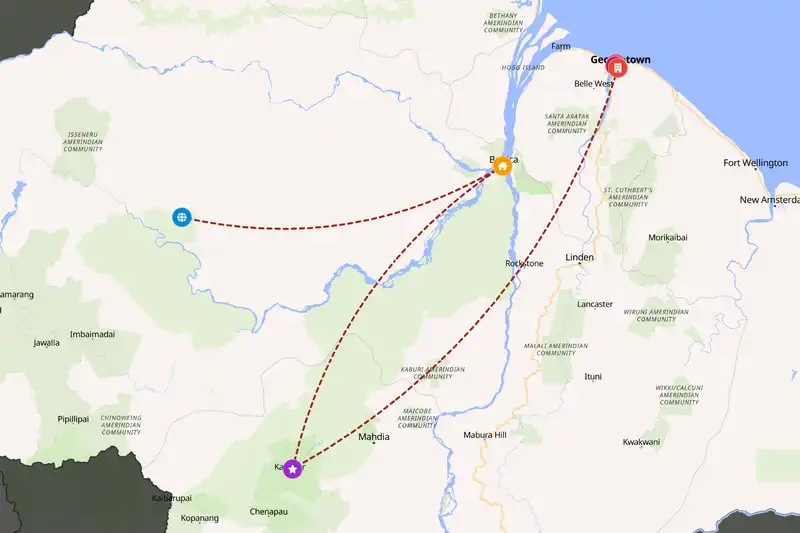
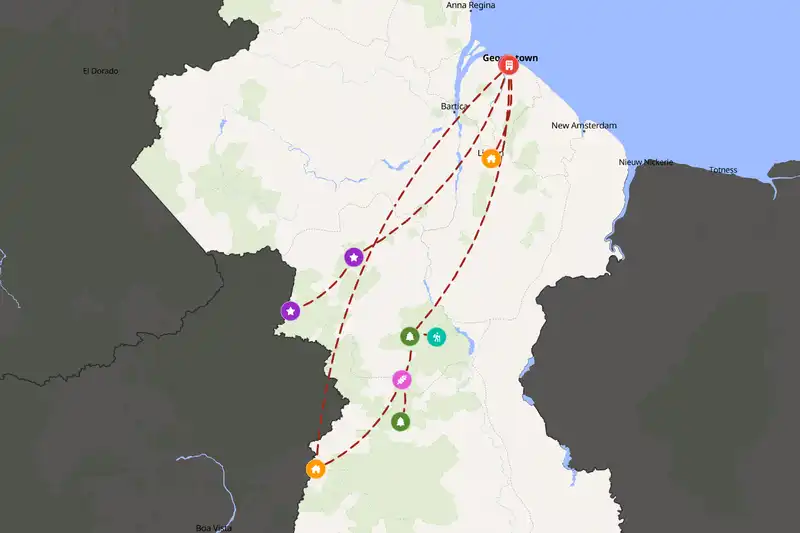
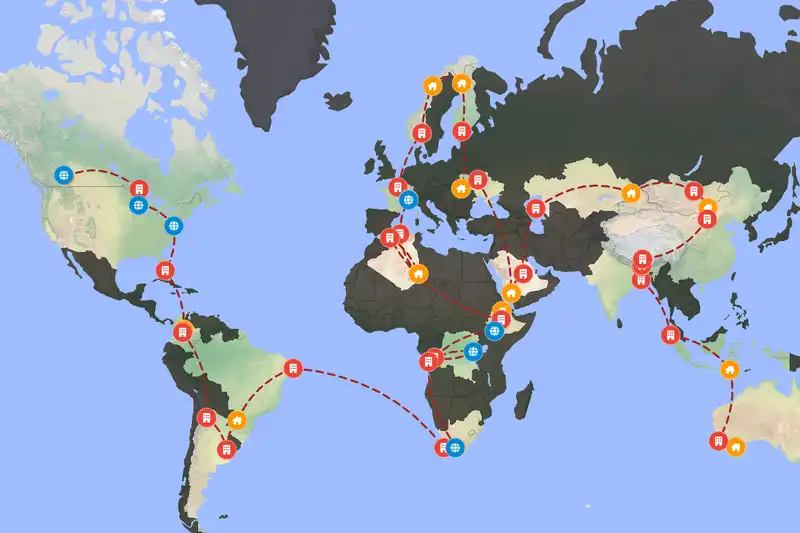
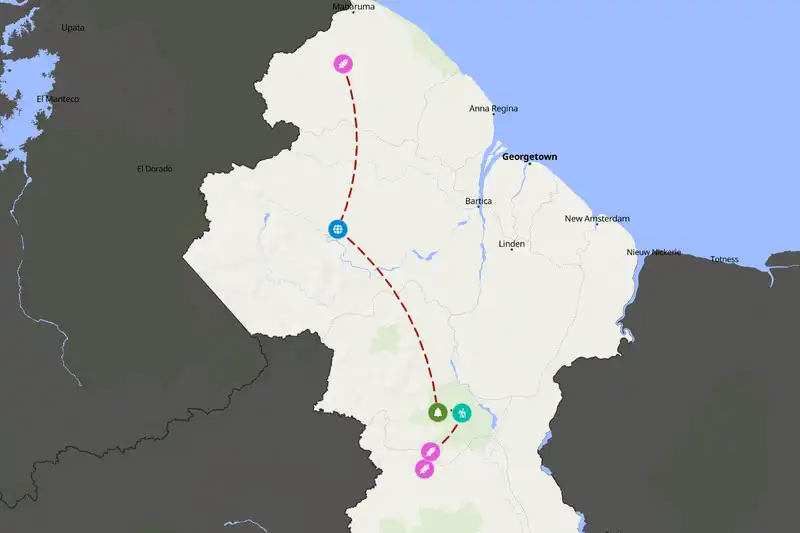
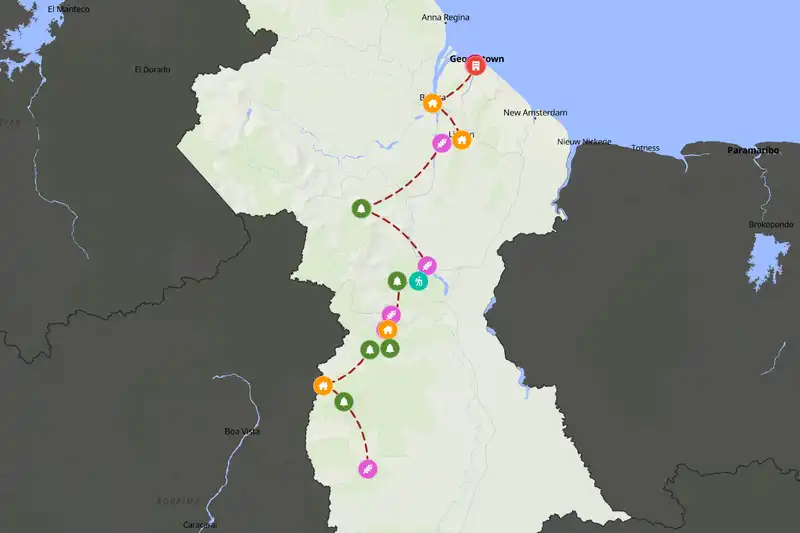
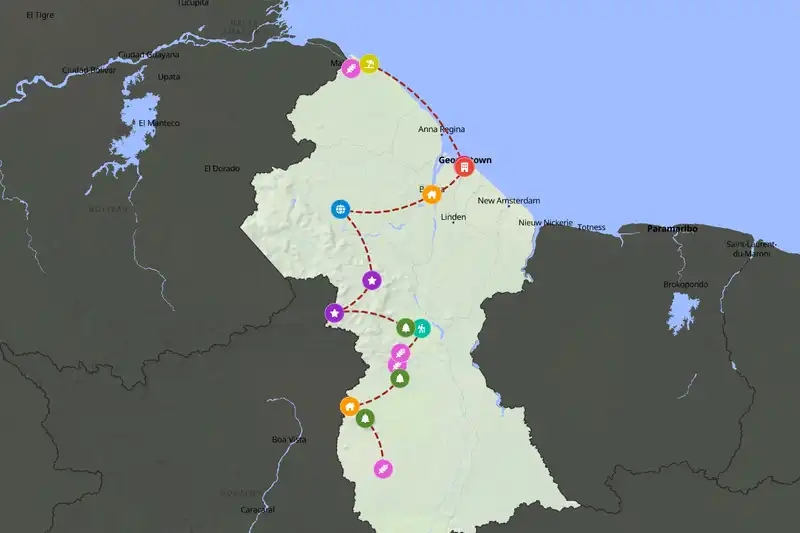
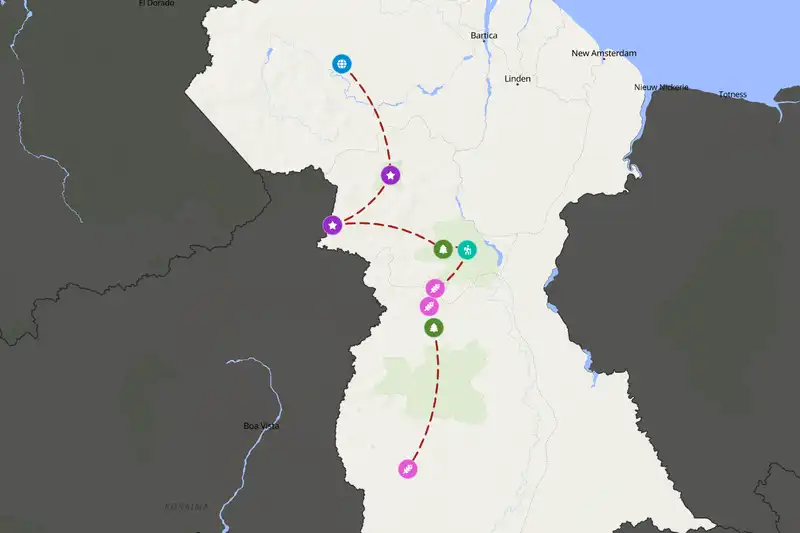
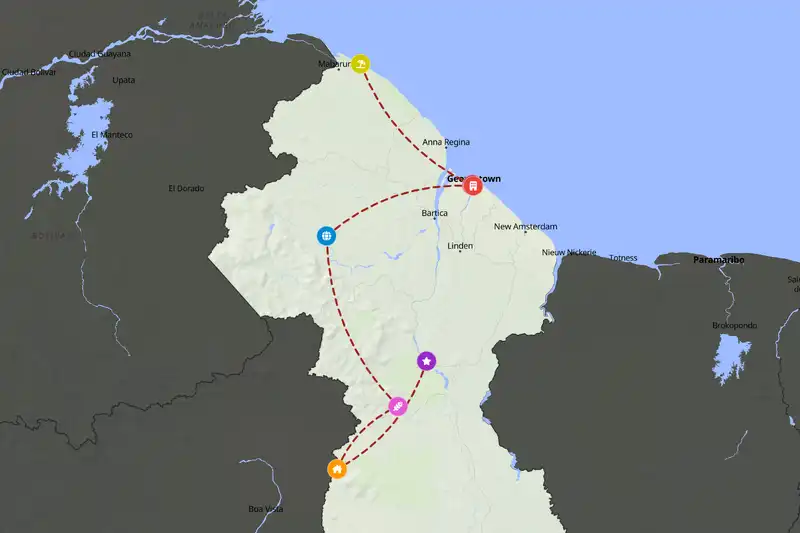
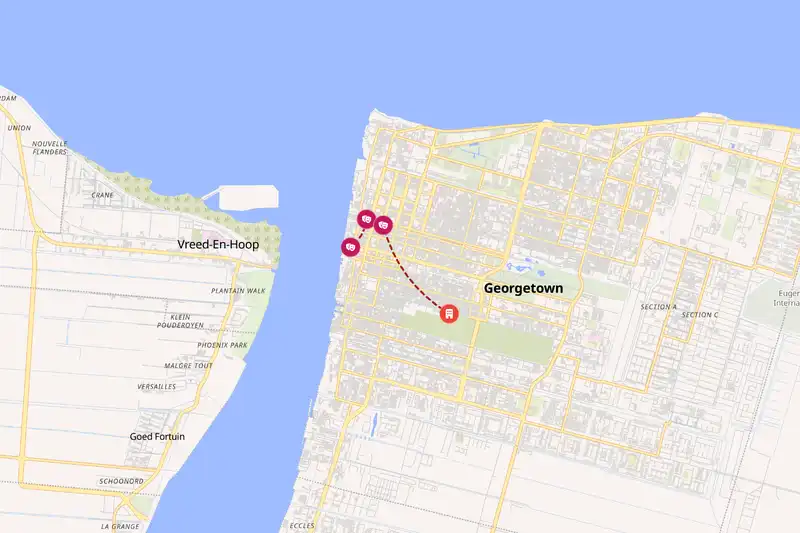
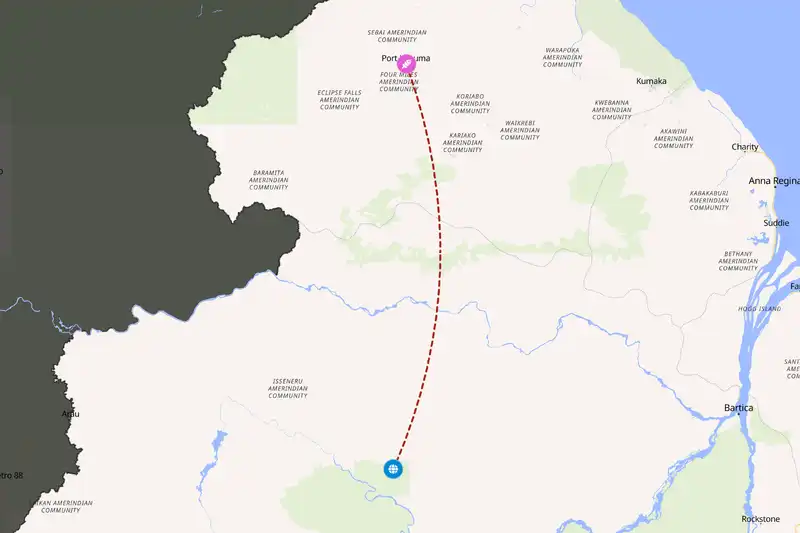
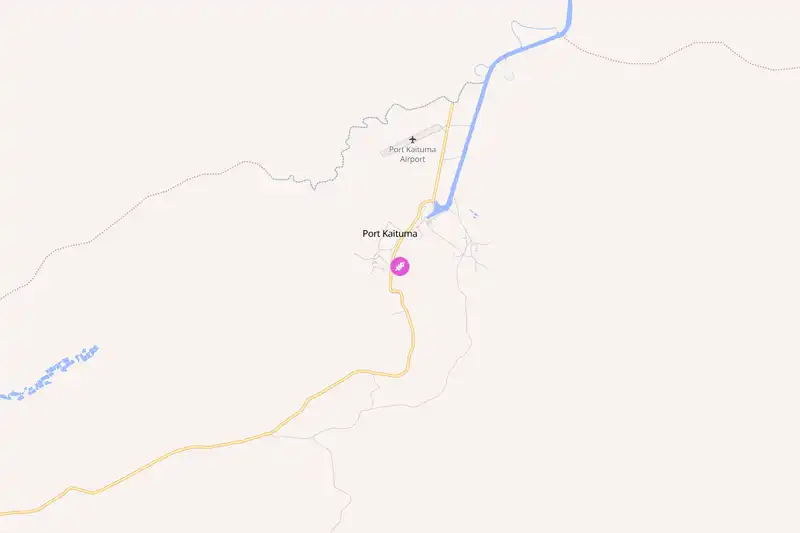
Example Guyana itinerary planner route
Build your own Guyana route
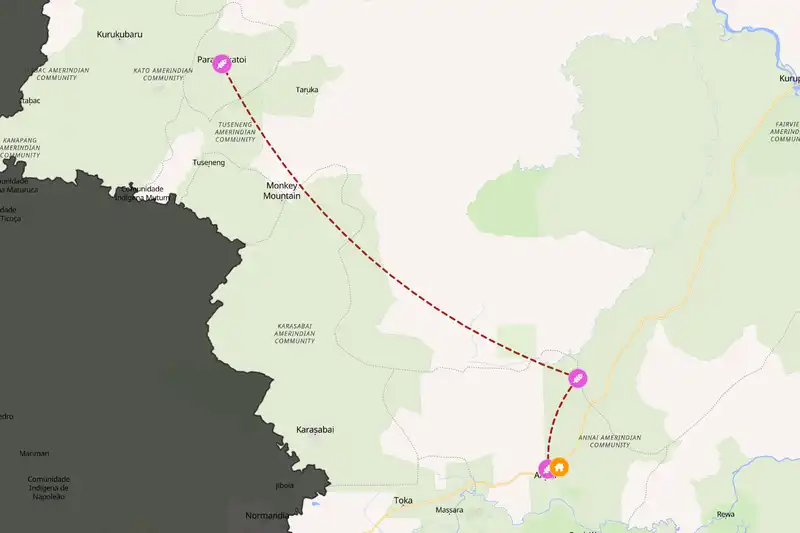
Example Guyana itinerary planner route
Build your own Guyana route
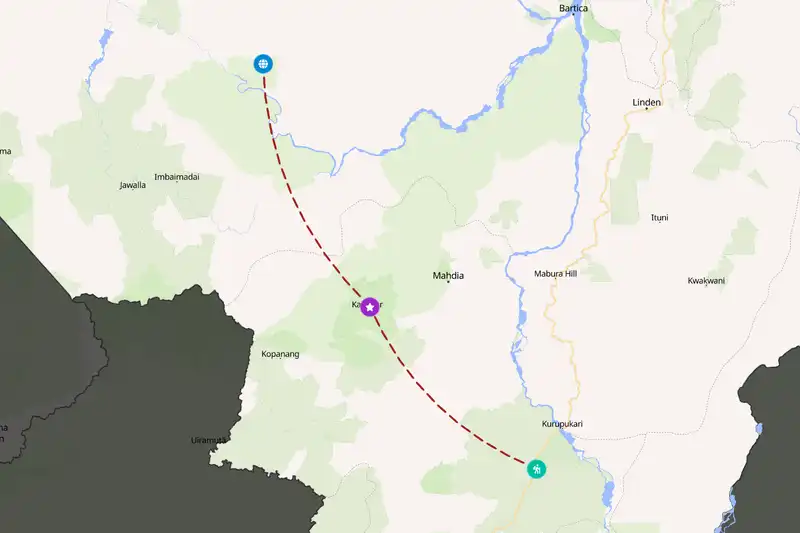
Example Guyana itinerary planner route
Build your own Guyana route
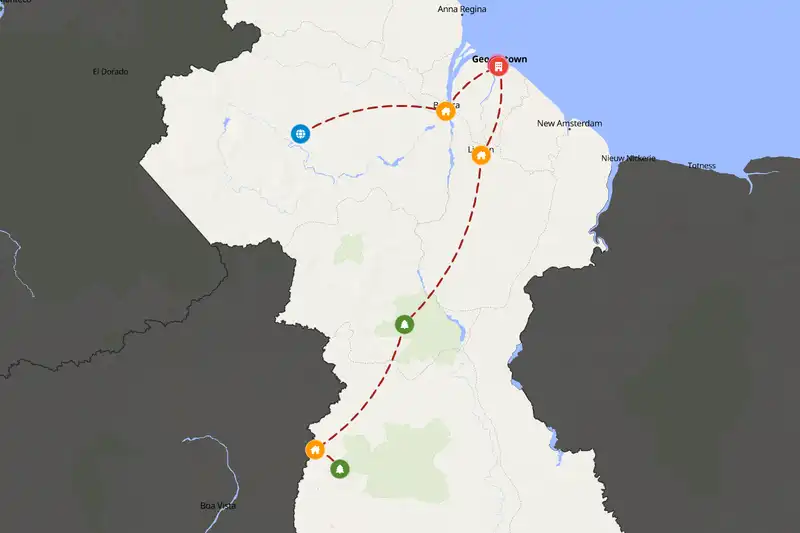
Example Guyana itinerary planner route
Build your own Guyana route
Example Guyana itinerary planner route
Build your own Guyana route
Example Guyana itinerary planner route
Build your own Guyana route
Example Guyana itinerary planner route
Build your own Guyana route
Example Guyana itinerary planner route
Build your own Guyana route
Example Guyana itinerary planner route
Build your own Guyana route
Example Guyana itinerary planner route
Build your own Guyana route

🇬🇾 GuyanaCreate Your Itinerary

1 How many days will you travel?
2 What are your interests?
3 Travel speed
⚙️ Advanced options

🙋 FAQGood to know before you start

If you only have about five days you can see Georgetown and squeeze in a quick rainforest or savannah trip, but around a week and a half lets you reach places like Kaieteur Falls and the Rupununi at a calmer pace, while roughly two weeks or a bit more gives you time to move slowly, link a couple of interior lodges, and build in buffer for weather or transport delays.
Yes, many travelers pair Guyana with Suriname or French Guiana along the Guianas coast, or with northern Brazil via overland routes through the interior, and some also link it with Venezuela when conditions allow, since all share the same general region and have cross-border connections.

Build a multi-country route
Yes. Stops are sequenced to minimize backtracking and grouped by how close they are to each other, and your chosen travel pace (fast, normal, or slow) adjusts how much ground each day covers.
Absolutely. Adjust your trip length, interests, starting point, or travel style and generate a new route in seconds.
Yes, generating and viewing your route is completely free. An offline-friendly PDF version is available as an optional purchase which gives more detailed information for each location on your route.

🗺️ RegionsWhere things are located

Guyana is big, wild, and slow to cross, so even famous spots like Kaieteur Falls and Iwokrama Forest Reserve can sit a long way from each other on the map. Distances that look small on a screen often mean a full day of travel once you factor in rivers, rainforest, and the lack of direct routes.

To keep your trip realistic, this planner groups nearby places into the same leg of the journey instead of bouncing you back and forth across the country. That way you spend more time actually exploring and less time worn out from long hauls between far‑flung corners.

📈 StatisticsPlanner insights

Our set of curated travel destinations for Guyana

Cities & Towns: 7      Villages: 9      Landmarks: 3      National Parks: 7      Hikes: 3      Beaches: 2      Attractions: 8     

Routes created by others

9

Routes created

11

Average trip length (days)

9

Average destinations

Most popular interests

  • 🚶‍♀️ Hikes (100%)
  • 🏞️ National Parks (89%)
  • 🌽 Villages (78%)
  • ⭐️ Landmarks (56%)
  • 🌆 Cities & Towns (44%)

Most included destinations

⚙️ How it worksHow it all fits together

The Guyana itinerary planner starts by grouping places that sit in the same general part of the country so you are not bouncing back and forth on long, tiring transfers. Once it has those clusters, it lays them out in a logical overall direction, so your trip flows steadily from one area to the next instead of zigzagging, which keeps travel days shorter and more predictable. Within each cluster, it looks at what kind of place each stop is and how many other spots are nearby, then gives more time to bigger hubs and less to quick stops, so the pace feels natural rather than rushed or dragged out. If you choose a mix of cities & towns, landmarks, and attractions, for example, it might have you spend several nights in Georgetown as your base, then slot nearby sights as easy day trips from there, which is why the route feels like something a local traveler would actually follow rather than a random list of pins on a map.