
×

Guyana🇬🇾 | national parksIwokrama Forest Reservecanopy walkway, dense rainforest, scientific research | things to do and best time to go

Explore Turtle Mountain TrailExplore Kaieteur National Park

Backpacking in Iwokrama Forest Reserve
🏆 Top picknational park ranked #2
By Johan Kruseman 🇳🇱 | Updated September 4, 2026

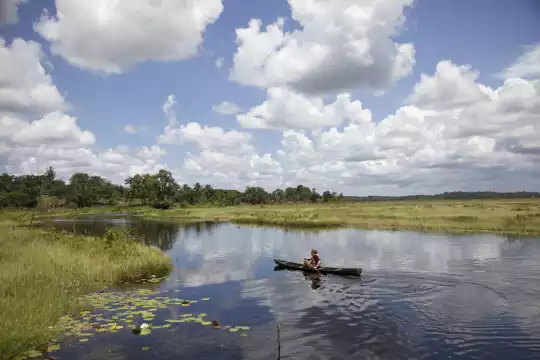
Most online blurbs sell Iwokrama as pure, untouched wilderness; the surprise is how tightly controlled and small your accessible slice actually is, especially if you’re on a backpacker budget and not on a pre-booked tour. Iwokrama Forest Reserve sits in central Guyana, straddling the Linden–Lethem road between Kurupukari and Annai, right in the interior rainforest belt. For backpackers, it’s a serious jungle stop: dense forest, river views, canopy walkway, and real chances at macaws, monkeys, maybe even a jaguar if luck is absurdly on your side. Hiking is mostly guided and on short, set trails, so don’t expect days of independent trekking. Access is easier than it looks on a map thanks to the main road, but transport is slow, and entrance, guiding, and lodging at the research centre or nearby eco-lodges add up. It’s quieter and more research-focused than Kaieteur or Shell Beach, less dramatic but more immersive if you want to sit with the forest rather than chase big “wow” moments.

Discover everything you want to know in the 📖 Guyana Travel Guide.


Get your Guyana guide
46 ranked highlights, routes & tips, works offline (205 pages)
Loading the map 🌍
CLICK TO FILTER
cities
towns
villages
landmarks
national parks
hikes
beaches
attractions
festivals
regions
SHOW COUNTRY’S BESTSHOW ALL

✨ Why go?
Ranked #2 national park in Guyana
Reasons people choose to explore here

Backpackers flock to Iwokrama Forest Reserve for its blend of independent exploration and affordable accommodations. This isn’t just another tourist stop; it’s a chance to immerse yourself in one of the world’s last great rainforests. The park offers a variety of trails, catering to different skill levels, which means you can tailor your adventure to your comfort zone.

Camping is budget-friendly, with options ranging from basic sites to nearby hostels that provide a roof over your head without breaking the bank. This makes it easy to stretch your dollars while still enjoying the rich biodiversity that Iwokrama has to offer.

Self-guided travelers will find the park particularly accommodating. While guided tours are available, many trails are well-marked, allowing you to set your own pace … read more 👉
Backpackers flock to Iwokrama Forest Reserve for its blend of independent exploration and affordable accommodations. This isn’t just another tourist stop; it’s a chance to immerse yourself in one of the world’s last great rainforests. The park offers a variety of trails, catering to different skill levels, which means you can tailor your adventure to your comfort zone.

Camping is budget-friendly, with options ranging from basic sites to nearby hostels that provide a roof over your head without breaking the bank. This makes it easy to stretch your dollars while still enjoying the rich biodiversity that Iwokrama has to offer.

Self-guided travelers will find the park particularly accommodating. While guided tours are available, many trails are well-marked, allowing you to set your own pace and discover the forest’s secrets on your terms. Just be aware of the weather; the rainforest can be unpredictable, so pack accordingly.

By choosing Iwokrama, you’re not just visiting a national park; you’re stepping into a living ecosystem that rewards curiosity and respect. This is where your energy and budget can truly shine, leaving room for the experiences that matter most.
Want to include Iwokrama Forest Reserve in your Guyana route?
Create a personalized Guyana itinerary that includes Iwokrama Forest Reserve and the places that fit your trip — based on your travel style, budget, and available time. Get your route in seconds.

Generate my trip

💡 HighlightsPlaces and moments you shouldn't skip

  • Canopy Walkway & Iwokrama Field Station — Walk above the treetops on the suspended canopy route and you’ll see the forest from a totally different angle: mixed-species bird flocks, monkeys moving through the crowns, and orchids/epiphytes up close; the field station nearby doubles as a research hub and a great place to learn what you’re actually looking at.
  • Burro-Burro River boat trips — Slow motor- or canoe-trips on the river are classic for wildlife viewing: banks lined with tapir tracks, parties of giant river otters, sunbathing caiman and a parade of kingfishers and herons. Early morning or late afternoon are the richest hours.
  • Giant river otter spotting — Iwokrama is one of the best places in Guyana to see these loud, social predators; sightings often happen from riverbanks or on guided
read more 👉
  • Canopy Walkway & Iwokrama Field Station — Walk above the treetops on the suspended canopy route and you’ll see the forest from a totally different angle: mixed-species bird flocks, monkeys moving through the crowns, and orchids/epiphytes up close; the field station nearby doubles as a research hub and a great place to learn what you’re actually looking at.
  • Burro-Burro River boat trips — Slow motor- or canoe-trips on the river are classic for wildlife viewing: banks lined with tapir tracks, parties of giant river otters, sunbathing caiman and a parade of kingfishers and herons. Early morning or late afternoon are the richest hours.
  • Giant river otter spotting — Iwokrama is one of the best places in Guyana to see these loud, social predators; sightings often happen from riverbanks or on guided boat trips, and they’re unforgettable to watch hunt and play.
  • Birding hotspots — The reserve is a birdwatcher’s dream: expect toucans, macaws, antbirds, and canopy specialists that are harder to find elsewhere in South America—bring bins and a patient guide for prime chances at rarer Guianan species.
  • Night walks and spotlighting — The forest after dark transforms: frogs and tree toads chorus, nocturnal mammals and owls become active, and guided night walks or boat rides are where you’ll meet the area’s secretive critters.
  • Savannah-forest transition and white-sand patches — Iwokrama sits on the Guiana Shield, so you get dramatic habitat changes in short walks: flooded forest, terra firme, and white-sand enclaves, each with distinct plants and specialist wildlife to notice.
  • Low-impact hikes and micro-landscapes — The reserve’s trail network may not be long-distance trekking, but short hikes reward you with spectacular micro-habitats—streams, folded sandstone outcrops, and hidden clearings—perfect for close-up wildlife and rainforest immersion.
  • Community-led ecotours and research encounters — Guides from local communities and researchers based at Iwokrama offer deeper insight: tracking sessions, talks about conservation work, and visits that connect wildlife sightings to ongoing efforts to protect the forest.
Spotted a mistake or missing something? Contact us.

Things to do near Iwokrama Forest Reserve

Ratings based on Tripadvisor reviews. When you book through this link, you support our work at no extra cost to you.

🌤️ When to go?Best time to explore Iwokrama Forest Reserve


  • Weather: The dry season from August to November is your best bet. Rainfall drops significantly, making trails less slippery and river crossings safer. The wet season (May to July) floods paths and can turn your trek into a slog.

  • Temperature: Expect daytime highs around 28-32°C (82-90°F) year-round, with nights cooling to 20-24°C (68-75°F). Humidity stays high, so pack breathable gear and prepare for sticky conditions even in the dry season.

  • Daylight Hours: Near the equator, daylight is steady—about 11.5 to 12.5 hours daily. This consistency means you can plan hikes without worrying about early sunsets or drastically shifting light.

  • Crowds: Visitor numbers are low year-round, but the dry season sees a slight uptick. Don’t expect crowds, but booking accommodations early during this
read more 👉

  • Weather: The dry season from August to November is your best bet. Rainfall drops significantly, making trails less slippery and river crossings safer. The wet season (May to July) floods paths and can turn your trek into a slog.

  • Temperature: Expect daytime highs around 28-32°C (82-90°F) year-round, with nights cooling to 20-24°C (68-75°F). Humidity stays high, so pack breathable gear and prepare for sticky conditions even in the dry season.

  • Daylight Hours: Near the equator, daylight is steady—about 11.5 to 12.5 hours daily. This consistency means you can plan hikes without worrying about early sunsets or drastically shifting light.

  • Crowds: Visitor numbers are low year-round, but the dry season sees a slight uptick. Don’t expect crowds, but booking accommodations early during this period is wise to avoid last-minute hassles.

  • Seasonal Activities: Wildlife spotting peaks in the dry season when animals gather around shrinking water sources. The wet season offers lush greenery and birdwatching but at the cost of accessibility.

  • Price Fluctuations: Costs for guides and lodging rise modestly during the dry season due to demand. The wet season offers lower prices but factor in potential extra costs for delays or gear replacements caused by rain.


Pro-tip: Aim for the shoulder months of August and November to balance fewer crowds, manageable weather, and better rates—your energy and wallet will thank you.


source: climatestotravel.comJANJanuary: fair for travelingFEBFebruary: fair for travelingMARMarch: fair for travelingAPRApril: good for travelingMAYMay: below average for travelingJUNJune: below average for travelingJULJuly: below average for travelingAUGAugust: highly recommended for travelingSEPSeptember: excellent for travelingOCTOctober: excellent for travelingNOVNovember: highly recommended for travelingDECDecember: good for traveling
when-to-go

✈️ The backpacker research shortcutGuyana Travel Guide

An offline-friendly backpacking guide with optimized travel routes, ranked highlights, transport advice, and the best areas to stay.
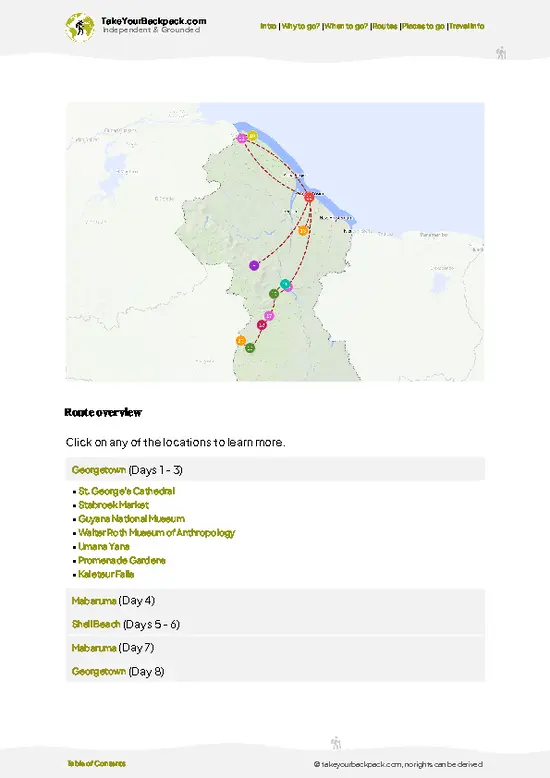
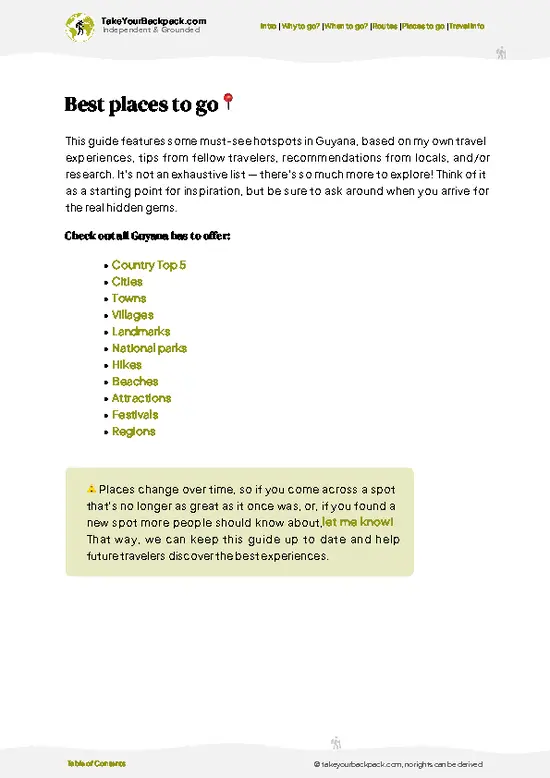
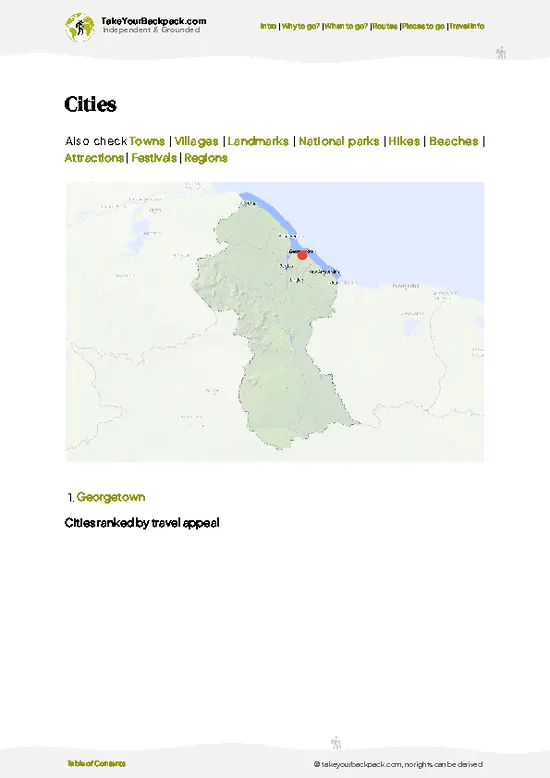
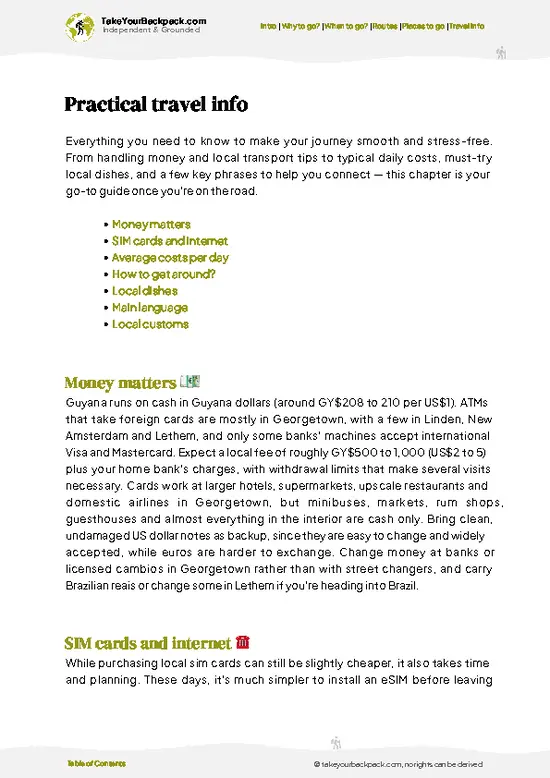
example page 0 from our offline Travel Guide for Guyana
example page 1 from our offline Travel Guide for Guyana
example page 2 from our offline Travel Guide for Guyana
example page 3 from our offline Travel Guide for Guyana
example page 4 from our offline Travel Guide for Guyana
example page 5 from our offline Travel Guide for Guyana
example page 6 from our offline Travel Guide for Guyana
example page 7 from our offline Travel Guide for Guyana
The digital guide (205 pages) contains:
46 highlights, ranked by travel appeal
Optimized 5, 10 & 15-day travel routes
Cities, national parks, landmarks, beaches
How to get around
Offline-friendly for travel without Wi-Fi
👉 Click to see all 30+ guide features

📅 Plan smarter in minutes, not weeks
Month by month travel advice
Festivals & national holidays
Budget expectations

🗺️ Go to the right places, skip the overrated ones
Honest pros & cons of destinations
Top hikes, parks & viewpoints
Lesser-known places most travelers miss
Clear “worth it vs skip it” guidance

🛏️ Travel smoothly without rookie mistakes
Best areas to stay
Transport systems explained simply
Common scams & safety advice
SIM cards, money & practical tips

🌍 Understand the country, not just visit it
Culture & traditions
Local customs
Festivals worth planning around
Traveler-friendly historical context
Insights that make places more meaningful

📱 Built for real travel conditions
Fully downloadable PDF
Works completely offline
Optimized for phone use
Useful in remote areas & buses
Everything in one place
Save weeks of stressful planning
Get instant access to your full guide. 30‑day money-back guarantee.
+ Add another guide for just US$7.80

By proceeding you agree to our terms.
Sent to your inbox immediately after payment • 100% Secure Checkout
Best Backpacking Travel Advisor 2025 tourism awardBest Backpacking
Travel Advisor
2025
What others say about Take Your Backpack Guides:
⭐⭐⭐⭐⭐
Fantastic, amazing amount of information!
⭐⭐⭐⭐⭐
My goodness this is amazing, it's what I've been looking for hats off too you!
⭐⭐⭐⭐⭐
I think this is absolutely BRILLIANT
⭐⭐⭐⭐
Very complete and informative. It's still missing places, but I gotta to commend you
⭐⭐⭐⭐⭐
This is truly amazing, thank you, can't wait to explore it with my kids!
⭐⭐⭐⭐⭐
Awesome resource, thank you!
⭐⭐⭐⭐⭐
This is amazing! Can't wait to explore the ones I haven't seen
⭐⭐⭐⭐
I love this! Well done, great idea.
⭐⭐⭐⭐⭐
Thanks for taking the time to make this gem!
⭐⭐⭐⭐⭐
This might be the best website I've ever seen.
⭐⭐⭐⭐⭐
Congratulations, and thank you so much for your work; it's incredibly valuable.
⭐⭐⭐⭐
In all seriousness I think you did a great job pointing out the important spots
⭐⭐⭐⭐⭐
10/10 very good
⭐⭐⭐⭐⭐
As someone who's only just starting to visit regularly this is awesome, thank you.
⭐⭐⭐⭐
Thank you very much! I'm going to visit my dad, it's going to be very useful!
⭐⭐⭐⭐⭐
This is really cool! We'll be travelling for the first time and this definitely come in handy.
⭐⭐⭐⭐⭐
You are now our minister of culture, congratulations 👨‍💼
⭐⭐⭐⭐⭐
Just wanted to tell you that this is a pearl! Going to follow your recommendations.
⭐⭐⭐⭐⭐
This is so cool. I'll definitely be using the resource for my travels soon.
⭐⭐⭐⭐⭐
This is very impressive! Good work.
⭐⭐⭐⭐⭐
This is an amazing and informative site. Very well done!

🛏️ Where to stay?How to pick the right area

For backpackers heading to the ’Iwokrama Forest Reserve, your options for accommodation are limited but rich in experience. Inside the park, the Iwokrama River Lodge stands out. It offers basic yet comfortable lodging with a focus on eco-tourism. You’ll find shared facilities and a communal vibe, perfect for meeting fellow adventurers. The lodge also organizes guided tours, which can be a great way to explore the area without getting lost in the dense forest.

If you prefer to stay outside the park, the nearby town of Lethem is your best bet. It’s about a two-hour drive from the reserve and has … read more 👉
For backpackers heading to the ’Iwokrama Forest Reserve, your options for accommodation are limited but rich in experience. Inside the park, the Iwokrama River Lodge stands out. It offers basic yet comfortable lodging with a focus on eco-tourism. You’ll find shared facilities and a communal vibe, perfect for meeting fellow adventurers. The lodge also organizes guided tours, which can be a great way to explore the area without getting lost in the dense forest.

If you prefer to stay outside the park, the nearby town of Lethem is your best bet. It’s about a two-hour drive from the reserve and has a few budget-friendly guesthouses. Options like Karanambu Lodge provide a more rustic experience, often with local meals and a chance to engage with the community.

Be aware that transportation can be tricky. Roads may be rough, and public transport isn’t always reliable. Budget extra time and money for travel.

Lastly, consider the weather. The rainy season can make some areas inaccessible, so plan your trip accordingly. Prioritize your energy and budget for the experiences that truly matter—like the wildlife and the stunning biodiversity of the forest.

👛 Costs (as of 4 September 2026)Money, prices, and spending tips

Visiting the Iwokrama Forest Reserve in Guyana can be a rewarding experience, but it’s essential to be aware of the costs involved to avoid surprises.

Entry fees for the reserve typically range from $10 to $20 USD per person. This fee grants you access to the park and its basic facilities. However, if you want to explore deeper, guided tours are highly recommended. These can cost anywhere from $50 to $150 USD, depending on the length and type of tour.

Accommodations vary widely. Basic lodges start around $30 USD per night, while more comfortable options can go up to $100 USD or more. Meals are often not included, so budget an additional $10 to $30 USD per day for food, depending on your dining choices.

Transportation to the reserve can also add up. If you’re traveling from Georgetown, … read more 👉
Visiting the Iwokrama Forest Reserve in Guyana can be a rewarding experience, but it’s essential to be aware of the costs involved to avoid surprises.

Entry fees for the reserve typically range from $10 to $20 USD per person. This fee grants you access to the park and its basic facilities. However, if you want to explore deeper, guided tours are highly recommended. These can cost anywhere from $50 to $150 USD, depending on the length and type of tour.

Accommodations vary widely. Basic lodges start around $30 USD per night, while more comfortable options can go up to $100 USD or more. Meals are often not included, so budget an additional $10 to $30 USD per day for food, depending on your dining choices.

Transportation to the reserve can also add up. If you’re traveling from Georgetown, expect to pay around $50 to $100 USD for a bus or private transfer.

Plan for additional costs like tips for guides and any optional activities, such as canoeing or birdwatching, which can range from $20 to $50 USD.

In summary, a budget of around $200 to $400 USD for a two-day visit is a reasonable estimate, depending on your choices. Being aware of these costs will help you focus on enjoying the unique beauty of Iwokrama without financial stress.


source: guyanatourism.com
⚠️ Prices can change and everyone travels differently, so take this as a rough guide. Hope it helps you plan your adventure!

🥾 TrailsPlan your hike in Iwokrama Forest Reserve: routes, terrain, and sights

The hiking opportunities in the Iwokrama Forest Reserve are pretty fantastic if you’re up for an adventure. The terrain is a mix of dense rainforest, riverbanks, and some elevated areas, giving you a chance to see everything from towering trees to stunning views of the Essequibo River. Wildlife is abundant, so keep your eyes peeled for monkeys, jaguars, and colorful birds. The trails can range from easy walks to more challenging treks, so there’s something for everyone.

One of the notable trails is the Canopy Walkway Trail. Here are the details:
  • Length: 250 meters
  • Estimated Duration: 1-2 hours
  • Difficulty
read more 👉
The hiking opportunities in the Iwokrama Forest Reserve are pretty fantastic if you’re up for an adventure. The terrain is a mix of dense rainforest, riverbanks, and some elevated areas, giving you a chance to see everything from towering trees to stunning views of the Essequibo River. Wildlife is abundant, so keep your eyes peeled for monkeys, jaguars, and colorful birds. The trails can range from easy walks to more challenging treks, so there’s something for everyone.

One of the notable trails is the Canopy Walkway Trail. Here are the details:
  • Length: 250 meters
  • Estimated Duration: 1-2 hours
  • Difficulty Level: Easy
  • Key Features: Elevated walkway through the treetops, birdwatching opportunities, great views of the forest
  • Terrain: Mostly flat with some stairs on the walkway

Another option is the Forest Trail, which offers a deeper dive into the jungle experience:
  • Length: 3 kilometers
  • Estimated Duration: 2-3 hours
  • Difficulty Level: Moderate
  • Key Features: Close-up look at flora and fauna, potential for wildlife sightings, immersive rainforest experience
  • Terrain: Uneven ground, some muddy sections, and roots to navigate

Getting to Iwokrama isn’t too tricky. You can catch a bus from Georgetown to Lethem, and then arrange a ride to the reserve. It’s not overly crowded, especially compared to other parks, so you can usually enjoy the tranquility of the forest. Just keep in mind there might be a small entrance fee, which helps maintain the area. Overall, it’s a solid choice for budget travelers looking to soak in some natural beauty without breaking the bank.
⚠️ Hiking info can sometimes be outdated or inaccurate. Before you hit the trail, check the latest conditions with locals. If you do spot anything that's off, I'd love to hear from you, so I can update it for fellow travelers.

🛡️ SafetyStaying Safe: What Travelers Should Know

The ’Iwokrama Forest Reserve’ is generally well-managed, making it accessible for backpackers, but there are a few realities to keep in mind. Weather can shift quickly; afternoon rain is common, so pack a reliable rain jacket and waterproof your gear.

The terrain varies from flat paths to uneven ground, with some areas requiring careful navigation. Watch your footing, especially near river crossings, which can be slippery. A sturdy pair of hiking boots is essential.

Wildlife encounters are part of the experience. You might spot monkeys or birds, but keep a respectful distance. Avoid feeding animals; it disrupts their natural behavior and can lead to unwanted encounters.

Preparation is key. Many first-timers underestimate the importance of hydration and snacks. Carry enough water and energy … read more 👉
The ’Iwokrama Forest Reserve’ is generally well-managed, making it accessible for backpackers, but there are a few realities to keep in mind. Weather can shift quickly; afternoon rain is common, so pack a reliable rain jacket and waterproof your gear.

The terrain varies from flat paths to uneven ground, with some areas requiring careful navigation. Watch your footing, especially near river crossings, which can be slippery. A sturdy pair of hiking boots is essential.

Wildlife encounters are part of the experience. You might spot monkeys or birds, but keep a respectful distance. Avoid feeding animals; it disrupts their natural behavior and can lead to unwanted encounters.

Preparation is key. Many first-timers underestimate the importance of hydration and snacks. Carry enough water and energy bars to keep your energy up. Timing your hikes for early morning or late afternoon helps you avoid the heat and maximizes your wildlife sightings. Stay aware, respect the environment, and you’ll have a rewarding adventure.

FAQCommon questions from travelers

3 to 4 days are recommended to explore Iwokrama Forest Reserve thoroughly. This allows time for guided hikes, wildlife spotting, and river activities. Longer stays provide better chances to experience the biodiversity and remote trails.
No, you cannot visit Iwokrama Forest Reserve without a car or arranged transport. The reserve is remote with limited public transport options, so visitors typically arrange 4x4 vehicles or boat transfers from nearby towns like Lethem or Georgetown.
Yes, an entrance fee or permit is required to visit Iwokrama Forest Reserve. Fees vary but expect to pay around 50 to 100 USD for guided tours and access permits, which help fund conservation efforts and local community projects.
⚠️ Things can change over time, so always validate details locally before you go.

Other Guyanese national parks near Iwokrama Forest Reserve

Explore more nearby:

  • Rupununi Savannah—open grasslands, scattered Amerindian villages, seasonal wetlands| 81 km away
  • Karanambu Ranch—giant river otters, savannah lodge, wildlife rehabilitation| 89 km away
  • Kaieteur National Park—Kaieteur Falls, sandstone plateau, endemic frogs| 96 km away

💡 Not sure where to go next?
Create a personalized itinerary for Guyana including Iwokrama Forest Reserve and the places that fit your trip.

Generate my itinerary

👉 Discover all national parks

Or checkout all Guyana has to offer (think cities, towns, villages, national parks, hikes, beaches, festivals)
Country photo of Guyana

We 💚 feedbackKey takeaways before you go

Iwokrama Forest Reserve is a raw slice of nature that demands respect. The vibe is tranquil yet alive, with wildlife that feels almost personal. Don’t miss the canopy walk; it’s a surprising thrill that offers a bird’s-eye view of the forest. Just be prepared for the humidity—stay hydrated and wear breathable clothing. The real magic lies in slowing down and soaking it all in. This isn’t just a destination; it’s an experience that will stick with you long after you leave.

✍️ Help improve this page!
The information on this page is based on in-depth research, insights shared by experienced travelers, and feedback from the local travel community in Guyana. While every effort is made to keep the information accurate and current, conditions can change — so if you spot anything incorrect or outdated, please get in touch.


🙋‍♂️ Give feedback

👋 Meet the founderWho’s Behind Take Your Backpack?

Johan, backpacker and founder of TakeYourBackpackHi, I’m Johan (Netherlands 🇳🇱), the creator of TakeYourBackpack. Over the past decade, I’ve backpacked through 80+ countries across six continents, gaining extensive experience with independent travel, long-term trips, and overland routes.

This site is built on a combination of firsthand travel experience and carefully curated insights from other backpackers. Many guides are based on places I’ve personally visited, while others bring together tips, observations, and practical advice shared by trusted travelers I’ve met along the way.

The goal is to provide realistic, experience-driven guidance — not generic itineraries — so you can explore destinations with better context, clearer expectations, and more confidence.

Get full Guyana guide •
Instant download • 46 highlights • Full Offline guide