v2.webp)
The Labyrinthine Alleys
Forget the Instagram fantasy of empty, sun-dappled lanes. The Casbah’s alleys are a living, breathing maze—narrow, steep, and unapologetically chaotic. You’ll dodge mopeds, cats, and the occasional soccer ball. The real thrill is getting lost, then realizing you’re exactly where you’re supposed to be. Each turn reveals a new layer: crumbling Ottoman arches, laundry strung like prayer flags, and the echo of a thousand years of footsteps. It’s not a sanitized museum; it’s a neighborhood with attitude.
Palace of the Dey (Dar Hassan Pacha)
This isn’t some cordoned-off relic. The Palace of the Dey is a swaggering reminder that Algiers was once the seat of Mediterranean power. The mosaics and carved cedar ceilings are the real deal—no over-restoration, no velvet ropes. If … read more 👉
Forget the Instagram fantasy of empty, sun-dappled lanes. The Casbah’s alleys are a living, breathing maze—narrow, steep, and unapologetically chaotic. You’ll dodge mopeds, cats, and the occasional soccer ball. The real thrill is getting lost, then realizing you’re exactly where you’re supposed to be. Each turn reveals a new layer: crumbling Ottoman arches, laundry strung like prayer flags, and the echo of a thousand years of footsteps. It’s not a sanitized museum; it’s a neighborhood with attitude.
Palace of the Dey (Dar Hassan Pacha)
This isn’t some cordoned-off relic. The Palace of the Dey is a swaggering reminder that Algiers was once the seat of Mediterranean power. The mosaics and carved cedar ceilings are the real deal—no over-restoration, no velvet ropes. If … read more 👉
The Labyrinthine Alleys
Forget the Instagram fantasy of empty, sun-dappled lanes. The Casbah’s alleys are a living, breathing maze—narrow, steep, and unapologetically chaotic. You’ll dodge mopeds, cats, and the occasional soccer ball. The real thrill is getting lost, then realizing you’re exactly where you’re supposed to be. Each turn reveals a new layer: crumbling Ottoman arches, laundry strung like prayer flags, and the echo of a thousand years of footsteps. It’s not a sanitized museum; it’s a neighborhood with attitude.
Palace of the Dey (Dar Hassan Pacha)
This isn’t some cordoned-off relic. The Palace of the Dey is a swaggering reminder that Algiers was once the seat of Mediterranean power. The mosaics and carved cedar ceilings are the real deal—no over-restoration, no velvet ropes. If you’re lucky enough to catch it open, you’ll feel the weight of history in every echoing hall. The palace’s faded grandeur is more compelling than any polished tourist site. You can practically hear the plotting and intrigue that once filled these rooms.
Ketchaoua Mosque
You’ll see plenty of mosques on your travels, but Ketchaoua is a shape-shifter. Built, rebuilt, and reimagined through centuries of conquest, it’s a mashup of Moorish, Ottoman, and even Catholic influences (it was a cathedral for a while). The marble columns and horseshoe arches are a crash course in Algerian resilience. The crowds can be thick, but step inside and the noise fades—what remains is the cool hush of stone and the sense that you’re standing at the crossroads of empires.
Street Life & Rooftop Vistas
The Casbah isn’t just about what’s behind closed doors. The real show is outside: old men playing dominoes, kids chasing pigeons, women gossiping from balcony to balcony. If you’re invited up to a rooftop, say yes. The view is a punch to the senses—whitewashed houses tumbling down to the sea, the port bustling below, the city’s pulse laid bare. No filter needed. This is the Casbah’s heartbeat, and it’s not for sale.
Artisan Workshops
Skip the souvenir stands. The Casbah’s soul lives in its workshops: copper-smiths hammering out trays, woodworkers carving doors, and weavers knotting carpets the old way. These aren’t staged for tourists. You’ll smell the sawdust, hear the clang of metal, and maybe get drawn into a conversation about craft, politics, or football. Buy something if you want, but the real prize is seeing skills passed down through generations, stubbornly alive in a world that’s always rushing forward.
Forget the Instagram fantasy of empty, sun-dappled lanes. The Casbah’s alleys are a living, breathing maze—narrow, steep, and unapologetically chaotic. You’ll dodge mopeds, cats, and the occasional soccer ball. The real thrill is getting lost, then realizing you’re exactly where you’re supposed to be. Each turn reveals a new layer: crumbling Ottoman arches, laundry strung like prayer flags, and the echo of a thousand years of footsteps. It’s not a sanitized museum; it’s a neighborhood with attitude.
Palace of the Dey (Dar Hassan Pacha)
This isn’t some cordoned-off relic. The Palace of the Dey is a swaggering reminder that Algiers was once the seat of Mediterranean power. The mosaics and carved cedar ceilings are the real deal—no over-restoration, no velvet ropes. If you’re lucky enough to catch it open, you’ll feel the weight of history in every echoing hall. The palace’s faded grandeur is more compelling than any polished tourist site. You can practically hear the plotting and intrigue that once filled these rooms.
Ketchaoua Mosque
You’ll see plenty of mosques on your travels, but Ketchaoua is a shape-shifter. Built, rebuilt, and reimagined through centuries of conquest, it’s a mashup of Moorish, Ottoman, and even Catholic influences (it was a cathedral for a while). The marble columns and horseshoe arches are a crash course in Algerian resilience. The crowds can be thick, but step inside and the noise fades—what remains is the cool hush of stone and the sense that you’re standing at the crossroads of empires.
Street Life & Rooftop Vistas
The Casbah isn’t just about what’s behind closed doors. The real show is outside: old men playing dominoes, kids chasing pigeons, women gossiping from balcony to balcony. If you’re invited up to a rooftop, say yes. The view is a punch to the senses—whitewashed houses tumbling down to the sea, the port bustling below, the city’s pulse laid bare. No filter needed. This is the Casbah’s heartbeat, and it’s not for sale.
Artisan Workshops
Skip the souvenir stands. The Casbah’s soul lives in its workshops: copper-smiths hammering out trays, woodworkers carving doors, and weavers knotting carpets the old way. These aren’t staged for tourists. You’ll smell the sawdust, hear the clang of metal, and maybe get drawn into a conversation about craft, politics, or football. Buy something if you want, but the real prize is seeing skills passed down through generations, stubbornly alive in a world that’s always rushing forward.
Spotted a mistake or missing something? Contact us.

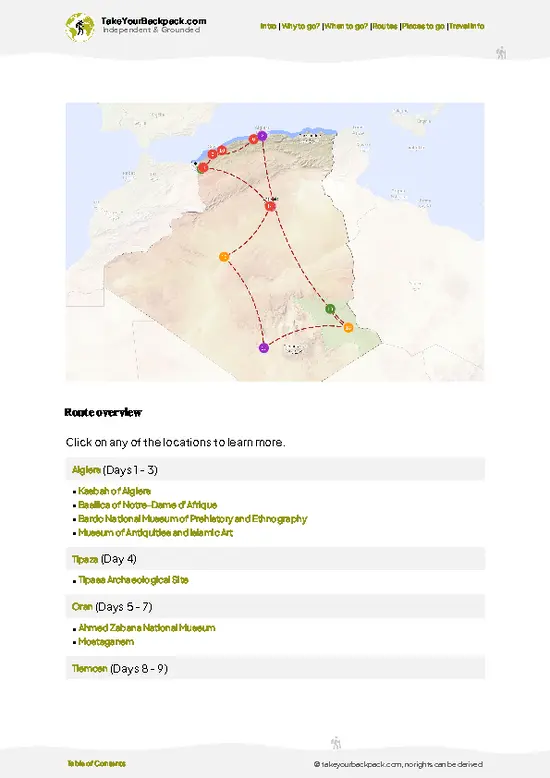
"Best of Algiers city" by Fancyellow

Algiers Casbah Tour

Best of Algiers Tour By Algeriatours16

"Tipaza and Cherchell" Tour by Fancyellow

The essential of Algiers by a local expert in a Private Day

Private Day Tour to the Roman Ruins of Tipaza

Casbah tour

BEST Casbah Private Guided tour with a Tasty Traditional Lunch

Djemila Roman Ruins in a Private Day


 Best Backpacking
.jpg) Hi, I’m Johan (Netherlands 🇳🇱), the creator of TakeYourBackpack. Over the past 3 decades, I’ve backpacked through 90+ countries across six continents, gaining extensive experience with independent travel, long-term trips, and overland routes.
Hi, I’m Johan (Netherlands 🇳🇱), the creator of TakeYourBackpack. Over the past 3 decades, I’ve backpacked through 90+ countries across six continents, gaining extensive experience with independent travel, long-term trips, and overland routes.