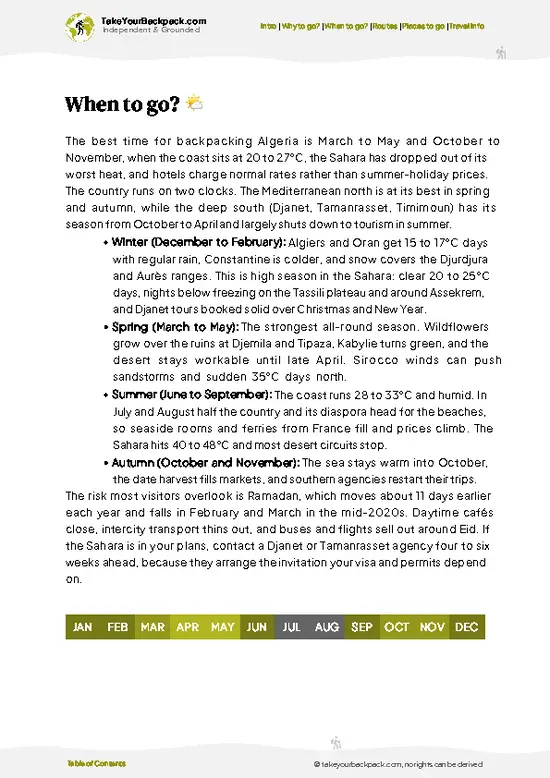
The Façade: Moorish Meets Neo-Byzantine
Forget the Instagrammed arches for a second—stand in front of Ketchaoua Mosque and you’re staring at a building that’s been everything from a mosque to a cathedral and back again. The façade is a collision of Moorish curves and French colonial bravado, with twin staircases that look like they belong in a Mediterranean opera house. It’s not just photogenic; it’s a physical record of Algeria’s tug-of-war with itself. You feel the history in the stone, not just in the guidebook captions.
The Interior: Marble, Light, and Echoes
Step inside and the noise of the Casbah drops away. The marble columns aren’t just decorative—they’re survivors, some dating back centuries, others added during the French occupation. The light filters through stained glass, bouncing … read more 👉
Forget the Instagrammed arches for a second—stand in front of Ketchaoua Mosque and you’re staring at a building that’s been everything from a mosque to a cathedral and back again. The façade is a collision of Moorish curves and French colonial bravado, with twin staircases that look like they belong in a Mediterranean opera house. It’s not just photogenic; it’s a physical record of Algeria’s tug-of-war with itself. You feel the history in the stone, not just in the guidebook captions.
The Interior: Marble, Light, and Echoes
Step inside and the noise of the Casbah drops away. The marble columns aren’t just decorative—they’re survivors, some dating back centuries, others added during the French occupation. The light filters through stained glass, bouncing … read more 👉
The Façade: Moorish Meets Neo-Byzantine
Forget the Instagrammed arches for a second—stand in front of Ketchaoua Mosque and you’re staring at a building that’s been everything from a mosque to a cathedral and back again. The façade is a collision of Moorish curves and French colonial bravado, with twin staircases that look like they belong in a Mediterranean opera house. It’s not just photogenic; it’s a physical record of Algeria’s tug-of-war with itself. You feel the history in the stone, not just in the guidebook captions.
The Interior: Marble, Light, and Echoes
Step inside and the noise of the Casbah drops away. The marble columns aren’t just decorative—they’re survivors, some dating back centuries, others added during the French occupation. The light filters through stained glass, bouncing off the white marble and making the whole space feel both grand and strangely intimate. You’ll see the scars of conversion: Christian iconography ghosting beneath Islamic calligraphy. It’s a living palimpsest, not a sanitized monument.
The Mihrab and Minbar: Layers of Faith
The mihrab (prayer niche) and minbar (pulpit) are not just religious fixtures—they’re the heart of the mosque’s identity crisis. The mihrab is carved with intricate geometric patterns, but look closer and you’ll spot traces of earlier Christian motifs, half-erased but not forgotten. The minbar is a masterclass in North African woodwork, worn smooth by generations of hands. This is where you feel the building’s double life most acutely.
The Acoustics: Soundtrack of the Casbah
Most visitors miss this, but linger during prayer or even when the mosque is quiet. The acoustics are uncanny—whispers bounce, footsteps echo, and the call to prayer seems to hang in the air longer than physics should allow. It’s not just architecture; it’s an experience that makes you hyper-aware of your own presence in the space. No Instagram filter can capture that.
The View from the Steps: Casbah in Panorama
Don’t rush back down. From the top of those grand staircases, you get a panoramic sweep of the Casbah’s chaos—laundry lines, satellite dishes, kids playing soccer in alleys. It’s a front-row seat to the real Algiers, not the airbrushed version. The mosque is a vantage point, both literal and metaphorical, for understanding the city’s layers.
The People: Living Heritage
This isn’t a museum. Locals still come here to pray, chat, or just escape the city’s noise. If you’re respectful, you’ll catch snippets of daily life—old men debating politics, kids darting between columns, caretakers sweeping marble floors with the kind of care that comes from real pride. The human element is what makes Ketchaoua more than a checklist stop. It’s a living, breathing crossroads of faith, memory, and resilience.
Forget the Instagrammed arches for a second—stand in front of Ketchaoua Mosque and you’re staring at a building that’s been everything from a mosque to a cathedral and back again. The façade is a collision of Moorish curves and French colonial bravado, with twin staircases that look like they belong in a Mediterranean opera house. It’s not just photogenic; it’s a physical record of Algeria’s tug-of-war with itself. You feel the history in the stone, not just in the guidebook captions.
The Interior: Marble, Light, and Echoes
Step inside and the noise of the Casbah drops away. The marble columns aren’t just decorative—they’re survivors, some dating back centuries, others added during the French occupation. The light filters through stained glass, bouncing off the white marble and making the whole space feel both grand and strangely intimate. You’ll see the scars of conversion: Christian iconography ghosting beneath Islamic calligraphy. It’s a living palimpsest, not a sanitized monument.
The Mihrab and Minbar: Layers of Faith
The mihrab (prayer niche) and minbar (pulpit) are not just religious fixtures—they’re the heart of the mosque’s identity crisis. The mihrab is carved with intricate geometric patterns, but look closer and you’ll spot traces of earlier Christian motifs, half-erased but not forgotten. The minbar is a masterclass in North African woodwork, worn smooth by generations of hands. This is where you feel the building’s double life most acutely.
The Acoustics: Soundtrack of the Casbah
Most visitors miss this, but linger during prayer or even when the mosque is quiet. The acoustics are uncanny—whispers bounce, footsteps echo, and the call to prayer seems to hang in the air longer than physics should allow. It’s not just architecture; it’s an experience that makes you hyper-aware of your own presence in the space. No Instagram filter can capture that.
The View from the Steps: Casbah in Panorama
Don’t rush back down. From the top of those grand staircases, you get a panoramic sweep of the Casbah’s chaos—laundry lines, satellite dishes, kids playing soccer in alleys. It’s a front-row seat to the real Algiers, not the airbrushed version. The mosque is a vantage point, both literal and metaphorical, for understanding the city’s layers.
The People: Living Heritage
This isn’t a museum. Locals still come here to pray, chat, or just escape the city’s noise. If you’re respectful, you’ll catch snippets of daily life—old men debating politics, kids darting between columns, caretakers sweeping marble floors with the kind of care that comes from real pride. The human element is what makes Ketchaoua more than a checklist stop. It’s a living, breathing crossroads of faith, memory, and resilience.
Spotted a mistake or missing something? Contact us.
v2.webp)


Best Backpacking
Hi, I’m Johan (Netherlands 🇳🇱), the creator of TakeYourBackpack. Over the past decade, I’ve backpacked through 80+ countries across six continents, gaining extensive experience with independent travel, long-term trips, and overland routes.