×

Argentina🇦🇷 | regionsQuebrada de HumahuacaColored ridges, adobe villages, Pucará ruins, 2,300-meter gorge | things to do and best time to go

Explore Laguna El Palmar National ParkExplore La Pampa

Backpacking in Quebrada de Humahuaca
👀 For curious travelersregion ranked #14
By Johan Kruseman 🇳🇱 | Updated October 19, 2026

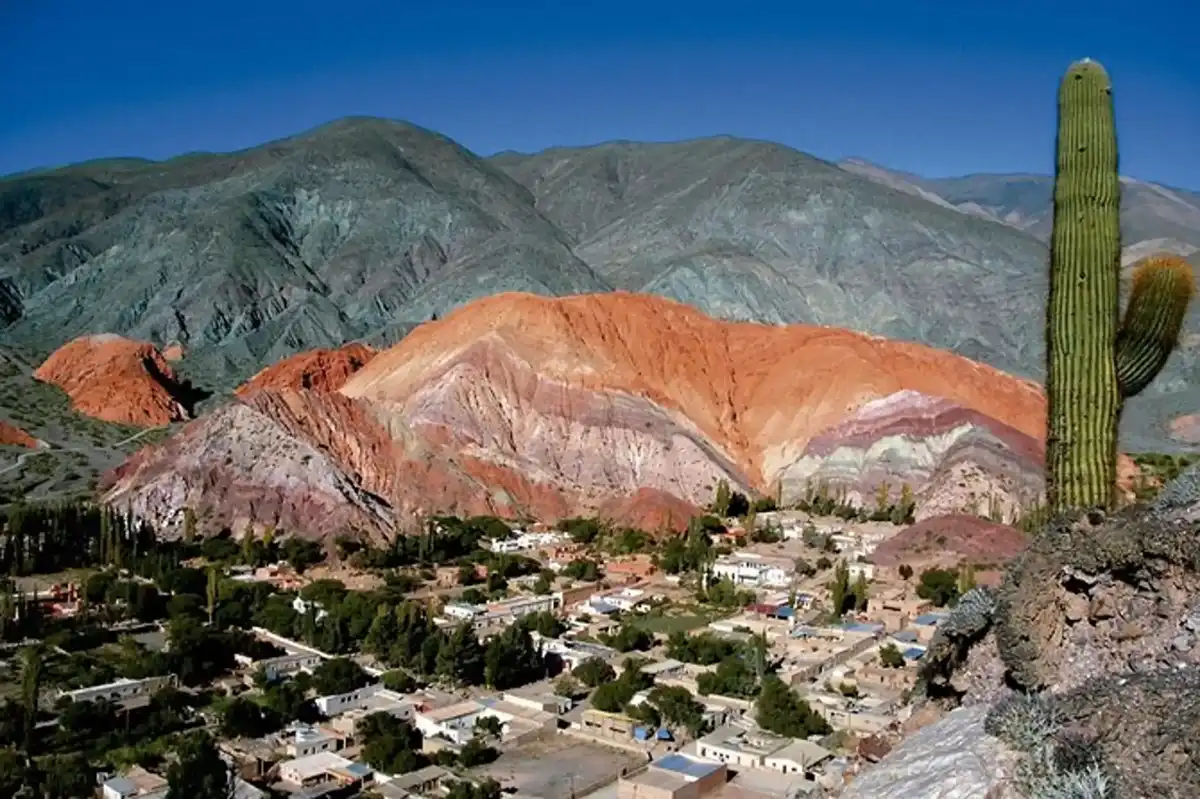
Quebrada de Humahuaca sits in Jujuy Province, in Argentina's far northwest, a 150-kilometer gorge carved by the Rio Grande. The hike itself isn't one trail but a network of day routes linking villages, so you can do two hours or four days depending on mood. Buses from Salta and Jujuy city reach the trailhead towns easily, cheaper and simpler than gearing up for El Chaltén further south. I remember standing above Purmamarca at dawn, lungs working harder than expected at 2,300 meters, watching the Seven Colors Hill shift from grey to rust as direct light hit it. Downsides: thin air, brutal midday sun, and dust that gets into everything.

Discover everything you want to know in the 📖 Argentina Travel Guide.
Best time to go: all year round
Duration: 4 hours
Distance: 40 kilometers
Total ascent: 600 meters


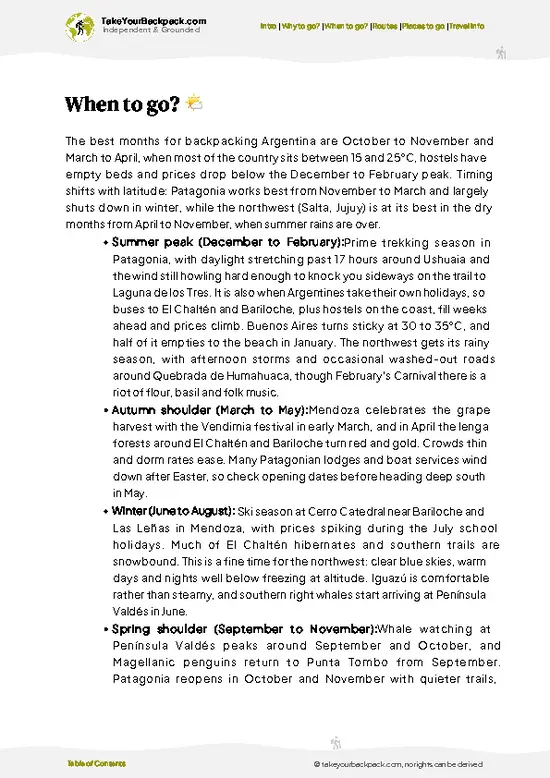
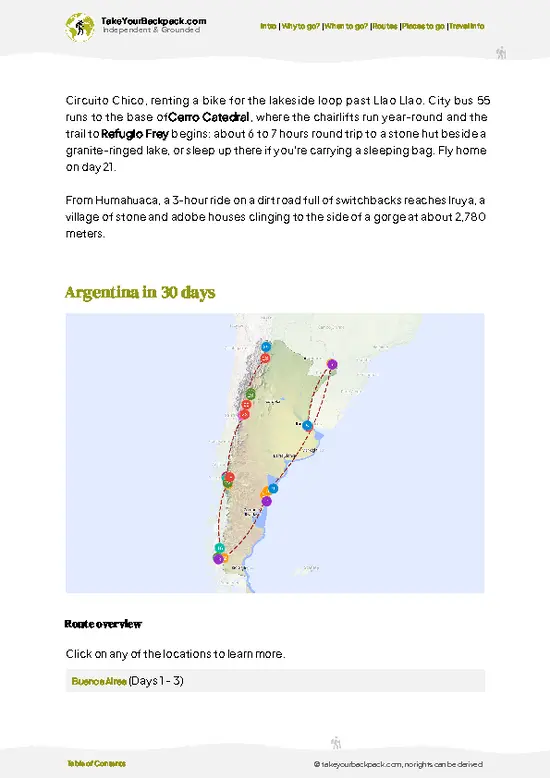
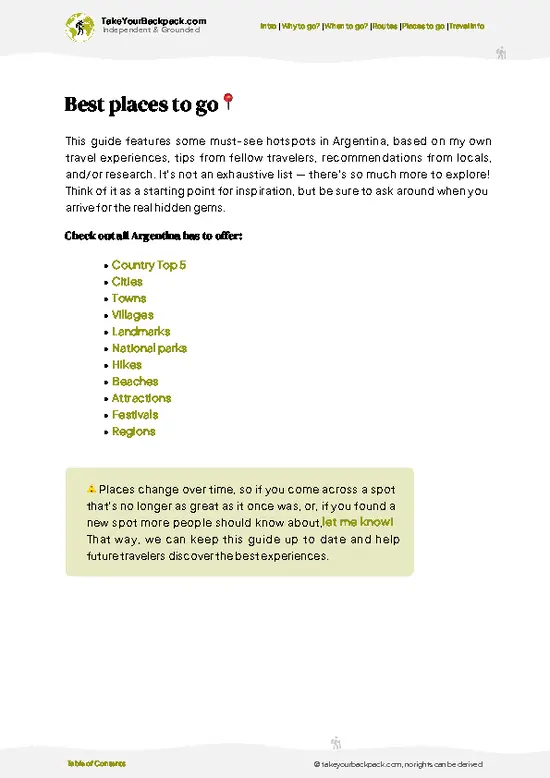
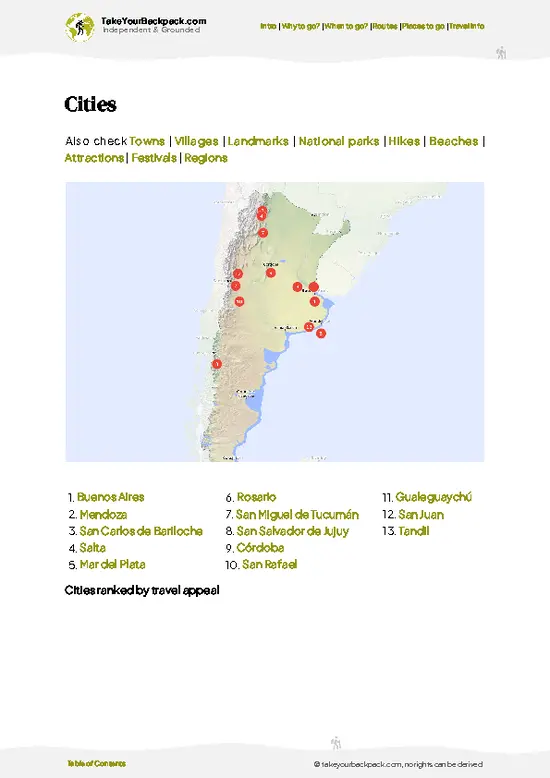
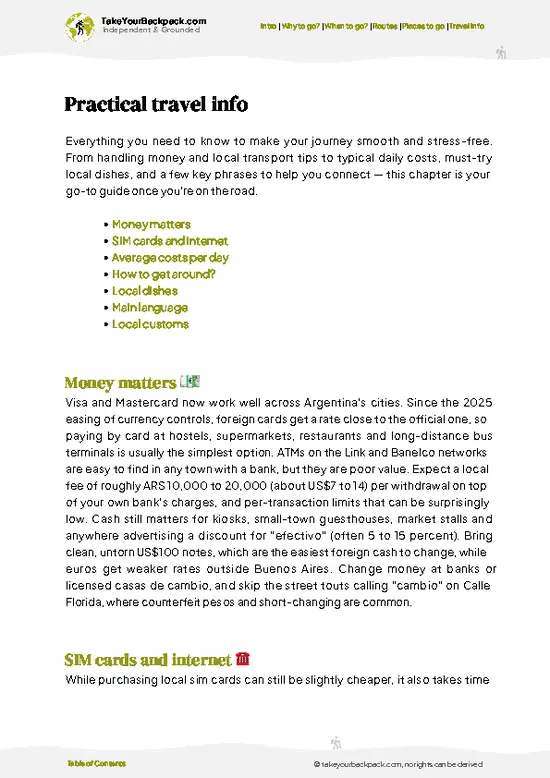
example page 0 from our offline Travel Guide for Argentina
example page 1 from our offline Travel Guide for Argentina
example page 2 from our offline Travel Guide for Argentina
example page 3 from our offline Travel Guide for Argentina
example page 4 from our offline Travel Guide for Argentina
example page 5 from our offline Travel Guide for Argentina
example page 6 from our offline Travel Guide for Argentina
example page 7 from our offline Travel Guide for Argentina
Loading the map 🌍
CLICK TO FILTER
cities
towns
villages
landmarks
national parks
hikes
beaches
attractions
festivals
regions
SHOW COUNTRY’S BESTSHOW ALL

✨ Why go?
Ranked #14 region in Argentina
The unique appeal for travelers

Backpackers come here for the scenery-to-effort ratio, honestly hard to beat: technicolor rock formations and 500-year-old villages without needing mountaineering skills. The public transport access is a huge draw too, frequent buses connect Salta, Jujuy, and the smaller pueblos, so you skip renting a car. It's also low cost, hostels in Tilcara or Humahuaca run cheap by South American standards, and meals rarely dent the budget. The flexible distances mean you tailor the trip, from a single afternoon around Purmamarca to a multi-day stretch through Uquía and Iruya. And because it sits directly on the overland route between Salta and Bolivia, it slots naturally into a longer northern Argentina itinerary without detours.

💡 HighlightsWhat this place is best known for

  1. Cerro de los Siete Colores (Purmamarca): The seven-colored hillside is the single most photographed feature in the gorge, its mineral bands ranging from ochre to deep violet, best seen at sunrise when the light rakes across the layers.
  2. Tilcara's Pucará: A reconstructed pre-Incan hilltop fortress overlooking the valley, giving you a genuinely elevated read on how ancient trade routes moved through this corridor.
  3. Serranía de Hornocal: Fourteen distinct colored mountain ridges outside Humahuaca town, more dramatic and less crowded than the Seven Colors Hill, though reaching the viewpoint requires a rough road or a long uphill walk.
  4. Iruya: A village clinging to a mountainside at the gorge's far edge, reached by a winding dirt road that drops into a separate valley entirely, with stone streets steep
… read more 👉
  1. Cerro de los Siete Colores (Purmamarca): The seven-colored hillside is the single most photographed feature in the gorge, its mineral bands ranging from ochre to deep violet, best seen at sunrise when the light rakes across the layers.
  2. Tilcara's Pucará: A reconstructed pre-Incan hilltop fortress overlooking the valley, giving you a genuinely elevated read on how ancient trade routes moved through this corridor.
  3. Serranía de Hornocal: Fourteen distinct colored mountain ridges outside Humahuaca town, more dramatic and less crowded than the Seven Colors Hill, though reaching the viewpoint requires a rough road or a long uphill walk.
  4. Iruya: A village clinging to a mountainside at the gorge's far edge, reached by a winding dirt road that drops into a separate valley entirely, with stone streets steep enough to leave you out of breath just walking to breakfast.
  5. Uquía's San Francisco de Paula Church: A 17th-century colonial chapel holding a rare set of paintings depicting armed angels in Spanish military dress, a strange and specific piece of colonial art history you won't find described in most trail guides.
Spotted a mistake or missing something? Contact us.

Things to do around Quebrada de Humahuaca

Ratings based on Tripadvisor reviews. When you book through this link, you support our work at no extra cost to you.

⌛️ 5 daysWhat you can realistically do in a week

Day 1: Tilcara: Start in the middle of the gorge, because buses and shared minibuses run the whole valley along Ruta 9, and Tilcara makes the easiest base. Climb the Pucará fortress ruins in the morning, then wander the market stalls as the afternoon heat settles in. The altitude of roughly 2,500 meters is gentler here than farther north, so you adjust before going higher.
Day 2: Humahuaca: Hop on a local bus north, since services thin out after midday and early departures keep your options open. Humahuaca has the cobbled center, the hillside monument and the clock-tower show at noon. Sleep here to enjoy empty streets at night.
Day 3: Serranía de Hornocal: This is the detour. Hire a shared taxi up the dirt road from Humahuaca to the striped ridge at about 4,300 meters, then return the same … read more 👉
Day 1: Tilcara: Start in the middle of the gorge, because buses and shared minibuses run the whole valley along Ruta 9, and Tilcara makes the easiest base. Climb the Pucará fortress ruins in the morning, then wander the market stalls as the afternoon heat settles in. The altitude of roughly 2,500 meters is gentler here than farther north, so you adjust before going higher.
Day 2: Humahuaca: Hop on a local bus north, since services thin out after midday and early departures keep your options open. Humahuaca has the cobbled center, the hillside monument and the clock-tower show at noon. Sleep here to enjoy empty streets at night.
Day 3: Serranía de Hornocal: This is the detour. Hire a shared taxi up the dirt road from Humahuaca to the striped ridge at about 4,300 meters, then return the same day. Go slowly and carry water, because the thin air hits hard.
Day 4: Purmamarca: Head south by bus, passing Tilcara again, and settle in Purmamarca. Walk the Paseo de los Colorados loop below the Cerro de los Siete Colores while the stones are still cool.
Day 5: Maimará: Make a short hop north to see the Paleta del Pintor hillside and the hilltop cemetery, then return to the road south.

If you keep only one day, make it Day 3. The Hornocal ridge, banded in ochre, rust and cream, is the reason to come.

🌤️ When to go?When to go for the best experience

  • Dry Winter (June-August): Cool, clear days around 15-20°C (59-68°F), cold nights near freezing, the most reliable window with minimal rain.
  • Shoulder Months (April-May, September-October): Mild temperatures, fewer crowds than winter high season, good light for photography.
  • Summer Rains (December-March): Afternoon thunderstorms are common, some trails and river crossings become risky, temperatures climb to 25-30°C (77-86°F) at midday.
  • Daylight: Roughly 11 hours in June, up to 13 in December, so winter hiking days end earlier.
  • Crowds and Prices: July's Argentine winter school holidays spike both visitor numbers and hostel rates in Tilcara and Purmamarca.
Early May or late August gives you dry-season stability without the July crowds and higher prices.

source: climatestotravel.comJANJanuary: good for travelingFEBFebruary: good for travelingMARMarch: good for travelingAPRApril: highly recommended for travelingMAYMay: excellent for travelingJUNJune: excellent for travelingJULJuly: highly recommended for travelingAUGAugust: highly recommended for travelingSEPSeptember: excellent for travelingOCTOctober: highly recommended for travelingNOVNovember: good for travelingDECDecember: good for traveling
argentina-region-quebrada-de-humahuaca
© Google | Alberto Curia

✈️ The backpacker research shortcutArgentina Travel Guide

An offline-friendly backpacking guide with optimized travel routes, ranked highlights, transport advice, and the best areas to stay.
example page 0 from our offline Travel Guide for Argentina
example page 1 from our offline Travel Guide for Argentina
example page 2 from our offline Travel Guide for Argentina
example page 3 from our offline Travel Guide for Argentina
example page 4 from our offline Travel Guide for Argentina
example page 5 from our offline Travel Guide for Argentina
example page 6 from our offline Travel Guide for Argentina
example page 7 from our offline Travel Guide for Argentina
The digital guide (393 pages) contains:
✅ 131 highlights, ranked by travel appeal
✅ Optimized 14, 21 & 30-day travel routes
✅ Cities, national parks, landmarks, beaches
✅ How to get around
✅ Offline-friendly for travel without Wi-Fi
👉 Click to see all 30+ guide features

📅 Plan smarter in minutes, not weeks
✅ Month by month travel advice
✅ Festivals & national holidays
✅ Budget expectations

🗺️ Go to the right places, skip the overrated ones
✅ Honest pros & cons of destinations
✅ Top hikes, parks & viewpoints
✅ Lesser-known places most travelers miss
✅ Clear “worth it vs skip it” guidance

🛏️ Travel smoothly without rookie mistakes
✅ Best areas to stay
✅ Transport systems explained simply
✅ Common scams & safety advice
✅ SIM cards, money & practical tips

🌍 Understand the country, not just visit it
✅ Culture & traditions
✅ 52 Essential phrases & customs
✅ Festivals worth planning around
✅ Traveler-friendly historical context
✅ Insights that make places more meaningful

📱 Built for real travel conditions
✅ Fully downloadable PDF
✅ Works completely offline
✅ Optimized for phone use
✅ Useful in remote areas & buses
✅ Everything in one place
Stop searching, start planning
Get instant access to your full guide. 30‑day money-back guarantee.
+ Add another guide for just

By proceeding you agree to our terms.
Sent to your inbox immediately after payment • 100% Secure Checkout
Best Backpacking Travel Advisor 2025 tourism awardBest Backpacking
Travel Advisor
2025
What others say about Take Your Backpack Guides:
⭐⭐⭐⭐⭐
Fantastic, amazing amount of information!
⭐⭐⭐⭐⭐
My goodness this is amazing, it's what I've been looking for hats off too you!
⭐⭐⭐⭐⭐
I think this is absolutely BRILLIANT
⭐⭐⭐⭐
Very complete and informative. It's still missing places, but I gotta to commend you
⭐⭐⭐⭐⭐
This is truly amazing, thank you, can't wait to explore it with my kids!
⭐⭐⭐⭐⭐
Awesome resource, thank you!
⭐⭐⭐⭐⭐
This is amazing! Can't wait to explore the ones I haven't seen
⭐⭐⭐⭐
I love this! Well done, great idea.
⭐⭐⭐⭐⭐
Thanks for taking the time to make this gem!
⭐⭐⭐⭐⭐
This might be the best website I've ever seen.
⭐⭐⭐⭐⭐
Congratulations, and thank you so much for your work; it's incredibly valuable.
⭐⭐⭐⭐
In all seriousness I think you did a great job pointing out the important spots
⭐⭐⭐⭐⭐
10/10 very good
⭐⭐⭐⭐⭐
As someone who's only just starting to visit regularly this is awesome, thank you.
⭐⭐⭐⭐
Thank you very much! I'm going to visit my dad, it's going to be very useful!
⭐⭐⭐⭐⭐
This is really cool! We'll be travelling for the first time and this definitely come in handy.
⭐⭐⭐⭐⭐
You are now our minister of culture, congratulations 👨‍💼
⭐⭐⭐⭐⭐
Just wanted to tell you that this is a pearl! Going to follow your recommendations.
⭐⭐⭐⭐⭐
This is so cool. I'll definitely be using the resource for my travels soon.
⭐⭐⭐⭐⭐
This is very impressive! Good work.
⭐⭐⭐⭐⭐
This is an amazing and informative site. Very well done!

🛏️ Where to stay?Where staying makes the most sense

Tilcara is the best base for most backpackers, with the widest range of budget beds, a walkable center and a relaxed evening scene of peñas (folk music venues) and small bars. It sits at about 2,460 meters, so the altitude is manageable on day one. Dorm beds run roughly US$10 to 18.
Humahuaca, at the northern end, is smaller and quieter. It suits you if you want the colonial streets, the hillside monument and the market without the crowds that arrive on day trips. Beds are often US$8 to 15.
Purmamarca is tiny and beautiful at the foot of the Cerro de los Siete Colores, but it has few budget options … read more 👉
Tilcara is the best base for most backpackers, with the widest range of budget beds, a walkable center and a relaxed evening scene of peñas (folk music venues) and small bars. It sits at about 2,460 meters, so the altitude is manageable on day one. Dorm beds run roughly US$10 to 18.
Humahuaca, at the northern end, is smaller and quieter. It suits you if you want the colonial streets, the hillside monument and the market without the crowds that arrive on day trips. Beds are often US$8 to 15.
Purmamarca is tiny and beautiful at the foot of the Cerro de los Siete Colores, but it has few budget options and little nightlife. Plan one night at most.
Maimará, between Purmamarca and Tilcara, is a calm village under the Paleta del Pintor hillside, good for quiet stays.
Book ahead for Carnival in February and for July holidays.

🚌 Getting aroundHow to get around Quebrada de Humahuaca

Most visitors waste a day by basing in Salta or Jujuy and doing the whole quebrada as a rushed tour, when the buses that run along Ruta 9 let you sleep in the villages and see them at dawn and dusk. Buses are frequent, cheap and reliable, and no car is needed to do the valley well.
  • Long-distance buses: Companies run from Jujuy city (San Salvador de Jujuy) up the valley to Tilcara, Humahuaca and on to La Quiaca. Jujuy to Tilcara takes about 1.5 hours for US$3 to 5, and to Humahuaca 2.5 to 3 hours for US$5 to 8. They stop at the roadside, so ask the driver to tell you your stop.
  • Local minibuses (combis): Shared vans link Tilcara, Maimará, Purmamarca and Humahuaca every 20 to 40 minutes. They cost US$1 to 3 a hop and are faster than waiting for a big bus. Pay in cash pesos.
  • Day tours: A full-day
… read more 👉
Most visitors waste a day by basing in Salta or Jujuy and doing the whole quebrada as a rushed tour, when the buses that run along Ruta 9 let you sleep in the villages and see them at dawn and dusk. Buses are frequent, cheap and reliable, and no car is needed to do the valley well.
  • Long-distance buses: Companies run from Jujuy city (San Salvador de Jujuy) up the valley to Tilcara, Humahuaca and on to La Quiaca. Jujuy to Tilcara takes about 1.5 hours for US$3 to 5, and to Humahuaca 2.5 to 3 hours for US$5 to 8. They stop at the roadside, so ask the driver to tell you your stop.
  • Local minibuses (combis): Shared vans link Tilcara, Maimará, Purmamarca and Humahuaca every 20 to 40 minutes. They cost US$1 to 3 a hop and are faster than waiting for a big bus. Pay in cash pesos.
  • Day tours: A full-day tour from Salta or Jujuy runs about US$35 to 60. It hits Purmamarca, Tilcara and Humahuaca in a blur. Skip it if you have more than two days, because you get an hour at each stop.
  • Taxis and remises: Useful for Cerro de los Siete Colores at Purmamarca, the Hornocal viewpoint above Humahuaca (about 25 km, US$20 to 35 round trip with a wait) and the Salinas Grandes detour. Share the cost with other travelers.
  • Hitchhiking: Possible between villages, but traffic thins out in the afternoon. Treat it as a backup, not a plan.
Buy the next ticket at the terminal in the morning, and carry small bills. Drivers often have no change, and the best light on the colored hills comes early, so the first bus out of a village beats the last.

🍲 FoodLocal Cuisine & Drinks

Start with locro, a thick stew of corn, beans and pork, and humita en chala, sweet corn paste steamed in husks. Llama meat shows up as steaks, empanadas and stew, lean and slightly gamey. Empanadas jujeñas are small, juicy, cumin-heavy and baked, often with hand-cut beef and a little potato.
For drinks, try chicha (fermented corn) or a glass of high-altitude Torrontés wine. Chewing coca leaves or sipping coca tea eases altitude headaches.
Eat at the mercados in Humahuaca and Tilcara, where a hearty plate costs about US$4 to 8. Small family comedores and peña restaurants fill up after 9 pm, with live folk music and a set menú del día at lunch for around US$6 to 10.
If a host offers a bit of food or drink, accept it. Lunch is the main meal and many kitchens close mid-afternoon.

🛡️ SafetySafety Tips and Common Scams in Quebrada de Humahuaca

This gorge is generally straightforward and well-managed, with clear paths near towns and plenty of locals around if you need directions. Altitude is the real factor, arriving from sea level and pushing hard on day one is the classic mistake, so pace yourself and drink more water than feels necessary. Midday sun at 2,000+ meters burns fast, so a hat and long sleeves matter more than sunscreen alone. Afternoon thunderstorms in summer can turn dirt roads slick, particularly the route to Iruya, so check conditions before committing to that drive or walk.

FAQFrequently asked questions about Quebrada de Humahuaca

A single day hike around villages like Purmamarca or Tilcara takes 2 to 5 hours, while linking multiple villages including Iruya stretches to 3 or 4 days. Most backpackers base themselves in Tilcara and do day trips rather than a continuous trek.
It's moderate overall, with the main challenge being altitude (2,000 to 2,900 meters) rather than technical climbing or exposure. Trails near towns are well-trodden and clearly marked, though routes to spots like Serranía de Hornocal involve steeper, rougher ground.
No permit is required for the main village trails or viewpoints, and most people hike independently using local buses between towns. A guide is only worth arranging for remote stretches like the Hornocal ridge road or if you want cultural context on the archaeological sites at Tilcara's Pucará.
⚠️ Things can change over time, so always validate details locally before you go.

Other Argentine regions near Quebrada de Humahuaca

Explore more nearby:

  • Tucumán—Sugarcane valleys, cloud forest, Quilmes ruins, Tafí highlands| 414 km away
  • Sierras Chicas—Swimming holes, car-free village, Uritorco summit, folk festival| 904 km away
  • Mendoza wine region—Malbec bodegas, Maipú bikes, Andes terraces, thermal pools| 1224 km away

💡 Not sure where to go next?
Create a personalized itinerary for Argentina including Quebrada de Humahuaca and the places that fit your trip.

Generate my itinerary

👉 Discover all regions

Or checkout all Argentina has to offer (think cities, towns, villages, national parks, hikes, beaches, festivals)
Country photo of Argentina

We 💚 feedbackSumming up the experience

What makes this worth it: color you genuinely can't get elsewhere, rock striped like layer cake against thin blue sky. The drawback: altitude sneaks up on you, and if you rush straight off a bus from sea level, your first day will feel harder than the trail actually is.

✈️ When did I visit Argentina?
I have visited Argentina, together with Chile, in September 2012.

✍️ Help improve this page!
The information on this page is based on my own backpacking experience in Argentina, supplemented with up-to-date research and feedback from other travelers. Travel details can change, so if you notice anything outdated or incomplete, feel free to let me know.


🙋‍♂️ Give feedback

👋 Meet the founderWho’s Behind Take Your Backpack?

Johan, backpacker and founder of TakeYourBackpackHi, I’m Johan (Netherlands 🇳🇱), the creator of TakeYourBackpack. Over the past 3 decades, I’ve backpacked through 90+ countries across six continents, gaining extensive experience with independent travel, long-term trips, and overland routes.

This site is built on a combination of firsthand travel experience and carefully curated insights from other backpackers. Many guides are based on places I’ve personally visited, while others bring together tips, observations, and practical advice shared by trusted travelers I’ve met along the way.

The goal is to provide realistic, experience-driven guidance — not generic itineraries — so you can explore destinations with better context, clearer expectations, and more confidence.