×

Argentina🇦🇷 | landmarksMar de AnsenuzaHypersaline float, flamingos, Miramar ruins, salt mirrors | things to do and best time to go

Explore JaaukanigásExplore El Chaltén

Backpacking in Mar de Ansenuza
👌 Worth visitingunique site ranked #10
By Johan Kruseman 🇳🇱 | Updated October 19, 2026

The salt crust near the shore can hold your weight one meter in and swallow your boot the next, so test every step before you commit. Mar de Ansenuza sits in northeastern Córdoba province, one of the largest salt lakes on the planet, and it's nowhere near the backpacker trail. That's the trade-off. No crowds, no entrance fee, barely any infrastructure. I floated on my back in water so dense I could read a paperback held above my chest, salt crystals stinging a scrape on my knee like tiny needles. The photo potential is real (pink hues, mirror flats) but you need your own transport and patience for a place that offers zero hand-holding.

Discover everything you want to know in the 📖 Argentina Travel Guide.


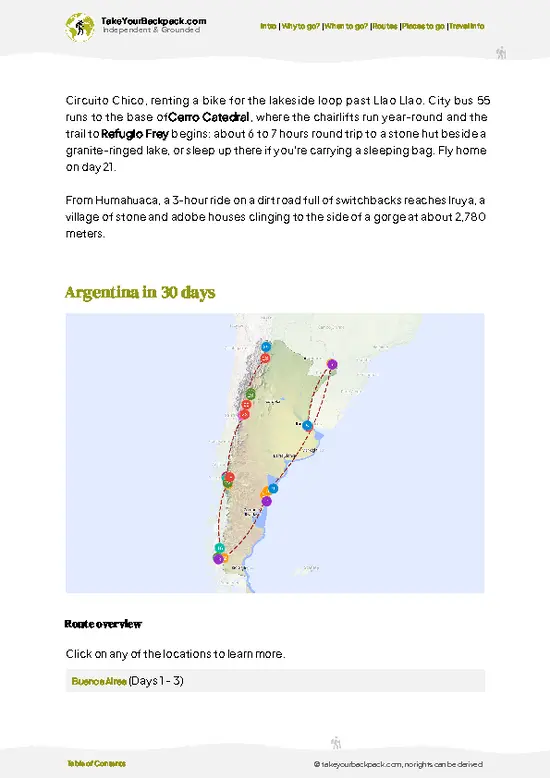
example page 0 from our offline Travel Guide for Argentina
example page 1 from our offline Travel Guide for Argentina
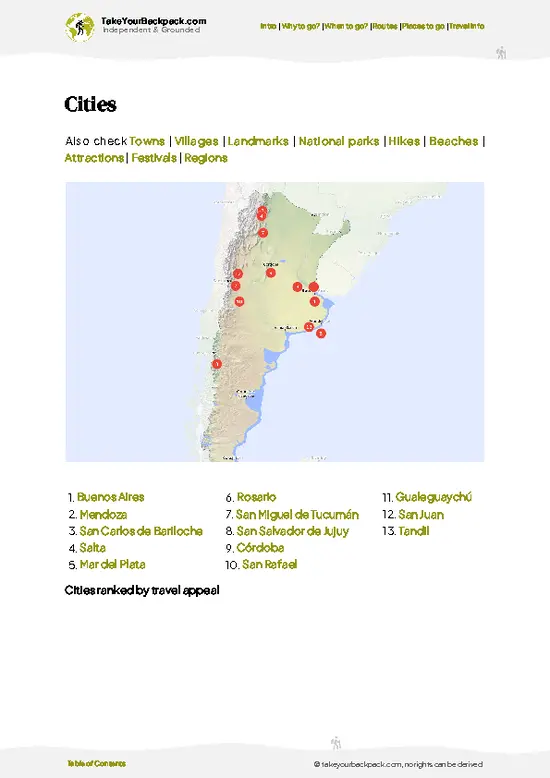
example page 2 from our offline Travel Guide for Argentina
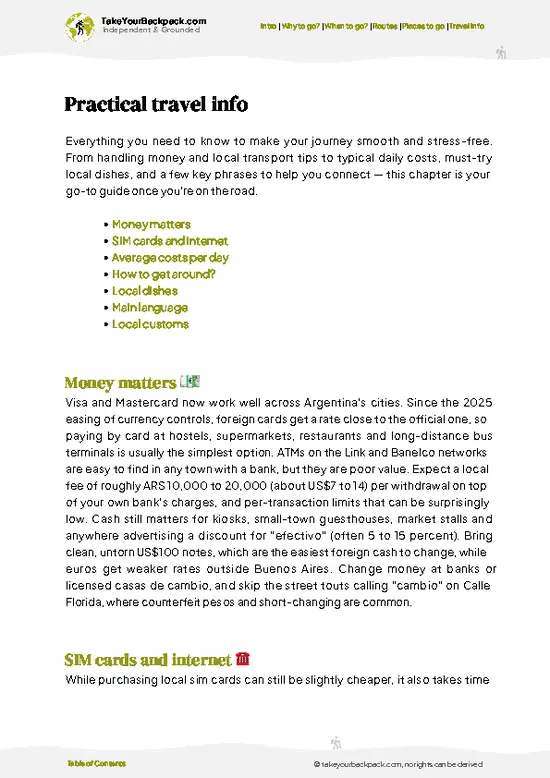
example page 3 from our offline Travel Guide for Argentina
example page 4 from our offline Travel Guide for Argentina
example page 5 from our offline Travel Guide for Argentina
example page 6 from our offline Travel Guide for Argentina
example page 7 from our offline Travel Guide for Argentina
Loading the map 🌍
CLICK TO FILTER
cities
towns
villages
landmarks
national parks
hikes
beaches
attractions
festivals
regions
SHOW COUNTRY’S BESTSHOW ALL

✨ Why go?
Ranked #10 unique site in Argentina
What makes this unique site worth visiting

Backpackers detour here because the payoff is disproportionate to the effort: a few hours off Argentina's main gringo trail gets you total solitude at one of the world's biggest salt lakes, no ticket booth in sight. It's essentially free, aside from transport and maybe a boat ride with a local operator in Miramar. The buoyancy alone justifies the trip, denser than the Dead Sea in some readings, and you won't share it with tour buses. It also slots naturally into a Córdoba province loop, pairing with the Sierras or a Rosario-to-Salta overland run, so you're not burning a dedicated flight or multi-day detour just for one lake. For travelers chasing authentic, undercrowded nature over polished tourist infrastructure, it delivers exactly that.

💡 HighlightsKey sights and experiences for travelers

  1. Floating in the hypersaline water: The salt concentration is high enough that you bob like a cork with almost no effort. It's the single most memorable physical sensation the lake offers.
  2. Flamingo colonies: Thousands of flamingos feed in the shallows, especially in spring. Bring binoculars, they keep their distance.
  3. Miramar town: The old resort town on the lake's edge has faded, slightly eerie charm, with flooded hotels hinting at its mid-20th-century heyday as a spa destination.
  4. Salt flat photography: When the water recedes, the exposed salt crust creates mirror-like reflections at sunrise and sunset, similar in effect to Bolivia's Salar de Uyuni but on a smaller scale.
  5. Bird-watching beyond flamingos: The lake and surrounding wetlands host black-necked swans, coots, and migratory shorebirds,
… read more 👉
  1. Floating in the hypersaline water: The salt concentration is high enough that you bob like a cork with almost no effort. It's the single most memorable physical sensation the lake offers.
  2. Flamingo colonies: Thousands of flamingos feed in the shallows, especially in spring. Bring binoculars, they keep their distance.
  3. Miramar town: The old resort town on the lake's edge has faded, slightly eerie charm, with flooded hotels hinting at its mid-20th-century heyday as a spa destination.
  4. Salt flat photography: When the water recedes, the exposed salt crust creates mirror-like reflections at sunrise and sunset, similar in effect to Bolivia's Salar de Uyuni but on a smaller scale.
  5. Bird-watching beyond flamingos: The lake and surrounding wetlands host black-necked swans, coots, and migratory shorebirds, making it a genuine stop for serious birders.
  6. Boat trips with local guides: A handful of operators in Miramar run short boat excursions, giving you a different angle on the lake's scale that you can't get from shore.
  7. The abandoned bathhouse ruins: Crumbling concrete structures half-swallowed by salt crust, remnants of a spa boom that collapsed after the 1977 to 1981 floods. It's a strange, quiet place to wander, equal parts sad and fascinating.
  8. Stargazing: With almost no light pollution and flat, open horizons, clear winter nights deliver a sky thick with stars, a solid payoff if you're camping nearby.
Spotted a mistake or missing something? Contact us.

🌤️ When to go?Weather, crowds, and seasonal trade-offs

  • Summer (December to February): Hot, 28-35°C (82-95°F), ideal for floating and swimming, but intense sun means you'll want a hat and reef-safe sunscreen since there's minimal shade.
  • Autumn (March to May): Mild, 15-24°C (59-75°F), fewer bugs, comfortable for exploring the shoreline without overheating.
  • Winter (June to August): Cold, 5-15°C (41-59°F), water too chilly for most swimmers, but skies are clear and daylight is shorter, around 10 hours.
  • Spring (September to November): Warming up, 15-25°C (59-77°F), birdlife (flamingos) is most active, and crowds, what few there are, stay minimal.
Go early morning in summer before the heat turns the salt flats into a glare-blasted furnace.

source: climatestotravel.comJANJanuary: highly recommended for travelingFEBFebruary: highly recommended for travelingMARMarch: highly recommended for travelingAPRApril: excellent for travelingMAYMay: excellent for travelingJUNJune: fair for travelingJULJuly: fair for travelingAUGAugust: fair for travelingSEPSeptember: excellent for travelingOCTOctober: excellent for travelingNOVNovember: highly recommended for travelingDECDecember: highly recommended for traveling
when-to-go

✈️ The backpacker research shortcutArgentina Travel Guide

An offline-friendly backpacking guide with optimized travel routes, ranked highlights, transport advice, and the best areas to stay.
example page 0 from our offline Travel Guide for Argentina
example page 1 from our offline Travel Guide for Argentina
example page 2 from our offline Travel Guide for Argentina
example page 3 from our offline Travel Guide for Argentina
example page 4 from our offline Travel Guide for Argentina
example page 5 from our offline Travel Guide for Argentina
example page 6 from our offline Travel Guide for Argentina
example page 7 from our offline Travel Guide for Argentina
The digital guide (393 pages) contains:
✅ 131 highlights, ranked by travel appeal
✅ Optimized 14, 21 & 30-day travel routes
✅ Cities, national parks, landmarks, beaches
✅ How to get around
✅ Offline-friendly for travel without Wi-Fi
👉 Click to see all 30+ guide features

📅 Plan smarter in minutes, not weeks
✅ Month by month travel advice
✅ Festivals & national holidays
✅ Budget expectations

🗺️ Go to the right places, skip the overrated ones
✅ Honest pros & cons of destinations
✅ Top hikes, parks & viewpoints
✅ Lesser-known places most travelers miss
✅ Clear “worth it vs skip it” guidance

🛏️ Travel smoothly without rookie mistakes
✅ Best areas to stay
✅ Transport systems explained simply
✅ Common scams & safety advice
✅ SIM cards, money & practical tips

🌍 Understand the country, not just visit it
✅ Culture & traditions
✅ 52 Essential phrases & customs
✅ Festivals worth planning around
✅ Traveler-friendly historical context
✅ Insights that make places more meaningful

📱 Built for real travel conditions
✅ Fully downloadable PDF
✅ Works completely offline
✅ Optimized for phone use
✅ Useful in remote areas & buses
✅ Everything in one place
Stop searching, start planning
Get instant access to your full guide. 30‑day money-back guarantee.
+ Add another guide for just

By proceeding you agree to our terms.
Sent to your inbox immediately after payment • 100% Secure Checkout
Best Backpacking Travel Advisor 2025 tourism awardBest Backpacking
Travel Advisor
2025
What others say about Take Your Backpack Guides:
⭐⭐⭐⭐⭐
Fantastic, amazing amount of information!
⭐⭐⭐⭐⭐
My goodness this is amazing, it's what I've been looking for hats off too you!
⭐⭐⭐⭐⭐
I think this is absolutely BRILLIANT
⭐⭐⭐⭐
Very complete and informative. It's still missing places, but I gotta to commend you
⭐⭐⭐⭐⭐
This is truly amazing, thank you, can't wait to explore it with my kids!
⭐⭐⭐⭐⭐
Awesome resource, thank you!
⭐⭐⭐⭐⭐
This is amazing! Can't wait to explore the ones I haven't seen
⭐⭐⭐⭐
I love this! Well done, great idea.
⭐⭐⭐⭐⭐
Thanks for taking the time to make this gem!
⭐⭐⭐⭐⭐
This might be the best website I've ever seen.
⭐⭐⭐⭐⭐
Congratulations, and thank you so much for your work; it's incredibly valuable.
⭐⭐⭐⭐
In all seriousness I think you did a great job pointing out the important spots
⭐⭐⭐⭐⭐
10/10 very good
⭐⭐⭐⭐⭐
As someone who's only just starting to visit regularly this is awesome, thank you.
⭐⭐⭐⭐
Thank you very much! I'm going to visit my dad, it's going to be very useful!
⭐⭐⭐⭐⭐
This is really cool! We'll be travelling for the first time and this definitely come in handy.
⭐⭐⭐⭐⭐
You are now our minister of culture, congratulations 👨‍💼
⭐⭐⭐⭐⭐
Just wanted to tell you that this is a pearl! Going to follow your recommendations.
⭐⭐⭐⭐⭐
This is so cool. I'll definitely be using the resource for my travels soon.
⭐⭐⭐⭐⭐
This is very impressive! Good work.
⭐⭐⭐⭐⭐
This is an amazing and informative site. Very well done!

🛏️ Where to stay?Where staying makes the most sense

Miramar is your base, the small town directly on the lake's southwestern shore. It's modest, quiet, and built around the salt lake's old tourism identity, so you'll find guesthouses and campsites geared toward budget travelers rather than luxury resorts. Staying here puts you within walking distance of the shoreline and any boat operators, which matters since public transport around the lake is thin. Camping is a legitimate option in designated areas near town if you want to cut costs further and catch sunrise over the salt flats without an early drive. Avoid trying to base yourself in Córdoba … read more 👉
Miramar is your base, the small town directly on the lake's southwestern shore. It's modest, quiet, and built around the salt lake's old tourism identity, so you'll find guesthouses and campsites geared toward budget travelers rather than luxury resorts. Staying here puts you within walking distance of the shoreline and any boat operators, which matters since public transport around the lake is thin. Camping is a legitimate option in designated areas near town if you want to cut costs further and catch sunrise over the salt flats without an early drive. Avoid trying to base yourself in Córdoba city and day-trip out, it's roughly 200 km away and eats your whole day in transit. Miramar's small size also means it's easy to meet other travelers, since everyone passing through ends up at the same few spots for meals or boat trips.

👛 Costs (as of 19 October 2026)Typical daily expenses

Visiting Mar de Ansenuza is inexpensive by Argentine standards, since there's no entrance fee and the main costs come from getting there and basic accommodation in Miramar.
CategoryBudget RangeLocal Reality
Accommodation (Miramar)USD 8 to 20/nightBasic guesthouses and campsites dominate; expect simple rooms, not resorts.
Transport from Córdoba cityUSD 10 to 25Bus to Miramar or nearby towns, then local transport or hitchhiking to the shore.
FoodUSD 5 to 12/daySimple parrilla meals and grocery staples; few restaurant options in Miramar.
Boat excursionUSD 10 to 20Informal local operators, prices vary by group size and negotiation.
Camping feeUSD 0 to 5Some sites are free or donation-based; formal campgrounds charge modestly.
Overall, a frugal traveler can manage a day or two here for USD 25 to 40 per … read more 👉
Visiting Mar de Ansenuza is inexpensive by Argentine standards, since there's no entrance fee and the main costs come from getting there and basic accommodation in Miramar.
CategoryBudget RangeLocal Reality
Accommodation (Miramar)USD 8 to 20/nightBasic guesthouses and campsites dominate; expect simple rooms, not resorts.
Transport from Córdoba cityUSD 10 to 25Bus to Miramar or nearby towns, then local transport or hitchhiking to the shore.
FoodUSD 5 to 12/daySimple parrilla meals and grocery staples; few restaurant options in Miramar.
Boat excursionUSD 10 to 20Informal local operators, prices vary by group size and negotiation.
Camping feeUSD 0 to 5Some sites are free or donation-based; formal campgrounds charge modestly.
Overall, a frugal traveler can manage a day or two here for USD 25 to 40 per day including transport, food, and a bed, making it one of the cheaper natural landmarks in Argentina to visit.


source: argentina.travel
⚠️ Prices can change and everyone travels differently, so take this as a rough guide. Hope it helps you plan your adventure!

FAQCommon questions from travelers

Mar de Ansenuza is one of the largest saline lakes in the world, located in northeastern Córdoba province, Argentina. Its hypersaline water, denser in some periods than the Dead Sea, allows swimmers to float effortlessly, and it's also a Ramsar-listed wetland supporting large flamingo populations.
A single day is enough to swim, walk the shoreline, and visit the abandoned bathhouse ruins in Miramar, but staying two days gives you time for a boat trip and proper bird-watching, especially at sunrise when the salt flats reflect light best.
Most travelers reach it via Córdoba city, roughly 200 km away, taking a bus to Miramar and then arranging local transport or a short taxi ride to the shore, since there's no direct public transit to the water's edge and a rental car offers the most flexibility.
⚠️ Things can change over time, so always validate details locally before you go.

Other Argentine landmarks near Mar de Ansenuza

Explore more nearby:

  • Quebrada de los Cóndores—Condor roosts, Las Higueras viewpoint, Sierra de los Quinteros, guided treks, horseback routes| 360 km away
  • Jaaukanigás—Paraná wetlands, flooded forest, heron colonies, canoe dawns| 379 km away
  • Campo de Piedra Pómez—Pumice towers, mushroom rocks, volcanic basin, wind silence| 644 km away

💡 Not sure where to go next?
Create a personalized itinerary for Argentina including Mar de Ansenuza and the places that fit your trip.

Generate my itinerary

👉 Discover all landmarks

Or checkout all Argentina has to offer (think cities, towns, villages, national parks, hikes, beaches, festivals)
Country photo of Argentina

We 💚 feedbackSumming up the experience

Worth it for the sheer strangeness of floating in a lake this dense while flamingos work the shallows nearby, no crowds, no fences. The drawback: you're on your own for transport and info, and the abandoned bathhouses hint at how quickly this place could flood or fade again.

✈️ When did I visit Argentina?
I have visited Argentina, together with Chile, in September 2012.

✍️ Help improve this page!
The information on this page is based on my own backpacking experience in Argentina, supplemented with up-to-date research and feedback from other travelers. Travel details can change, so if you notice anything outdated or incomplete, feel free to let me know.


🙋‍♂️ Give feedback

👋 Meet the founderWho’s Behind Take Your Backpack?

Johan, backpacker and founder of TakeYourBackpackHi, I’m Johan (Netherlands 🇳🇱), the creator of TakeYourBackpack. Over the past 3 decades, I’ve backpacked through 90+ countries across six continents, gaining extensive experience with independent travel, long-term trips, and overland routes.

This site is built on a combination of firsthand travel experience and carefully curated insights from other backpackers. Many guides are based on places I’ve personally visited, while others bring together tips, observations, and practical advice shared by trusted travelers I’ve met along the way.

The goal is to provide realistic, experience-driven guidance — not generic itineraries — so you can explore destinations with better context, clearer expectations, and more confidence.