×

Argentina🇦🇷 | citiesMendozaWine bodegas, Andes sunsets, tiled plazas, hilltop park | things to do and best time to go

Explore CórdobaExplore Salta

Backpacking in Mendoza
🏆 Top pickcity ranked #2
By Johan Kruseman 🇳🇱 | Updated October 19, 2026

The dust off the unpaved sidewalk under the plane trees, the smell of a parrillada firing up two doors down, and a wine glass sweating in your hand at 6pm because the Andes heat doesn't quit until sunset. That's Mendoza, tucked against the eastern wall of the Andes in western Argentina, a wine-and-adventure town most backpackers treat as a two-night pit stop and end up staying five. Here's the trade-off: spend money and you unlock the region's real payoff (bike tours through Maipú's wineries, rafting, Aconcagua views) but spend zero and you're left with a pleasant, walkable grid of plazas and not much else. Time-wise, it's a low-effort city (flat, easy to navigate, cheap by Argentine standards) but comfort-wise the dorms are basic and August nights get properly cold. I remember sitting in Plaza Independencia eating a still-warm empanada, watching a busker work the fountain crowd, thinking: this is the easiest 'expensive-feeling' city in South America to do cheap.

Discover everything you want to know in the 📖 Argentina Travel Guide.


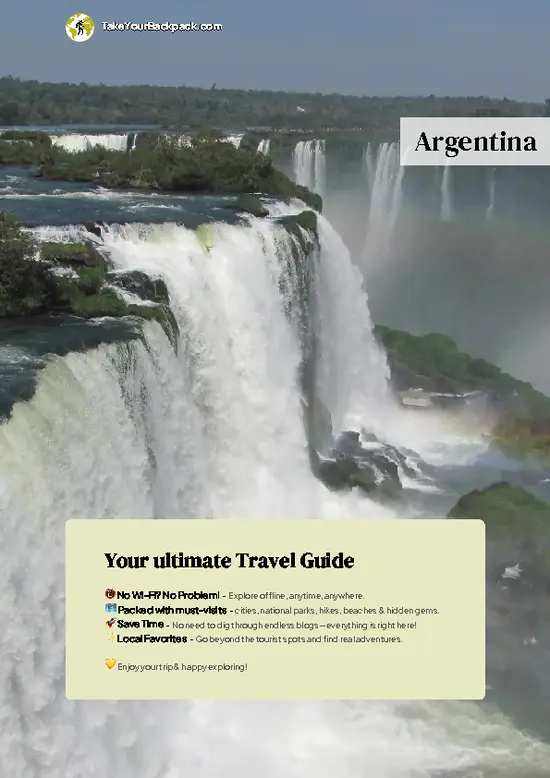
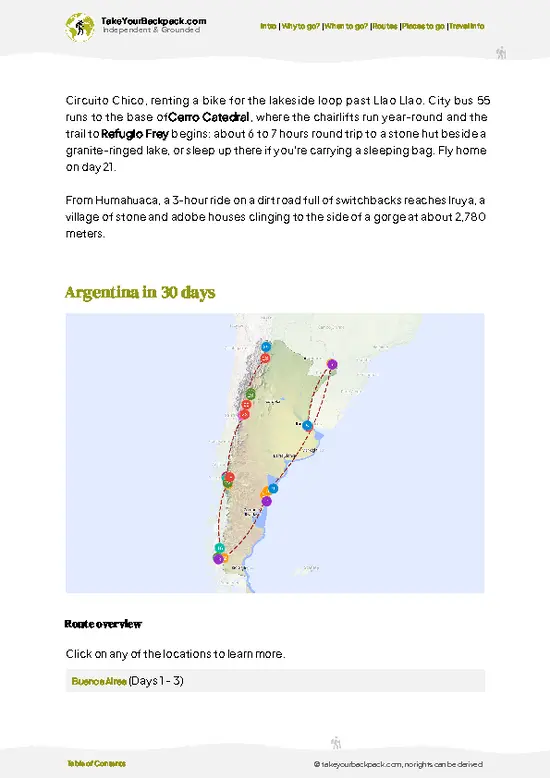
example page 0 from our offline Travel Guide for Argentina
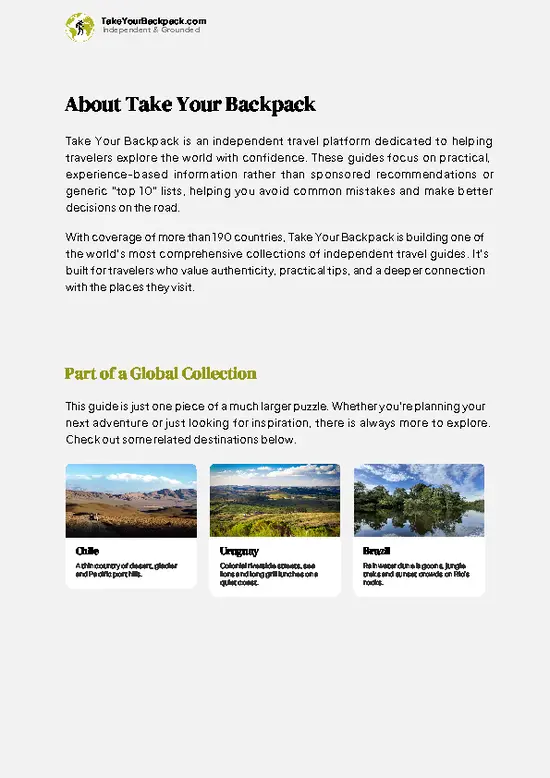
example page 1 from our offline Travel Guide for Argentina
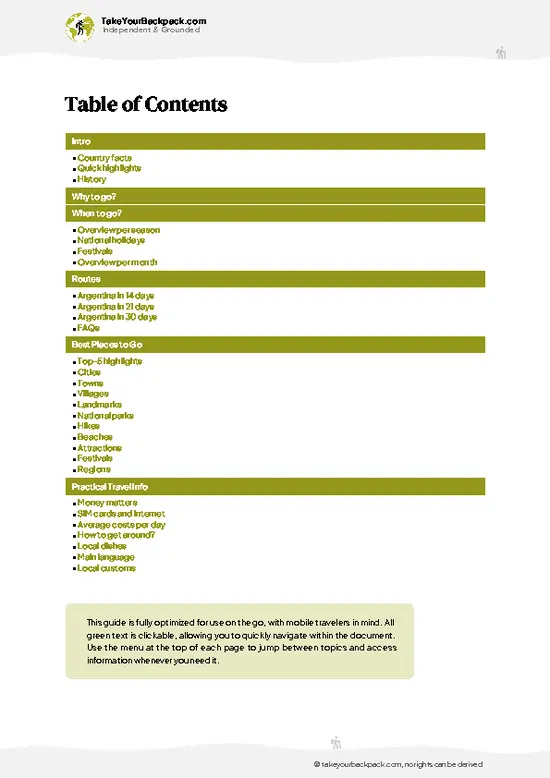
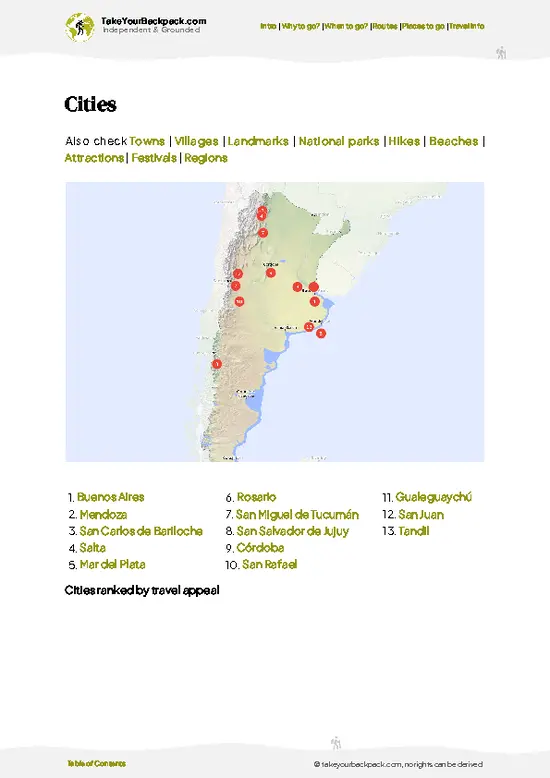
example page 2 from our offline Travel Guide for Argentina
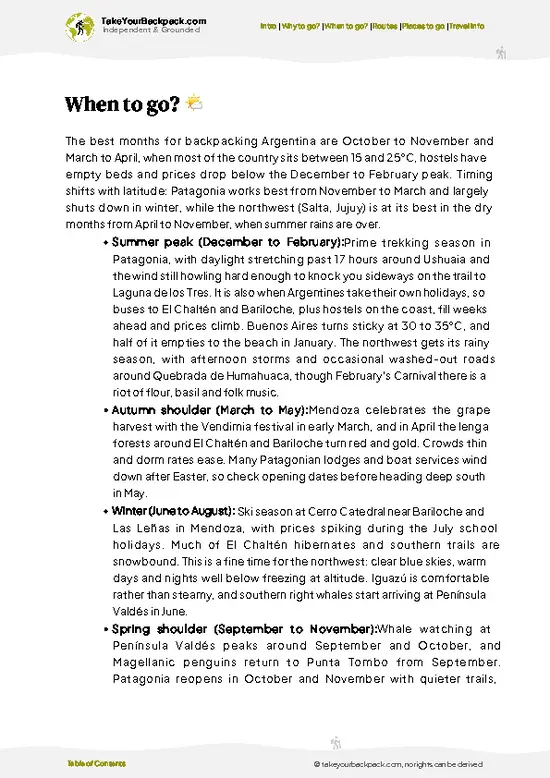
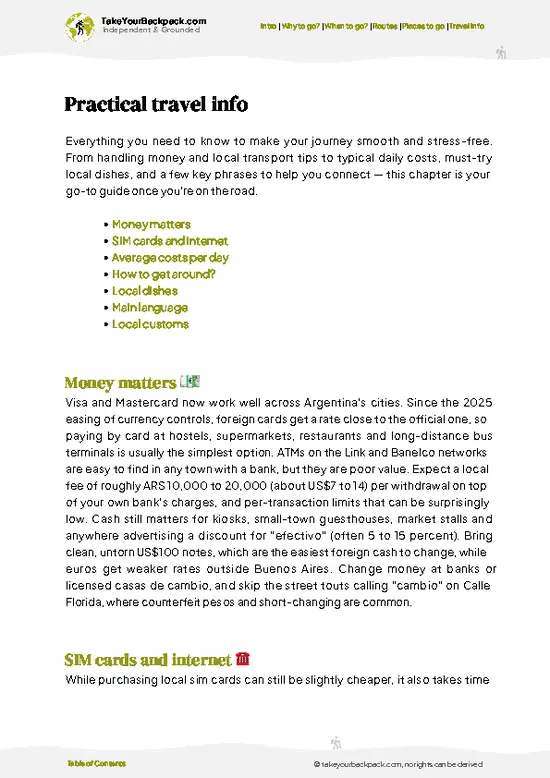
example page 3 from our offline Travel Guide for Argentina
example page 4 from our offline Travel Guide for Argentina
example page 5 from our offline Travel Guide for Argentina
example page 6 from our offline Travel Guide for Argentina
example page 7 from our offline Travel Guide for Argentina
Loading the map 🌍
CLICK TO FILTER
cities
towns
villages
landmarks
national parks
hikes
beaches
attractions
festivals
regions
SHOW COUNTRY’S BESTSHOW ALL

✨ Why go?
Ranked #2 city in Argentina
What makes it a must-see city

Backpackers land in Mendoza mostly for one reason: it's the best-value wine region basecamp in South America, with bike-able bodegas a short bus ride away in Maipú and Luján de Cuyo. But the city holds its own too. The hostel scene here is strong and social, heavy on rooftop asados and pisco nights, making it an easy place to link up with people heading the same direction (north to Salta, south to Bariloche, or over the Andes to Chile via the spectacular high-mountain crossing). It's flat and walkable, the plazas give you a natural rhythm for the day, and the food and wine are absurdly cheap relative to quality. Nightlife exists but it's not the draw; this is a town for slow mornings and long lunches, not all-night benders. For onward travel, Mendoza's bus terminal is a major hub, so logistics … read more 👉
Backpackers land in Mendoza mostly for one reason: it's the best-value wine region basecamp in South America, with bike-able bodegas a short bus ride away in Maipú and Luján de Cuyo. But the city holds its own too. The hostel scene here is strong and social, heavy on rooftop asados and pisco nights, making it an easy place to link up with people heading the same direction (north to Salta, south to Bariloche, or over the Andes to Chile via the spectacular high-mountain crossing). It's flat and walkable, the plazas give you a natural rhythm for the day, and the food and wine are absurdly cheap relative to quality. Nightlife exists but it's not the draw; this is a town for slow mornings and long lunches, not all-night benders. For onward travel, Mendoza's bus terminal is a major hub, so logistics are painless. If you want raw adrenaline and constant motion, it's a short stop. If you want a few days to reset, eat well, and day-trip hard, it earns a longer stay.

💡 HighlightsEssential experiences to have while visiting Mendoza

  1. Plaza Independencia: the city's central square, ringed by cafes and a weekend crafts market. Free, best visited in the early evening when the heat breaks. Allow 30-45 minutes.
  2. Parque General San Martín: a sprawling 1896 park with a lake, a rose garden, and a viewpoint hill (Cerro de la Gloria) with sweeping views toward the Andes. Free to enter, though a taxi or bike up the hill costs a few dollars. Best in late afternoon; allow 2-3 hours.
  3. Museo del Área Fundacional: built over the ruins of the original colonial city destroyed by the 1861 earthquake, with glass floor panels showing excavated foundations below. Entry is a few dollars; takes about an hour.
  4. Mercado Central: a compact, unpretentious covered market good for cheap lunches and a feel for daily Mendocino life. Free to browse, meals run
… read more 👉
  1. Plaza Independencia: the city's central square, ringed by cafes and a weekend crafts market. Free, best visited in the early evening when the heat breaks. Allow 30-45 minutes.
  2. Parque General San Martín: a sprawling 1896 park with a lake, a rose garden, and a viewpoint hill (Cerro de la Gloria) with sweeping views toward the Andes. Free to enter, though a taxi or bike up the hill costs a few dollars. Best in late afternoon; allow 2-3 hours.
  3. Museo del Área Fundacional: built over the ruins of the original colonial city destroyed by the 1861 earthquake, with glass floor panels showing excavated foundations below. Entry is a few dollars; takes about an hour.
  4. Mercado Central: a compact, unpretentious covered market good for cheap lunches and a feel for daily Mendocino life. Free to browse, meals run a few dollars. Best late morning.
  5. Bodega tours within city limits (like Escorihuela Gascón in Godoy Cruz): a handful of historic wineries sit close enough to the city center to visit without a full Maipú excursion. Tastings run roughly USD10 to 20, tours take 1-2 hours.
  6. Plaza España: smaller and more ornate than the main square, tiled with Spanish-style ceramics depicting scenes from Don Quixote. Free, best photographed in morning light, 15-20 minutes.
  7. Terraza Mirador: the rooftop garden terrace of the city hall at 9 de Julio 500 gives 360-degree views toward the Andes; tickets are sold online through Entrada Web.
Just outside the city, Maipú's wine bike routes, the Uco Valley's higher-end bodegas, and the Potrerillos reservoir with its mountain backdrop all make excellent day trips. Maipú, reachable by public bus in about 30-40 minutes, is my personal favorite: renting a bike and wobbling between four or five small bodegas for an afternoon is one of the best-value days anywhere in South America.
Spotted a mistake or missing something? Contact us.

Things to do in Mendoza

Ratings based on Tripadvisor reviews. When you book through this link, you support our work at no extra cost to you.

🏘️ NeighborhoodsHow different areas shape the experience

Mendoza's neighborhoods sort neatly by what you're willing to trade for convenience versus quiet.
  • Centro (around Plaza Independencia): the default choice, and for good reason. You trade a bit of noise for maximum walkability: restaurants, the bus terminal connections, and most hostels are within 15 minutes on foot. Best for short stays (1-3 nights) or first-timers who don't want to think about transport.
  • Plaza España area: quieter, slightly more residential, still close enough to walk into Centro in 10-15 minutes. Good trade if you want to sleep better without sacrificing access; fewer hostels though, so book ahead.
  • Chacras de Coria: leafy, calm, popular with longer-term travelers and those working remotely. You gain space and a slower pace but lose walkability into the city center; you're relying
… read more 👉
Mendoza's neighborhoods sort neatly by what you're willing to trade for convenience versus quiet.
  • Centro (around Plaza Independencia): the default choice, and for good reason. You trade a bit of noise for maximum walkability: restaurants, the bus terminal connections, and most hostels are within 15 minutes on foot. Best for short stays (1-3 nights) or first-timers who don't want to think about transport.
  • Plaza España area: quieter, slightly more residential, still close enough to walk into Centro in 10-15 minutes. Good trade if you want to sleep better without sacrificing access; fewer hostels though, so book ahead.
  • Chacras de Coria: leafy, calm, popular with longer-term travelers and those working remotely. You gain space and a slower pace but lose walkability into the city center; you're relying on buses or remises (private cabs) for everything. Worth it only if you're staying a week or more.
  • Godoy Cruz: a real residential district bordering the wine zone, less touristy, cheaper eats. Trade-off is fewer English-speaking services and a longer walk to the main sights, but it's a smart base if wineries are your priority over nightlife.
  • Near the bus terminal: budget-friendly and practical for one-night layovers between long-haul buses, but it's not where you want to be after dark or for anything beyond a crash-and-go stop.
The system rewards flexibility: stay central for short trips, shift outward the longer you linger.

⌛️ 1 dayWhat you can realistically do in a day

Mendoza rewards a slow, plaza-hopping pace rather than a checklist sprint, so this day mixes city history with a green escape.

9:00 AM: Plaza Independencia: start with coffee at one of the cafes ringing the square, then wander the surrounding blocks while the city wakes up.

10:00 AM: Museo del Área Fundacional: a 10-minute walk away, this small museum sits over the ruins of the original colonial city and gives real context for why Mendoza looks the way it does post-earthquake.

11:30 AM: Mercado Central: walk 15 minutes for an early, cheap lunch among locals doing their actual grocery shopping, not a tourist stall in sight.

1:00 PM: Plaza España: a short walk over for photos of the Spanish-tiled benches, then continue toward the park.

2:00 PM: Parque General San Martín: spend the afternoon here. … read more 👉
Mendoza rewards a slow, plaza-hopping pace rather than a checklist sprint, so this day mixes city history with a green escape.

9:00 AM: Plaza Independencia: start with coffee at one of the cafes ringing the square, then wander the surrounding blocks while the city wakes up.

10:00 AM: Museo del Área Fundacional: a 10-minute walk away, this small museum sits over the ruins of the original colonial city and gives real context for why Mendoza looks the way it does post-earthquake.

11:30 AM: Mercado Central: walk 15 minutes for an early, cheap lunch among locals doing their actual grocery shopping, not a tourist stall in sight.

1:00 PM: Plaza España: a short walk over for photos of the Spanish-tiled benches, then continue toward the park.

2:00 PM: Parque General San Martín: spend the afternoon here. Rent a bike near the entrance, ride the perimeter path around the lake, then climb (by bike, foot, or taxi) to Cerro de la Gloria for the Andes view. Watching the sun drop behind the mountains from up here makes you forget you're still technically in a city.

6:00 PM: Godoy Cruz street (off the usual route): wander into this residential district bordering the park for a low-key, local dinner spot away from the tourist strip.

8:30 PM: Rooftop bar near Centro: end with a Malbec at sunset-view height, watching the city lights come on against the dark mountain silhouette.

🌤️ When to go?Weather, crowds, and seasonal trade-offs

  • Autumn (March to May): The harvest season, with wineries at their most active and temperatures a comfortable 15-25°C (59-77°F). This is peak time for wine tourism, so book hostels a few days ahead.
  • Winter (June to August): Cold, with daytime highs around 15°C (59°F) and nights dropping near freezing. Crowds thin out and prices drop, good for budget travelers who don't mind bundling up, and it's ski season in the nearby Andes.
  • Spring (September to November): Mild, 18-26°C (64-79°F), vineyards greening up, fewer tourists than autumn, solid value across the board.
  • Summer (December to February): Hot and dry, often 30-35°C (86-95°F) during the day, long daylight hours near 14 hours, and peak season for Argentine domestic tourists, so prices climb.
Aim for late March to April. You get harvest-season … read more 👉
  • Autumn (March to May): The harvest season, with wineries at their most active and temperatures a comfortable 15-25°C (59-77°F). This is peak time for wine tourism, so book hostels a few days ahead.
  • Winter (June to August): Cold, with daytime highs around 15°C (59°F) and nights dropping near freezing. Crowds thin out and prices drop, good for budget travelers who don't mind bundling up, and it's ski season in the nearby Andes.
  • Spring (September to November): Mild, 18-26°C (64-79°F), vineyards greening up, fewer tourists than autumn, solid value across the board.
  • Summer (December to February): Hot and dry, often 30-35°C (86-95°F) during the day, long daylight hours near 14 hours, and peak season for Argentine domestic tourists, so prices climb.
Aim for late March to April. You get harvest-season energy in the wineries without the summer heat frying you on a bike tour.


source: climatestotravel.comJANJanuary: fair for travelingFEBFebruary: fair for travelingMARMarch: highly recommended for travelingAPRApril: highly recommended for travelingMAYMay: good for travelingJUNJune: fair for travelingJULJuly: below average for travelingAUGAugust: fair for travelingSEPSeptember: highly recommended for travelingOCTOctober: excellent for travelingNOVNovember: excellent for travelingDECDecember: fair for traveling
argentina-city-mendoza
© Google |

✈️ The backpacker research shortcutArgentina Travel Guide

An offline-friendly backpacking guide with optimized travel routes, ranked highlights, transport advice, and the best areas to stay.
example page 0 from our offline Travel Guide for Argentina
example page 1 from our offline Travel Guide for Argentina
example page 2 from our offline Travel Guide for Argentina
example page 3 from our offline Travel Guide for Argentina
example page 4 from our offline Travel Guide for Argentina
example page 5 from our offline Travel Guide for Argentina
example page 6 from our offline Travel Guide for Argentina
example page 7 from our offline Travel Guide for Argentina
The digital guide (393 pages) contains:
✅ 131 highlights, ranked by travel appeal
✅ Optimized 14, 21 & 30-day travel routes
✅ Cities, national parks, landmarks, beaches
✅ How to get around
✅ Offline-friendly for travel without Wi-Fi
👉 Click to see all 30+ guide features

📅 Plan smarter in minutes, not weeks
✅ Month by month travel advice
✅ Festivals & national holidays
✅ Budget expectations

🗺️ Go to the right places, skip the overrated ones
✅ Honest pros & cons of destinations
✅ Top hikes, parks & viewpoints
✅ Lesser-known places most travelers miss
✅ Clear “worth it vs skip it” guidance

🛏️ Travel smoothly without rookie mistakes
✅ Best areas to stay
✅ Transport systems explained simply
✅ Common scams & safety advice
✅ SIM cards, money & practical tips

🌍 Understand the country, not just visit it
✅ Culture & traditions
✅ 52 Essential phrases & customs
✅ Festivals worth planning around
✅ Traveler-friendly historical context
✅ Insights that make places more meaningful

📱 Built for real travel conditions
✅ Fully downloadable PDF
✅ Works completely offline
✅ Optimized for phone use
✅ Useful in remote areas & buses
✅ Everything in one place
Stop searching, start planning
Get instant access to your full guide. 30‑day money-back guarantee.
+ Add another guide for just

By proceeding you agree to our terms.
Sent to your inbox immediately after payment • 100% Secure Checkout
Best Backpacking Travel Advisor 2025 tourism awardBest Backpacking
Travel Advisor
2025
What others say about Take Your Backpack Guides:
⭐⭐⭐⭐⭐
Fantastic, amazing amount of information!
⭐⭐⭐⭐⭐
My goodness this is amazing, it's what I've been looking for hats off too you!
⭐⭐⭐⭐⭐
I think this is absolutely BRILLIANT
⭐⭐⭐⭐
Very complete and informative. It's still missing places, but I gotta to commend you
⭐⭐⭐⭐⭐
This is truly amazing, thank you, can't wait to explore it with my kids!
⭐⭐⭐⭐⭐
Awesome resource, thank you!
⭐⭐⭐⭐⭐
This is amazing! Can't wait to explore the ones I haven't seen
⭐⭐⭐⭐
I love this! Well done, great idea.
⭐⭐⭐⭐⭐
Thanks for taking the time to make this gem!
⭐⭐⭐⭐⭐
This might be the best website I've ever seen.
⭐⭐⭐⭐⭐
Congratulations, and thank you so much for your work; it's incredibly valuable.
⭐⭐⭐⭐
In all seriousness I think you did a great job pointing out the important spots
⭐⭐⭐⭐⭐
10/10 very good
⭐⭐⭐⭐⭐
As someone who's only just starting to visit regularly this is awesome, thank you.
⭐⭐⭐⭐
Thank you very much! I'm going to visit my dad, it's going to be very useful!
⭐⭐⭐⭐⭐
This is really cool! We'll be travelling for the first time and this definitely come in handy.
⭐⭐⭐⭐⭐
You are now our minister of culture, congratulations 👨‍💼
⭐⭐⭐⭐⭐
Just wanted to tell you that this is a pearl! Going to follow your recommendations.
⭐⭐⭐⭐⭐
This is so cool. I'll definitely be using the resource for my travels soon.
⭐⭐⭐⭐⭐
This is very impressive! Good work.
⭐⭐⭐⭐⭐
This is an amazing and informative site. Very well done!

🛏️ Where to stay?Best areas to stay in Argentina

Centro, right around Plaza Independencia, is the default and honestly the smartest choice for most backpackers. Hostels cluster here in real numbers, competition keeps prices reasonable, and you're within walking distance of the main plazas, restaurants, and the bus terminal connections you'll need for day trips and onward travel. The vibe is social: rooftop terraces, communal asado nights, and an easy flow of other travelers heading the same direction through Argentina or over into Chile.

The area around Plaza España, just a short walk from Centro, offers a quieter alternative without sacrificing … read more 👉
Centro, right around Plaza Independencia, is the default and honestly the smartest choice for most backpackers. Hostels cluster here in real numbers, competition keeps prices reasonable, and you're within walking distance of the main plazas, restaurants, and the bus terminal connections you'll need for day trips and onward travel. The vibe is social: rooftop terraces, communal asado nights, and an easy flow of other travelers heading the same direction through Argentina or over into Chile.

The area around Plaza España, just a short walk from Centro, offers a quieter alternative without sacrificing much access, good if you're a lighter sleeper or staying more than a few nights and want a break from the noise.

Avoid basing yourself too far out unless you're staying long-term; areas like Chacras de Coria are pleasant but require bus or remise transport for everything, which adds friction for a short visit. For most backpackers, especially first-timers or those staying under a week, Centro's combination of walkability, hostel density, and social energy makes it the easiest and most practical base.

🚌 Getting aroundMoving around without the hassle

Mendoza runs on a schedule that pretends to be rigid but bends constantly to heat, siesta hours, and Andes weather. Buses have timetables; whether they're followed within ten minutes is another story. The city itself is flat and grid-like, which means your biggest transport decision isn't which app to use, it's how much walking you're willing to trade for time saved.
  • Walking: free, and genuinely the best option within Centro since most sights sit within a 20-minute radius. You sacrifice speed for zero cost and constant orientation practice, since the grid layout makes it nearly impossible to get lost.
  • Local buses (Mendotran): cheap, typically under USD1 per ride with a rechargeable SUBE card, running from early morning until around midnight on most routes. You trade comfort and predictability
… read more 👉
Mendoza runs on a schedule that pretends to be rigid but bends constantly to heat, siesta hours, and Andes weather. Buses have timetables; whether they're followed within ten minutes is another story. The city itself is flat and grid-like, which means your biggest transport decision isn't which app to use, it's how much walking you're willing to trade for time saved.
  • Walking: free, and genuinely the best option within Centro since most sights sit within a 20-minute radius. You sacrifice speed for zero cost and constant orientation practice, since the grid layout makes it nearly impossible to get lost.
  • Local buses (Mendotran): cheap, typically under USD1 per ride with a rechargeable SUBE card, running from early morning until around midnight on most routes. You trade comfort and predictability (crowded at peak hours, schedules loose) for serious savings, especially useful for reaching Maipú's wineries or Chacras de Coria.
  • Bicycles: rentable cheaply by the day, ideal for the wine-route day trips and for cutting across Parque General San Martín. You trade a bit of physical effort and heat exposure for total route flexibility and a genuinely fun way to see the outskirts.
  • Remises (private radio taxis): cost more than buses but are affordable by international standards, usually a few dollars for a cross-town trip, and worth booking at night instead of walking or flagging a street cab. You're trading a small amount of money for a real comfort and safety upgrade after dark.
  • Long-distance buses: Mendoza's terminal is a major hub for onward travel to Santiago (Chile), Buenos Aires, and northern Argentina. Trading a lower fare for a longer travel time (semi-cama seats over 6+ hours) versus paying more for cama seats with better recline is the classic backpacker calculation here.
The system, once you see it, is simple: walk when you can, bus when it's far and you're patient, bike when it's about the journey, and pay for a remise the moment your gut says the street feels off. Play it that way and you'll spend almost nothing while losing very little time.

👛 Costs (as of 19 October 2026)Typical daily expenses

Mendoza is one of the more affordable stops in Argentina, especially compared to Buenos Aires or Bariloche, though inflation means prices shift often, so treat these as a general guide rather than fixed figures.
CategoryBudget RangeLocal Reality
Dorm bed (high season)USD12 to 20Wine harvest season (March-April) and summer push prices toward the top end
Dorm bed (off-season)USD8 to 14Winter (June-August) sees noticeably lower hostel rates
MealsUSD5 to 15 per mealMarket stalls and empanadas run cheap; a full parrilla dinner with wine sits higher
Local transportUSD0.50 to 1 per bus rideSUBE card required
City transport passUSD5 to 10 weeklyWorth it if doing multiple wine-region bus trips
Basic activities/entry feesUSD2 to 10Museums are cheap; winery tastings vary from free with purchase to USD20 for
… read more 👉
Mendoza is one of the more affordable stops in Argentina, especially compared to Buenos Aires or Bariloche, though inflation means prices shift often, so treat these as a general guide rather than fixed figures.
CategoryBudget RangeLocal Reality
Dorm bed (high season)USD12 to 20Wine harvest season (March-April) and summer push prices toward the top end
Dorm bed (off-season)USD8 to 14Winter (June-August) sees noticeably lower hostel rates
MealsUSD5 to 15 per mealMarket stalls and empanadas run cheap; a full parrilla dinner with wine sits higher
Local transportUSD0.50 to 1 per bus rideSUBE card required
City transport passUSD5 to 10 weeklyWorth it if doing multiple wine-region bus trips
Basic activities/entry feesUSD2 to 10Museums are cheap; winery tastings vary from free with purchase to USD20 for premium flights
MiscellaneousUSD5 to 10 dailyCovers snacks, SIM top-ups, small taxis
Total Daily BudgetUSD30 to 55Comfortable budget travel, more if doing daily winery tours


source: argentina.travel
⚠️ Prices can change and everyone travels differently, so take this as a rough guide. Hope it helps you plan your adventure!

🚌 Day tripsEasy escapes and nearby places

Mendoza works well as a day-trip base because the best nearby outings leave from the bus terminal or a short ride out of town, and you are back for dinner.
Maipú Wine Country by Bike:
The flattest, easiest wine day you can do without a tour. Take the Line 150 local bus or the Metrotranvía tram toward Maipú (30 to 45 minutes, under US$1.50 with a SUBE card), rent a bike for US$10 to 15, and pedal between bodegas, an olive oil producer and a chocolate shop. Tastings run US$5 to 20 each, so pick three stops, not six. First-timers book too many appointments, then ride the last stretch tipsy on a road with trucks. Go March to April for harvest or October to November for mild weather, and avoid midsummer afternoons above 35°C (95°F).

Luján de Cuyo and Uco-style Altitude Tastings:
Luján de Cuyo, … read more 👉
Mendoza works well as a day-trip base because the best nearby outings leave from the bus terminal or a short ride out of town, and you are back for dinner.
Maipú Wine Country by Bike:
The flattest, easiest wine day you can do without a tour. Take the Line 150 local bus or the Metrotranvía tram toward Maipú (30 to 45 minutes, under US$1.50 with a SUBE card), rent a bike for US$10 to 15, and pedal between bodegas, an olive oil producer and a chocolate shop. Tastings run US$5 to 20 each, so pick three stops, not six. First-timers book too many appointments, then ride the last stretch tipsy on a road with trucks. Go March to April for harvest or October to November for mild weather, and avoid midsummer afternoons above 35°C (95°F).

Luján de Cuyo and Uco-style Altitude Tastings:
Luján de Cuyo, 30 to 40 minutes south by local bus, is the home of old-vine Malbec and has more dramatic mountain backdrops than Maipú. Bodegas are spread out, so a shared taxi or a seat on a small-group tour (US$40 to 80 with tastings) beats the bus. Reserve tastings a day ahead, since many bodegas refuse walk-ins. Autumn gives golden vines, and winter is quiet and cheaper.

Cacheuta Hot Springs:
The thermal pools sit in a Mendoza River canyon about 45 km (28 miles) southwest, roughly 1 hour 15 minutes by the Potrerillos-bound bus from the terminal (US$3 to 5 each way). Entry is around US$25 to 45 depending on the package, and the pricier ones include lunch. Winter is the best time, when steam rises off the pools against cold air. Check the return bus schedule before you soak, as the last departures leave early evening.

Potrerillos and Uspallata:
This is the easiest taste of the Andes, with turquoise reservoir views at Potrerillos (1 to 1.5 hours by bus, US$4 to 6) and a rafting option for roughly US$40 to 60. Uspallata, 2 hours from the city, has barren multicolored hills and the setting for the film Seven Years in Tibet. Go November to March for clear skies and open roads. Winter snow can close the high-altitude road without notice, so check conditions at the terminal.

🍲 FoodLocal Flavors for Backpackers

Mendoza is built for eating well on a budget. Asado (grilled beef) is the obvious star, but don't skip the empanadas mendocinas, baked rather than fried, with a slightly sweet, spiced beef filling. Malbec is everywhere and cheap, a glass at a casual restaurant often costs less than a soft drink would back home, and most bodegas outside the city pour generous tasting flights for a few dollars.

Backpackers eat well at the Mercado Central, a no-frills covered market good for cheap sandwiches and empanadas among actual locals doing their shopping. Casual parrillas (grill restaurants) around Centro serve full meals affordably, and cafes ringing the plazas are ideal for a slow coffee and people-watching. For drinks, rooftop bars near sunset are a genuine local ritual, not just a tourist thing.

One … read more 👉
Mendoza is built for eating well on a budget. Asado (grilled beef) is the obvious star, but don't skip the empanadas mendocinas, baked rather than fried, with a slightly sweet, spiced beef filling. Malbec is everywhere and cheap, a glass at a casual restaurant often costs less than a soft drink would back home, and most bodegas outside the city pour generous tasting flights for a few dollars.

Backpackers eat well at the Mercado Central, a no-frills covered market good for cheap sandwiches and empanadas among actual locals doing their shopping. Casual parrillas (grill restaurants) around Centro serve full meals affordably, and cafes ringing the plazas are ideal for a slow coffee and people-watching. For drinks, rooftop bars near sunset are a genuine local ritual, not just a tourist thing.

One quirk worth knowing: dinner runs late here, often not starting until 9 or 10pm, and lunch can stretch long into a lazy afternoon siesta. Roll with that rhythm rather than fighting it, and you'll eat better for it.

🛡️ SafetyStaying Safe: What Travelers Should Know

Mendoza is a broadly safe city by South American standards, and most backpackers pass through without incident. The main things worth watching are petty theft in crowded spots like the bus terminal and busy market areas, so keep bags zipped and in front of you rather than on your back. Walking alone at night in Centro is generally fine on well-lit streets, but as anywhere, quieter residential blocks after midnight are better covered by a short remise ride than a solo walk. Solo travelers, including women, generally report feeling comfortable here, though the usual street-smart habits apply: stay aware near ATMs, and count change carefully since counterfeit bills occasionally circulate. The most common annoyance is simply overcharging tourists on unofficial taxi rides, easily avoided by using … read more 👉
Mendoza is a broadly safe city by South American standards, and most backpackers pass through without incident. The main things worth watching are petty theft in crowded spots like the bus terminal and busy market areas, so keep bags zipped and in front of you rather than on your back. Walking alone at night in Centro is generally fine on well-lit streets, but as anywhere, quieter residential blocks after midnight are better covered by a short remise ride than a solo walk. Solo travelers, including women, generally report feeling comfortable here, though the usual street-smart habits apply: stay aware near ATMs, and count change carefully since counterfeit bills occasionally circulate. The most common annoyance is simply overcharging tourists on unofficial taxi rides, easily avoided by using registered remises or apps instead of hailing on the street.

FAQTraveler FAQ

Two to three days is enough to cover the city's main sights and fit in at least one winery day trip to Maipú; extend to four or five if you want to add the Uco Valley or Potrerillos reservoir without rushing.
Yes, Mendoza is considered one of the safer Argentine cities for solo travelers, including women, with low rates of violent crime; standard precautions around petty theft in crowded areas and using registered remises at night are enough to stay comfortable.
Mendoza is known primarily as Argentina's premier wine region, especially for Malbec, along with its Andes mountain backdrop, tree-lined streets fed by a historic irrigation system, and its role as a gateway for outdoor activities like rafting and trekking near Aconcagua.
⚠️ Things can change over time, so always validate details locally before you go.

Other Argentine cities near Mendoza

Explore more nearby:

  • San Juan—Quake-rebuilt center, Sarmiento’s birthplace, city-edge wineries, dried-fruit market| 153 km away
  • San Rafael—Atuel canyon departures, Diamante riverside, small-town wineries, pear country| 197 km away
  • Córdoba—Jesuit block, student energy, evening plazas, weekend craft fair| 468 km away

💡 Not sure where to go next?
Create a personalized itinerary for Argentina including Mendoza and the places that fit your trip.

Generate my itinerary

👉 Discover all cities

Or checkout all Argentina has to offer (think cities, towns, villages, national parks, hikes, beaches, festivals)
Country photo of Argentina

We 💚 feedbackParting advice and final tips

Mendoza's worth it for the sheer value: cheap Malbec, easy wine-region day trips, and a walkable, low-stress city to recover in between longer Argentine bus rides. The drawback? It's not thrilling after dark, and if you're chasing nightlife or constant stimulation, two days is plenty before it starts feeling sleepy.

✈️ When did I visit Argentina?
I have visited Argentina, together with Chile, in September 2012.

✍️ Help improve this page!
The information on this page is based on my own backpacking experience in Argentina, supplemented with up-to-date research and feedback from other travelers. Travel details can change, so if you notice anything outdated or incomplete, feel free to let me know.


🙋‍♂️ Give feedback

👋 Meet the founderWho’s Behind Take Your Backpack?

Johan, backpacker and founder of TakeYourBackpackHi, I’m Johan (Netherlands 🇳🇱), the creator of TakeYourBackpack. Over the past 3 decades, I’ve backpacked through 90+ countries across six continents, gaining extensive experience with independent travel, long-term trips, and overland routes.

This site is built on a combination of firsthand travel experience and carefully curated insights from other backpackers. Many guides are based on places I’ve personally visited, while others bring together tips, observations, and practical advice shared by trusted travelers I’ve met along the way.

The goal is to provide realistic, experience-driven guidance — not generic itineraries — so you can explore destinations with better context, clearer expectations, and more confidence.