×

Argentina🇦🇷 | citiesSan Juandesert climate, olive groves, paleontology sites | things to do and best time to go

Explore San Carlos de BarilocheExplore San Miguel de Tucumán

Backpacking in San Juan
👀 For curious travelerscity ranked #12
By Johan Kruseman 🇳🇱 | Updated September 4, 2026

Most people who’ve heard of San Juan think “just a desert stop between Mendoza and La Rioja.” That’s wrong; if you treat it as a layover, you miss the point. San Juan sits in western Argentina, in the Cuyo region, pressed up against the Andean foothills. For backpackers, it’s a calm, slightly austere base with real payoffs: access to Ischigualasto’s moonlike landscapes, serious wine country in the Tulum Valley, and a lived-in provincial capital with wide plazas and a few solid museums. It’s cheaper and less polished than Mendoza, quieter at night, and more conservative; meeting other travelers takes effort. Safe-feeling, spread out, low on hype—high on slow-burn character.

Discover everything you want to know in the 📖 Argentina Travel Guide.
Loading the map 🌍
CLICK TO FILTER
cities
towns
villages
landmarks
national parks
hikes
beaches
attractions
festivals
regions
SHOW COUNTRY’S BESTSHOW ALL

✨ Why go?
Ranked #12 city in Argentina
Reasons people choose to visit here

San Juan, Argentina, is a strategic basecamp for backpackers. It offers a blend of affordability and comfort that makes it easy to settle in. The hostels here are not just places to crash; they foster a community vibe, perfect for meeting fellow travelers. The walkability of the city means you can explore local food scenes without breaking a sweat. When night falls, the nightlife kicks in, with bars and live music that keep the energy high. Plus, San Juan serves as a gateway for day trips to stunning landscapes, making it a practical stop on your route. Whether you linger or just pass through, this city has a way of enhancing your journey.
Want to include San Juan in your Argentina route?
Create a personalized Argentina itinerary that includes San Juan and the places that fit your trip — based on your travel style, budget, and available time. Get your route in seconds.

Generate my trip

💡 HighlightsTop highlights of San Juan

Casa Natal de Sarmiento
The birthplace of Domingo Faustino Sarmiento, Argentina’s “teacher president,” is a living slice of 19th-century history. The house is modest, but the museum inside is packed with artifacts and context about Sarmiento’s crusade for education and civil rights. You’ll see the original adobe walls and a tranquil courtyard. Go in the morning to dodge school groups. Entry is low-cost, and you’ll need 45-60 minutes for a thorough visit. This is the city’s intellectual heart—skip it only if you’re allergic to history.


Teatro del Bicentenario
San Juan’s modern opera house is a surprise: sleek, acoustically superb, and a hub for the city’s cultural pulse. Even if you’re not catching a performance, guided tours reveal the behind-the-scenes machinery and the city’s ambition to … read more 👉
Casa Natal de Sarmiento
The birthplace of Domingo Faustino Sarmiento, Argentina’s “teacher president,” is a living slice of 19th-century history. The house is modest, but the museum inside is packed with artifacts and context about Sarmiento’s crusade for education and civil rights. You’ll see the original adobe walls and a tranquil courtyard. Go in the morning to dodge school groups. Entry is low-cost, and you’ll need 45-60 minutes for a thorough visit. This is the city’s intellectual heart—skip it only if you’re allergic to history.


Teatro del Bicentenario
San Juan’s modern opera house is a surprise: sleek, acoustically superb, and a hub for the city’s cultural pulse. Even if you’re not catching a performance, guided tours reveal the behind-the-scenes machinery and the city’s ambition to be more than a provincial outpost. Tours are affordable and run most afternoons; performances are pricier but worth it for the experience. Budget 30-90 minutes, depending on your level of curiosity.


Parque de Mayo
This sprawling urban park is where San Juan breathes. Locals jog, sip mate, and families sprawl on the grass. There’s a small lake, shady paths, and a lively vibe on weekends. It’s free, and you can spend as little as 20 minutes or as long as you like. Go late afternoon for golden light and people-watching. Comfort is high, costs are nil, but you trade away “wow factor” for authenticity.


Catedral de San Juan Bautista
Rebuilt after the 1944 earthquake, this cathedral is a symbol of resilience. The architecture is modernist, not colonial, but the stained glass and bell tower offer a unique take on Argentine faith and recovery. Entry is free. Ten minutes for a quick look, or linger for a quiet moment. Best visited midday when the light streams through the glass.


Museo Provincial de Bellas Artes Franklin Rawson
A compact but ambitious art museum, with a sharp focus on regional artists and rotating contemporary exhibitions. The building itself is a cool, minimalist space—a contrast to the city’s sun-baked streets. Entry is modest, and you’ll want 45 minutes to an hour. Go during the hottest part of the day for a cultural cool-down.


Outside the city, the Ischigualasto “Valley of the Moon” and the wild Cañon de Talampaya are the heavy-hitters for day trips—Ischigualasto is my personal favorite for its otherworldly landscapes and dinosaur fossils.
Spotted a mistake or missing something? Contact us.

Things to do in San Juan

Ratings based on Tripadvisor reviews. When you book through this link, you support our work at no extra cost to you.

🏘️ NeighborhoodsHow different areas shape the experience

San Juan, Argentina, offers a blend of vibrant culture and stunning landscapes, making it a playground for backpackers. Here’s how the neighborhoods stack up:

Centro: The heart of the city, Centro is bustling with shops, cafes, and historical sites. It’s walkable, making it easy to explore. Costs are moderate, and nightlife is lively, perfect for short stays. Public transport is readily available.

San Miguel: This area has a more laid-back vibe, ideal for those seeking a quieter experience. It’s slightly cheaper than Centro, with cozy cafes and parks. Walkability is decent, but you might need public transport for nightlife, which is more subdued here. Great for longer stays.

Rivadavia: Known for its local markets and authentic Argentine feel, Rivadavia is budget-friendly and offers a unique … read more 👉
San Juan, Argentina, offers a blend of vibrant culture and stunning landscapes, making it a playground for backpackers. Here’s how the neighborhoods stack up:

Centro: The heart of the city, Centro is bustling with shops, cafes, and historical sites. It’s walkable, making it easy to explore. Costs are moderate, and nightlife is lively, perfect for short stays. Public transport is readily available.

San Miguel: This area has a more laid-back vibe, ideal for those seeking a quieter experience. It’s slightly cheaper than Centro, with cozy cafes and parks. Walkability is decent, but you might need public transport for nightlife, which is more subdued here. Great for longer stays.

Rivadavia: Known for its local markets and authentic Argentine feel, Rivadavia is budget-friendly and offers a unique cultural experience. It’s less touristy, so expect a quieter atmosphere. Walkability is good, but nightlife options are limited. Perfect for those wanting to immerse themselves in local life.

Jardín de los Poetas: A hidden treasure for nature lovers, this area is peaceful and picturesque. It’s a bit pricier but worth it for the tranquility. Walkability is excellent, and while nightlife is minimal, it’s perfect for longer stays focused on relaxation.

⌛️ 1 dayA smart one-day plan

San Juan, Argentina, is a city that pulses with history and culture, nestled in a valley surrounded by the Andes. It’s often overlooked, but its charm lies in its vibrant streets and the warmth of its people. Start your day in the historic center, where you can sip a strong café con leche at a local café while watching the world wake up. The Plaza 25 de Mayo is a great spot to soak in the atmosphere, surrounded by colonial architecture.

In the afternoon, head to the nearby neighborhood of San Miguel, where the Museo de la Memoria offers a poignant look at the region’s past. It’s not on every tourist’s radar, but it’s a powerful experience that adds depth to your visit. Afterward, stroll through the Mercado Municipal, where you can sample local delicacies like empanadas and artisan cheeses. … read more 👉
San Juan, Argentina, is a city that pulses with history and culture, nestled in a valley surrounded by the Andes. It’s often overlooked, but its charm lies in its vibrant streets and the warmth of its people. Start your day in the historic center, where you can sip a strong café con leche at a local café while watching the world wake up. The Plaza 25 de Mayo is a great spot to soak in the atmosphere, surrounded by colonial architecture.

In the afternoon, head to the nearby neighborhood of San Miguel, where the Museo de la Memoria offers a poignant look at the region’s past. It’s not on every tourist’s radar, but it’s a powerful experience that adds depth to your visit. Afterward, stroll through the Mercado Municipal, where you can sample local delicacies like empanadas and artisan cheeses.

As the sun sets, make your way to the Parque de Mayo. It’s a lovely place to unwind, and you might catch a local band playing. For dinner, seek out a parrilla that’s popular with locals—nothing beats the flavor of a well-cooked asado. This day in San Juan isn’t just about seeing sights; it’s about feeling the city’s heartbeat.
Turn your San Juan visit into an Argentina adventure
Build a complete Argentina route with San Juan, hidden gems, must-see destinations, and realistic travel times included.

Generate my trip

🌤️ When to go?Best time to visit San Juan


  • Weather: San Juan bakes under a desert climate. Summers scorch with highs around 35°C (95°F), pushing comfort limits. Winters are mild and dry, hovering near 15°C (59°F), perfect for hiking without overheating.

  • Temperature: Spring (September-November) offers a sweet spot: daytime temps between 20-25°C (68-77°F), cool nights, and less sweat. Avoid the mid-summer heat unless you’re a heat warrior.

  • Daylight Hours: Longer days from October to March mean more daylight for exploration—up to 14 hours. Winter days shrink to about 10 hours, limiting your trekking window.

  • Crowds: Peak tourist season aligns with summer holidays (December-February), swelling crowds and prices. Shoulder seasons (spring and autumn) bring fewer travelers, letting you savor the landscape in peace.

  • Seasonal Activities:
read more 👉

  • Weather: San Juan bakes under a desert climate. Summers scorch with highs around 35°C (95°F), pushing comfort limits. Winters are mild and dry, hovering near 15°C (59°F), perfect for hiking without overheating.

  • Temperature: Spring (September-November) offers a sweet spot: daytime temps between 20-25°C (68-77°F), cool nights, and less sweat. Avoid the mid-summer heat unless you’re a heat warrior.

  • Daylight Hours: Longer days from October to March mean more daylight for exploration—up to 14 hours. Winter days shrink to about 10 hours, limiting your trekking window.

  • Crowds: Peak tourist season aligns with summer holidays (December-February), swelling crowds and prices. Shoulder seasons (spring and autumn) bring fewer travelers, letting you savor the landscape in peace.

  • Seasonal Activities: Spring and autumn are prime for outdoor adventures—vineyard tours, mountain hikes, and local festivals. Summer’s heat can limit daytime activity, while winter’s chill is too mild to deter exploration.

  • Price Fluctuations: Expect higher accommodation and tour costs in summer. Booking in shoulder seasons can save you 20-30%, with better availability and more personalized experiences.


Pro-tip: Aim for spring or autumn to balance weather, daylight, and cost—this is when San Juan reveals its best self without punishing heat or crowds.


source: climatestotravel.comJANJanuary: fair for travelingFEBFebruary: fair for travelingMARMarch: good for travelingAPRApril: highly recommended for travelingMAYMay: highly recommended for travelingJUNJune: good for travelingJULJuly: good for travelingAUGAugust: good for travelingSEPSeptember: excellent for travelingOCTOctober: excellent for travelingNOVNovember: excellent for travelingDECDecember: fair for traveling
when-to-go

✈️ The backpacker research shortcutArgentina Travel Guide

An offline-friendly backpacking guide with optimized travel routes, ranked highlights, transport advice, and the best areas to stay.
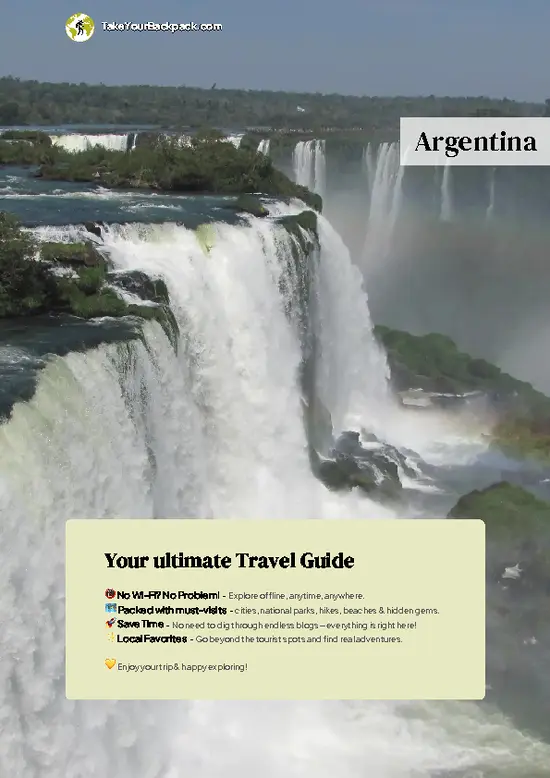
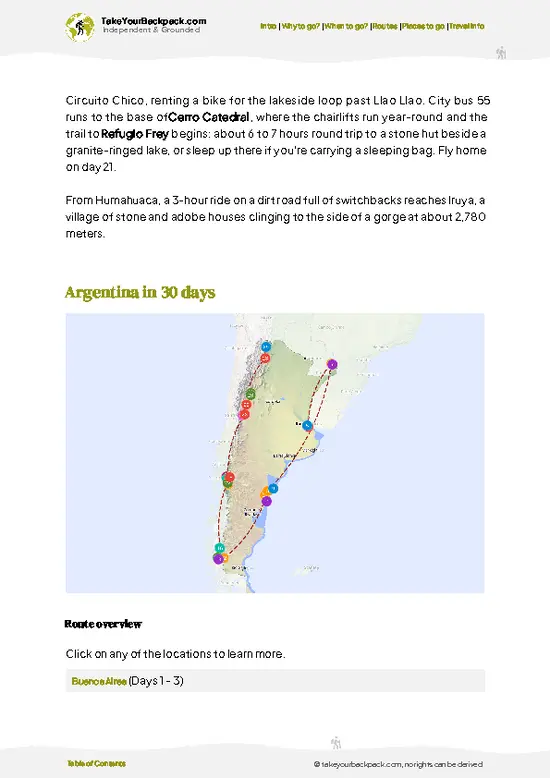
example page 0 from our offline Travel Guide for Argentina
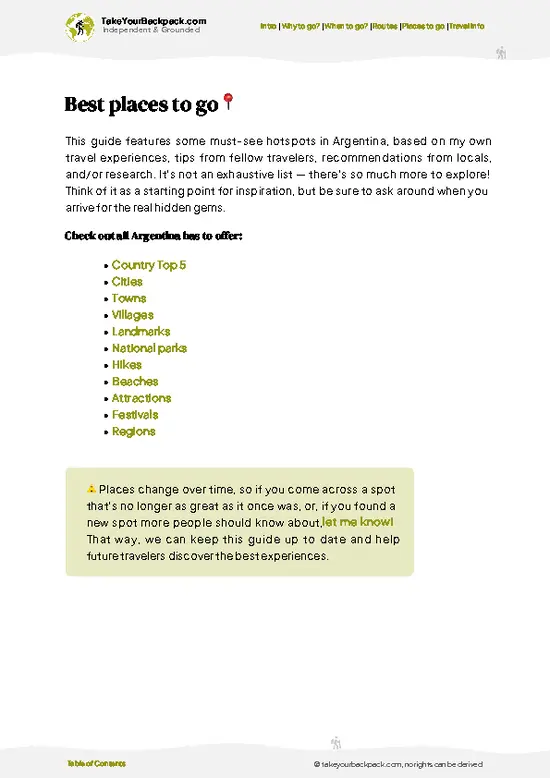
example page 1 from our offline Travel Guide for Argentina
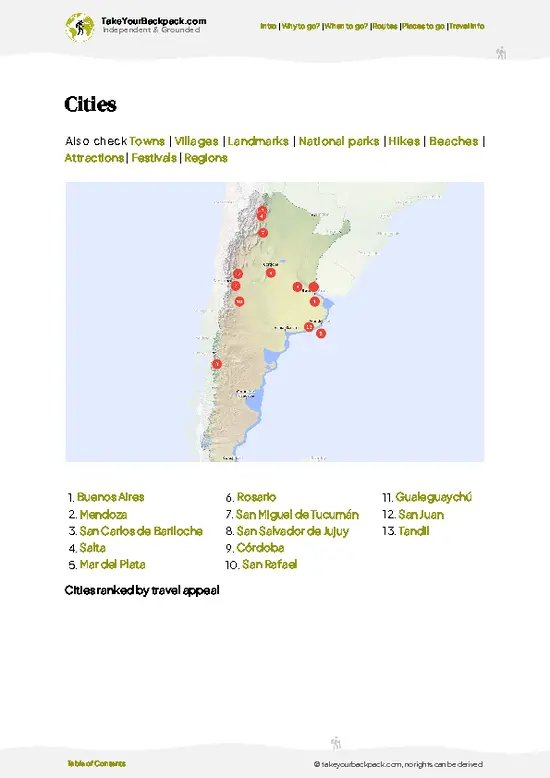
example page 2 from our offline Travel Guide for Argentina
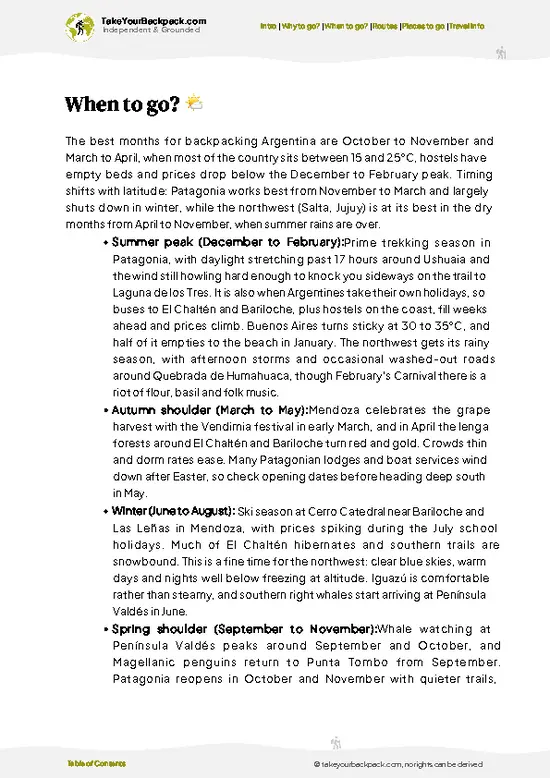
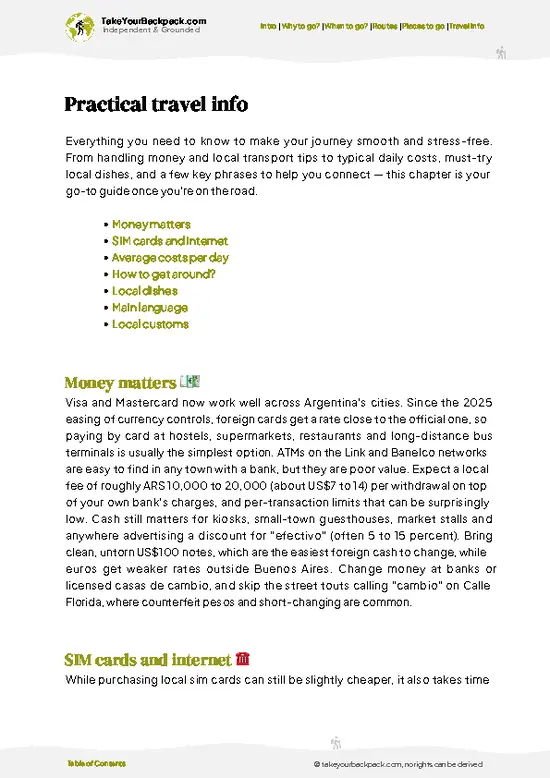
example page 3 from our offline Travel Guide for Argentina
example page 4 from our offline Travel Guide for Argentina
example page 5 from our offline Travel Guide for Argentina
example page 6 from our offline Travel Guide for Argentina
example page 7 from our offline Travel Guide for Argentina
The digital guide (505 pages) contains:
135 highlights, ranked by travel appeal
Optimized 14, 21 & 30-day travel routes
Cities, national parks, landmarks, beaches
How to get around
Offline-friendly for travel without Wi-Fi
👉 Click to see all 30+ guide features

📅 Plan smarter in minutes, not weeks
Month by month travel advice
Festivals & national holidays
Budget expectations

🗺️ Go to the right places, skip the overrated ones
Honest pros & cons of destinations
Top hikes, parks & viewpoints
Lesser-known places most travelers miss
Clear “worth it vs skip it” guidance

🛏️ Travel smoothly without rookie mistakes
Best areas to stay
Transport systems explained simply
Common scams & safety advice
SIM cards, money & practical tips

🌍 Understand the country, not just visit it
Culture & traditions
52 Essential phrases & customs
Festivals worth planning around
Traveler-friendly historical context
Insights that make places more meaningful

📱 Built for real travel conditions
Fully downloadable PDF
Works completely offline
Optimized for phone use
Useful in remote areas & buses
Everything in one place
Save weeks of stressful planning
Get instant access to your full guide. 30‑day money-back guarantee.
+ Add another guide for just US$7.80

By proceeding you agree to our terms.
Sent to your inbox immediately after payment • 100% Secure Checkout
Best Backpacking Travel Advisor 2025 tourism awardBest Backpacking
Travel Advisor
2025
What others say about Take Your Backpack Guides:
⭐⭐⭐⭐⭐
Fantastic, amazing amount of information!
⭐⭐⭐⭐⭐
My goodness this is amazing, it's what I've been looking for hats off too you!
⭐⭐⭐⭐⭐
I think this is absolutely BRILLIANT
⭐⭐⭐⭐
Very complete and informative. It's still missing places, but I gotta to commend you
⭐⭐⭐⭐⭐
This is truly amazing, thank you, can't wait to explore it with my kids!
⭐⭐⭐⭐⭐
Awesome resource, thank you!
⭐⭐⭐⭐⭐
This is amazing! Can't wait to explore the ones I haven't seen
⭐⭐⭐⭐
I love this! Well done, great idea.
⭐⭐⭐⭐⭐
Thanks for taking the time to make this gem!
⭐⭐⭐⭐⭐
This might be the best website I've ever seen.
⭐⭐⭐⭐⭐
Congratulations, and thank you so much for your work; it's incredibly valuable.
⭐⭐⭐⭐
In all seriousness I think you did a great job pointing out the important spots
⭐⭐⭐⭐⭐
10/10 very good
⭐⭐⭐⭐⭐
As someone who's only just starting to visit regularly this is awesome, thank you.
⭐⭐⭐⭐
Thank you very much! I'm going to visit my dad, it's going to be very useful!
⭐⭐⭐⭐⭐
This is really cool! We'll be travelling for the first time and this definitely come in handy.
⭐⭐⭐⭐⭐
You are now our minister of culture, congratulations 👨‍💼
⭐⭐⭐⭐⭐
Just wanted to tell you that this is a pearl! Going to follow your recommendations.
⭐⭐⭐⭐⭐
This is so cool. I'll definitely be using the resource for my travels soon.
⭐⭐⭐⭐⭐
This is very impressive! Good work.
⭐⭐⭐⭐⭐
This is an amazing and informative site. Very well done!

🛏️ Where to stay?Best areas and accommodation options

In San Juan, Argentina, the sweet spot for backpackers is the downtown area around Avenida España and Calle Mendoza. This zone nails the balance between safety and social buzz, making it a natural magnet for solo travelers and budget adventurers. Hostels cluster here, offering easy access to cafes, local eateries, and nightlife without the hassle of long commutes. The vibe is relaxed but lively—think friendly locals mingling with travelers swapping tips over mate or craft beer.

Compared to the quieter, more residential neighborhoods on the city’s outskirts, downtown keeps you plugged into the … read more 👉
In San Juan, Argentina, the sweet spot for backpackers is the downtown area around Avenida España and Calle Mendoza. This zone nails the balance between safety and social buzz, making it a natural magnet for solo travelers and budget adventurers. Hostels cluster here, offering easy access to cafes, local eateries, and nightlife without the hassle of long commutes. The vibe is relaxed but lively—think friendly locals mingling with travelers swapping tips over mate or craft beer.

Compared to the quieter, more residential neighborhoods on the city’s outskirts, downtown keeps you plugged into the pulse of San Juan. It’s not flashy, but it’s authentic and practical. You’ll sacrifice some luxury and sprawling green spaces, but gain walkability and a built-in social scene. For backpackers, that trade-off is gold: less time lost in transit, more time exploring and connecting. This area is your launchpad for both city life and day trips into the nearby wine country or mountains.

🚌 Getting aroundHow to get from A to B

San Juan moves with a pulse that’s part old-school Caribbean charm, part modern hustle. It’s not a city where everything clicks like clockwork, but it’s also not a free-for-all chaos. Think of it as a dance between laid-back locals who know shortcuts and tourists trying to crack the code. The rhythm here rewards those who read the flow—sometimes you wait, sometimes you leap—and that’s where the trade-offs come in. Time, money, comfort: you can’t have all three, but you can pick your winning combo.


  • Walking: The purest way to soak in San Juan’s character. Free, obviously, and often faster than waiting for transit in the dense Old San Juan streets. But it’s only practical if you’re staying central and ready to handle the tropical heat and cobblestones.

  • AMA Buses: The city’s public bus system
read more 👉
San Juan moves with a pulse that’s part old-school Caribbean charm, part modern hustle. It’s not a city where everything clicks like clockwork, but it’s also not a free-for-all chaos. Think of it as a dance between laid-back locals who know shortcuts and tourists trying to crack the code. The rhythm here rewards those who read the flow—sometimes you wait, sometimes you leap—and that’s where the trade-offs come in. Time, money, comfort: you can’t have all three, but you can pick your winning combo.


  • Walking: The purest way to soak in San Juan’s character. Free, obviously, and often faster than waiting for transit in the dense Old San Juan streets. But it’s only practical if you’re staying central and ready to handle the tropical heat and cobblestones.

  • AMA Buses: The city’s public bus system is the budget traveler’s backbone. Fares hover around $0.75, making it the cheapest motorized option. Runs roughly from 5:00 AM to 10:00 PM, but schedules can be loose—expect some waiting and occasional detours. Comfort is basic, but the buses cover key routes like Condado and Santurce efficiently.

  • Public Taxis (Colectivos): Shared taxis operate on fixed routes with flexible stops. They’re faster than buses and run late into the night, but prices vary—usually $2 to $3 per ride. They’re a middle ground between cost and speed, though comfort depends on how packed they get.

  • Uber and Local Ride-Sharing: Offers the most comfort and speed with door-to-door service, but expect to pay $8 to $15 for typical short hops within the metro area. Surge pricing can spike costs during peak hours or events, so it’s a trade-off between convenience and budget.

  • Rental Scooters/Bikes: A flexible, moderately priced option if you’re comfortable navigating city traffic. Rentals run about $10 to $20 per day. They let you cover more ground than walking without the unpredictability of public transit schedules, but safety and weather are factors to weigh.

👛 Costs (as of 4 September 2026)How expensive it really is

Backpacking in San Juan, Argentina, offers a clear trade-off between cost and comfort, with prices reflecting the city’s laid-back vibe and local economy. Here’s a breakdown of what you’re likely to spend daily, giving you the power to decide where to save and where to splurge.
  • Dorm Accommodation (High Season): Expect to pay around $10 to $15 USD per night. High season here means more tourists, so prices tick up slightly but still remain very affordable compared to bigger Argentine cities.
  • Dorm Accommodation (Off-Season): Dropping to about $7 to $10 USD, off-season rates offer a quieter, cheaper stay with fewer backpackers around, perfect if you want to stretch your budget without sacrificing basic comfort.
  • Meals: Local eateries serve hearty meals for $3 to $6 USD. Street food and small
read more 👉
Backpacking in San Juan, Argentina, offers a clear trade-off between cost and comfort, with prices reflecting the city’s laid-back vibe and local economy. Here’s a breakdown of what you’re likely to spend daily, giving you the power to decide where to save and where to splurge.
  • Dorm Accommodation (High Season): Expect to pay around $10 to $15 USD per night. High season here means more tourists, so prices tick up slightly but still remain very affordable compared to bigger Argentine cities.
  • Dorm Accommodation (Off-Season): Dropping to about $7 to $10 USD, off-season rates offer a quieter, cheaper stay with fewer backpackers around, perfect if you want to stretch your budget without sacrificing basic comfort.
  • Meals: Local eateries serve hearty meals for $3 to $6 USD. Street food and small cafes are your best bets for authentic flavors without the tourist markup. If you cook, groceries can cost around $2 to $4 USD per day.
  • Local Transport: Bus rides within the city typically cost about $0.30 to $0.50 USD per trip. It’s cheap and reliable, but be ready for some waiting and standing during peak hours.
  • City Transport Pass: If you plan to move around a lot, a monthly or weekly pass can save money, averaging around $10 to $15 USD for a week. This is a smart move if you want to maximize your exploration without fussing over cash each ride.
  • Basic Activities/Entry Fees: Museums and local attractions usually charge between $2 and $5 USD. Many natural sites are free or have minimal entrance fees, so you can enjoy the outdoors without breaking the bank.
  • Miscellaneous Expenses: Factor in about $2 to $5 USD for things like bottled water, snacks, or occasional treats. These small costs add up but are manageable with a bit of planning.

All told, you’re looking at a daily budget roughly between $15 and $30 USD, depending on how much you lean into comfort or scrimp on extras. San Juan rewards those who balance frugality with a few well-chosen splurges—like a local meal or a guided tour—turning simple logistics into a strategic game of value.


source: argentina.gob.ar
⚠️ Prices can change and everyone travels differently, so take this as a rough guide. Hope it helps you plan your adventure!

🚌 Day tripsExploring the surroundings

San Juan, Argentina, is a fantastic launchpad for day trips that pack a punch without draining your wallet or time. Here’s how to make the most of your adventure.

Ischigualasto Provincial Park
This UNESCO World Heritage site is a must-see for any dinosaur enthusiast. The surreal landscape, often compared to the moon, features unique rock formations and fossil remains. It’s about a 3.5-hour drive from San Juan, so leave early to maximize your time. Expect to spend around $10 for park entry and a guided tour. The best months to visit are from March to November when temperatures are milder. A common mistake? Underestimating the park’s size; plan for a full day to explore.
👉 Explore Ischigualasto Provincial Park

Talampaya National Park
Just a stone’s throw from Ischigualasto, Talampaya … read more 👉
San Juan, Argentina, is a fantastic launchpad for day trips that pack a punch without draining your wallet or time. Here’s how to make the most of your adventure.

Ischigualasto Provincial Park
This UNESCO World Heritage site is a must-see for any dinosaur enthusiast. The surreal landscape, often compared to the moon, features unique rock formations and fossil remains. It’s about a 3.5-hour drive from San Juan, so leave early to maximize your time. Expect to spend around $10 for park entry and a guided tour. The best months to visit are from March to November when temperatures are milder. A common mistake? Underestimating the park’s size; plan for a full day to explore.
👉 Explore Ischigualasto Provincial Park

Talampaya National Park
Just a stone’s throw from Ischigualasto, Talampaya offers stunning red rock canyons and ancient petroglyphs. The drive takes about 4 hours, but the scenery along the way is part of the experience. Budget around $15 for entry and a guided tour. Spring and fall are ideal for comfortable hiking. Many first-timers rush through; take your time to soak in the geological wonders.
👉 Explore Talampaya National Park

Uspallata
A charming village nestled in the Andes, Uspallata is about 2 hours from San Juan. It’s perfect for a day of hiking or simply enjoying local cuisine. You can easily spend under $20 for transport and a meal. Late spring and early fall are best for pleasant weather. A common pitfall is not checking the weather; the mountains can be unpredictable.


Barreal
Known for its stunning views of the Andes and the nearby Valle de la Luna, Barreal is a 2.5-hour drive from San Juan. It’s a great spot for stargazing and enjoying the tranquility of nature. Expect to spend around $15 on transport and snacks. The best time to visit is during the dry season, from September to April. Don’t forget to bring water; the desert can be unforgiving.
Want to know what more Argentina offers?
The Argentina Travel Guide describes 135 highlights, from cities to national parks, from beaches to hikes

Get the Travel Guide -

🍲 FoodLocal Flavors for Backpackers

In San Juan, food is a celebration of local flavors. Dive into asado, a mouthwatering barbecue experience that’s not just a meal but a social event. The smoky aroma of grilled meats fills the air, drawing you into the vibrant atmosphere. Don’t miss empanadas, stuffed pastries that vary by region; each bite bursts with savory goodness.

For drinks, try a glass of Malbec—the region’s pride. Sip it at a casual bar or while lounging in a café, where the chatter of locals creates a lively backdrop. Street vendors serve up choripán, a chorizo sandwich that’s a must-try for a quick bite.

When dining, embrace the siesta culture; many places close in the afternoon, so plan your meals accordingly. Sharing food is common, so don’t hesitate to order a few dishes to enjoy with friends. This communal spirit makes every meal feel like a feast.

🛡️ SafetyScams, Hazards, and Annoyances

San Juan, Argentina, is generally safe, but a few areas warrant extra awareness, especially after dark. Stick to well-lit streets and avoid quiet corners. If you’re solo, consider using rideshares instead of walking late at night.

Scams are rare, but be cautious around street vendors who may inflate prices or offer “special deals.” Always confirm costs upfront. Everyday annoyances include the occasional aggressive street performer; a polite but firm “no” usually does the trick. Carry your belongings close and stay aware of your surroundings. With these simple strategies, you can navigate San Juan confidently and enjoy its unique charm.

FAQFrequently asked questions about San Juan

2 to 3 days are sufficient to explore San Juan. This allows time to visit key sites like the Ischigualasto Provincial Park and local wineries. Additional days are needed if planning extensive trekking or wine tours.
Yes, San Juan is generally safe for solo backpackers. Usual precautions apply, especially at night and in less populated areas. The city has a low crime rate compared to larger Argentine cities.
San Juan is known for its wine production, especially Malbec and Syrah varieties. It is also famous for the nearby Ischigualasto Provincial Park, a UNESCO World Heritage site with unique geological formations.
⚠️ Things can change over time, so always validate details locally before you go.

Other Argentinian cities near San Juan

Explore more nearby:

  • Mendoza—Andes views, wine bodegas, tree-lined streets| 153 km away
  • San Rafael—vineyards, river canyons, adventure sports| 343 km away
  • Cordoba—colonial churches, student energy, sierras backdrop| 413 km away

💡 Not sure where to go next?
Create a personalized itinerary for Argentina including San Juan and the places that fit your trip.

Generate my itinerary

👉 Discover all cities

Or checkout all Argentina has to offer (think cities, towns, villages, national parks, hikes, beaches, festivals)
Country photo of Argentina

We 💚 feedbackWhat to keep in mind

San Juan’s wine scene is a revelation. Sipping Malbec while gazing at the Andes is pure bliss. But be ready for the heat; summer can be relentless. If you’re not a fan of sweltering days, plan your visit for spring or fall. It’s all about timing your comfort for those high-value moments.

✈️ When did I visit Argentina?
I have visited Argentina, together with Chile, in September 2012.

✍️ Help improve this page!
The information on this page is based on my own backpacking experience in Argentina, supplemented with up-to-date research and feedback from other travelers. Travel details can change, so if you notice anything outdated or incomplete, feel free to let me know.


🙋‍♂️ Give feedback

👋 Meet the founderWho’s Behind Take Your Backpack?

Johan, backpacker and founder of TakeYourBackpackHi, I’m Johan (Netherlands 🇳🇱), the creator of TakeYourBackpack. Over the past decade, I’ve backpacked through 80+ countries across six continents, gaining extensive experience with independent travel, long-term trips, and overland routes.

This site is built on a combination of firsthand travel experience and carefully curated insights from other backpackers. Many guides are based on places I’ve personally visited, while others bring together tips, observations, and practical advice shared by trusted travelers I’ve met along the way.

The goal is to provide realistic, experience-driven guidance — not generic itineraries — so you can explore destinations with better context, clearer expectations, and more confidence.

Get full Argentina guide •
Instant download • 135 highlights • Full Offline guide