×

Argentina🇦🇷 | citiesSan Miguel de Tucumán1816 independence house, northern market, subtropical heat, Northwest gateway | things to do and best time to go

Explore San JuanExplore San Salvador de Jujuy

Backpacking in San Miguel de Tucumán
👍 Recommendedcity ranked #7
By Johan Kruseman 🇳🇱 | Updated October 19, 2026

Everyone asks about the Casa Histórica where independence was declared in 1816, but the real value here is what happens after the plaza selfie: this is the gateway to Argentina's Northwest, tucked in the country's subtropical interior near the Andean foothills. San Miguel de Tucumán itself trades postcard beauty for something more useful, a workable, unpretentious city where you can bank cheap dorms, solid regional food, and fast bus connections before pushing into the mountains. The trade-off is time versus comfort: spend one day here and you save money and gain access, spend three and you're padding your route with a city that, frankly, isn't the main event. I remember sitting in a corner cafe at 11pm, sweat still on my neck from the heat, eating a tamal wrapped in corn husk, watching university students argue about football like the world depended on it. That's the city's real currency: unpolished, warm, functional.

Discover everything you want to know in the 📖 Argentina Travel Guide.


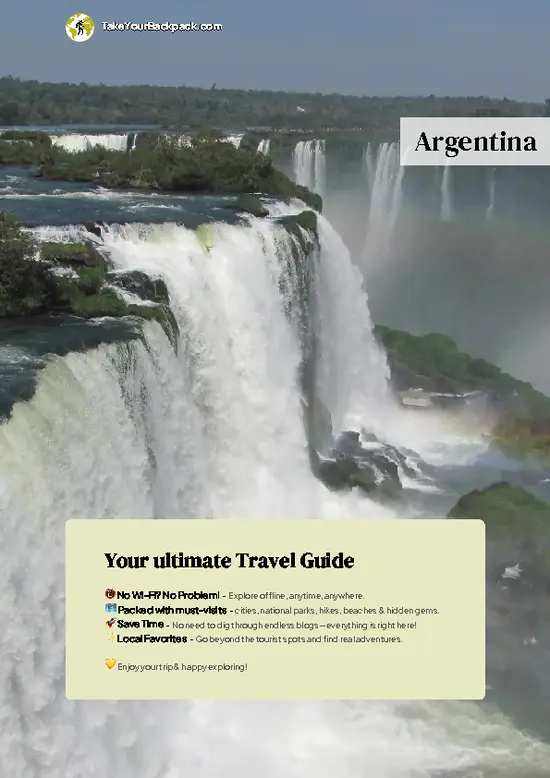
example page 0 from our offline Travel Guide for Argentina
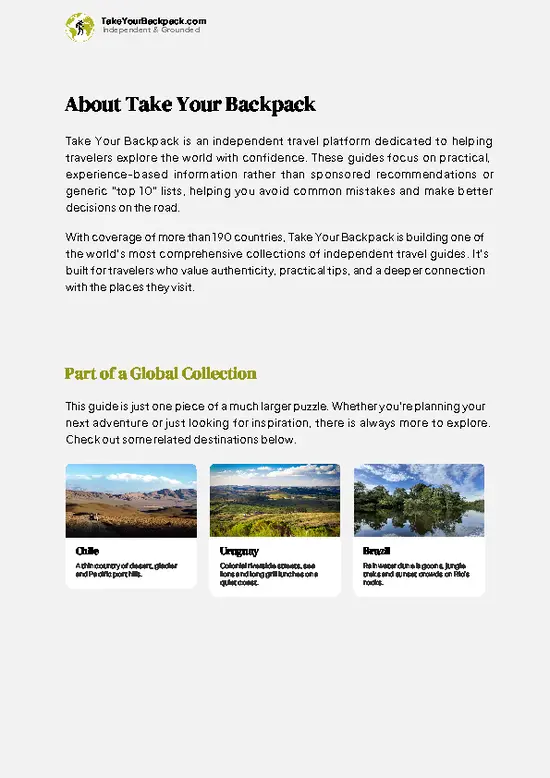
example page 1 from our offline Travel Guide for Argentina
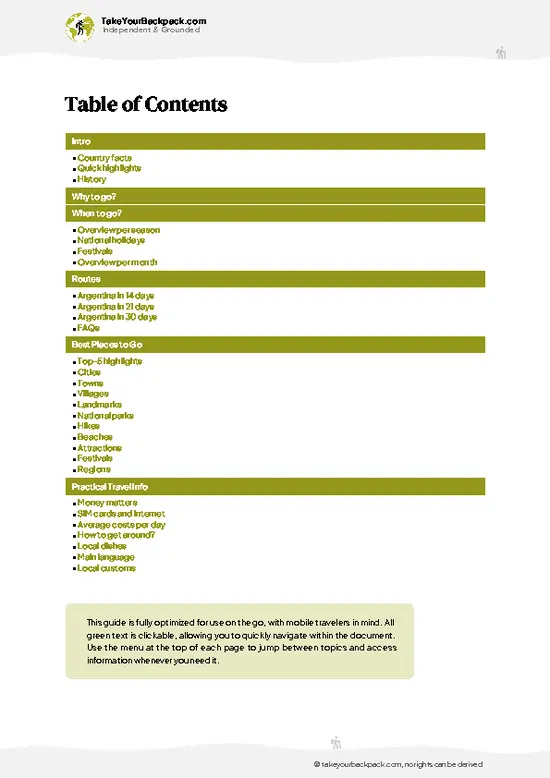
example page 2 from our offline Travel Guide for Argentina
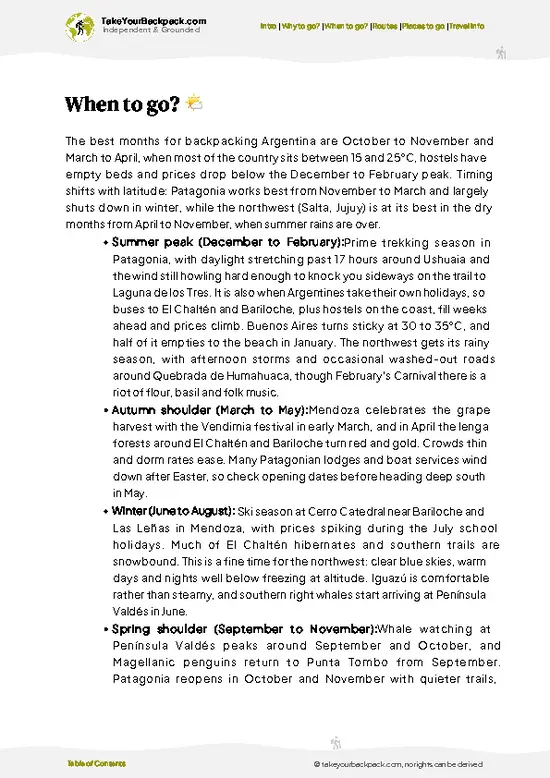
example page 3 from our offline Travel Guide for Argentina
example page 4 from our offline Travel Guide for Argentina
example page 5 from our offline Travel Guide for Argentina
example page 6 from our offline Travel Guide for Argentina
example page 7 from our offline Travel Guide for Argentina
Loading the map 🌍
CLICK TO FILTER
cities
towns
villages
landmarks
national parks
hikes
beaches
attractions
festivals
regions
SHOW COUNTRY’S BESTSHOW ALL

✨ Why go?
Ranked #7 city in Argentina
What makes this city worth visiting

Backpackers land in San Miguel de Tucumán mostly for its basecamp value, not its own charm. The city sits at a transport hub for Argentina's Northwest, so onward travel to the mountains and valleys is quick and cheap. Hostels here run noticeably lower than Buenos Aires or Mendoza, and the walkability of the compact center means you don't need taxis for basic orientation. The food scene rewards curiosity, empanadas and regional stews cost little and taste like nowhere else in the country. Nightlife exists but skews local and student-driven rather than backpacker-circuit, which some travelers love and others find isolating. It's not a city stacked with must-see attractions, so treat it as a practical stop: land, recharge, sort logistics, maybe two nights max unless day trips pull you in. If … read more 👉
Backpackers land in San Miguel de Tucumán mostly for its basecamp value, not its own charm. The city sits at a transport hub for Argentina's Northwest, so onward travel to the mountains and valleys is quick and cheap. Hostels here run noticeably lower than Buenos Aires or Mendoza, and the walkability of the compact center means you don't need taxis for basic orientation. The food scene rewards curiosity, empanadas and regional stews cost little and taste like nowhere else in the country. Nightlife exists but skews local and student-driven rather than backpacker-circuit, which some travelers love and others find isolating. It's not a city stacked with must-see attractions, so treat it as a practical stop: land, recharge, sort logistics, maybe two nights max unless day trips pull you in. If you want constant traveler energy and polished infrastructure, this isn't it. If you want an honest, functional Argentine city with real value, it delivers.

💡 HighlightsKey sights and experiences for travelers

  1. Casa Histórica de la Independencia: The building where Argentina's independence was declared in 1816. The interior museum covers the events in detail with period rooms and documents. Visit in the morning to avoid midday heat; entry costs a few hundred pesos; allow 45-60 minutes.
  2. Plaza Independencia: The city's central square, ringed by government buildings and the cathedral. It's the natural starting point for any walk through downtown, free to visit, and best experienced in early evening when locals gather.
  3. Catedral de Tucumán: A neoclassical cathedral facing the main plaza, worth a quick look inside for its restrained interior. Free entry, 15-20 minutes is enough unless a service is underway.
  4. Parque 9 de Julio: A large green space designed with input from the same landscape architect behind
… read more 👉
  1. Casa Histórica de la Independencia: The building where Argentina's independence was declared in 1816. The interior museum covers the events in detail with period rooms and documents. Visit in the morning to avoid midday heat; entry costs a few hundred pesos; allow 45-60 minutes.
  2. Plaza Independencia: The city's central square, ringed by government buildings and the cathedral. It's the natural starting point for any walk through downtown, free to visit, and best experienced in early evening when locals gather.
  3. Catedral de Tucumán: A neoclassical cathedral facing the main plaza, worth a quick look inside for its restrained interior. Free entry, 15-20 minutes is enough unless a service is underway.
  4. Parque 9 de Julio: A large green space designed with input from the same landscape architect behind some of Buenos Aires' parks. Good for a morning run or a slow afternoon walk; free, and you can easily spend an hour or two.
  5. Museo Folklórico Manuel Belgrano: A small museum dedicated to regional folk traditions, crafts, and instruments. Worth it if you're curious about Northwest Argentine culture beyond the independence narrative; modest entry fee, 30-45 minutes.
  6. Mercado del Norte: A covered market good for cheap regional food and a look at daily commerce away from the tourist plazas. Best visited late morning when stalls are fully active; food costs are low, budget an hour.
  7. Casa de Gobierno de Tucumán: The provincial government palace facing the main plaza, notable for its architecture even if you don't go inside. A five-minute stop on any plaza walk.
  8. Iglesia de San Francisco: A colonial-era church with a distinct yellow facade, a quiet contrast to the busier cathedral. Free, quick visit of 15-20 minutes.
Beyond the city, Tafí del Valle and the Quebrada de los Cardones make excellent day trips into cooler highland scenery, and the ruins at Quilmes reward the longer haul with genuine pre-Columbian history. Tafí del Valle is my personal favorite: the temperature drop alone is worth the bus ride.
Spotted a mistake or missing something? Contact us.

Things to do in San Miguel de Tucumán

Ratings based on Tripadvisor reviews. When you book through this link, you support our work at no extra cost to you.

🏘️ NeighborhoodsWhere things are and how it's laid out

Orientation here is simple once you see the pattern: everything useful clusters near the center, and distance from it costs you comfort or nightlife access.
  • Centro (around Plaza Independencia): The obvious trade is money for convenience. Hostels, restaurants, and bus connections sit within walking distance, but you pay slightly more and deal with daytime noise. Best for short stays of one to two nights.
  • Barrio Sur: Quieter, cheaper, residential. You save on accommodation but sacrifice walkability to nightlife and sights, expect short taxi or bus rides after dark. Good if you're staying longer and want a slower pace.
  • Barrio Norte: A middle-ground zone with some leafy streets and mid-range guesthouses. Comfort improves slightly over Sur, but you're still a bus ride from the action, a reasonable
… read more 👉
Orientation here is simple once you see the pattern: everything useful clusters near the center, and distance from it costs you comfort or nightlife access.
  • Centro (around Plaza Independencia): The obvious trade is money for convenience. Hostels, restaurants, and bus connections sit within walking distance, but you pay slightly more and deal with daytime noise. Best for short stays of one to two nights.
  • Barrio Sur: Quieter, cheaper, residential. You save on accommodation but sacrifice walkability to nightlife and sights, expect short taxi or bus rides after dark. Good if you're staying longer and want a slower pace.
  • Barrio Norte: A middle-ground zone with some leafy streets and mid-range guesthouses. Comfort improves slightly over Sur, but you're still a bus ride from the action, a reasonable trade if you value sleep over proximity.
  • Near the bus terminal (Terminal General San Martín): Practical if you're arriving late or leaving early, saving time on your first or last morning. It's not scenic and nightlife is thin, but the logistical win is real for one-night stopovers.
Read the pattern: Centro wins on time and social access, the outer barrios win on cost and quiet. Pick based on how long you're staying and what you're optimizing for.

⌛️ 1 dayA smart one-day plan

The day moves on foot through the flat grid of the center, with a long lunch and a siesta break when the heat peaks, and one short taxi ride to finish.
8:30 AM: Plaza Independencia Start under the jacaranda and palo borracho trees, with the Casa de Gobierno and the cathedral on its edges. Grab a coffee and medialunas at a corner café and watch the city fill with office workers.
9:45 AM: Casa Histórica de la Independencia Walk three blocks along Congreso. This is the house where independence was declared in 1816. Entry is around US$2 for foreigners, and the courtyard with its orange trees is the best part. Allow an hour.
11:15 AM: Calle Muñecas and Mercado del Norte Stroll toward the market through the pedestrian streets. Inside, stalls sell cheese, cured meats, lemons (Tucumán is famous for them) … read more 👉
The day moves on foot through the flat grid of the center, with a long lunch and a siesta break when the heat peaks, and one short taxi ride to finish.
8:30 AM: Plaza Independencia Start under the jacaranda and palo borracho trees, with the Casa de Gobierno and the cathedral on its edges. Grab a coffee and medialunas at a corner café and watch the city fill with office workers.
9:45 AM: Casa Histórica de la Independencia Walk three blocks along Congreso. This is the house where independence was declared in 1816. Entry is around US$2 for foreigners, and the courtyard with its orange trees is the best part. Allow an hour.
11:15 AM: Calle Muñecas and Mercado del Norte Stroll toward the market through the pedestrian streets. Inside, stalls sell cheese, cured meats, lemons (Tucumán is famous for them) and fresh empanadas. Try a tucumana empanada with a squeeze of lemon.
1:00 PM: Lunch and siesta Many places close from about 1:30 to 5:00 PM, so eat early. Order locro or humita, then rest at your hostel while the sun does its worst.
5:30 PM: Museo Casa Padilla The museum faces Plaza Independencia at 25 de Mayo 36. The 19th-century mansion holds period furniture and local art, and few backpackers bother with it. Entry is under US$2. Expect about 45 minutes.
7:00 PM: Parque 9 de Julio Take a short taxi to the park, designed by Charles Thays. Locals jog, drink mate and stroll the paths around the lake and the Casa del Obispo Colombres, now a sugar museum, at golden hour.
9:30 PM: Dinner on Avenida Mate de Luna Argentines eat late, so the restaurants only fill up now. Share a parrillada, then finish with a local wine from nearby Tafí del Valle or Cafayate.

🌤️ When to go?Best time to visit San Miguel de Tucumán

  • Dry Season (April to October): Cooler, more comfortable days averaging 15-24°C (59-75°F), minimal rain, and the best window for exploring the city and nearby valleys without heat fatigue.
  • Hot, Humid Summer (November to March): Temperatures regularly hit 30-35°C (86-95°F) with high humidity and afternoon thunderstorms; walking the city center becomes uncomfortable by midday.
  • Daylight Hours: Around 10 hours in June, stretching to roughly 14 hours in December, giving summer visitors more evening light but less relief from heat.
  • Crowds and Prices: The city sees relatively few dedicated tourists year-round, so price swings are modest; regional festivals and university term time (March to November) bring more local foot traffic than backpackers.
  • Seasonal Activities: Dry season months align best with
… read more 👉
  • Dry Season (April to October): Cooler, more comfortable days averaging 15-24°C (59-75°F), minimal rain, and the best window for exploring the city and nearby valleys without heat fatigue.
  • Hot, Humid Summer (November to March): Temperatures regularly hit 30-35°C (86-95°F) with high humidity and afternoon thunderstorms; walking the city center becomes uncomfortable by midday.
  • Daylight Hours: Around 10 hours in June, stretching to roughly 14 hours in December, giving summer visitors more evening light but less relief from heat.
  • Crowds and Prices: The city sees relatively few dedicated tourists year-round, so price swings are modest; regional festivals and university term time (March to November) bring more local foot traffic than backpackers.
  • Seasonal Activities: Dry season months align best with day trips into the surrounding hills, where trails and roads are less affected by storm damage.
Aim for May or September, shoulder months with stable weather and fewer domestic travelers competing for bus seats and dorm beds.


source: climatestotravel.comJANJanuary: fair for travelingFEBFebruary: fair for travelingMARMarch: highly recommended for travelingAPRApril: excellent for travelingMAYMay: highly recommended for travelingJUNJune: good for travelingJULJuly: good for travelingAUGAugust: good for travelingSEPSeptember: excellent for travelingOCTOctober: excellent for travelingNOVNovember: highly recommended for travelingDECDecember: fair for traveling
when-to-go

✈️ The backpacker research shortcutArgentina Travel Guide

An offline-friendly backpacking guide with optimized travel routes, ranked highlights, transport advice, and the best areas to stay.
example page 0 from our offline Travel Guide for Argentina
example page 1 from our offline Travel Guide for Argentina
example page 2 from our offline Travel Guide for Argentina
example page 3 from our offline Travel Guide for Argentina
example page 4 from our offline Travel Guide for Argentina
example page 5 from our offline Travel Guide for Argentina
example page 6 from our offline Travel Guide for Argentina
example page 7 from our offline Travel Guide for Argentina
The digital guide (393 pages) contains:
✅ 131 highlights, ranked by travel appeal
✅ Optimized 14, 21 & 30-day travel routes
✅ Cities, national parks, landmarks, beaches
✅ How to get around
✅ Offline-friendly for travel without Wi-Fi
👉 Click to see all 30+ guide features

📅 Plan smarter in minutes, not weeks
✅ Month by month travel advice
✅ Festivals & national holidays
✅ Budget expectations

🗺️ Go to the right places, skip the overrated ones
✅ Honest pros & cons of destinations
✅ Top hikes, parks & viewpoints
✅ Lesser-known places most travelers miss
✅ Clear “worth it vs skip it” guidance

🛏️ Travel smoothly without rookie mistakes
✅ Best areas to stay
✅ Transport systems explained simply
✅ Common scams & safety advice
✅ SIM cards, money & practical tips

🌍 Understand the country, not just visit it
✅ Culture & traditions
✅ 52 Essential phrases & customs
✅ Festivals worth planning around
✅ Traveler-friendly historical context
✅ Insights that make places more meaningful

📱 Built for real travel conditions
✅ Fully downloadable PDF
✅ Works completely offline
✅ Optimized for phone use
✅ Useful in remote areas & buses
✅ Everything in one place
Stop searching, start planning
Get instant access to your full guide. 30‑day money-back guarantee.
+ Add another guide for just

By proceeding you agree to our terms.
Sent to your inbox immediately after payment • 100% Secure Checkout
Best Backpacking Travel Advisor 2025 tourism awardBest Backpacking
Travel Advisor
2025
What others say about Take Your Backpack Guides:
⭐⭐⭐⭐⭐
Fantastic, amazing amount of information!
⭐⭐⭐⭐⭐
My goodness this is amazing, it's what I've been looking for hats off too you!
⭐⭐⭐⭐⭐
I think this is absolutely BRILLIANT
⭐⭐⭐⭐
Very complete and informative. It's still missing places, but I gotta to commend you
⭐⭐⭐⭐⭐
This is truly amazing, thank you, can't wait to explore it with my kids!
⭐⭐⭐⭐⭐
Awesome resource, thank you!
⭐⭐⭐⭐⭐
This is amazing! Can't wait to explore the ones I haven't seen
⭐⭐⭐⭐
I love this! Well done, great idea.
⭐⭐⭐⭐⭐
Thanks for taking the time to make this gem!
⭐⭐⭐⭐⭐
This might be the best website I've ever seen.
⭐⭐⭐⭐⭐
Congratulations, and thank you so much for your work; it's incredibly valuable.
⭐⭐⭐⭐
In all seriousness I think you did a great job pointing out the important spots
⭐⭐⭐⭐⭐
10/10 very good
⭐⭐⭐⭐⭐
As someone who's only just starting to visit regularly this is awesome, thank you.
⭐⭐⭐⭐
Thank you very much! I'm going to visit my dad, it's going to be very useful!
⭐⭐⭐⭐⭐
This is really cool! We'll be travelling for the first time and this definitely come in handy.
⭐⭐⭐⭐⭐
You are now our minister of culture, congratulations 👨‍💼
⭐⭐⭐⭐⭐
Just wanted to tell you that this is a pearl! Going to follow your recommendations.
⭐⭐⭐⭐⭐
This is so cool. I'll definitely be using the resource for my travels soon.
⭐⭐⭐⭐⭐
This is very impressive! Good work.
⭐⭐⭐⭐⭐
This is an amazing and informative site. Very well done!

🛏️ Where to stay?How to pick the right area

The center around Plaza Independencia is the clear choice for most backpackers. Hostel availability is concentrated here, prices stay reasonable compared to bigger Argentine cities, and you can walk to the main sights, bus terminal connections, and evening food spots without relying on taxis. The vibe is functional rather than polished, a mix of students, regional travelers, and the occasional backpacker passing through en route to the Northwest.

Staying central also means easier access to onward buses, useful if you're only spending one or two nights before heading into the mountains. Areas slightly … read more 👉
The center around Plaza Independencia is the clear choice for most backpackers. Hostel availability is concentrated here, prices stay reasonable compared to bigger Argentine cities, and you can walk to the main sights, bus terminal connections, and evening food spots without relying on taxis. The vibe is functional rather than polished, a mix of students, regional travelers, and the occasional backpacker passing through en route to the Northwest.

Staying central also means easier access to onward buses, useful if you're only spending one or two nights before heading into the mountains. Areas slightly outside the center offer quieter nights and sometimes cheaper beds, but you'll trade that for longer walks or bus rides back from restaurants and nightlife. For solo travelers, the center's foot traffic in the evening provides a natural safety net that outer neighborhoods lack. Unless you're settling in for an extended stay and prioritizing quiet over convenience, the center wins on nearly every practical measure.

🚌 Getting aroundMoving around without the hassle

San Miguel de Tucumán runs on intuition more than rigid timetables. Buses show up on a general rhythm rather than a precise schedule, drivers know their routes by memory, and locals navigate by landmark rather than map. Once you accept that flexibility is the system, getting around becomes almost enjoyable, a puzzle you win by staying loose rather than rigid.
  • Walking: The center is compact enough that most sights sit within a 20-minute walk of each other, costing nothing and giving you the best read on the city's actual pace, though midday heat in summer makes this a real trade-off between saving money and staying comfortable.
  • City Buses (colectivos): Cheap, running roughly from early morning until around 11pm-midnight depending on the route, with fares typically under a dollar using a rechargeable
… read more 👉
San Miguel de Tucumán runs on intuition more than rigid timetables. Buses show up on a general rhythm rather than a precise schedule, drivers know their routes by memory, and locals navigate by landmark rather than map. Once you accept that flexibility is the system, getting around becomes almost enjoyable, a puzzle you win by staying loose rather than rigid.
  • Walking: The center is compact enough that most sights sit within a 20-minute walk of each other, costing nothing and giving you the best read on the city's actual pace, though midday heat in summer makes this a real trade-off between saving money and staying comfortable.
  • City Buses (colectivos): Cheap, running roughly from early morning until around 11pm-midnight depending on the route, with fares typically under a dollar using a rechargeable SUBE card. The trade here is time for savings: routes can be confusing at first and buses don't always run on a fixed clock, but once you learn two or three key lines, you'll move through the city for almost nothing.
  • Taxis and Remises: Inexpensive by international standards and useful at night or when carrying luggage to or from the bus terminal. You're trading a small amount of money for real comfort and safety, a smart swap late at night or after a long travel day.
  • Bus Terminal (Terminal General San Martín): Not a daily transit option, but essential to understand since it's your gateway to the rest of the Northwest. Long-distance buses depart frequently throughout the day and into the evening, and booking a day ahead in high season saves you the stress of standing in line for a sold-out route.
  • Bicycles: Less common among travelers, but some guesthouses offer rentals for a small daily fee. This suits confident riders comfortable with mixed traffic, trading a bit of risk for speed and independence around the city.
Master the bus routes early and you'll move through this city cheaper and smarter than most visitors bother to.

👛 Costs (as of 19 October 2026)Money, prices, and spending tips

Backpacking costs in San Miguel de Tucumán run noticeably lower than Buenos Aires or Mendoza, making it a budget-friendly stop in the Northwest circuit.
CategoryBudget RangeLocal Reality
Dorm bed (high season)USD 10-15Basic hostels near the center, fan-cooled rooms common
Dorm bed (off-season)USD 7-11Prices drop slightly outside peak domestic travel months
MealsUSD 4-9 per mealEmpanadas and market food on the low end, sit-down parrilla higher
Local transportUSD 0.30-0.50 per rideSUBE card rides on city buses
City transport passUSD 5-8 refillSUBE card top-ups last several days of regular use
Basic activities/entry feesUSD 1-4Most museums charge modest entry, some are free
MiscellaneousUSD 3-6Snacks, water, small purchases
Total Daily BudgetUSD 25-40Comfortable budget travel without cutting corners
Argentina's … read more 👉
Backpacking costs in San Miguel de Tucumán run noticeably lower than Buenos Aires or Mendoza, making it a budget-friendly stop in the Northwest circuit.
CategoryBudget RangeLocal Reality
Dorm bed (high season)USD 10-15Basic hostels near the center, fan-cooled rooms common
Dorm bed (off-season)USD 7-11Prices drop slightly outside peak domestic travel months
MealsUSD 4-9 per mealEmpanadas and market food on the low end, sit-down parrilla higher
Local transportUSD 0.30-0.50 per rideSUBE card rides on city buses
City transport passUSD 5-8 refillSUBE card top-ups last several days of regular use
Basic activities/entry feesUSD 1-4Most museums charge modest entry, some are free
MiscellaneousUSD 3-6Snacks, water, small purchases
Total Daily BudgetUSD 25-40Comfortable budget travel without cutting corners
Argentina's inflation means prices shift quickly, so treat these as a general baseline rather than fixed figures.


source: argentina.gob.ar
⚠️ Prices can change and everyone travels differently, so take this as a rough guide. Hope it helps you plan your adventure!

🚌 Day tripsExploring the surroundings

San Miguel de Tucumán works well as a day-trip base because the best targets sit within 1 to 3 hours by bus or shared transfer, and you return to a bed with a shower by evening.
Tafí del Valle:
The climb into the Calchaquí highlands takes about 2.5 to 3 hours each way, up a switchbacked road through cloud forest to a cool valley with goat cheese stalls, a reservoir and a quiet main street. Buses run several times daily for roughly US$6 to 10 each way, so budget about US$25 to 35 with lunch. Go in the dry months of April to October for clear views, and don’t arrive on the last morning bus expecting to see everything, because the final return leaves late afternoon. Bring a warm layer, since it is noticeably colder than the city.
👉 Explore Tafí del Valle
Quilmes Ruins:
The hillside remains of a … read more 👉
San Miguel de Tucumán works well as a day-trip base because the best targets sit within 1 to 3 hours by bus or shared transfer, and you return to a bed with a shower by evening.
Tafí del Valle:
The climb into the Calchaquí highlands takes about 2.5 to 3 hours each way, up a switchbacked road through cloud forest to a cool valley with goat cheese stalls, a reservoir and a quiet main street. Buses run several times daily for roughly US$6 to 10 each way, so budget about US$25 to 35 with lunch. Go in the dry months of April to October for clear views, and don’t arrive on the last morning bus expecting to see everything, because the final return leaves late afternoon. Bring a warm layer, since it is noticeably colder than the city.
👉 Explore Tafí del Valle
Quilmes Ruins:
The hillside remains of a large pre-Hispanic Quilmes town sit about 180 km west, 3.5 to 4 hours by road toward Cafayate. Stone walls climb the slope above a dry plain, and the wind and cactus make the place memorable. Entry is roughly US$5 to 8, and the long bus ride puts a full day cost near US$30 to 40. First-timers often skip water and sun protection, and there is almost no shade on the site. Spring and autumn are most comfortable.

San Javier and Cristo Blanco:
This is the easy one. A local bus climbs about 30 to 45 minutes into the green foothills of the Sierra de San Javier, ending near a large white Christ statue with views over the city and the plains. Total cost is usually under US$8 with a snack. Clear mornings in winter give the best visibility, while summer afternoons bring haze and storms. Many people go on a weekend, so weekdays are calmer.

Termas de Río Hondo:
The hot springs town in neighboring Santiago del Estero lies about 1.5 to 2 hours by bus, costing around US$5 to 9 each way. Thermal pools run from roughly US$5 to 15 depending on the facility, so a day lands near US$30 to 40. Winter is the best moment, when the warm water suits the cool air. Check the last bus back before settling into a long soak.

🍲 FoodLocal Flavors for Backpackers

Tucumán's food identity centers on empanadas tucumanas, juicier and more heavily spiced than versions found elsewhere in Argentina, often eaten standing at a counter with a bite of the corner first to check the filling before diving in. Tamales wrapped in corn husk show up at markets and street stalls, especially around Mercado del Norte, where cheap, filling regional food dominates over anything aimed at tourists. For drinks, locals lean on mate throughout the day and casual bars serving regional wines and beer in the evening, particularly around the center where students gather after dark. Sit-down parrillas (grill restaurants) offer solid, affordable steak dinners without the price inflation you'd find in Buenos Aires. Expect a relaxed, unhurried eating culture: lunch stretches long, dinner … read more 👉
Tucumán's food identity centers on empanadas tucumanas, juicier and more heavily spiced than versions found elsewhere in Argentina, often eaten standing at a counter with a bite of the corner first to check the filling before diving in. Tamales wrapped in corn husk show up at markets and street stalls, especially around Mercado del Norte, where cheap, filling regional food dominates over anything aimed at tourists. For drinks, locals lean on mate throughout the day and casual bars serving regional wines and beer in the evening, particularly around the center where students gather after dark. Sit-down parrillas (grill restaurants) offer solid, affordable steak dinners without the price inflation you'd find in Buenos Aires. Expect a relaxed, unhurried eating culture: lunch stretches long, dinner starts late, often after 9pm, and nobody rushes you out once the table's yours for the evening.

🛡️ SafetySafety Tips and Common Scams in San Miguel de Tucumán

San Miguel de Tucumán is generally safe for backpackers who stay reasonably alert, particularly in the center. The main annoyances are opportunistic, unattended bags in cafes or crowded markets, and occasional overcharging by unmetered taxis, so agreeing on a fare or using a metered remise avoids friction. At night, stick to well-lit streets near the plaza and avoid walking alone through quieter residential blocks you don't know yet. Solo travelers, including women, generally report few issues in the center, though the usual common sense applies: keep valuables minimal, don't flash phones or cameras unnecessarily, and take a taxi rather than walk if you're out late. Nothing here suggests elevated risk compared to other mid-sized Argentine cities, treat it with normal urban awareness and you'll be fine.

FAQCommon questions from travelers

One full day covers the city's core sights comfortably, with a second day useful only if you're using it as a launch point for nearby day trips like Tafí del Valle. Most backpackers treat it as a one-to-two night stop rather than an extended base.
It's generally safe for solo travelers who stick to normal urban precautions, especially in the center near Plaza Independencia. Petty theft and taxi overcharging are the main issues to watch for, not violent crime, and solo women travelers commonly report feeling comfortable in well-lit central areas.
It's best known as the birthplace of Argentine independence, declared there on July 9, 1816 inside the Casa Histórica, and as a hub for the country's sugar industry and Northwest regional culture.
⚠️ Things can change over time, so always validate details locally before you go.

Other Argentine cities near San Miguel de Tucumán

Explore more nearby:

  • Salta—Inca mummies, folklore peñas, terracotta church, cable car hill| 229 km away
  • San Salvador de Jujuy—Gilded pulpit, archaeology museum, Andean market, Quebrada day trips| 294 km away
  • Córdoba—Jesuit block, student energy, evening plazas, weekend craft fair| 520 km away

💡 Not sure where to go next?
Create a personalized itinerary for Argentina including San Miguel de Tucumán and the places that fit your trip.

Generate my itinerary

👉 Discover all cities

Or checkout all Argentina has to offer (think cities, towns, villages, national parks, hikes, beaches, festivals)
Country photo of Argentina

We 💚 feedbackWhat to keep in mind

Worth visiting for its genuine role in Argentine history and its refreshingly low costs compared to bigger cities. The drawback: it's not a place with enough standalone charm to fill more than a day or two, so treat it as a smart, cheap gateway rather than a destination in itself.

✈️ When did I visit Argentina?
I have visited Argentina, together with Chile, in September 2012.

✍️ Help improve this page!
The information on this page is based on my own backpacking experience in Argentina, supplemented with up-to-date research and feedback from other travelers. Travel details can change, so if you notice anything outdated or incomplete, feel free to let me know.


🙋‍♂️ Give feedback

👋 Meet the founderWho’s Behind Take Your Backpack?

Johan, backpacker and founder of TakeYourBackpackHi, I’m Johan (Netherlands 🇳🇱), the creator of TakeYourBackpack. Over the past 3 decades, I’ve backpacked through 90+ countries across six continents, gaining extensive experience with independent travel, long-term trips, and overland routes.

This site is built on a combination of firsthand travel experience and carefully curated insights from other backpackers. Many guides are based on places I’ve personally visited, while others bring together tips, observations, and practical advice shared by trusted travelers I’ve met along the way.

The goal is to provide realistic, experience-driven guidance — not generic itineraries — so you can explore destinations with better context, clearer expectations, and more confidence.