×

Argentina🇦🇷 | citiesSan Salvador de JujuyGilded pulpit, archaeology museum, Andean market, Quebrada day trips | things to do and best time to go

Explore San Miguel de TucumánExplore San Rafael

Backpacking in San Salvador de Jujuy
👍 Recommendedcity ranked #8
By Johan Kruseman 🇳🇱 | Updated October 19, 2026

Everyone asks about the Purmamarca hill of seven colors, but the real question is why so few backpackers give San Salvador de Jujuy itself more than a night. Tucked into a valley in Argentina's far northwest, near the Bolivian border, this provincial capital runs on a different logic than Salta, its flashier neighbor. Here's the trade-off map: spend money and you buy comfort, quicker connections to the puna, better hostels in the center. Spend time instead and you get a slower, cheaper read on Andean-influenced Argentina, empanadas that cost a third of Buenos Aires prices, and streets where colonial churches sit next to indigenous markets without any performance for tourists. I remember sitting on a bench in Plaza Belgrano at dusk, a warm tamal in one hand, watching the surrounding hills go pink, and realizing nobody around me was a tourist. That's the sacrifice: less polish, more reality.

Discover everything you want to know in the 📖 Argentina Travel Guide.


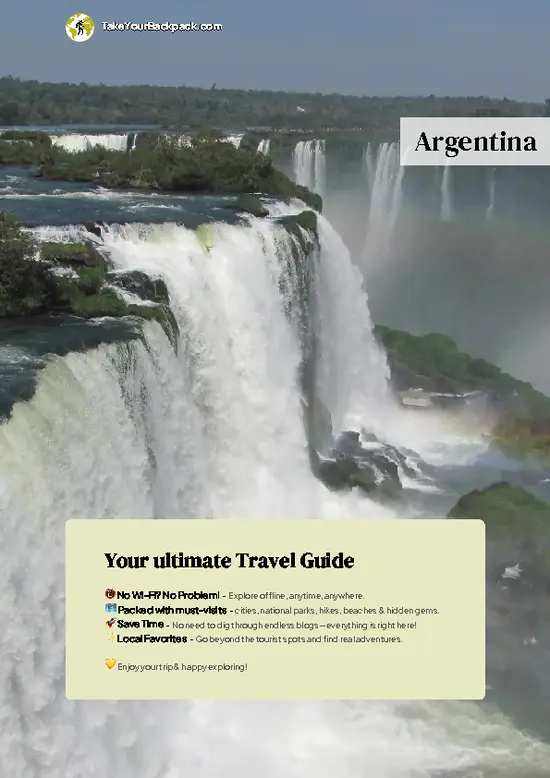
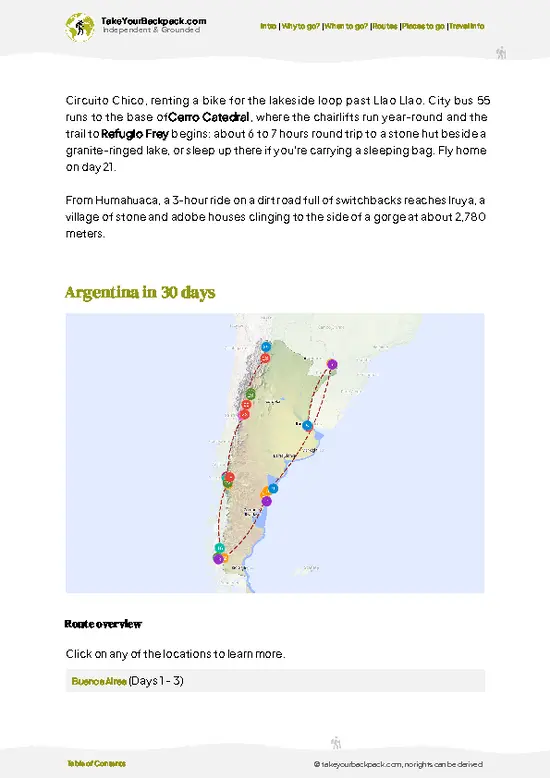
example page 0 from our offline Travel Guide for Argentina
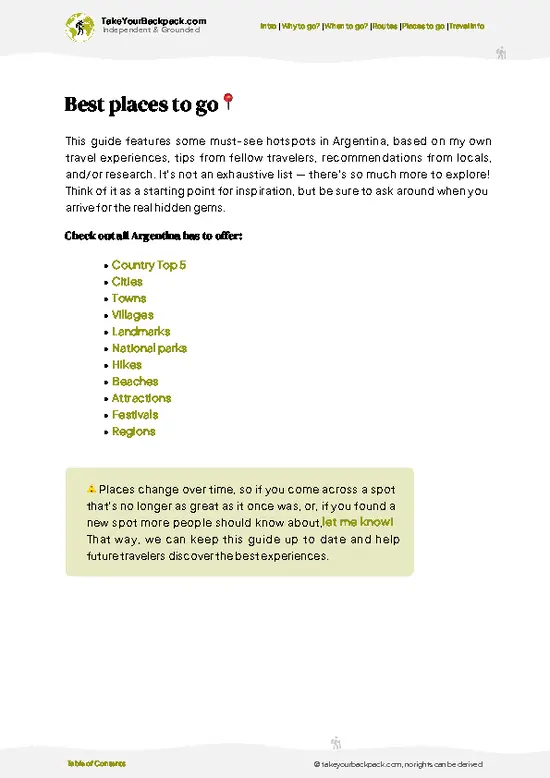
example page 1 from our offline Travel Guide for Argentina
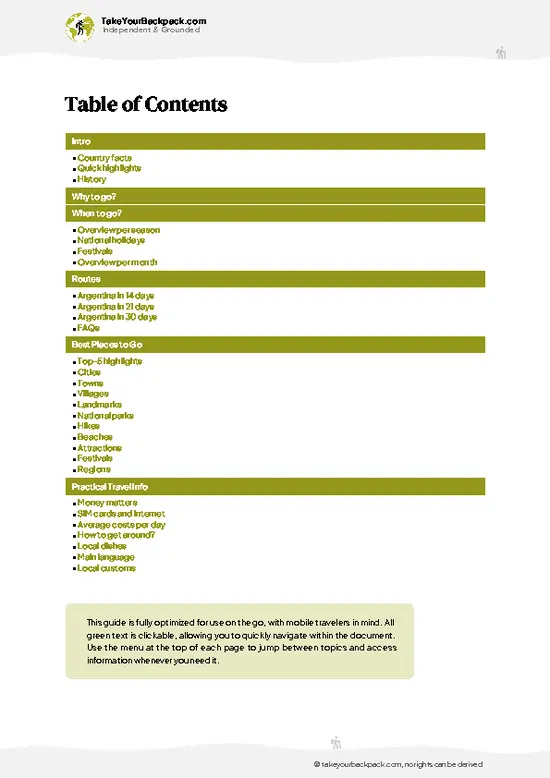
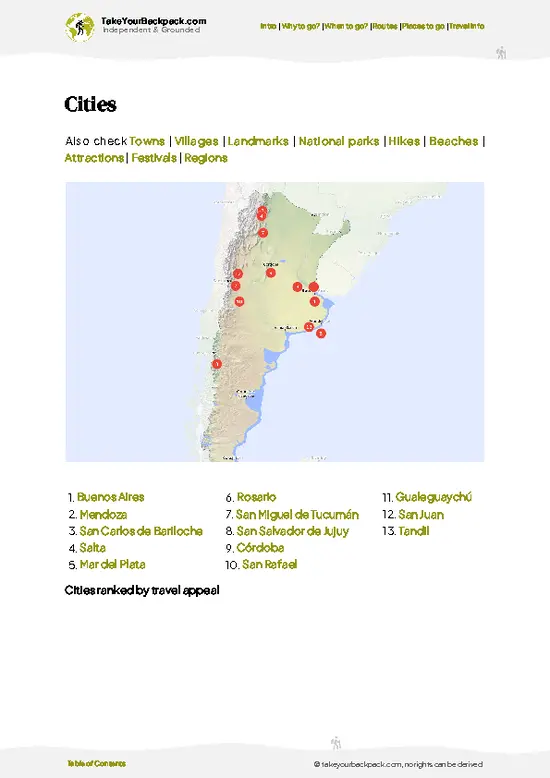
example page 2 from our offline Travel Guide for Argentina
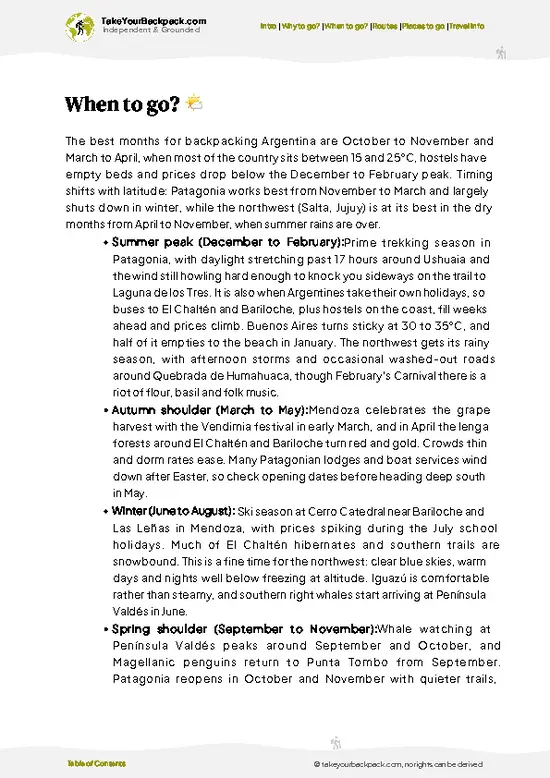
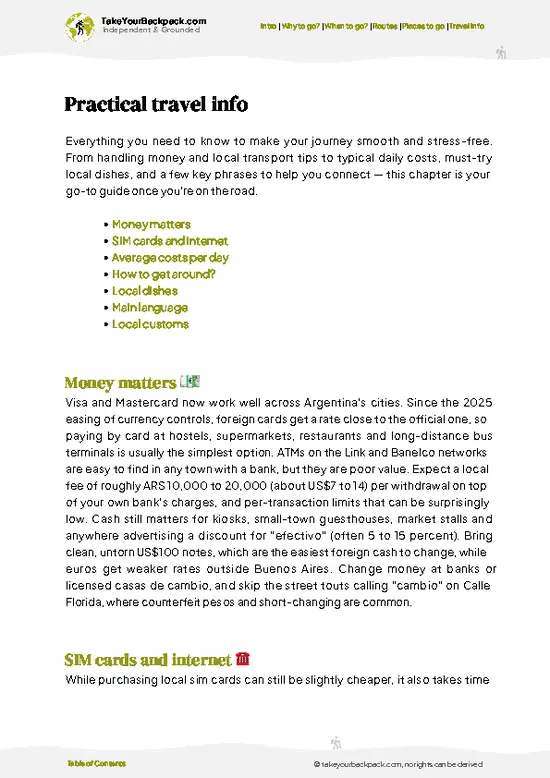
example page 3 from our offline Travel Guide for Argentina
example page 4 from our offline Travel Guide for Argentina
example page 5 from our offline Travel Guide for Argentina
example page 6 from our offline Travel Guide for Argentina
example page 7 from our offline Travel Guide for Argentina
Loading the map 🌍
CLICK TO FILTER
cities
towns
villages
landmarks
national parks
hikes
beaches
attractions
festivals
regions
SHOW COUNTRY’S BESTSHOW ALL

✨ Why go?
Ranked #8 city in Argentina
What sets this place apart

Backpackers use San Salvador de Jujuy mainly as a launchpad, not a destination to linger in for a week. Its real value is basecamp logic: cheap, walkable, and positioned close enough to the puna and quebradas that you can day-trip out and sleep back in an affordable bed. The hostels here run noticeably cheaper than Salta's, and the food scene leans heavily into empanadas salteñas and locro at prices that reward budget travel. The historic center is compact enough to cover on foot in half a day, so you're not burning hours on buses just to see the sights. Nightlife exists but stays low-key, more peña folklore than club scene, which suits early risers heading out on tours. Onward travel is straightforward too, with regular buses toward Salta, the Bolivian border, and the high-altitude routes … read more 👉
Backpackers use San Salvador de Jujuy mainly as a launchpad, not a destination to linger in for a week. Its real value is basecamp logic: cheap, walkable, and positioned close enough to the puna and quebradas that you can day-trip out and sleep back in an affordable bed. The hostels here run noticeably cheaper than Salta's, and the food scene leans heavily into empanadas salteñas and locro at prices that reward budget travel. The historic center is compact enough to cover on foot in half a day, so you're not burning hours on buses just to see the sights. Nightlife exists but stays low-key, more peña folklore than club scene, which suits early risers heading out on tours. Onward travel is straightforward too, with regular buses toward Salta, the Bolivian border, and the high-altitude routes north. For most backpackers, it works best as a short, efficient stop rather than a long stay.

💡 HighlightsThe experiences that define the visit

  1. Plaza Belgrano: The central square, shaded and social, ringed by the cathedral and government house. Free to visit, best in early evening when locals gather; give it 20-30 minutes.
  2. Jujuy Cathedral: Known for its carved wooden pulpit covered in gold leaf, one of the finest colonial-era pieces in northern Argentina. Free entry, open mornings and late afternoons, worth 20 minutes.
  3. Museo Arqueológico Provincial: Compact but well-curated collection of pre-Columbian ceramics and artifacts from the region. Entry costs a few hundred pesos, roughly 45 minutes to an hour.
  4. Iglesia San Francisco: Another colonial church worth a quick stop for its interior woodwork, free entry, 15 minutes.
  5. Parque San Martín: A green stretch along the river good for an evening walk or a break from the heat, free, flexible timing.
… read more 👉
  1. Plaza Belgrano: The central square, shaded and social, ringed by the cathedral and government house. Free to visit, best in early evening when locals gather; give it 20-30 minutes.
  2. Jujuy Cathedral: Known for its carved wooden pulpit covered in gold leaf, one of the finest colonial-era pieces in northern Argentina. Free entry, open mornings and late afternoons, worth 20 minutes.
  3. Museo Arqueológico Provincial: Compact but well-curated collection of pre-Columbian ceramics and artifacts from the region. Entry costs a few hundred pesos, roughly 45 minutes to an hour.
  4. Iglesia San Francisco: Another colonial church worth a quick stop for its interior woodwork, free entry, 15 minutes.
  5. Parque San Martín: A green stretch along the river good for an evening walk or a break from the heat, free, flexible timing.
  6. Mercado del Sur: The city's working market for produce, regional cheeses, and cheap lunch stalls. Best visited mid-morning, budget a few hundred pesos for a full meal, an hour to browse.
  7. Casa de Gobierno: The provincial government building facing the plaza, notable for its architecture, free to view from outside, 10 minutes.
Just outside the city, the Quebrada de Humahuaca towns, Purmamarca, Tilcara, and Humahuaca, make excellent day trips, along with the Salinas Grandes salt flats. Purmamarca is my personal favorite for the sheer color of its hillside.
Spotted a mistake or missing something? Contact us.

Things to do in San Salvador de Jujuy

Ratings based on Tripadvisor reviews. When you book through this link, you support our work at no extra cost to you.

🏘️ NeighborhoodsKey areas and districts to know

Orienting yourself here is a game of trading polish for proximity. Here's the trade-off map for where to sleep and hang out.
  • Centro (around Plaza Belgrano): The highest-value zone for time versus comfort. You get the cathedral, government buildings, and most restaurants within a ten-minute walk, plus the main bus connections nearby. Costs run slightly higher than outer barrios, but you save hours you'd otherwise spend on local buses. Best for short stays of one to two nights.
  • Barrio Belgrano: A quieter residential stretch just outside the center, cheaper on accommodation, but you sacrifice walkability to nightlife and need short taxi or bus hops to reach the main square. Suits travelers prioritizing budget over convenience.
  • Alto Comedero: Far from the tourist track, functional and residential.
… read more 👉
Orienting yourself here is a game of trading polish for proximity. Here's the trade-off map for where to sleep and hang out.
  • Centro (around Plaza Belgrano): The highest-value zone for time versus comfort. You get the cathedral, government buildings, and most restaurants within a ten-minute walk, plus the main bus connections nearby. Costs run slightly higher than outer barrios, but you save hours you'd otherwise spend on local buses. Best for short stays of one to two nights.
  • Barrio Belgrano: A quieter residential stretch just outside the center, cheaper on accommodation, but you sacrifice walkability to nightlife and need short taxi or bus hops to reach the main square. Suits travelers prioritizing budget over convenience.
  • Alto Comedero: Far from the tourist track, functional and residential. Not worth the commute time unless you have a specific reason to be there; the savings don't offset the lost hours.
  • Near the bus terminal: Practical for one-night layovers before an early departure. Noisier, less scenic, but you're trading ambiance for logistics efficiency if you're catching a 6 AM bus to the quebrada.
The system rewards staying central: you sacrifice a few dollars a night but win back hours of movement, which matters more when your real goal is the surrounding valleys anyway.

⌛️ 1 daySeeing the highlights in 24 hours

The center of San Salvador de Jujuy is small enough to cover on foot, with one short taxi hop to the edge of town and a long lunch to sit out the midday sun.
8:30 AM: Plaza Belgrano
Start at the plaza under the jacaranda and palo borracho trees. The Casa de Gobierno, with its French-style facade, faces the square. Grab a coffee and medialunas at a corner café before the heat builds.
9:30 AM: Catedral Basílica
Walk one block to the cathedral. Inside, the gilded Baroque pulpit, carved in the 18th century by local indigenous artisans, is the reason to go. Entry is free.
10:30 AM: Cabildo and Museo de la Policía
The old colonial Cabildo, a few steps from the plaza, now houses a police museum with a famously eerie collection of prison cells and relics. It is odd, a bit macabre, and rarely on anyone’s … read more 👉
The center of San Salvador de Jujuy is small enough to cover on foot, with one short taxi hop to the edge of town and a long lunch to sit out the midday sun.
8:30 AM: Plaza Belgrano
Start at the plaza under the jacaranda and palo borracho trees. The Casa de Gobierno, with its French-style facade, faces the square. Grab a coffee and medialunas at a corner café before the heat builds.
9:30 AM: Catedral Basílica
Walk one block to the cathedral. Inside, the gilded Baroque pulpit, carved in the 18th century by local indigenous artisans, is the reason to go. Entry is free.
10:30 AM: Cabildo and Museo de la Policía
The old colonial Cabildo, a few steps from the plaza, now houses a police museum with a famously eerie collection of prison cells and relics. It is odd, a bit macabre, and rarely on anyone’s list.
12:00 PM: Mercado del Sur
Walk about fifteen minutes toward the railway tracks. Inside, Quechua and Aymara women sell coca leaves, potatoes in a dozen colors and spices. Eat a humita or empanadas at the food stalls.
2:00 PM: Siesta
Shops shut and the streets empty. Rest at your hostel or find shade in a café.
4:30 PM: Barrio Cerro and Parque San Martín
Take a short taxi to the quiet residential streets on the edge of the center, then stroll the park’s shaded paths. Locals jog and drink mate here, and almost no visitors come.
7:30 PM: Dinner on Calle Lavalle
Walk back for goat stew or locro in a peña, where folk guitarists often play after 9 PM.

🌤️ When to go?Choosing the right time of year

  • Dry Winter (May to August): Cold nights, often dropping to 2-5°C (36-41°F), but clear, sunny days around 18-20°C (64-68°F). This is peak season for clarity in the surrounding quebradas, with less rain disrupting travel.
  • Shoulder Season (September, April): Mild days near 20°C (68°F), fewer crowds, and better hostel prices than winter peak.
  • Summer Rains (December to March): Warmer, 25-28°C (77-82°F) daytime, but afternoon thunderstorms are common and can disrupt mountain road trips.
  • Daylight: Roughly 10 hours in June, up to 13-14 hours in December.
  • Carnival (February): Regional celebrations bring higher energy and slightly inflated accommodation prices.
Aim for June through August if your priority is day trips into the high valleys, the dry air makes those bus rides far less nerve-wracking.

source: climatestotravel.comJANJanuary: good for travelingFEBFebruary: good for travelingMARMarch: good for travelingAPRApril: highly recommended for travelingMAYMay: highly recommended for travelingJUNJune: excellent for travelingJULJuly: excellent for travelingAUGAugust: excellent for travelingSEPSeptember: highly recommended for travelingOCTOctober: highly recommended for travelingNOVNovember: fair for travelingDECDecember: fair for traveling
when-to-go

✈️ The backpacker research shortcutArgentina Travel Guide

An offline-friendly backpacking guide with optimized travel routes, ranked highlights, transport advice, and the best areas to stay.
example page 0 from our offline Travel Guide for Argentina
example page 1 from our offline Travel Guide for Argentina
example page 2 from our offline Travel Guide for Argentina
example page 3 from our offline Travel Guide for Argentina
example page 4 from our offline Travel Guide for Argentina
example page 5 from our offline Travel Guide for Argentina
example page 6 from our offline Travel Guide for Argentina
example page 7 from our offline Travel Guide for Argentina
The digital guide (393 pages) contains:
✅ 131 highlights, ranked by travel appeal
✅ Optimized 14, 21 & 30-day travel routes
✅ Cities, national parks, landmarks, beaches
✅ How to get around
✅ Offline-friendly for travel without Wi-Fi
👉 Click to see all 30+ guide features

📅 Plan smarter in minutes, not weeks
✅ Month by month travel advice
✅ Festivals & national holidays
✅ Budget expectations

🗺️ Go to the right places, skip the overrated ones
✅ Honest pros & cons of destinations
✅ Top hikes, parks & viewpoints
✅ Lesser-known places most travelers miss
✅ Clear “worth it vs skip it” guidance

🛏️ Travel smoothly without rookie mistakes
✅ Best areas to stay
✅ Transport systems explained simply
✅ Common scams & safety advice
✅ SIM cards, money & practical tips

🌍 Understand the country, not just visit it
✅ Culture & traditions
✅ 52 Essential phrases & customs
✅ Festivals worth planning around
✅ Traveler-friendly historical context
✅ Insights that make places more meaningful

📱 Built for real travel conditions
✅ Fully downloadable PDF
✅ Works completely offline
✅ Optimized for phone use
✅ Useful in remote areas & buses
✅ Everything in one place
Stop searching, start planning
Get instant access to your full guide. 30‑day money-back guarantee.
+ Add another guide for just

By proceeding you agree to our terms.
Sent to your inbox immediately after payment • 100% Secure Checkout
Best Backpacking Travel Advisor 2025 tourism awardBest Backpacking
Travel Advisor
2025
What others say about Take Your Backpack Guides:
⭐⭐⭐⭐⭐
Fantastic, amazing amount of information!
⭐⭐⭐⭐⭐
My goodness this is amazing, it's what I've been looking for hats off too you!
⭐⭐⭐⭐⭐
I think this is absolutely BRILLIANT
⭐⭐⭐⭐
Very complete and informative. It's still missing places, but I gotta to commend you
⭐⭐⭐⭐⭐
This is truly amazing, thank you, can't wait to explore it with my kids!
⭐⭐⭐⭐⭐
Awesome resource, thank you!
⭐⭐⭐⭐⭐
This is amazing! Can't wait to explore the ones I haven't seen
⭐⭐⭐⭐
I love this! Well done, great idea.
⭐⭐⭐⭐⭐
Thanks for taking the time to make this gem!
⭐⭐⭐⭐⭐
This might be the best website I've ever seen.
⭐⭐⭐⭐⭐
Congratulations, and thank you so much for your work; it's incredibly valuable.
⭐⭐⭐⭐
In all seriousness I think you did a great job pointing out the important spots
⭐⭐⭐⭐⭐
10/10 very good
⭐⭐⭐⭐⭐
As someone who's only just starting to visit regularly this is awesome, thank you.
⭐⭐⭐⭐
Thank you very much! I'm going to visit my dad, it's going to be very useful!
⭐⭐⭐⭐⭐
This is really cool! We'll be travelling for the first time and this definitely come in handy.
⭐⭐⭐⭐⭐
You are now our minister of culture, congratulations 👨‍💼
⭐⭐⭐⭐⭐
Just wanted to tell you that this is a pearl! Going to follow your recommendations.
⭐⭐⭐⭐⭐
This is so cool. I'll definitely be using the resource for my travels soon.
⭐⭐⭐⭐⭐
This is very impressive! Good work.
⭐⭐⭐⭐⭐
This is an amazing and informative site. Very well done!

🛏️ Where to stay?Best areas to stay in Argentina

The center, around Plaza Belgrano and the streets running toward the cathedral, is the clear choice for backpackers. It's walkable to nearly everything worth seeing, has the highest concentration of budget hostels, and puts you within easy reach of the bus terminal for early departures toward the quebrada or Salta. The vibe stays low-key rather than party-driven, more suited to travelers who want a functional, social base than a loud nightlife scene. Streets closest to the plaza feel safe and active into the evening, with restaurants and peñas nearby for casual socializing with other travelers. … read more 👉
The center, around Plaza Belgrano and the streets running toward the cathedral, is the clear choice for backpackers. It's walkable to nearly everything worth seeing, has the highest concentration of budget hostels, and puts you within easy reach of the bus terminal for early departures toward the quebrada or Salta. The vibe stays low-key rather than party-driven, more suited to travelers who want a functional, social base than a loud nightlife scene. Streets closest to the plaza feel safe and active into the evening, with restaurants and peñas nearby for casual socializing with other travelers. Straying farther out, toward residential barrios, saves a little money but costs you convenience, longer walks or bus rides to reach sights and transport hubs. For a short stay, which is how most backpackers treat this city, staying central outweighs any minor savings found elsewhere.

🚌 Getting aroundHow to get around San Salvador de Jujuy

This city runs on intuition, not schedules. Buses move when they're full enough, not necessarily on the printed time, and locals read the rhythm without needing a timetable. Once you understand that logic, getting around becomes a game you can actually win.
  • Walking: Free, and honestly the best option in the center, most sights sit within a 15-minute radius of Plaza Belgrano, so you sacrifice nothing by skipping transport entirely.
  • Local buses (colectivos): Cost around 100-150 pesos per ride, run roughly 6 AM to 11 PM, cheap but require a rechargeable card (SUBE) and patience since frequency drops outside peak hours.
  • Remises (local taxis): Fixed-fare radio taxis, more predictable than street hailing, cost a bit more than colectivos but save time getting to the bus terminal or outlying barrios,
… read more 👉
This city runs on intuition, not schedules. Buses move when they're full enough, not necessarily on the printed time, and locals read the rhythm without needing a timetable. Once you understand that logic, getting around becomes a game you can actually win.
  • Walking: Free, and honestly the best option in the center, most sights sit within a 15-minute radius of Plaza Belgrano, so you sacrifice nothing by skipping transport entirely.
  • Local buses (colectivos): Cost around 100-150 pesos per ride, run roughly 6 AM to 11 PM, cheap but require a rechargeable card (SUBE) and patience since frequency drops outside peak hours.
  • Remises (local taxis): Fixed-fare radio taxis, more predictable than street hailing, cost a bit more than colectivos but save time getting to the bus terminal or outlying barrios, especially with luggage.
  • Shared minivans to the quebrada: Depart from near the terminal heading toward Purmamarca and Tilcara, inexpensive and frequent in high season, though schedules loosen considerably on slow days.
  • Long-distance buses: The terminal handles connections to Salta (roughly 2-3 hours) and onward north, comfortable semi-cama options cost more but buy you sleep and reclining seats on longer overnight hauls.
The trade-off is consistent throughout: walking and colectivos save money but cost time and predictability, while remises and semi-cama buses buy comfort and certainty at a modest premium. Once you clock that pattern, you stop fighting the system and start using it, timing your movements around when buses actually fill up rather than when a schedule claims they'll leave.

👛 Costs (as of 19 October 2026)Typical daily expenses

Backpacking through San Salvador de Jujuy costs noticeably less than Buenos Aires or Salta, making it a solid budget stop in the north.
CategoryBudget RangeLocal Reality
Dorm bed (high season)USD 10-15Prices rise slightly around Carnival and July holidays
Dorm bed (off-season)USD 7-11Widely available, especially May-August outside holidays
MealsUSD 5-10/dayMarket stalls and set lunch menus keep costs low
Local transportUSD 1-2/rideColectivos require a SUBE card, cheap but slow
City transport passUSD 5-8/weekSUBE top-up covers most local bus needs
Basic activities/entry feesUSD 2-5Museums and ruins charge modest entry fees
MiscellaneousUSD 3-6/daySnacks, coca tea, small souvenirs
Total Daily BudgetUSD 25-40Comfortable budget travel, less for very frugal backpackers
⚠️ Prices can change and everyone travels differently, so take this as a rough guide. Hope it helps you plan your adventure!

🚌 Day tripsEasy escapes and nearby places

San Salvador de Jujuy works well as a day-trip base because the main sights sit 1 to 3.5 hours away by cheap regional buses from the central terminal.
Purmamarca and the Hill of Seven Colors:
The mineral-striped hillside rises right behind a small adobe village with a craft market around the plaza. Buses toward the Quebrada de Humahuaca take about 1 to 1.5 hours and cost roughly US$3 to 5 each way, so a full day with lunch lands around US$15 to 25. Go in the morning, when the colors are strongest and the tour vans haven't arrived. First-timers often walk the 3 km circuit at midday and regret the sun and lack of shade. April to October is dry and clear.
👉 Explore Purmamarca
Tilcara:
Tilcara pairs a reconstructed pre-Inca hilltop fortress, the Pucará, with a handful of small museums and a relaxed … read more 👉
San Salvador de Jujuy works well as a day-trip base because the main sights sit 1 to 3.5 hours away by cheap regional buses from the central terminal.
Purmamarca and the Hill of Seven Colors:
The mineral-striped hillside rises right behind a small adobe village with a craft market around the plaza. Buses toward the Quebrada de Humahuaca take about 1 to 1.5 hours and cost roughly US$3 to 5 each way, so a full day with lunch lands around US$15 to 25. Go in the morning, when the colors are strongest and the tour vans haven't arrived. First-timers often walk the 3 km circuit at midday and regret the sun and lack of shade. April to October is dry and clear.
👉 Explore Purmamarca
Tilcara:
Tilcara pairs a reconstructed pre-Inca hilltop fortress, the Pucará, with a handful of small museums and a relaxed plaza. Buses take about 1.5 to 2 hours (US$4 to 6 each way). Entry to the Pucará costs a few dollars, and a day usually totals US$20 to 30. The town sits near 2,450 meters, so walk slowly uphill and carry water. Many people try to cram Tilcara and Humahuaca into one afternoon. Give Tilcara its own half day.

Humahuaca:
The far end of the gorge is a cobbled old town at about 3,000 meters, with a hillside monument and a daily puppet-clock moment at the Cabildo. It is 2.5 to 3.5 hours each way by bus (US$6 to 9), so leave on one of the earliest departures and plan the last bus back before you arrive. A day costs about US$25 to 35. Weather is best from April through October, though nights are cold. Rain in summer can cut road access.

Termas de Reyes:
This hot-spring complex in a forested valley is about 20 km northwest of the city. Local buses and shared taxis make the trip in 40 to 50 minutes (US$2 to 4), and entry to the pools runs roughly US$5 to 10. It suits a tired-legs day after the high-altitude gorge towns, especially from May to September when the cool air makes the water more appealing. Weekends fill up, so aim for a weekday.

🍲 FoodLocal Cuisine & Drinks

Empanadas salteñas and tamales dominate the street-food scene here, often sold from small carts or market stalls for a few hundred pesos each. Locro, a thick stew of corn, beans, and meat, shows up on menus especially in cooler months, and humita, corn paste wrapped in husks, makes a filling, cheap lunch. The Mercado del Sur is the best spot for an authentic, budget-friendly meal, where you'll eat elbow to elbow with locals rather than tourists. Casual restaurants around the center serve regional stews and grilled meats at prices well below Buenos Aires. For drinks, regional wines from nearby Cafayate show up on most menus, while coca leaf tea (mate de coca) is common and helps with altitude adjustment. Evenings sometimes bring folklore peñas, small venues with live Andean music where food … read more 👉
Empanadas salteñas and tamales dominate the street-food scene here, often sold from small carts or market stalls for a few hundred pesos each. Locro, a thick stew of corn, beans, and meat, shows up on menus especially in cooler months, and humita, corn paste wrapped in husks, makes a filling, cheap lunch. The Mercado del Sur is the best spot for an authentic, budget-friendly meal, where you'll eat elbow to elbow with locals rather than tourists. Casual restaurants around the center serve regional stews and grilled meats at prices well below Buenos Aires. For drinks, regional wines from nearby Cafayate show up on most menus, while coca leaf tea (mate de coca) is common and helps with altitude adjustment. Evenings sometimes bring folklore peñas, small venues with live Andean music where food and drink flow alongside singing, a genuinely social, unforced way to spend a night.

🛡️ SafetyScams, Hazards, and Annoyances

San Salvador de Jujuy is broadly safe by regional standards, and most travelers pass through without incident. Basic street awareness around the bus terminal and market areas after dark is worth keeping, mainly for pickpocketing rather than anything violent. Solo travelers, including women, generally report feeling comfortable walking the center in early evening, though quieter residential streets late at night are better avoided on foot. Taxis are cheap enough to take instead of walking long stretches after dark. Common annoyances are more mundane than dangerous: buses that leave without much warning, occasional overcharging at unmarked taxis, and vendors near tourist sites quoting inflated prices, easily solved by asking locals for a rough price first.

FAQCommon questions from travelers

One full day covers the historic center comfortably, including the cathedral, main plaza, and the archaeological museum, but most backpackers stay two to three nights to use the city as a base for day trips into the Quebrada de Humahuaca.
Yes, it's considered safe for solo travelers by regional standards, with most issues limited to minor pickpocketing near the bus terminal or market rather than violent crime. Basic precautions, like avoiding empty streets late at night and using taxis after dark, are generally enough.
It's known as a gateway to the Quebrada de Humahuaca, a UNESCO-listed valley, and for its colonial architecture, including a cathedral with a gold-leaf pulpit, along with strong Andean cultural influence reflected in its food and festivals.
⚠️ Things can change over time, so always validate details locally before you go.

Other Argentine cities near San Salvador de Jujuy

Explore more nearby:

  • Salta—Inca mummies, folklore peñas, terracotta church, cable car hill| 67 km away
  • San Miguel de Tucumán—1816 independence house, northern market, subtropical heat, Northwest gateway| 294 km away
  • Córdoba—Jesuit block, student energy, evening plazas, weekend craft fair| 812 km away

💡 Not sure where to go next?
Create a personalized itinerary for Argentina including San Salvador de Jujuy and the places that fit your trip.

Generate my itinerary

👉 Discover all cities

Or checkout all Argentina has to offer (think cities, towns, villages, national parks, hikes, beaches, festivals)
Country photo of Argentina

We 💚 feedbackWhat to keep in mind

Jujuy earns its keep as a cheap, unpolished base for the quebradas, where a humita and a market stall lunch cost less than a coffee back home. The drawback: the city itself runs thin on things to hold you past a day or two, so treat it as a launch point, not a destination.

✈️ When did I visit Argentina?
I have visited Argentina, together with Chile, in September 2012.

✍️ Help improve this page!
The information on this page is based on my own backpacking experience in Argentina, supplemented with up-to-date research and feedback from other travelers. Travel details can change, so if you notice anything outdated or incomplete, feel free to let me know.


🙋‍♂️ Give feedback

👋 Meet the founderWho’s Behind Take Your Backpack?

Johan, backpacker and founder of TakeYourBackpackHi, I’m Johan (Netherlands 🇳🇱), the creator of TakeYourBackpack. Over the past 3 decades, I’ve backpacked through 90+ countries across six continents, gaining extensive experience with independent travel, long-term trips, and overland routes.

This site is built on a combination of firsthand travel experience and carefully curated insights from other backpackers. Many guides are based on places I’ve personally visited, while others bring together tips, observations, and practical advice shared by trusted travelers I’ve met along the way.

The goal is to provide realistic, experience-driven guidance — not generic itineraries — so you can explore destinations with better context, clearer expectations, and more confidence.