×

Argentina🇦🇷 | regionsTierra del Fuegosubantarctic forests, windswept channels, end-of-the-road towns | things to do and best time to go

Explore Sierras ChicasExplore Tigre Delta

Backpacking in Tierra del Fuego
🏆 Top pickregion ranked #2
By Johan Kruseman 🇳🇱 | Updated September 4, 2026

Everyone shows up in Tierra del Fuego chasing the “End of the World” sign in Ushuaia, but the real story isn’t that photo; it’s how much time, money, and comfort you’re willing to burn to feel that edge-of-the-map isolation. This archipelago sits at the very bottom of Argentina, split from the mainland by the Strait of Magellan, and it feels like the country’s wild afterthought in the best and worst ways. For backpackers, it’s raw and dramatic—glacier-cut valleys, peat bogs, wind-battered forests, and that moody Beagle Channel—but it’s also pricier and more spread out than Patagonia further north. Ushuaia is busy, cruise-heavy, and tour-marked, while Río Grande and smaller towns feel more “real” but have less to do. Buses are long, weather wrecks schedules, and comfort drops fast once you leave town, yet that’s exactly why it feels like you actually earned the experience.

Discover everything you want to know in the 📖 Argentina Travel Guide.
Loading the map 🌍
CLICK TO FILTER
cities
towns
villages
landmarks
national parks
hikes
beaches
attractions
festivals
regions
SHOW COUNTRY’S BESTSHOW ALL

✨ Why go?
Ranked #2 region in Argentina
Reasons people choose to visit here

Tierra del Fuego is a backpacker’s paradise for a reason. First off, the variety of landscapes is jaw-dropping. You’ve got everything from rugged mountains to serene lakes, all within a stone’s throw. This means you can dive into multiple experiences without the hassle of constant relocation.

Transport here is surprisingly flexible. Buses and ferries connect the dots, making it easy to hop from one stunning spot to another. You can spend a day hiking in the national parks and then head to a local town for some culture. It’s the perfect blend of nature and culture, allowing for that sweet slow travel vibe.

Plus, the region’s remoteness adds a sense of adventure. You’re not just ticking boxes; you’re immersing yourself in a place that feels alive. So, if you’re looking to savor every moment … read more 👉
Tierra del Fuego is a backpacker’s paradise for a reason. First off, the variety of landscapes is jaw-dropping. You’ve got everything from rugged mountains to serene lakes, all within a stone’s throw. This means you can dive into multiple experiences without the hassle of constant relocation.

Transport here is surprisingly flexible. Buses and ferries connect the dots, making it easy to hop from one stunning spot to another. You can spend a day hiking in the national parks and then head to a local town for some culture. It’s the perfect blend of nature and culture, allowing for that sweet slow travel vibe.

Plus, the region’s remoteness adds a sense of adventure. You’re not just ticking boxes; you’re immersing yourself in a place that feels alive. So, if you’re looking to savor every moment without the tourist rush, Tierra del Fuego is your ticket. Embrace the slow pace, and let the landscapes unfold at their own rhythm.
Want to include Tierra del Fuego in your Argentina route?
Create a personalized Argentina itinerary that includes Tierra del Fuego and the places that fit your trip — based on your travel style, budget, and available time. Get your route in seconds.

Generate my trip

💡 HighlightsWhat this place is best known for

  • Tierra del Fuego National Park (Lapataia Bay & coastal trails) — Compact but wild: lenga forests, peat bogs, coastal boardwalks and lakes all braided together. The park’s short hikes (like the Lapataia and coastal trails) give you that unmistakable subantarctic feel — sea, mountains and wind in close quarters — without needing multi-day logistics.
  • Laguna Esmeralda — A classic hike through boggy carpets and lenga forest that ends at a milky turquoise glacial lake. It’s visually dramatic in a way that’s hard to replicate elsewhere: glaciers, mossy valleys and a feel of real remoteness only an hour from Ushuaia.
  • Glaciar Martial — Short, sharp climbs or a chairlift take you to viewpoints above Ushuaia and the Beagle Channel. It’s a local go-to for day hikes, mountain panoramas and, in winter,
read more 👉
  • Tierra del Fuego National Park (Lapataia Bay & coastal trails) — Compact but wild: lenga forests, peat bogs, coastal boardwalks and lakes all braided together. The park’s short hikes (like the Lapataia and coastal trails) give you that unmistakable subantarctic feel — sea, mountains and wind in close quarters — without needing multi-day logistics.
  • Laguna Esmeralda — A classic hike through boggy carpets and lenga forest that ends at a milky turquoise glacial lake. It’s visually dramatic in a way that’s hard to replicate elsewhere: glaciers, mossy valleys and a feel of real remoteness only an hour from Ushuaia.
  • Glaciar Martial — Short, sharp climbs or a chairlift take you to viewpoints above Ushuaia and the Beagle Channel. It’s a local go-to for day hikes, mountain panoramas and, in winter, straightforward ski runs — great for people who want alpine views without long approaches.
  • Lago Fagnano shoreline & Tolhuin — Fagnano is a long, wild freshwater lake whose windswept shores are perfect for fishing, paddling or watching dramatic light at dusk. Stop in Tolhuin on the southern shore for small-town character and local treats — and hit Panadería La Unión for massive, no-nonsense sandwiches and baked goods locals swear by (hidden gem).
  • Estancia Harberton and Martillo Island penguins — One of the oldest European estancias in the area, Harberton gives you real historical context: coastal walks, working-farm landscapes and salt-air stories. From there you can boat to Martillo Island to see Magellanic penguins up close — a proper mix of regional culture and wildlife.
  • Puerto Almanza — A tiny fishing village on the Beagle Channel that’s blissfully low-key: fresh crab and fish straight from the boats, rusted piers, and local anglers. Visitors who detour here get an authentic coastal-feeling evening and the kind of sea-to-table food most cruise crowds never find (hidden gem). Personal favorite.
  • Isla de los Lobos / small Beagle Channel islets — Short boat trips put you beside barking sea lion colonies and colonies of seabirds on the Channel’s islands. It’s marine life viewing in an intimate, raw setting — less zoo-like than larger tour circuits and very region-specific.
  • Cerro Castor (southern ski area) — The southernmost lift-served ski resort in the world, with a long season and slopes that see fewer crowds than the Andes farther north. If you like skiing or winter hiking in an odd-latitude location, it’s a uniquely Fuegian experience.
  • Bahía Lapataia (tidal flats & birding) — At the edges of the national park, this bay’s intertidal zones and rivers-meet-sea geography host surprisingly rich birdlife and eerie peatland scenery. It’s an easy, quiet place to watch tides, migratory birds and the small-scale coastal ecosystems that define the island.
  • Working estancias and the Atlantic-steppe near Río Grande — Swap mountains for open steppe: wide horizons, sheep estancias, and a different side of Fuegian culture. Staying a night on a family-run estancia or joining a gaucho outing gives you hands-on perspective on how people have lived with this landscape for generations — a quieter cultural experience most tourists skip (hidden gem).
Spotted a mistake or missing something? Contact us.

Things to do around Tierra del Fuego

Ratings based on Tripadvisor reviews. When you book through this link, you support our work at no extra cost to you.

⌛️ 5 daysSeeing the highlights in 5 days

Day 1: Ushuaia
Welcome to the southernmost city in the world. Start your adventure here, where the Andes meet the sea. Spend the day exploring the town, but don’t miss the chance to hop on a boat to the Beagle Channel. This is your first taste of the wild beauty that defines Tierra del Fuego. The transport system is straightforward, with local buses and taxis making it easy to navigate.

Day 2: Tierra del Fuego National Park
Get an early start and take a bus to the national park. The trails here are your gateway to stunning landscapes—think rugged mountains and pristine lakes. The bus ride is about an hour, but it’s worth every minute. You’ll feel the remoteness of the region, and the hiking options are plentiful. This is where you’ll start to understand the rhythm of the land.

Day … read more 👉
Day 1: Ushuaia
Welcome to the southernmost city in the world. Start your adventure here, where the Andes meet the sea. Spend the day exploring the town, but don’t miss the chance to hop on a boat to the Beagle Channel. This is your first taste of the wild beauty that defines Tierra del Fuego. The transport system is straightforward, with local buses and taxis making it easy to navigate.

Day 2: Tierra del Fuego National Park
Get an early start and take a bus to the national park. The trails here are your gateway to stunning landscapes—think rugged mountains and pristine lakes. The bus ride is about an hour, but it’s worth every minute. You’ll feel the remoteness of the region, and the hiking options are plentiful. This is where you’ll start to understand the rhythm of the land.

Day 3: El Chaltén
Travel to El Chaltén, the trekking capital of Argentina. This is a longer journey, around 6-7 hours by bus, but it sets you up for some of the best hikes in the region. The transport options are limited, so book your bus in advance. Once you arrive, the town buzzes with fellow adventurers, and you’ll want to hit the trails right away.

Day 4: Fitz Roy
Dedicate this day to the iconic Mount Fitz Roy. The hike is challenging but incredibly rewarding. The views are breathtaking, and you’ll feel a sense of accomplishment. The transport here is simple; just walk from town to the trailhead.

Day 5: Off-Path Reward: Lago del Desierto
On your way back to El Chaltén, take a detour to Lago del Desierto. This hidden spot offers tranquility and stunning reflections of the mountains. It’s a bit out of the way, but the peace you find here is worth the extra effort.

The must-do day? Day 4 at Fitz Roy. It encapsulates the spirit of Tierra del Fuego—raw, beautiful, and utterly unforgettable.
Turn your Tierra del Fuego visit into an Argentina adventure
Build a complete Argentina route with Tierra del Fuego, hidden gems, must-see destinations, and realistic travel times included.

Generate my trip

🌤️ When to go?Seasonal considerations and timing


  • Weather: The prime backpacking window is from late November to early March. Summers hover between 10°C and 18°C (50°F to 64°F), which is cool but manageable. Outside this, expect biting winds and frequent rain, turning trails into mud traps.

  • Temperature: Winter months (June to August) plunge below freezing, often hitting -5°C (23°F) or colder, making outdoor activities a tough slog unless you’re geared for it. Spring and fall are unpredictable, swinging between chilly and mild.

  • Daylight Hours: Peak summer grants up to 17 hours of daylight—golden for squeezing in long hikes and late-night campfires. Winter days shrink to about 7 hours, cutting your adventure time drastically.

  • Crowds: High season (December to February) draws tourists, especially around Ushuaia. Trails and hostels fill
read more 👉

  • Weather: The prime backpacking window is from late November to early March. Summers hover between 10°C and 18°C (50°F to 64°F), which is cool but manageable. Outside this, expect biting winds and frequent rain, turning trails into mud traps.

  • Temperature: Winter months (June to August) plunge below freezing, often hitting -5°C (23°F) or colder, making outdoor activities a tough slog unless you’re geared for it. Spring and fall are unpredictable, swinging between chilly and mild.

  • Daylight Hours: Peak summer grants up to 17 hours of daylight—golden for squeezing in long hikes and late-night campfires. Winter days shrink to about 7 hours, cutting your adventure time drastically.

  • Crowds: High season (December to February) draws tourists, especially around Ushuaia. Trails and hostels fill up, so book early or risk scrambling for space. Shoulder seasons offer solitude but with a weather gamble.

  • Seasonal Activities: Summer is king for trekking, kayaking, and wildlife spotting. Winter shifts focus to skiing and snowshoeing, but these require specialized gear and experience.

  • Price Fluctuations: Expect a spike in accommodation and transport costs during summer. Shoulder seasons can offer deals but come with the risk of limited services and harsher weather.


Pro-tip: Aim for late November or early March—fewer crowds, decent weather, and better prices. It’s the sweet spot where you get the best of Tierra del Fuego without the tourist stampede or the winter chill.


source: climatestotravel.comJANJanuary: excellent for travelingFEBFebruary: excellent for travelingMARMarch: highly recommended for travelingAPRApril: fair for travelingMAYMay: fair for travelingJUNJune: below average for travelingJULJuly: below average for travelingAUGAugust: below average for travelingSEPSeptember: fair for travelingOCTOctober: good for travelingNOVNovember: highly recommended for travelingDECDecember: excellent for traveling
when-to-go

✈️ The backpacker research shortcutArgentina Travel Guide

An offline-friendly backpacking guide with optimized travel routes, ranked highlights, transport advice, and the best areas to stay.
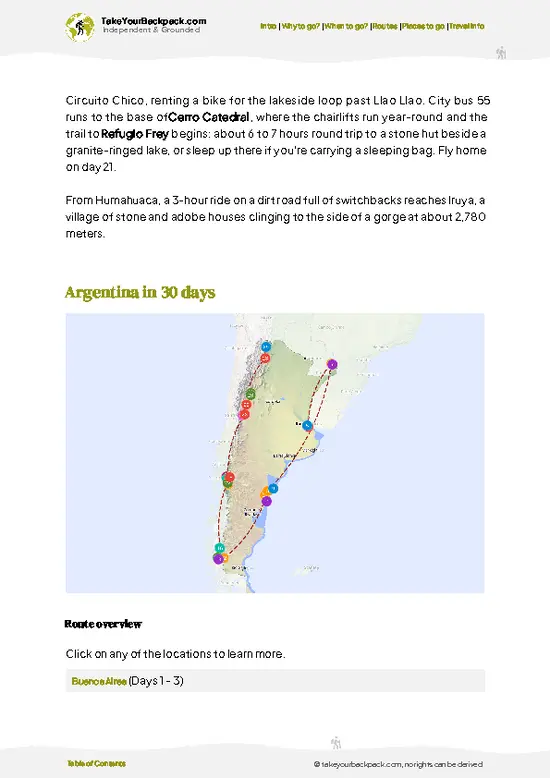
example page 0 from our offline Travel Guide for Argentina
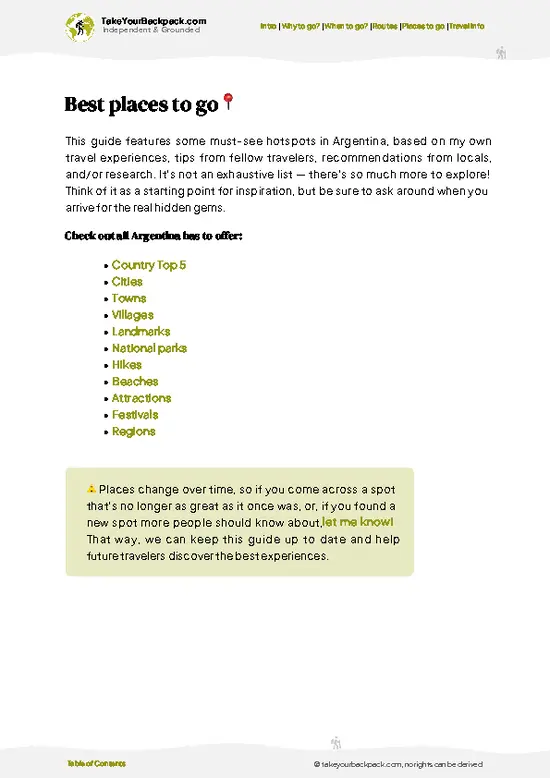
example page 1 from our offline Travel Guide for Argentina
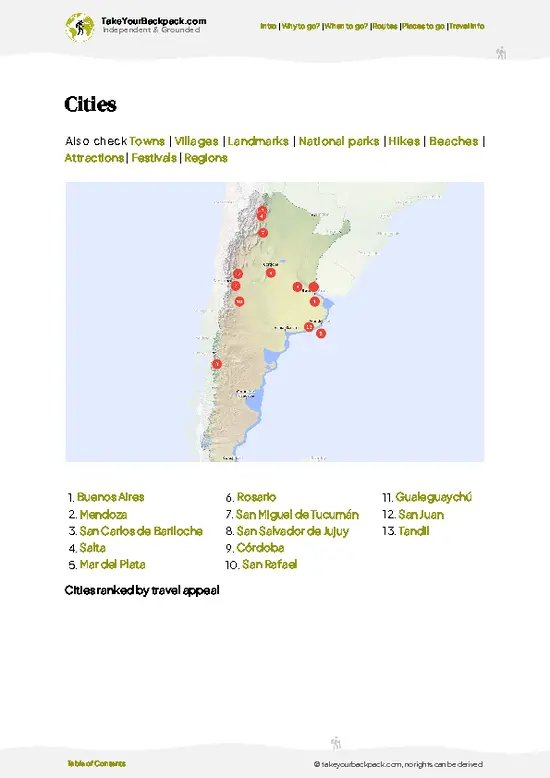
example page 2 from our offline Travel Guide for Argentina
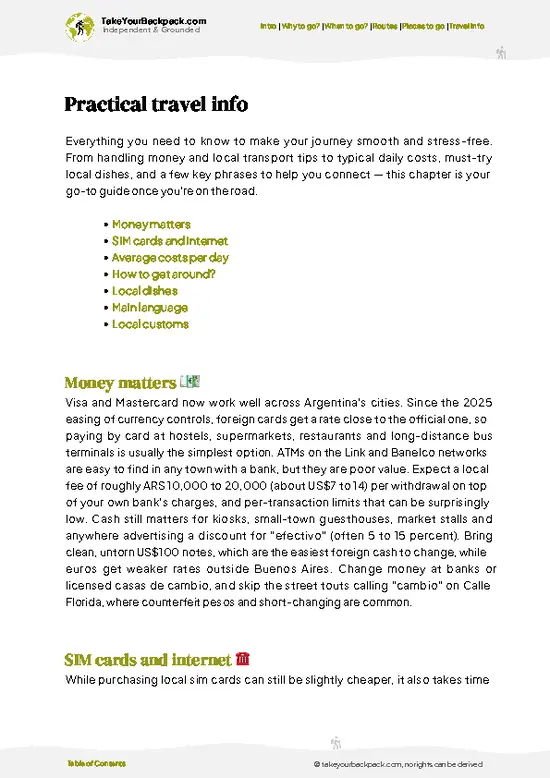
example page 3 from our offline Travel Guide for Argentina
example page 4 from our offline Travel Guide for Argentina
example page 5 from our offline Travel Guide for Argentina
example page 6 from our offline Travel Guide for Argentina
example page 7 from our offline Travel Guide for Argentina
The digital guide (505 pages) contains:
135 highlights, ranked by travel appeal
Optimized 14, 21 & 30-day travel routes
Cities, national parks, landmarks, beaches
How to get around
Offline-friendly for travel without Wi-Fi
👉 Click to see all 30+ guide features

📅 Plan smarter in minutes, not weeks
Month by month travel advice
Festivals & national holidays
Budget expectations

🗺️ Go to the right places, skip the overrated ones
Honest pros & cons of destinations
Top hikes, parks & viewpoints
Lesser-known places most travelers miss
Clear “worth it vs skip it” guidance

🛏️ Travel smoothly without rookie mistakes
Best areas to stay
Transport systems explained simply
Common scams & safety advice
SIM cards, money & practical tips

🌍 Understand the country, not just visit it
Culture & traditions
52 Essential phrases & customs
Festivals worth planning around
Traveler-friendly historical context
Insights that make places more meaningful

📱 Built for real travel conditions
Fully downloadable PDF
Works completely offline
Optimized for phone use
Useful in remote areas & buses
Everything in one place
Save weeks of stressful planning
Get instant access to your full guide. 30‑day money-back guarantee.
+ Add another guide for just €6.50

By proceeding you agree to our terms.
Sent to your inbox immediately after payment • 100% Secure Checkout
Best Backpacking Travel Advisor 2025 tourism awardBest Backpacking
Travel Advisor
2025
What others say about Take Your Backpack Guides:
⭐⭐⭐⭐⭐
Fantastic, amazing amount of information!
⭐⭐⭐⭐⭐
My goodness this is amazing, it's what I've been looking for hats off too you!
⭐⭐⭐⭐⭐
I think this is absolutely BRILLIANT
⭐⭐⭐⭐
Very complete and informative. It's still missing places, but I gotta to commend you
⭐⭐⭐⭐⭐
This is truly amazing, thank you, can't wait to explore it with my kids!
⭐⭐⭐⭐⭐
Awesome resource, thank you!
⭐⭐⭐⭐⭐
This is amazing! Can't wait to explore the ones I haven't seen
⭐⭐⭐⭐
I love this! Well done, great idea.
⭐⭐⭐⭐⭐
Thanks for taking the time to make this gem!
⭐⭐⭐⭐⭐
This might be the best website I've ever seen.
⭐⭐⭐⭐⭐
Congratulations, and thank you so much for your work; it's incredibly valuable.
⭐⭐⭐⭐
In all seriousness I think you did a great job pointing out the important spots
⭐⭐⭐⭐⭐
10/10 very good
⭐⭐⭐⭐⭐
As someone who's only just starting to visit regularly this is awesome, thank you.
⭐⭐⭐⭐
Thank you very much! I'm going to visit my dad, it's going to be very useful!
⭐⭐⭐⭐⭐
This is really cool! We'll be travelling for the first time and this definitely come in handy.
⭐⭐⭐⭐⭐
You are now our minister of culture, congratulations 👨‍💼
⭐⭐⭐⭐⭐
Just wanted to tell you that this is a pearl! Going to follow your recommendations.
⭐⭐⭐⭐⭐
This is so cool. I'll definitely be using the resource for my travels soon.
⭐⭐⭐⭐⭐
This is very impressive! Good work.
⭐⭐⭐⭐⭐
This is an amazing and informative site. Very well done!

🛏️ Where to stay?Best areas and accommodation options

In Tierra del Fuego, you’ve got some prime spots that scream adventure while keeping your wallet happy.

Start in Ushuaia, the southernmost city in the world. It’s a backpacker hub, buzzing with energy. The waterfront is lined with bars and eateries where you can swap stories with fellow travelers. The vibe is friendly, and you’ll find plenty of opportunities for hiking, kayaking, and even penguin spotting.

Next up is Puerto Williams, a quieter alternative across the Beagle Channel. It’s less touristy, which means you can soak in the local culture without the crowds. The hiking trails here … read more 👉
In Tierra del Fuego, you’ve got some prime spots that scream adventure while keeping your wallet happy.

Start in Ushuaia, the southernmost city in the world. It’s a backpacker hub, buzzing with energy. The waterfront is lined with bars and eateries where you can swap stories with fellow travelers. The vibe is friendly, and you’ll find plenty of opportunities for hiking, kayaking, and even penguin spotting.

Next up is Puerto Williams, a quieter alternative across the Beagle Channel. It’s less touristy, which means you can soak in the local culture without the crowds. The hiking trails here are stunning, and you’ll feel like you’ve stumbled into a hidden corner of the world.

Don’t overlook Tolhuin, a small town with a cozy atmosphere. It’s a great pit stop between Ushuaia and the national parks. The bakery here is legendary—grab a slice of torta negra and chat with locals.

Each of these spots offers a unique slice of Tierra del Fuego, balancing comfort and social opportunities. Choose wisely, and you’ll create memories that stick.

🚌 Getting aroundHow to get around Tierra del Fuego

Tierra del Fuego is a land where the winds dictate the rhythm of life. Here, schedules are more of a suggestion than a rule; the pulse of the region flows with the unpredictable gusts that sweep across the rugged landscapes. You’ll find yourself navigating a dance between the wild beauty of nature and the whims of local transport. It’s not about rigid itineraries; it’s about embracing spontaneity. The locals know this well, and if you’re willing to roll with the punches, you’ll discover the true essence of this remote paradise.


  • Bus: The backbone of budget travel here. Buses run between major towns like Ushuaia and Puerto Natales, with departures typically starting at 7 AM and the last ones around 6 PM. Expect to pay around $30-50 USD for a 12-hour ride. While comfort varies, you’ll get to
read more 👉
Tierra del Fuego is a land where the winds dictate the rhythm of life. Here, schedules are more of a suggestion than a rule; the pulse of the region flows with the unpredictable gusts that sweep across the rugged landscapes. You’ll find yourself navigating a dance between the wild beauty of nature and the whims of local transport. It’s not about rigid itineraries; it’s about embracing spontaneity. The locals know this well, and if you’re willing to roll with the punches, you’ll discover the true essence of this remote paradise.


  • Bus: The backbone of budget travel here. Buses run between major towns like Ushuaia and Puerto Natales, with departures typically starting at 7 AM and the last ones around 6 PM. Expect to pay around $30-50 USD for a 12-hour ride. While comfort varies, you’ll get to soak in the stunning scenery along the way.


  • Ferry: Essential for crossing the Beagle Channel. The main ferry service operates daily, with the first crossing at 8 AM and the last at 6 PM. Tickets are about $20 USD, and the ride takes about an hour. You’ll be treated to breathtaking views of the surrounding mountains and wildlife, making it a worthwhile splurge.


  • Shared Taxi (Remis): A faster, albeit pricier option. These can be found in Ushuaia and are perfect for shorter distances or when you’re in a hurry. Prices vary, but expect to pay around $10-15 USD per person for a shared ride. It’s a cozy way to meet fellow travelers while zipping through the landscape.


  • Rental Car: If you crave freedom, consider renting a car. Prices start around $50 USD per day. This gives you the flexibility to explore at your own pace, but be aware of fuel costs and road conditions. Just remember, the weather can change in an instant!


  • Hiking: Not a transport option per se, but the best way to truly experience Tierra del Fuego. Trails like the one to Laguna Esmeralda are accessible from Ushuaia and offer a chance to immerse yourself in the wild. Just pack snacks and water, and you’re set!


To navigate Tierra del Fuego efficiently, always check local transport schedules the night before. They can change, and knowing your options will save you time and frustration. Embrace the chaos, and let the adventure unfold!

🍲 FoodLocal Flavors for Backpackers

In Tierra del Fuego, the flavors are as wild as the landscapes. You can’t miss the cordero patagónico, a slow-roasted lamb that melts in your mouth, often cooked over an open flame. Pair it with a side of locro, a hearty stew that warms you from the inside out, especially on chilly nights. And don’t overlook the king crab; it’s a local delicacy that’s sweet and succulent, best enjoyed with a squeeze of lemon.

For drinks, dive into a glass of Malbec from the nearby vineyards, or try the local craft beers that capture the spirit of the region. If you’re feeling adventurous, sip on some mate with locals; it’s more than just a drink—it’s a social ritual.

Hit up local markets for fresh produce and street vendors serving up empanadas that are crispy and bursting with flavor. Cafés are perfect … read more 👉
In Tierra del Fuego, the flavors are as wild as the landscapes. You can’t miss the cordero patagónico, a slow-roasted lamb that melts in your mouth, often cooked over an open flame. Pair it with a side of locro, a hearty stew that warms you from the inside out, especially on chilly nights. And don’t overlook the king crab; it’s a local delicacy that’s sweet and succulent, best enjoyed with a squeeze of lemon.

For drinks, dive into a glass of Malbec from the nearby vineyards, or try the local craft beers that capture the spirit of the region. If you’re feeling adventurous, sip on some mate with locals; it’s more than just a drink—it’s a social ritual.

Hit up local markets for fresh produce and street vendors serving up empanadas that are crispy and bursting with flavor. Cafés are perfect for a quick alfajor and coffee break, where you can soak in the laid-back vibe.

Dining here is casual; don’t be surprised if you share a table or pass around food. Embrace the communal spirit, and you’ll feel right at home.

FAQTraveler FAQ

5 to 7 days are ideal to explore Tierra del Fuego thoroughly. This allows time to visit key sites like Ushuaia, Tierra del Fuego National Park, and take boat trips on the Beagle Channel. Shorter trips of 3 days can cover highlights but feel rushed.
Public buses and shared taxis are the main options for getting around without a car. Ushuaia has a reliable bus system connecting the city with nearby attractions, with fares around 50-100 ARS. Organized tours are also common for reaching remote areas.
Tierra del Fuego is known for its dramatic landscapes, including glaciers, forests, and mountains. It is famous as the southernmost tip of South America and for the Tierra del Fuego National Park. The region is also recognized for its wildlife, such as sea lions and penguins.
⚠️ Things can change over time, so always validate details locally before you go.

Other Argentinian regions near Tierra del Fuego

Explore more nearby:

  • Patagonia—wind-swept steppe, glaciers, remote trekking| 1092 km away
  • Península Valdés—marine wildlife, coastal cliffs, salt flats| 1425 km away
  • Lake District—glacial lakes, Andean forests, alpine villages| 1597 km away

💡 Not sure where to go next?
Create a personalized itinerary for Argentina including Tierra del Fuego and the places that fit your trip.

Generate my itinerary

👉 Discover all regions

Or checkout all Argentina has to offer (think cities, towns, villages, national parks, hikes, beaches, festivals)
Country photo of Argentina

We 💚 feedbackFinal thoughts on visiting Tierra del Fuego

Tierra del Fuego is a wild playground where the Andes meet the sea, and the landscapes are nothing short of jaw-dropping. You’ll feel like you’ve stepped into another world. But here’s the kicker: it’s remote, and getting around can be a hassle. Expect long travel times and limited options. Embrace the adventure, though; the payoff is worth every minute spent on the road.

✈️ When did I visit Argentina?
I have visited Argentina, together with Chile, in September 2012.

✍️ Help improve this page!
The information on this page is based on my own backpacking experience in Argentina, supplemented with up-to-date research and feedback from other travelers. Travel details can change, so if you notice anything outdated or incomplete, feel free to let me know.


🙋‍♂️ Give feedback

👋 Meet the founderWho’s Behind Take Your Backpack?

Johan, backpacker and founder of TakeYourBackpackHi, I’m Johan (Netherlands 🇳🇱), the creator of TakeYourBackpack. Over the past decade, I’ve backpacked through 80+ countries across six continents, gaining extensive experience with independent travel, long-term trips, and overland routes.

This site is built on a combination of firsthand travel experience and carefully curated insights from other backpackers. Many guides are based on places I’ve personally visited, while others bring together tips, observations, and practical advice shared by trusted travelers I’ve met along the way.

The goal is to provide realistic, experience-driven guidance — not generic itineraries — so you can explore destinations with better context, clearer expectations, and more confidence.

Get full Argentina guide •
Instant download • 135 highlights • Full Offline guide