×

Argentina🇦🇷 | regionsTigre DeltaStilt houses, river launches, fruit-port market, island prison | things to do and best time to go

Explore Tierra del FuegoExplore Tucumán

Backpacking in Tigre Delta
👍 Recommendedregion ranked #7
By Johan Kruseman 🇳🇱 | Updated October 19, 2026

Twenty years ago you'd hop a rickety wooden collectivo boat with three chickens and a guy selling empanadas out of a cooler. Sleek tourist catamarans now share the channels with the shared lanchas colectivas, but the water still smells the same, green and slightly sweet. Tigre Delta sits about 28 kilometers north of Buenos Aires, where the Paraná river splits into hundreds of channels lined with stilt houses. Pay for the tourist launch from Puerto de Frutos and you get comfort and speed, but you're boxed into a schedule. Take the local lancha colectiva instead, the one actually used by delta residents, and you sacrifice a printed timetable for something real, river life unfolding at its own pace. I remember drifting past a floating grocery store, its owner tossing a bag of yerba mate to a woman on her dock without either boat slowing down. That's the delta talking to you directly, no brochure required.

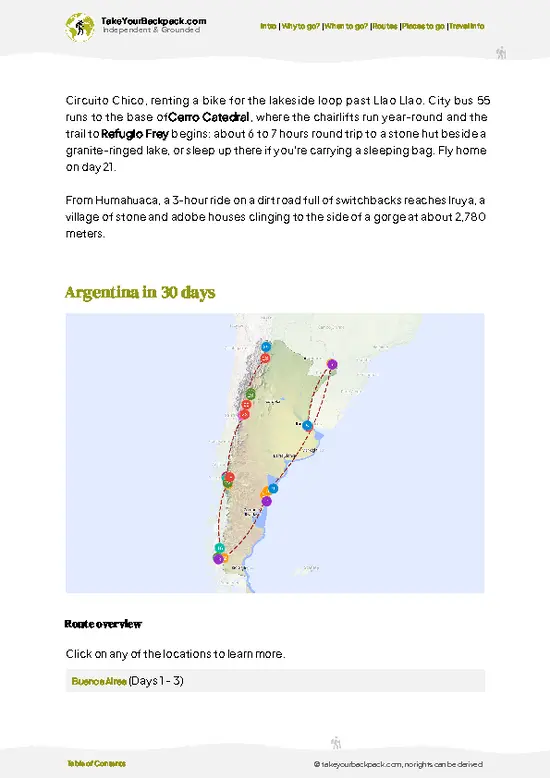
Discover everything you want to know in the 📖 Argentina Travel Guide.


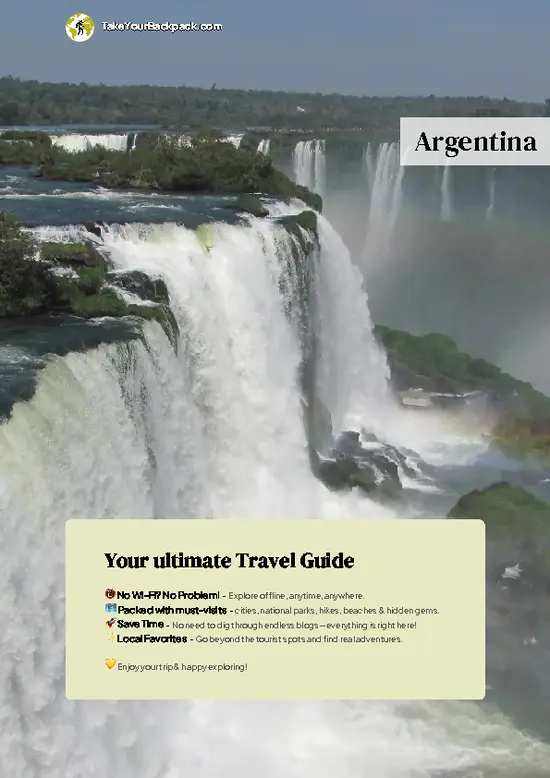
example page 0 from our offline Travel Guide for Argentina
example page 1 from our offline Travel Guide for Argentina
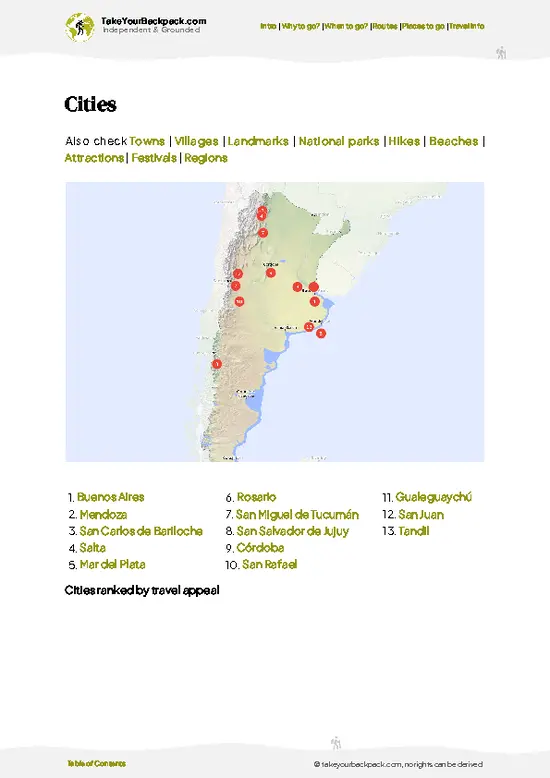
example page 2 from our offline Travel Guide for Argentina
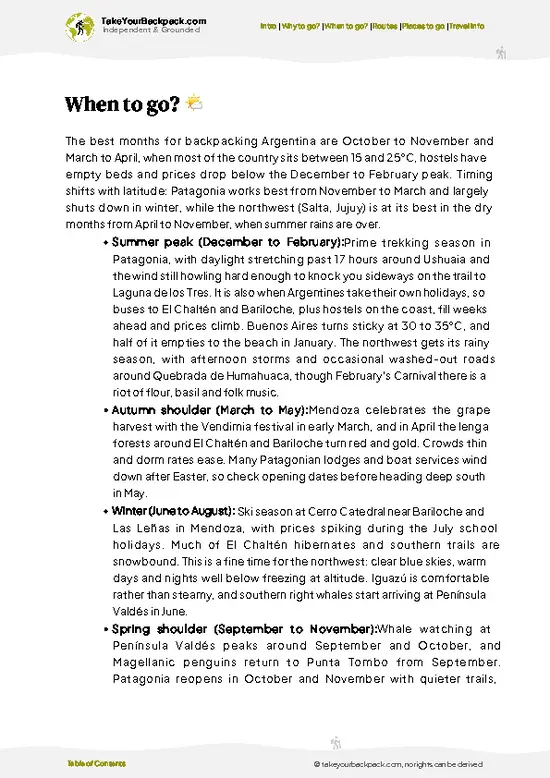
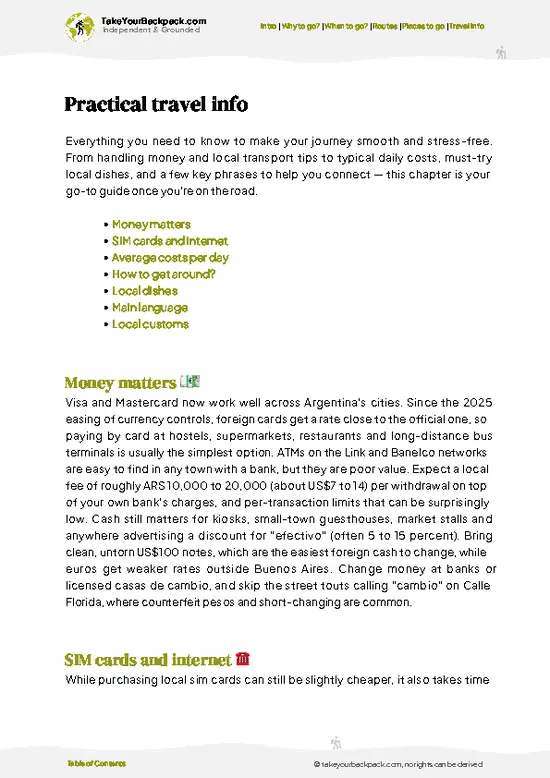
example page 3 from our offline Travel Guide for Argentina
example page 4 from our offline Travel Guide for Argentina
example page 5 from our offline Travel Guide for Argentina
example page 6 from our offline Travel Guide for Argentina
example page 7 from our offline Travel Guide for Argentina
Loading the map 🌍
CLICK TO FILTER
cities
towns
villages
landmarks
national parks
hikes
beaches
attractions
festivals
regions
SHOW COUNTRY’S BESTSHOW ALL

✨ Why go?
Ranked #7 region in Argentina
What makes it a must-see region

Backpackers land in Tigre Delta because it delivers landscape diversity without demanding constant repacking. One base, dozens of channels, islands, and riverside towns reachable by boat alone. You get slow travel built into the bones of the place: there's no rushing a river. The transport flexibility of hopping between lanchas colectivas means you choose your own itinerary daily, deciding on a whim whether today is a kayak day or a hammock day. It also rewards travelers who want to mix nature and culture in one stretch, jungle-like backwaters one hour, tango history and antique markets the next in Tigre town itself. Compared to a fixed bus-and-hostel circuit elsewhere in Argentina, the delta feels looser, more improvised, genuinely relaxing rather than sightseeing-exhausting. It's also cheap … read more 👉
Backpackers land in Tigre Delta because it delivers landscape diversity without demanding constant repacking. One base, dozens of channels, islands, and riverside towns reachable by boat alone. You get slow travel built into the bones of the place: there's no rushing a river. The transport flexibility of hopping between lanchas colectivas means you choose your own itinerary daily, deciding on a whim whether today is a kayak day or a hammock day. It also rewards travelers who want to mix nature and culture in one stretch, jungle-like backwaters one hour, tango history and antique markets the next in Tigre town itself. Compared to a fixed bus-and-hostel circuit elsewhere in Argentina, the delta feels looser, more improvised, genuinely relaxing rather than sightseeing-exhausting. It's also cheap relative to Patagonia or wine country, letting budget travelers stretch days rather than pesos.

💡 HighlightsThe experiences that define the visit

  1. Puerto de Frutos - the old fruit port turned riverside craft market, best early morning before the day-trippers from the capital arrive.
  2. Río Luján - the delta's main navigable artery, lined with boathouses and rowing clubs dating to the 1900s British immigrant era.
  3. Museo de Arte Tigre - a former social club turned art museum, its belle-époque interior is worth the visit even if you skip the paintings.
  4. Isla Martín García - technically a separate island reachable by boat, with abandoned prison buildings and a strange, quiet colonial-era village feel.
  5. Paraná de las Palmas - wider, wilder channel favored by locals for weekend fishing, rarely crowded with tour boats.
  6. Estación Fluvial - the departure hub for all lancha colectivos, itself worth watching for the choreography of daily delta commuting.
  7. Rama
… read more 👉
  1. Puerto de Frutos - the old fruit port turned riverside craft market, best early morning before the day-trippers from the capital arrive.
  2. Río Luján - the delta's main navigable artery, lined with boathouses and rowing clubs dating to the 1900s British immigrant era.
  3. Museo de Arte Tigre - a former social club turned art museum, its belle-époque interior is worth the visit even if you skip the paintings.
  4. Isla Martín García - technically a separate island reachable by boat, with abandoned prison buildings and a strange, quiet colonial-era village feel.
  5. Paraná de las Palmas - wider, wilder channel favored by locals for weekend fishing, rarely crowded with tour boats.
  6. Estación Fluvial - the departure hub for all lancha colectivos, itself worth watching for the choreography of daily delta commuting.
  7. Rama Negra channel - a locals' favorite backwater loop, narrow and jungle-dense, almost no tourist boats bother with it.
  8. Casco Histórico de Tigre - the old town's low colonial buildings, best explored on foot before the market stalls open.
Spotted a mistake or missing something? Contact us.

Things to do around Tigre Delta

Ratings based on Tripadvisor reviews. When you book through this link, you support our work at no extra cost to you.

⌛️ 5 daysSeeing the highlights in 5 days

Day 1: Tigre Town: Arrive by train from Buenos Aires (about an hour), settle in, and walk the Casco Histórico before the market crowds swell. This sets your rhythm: everything after this runs by river schedule, not clock.Day 2: Puerto de Frutos: Spend the morning at the market, then catch an afternoon lancha colectivo deeper into the delta. The boat schedule dictates your whole day, so plan around the last return run.Day 3: Río Luján Islands: Base yourself on an island guesthouse. Detour up the quieter Rama Negra channel by kayak, where you'll likely see more herons than people.Day 4: Paraná de las Palmas: Take a longer boat push to the wider channel favored by local fishermen. Fewer tourists, more genuine delta pace.Day 5: Isla Martín García: The boat ride is longer, and the island runs on … read more 👉
Day 1: Tigre Town: Arrive by train from Buenos Aires (about an hour), settle in, and walk the Casco Histórico before the market crowds swell. This sets your rhythm: everything after this runs by river schedule, not clock.Day 2: Puerto de Frutos: Spend the morning at the market, then catch an afternoon lancha colectivo deeper into the delta. The boat schedule dictates your whole day, so plan around the last return run.Day 3: Río Luján Islands: Base yourself on an island guesthouse. Detour up the quieter Rama Negra channel by kayak, where you'll likely see more herons than people.Day 4: Paraná de las Palmas: Take a longer boat push to the wider channel favored by local fishermen. Fewer tourists, more genuine delta pace.Day 5: Isla Martín García: The boat ride is longer, and the island runs on its own transport, separate from the mainland delta network.The must-do day is Day 3. Sleeping on the water, away from Tigre town's market noise, is the one experience that actually justifies choosing the delta over any other river town in Argentina.

🌤️ When to go?Weather, crowds, and seasonal trade-offs

  • Autumn (March to May): Days average 18-24°C (64-75°F), humidity drops, and the delta's foliage turns coppery. This is the sweet spot for comfortable paddling and walking.
  • Winter (June to August): Cooler, 10-16°C (50-61°F), with shorter daylight (around 10 hours). Quiet season, fewer boats running, some island guesthouses close.
  • Spring (September to November): Warming fast, 15-23°C (59-73°F), river life reawakens, mosquitoes start appearing toward late November.
  • Summer (December to February): Hot and humid, 25-32°C (77-90°F), peak local tourism on weekends, mosquitoes at their worst, prices for river transport tick upward on Sundays.
Go on a weekday in April: warm enough to swim off a dock, cool enough to sleep without a fan, and the weekend crowds from Buenos Aires are nowhere in sight.

source: climatestotravel.comJANJanuary: highly recommended for travelingFEBFebruary: highly recommended for travelingMARMarch: excellent for travelingAPRApril: excellent for travelingMAYMay: good for travelingJUNJune: fair for travelingJULJuly: fair for travelingAUGAugust: fair for travelingSEPSeptember: good for travelingOCTOctober: excellent for travelingNOVNovember: excellent for travelingDECDecember: highly recommended for traveling
when-to-go

✈️ The backpacker research shortcutArgentina Travel Guide

An offline-friendly backpacking guide with optimized travel routes, ranked highlights, transport advice, and the best areas to stay.
example page 0 from our offline Travel Guide for Argentina
example page 1 from our offline Travel Guide for Argentina
example page 2 from our offline Travel Guide for Argentina
example page 3 from our offline Travel Guide for Argentina
example page 4 from our offline Travel Guide for Argentina
example page 5 from our offline Travel Guide for Argentina
example page 6 from our offline Travel Guide for Argentina
example page 7 from our offline Travel Guide for Argentina
The digital guide (393 pages) contains:
✅ 131 highlights, ranked by travel appeal
✅ Optimized 14, 21 & 30-day travel routes
✅ Cities, national parks, landmarks, beaches
✅ How to get around
✅ Offline-friendly for travel without Wi-Fi
👉 Click to see all 30+ guide features

📅 Plan smarter in minutes, not weeks
✅ Month by month travel advice
✅ Festivals & national holidays
✅ Budget expectations

🗺️ Go to the right places, skip the overrated ones
✅ Honest pros & cons of destinations
✅ Top hikes, parks & viewpoints
✅ Lesser-known places most travelers miss
✅ Clear “worth it vs skip it” guidance

🛏️ Travel smoothly without rookie mistakes
✅ Best areas to stay
✅ Transport systems explained simply
✅ Common scams & safety advice
✅ SIM cards, money & practical tips

🌍 Understand the country, not just visit it
✅ Culture & traditions
✅ 52 Essential phrases & customs
✅ Festivals worth planning around
✅ Traveler-friendly historical context
✅ Insights that make places more meaningful

📱 Built for real travel conditions
✅ Fully downloadable PDF
✅ Works completely offline
✅ Optimized for phone use
✅ Useful in remote areas & buses
✅ Everything in one place
Stop searching, start planning
Get instant access to your full guide. 30‑day money-back guarantee.
+ Add another guide for just

By proceeding you agree to our terms.
Sent to your inbox immediately after payment • 100% Secure Checkout
Best Backpacking Travel Advisor 2025 tourism awardBest Backpacking
Travel Advisor
2025
What others say about Take Your Backpack Guides:
⭐⭐⭐⭐⭐
Fantastic, amazing amount of information!
⭐⭐⭐⭐⭐
My goodness this is amazing, it's what I've been looking for hats off too you!
⭐⭐⭐⭐⭐
I think this is absolutely BRILLIANT
⭐⭐⭐⭐
Very complete and informative. It's still missing places, but I gotta to commend you
⭐⭐⭐⭐⭐
This is truly amazing, thank you, can't wait to explore it with my kids!
⭐⭐⭐⭐⭐
Awesome resource, thank you!
⭐⭐⭐⭐⭐
This is amazing! Can't wait to explore the ones I haven't seen
⭐⭐⭐⭐
I love this! Well done, great idea.
⭐⭐⭐⭐⭐
Thanks for taking the time to make this gem!
⭐⭐⭐⭐⭐
This might be the best website I've ever seen.
⭐⭐⭐⭐⭐
Congratulations, and thank you so much for your work; it's incredibly valuable.
⭐⭐⭐⭐
In all seriousness I think you did a great job pointing out the important spots
⭐⭐⭐⭐⭐
10/10 very good
⭐⭐⭐⭐⭐
As someone who's only just starting to visit regularly this is awesome, thank you.
⭐⭐⭐⭐
Thank you very much! I'm going to visit my dad, it's going to be very useful!
⭐⭐⭐⭐⭐
This is really cool! We'll be travelling for the first time and this definitely come in handy.
⭐⭐⭐⭐⭐
You are now our minister of culture, congratulations 👨‍💼
⭐⭐⭐⭐⭐
Just wanted to tell you that this is a pearl! Going to follow your recommendations.
⭐⭐⭐⭐⭐
This is so cool. I'll definitely be using the resource for my travels soon.
⭐⭐⭐⭐⭐
This is very impressive! Good work.
⭐⭐⭐⭐⭐
This is an amazing and informative site. Very well done!

🛏️ Where to stay?Choosing the right base

Tigre town itself is the practical base: safe, walkable, with the train station connecting straight back to Buenos Aires whenever you need a city fix. It's social enough that you'll bump into other backpackers at the market or riverside benches without trying hard. For a deeper delta feel, island guesthouses along the Río Luján offer a quieter, more isolated stay, ideal if you want actual river immersion rather than day-tripping. These island stays are generally safe but remote, so you're committing to boat schedules rather than convenience. Avoid staying purely for the party scene here, that's … read more 👉
Tigre town itself is the practical base: safe, walkable, with the train station connecting straight back to Buenos Aires whenever you need a city fix. It's social enough that you'll bump into other backpackers at the market or riverside benches without trying hard. For a deeper delta feel, island guesthouses along the Río Luján offer a quieter, more isolated stay, ideal if you want actual river immersion rather than day-tripping. These island stays are generally safe but remote, so you're committing to boat schedules rather than convenience. Avoid staying purely for the party scene here, that's not really this region's identity. Instead, split your nights: a couple in Tigre town for orientation and market mornings, then a couple further out on the water for the slower, stranger version of the delta that most day visitors never see.

🚌 Getting aroundHow to get from A to B

In the Tigre Delta, about 50 lanchas colectivas, the shared public boats, leave from the Estación Fluvial next to Tigre train station. Pay more for the tourist catamaran and get comfort and a guided loop, or ride the local lancha colectivo for a fraction of the price and a far more real experience.
  • Lancha Colectivo: the delta's actual public transport, running roughly 8am to 6pm, priced by distance, slow but the real way locals commute between islands.
  • Tourist Catamaran Tours: depart from Estación Fluvial on a fixed schedule, pricier, comfortable, good for a first orientation loop but not for genuine exploration.
  • Kayak Rental: widely available near Puerto de Frutos, best for the narrower channels boats can't enter, gives you total control over pace.
  • Train from Buenos Aires: the Mitre line runs
… read more 👉
In the Tigre Delta, about 50 lanchas colectivas, the shared public boats, leave from the Estación Fluvial next to Tigre train station. Pay more for the tourist catamaran and get comfort and a guided loop, or ride the local lancha colectivo for a fraction of the price and a far more real experience.
  • Lancha Colectivo: the delta's actual public transport, running roughly 8am to 6pm, priced by distance, slow but the real way locals commute between islands.
  • Tourist Catamaran Tours: depart from Estación Fluvial on a fixed schedule, pricier, comfortable, good for a first orientation loop but not for genuine exploration.
  • Kayak Rental: widely available near Puerto de Frutos, best for the narrower channels boats can't enter, gives you total control over pace.
  • Train from Buenos Aires: the Mitre line runs to Tigre station regularly throughout the day, cheap and the standard way in and out of the region.
Catch the first lancha colectivo of the morning, around 8am, before the tourist catamarans start running. You'll pay local price, get a seat instead of standing room, and see the delta waking up, fishermen setting nets, kids paddling to school, before the day-trip crowds arrive and turn the main channels into a slow parade of camera phones.

🍲 FoodLocal Flavors for Backpackers

The delta's signature ritual is mate, shared from hand to hand on porches and boat decks, more social contract than beverage. On land, empanadas fritas sold from small riverside stalls are the backpacker staple, cheap, filling, eaten standing up. Puerto de Frutos has a cluster of casual parrilla spots where grilled meat smoke drifts across the market stalls, mixing with river damp air. Out on the channels, lanchas-almacén, floating grocery boats, supply the islanders, and locals flag them down like a taxi. Fish from the river itself, particularly boga and surubí, shows up grilled or fried at small family-run comedores. Dining customs are relaxed: nobody rushes a meal here, and sharing mate with strangers on a dock is normal, even expected, rather than intrusive.

FAQTraveler FAQ

Three full days is enough to get a real feel for Tigre Delta: one day in Tigre town and Puerto de Frutos, one for island exploration by lancha colectivo, and one dedicated to kayaking the quieter channels. Backpackers with more flexible schedules often stretch it to five days to include an island guesthouse stay and a trip to Isla Martín García.
Boats are the actual roads here, so getting around means using lancha colectivos, the local public river transport that connects islands and towns for a small fare. Kayaks are widely rentable near Puerto de Frutos for reaching narrower channels boats can't access, and the train from Buenos Aires to Tigre station covers the mainland connection.
Tigre Delta is known for its maze of river channels formed where the Paraná river splits before reaching the Río de la Plata, along with its stilt houses, rowing club history from the early 1900s, and the Puerto de Frutos craft market. It's also recognized as the easiest slice of river life reachable from Buenos Aires without a long-distance trip.
⚠️ Things can change over time, so always validate details locally before you go.

Other Argentine regions near Tigre Delta

Explore more nearby:

  • La Pampa—Gaucho ranch towns, flat pampa horizons, granite hills, salt flats| 571 km away
  • Sierras Chicas—Swimming holes, car-free village, Uritorco summit, folk festival| 664 km away
  • Mendoza wine region—Malbec bodegas, Maipú bikes, Andes terraces, thermal pools| 968 km away

💡 Not sure where to go next?
Create a personalized itinerary for Argentina including Tigre Delta and the places that fit your trip.

Generate my itinerary

👉 Discover all regions

Or checkout all Argentina has to offer (think cities, towns, villages, national parks, hikes, beaches, festivals)
Country photo of Argentina

We 💚 feedbackParting advice and final tips

Tigre Delta earns its spot on any Argentina route because the river genuinely dictates the pace, forcing you to slow down in a way few destinations manage. The drawback: mosquitoes in summer are relentless, and weekend crowds from Buenos Aires can flood Puerto de Frutos fast. Go on a weekday, bring repellent, and you're golden.

✈️ When did I visit Argentina?
I have visited Argentina, together with Chile, in September 2012.

✍️ Help improve this page!
The information on this page is based on my own backpacking experience in Argentina, supplemented with up-to-date research and feedback from other travelers. Travel details can change, so if you notice anything outdated or incomplete, feel free to let me know.


🙋‍♂️ Give feedback

👋 Meet the founderWho’s Behind Take Your Backpack?

Johan, backpacker and founder of TakeYourBackpackHi, I’m Johan (Netherlands 🇳🇱), the creator of TakeYourBackpack. Over the past 3 decades, I’ve backpacked through 90+ countries across six continents, gaining extensive experience with independent travel, long-term trips, and overland routes.

This site is built on a combination of firsthand travel experience and carefully curated insights from other backpackers. Many guides are based on places I’ve personally visited, while others bring together tips, observations, and practical advice shared by trusted travelers I’ve met along the way.

The goal is to provide realistic, experience-driven guidance — not generic itineraries — so you can explore destinations with better context, clearer expectations, and more confidence.