×

Australia🇦🇺 | hikesCradle MountainDolerite peak, Dove Lake loop, Overland permits, boardwalk rainforest | things to do and best time to go

Explore Alice Springs Desert FestivalExplore Great Ocean Walk

Backpacking in Cradle Mountain
🌟 Highlighthike ranked #4
By Johan Kruseman 🇳🇱 | Updated October 15, 2026

The real decision at Cradle Mountain is whether to hike the Overland Track or stay for day walks, and the booking system tips it: the Overland needs a permit and a fee in peak season, while day walks need only a park pass. Cradle Mountain sits in the north-west highlands of Tasmania, Australia, at the top of Cradle Mountain-Lake St Clair National Park. I stepped off the shuttle at Dove Lake and the jagged dolerite peak stood over the water, so perfectly framed that it looked like a postcard someone had forgotten to take down. Costs catch people out: the park pass is required, and the shuttle from the visitor center is mandatory in busy hours, so buy both before you arrive. Weather turns fast, so pack a rain shell even in summer. Walkers who like big alpine views and boardwalks will love it. Anyone wanting solitude in January will not.

Discover everything you want to know in the 📖 Australia Travel Guide.
Best time to go: September - May
Duration: 6 days
Distance: 65 kilometers
Total ascent: 1200 meters


example page 0 from our offline Travel Guide for Australia
example page 1 from our offline Travel Guide for Australia
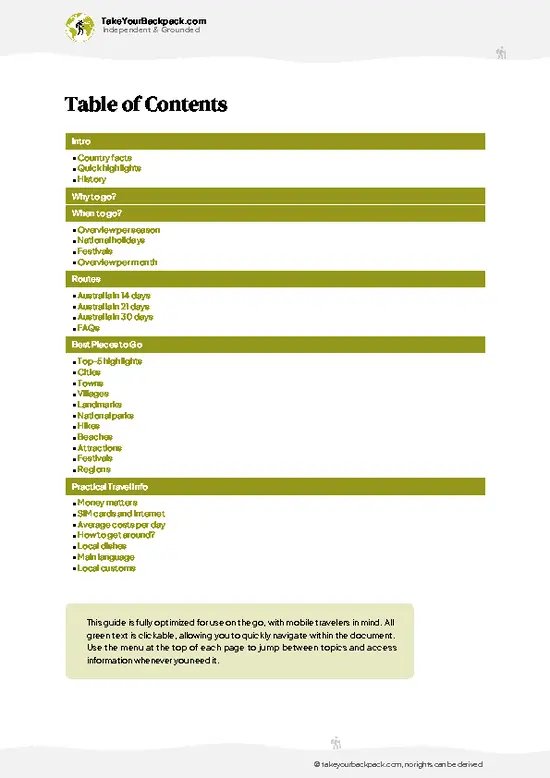
example page 2 from our offline Travel Guide for Australia
example page 3 from our offline Travel Guide for Australia
example page 4 from our offline Travel Guide for Australia
example page 5 from our offline Travel Guide for Australia
example page 6 from our offline Travel Guide for Australia
example page 7 from our offline Travel Guide for Australia
Loading the map 🌍
CLICK TO FILTER
cities
towns
villages
landmarks
national parks
hikes
beaches
attractions
festivals
regions
SHOW COUNTRY’S BESTSHOW ALL

✨ Why go?
Ranked #4 hike in Australia
What sets this place apart

Backpackers come for the Overland Track, the 65 kilometer walk south to Lake St Clair that ranks among Australia’s great multi-day trails, and for the fact that the best scenery starts right at the trailhead. Few places let you drop a pack, climb a 1,545 meter dolerite summit, and still reach a hot meal by evening. Distances are flexible. You can do a two-hour lake loop, a full day to the summit, or commit to five or six days with huts and tent platforms along the way. The shuttle from the visitor center keeps logistics simple, and the park sits comfortably between Launceston, Devonport and Queenstown on a Tasmanian loop. The terrain changes constantly, from button grass plains to ancient pencil pine and beech forest, so a short visit never feels thin and a long one never repeats itself.

💡 HighlightsPlaces and moments you shouldn't skip

  1. Cradle Mountain Summit: The jagged peak itself is the reason for the trip. The scramble from Kitchen Hut involves hand-over-hand rock work and exposure, so it suits confident walkers on clear days.
  2. Dove Lake Circuit: A roughly 6 kilometer loop, usually 2 hours, with the mountain reflected in the water. It passes the old Boat Shed, a photogenic timber building from the 1940s.
  3. Marions Lookout: A steep climb above Dove Lake that gives a sweeping view over the lake, Cradle’s face and Crater Lake. Allow about 2 hours return from the lake.
  4. Crater Falls and Crater Lake: A gentle walk through myrtle forest to a small waterfall and a glacial tarn tucked under the cliffs. It is quieter than the main loop.
  5. Enchanted Walk: A short boardwalk beside Pencil Pine Creek, mossy and dripping, with cascades and thick
… read more 👉
  1. Cradle Mountain Summit: The jagged peak itself is the reason for the trip. The scramble from Kitchen Hut involves hand-over-hand rock work and exposure, so it suits confident walkers on clear days.
  2. Dove Lake Circuit: A roughly 6 kilometer loop, usually 2 hours, with the mountain reflected in the water. It passes the old Boat Shed, a photogenic timber building from the 1940s.
  3. Marions Lookout: A steep climb above Dove Lake that gives a sweeping view over the lake, Cradle’s face and Crater Lake. Allow about 2 hours return from the lake.
  4. Crater Falls and Crater Lake: A gentle walk through myrtle forest to a small waterfall and a glacial tarn tucked under the cliffs. It is quieter than the main loop.
  5. Enchanted Walk: A short boardwalk beside Pencil Pine Creek, mossy and dripping, with cascades and thick rainforest. Wombats often graze nearby at dusk.
If time is short, skip Crater Falls and put the hours into the Dove Lake loop or Marions Lookout.
Spotted a mistake or missing something? Contact us.

Things to do around Cradle Mountain

Ratings based on Tripadvisor reviews. When you book through this link, you support our work at no extra cost to you.

🌤️ When to go?Choosing the right time of year

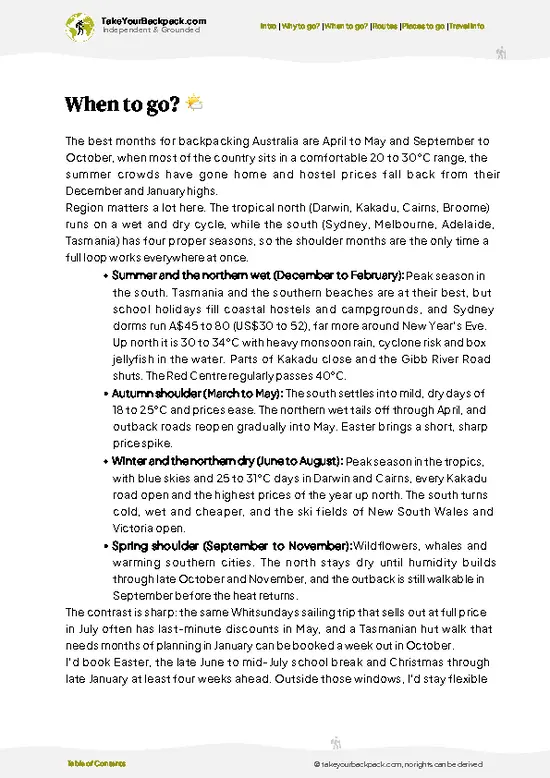
  • Summer (December to February): Summer is the most dependable window for the Overland Track and Dove Lake circuit. Days reach 12 to 20°C (54 to 68°F), nights drop to 3 to 6°C (37 to 43°F), and light lasts until roughly 9pm. Crowds and booking pressure peak, and the Overland Track requires a fee and a booked start date in this season.
  • Autumn (March to May): Crisp, often clear days of 8 to 16°C (46 to 61°F), with the deciduous beech (fagus) turning gold in April. Daylight shrinks to about 10 hours by May. Crowds thin noticeably.
  • Winter (June to August): Snow is common, days sit between 0 and 7°C (32 to 45°F), and darkness falls around 5pm. Short day walks are possible, but longer routes need snow skills. Lodging prices soften.
  • Spring (September to November): Changeable, 5 to 14°C (41 to 57°F), with
… read more 👉
  • Summer (December to February): Summer is the most dependable window for the Overland Track and Dove Lake circuit. Days reach 12 to 20°C (54 to 68°F), nights drop to 3 to 6°C (37 to 43°F), and light lasts until roughly 9pm. Crowds and booking pressure peak, and the Overland Track requires a fee and a booked start date in this season.
  • Autumn (March to May): Crisp, often clear days of 8 to 16°C (46 to 61°F), with the deciduous beech (fagus) turning gold in April. Daylight shrinks to about 10 hours by May. Crowds thin noticeably.
  • Winter (June to August): Snow is common, days sit between 0 and 7°C (32 to 45°F), and darkness falls around 5pm. Short day walks are possible, but longer routes need snow skills. Lodging prices soften.
  • Spring (September to November): Changeable, 5 to 14°C (41 to 57°F), with late snowfalls and wildflowers building toward November.
Book summer track dates and park-area lodging months ahead, and pack for snow in any month.


source: climatestotravel.comJANJanuary: highly recommended for travelingFEBFebruary: highly recommended for travelingMARMarch: highly recommended for travelingAPRApril: excellent for travelingMAYMay: highly recommended for travelingJUNJune: fair for travelingJULJuly: fair for travelingAUGAugust: fair for travelingSEPSeptember: highly recommended for travelingOCTOctober: excellent for travelingNOVNovember: highly recommended for travelingDECDecember: highly recommended for traveling
australia-hike-cradle-mountain
© Google | Lakhwinder Singh

✈️ The backpacker research shortcutAustralia Travel Guide

An offline-friendly backpacking guide with optimized travel routes, ranked highlights, transport advice, and the best areas to stay.
example page 0 from our offline Travel Guide for Australia
example page 1 from our offline Travel Guide for Australia
example page 2 from our offline Travel Guide for Australia
example page 3 from our offline Travel Guide for Australia
example page 4 from our offline Travel Guide for Australia
example page 5 from our offline Travel Guide for Australia
example page 6 from our offline Travel Guide for Australia
example page 7 from our offline Travel Guide for Australia
The digital guide (414 pages) contains:
✅ 143 highlights, ranked by travel appeal
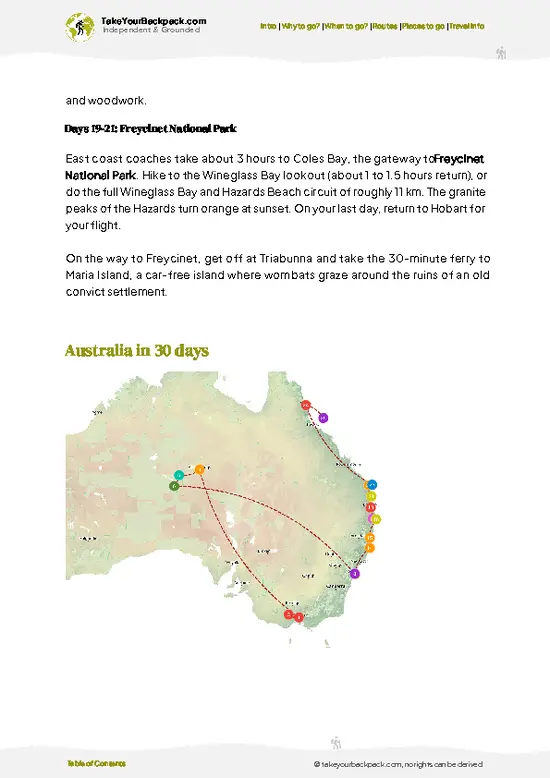
✅ Optimized 14, 21 & 30-day travel routes
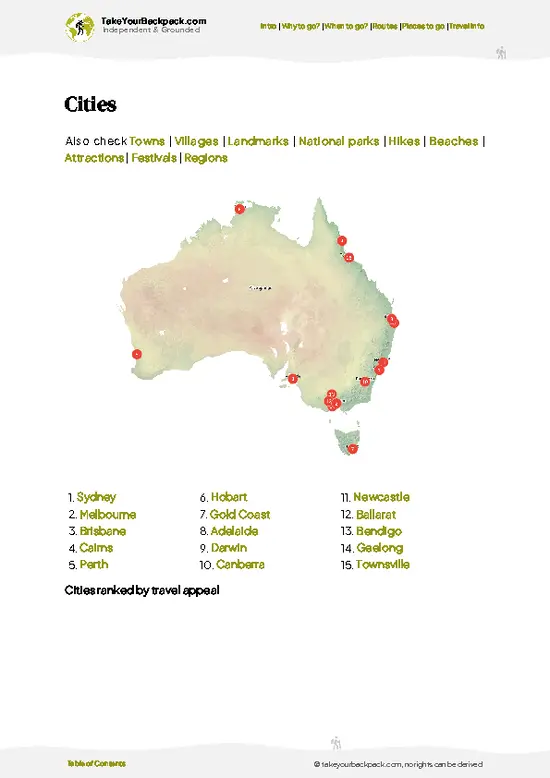
✅ Cities, national parks, landmarks, beaches
✅ How to get around
✅ Offline-friendly for travel without Wi-Fi
👉 Click to see all 30+ guide features

📅 Plan smarter in minutes, not weeks
✅ Month by month travel advice
✅ Festivals & national holidays
✅ Budget expectations

🗺️ Go to the right places, skip the overrated ones
✅ Honest pros & cons of destinations
✅ Top hikes, parks & viewpoints
✅ Lesser-known places most travelers miss
✅ Clear “worth it vs skip it” guidance

🛏️ Travel smoothly without rookie mistakes
✅ Best areas to stay
✅ Transport systems explained simply
✅ Common scams & safety advice
✅ SIM cards, money & practical tips

🌍 Understand the country, not just visit it
✅ Culture & traditions
✅ Local customs
✅ Festivals worth planning around
✅ Traveler-friendly historical context
✅ Insights that make places more meaningful

📱 Built for real travel conditions
✅ Fully downloadable PDF
✅ Works completely offline
✅ Optimized for phone use
✅ Useful in remote areas & buses
✅ Everything in one place
Stop searching, start planning
Get instant access to your full guide. 30‑day money-back guarantee.
+ Add another guide for just

By proceeding you agree to our terms.
Sent to your inbox immediately after payment • 100% Secure Checkout
Best Backpacking Travel Advisor 2025 tourism awardBest Backpacking
Travel Advisor
2025
What others say about Take Your Backpack Guides:
⭐⭐⭐⭐⭐
Fantastic, amazing amount of information!
⭐⭐⭐⭐⭐
My goodness this is amazing, it's what I've been looking for hats off too you!
⭐⭐⭐⭐⭐
I think this is absolutely BRILLIANT
⭐⭐⭐⭐
Very complete and informative. It's still missing places, but I gotta to commend you
⭐⭐⭐⭐⭐
This is truly amazing, thank you, can't wait to explore it with my kids!
⭐⭐⭐⭐⭐
Awesome resource, thank you!
⭐⭐⭐⭐⭐
This is amazing! Can't wait to explore the ones I haven't seen
⭐⭐⭐⭐
I love this! Well done, great idea.
⭐⭐⭐⭐⭐
Thanks for taking the time to make this gem!
⭐⭐⭐⭐⭐
This might be the best website I've ever seen.
⭐⭐⭐⭐⭐
Congratulations, and thank you so much for your work; it's incredibly valuable.
⭐⭐⭐⭐
In all seriousness I think you did a great job pointing out the important spots
⭐⭐⭐⭐⭐
10/10 very good
⭐⭐⭐⭐⭐
As someone who's only just starting to visit regularly this is awesome, thank you.
⭐⭐⭐⭐
Thank you very much! I'm going to visit my dad, it's going to be very useful!
⭐⭐⭐⭐⭐
This is really cool! We'll be travelling for the first time and this definitely come in handy.
⭐⭐⭐⭐⭐
You are now our minister of culture, congratulations 👨‍💼
⭐⭐⭐⭐⭐
Just wanted to tell you that this is a pearl! Going to follow your recommendations.
⭐⭐⭐⭐⭐
This is so cool. I'll definitely be using the resource for my travels soon.
⭐⭐⭐⭐⭐
This is very impressive! Good work.
⭐⭐⭐⭐⭐
This is an amazing and informative site. Very well done!

🛏️ Where to stay?Best areas to stay in Australia

If you enjoy meeting fellow travelers, consider choosing hostels with high ratings for atmosphere. On the other hand, if you prefer having your own space, a hotel might be a better option.

🥾 Hike detailsKey facts about the Cradle Mountain hike

Total Distance: The Overland Track runs about 65 kilometers from Ronny Creek to Lake St Clair, and day walks range from 1 to 14 kilometers.
Duration: Five to six days for the full Overland, or 2 to 6 hours for most day walks.
Difficulty: Day walks around the lake are easy to moderate. The summit scramble and the Overland are demanding, with changeable weather and mud.
Starting Point: Dove Lake and Ronny Creek, reached by park shuttle from the visitor center. Public transport to the region is limited, so most walkers use shuttles or tour services from Launceston.
Major Landmarks:
  • Dove Lake: Glacial
… read more 👉
Total Distance: The Overland Track runs about 65 kilometers from Ronny Creek to Lake St Clair, and day walks range from 1 to 14 kilometers.
Duration: Five to six days for the full Overland, or 2 to 6 hours for most day walks.
Difficulty: Day walks around the lake are easy to moderate. The summit scramble and the Overland are demanding, with changeable weather and mud.
Starting Point: Dove Lake and Ronny Creek, reached by park shuttle from the visitor center. Public transport to the region is limited, so most walkers use shuttles or tour services from Launceston.
Major Landmarks:
  • Dove Lake: Glacial lake and the main trailhead.
  • Marions Lookout: Steep viewpoint above the lake.
  • Kitchen Hut: Emergency shelter below the summit scramble.
  • Waldheim Chalet: Historic hut tied to the park’s founding.
Terrain and Scenery: Boardwalks, rocky steps, alpine plateau, glacial lakes and dolerite cliffs. Mud is common on the open sections.
Vegetation: Button grass moorland, pencil pine, King Billy pine, myrtle beech and the cushion plants of the alpine zone, plus the deciduous beech, Australia’s only winter-leafless native tree, which turns gold in autumn.
Wildlife: Wombats, pademelons, Bennett’s wallabies and echidnas are common. Tasmanian devils and quolls live here but are rarely seen in daylight.
⚠️ Hiking info can sometimes be outdated or inaccurate. Before you hit the trail, check the latest conditions with locals. If you do spot anything that's off, I'd love to hear from you, so I can update it for fellow travelers.

🛡️ SafetyScams, Hazards, and Annoyances

Weather is the main hazard at Cradle Mountain, because cold, wind and rain can arrive in any month, and snow can fall even in midsummer. Temperatures drop fast, so carry a waterproof shell, warm layers, a hat and gloves even on a sunny morning. Cloud often hides the summit area, and the Cradle Mountain summit scramble involves exposed rock and chains that become slippery when wet, so turn back if conditions slide. Boardwalks cover much of the lowland routes, but off-boardwalk sections turn to deep mud, so waterproof boots help. Register your walk at the visitor center or in the logbooks along the track. Wombats, pademelons and wallabies are common and harmless if left alone, but keep food sealed and never feed them. Tiger snakes and other snakes are active on warm days, so watch your step … read more 👉
Weather is the main hazard at Cradle Mountain, because cold, wind and rain can arrive in any month, and snow can fall even in midsummer. Temperatures drop fast, so carry a waterproof shell, warm layers, a hat and gloves even on a sunny morning. Cloud often hides the summit area, and the Cradle Mountain summit scramble involves exposed rock and chains that become slippery when wet, so turn back if conditions slide. Boardwalks cover much of the lowland routes, but off-boardwalk sections turn to deep mud, so waterproof boots help. Register your walk at the visitor center or in the logbooks along the track. Wombats, pademelons and wallabies are common and harmless if left alone, but keep food sealed and never feed them. Tiger snakes and other snakes are active on warm days, so watch your step and give them space. Carry a map and start early to finish in daylight.

FAQCommon questions from travelers

The Dove Lake circuit takes about 2 to 3 hours for its 6 kilometer loop, while the Cradle Mountain summit return from Dove Lake takes 6 to 8 hours. The full Overland Track to Lake St Clair covers about 65 kilometers and usually takes 5 to 7 days. Most people walking it go north to south, starting at Ronny Creek near Cradle Mountain.
The Dove Lake circuit is easy and mostly flat on boardwalk and gravel, suitable for families. The summit climb is hard, with steep rock scrambling, exposure and chains, and it should be done only in clear weather. The Overland Track is moderate to demanding, with roughly 8 to 17 kilometers per day and changeable alpine weather that requires carrying a full pack.
Day walks need no guide or permit, but you pay the Tasmania Parks Pass entry fee (around A$25 to 50 per vehicle depending on pass type) for the national park, and shuttle buses run from the visitor center. The Overland Track needs a booked start date and a fee (roughly A$200 to 300 per adult in the peak season, October to May), and no guide is required. Bookings for December to February fill up months ahead, so reserve early.
⚠️ Things can change over time, so always validate details locally before you go.

Other Australian hikes near Cradle Mountain

Explore more nearby:

  • Overland Track—65 km, button grass plains, Mount Ossa, permit season, hut-to-hut| 23 km away
  • Three Capes Track—Sea cliffs, Cape Pillar, hut comfort, boat start| 230 km away
  • Great Ocean Walk—104 km, Apollo Bay to Apostles, lighthouse, booked campsites| 379 km away

💡 Not sure where to go next?
Create a personalized itinerary for Australia including Cradle Mountain and the places that fit your trip.

Generate my itinerary

👉 Discover all hikes

Or checkout all Australia has to offer (think cities, towns, villages, national parks, hikes, beaches, festivals)
Country photo of Australia

We 💚 feedbackKey takeaways before you go

Cradle Mountain suits hikers who want serious alpine scenery with infrastructure behind them, from day walkers to first-time multi-day trekkers. It is crowded in summer and wet in most seasons. I would pick the Overland over the day walks if you have the days, and I would pack a spare dry layer regardless.

✈️ When did I visit Australia?
On my trip to New Zealand in 1993, I had a short stop in Australia as well.

✍️ Help improve this page!
The information on this page is based on my own backpacking experience in Australia, supplemented with up-to-date research and feedback from other travelers. Travel details can change, so if you notice anything outdated or incomplete, feel free to let me know.


🙋‍♂️ Give feedback

👋 Meet the founderWho’s Behind Take Your Backpack?

Johan, backpacker and founder of TakeYourBackpackHi, I’m Johan (Netherlands 🇳🇱), the creator of TakeYourBackpack. Over the past 3 decades, I’ve backpacked through 90+ countries across six continents, gaining extensive experience with independent travel, long-term trips, and overland routes.

This site is built on a combination of firsthand travel experience and carefully curated insights from other backpackers. Many guides are based on places I’ve personally visited, while others bring together tips, observations, and practical advice shared by trusted travelers I’ve met along the way.

The goal is to provide realistic, experience-driven guidance — not generic itineraries — so you can explore destinations with better context, clearer expectations, and more confidence.