×

Australia🇦🇺 | regionsLord Howe IslandSouthern coral lagoon, cloud forest summit, visitor cap, bike transport | things to do and best time to go

Explore K’gari (Fraser Island)Explore Recherche Bay

Backpacking in Lord Howe Island
UNESCO World Heritage site
👌 Worth visitingregion ranked #11
By Johan Kruseman 🇳🇱 | Updated October 15, 2026

Most travelers have to decide whether to pay for the flight and the island’s high prices or to skip it for a cheaper reef elsewhere, and the 400 visitor cap tips it for anyone who wants empty trails. Lord Howe Island sits in the Tasman Sea off the east coast of Australia, a crescent of forest, lagoon and two steep peaks. Nothing here is cheap, and nightlife means a pub and stars. I stepped off the small plane, spotted a woodhen strolling across the grass near the airstrip, and realized nobody was in a hurry. Bikes are the local transport, so hire one on day one instead of renting a car. Book flights and beds months ahead.

Discover everything you want to know in the 📖 Australia Travel Guide.


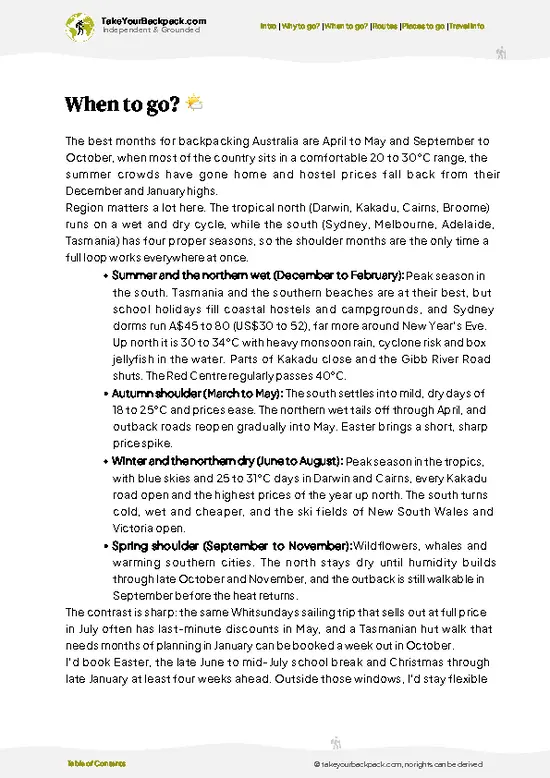
example page 0 from our offline Travel Guide for Australia
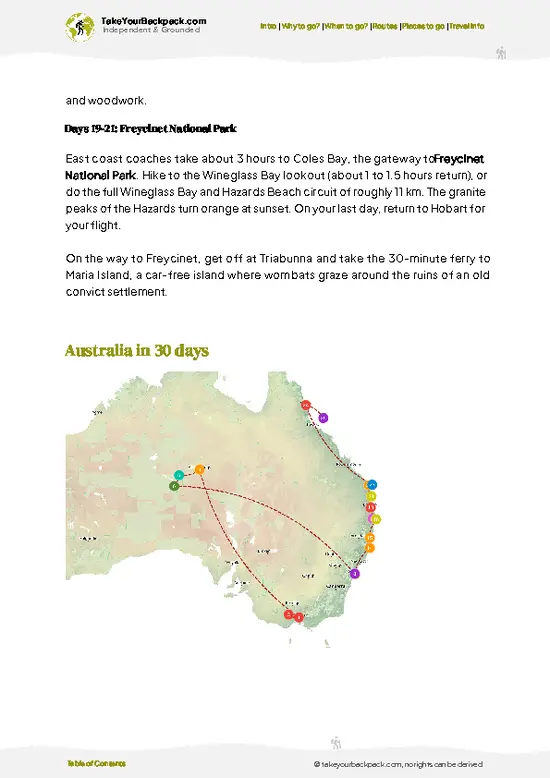
example page 1 from our offline Travel Guide for Australia
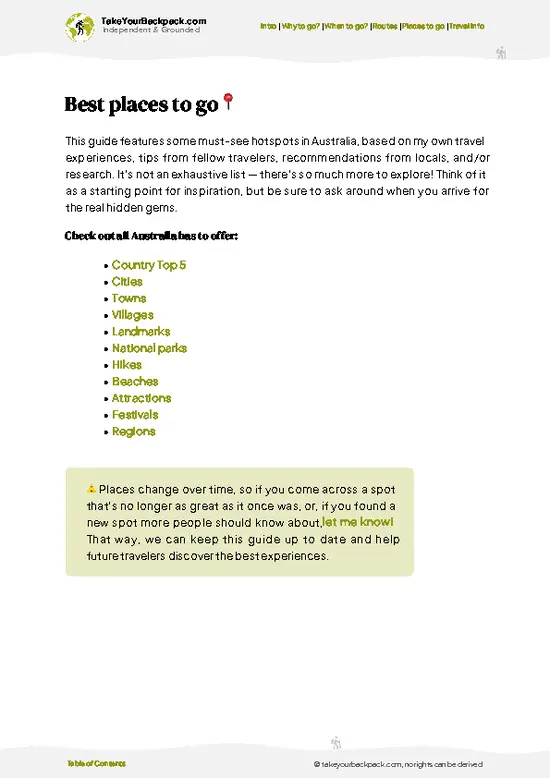
example page 2 from our offline Travel Guide for Australia
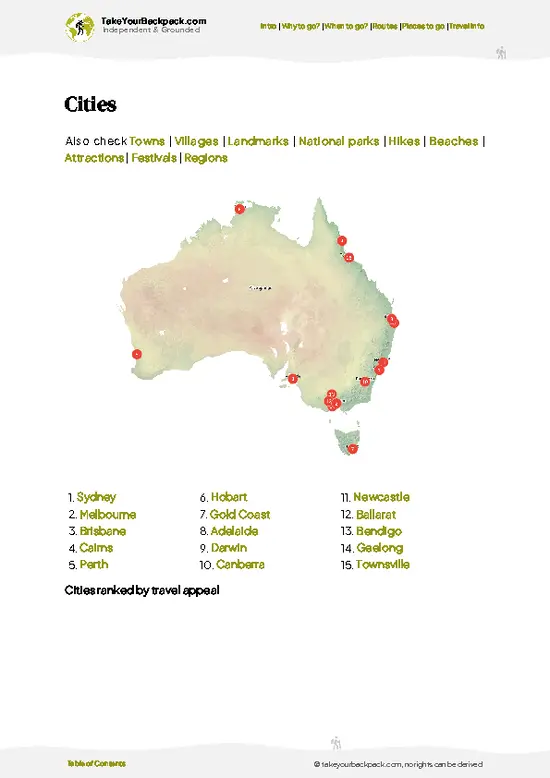
example page 3 from our offline Travel Guide for Australia
example page 4 from our offline Travel Guide for Australia
example page 5 from our offline Travel Guide for Australia
example page 6 from our offline Travel Guide for Australia
example page 7 from our offline Travel Guide for Australia
Loading the map 🌍
CLICK TO FILTER
cities
towns
villages
landmarks
national parks
hikes
beaches
attractions
festivals
regions
SHOW COUNTRY’S BESTSHOW ALL

✨ Why go?
Ranked #11 region in Australia
What makes this region worth visiting

Lord Howe works because everything sits within a few kilometers, so you can stack experiences without ever repacking. A morning can start on the Lord Howe Island Marine Park lagoon, which holds the world’s southernmost coral reef you can snorkel straight from the beach. By afternoon you are in palm forest, and by dusk you are on a ridge watching seabirds come home. Slow travel is the only mode on offer, and it suits the place. Roads are narrow, speed limits are low and bicycles do most of the work. The 400 visitor limit keeps beaches and trails quiet, which is rare for a place with this much scenery. Add the World Heritage listing, and you get hiking, diving and birdwatching in one small, walkable package.

💡 HighlightsTop highlights of Lord Howe Island

  1. Mount Gower Track: a guided, full-day climb to the 875 meter summit through cloud forest, the island’s signature hike. Guide required, book ahead.
  2. Ned’s Beach: you can hand-feed wild fish at the water’s edge, a quirky local ritual with a small donation for the fish feed.
  3. Lord Howe Island Marine Park lagoon: snorkel the southernmost coral reef from the sand, with turtles often cruising by.
  4. Malabar Hill: a short climb to a clifftop meadow where seabirds nest and the island opens beneath you at sunset.
  5. Goat House Track: a very steep climb up the flank of Mount Lidgbird to a cave with views across the island.
  6. Blinky Beach: the island’s surf beach on the east side, less visited than the lagoon.
  7. Lord Howe Island Museum: compact exhibits on settlement, shipwrecks and the stick insect once thought extinct.
… read more 👉
  1. Mount Gower Track: a guided, full-day climb to the 875 meter summit through cloud forest, the island’s signature hike. Guide required, book ahead.
  2. Ned’s Beach: you can hand-feed wild fish at the water’s edge, a quirky local ritual with a small donation for the fish feed.
  3. Lord Howe Island Marine Park lagoon: snorkel the southernmost coral reef from the sand, with turtles often cruising by.
  4. Malabar Hill: a short climb to a clifftop meadow where seabirds nest and the island opens beneath you at sunset.
  5. Goat House Track: a very steep climb up the flank of Mount Lidgbird to a cave with views across the island.
  6. Blinky Beach: the island’s surf beach on the east side, less visited than the lagoon.
  7. Lord Howe Island Museum: compact exhibits on settlement, shipwrecks and the stick insect once thought extinct.
  8. The Clear Place: an easy 1.2 km return walk from Middle Beach through palm forest to a windy clifftop lookout.
  9. Little Island Track: a quiet walk through palm forest and rocky shoreline, rarely crowded.
  10. Old Gulch: a small, tucked-away swimming and snorkeling cove that locals prefer when the wind is up.
Book the Mount Gower climb first, because guided places are limited and weather dictates the day.
Spotted a mistake or missing something? Contact us.

⌛️ 5 daysWhat you can realistically do in a week

Day 1: Ned’s Beach: Start here because feeding the fish sets the island’s unhurried tone, and the reef sits right off the sand. Hire a bicycle on arrival, since the island is flat enough that you will not miss a car.
Day 2: Lagoon and Marine Park: Spend the second day in the water. Calm lagoon conditions make snorkeling easy, and the glass-bottom or paddle options let you see turtles without long transfers. Clear Place and Old Gulch are easy bike stops.
Day 3: Malabar Hill and Blinky Beach: Shift to the northern headlands and east coast. Ride, then walk, and finish with sunset above the seabird colonies. The slow roads keep this loop gentle.
Day 4: Detour to Little Island Track: This side walk adds forest and shoreline in a few hours, costs almost nothing and does not break your cycling loop. … read more 👉
Day 1: Ned’s Beach: Start here because feeding the fish sets the island’s unhurried tone, and the reef sits right off the sand. Hire a bicycle on arrival, since the island is flat enough that you will not miss a car.
Day 2: Lagoon and Marine Park: Spend the second day in the water. Calm lagoon conditions make snorkeling easy, and the glass-bottom or paddle options let you see turtles without long transfers. Clear Place and Old Gulch are easy bike stops.
Day 3: Malabar Hill and Blinky Beach: Shift to the northern headlands and east coast. Ride, then walk, and finish with sunset above the seabird colonies. The slow roads keep this loop gentle.
Day 4: Detour to Little Island Track: This side walk adds forest and shoreline in a few hours, costs almost nothing and does not break your cycling loop.
Day 5: Mount Gower Track: Leave the hardest day for last, so weather can shuffle the schedule. The guide, the cloud forest and the summit make this the day that justifies the whole trip, and I would arrange it as soon as you land.

🌤️ When to go?Best time to visit Lord Howe Island

  • Summer (Dec to Feb): Warm and humid, 20 to 27°C (68 to 81°F), with daylight stretching past 14 hours. Snorkeling and swimming are at their best, and so are the prices and the flight bookings.
  • Autumn (Mar to May): Mild at 18 to 25°C (64 to 77°F), with calmer crowds and clear water. Fairy terns and fewer visitors make it a quiet stretch.
  • Winter (Jun to Aug): Cool and breezy, 15 to 20°C (59 to 68°F), with about 10 hours of light. Rain and wind are more frequent, but rooms are cheaper.
  • Spring (Sep to Nov): 17 to 24°C (63 to 75°F), with wildflowers and seabird nesting. Mount Gower hikes run best now.
Book flights and rooms several months ahead for any school holiday period, because the island caps visitor numbers.

source: climatestotravel.comJANJanuary: highly recommended for travelingFEBFebruary: highly recommended for travelingMARMarch: excellent for travelingAPRApril: excellent for travelingMAYMay: good for travelingJUNJune: good for travelingJULJuly: good for travelingAUGAugust: good for travelingSEPSeptember: good for travelingOCTOctober: excellent for travelingNOVNovember: excellent for travelingDECDecember: highly recommended for traveling
when-to-go

✈️ The backpacker research shortcutAustralia Travel Guide

An offline-friendly backpacking guide with optimized travel routes, ranked highlights, transport advice, and the best areas to stay.
example page 0 from our offline Travel Guide for Australia
example page 1 from our offline Travel Guide for Australia
example page 2 from our offline Travel Guide for Australia
example page 3 from our offline Travel Guide for Australia
example page 4 from our offline Travel Guide for Australia
example page 5 from our offline Travel Guide for Australia
example page 6 from our offline Travel Guide for Australia
example page 7 from our offline Travel Guide for Australia
The digital guide (414 pages) contains:
✅ 143 highlights, ranked by travel appeal
✅ Optimized 14, 21 & 30-day travel routes
✅ Cities, national parks, landmarks, beaches
✅ How to get around
✅ Offline-friendly for travel without Wi-Fi
👉 Click to see all 30+ guide features

📅 Plan smarter in minutes, not weeks
✅ Month by month travel advice
✅ Festivals & national holidays
✅ Budget expectations

🗺️ Go to the right places, skip the overrated ones
✅ Honest pros & cons of destinations
✅ Top hikes, parks & viewpoints
✅ Lesser-known places most travelers miss
✅ Clear “worth it vs skip it” guidance

🛏️ Travel smoothly without rookie mistakes
✅ Best areas to stay
✅ Transport systems explained simply
✅ Common scams & safety advice
✅ SIM cards, money & practical tips

🌍 Understand the country, not just visit it
✅ Culture & traditions
✅ Local customs
✅ Festivals worth planning around
✅ Traveler-friendly historical context
✅ Insights that make places more meaningful

📱 Built for real travel conditions
✅ Fully downloadable PDF
✅ Works completely offline
✅ Optimized for phone use
✅ Useful in remote areas & buses
✅ Everything in one place
Stop searching, start planning
Get instant access to your full guide. 30‑day money-back guarantee.
+ Add another guide for just

By proceeding you agree to our terms.
Sent to your inbox immediately after payment • 100% Secure Checkout
Best Backpacking Travel Advisor 2025 tourism awardBest Backpacking
Travel Advisor
2025
What others say about Take Your Backpack Guides:
⭐⭐⭐⭐⭐
Fantastic, amazing amount of information!
⭐⭐⭐⭐⭐
My goodness this is amazing, it's what I've been looking for hats off too you!
⭐⭐⭐⭐⭐
I think this is absolutely BRILLIANT
⭐⭐⭐⭐
Very complete and informative. It's still missing places, but I gotta to commend you
⭐⭐⭐⭐⭐
This is truly amazing, thank you, can't wait to explore it with my kids!
⭐⭐⭐⭐⭐
Awesome resource, thank you!
⭐⭐⭐⭐⭐
This is amazing! Can't wait to explore the ones I haven't seen
⭐⭐⭐⭐
I love this! Well done, great idea.
⭐⭐⭐⭐⭐
Thanks for taking the time to make this gem!
⭐⭐⭐⭐⭐
This might be the best website I've ever seen.
⭐⭐⭐⭐⭐
Congratulations, and thank you so much for your work; it's incredibly valuable.
⭐⭐⭐⭐
In all seriousness I think you did a great job pointing out the important spots
⭐⭐⭐⭐⭐
10/10 very good
⭐⭐⭐⭐⭐
As someone who's only just starting to visit regularly this is awesome, thank you.
⭐⭐⭐⭐
Thank you very much! I'm going to visit my dad, it's going to be very useful!
⭐⭐⭐⭐⭐
This is really cool! We'll be travelling for the first time and this definitely come in handy.
⭐⭐⭐⭐⭐
You are now our minister of culture, congratulations 👨‍💼
⭐⭐⭐⭐⭐
Just wanted to tell you that this is a pearl! Going to follow your recommendations.
⭐⭐⭐⭐⭐
This is so cool. I'll definitely be using the resource for my travels soon.
⭐⭐⭐⭐⭐
This is very impressive! Good work.
⭐⭐⭐⭐⭐
This is an amazing and informative site. Very well done!

🛏️ Where to stay?Best areas to stay in Australia

Stay in the central settlement around Lagoon Road, because that is where nearly every traveler on the island ends up. It sits beside the lagoon, with a short walk to the shop, cafes, bike hire and tour offices, so you meet other guests easily and never depend on a vehicle. Self-catering units and lodges here let you cook, which matters for budgets on an island with pricey supplies. The safety picture is simple: crime is almost nonexistent, and the main risks are steep paths and reef currents.

Ned’s Beach and the northern end are quieter and suit those who want birds and sunrise walks, though … read more 👉
Stay in the central settlement around Lagoon Road, because that is where nearly every traveler on the island ends up. It sits beside the lagoon, with a short walk to the shop, cafes, bike hire and tour offices, so you meet other guests easily and never depend on a vehicle. Self-catering units and lodges here let you cook, which matters for budgets on an island with pricey supplies. The safety picture is simple: crime is almost nonexistent, and the main risks are steep paths and reef currents.

Ned’s Beach and the northern end are quieter and suit those who want birds and sunrise walks, though you pay for the distance in bike effort. The south end near Old Settlement Beach is peaceful and scenic, but has fewer social options. Solo backpackers meet people best near the lagoon, where tours depart, snorkelers gather and the evening scene stays within an easy ride.

🚌 Getting aroundTransportation options and practical tips

The settlement near Lagoon Beach is flat and small enough to cross on foot in 20 minutes, and walking stops making sense once you head for the north hills, Ned’s Beach or the south end, where roads climb and the sun gets serious. The island is about 11 km (7 miles) long, so nothing is far, only inconveniently hilly. Everything works on island time, which means a schedule is more of a polite suggestion.
  • Bicycle: Hire costs about A$20 to 30 a day (US$13 to 20). Cars are scarce and the speed limit is 25 km/h, so cycling is the default, and the smart move is hiring for the whole stay rather than day by day, since the rate drops with length.
  • Walking: Free, and the only way to reach tracks such as Malabar and Transit Hill. Wear proper shoes, because the island is steeper than the map suggests.
  • Hire
… read more 👉
The settlement near Lagoon Beach is flat and small enough to cross on foot in 20 minutes, and walking stops making sense once you head for the north hills, Ned’s Beach or the south end, where roads climb and the sun gets serious. The island is about 11 km (7 miles) long, so nothing is far, only inconveniently hilly. Everything works on island time, which means a schedule is more of a polite suggestion.
  • Bicycle: Hire costs about A$20 to 30 a day (US$13 to 20). Cars are scarce and the speed limit is 25 km/h, so cycling is the default, and the smart move is hiring for the whole stay rather than day by day, since the rate drops with length.
  • Walking: Free, and the only way to reach tracks such as Malabar and Transit Hill. Wear proper shoes, because the island is steeper than the map suggests.
  • Hire car or scooter: Limited stock, often A$60 to 100 a day. Most travelers skip it because distances are tiny, and the few who want one should reserve it before arriving.
  • Guided tours and boats: Dive, snorkel and glass-bottom boat trips run A$60 to 150 (US$40 to 100). Weather cancels them often, so leave slack days rather than booking them consecutively.
  • Taxi or lodge transfer: A short ride costs about A$10 to 25. Most lodges meet flights, which saves hauling bags uphill.
Hire a bike on arrival day and carry a headlamp, since street lighting is almost nonexistent and dusk arrives fast.

🍲 FoodEating & Drinking in Lord Howe Island

Fresh kingfish is the island’s signature, served grilled, smoked or as sashimi, and the kentia palm heritage shows up in a few local products and honey. Look for wahoo and trevally on small menus, plus rich cakes and strong coffee at the few cafes around the settlement.

Budget eating means the general store and self-catering. Stock is flown or shipped in, so prices run higher than the mainland, and stocking up on arrival day helps. A few takeaway counters and a weekly community market offer cheap fish, baked goods and produce, while evening dining at lodges needs a reservation because places are small.

Tables fill early and kitchens close by about 8 or 9 pm. Many places are BYO for wine, and the island’s relaxed manner means unhurried service. Pick up a fish burger after a snorkel and eat it on the lagoon wall.

FAQCommon questions from travelers

Plan 4 to 5 days to cover the island properly. That gives time for the Mount Gower hike (about 8 to 9 hours, guided only), a snorkel trip to the lagoon and Ned’s Beach, and a boat outing around Balls Pyramid. A long weekend of 3 days works if you skip the big hike.
Bicycles are the standard way, hired for about A$20 to 30 a day. The island is roughly 11 km long, and most sights lie within 5 to 8 km of the settlement. Walking covers the lagoon area and tracks, and lodges usually arrange airport transfers.
The island is known for its World Heritage listing, the southernmost coral reef in the world, and the 875 m Mount Gower. Balls Pyramid, a sea spire about 23 km away, is a top dive and boat trip, and the island is home to seabirds and the rediscovered Lord Howe Island stick insect. Visitor numbers are capped at around 400 at a time, which keeps beaches quiet.
⚠️ Things can change over time, so always validate details locally before you go.

Other Australian regions near Lord Howe Island

Explore more nearby:


💡 Not sure where to go next?
Create a personalized itinerary for Australia including Lord Howe Island and the places that fit your trip.

Generate my itinerary

👉 Discover all regions

Or checkout all Australia has to offer (think cities, towns, villages, national parks, hikes, beaches, festivals)
Country photo of Australia

We 💚 feedbackIs it worth it?

Travelers often treat Lord Howe like a relaxed beach stop and leave the Mount Gower climb until the last day, then lose it to weather. Book it for your first clear morning and spend the flexible days on the reef. I would also pack your own snacks, because the island supplies are limited and pricey.

✈️ When did I visit Australia?
On my trip to New Zealand in 1993, I had a short stop in Australia as well.

✍️ Help improve this page!
The information on this page is based on my own backpacking experience in Australia, supplemented with up-to-date research and feedback from other travelers. Travel details can change, so if you notice anything outdated or incomplete, feel free to let me know.


🙋‍♂️ Give feedback

👋 Meet the founderWho’s Behind Take Your Backpack?

Johan, backpacker and founder of TakeYourBackpackHi, I’m Johan (Netherlands 🇳🇱), the creator of TakeYourBackpack. Over the past 3 decades, I’ve backpacked through 90+ countries across six continents, gaining extensive experience with independent travel, long-term trips, and overland routes.

This site is built on a combination of firsthand travel experience and carefully curated insights from other backpackers. Many guides are based on places I’ve personally visited, while others bring together tips, observations, and practical advice shared by trusted travelers I’ve met along the way.

The goal is to provide realistic, experience-driven guidance — not generic itineraries — so you can explore destinations with better context, clearer expectations, and more confidence.