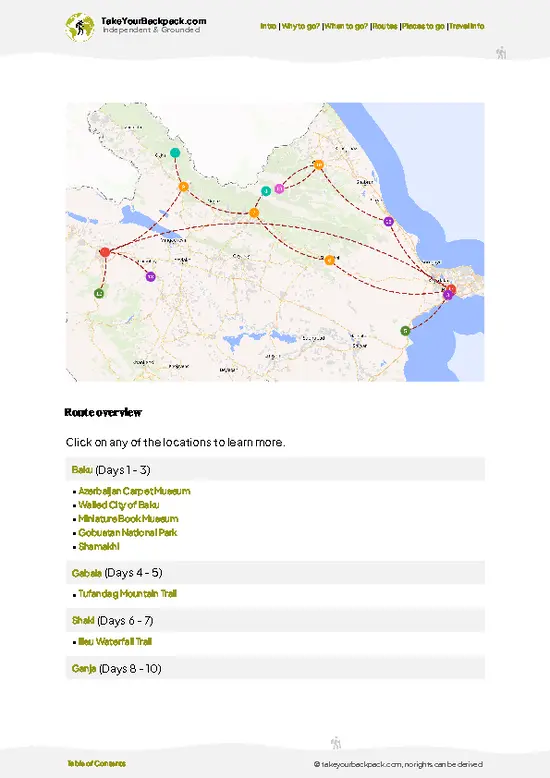
How many towns to visit: Three to four towns is the number I would advise for a backpacker with 8 to 12 days. Each town needs a full day plus an evening to register, and the bus legs between regions take 3 to 6 hours. A fifth stop usually means trading depth for transit time.
Choosing between kinds of towns: For
history and architecture, prioritize the old trading towns of the northwest, where caravanserais, palaces and Albanian churches sit within walking distance. For
hiking and cool air, pick the northern mountain-edge towns, which serve as bases for village trails and waterfalls. For
coast, forest and a different food culture, choose the south, with its tea plantations and Talysh dishes. Travelers short on time should take one from each of the first two types and skip the third.
Budget: …
read more 👉 How many towns to visit: Three to four towns is the number I would advise for a backpacker with 8 to 12 days. Each town needs a full day plus an evening to register, and the bus legs between regions take 3 to 6 hours. A fifth stop usually means trading depth for transit time.
Choosing between kinds of towns: For history and architecture, prioritize the old trading towns of the northwest, where caravanserais, palaces and Albanian churches sit within walking distance. For hiking and cool air, pick the northern mountain-edge towns, which serve as bases for village trails and waterfalls. For coast, forest and a different food culture, choose the south, with its tea plantations and Talysh dishes. Travelers short on time should take one from each of the first two types and skip the third.
Budget: A realistic budget is US$25 to 45 a day (about 43 to 77 AZN) with guesthouses at US$12 to 25 a night, meals at US$4 to 10, and tea houses costing a few manat. Intercity marshrutkas run roughly 5 to 15 AZN per leg. Entry fees to museums, palaces and caravanserais are typically 2 to 15 AZN, and local guides at heritage sites charge about US$15 to 40 for a few hours. Taxis between a town and nearby villages cost US$10 to 30 for a half day, so shared rides cut costs. Carry cash, since ATMs exist but small guesthouses and tea houses rarely take cards.
Safety and cultural considerations: Azerbaijan is generally safe for independent travelers, with low street crime in towns. The main risks are road accidents on mountain routes and unlicensed taxis that quote inflated fares, so agree a price before you get in. Avoid photographing military installations, and stay out of areas near the Armenian border and the former conflict zone unless official permission and current guidance allow it.
Culturally, the country is mostly secular but conservative in small towns. Dress modestly in mosques, remove shoes indoors and in homes, and accept tea, which is offered as hospitality and refused only with a polite word. Alcohol is available but drinking in public looks out of place. Learning salam and sağ ol (thank you) pays back quickly, and Russian often works better than English with older residents.
Towns also run on their own clock: shops close for midday breaks in summer, and Friday prayer thins services. Carry a printed copy of your e-visa and register for a SIM card at a Baku mobile shop with your passport, since maps and translation tools matter more once you leave the capital.


 Best Backpacking
 Hi, I’m Johan (Netherlands 🇳🇱), the creator of TakeYourBackpack. Over the past 3 decades, I’ve backpacked through 90+ countries across six continents, gaining extensive experience with independent travel, long-term trips, and overland routes.