×

Belarus🇧🇾 | best festivalsTop-Rated 7 festivals in Belarus

Festivals in Belarus are mostly state-supported, folk-rooted and organized around place: crafts, music, food and historical reenactment, often held in castle grounds, open-air museums or town squares. Entry is usually free or costs a few Belarusian rubles. The largest gatherings are in Minsk and Vitebsk, with good rail links and plenty of beds, but also bigger crowds. Smaller events in Grodno, Brest and the Mir and Nesvizh area are quieter and more local. For a backpacker or any independent traveler, rural events mean fewer English signs and sparser buses, so plan transport before choosing.

By Johan Kruseman 🇳🇱 | Updated October 19, 2026
Explore the best regions in Belarus

Why go?Why Travelers Love These Spots

Belarus suits festivals that grow out of folk tradition and local history. Rural life, Orthodox and Catholic calendars and the Soviet-era emphasis on organized public culture have left a country where town and district celebrations are run regularly, with municipal budgets behind them. The castles at Mir and Nesvizh, the old towns of Grodno and Polotsk, and the open-air villages near Minsk give events a ready-made setting. The flat, forested geography means most venues are reachable from a few hubs, and the rail network is cheap and punctual.

The country is less suited to a loose, spontaneous festival circuit. Events are officially organized and tend to follow a programme, so the atmosphere is orderly and family-oriented rather than raucous. Information is mainly in Russian or Belarusian, … read more 👉
Belarus suits festivals that grow out of folk tradition and local history. Rural life, Orthodox and Catholic calendars and the Soviet-era emphasis on organized public culture have left a country where town and district celebrations are run regularly, with municipal budgets behind them. The castles at Mir and Nesvizh, the old towns of Grodno and Polotsk, and the open-air villages near Minsk give events a ready-made setting. The flat, forested geography means most venues are reachable from a few hubs, and the rail network is cheap and punctual.

The country is less suited to a loose, spontaneous festival circuit. Events are officially organized and tend to follow a programme, so the atmosphere is orderly and family-oriented rather than raucous. Information is mainly in Russian or Belarusian, and English schedules are limited. Sources of listings can be thin, so confirm dates through local tourist offices or venue pages before building a route around one.

Before choosing Belarus, check entry rules, visa requirements and registration for your nationality, as these change and affect timing. Carry cash and a card that works locally, because foreign-issued cards can be unreliable. Photography, political displays and public behavior are monitored more closely than in neighboring EU countries, so keep a low profile.
Behind the Scenes of Selection
The list of best festivals in Belarus is created based on energy, traditions, crowd experience, activities, and overall excitement. If you feel a festival is missing in this list, please let us know.

When to go?Optimal Periods for Travel

Best months: The best months for festivals in Belarus are June to September, when daytime highs of 18 to 25°C suit outdoor events and the long days run until about 9 pm in midsummer. Most open-air, castle and folk events are scheduled in this window.

Shoulder seasons: May and early October are workable. Highs sit around 12 to 18°C in May and 8 to 13°C in early October, with cooler evenings, and crowds are lighter. Rain is spread through the year, with roughly 50 to 90 mm a month and the wettest period in summer, often as short heavy showers, so pack a light waterproof even in July.

Winter: December to February is cold, with averages between -8 and 0°C and snow common, especially in the north around Vitebsk and Polotsk. Winter events are mostly indoor or tied to Christmas, Orthodox Christmas … read more 👉
Best months: The best months for festivals in Belarus are June to September, when daytime highs of 18 to 25°C suit outdoor events and the long days run until about 9 pm in midsummer. Most open-air, castle and folk events are scheduled in this window.

Shoulder seasons: May and early October are workable. Highs sit around 12 to 18°C in May and 8 to 13°C in early October, with cooler evenings, and crowds are lighter. Rain is spread through the year, with roughly 50 to 90 mm a month and the wettest period in summer, often as short heavy showers, so pack a light waterproof even in July.

Winter: December to February is cold, with averages between -8 and 0°C and snow common, especially in the north around Vitebsk and Polotsk. Winter events are mostly indoor or tied to Christmas, Orthodox Christmas in early January and the pre-Lenten folk period in February or March. Daylight is short, about 7 hours at midwinter, which limits time outdoors.

Prices and crowds: Accommodation in Minsk rises noticeably around major city events, with hostel beds typically US$10 to 18 and private rooms often 30 to 50% higher on busy dates. Smaller towns have few beds, so book ahead in Mir, Nesvizh and Grodno in July and August. Spring thaw in March and April turns rural roads muddy and few events run.

festival hoppingHow to Combine festivals Into One Trip

How many days: A trip combining several festivals in Belarus needs 7 to 12 days, because events are spread across distant regions and fall on fixed dates. Plan around the dates first, then fit the stops between them.

Regional clusters: Three groups work well. The central cluster of Minsk, Mir, Nesvizh and the open-air museum areas is reachable in 1.5 to 2.5 hours by bus or minibus from the capital. The west pairs Brest and Grodno, about 4 to 5 hours apart by train or bus. The northeast links Vitebsk and Polotsk, roughly 1.5 to 2 hours apart. A sensible direction is Minsk first, then west toward Grodno and Brest, finishing back through Minsk, or Minsk then northeast as a separate loop. Minsk to Vitebsk takes 3.5 to 5 hours, Minsk to Brest 3.5 to 4.5 hours by fast train, and Minsk to Grodno … read more 👉
How many days: A trip combining several festivals in Belarus needs 7 to 12 days, because events are spread across distant regions and fall on fixed dates. Plan around the dates first, then fit the stops between them.

Regional clusters: Three groups work well. The central cluster of Minsk, Mir, Nesvizh and the open-air museum areas is reachable in 1.5 to 2.5 hours by bus or minibus from the capital. The west pairs Brest and Grodno, about 4 to 5 hours apart by train or bus. The northeast links Vitebsk and Polotsk, roughly 1.5 to 2 hours apart. A sensible direction is Minsk first, then west toward Grodno and Brest, finishing back through Minsk, or Minsk then northeast as a separate loop. Minsk to Vitebsk takes 3.5 to 5 hours, Minsk to Brest 3.5 to 4.5 hours by fast train, and Minsk to Grodno 4 to 5 hours.

Time per stop: Allow 1 to 2 nights in smaller towns and 2 to 3 in Minsk, Grodno or Vitebsk. A festival day usually fills an afternoon and evening, so arrive the day before.

Planning mistakes: The most common error is packing too many regions into a short trip, then losing days to transit. Pick two clusters at most. Another is relying on last-bus timing to small venues, as evening services are sparse; book a room nearby or arrange a taxi back. Booking trains late also costs seats on weekends, so reserve a few days ahead.

The ListThe Best festivals of Belarus

1 Slavianski Bazaar

Slavic music, cross-border artists, open-air stages

Discover a major gathering of musicians and performers from across Eastern Europe, with concerts and events spanning several days.

2 Minsk International Film Festival

cinema premieres, filmmaker talks, city cinemas

Catch new films from Belarus and abroad, attend director Q&As, and mingle with cinephiles in Minsk’s main theaters.

3 Kupalle

night bonfires, wreath floating, folk rituals

Join locals as they celebrate midsummer with ancient songs, fire-jumping, and symbolic water ceremonies in open countryside settings.

4 Lida Castle Festival

medieval reenactments, knight tournaments, castle grounds

Step into a reconstructed medieval world with costumed battles, artisan markets, and hands-on activities inside historic castle walls.

5 International Festival of Organ Music in Grodno

baroque churches, pipe organ recitals, classical repertoire

Hear accomplished organists perform in acoustically rich churches, offering travelers a rare chance to experience sacred music traditions.

6 Dozhinki

harvest displays, rural parades, agricultural contests

Experience a rural gathering where communities mark the end of harvest with decorated streets, local produce, and traditional competitions.

7 Belaya Vezha

street performances, circus acts, urban spectacle

Watch city streets transform with acrobats, clowns, and open-air shows, drawing crowds into a lively celebration of performance art.

Loading the map 🌍

Expert viewTips and Advice from Travelers

How many to visit: I advise two to four festivals on one trip. Events are spread across regions and are scheduled by date, so more than that turns the trip into transit. Two lets you add a few ordinary days in towns and villages, which is where much of Belarus is best seen. Four is the ceiling if you travel fast and only stay in one or two regions.

Which kind to prioritize: If you travel on a tight budget and want local life, choose small town and folk events: they are free or cost a few rubles, and the audience is mostly local families. If you want history and photography, pick events at castles and old towns, where the setting does the work but prices for food and lodging are higher. If you like music and nightlife, stay with the larger city events in Minsk and Vitebsk, which have more … read more 👉
How many to visit: I advise two to four festivals on one trip. Events are spread across regions and are scheduled by date, so more than that turns the trip into transit. Two lets you add a few ordinary days in towns and villages, which is where much of Belarus is best seen. Four is the ceiling if you travel fast and only stay in one or two regions.

Which kind to prioritize: If you travel on a tight budget and want local life, choose small town and folk events: they are free or cost a few rubles, and the audience is mostly local families. If you want history and photography, pick events at castles and old towns, where the setting does the work but prices for food and lodging are higher. If you like music and nightlife, stay with the larger city events in Minsk and Vitebsk, which have more language support and transport. Choose by the kind of day you want, not by the biggest name.

What it costs: Budget US$30 to 55 a day traveling independently: a hostel bed or budget room at US$10 to 25, meals at US$8 to 15, and local transport at US$2 to 8. Entry to most outdoor events is free to about US$5, while ticketed concerts or castle programs run US$5 to 25. A guide for a castle or museum tour is typically US$10 to 30 for a small group. Intercity trains of 3 to 5 hours cost roughly US$5 to 12 in second class. Account for the rate in Belarusian rubles and keep part of your money in cash.

Costs and delays that catch people out: Sold-out beds near events are the main trap, so book lodging two to four weeks ahead for July and August. Cards issued abroad can fail, so carry enough cash for several days and change money at official exchange points only. Rural venues often have no late buses, and a taxi back can cost US$15 to 40, so arrange the return before you leave. Festival schedules shift, so confirm dates with a local source a week beforehand.

Safety and cultural considerations: Belarus has low street crime, and festivals are orderly and well policed. Police presence is visible, so carry your passport, registration papers and insurance and be polite during checks. Avoid political topics, flags or slogans, and ask before photographing people, uniforms or official buildings. Drink in moderation, because public intoxication is taken seriously. Dress modestly at events tied to church holidays, and accept offered food or drink with thanks.

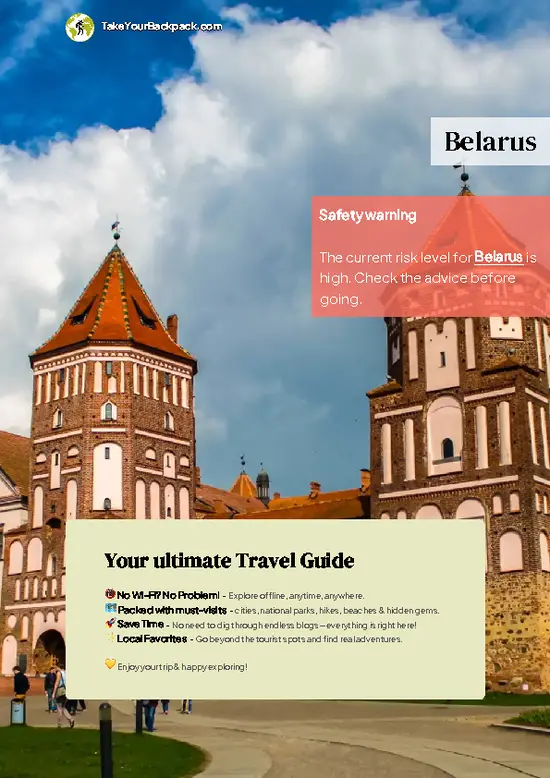
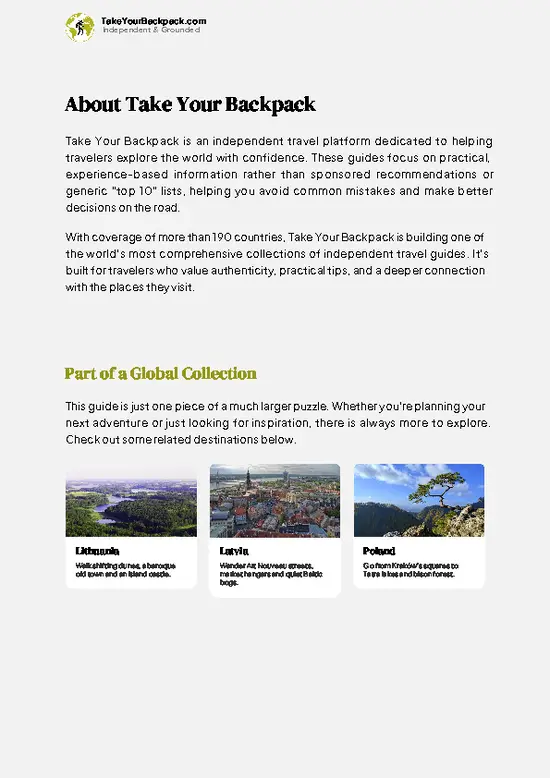
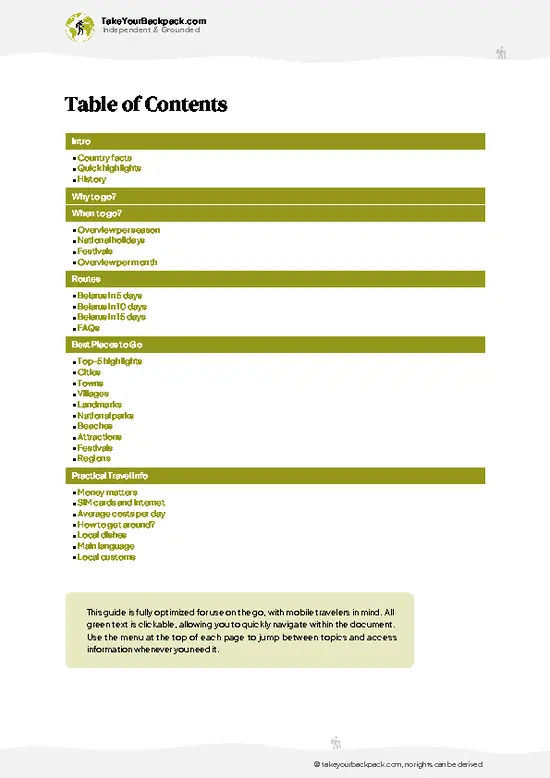
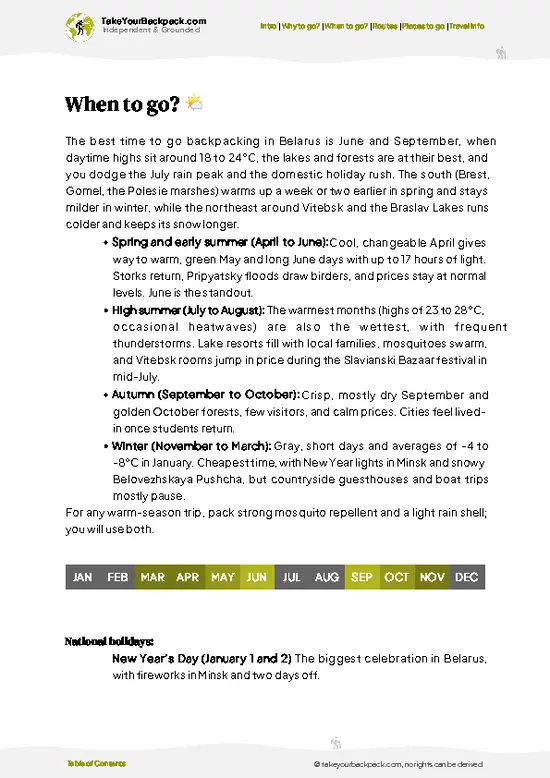
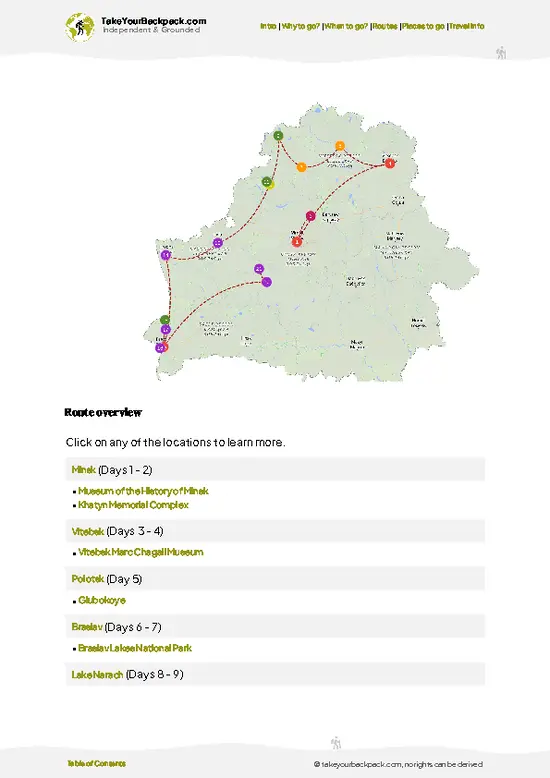
✈️ The backpacker research shortcutBelarus Travel Guide

An offline-friendly backpacking guide with optimized travel routes, ranked highlights, transport advice, and the best areas to stay.
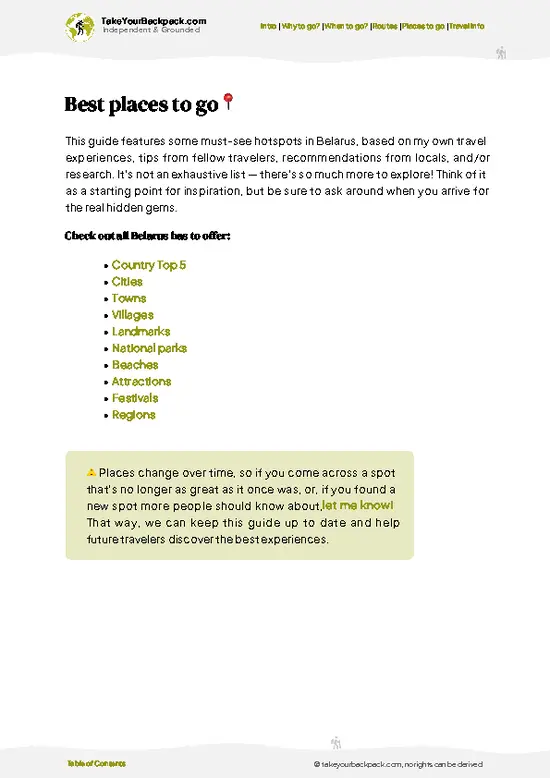
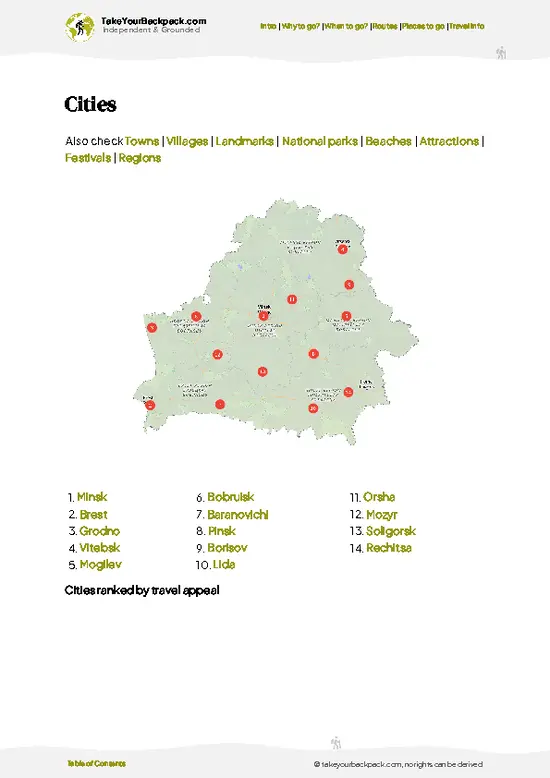
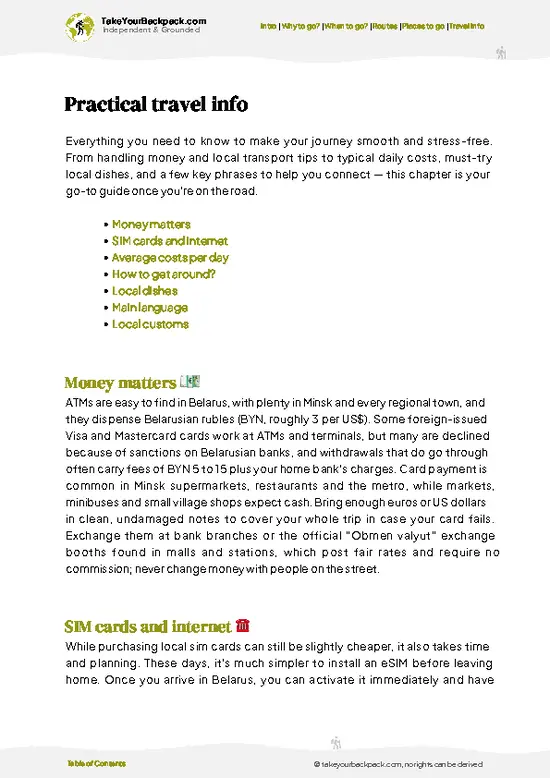
example page 0 from our offline Travel Guide for Belarus
example page 1 from our offline Travel Guide for Belarus
example page 2 from our offline Travel Guide for Belarus
example page 3 from our offline Travel Guide for Belarus
example page 4 from our offline Travel Guide for Belarus
example page 5 from our offline Travel Guide for Belarus
example page 6 from our offline Travel Guide for Belarus
example page 7 from our offline Travel Guide for Belarus
The digital guide (288 pages) contains:
✅ 67 highlights, ranked by travel appeal
✅ Optimized 5, 10 & 15-day travel routes
✅ Cities, national parks, landmarks, beaches
✅ How to get around
✅ Offline-friendly for travel without Wi-Fi
👉 Click to see all 30+ guide features

📅 Plan smarter in minutes, not weeks
✅ Month by month travel advice
✅ Festivals & national holidays
✅ Budget expectations

🗺️ Go to the right places, skip the overrated ones
✅ Honest pros & cons of destinations
✅ Top hikes, parks & viewpoints
✅ Lesser-known places most travelers miss
✅ Clear “worth it vs skip it” guidance

🛏️ Travel smoothly without rookie mistakes
✅ Best areas to stay
✅ Transport systems explained simply
✅ Common scams & safety advice
✅ SIM cards, money & practical tips

🌍 Understand the country, not just visit it
✅ Culture & traditions
✅ 52 Essential phrases & customs
✅ Festivals worth planning around
✅ Traveler-friendly historical context
✅ Insights that make places more meaningful

📱 Built for real travel conditions
✅ Fully downloadable PDF
✅ Works completely offline
✅ Optimized for phone use
✅ Useful in remote areas & buses
✅ Everything in one place
Stop searching, start planning
Get instant access to your full guide. 30‑day money-back guarantee.
+ Add another guide for just

By proceeding you agree to our terms.
Sent to your inbox immediately after payment • 100% Secure Checkout
Best Backpacking Travel Advisor 2025 tourism awardBest Backpacking
Travel Advisor
2025
What others say about Take Your Backpack Guides:
⭐⭐⭐⭐⭐
Fantastic, amazing amount of information!
⭐⭐⭐⭐⭐
My goodness this is amazing, it's what I've been looking for hats off too you!
⭐⭐⭐⭐⭐
I think this is absolutely BRILLIANT
⭐⭐⭐⭐
Very complete and informative. It's still missing places, but I gotta to commend you
⭐⭐⭐⭐⭐
This is truly amazing, thank you, can't wait to explore it with my kids!
⭐⭐⭐⭐⭐
Awesome resource, thank you!
⭐⭐⭐⭐⭐
This is amazing! Can't wait to explore the ones I haven't seen
⭐⭐⭐⭐
I love this! Well done, great idea.
⭐⭐⭐⭐⭐
Thanks for taking the time to make this gem!
⭐⭐⭐⭐⭐
This might be the best website I've ever seen.
⭐⭐⭐⭐⭐
Congratulations, and thank you so much for your work; it's incredibly valuable.
⭐⭐⭐⭐
In all seriousness I think you did a great job pointing out the important spots
⭐⭐⭐⭐⭐
10/10 very good
⭐⭐⭐⭐⭐
As someone who's only just starting to visit regularly this is awesome, thank you.
⭐⭐⭐⭐
Thank you very much! I'm going to visit my dad, it's going to be very useful!
⭐⭐⭐⭐⭐
This is really cool! We'll be travelling for the first time and this definitely come in handy.
⭐⭐⭐⭐⭐
You are now our minister of culture, congratulations 👨‍💼
⭐⭐⭐⭐⭐
Just wanted to tell you that this is a pearl! Going to follow your recommendations.
⭐⭐⭐⭐⭐
This is so cool. I'll definitely be using the resource for my travels soon.
⭐⭐⭐⭐⭐
This is very impressive! Good work.
⭐⭐⭐⭐⭐
This is an amazing and informative site. Very well done!

🛏️ Where to stay?Accommodation Highlights

Belarus has a small but solid hostel scene, with dorm beds typically at 25 to 50 BYN (US$8 to 15) and simple private rooms or rented apartments from about 80 BYN (US$25), concentrated mostly in Minsk and, in smaller numbers, in Brest, Grodno and Vitebsk. In Minsk, the area around Nemiga and the Upper Town puts you closest to the bars and riverside walks but can be noisy on weekends, while Independence Avenue and the streets near the railway station are more central for transport and quieter at night, with easy metro links. Elsewhere, staying in the pedestrian old centers of Grodno or near Sovetskaya Street in Brest keeps the sights walkable, and the whole country is very safe for walking back … read more 👉
Belarus has a small but solid hostel scene, with dorm beds typically at 25 to 50 BYN (US$8 to 15) and simple private rooms or rented apartments from about 80 BYN (US$25), concentrated mostly in Minsk and, in smaller numbers, in Brest, Grodno and Vitebsk. In Minsk, the area around Nemiga and the Upper Town puts you closest to the bars and riverside walks but can be noisy on weekends, while Independence Avenue and the streets near the railway station are more central for transport and quieter at night, with easy metro links. Elsewhere, staying in the pedestrian old centers of Grodno or near Sovetskaya Street in Brest keeps the sights walkable, and the whole country is very safe for walking back late, even if nightlife outside Minsk winds down early.

If you enjoy meeting fellow travelers, consider choosing hostels with high ratings for atmosphere. On the other hand, if you prefer having your own space, a hotel might be a better option.

BelarusSee More of Belarus

👋 Meet the founderWho’s Behind Take Your Backpack?

Johan, backpacker and founder of TakeYourBackpackHi, I’m Johan (Netherlands 🇳🇱), the creator of TakeYourBackpack. Over the past 3 decades, I’ve backpacked through 90+ countries across six continents, gaining extensive experience with independent travel, long-term trips, and overland routes.

This site is built on a combination of firsthand travel experience and carefully curated insights from other backpackers. Many guides are based on places I’ve personally visited, while others bring together tips, observations, and practical advice shared by trusted travelers I’ve met along the way.

The goal is to provide realistic, experience-driven guidance — not generic itineraries — so you can explore destinations with better context, clearer expectations, and more confidence.