How many landmarks to aim for: Plan on
one main landmark a day, or about six to eight in a week to ten days. Belarus has long gaps between towns and limited onward buses, so a third stop in a day usually means rushing for transport rather than seeing more. Fewer, longer visits let you read the exhibits and walk the grounds.
Choosing between kinds of landmarks: Travelers interested in history should favor the
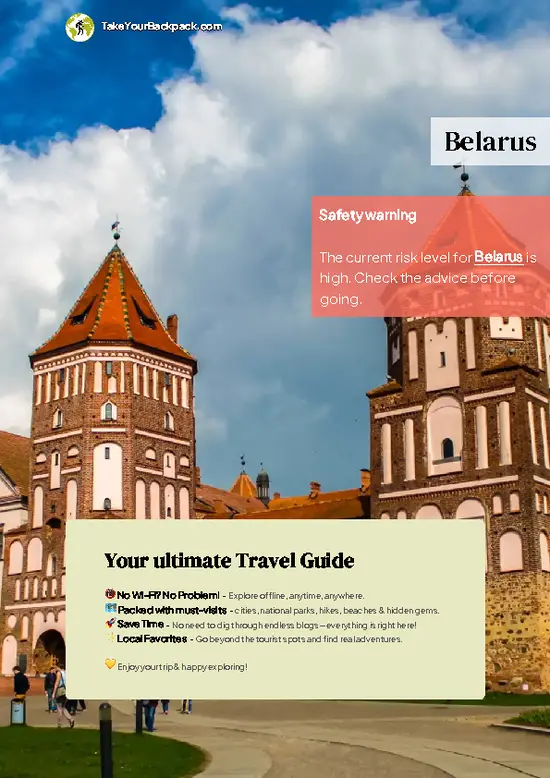
castle and palace complexes of the west and center, which have the best English-language interpretation and the most visitors who speak it. Those drawn to twentieth-century history should give priority to
war memorials and Minsk’s Soviet architecture, which are free or very cheap and easy to reach by metro. Nature-minded travelers should put the
forest reserve first, since it needs a permit-based …
read more 👉 How many landmarks to aim for: Plan on
one main landmark a day, or about six to eight in a week to ten days. Belarus has long gaps between towns and limited onward buses, so a third stop in a day usually means rushing for transport rather than seeing more. Fewer, longer visits let you read the exhibits and walk the grounds.
Choosing between kinds of landmarks: Travelers interested in history should favor the
castle and palace complexes of the west and center, which have the best English-language interpretation and the most visitors who speak it. Those drawn to twentieth-century history should give priority to
war memorials and Minsk’s Soviet architecture, which are free or very cheap and easy to reach by metro. Nature-minded travelers should put the
forest reserve first, since it needs a permit-based or guided entry. Keep two or three slots free for smaller churches and synagogue sites, which are quick stops and often free.
What it costs: A realistic budget is
US$30 to 55 a day including a hostel bed or modest room, local meals and transport. Entry fees at major sites generally run about BYN 10 to 30 (roughly US$3 to 10), with extra charges for photography at some museums. Guided tours in English cost around BYN 40 to 100 (US$12 to 30) per group, and reserve guides can cost more. Intercity trains typically run BYN 10 to 30 (US$3 to 10) per leg, which is the cheapest way to avoid taxi fares that can exceed US$30 for rural transfers.
Costs and delays that catch travelers out: Foreign cards are not always accepted, so carry enough
cash in local currency for several days and change money at official exchanges only. Many sites shut on
Monday or Tuesday, and last entry can be an hour before closing. Check hours the day before. Forest reserve access often requires advance booking, and turning up unannounced can mean a wasted trip.
Safety and cultural considerations: Belarus is orderly and street crime is low, but
registration, entry and travel rules are strict and change, so confirm them with official sources before booking. Carry your passport at all times, since checks happen. Avoid photographing
government buildings, police, or military sites, and treat memorials with quiet respect. Political discussion with strangers is best avoided. Dress modestly in churches, and ask before photographing inside.


 Best Backpacking
 Hi, I’m Johan (Netherlands 🇳🇱), the creator of TakeYourBackpack. Over the past 3 decades, I’ve backpacked through 90+ countries across six continents, gaining extensive experience with independent travel, long-term trips, and overland routes.