×

Belarus🇧🇾 | best attractionsTop-Rated 8 attractions in Belarus

Attractions in Belarus are mostly historical and natural: restored castles and palaces, Soviet-era memorials, old town centers and large forest reserves. The landscape is flat, so interest comes from architecture and memory rather than relief. The west (Grodno, Brest) has Polish and Lithuanian heritage and the most varied sights. Minsk offers museums and Soviet planning on a wide scale. The east and southeast are quieter and less visited. Crowds are thin almost everywhere, and entry fees are low. For backpacking or independent travel, trains and buses make the main cities easy, while rural sites usually need a taxi or a tour.

By Johan Kruseman 🇳🇱 | Updated October 19, 2026
Explore the best festivals in Belarus

Why go?Why Travelers Love These Spots

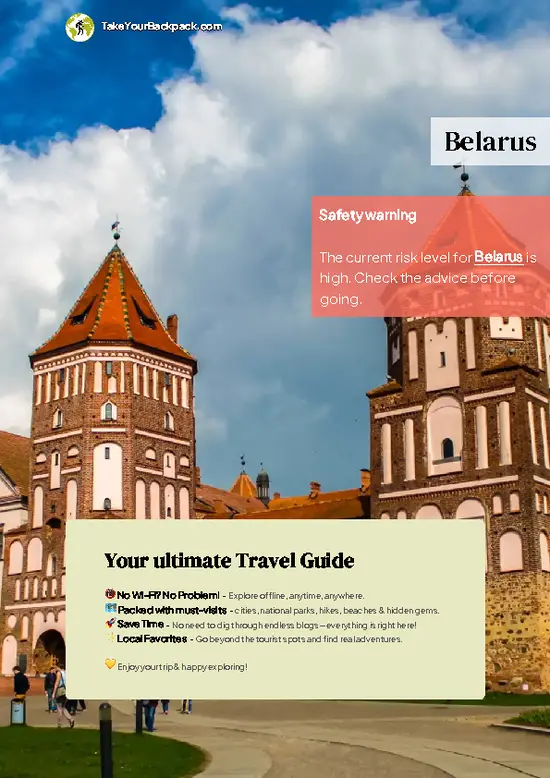
Belarus sits between Poland, Russia and Lithuania, and its attractions reflect centuries of shifting rulers. Catholic, Orthodox and Jewish heritage is layered across the country, and the 20th century left a heavy imprint through wartime destruction and Soviet rebuilding. Many historic buildings are reconstructions, and the country is open about that. Visitors who expect medieval towns left intact will find fewer than in Poland or Lithuania.

The terrain is lowland, with forests, marshes and lakes covering large areas. That suits nature reserves and quiet walking more than dramatic mountain scenery. Infrastructure is tidy and inexpensive: roads are good, trains are punctual, and cities are clean. English signage is limited outside Minsk, so a translation app and the Cyrillic alphabet are worth … read more 👉
Belarus sits between Poland, Russia and Lithuania, and its attractions reflect centuries of shifting rulers. Catholic, Orthodox and Jewish heritage is layered across the country, and the 20th century left a heavy imprint through wartime destruction and Soviet rebuilding. Many historic buildings are reconstructions, and the country is open about that. Visitors who expect medieval towns left intact will find fewer than in Poland or Lithuania.

The terrain is lowland, with forests, marshes and lakes covering large areas. That suits nature reserves and quiet walking more than dramatic mountain scenery. Infrastructure is tidy and inexpensive: roads are good, trains are punctual, and cities are clean. English signage is limited outside Minsk, so a translation app and the Cyrillic alphabet are worth a little preparation.

Before choosing Belarus, check the entry rules for your passport, since visa-free stays, required medical insurance and border crossings change. Several foreign governments advise against travel, and land borders with the EU are restricted. Tourism is low-volume, so there is little commercial polish, but also little queuing or haggling. Reserves in border areas often require advance permission.
Behind the Scenes of Selection
The list of best attractions in Belarus is created based on cultural significance or entertainment value. If you feel a attraction is missing in this list, please let us know.

When to go?Optimal Periods for Travel

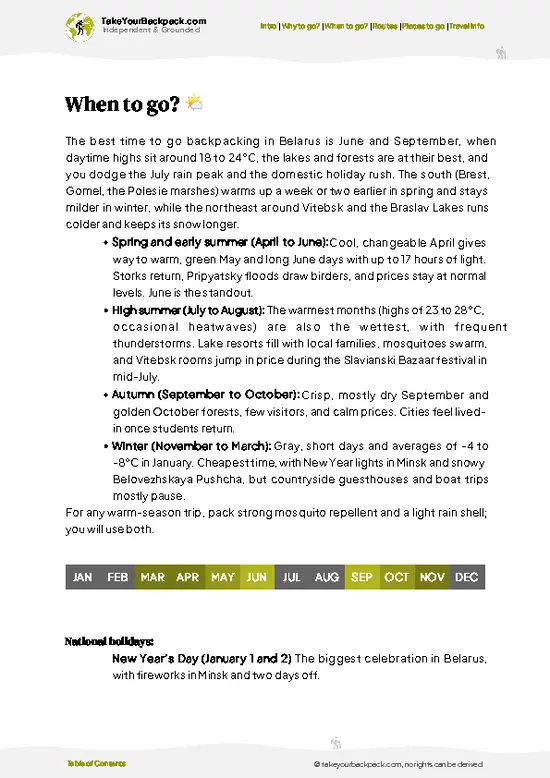
Best months: The best months are late May to September, when daytime highs run about 18 to 25°C and long daylight makes outdoor sites and day trips easy. June to August is the warmest period, with July highs around 23 to 25°C, though thunderstorms are common and most of the roughly 600 to 700 mm of annual rain falls in summer.

Shoulder seasons: May and September are the most comfortable for combining cities and countryside. September brings clear days at 12 to 18°C, and forests start to turn color in the last weeks. April and October are cooler, at roughly 5 to 12°C, with more gray days and wet ground in the reserves. Some outdoor attractions shorten their hours in these months.

Winter: From December to February, temperatures typically sit between -8 and 0°C, with colder spells below -15°C, … read more 👉
Best months: The best months are late May to September, when daytime highs run about 18 to 25°C and long daylight makes outdoor sites and day trips easy. June to August is the warmest period, with July highs around 23 to 25°C, though thunderstorms are common and most of the roughly 600 to 700 mm of annual rain falls in summer.

Shoulder seasons: May and September are the most comfortable for combining cities and countryside. September brings clear days at 12 to 18°C, and forests start to turn color in the last weeks. April and October are cooler, at roughly 5 to 12°C, with more gray days and wet ground in the reserves. Some outdoor attractions shorten their hours in these months.

Winter: From December to February, temperatures typically sit between -8 and 0°C, with colder spells below -15°C, especially in the north and east around Vitebsk. Daylight lasts only about 7 to 8 hours in midwinter. Snow cover is dependable, which suits towns and museums, but outdoor sites can be icy and some seasonal buildings close. Heating makes museums comfortable.

Crowds and prices: Belarus never fills up in the way Central European capitals do. Minsk hotels are somewhat dearer in summer and during major events and holidays, by perhaps 10 to 25 percent. Early July and the weeks around the national holidays are the busiest for domestic travelers. Winter rates in the west are the lowest of the year.

attraction hoppingHow to Combine attractions Into One Trip

How long it takes: A trip linking several attractions in Belarus needs 7 to 10 days. A shorter stay of 4 to 5 days works if you stick to Minsk and one regional hub.

Grouping and direction: Minsk is the natural hub, with an international airport and rail lines running to every region. The west clusters well: Minsk, then the castle towns southwest of the capital, then Grodno, then Brest. Going in that direction keeps the longest transfers at the start, and Brest connects back to Minsk by train. The northeast and southeast, Vitebsk and Gomel, sit on separate lines, so treat them as an extra loop only if you have a full week or more.

Time per stop: Allow 2 to 3 days in Minsk, 1 day for each castle town as a day trip (1.5 to 2 hours each way by bus or minibus), 1 to 2 days in Grodno and 1 to … read more 👉
How long it takes: A trip linking several attractions in Belarus needs 7 to 10 days. A shorter stay of 4 to 5 days works if you stick to Minsk and one regional hub.

Grouping and direction: Minsk is the natural hub, with an international airport and rail lines running to every region. The west clusters well: Minsk, then the castle towns southwest of the capital, then Grodno, then Brest. Going in that direction keeps the longest transfers at the start, and Brest connects back to Minsk by train. The northeast and southeast, Vitebsk and Gomel, sit on separate lines, so treat them as an extra loop only if you have a full week or more.

Time per stop: Allow 2 to 3 days in Minsk, 1 day for each castle town as a day trip (1.5 to 2 hours each way by bus or minibus), 1 to 2 days in Grodno and 1 to 2 days in Brest. Minsk to Brest takes about 3.5 to 5 hours, Minsk to Grodno about 4 to 5 hours, and Minsk to Vitebsk or Gomel about 4 to 5 hours.

Planning mistakes: The most common error is crossing the country in a line and backtracking through Minsk. Build a loop instead. Another is fitting two rural sites into one day without private transport, since buses are infrequent and often leave before midday. Book a taxi or tour for those, and keep a buffer day for national park permissions, which may need arranging ahead.

The ListThe Best attractions of Belarus

1 Khatyn Memorial Complex

symbolic chimneys, bell towers, mass grave markers, remembrance site

Walk among stark memorials that mark the site of a destroyed village, honoring the memory of civilians lost during wartime reprisals.

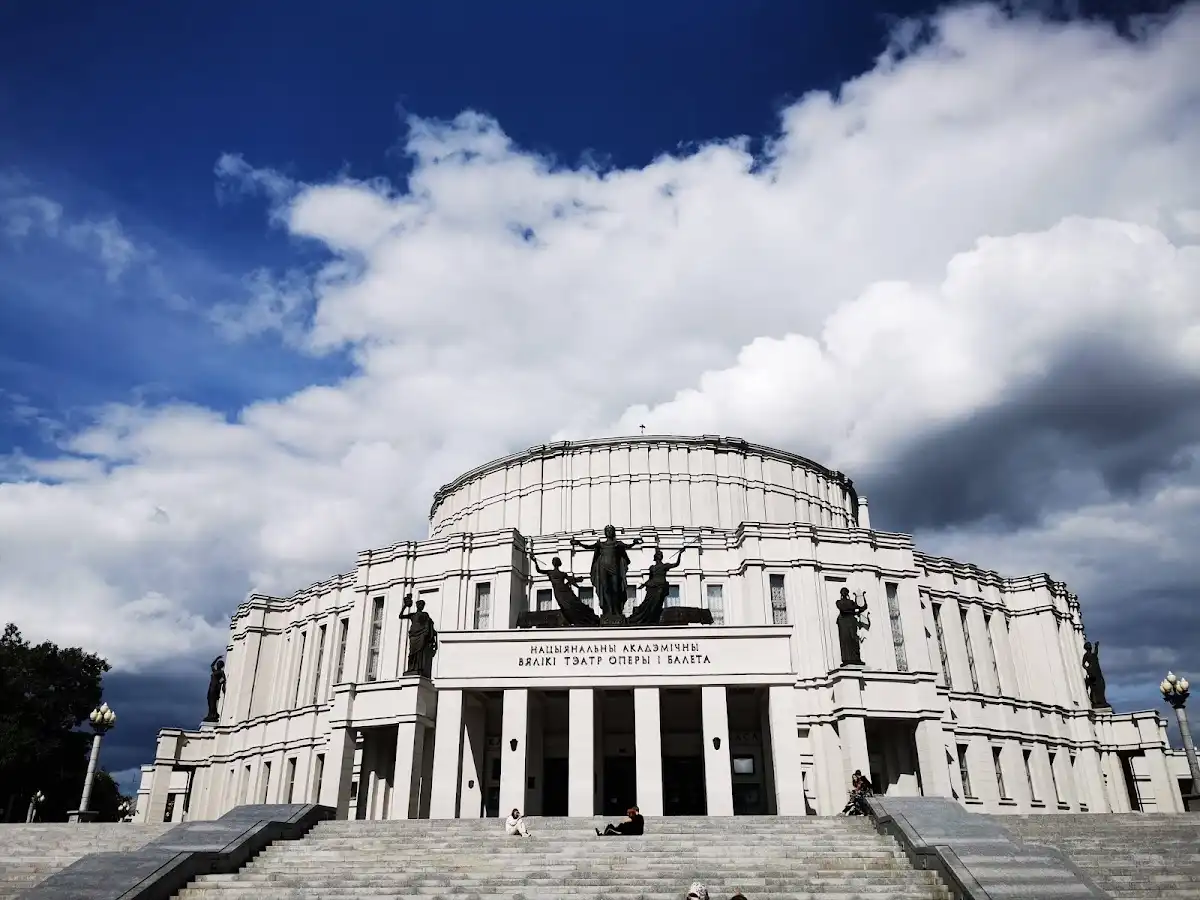
2 Bolshoi Theatre of Belarus

neoclassical façade, grand auditorium, resident ensembles, seasonal repertoire

Attend a performance in an iconic venue known for its acoustics, architectural detail, and diverse program of opera and ballet.

belarus-attraction-bolshoi-theatre-of-belarus
© Google |

3 Stalin Line Historical and Cultural Complex

bunker network, tank displays, shooting ranges, military reenactments

Explore preserved fortifications and interactive exhibits that illustrate the defensive strategies and military technology of the 20th century.

belarus-attraction-stalin-line-historical-and-cultural-complex
© Google |

4 Belarusian State Museum of Folk Architecture and Rural Lifestyle

open-air village, wooden churches, rural homesteads, folk artifacts

Wander through reconstructed countryside settlements and observe traditional buildings that illustrate rural life and craftsmanship across Belarusian regions.

belarus-attraction-belarusian-state-museum-of-folk-architecture-and-rural-lifestyle
© Google |

5 Dudutki Museum of Old Folk Crafts and Technologies

working windmill, artisan workshops, farm animals, local food tasting

Experience hands-on demonstrations of traditional crafts, sample regional specialties, and interact with artisans in a recreated rural setting.

belarus-attraction-dudutki-museum-of-old-folk-crafts-and-technologies
© Google |

6 Vitebsk Marc Chagall Museum

artist’s house, early works, personal artifacts, Jewish heritage

View original pieces and memorabilia in the birthplace of Marc Chagall, gaining insight into his formative years and cultural influences.

7 Museum of the History of Minsk

city models, urban artifacts, local legends, changing exhibitions

Discover Minsk’s transformation through centuries by viewing artifacts, scale models, and stories that reveal the city’s evolving identity.

belarus-attraction-museum-of-the-history-of-minsk
© Google |

8 Grodno Zoo

native species, aviaries, educational trails, family-friendly enclosures

Observe a variety of animals from Belarus and beyond, with opportunities to learn about conservation and regional wildlife habitats.

Loading the map 🌍

Expert viewTips and Advice from Travelers

How many to visit: I would advise 6 to 8 attractions over a week to ten days. That pace leaves time for transfers, which are slow outside the main rail lines, and for the lunch break that most smaller sites keep. Pack in more and you spend the trip on buses. Fewer than five, and you miss the contrast between the capital, the west and the forests.

Prioritizing by style: If you like history, put museums and castle towns first. If you prefer walking or wildlife, build around one or two national parks and accept that they take a full day each. For cheap and low effort, choose city centers and Soviet-era sites you can reach on foot or by metro. Rural sites reward a guide or driver, since signage in English is sparse.

What it costs: Plan on US$30 to 50 a day (about BYN 100 to 160) including a … read more 👉
How many to visit: I would advise 6 to 8 attractions over a week to ten days. That pace leaves time for transfers, which are slow outside the main rail lines, and for the lunch break that most smaller sites keep. Pack in more and you spend the trip on buses. Fewer than five, and you miss the contrast between the capital, the west and the forests.

Prioritizing by style: If you like history, put museums and castle towns first. If you prefer walking or wildlife, build around one or two national parks and accept that they take a full day each. For cheap and low effort, choose city centers and Soviet-era sites you can reach on foot or by metro. Rural sites reward a guide or driver, since signage in English is sparse.

What it costs: Plan on US$30 to 50 a day (about BYN 100 to 160) including a hostel bed or budget hotel at US$12 to 25. Entry fees are usually BYN 5 to 25 (US$2 to 8), and a few palace or park tickets cost more. A local guide for two to three hours runs about US$15 to 40. Intercity trains cost roughly US$5 to 15 per leg, and a taxi to a remote site and back is US$30 to 70 for a half day. Card payments work in cities, but carry cash in BYN for villages. Foreign cards are sometimes refused, and exchange rates differ between offices, so compare before changing money.

Costs and delays to avoid: Paying for a separate camera permit at some sites is common, so ask at the ticket desk. Foreigners often pay a higher ticket than locals, so budget at the upper end. Weekday closures, typically Monday or Tuesday, catch people out. Check opening days the evening before. Restricted areas and border-zone reserves can require advance permission and a guide, and arriving without it wastes a transfer.

Safety and conduct: Several governments advise against travel to Belarus, so read your own government’s current guidance and carry medical insurance valid there, which is checked at entry. Carry your passport and keep your registration paper if you receive one. Do not photograph military sites, police, or government buildings. Avoid political discussion with strangers and do not take part in or film any gathering. Memorials to the Second World War are treated with deep seriousness, so dress plainly and stay quiet there. In churches, cover shoulders and keep your voice low. Drones are effectively unwelcome.

✈️ The backpacker research shortcutBelarus Travel Guide

An offline-friendly backpacking guide with optimized travel routes, ranked highlights, transport advice, and the best areas to stay.
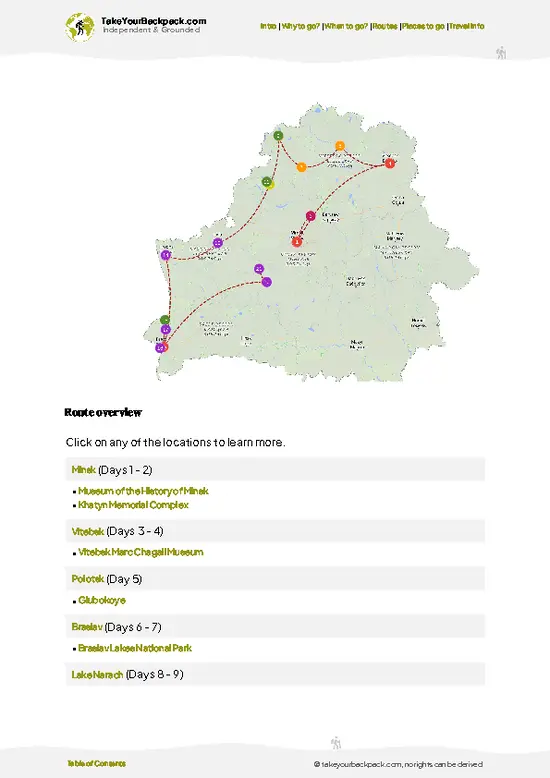
example page 0 from our offline Travel Guide for Belarus
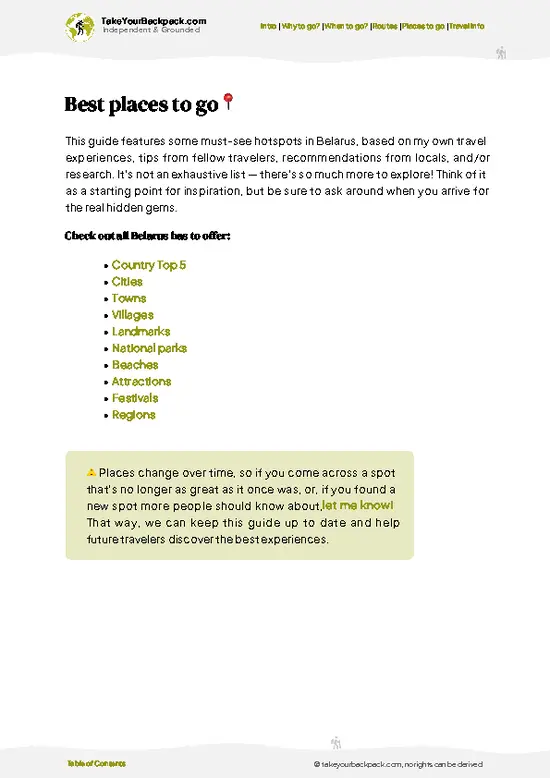
example page 1 from our offline Travel Guide for Belarus
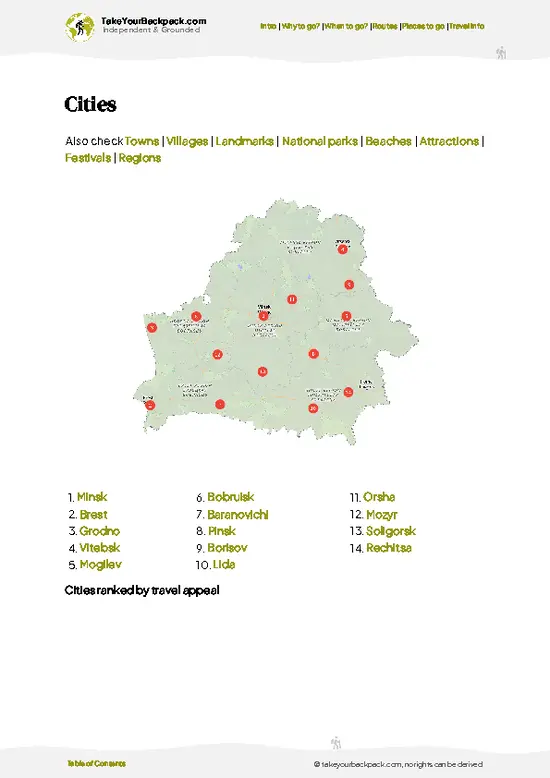
example page 2 from our offline Travel Guide for Belarus
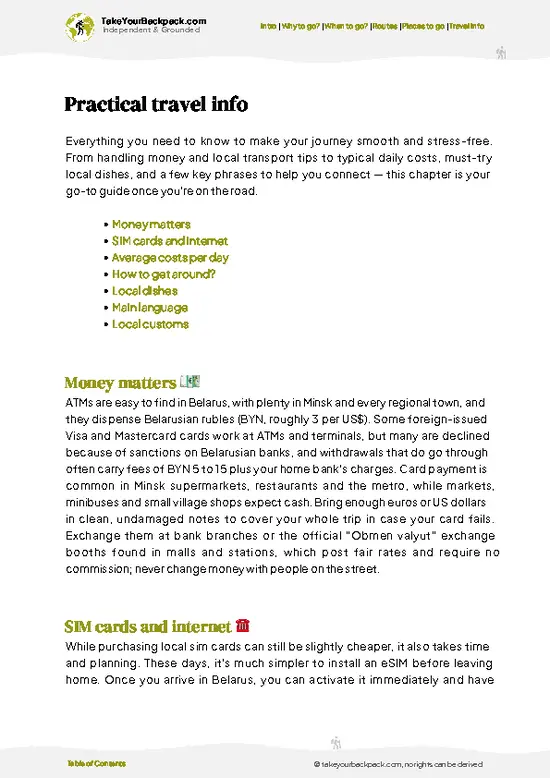
example page 3 from our offline Travel Guide for Belarus
example page 4 from our offline Travel Guide for Belarus
example page 5 from our offline Travel Guide for Belarus
example page 6 from our offline Travel Guide for Belarus
example page 7 from our offline Travel Guide for Belarus
The digital guide (288 pages) contains:
✅ 67 highlights, ranked by travel appeal
✅ Optimized 5, 10 & 15-day travel routes
✅ Cities, national parks, landmarks, beaches
✅ How to get around
✅ Offline-friendly for travel without Wi-Fi
👉 Click to see all 30+ guide features

📅 Plan smarter in minutes, not weeks
✅ Month by month travel advice
✅ Festivals & national holidays
✅ Budget expectations

🗺️ Go to the right places, skip the overrated ones
✅ Honest pros & cons of destinations
✅ Top hikes, parks & viewpoints
✅ Lesser-known places most travelers miss
✅ Clear “worth it vs skip it” guidance

🛏️ Travel smoothly without rookie mistakes
✅ Best areas to stay
✅ Transport systems explained simply
✅ Common scams & safety advice
✅ SIM cards, money & practical tips

🌍 Understand the country, not just visit it
✅ Culture & traditions
✅ 52 Essential phrases & customs
✅ Festivals worth planning around
✅ Traveler-friendly historical context
✅ Insights that make places more meaningful

📱 Built for real travel conditions
✅ Fully downloadable PDF
✅ Works completely offline
✅ Optimized for phone use
✅ Useful in remote areas & buses
✅ Everything in one place
Stop searching, start planning
Get instant access to your full guide. 30‑day money-back guarantee.
+ Add another guide for just

By proceeding you agree to our terms.
Sent to your inbox immediately after payment • 100% Secure Checkout
Best Backpacking Travel Advisor 2025 tourism awardBest Backpacking
Travel Advisor
2025
What others say about Take Your Backpack Guides:
⭐⭐⭐⭐⭐
Fantastic, amazing amount of information!
⭐⭐⭐⭐⭐
My goodness this is amazing, it's what I've been looking for hats off too you!
⭐⭐⭐⭐⭐
I think this is absolutely BRILLIANT
⭐⭐⭐⭐
Very complete and informative. It's still missing places, but I gotta to commend you
⭐⭐⭐⭐⭐
This is truly amazing, thank you, can't wait to explore it with my kids!
⭐⭐⭐⭐⭐
Awesome resource, thank you!
⭐⭐⭐⭐⭐
This is amazing! Can't wait to explore the ones I haven't seen
⭐⭐⭐⭐
I love this! Well done, great idea.
⭐⭐⭐⭐⭐
Thanks for taking the time to make this gem!
⭐⭐⭐⭐⭐
This might be the best website I've ever seen.
⭐⭐⭐⭐⭐
Congratulations, and thank you so much for your work; it's incredibly valuable.
⭐⭐⭐⭐
In all seriousness I think you did a great job pointing out the important spots
⭐⭐⭐⭐⭐
10/10 very good
⭐⭐⭐⭐⭐
As someone who's only just starting to visit regularly this is awesome, thank you.
⭐⭐⭐⭐
Thank you very much! I'm going to visit my dad, it's going to be very useful!
⭐⭐⭐⭐⭐
This is really cool! We'll be travelling for the first time and this definitely come in handy.
⭐⭐⭐⭐⭐
You are now our minister of culture, congratulations 👨‍💼
⭐⭐⭐⭐⭐
Just wanted to tell you that this is a pearl! Going to follow your recommendations.
⭐⭐⭐⭐⭐
This is so cool. I'll definitely be using the resource for my travels soon.
⭐⭐⭐⭐⭐
This is very impressive! Good work.
⭐⭐⭐⭐⭐
This is an amazing and informative site. Very well done!

🛏️ Where to stay?Best Places to Stay in Belarus

Belarus has a small but solid hostel scene, with dorm beds typically at 25 to 50 BYN (US$8 to 15) and simple private rooms or rented apartments from about 80 BYN (US$25), concentrated mostly in Minsk and, in smaller numbers, in Brest, Grodno and Vitebsk. In Minsk, the area around Nemiga and the Upper Town puts you closest to the bars and riverside walks but can be noisy on weekends, while Independence Avenue and the streets near the railway station are more central for transport and quieter at night, with easy metro links. Elsewhere, staying in the pedestrian old centers of Grodno or near Sovetskaya Street in Brest keeps the sights walkable, and the whole country is very safe for walking back … read more 👉
Belarus has a small but solid hostel scene, with dorm beds typically at 25 to 50 BYN (US$8 to 15) and simple private rooms or rented apartments from about 80 BYN (US$25), concentrated mostly in Minsk and, in smaller numbers, in Brest, Grodno and Vitebsk. In Minsk, the area around Nemiga and the Upper Town puts you closest to the bars and riverside walks but can be noisy on weekends, while Independence Avenue and the streets near the railway station are more central for transport and quieter at night, with easy metro links. Elsewhere, staying in the pedestrian old centers of Grodno or near Sovetskaya Street in Brest keeps the sights walkable, and the whole country is very safe for walking back late, even if nightlife outside Minsk winds down early.

If you enjoy meeting fellow travelers, consider choosing hostels with high ratings for atmosphere. On the other hand, if you prefer having your own space, a hotel might be a better option.

BelarusExplore Belarus

👋 Meet the founderWho’s Behind Take Your Backpack?

Johan, backpacker and founder of TakeYourBackpackHi, I’m Johan (Netherlands 🇳🇱), the creator of TakeYourBackpack. Over the past 3 decades, I’ve backpacked through 90+ countries across six continents, gaining extensive experience with independent travel, long-term trips, and overland routes.

This site is built on a combination of firsthand travel experience and carefully curated insights from other backpackers. Many guides are based on places I’ve personally visited, while others bring together tips, observations, and practical advice shared by trusted travelers I’ve met along the way.

The goal is to provide realistic, experience-driven guidance — not generic itineraries — so you can explore destinations with better context, clearer expectations, and more confidence.