×

Belize🇧🇿 | best landmarksTop-Rated 8 landmarks in Belize

Landmarks in Belize are mostly Maya ruins and natural sinkholes and caves, set in a country of about 400,000 people. Inland, limestone temples rise out of jungle where howler monkeys roar before dawn, the air smells of wet leaf litter, and the stone is hot by 10 a.m. The cayes and coast offer reef and blue-hole sites reached by boat, where salt spray and engine noise replace birdsong. The north is flat, humid and lightly visited. The west is the easiest for independent travelers, with frequent buses and guides in every town. The far south means rough roads, fewer crowds and sweaty waits. Costs climb with every boat transfer.

By Johan Kruseman 🇳🇱 | Updated October 23, 2026
Explore the best national parks in Belize

Why go?Key Factors That Shape the Experience

Belize packs a remarkable range into a country smaller than Massachusetts. The Maya civilization once filled the lowlands, and its plazas and causeways still lie under thick canopy, so many sites feel half-reclaimed by roots, ferns and the whine of cicadas. Underneath sits a soft limestone shelf, which explains the caves, sinkholes and river tunnels that make the country's natural landmarks so dramatic. Offshore, the Belize Barrier Reef runs along the whole coast and defines the Caribbean side.

The tradeoff is infrastructure. The country has few highways, and the Western Highway and the Hummingbird Highway handle most traffic. Beyond them, roads turn to red mud in the rain and to dust in the dry months. Water landmarks need a boat, and boats cost real money. Many cave and ruin sites are regulated, … read more 👉
Belize packs a remarkable range into a country smaller than Massachusetts. The Maya civilization once filled the lowlands, and its plazas and causeways still lie under thick canopy, so many sites feel half-reclaimed by roots, ferns and the whine of cicadas. Underneath sits a soft limestone shelf, which explains the caves, sinkholes and river tunnels that make the country's natural landmarks so dramatic. Offshore, the Belize Barrier Reef runs along the whole coast and defines the Caribbean side.

The tradeoff is infrastructure. The country has few highways, and the Western Highway and the Hummingbird Highway handle most traffic. Beyond them, roads turn to red mud in the rain and to dust in the dry months. Water landmarks need a boat, and boats cost real money. Many cave and ruin sites are regulated, so a licensed guide is often mandatory, which adds a fixed cost to the visit.

Travelers should also know that Belize is English-speaking, which makes booking and haggling easy, but it is not a budget country. Prices are quoted in Belize dollars, pegged at 2 to 1 against the US dollar, and most tour operators quote in US dollars. Heat, humidity and mosquitoes come with the territory. Plan for slow days and early starts.
Behind the Scenes of Selection
The list of best unique sites in Belize is created based on history or culture, wow factor, atmosphere, quirks, and memorability. If you feel a unique site is missing in this list, please let us know.

When to go?Timing Your Visit for the Best Experience

Best Months: The best months for landmarks in Belize are February to May, when the dry season keeps jungle trails firm, cave rivers low and seas calm enough for boat trips. Days run around 28 to 33°C (82 to 91°F), and the light is sharp and clear in the morning. By April the heat is heavy, the air smells of woodsmoke from burning fields, and the ruins are best before 11 a.m.
Wet Season and Shoulders: The rainy season runs roughly June to November. Rainfall is heavy in the south, often more than 3,000 mm (118 in) a year in Toledo District, and lighter in the north. Expect afternoon downpours, slick limestone steps, muddy tracks and river-swollen caves that sometimes close to visitors. The shoulder months of November to January bring cooler nights, around 18 to 22°C (64 to 72°F) inland, and a … read more 👉
Best Months: The best months for landmarks in Belize are February to May, when the dry season keeps jungle trails firm, cave rivers low and seas calm enough for boat trips. Days run around 28 to 33°C (82 to 91°F), and the light is sharp and clear in the morning. By April the heat is heavy, the air smells of woodsmoke from burning fields, and the ruins are best before 11 a.m.
Wet Season and Shoulders: The rainy season runs roughly June to November. Rainfall is heavy in the south, often more than 3,000 mm (118 in) a year in Toledo District, and lighter in the north. Expect afternoon downpours, slick limestone steps, muddy tracks and river-swollen caves that sometimes close to visitors. The shoulder months of November to January bring cooler nights, around 18 to 22°C (64 to 72°F) inland, and a green landscape. The northern winds can make the sea choppy at that time.
Crowds and Prices: Peak season falls from December to April, with the busiest weeks at Christmas, New Year and Easter. Cayes and cave tours then fill up, and room rates rise by around 20 to 50 percent. Book boats ahead in those weeks. From June to October, rooms and tours are often cheaper, and sites are quiet. Hurricane season peaks from August to October, so allow flexibility with transport.

unique site hoppingHow to Combine landmarks Into One Trip

How Many Days: A trip combining several landmarks in Belize needs 7 to 12 days. Most backpackers split the country into three clusters and move in one direction. The west (San Ignacio and the Cayo District) holds the inland ruins and caves. The north (Orange Walk and Corozal) is reached by Northern Highway buses. The coast and cayes run from Belize City by water taxi. The south (Dangriga, Placencia, Punta Gorda) is the slowest region to cover.
Direction and Timing: A sensible order starts in Belize City or at the western border, works through Cayo, then drops south along the Hummingbird Highway toward the coast. Allow 1 to 2 days per inland stop and a full day for any boat trip. Typical bus times are about 2 to 2.5 hours from Belize City to San Ignacio, 1.5 to 2 hours from Belize City to Orange … read more 👉
How Many Days: A trip combining several landmarks in Belize needs 7 to 12 days. Most backpackers split the country into three clusters and move in one direction. The west (San Ignacio and the Cayo District) holds the inland ruins and caves. The north (Orange Walk and Corozal) is reached by Northern Highway buses. The coast and cayes run from Belize City by water taxi. The south (Dangriga, Placencia, Punta Gorda) is the slowest region to cover.
Direction and Timing: A sensible order starts in Belize City or at the western border, works through Cayo, then drops south along the Hummingbird Highway toward the coast. Allow 1 to 2 days per inland stop and a full day for any boat trip. Typical bus times are about 2 to 2.5 hours from Belize City to San Ignacio, 1.5 to 2 hours from Belize City to Orange Walk, 3 to 4 hours down to Dangriga, and 5 to 6 hours to Punta Gorda. Water taxis to the cayes take 45 to 75 minutes.
Common Planning Mistakes: The first mistake is cramming three regions into four days. Heat and long, bumpy rides eat the afternoons, so choose two regions and leave slack. The second is doubling back through Belize City, where bus connections are slow. The third is ignoring last departures, since many buses stop by late afternoon and some southern services run only a few times daily. Book early-morning slots and keep one buffer day.

The ListThe Best landmarks of Belize

1 Actun Tunichil Muknal

River wade, jungle hike, Crystal Maiden, in-place pottery

Wade a shallow river and hike through forest to reach lamp-lit chambers where Maya ceremonial pottery and a calcified skeleton remain where they were left.

belize-unique-site-actun-tunichil-muknal
© Google | Paul Watson

2 Xunantunich

El Castillo, hand-cranked ferry, stucco friezes, Mopan Valley view

Cross the Mopan River on a hand-cranked ferry, then climb El Castillo, about 40 meters high, for a view toward the Guatemalan hills.

belize-unique-site-xunantunich
© Google | Arielle

3 Lamanai

River boat approach, Mask Temple, High Temple, caiman banks

Travel by boat up the New River past caiman and monkeys, then climb the High Temple above a site occupied into Spanish times.

belize-unique-site-lamanai
© Google | Bartosz Wisniewski

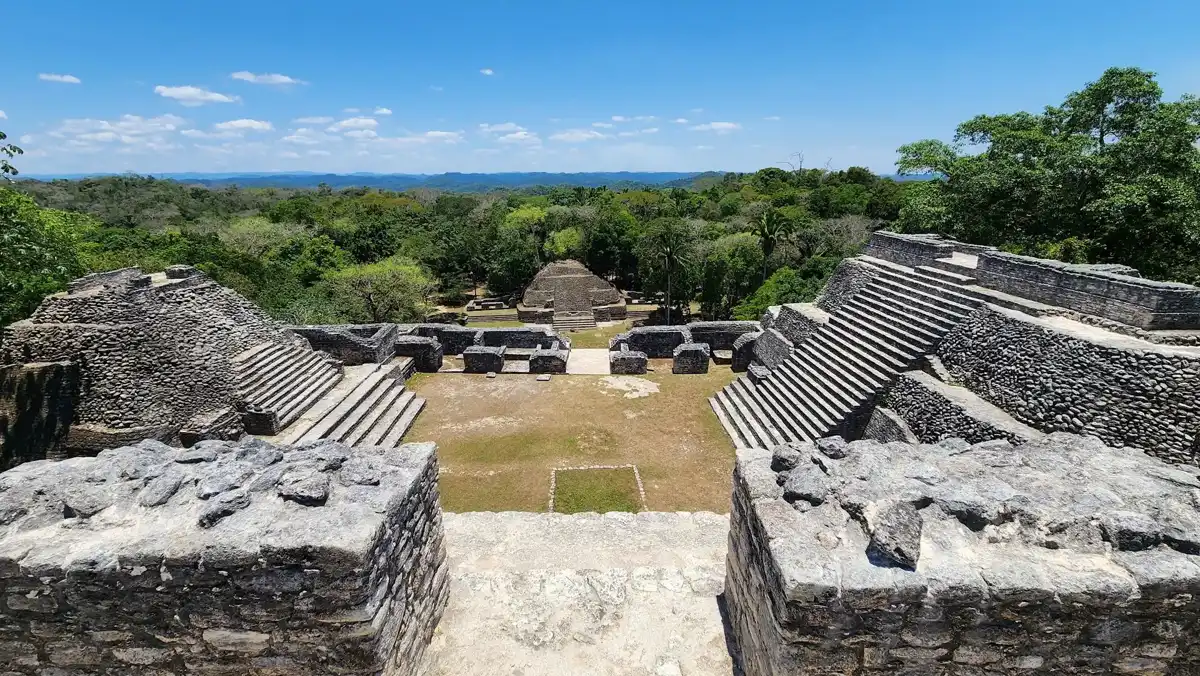
4 Caracol

Caana summit, Chiquibul approach, carved stelae, howler chorus

Climb Caana for a view over the forest canopy, then walk causeways, plazas and terraces of a Maya city that once held tens of thousands.

belize-unique-site-caracol
© Google | Lesio

5 Glover’s Reef Atoll

Atoll walls, lagoon snorkeling, sand cays, camping

Dive the outer drop-off, snorkel patch reefs in the lagoon, then sleep on a small caye with seabirds and nothing else around.

belize-unique-site-glovers-reef-atoll
© Google | Evtim Ivanov

6 Lubaantun

Mortarless masonry, rounded corners, ballcourt, quiet Toledo ridge

Walk compact plazas and terraces of tightly fitted stone, built without mortar, in a southern site where you will likely meet few other visitors.

belize-unique-site-lubaantun
© Google |

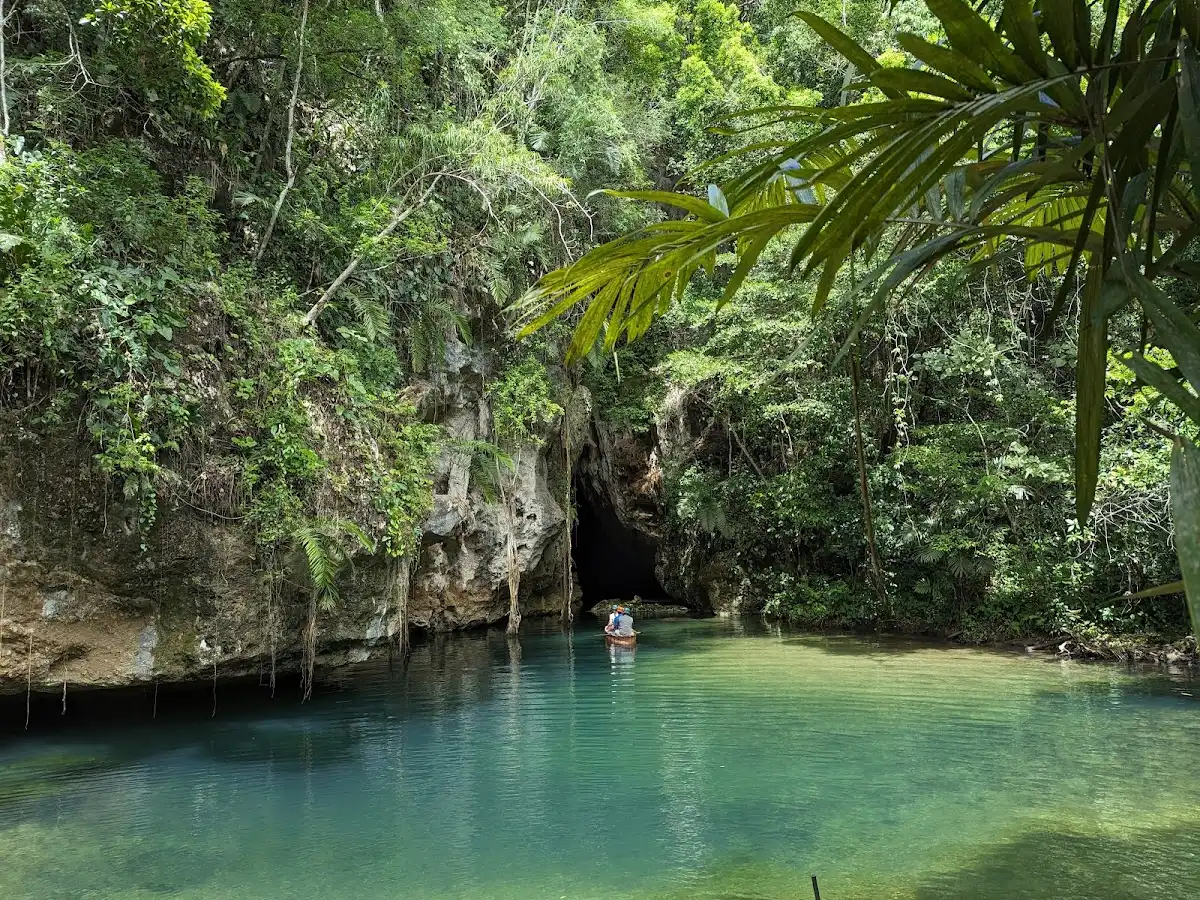
7 Blue Creek Cave

Cave river, emerald pools, ceremonial niches, bat flights

Follow a cool stream into a limestone cave in Toledo, where skylight shafts, dripstone curtains and Maya offering niches line the dark route.

belize-unique-site-blue-creek-cave
© Google |

8 Twin Cayes

Mangrove channels, patch reefs, seagrass flats, seabird roosts

Paddle mangrove fringes, snorkel shallow coral heads just off the shore, and watch rays and juvenile fish drift over the grass flats.

Loading the map 🌍

Expert viewWhat You Should Know

How Many to Visit: I advise four to six landmarks in a two-week trip. Belize's heat, boat transfers and guide rules make each visit a half-day or more, and beyond six the experiences start to blur into one sweaty memory of stone steps. Stop at five and you still have time for a hammock, a plate of stew chicken and rice, and a rain shower on the roof.
Which Kind to Choose: Backpackers on a tight budget should lean toward inland Maya sites, which are reachable by local bus and cheap to enter. Adventure-minded travelers should add one cave or river trip, where you wade through cold, dark water with a headlamp and see calcite formations and old pottery. Anyone wanting water landmarks should accept that boat-based sites cost much more and need calm seas, so pick just one. Culture-focused travelers … read more 👉
How Many to Visit: I advise four to six landmarks in a two-week trip. Belize's heat, boat transfers and guide rules make each visit a half-day or more, and beyond six the experiences start to blur into one sweaty memory of stone steps. Stop at five and you still have time for a hammock, a plate of stew chicken and rice, and a rain shower on the roof.
Which Kind to Choose: Backpackers on a tight budget should lean toward inland Maya sites, which are reachable by local bus and cheap to enter. Adventure-minded travelers should add one cave or river trip, where you wade through cold, dark water with a headlamp and see calcite formations and old pottery. Anyone wanting water landmarks should accept that boat-based sites cost much more and need calm seas, so pick just one. Culture-focused travelers do well in the south, where Maya and Garifuna villages receive far fewer visitors and the payoff is quiet.
What It Costs: Budget about US$45 to 75 a day for dorms or basic rooms, local food and some bus rides. Ruins usually charge US$5 to 10 for foreigners (BZ$10 to 20). Licensed guides at ruins run roughly US$25 to 60 a group, and cave tours often cost US$60 to 120 a person with transport and gear. Boat trips to reef or atoll sites are commonly US$100 to 250. Buses cost a few US dollars per leg, taxis to trailheads US$10 to 30. Carry small cash, since many remote sites do not take cards.
Safety and Culture: Belize City has a high crime rate, so move through it in daylight and take a taxi at night. At the sites, stay on marked paths, since the jungle hides snakes and steep drops. Cave water rises quickly after rain, so go only with an accredited guide and check weather the evening before. Many Maya structures are sacred to local communities, so do not climb where signs prohibit it, and never remove stones or pottery, which is illegal. Ask before photographing people in villages. Apply insect repellent, drink bottled or filtered water, and wear shoes with grip, because wet limestone is slick.

✈️ The backpacker research shortcutBelize Travel Guide

An offline-friendly backpacking guide with optimized travel routes, ranked highlights, transport advice, and the best areas to stay.
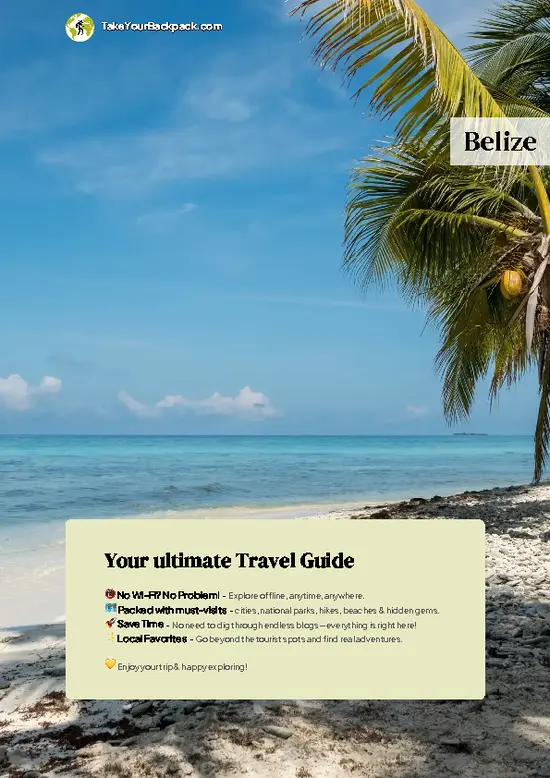
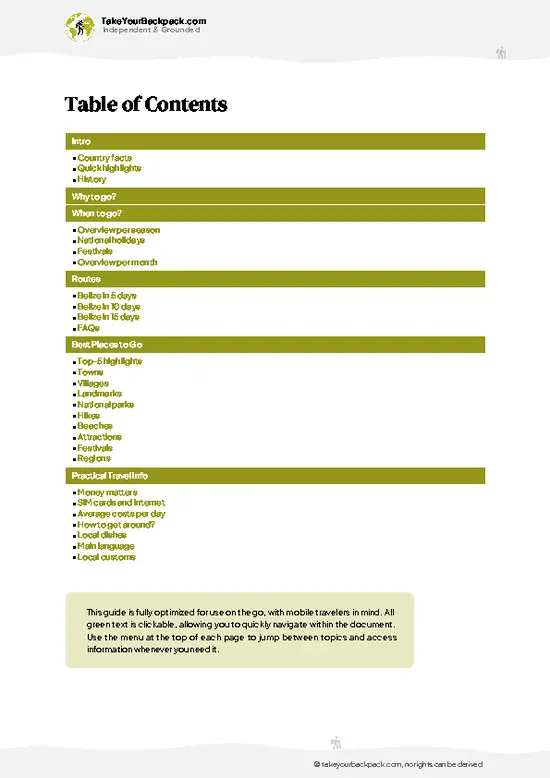
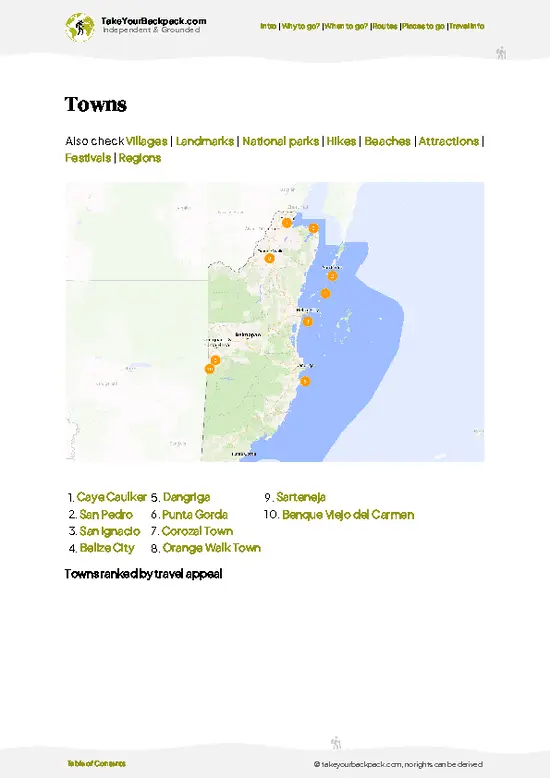
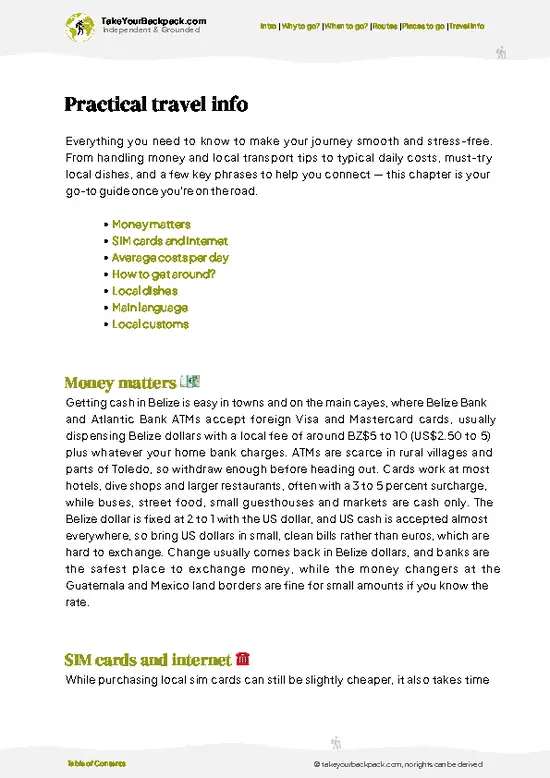
example page 0 from our offline Travel Guide for Belize
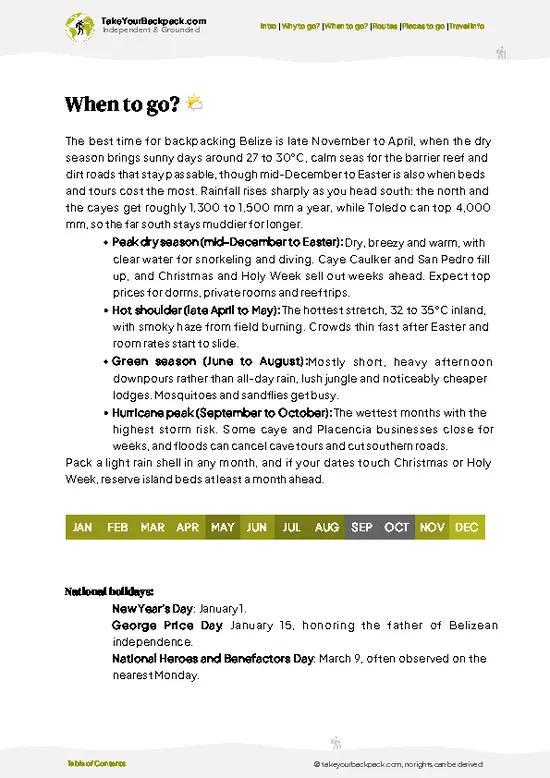
example page 1 from our offline Travel Guide for Belize
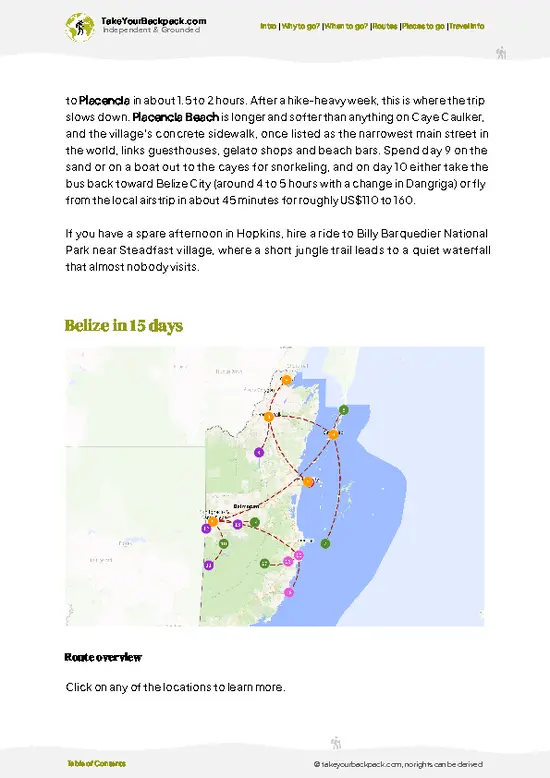
example page 2 from our offline Travel Guide for Belize
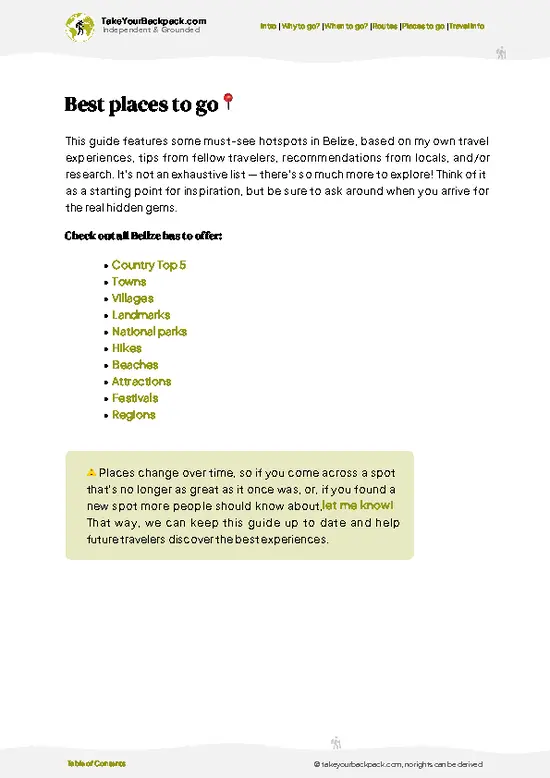
example page 3 from our offline Travel Guide for Belize
example page 4 from our offline Travel Guide for Belize
example page 5 from our offline Travel Guide for Belize
example page 6 from our offline Travel Guide for Belize
example page 7 from our offline Travel Guide for Belize
The digital guide (168 pages) contains:
✅ 44 highlights, ranked by travel appeal
✅ Optimized 5, 10 & 15-day travel routes
✅ Cities, national parks, landmarks, beaches
✅ How to get around
✅ Offline-friendly for travel without Wi-Fi
👉 Click to see all 30+ guide features

📅 Plan smarter in minutes, not weeks
✅ Month by month travel advice
✅ Festivals & national holidays
✅ Budget expectations

🗺️ Go to the right places, skip the overrated ones
✅ Honest pros & cons of destinations
✅ Top hikes, parks & viewpoints
✅ Lesser-known places most travelers miss
✅ Clear “worth it vs skip it” guidance

🛏️ Travel smoothly without rookie mistakes
✅ Best areas to stay
✅ Transport systems explained simply
✅ Common scams & safety advice
✅ SIM cards, money & practical tips

🌍 Understand the country, not just visit it
✅ Culture & traditions
✅ 52 Essential phrases & customs
✅ Festivals worth planning around
✅ Traveler-friendly historical context
✅ Insights that make places more meaningful

📱 Built for real travel conditions
✅ Fully downloadable PDF
✅ Works completely offline
✅ Optimized for phone use
✅ Useful in remote areas & buses
✅ Everything in one place
Stop searching, start planning
Get instant access to your full guide. 30‑day money-back guarantee.
+ Add another guide for just

By proceeding you agree to our terms.
Sent to your inbox immediately after payment • 100% Secure Checkout
Best Backpacking Travel Advisor 2025 tourism awardBest Backpacking
Travel Advisor
2025
What others say about Take Your Backpack Guides:
⭐⭐⭐⭐⭐
Fantastic, amazing amount of information!
⭐⭐⭐⭐⭐
My goodness this is amazing, it's what I've been looking for hats off too you!
⭐⭐⭐⭐⭐
I think this is absolutely BRILLIANT
⭐⭐⭐⭐
Very complete and informative. It's still missing places, but I gotta to commend you
⭐⭐⭐⭐⭐
This is truly amazing, thank you, can't wait to explore it with my kids!
⭐⭐⭐⭐⭐
Awesome resource, thank you!
⭐⭐⭐⭐⭐
This is amazing! Can't wait to explore the ones I haven't seen
⭐⭐⭐⭐
I love this! Well done, great idea.
⭐⭐⭐⭐⭐
Thanks for taking the time to make this gem!
⭐⭐⭐⭐⭐
This might be the best website I've ever seen.
⭐⭐⭐⭐⭐
Congratulations, and thank you so much for your work; it's incredibly valuable.
⭐⭐⭐⭐
In all seriousness I think you did a great job pointing out the important spots
⭐⭐⭐⭐⭐
10/10 very good
⭐⭐⭐⭐⭐
As someone who's only just starting to visit regularly this is awesome, thank you.
⭐⭐⭐⭐
Thank you very much! I'm going to visit my dad, it's going to be very useful!
⭐⭐⭐⭐⭐
This is really cool! We'll be travelling for the first time and this definitely come in handy.
⭐⭐⭐⭐⭐
You are now our minister of culture, congratulations 👨‍💼
⭐⭐⭐⭐⭐
Just wanted to tell you that this is a pearl! Going to follow your recommendations.
⭐⭐⭐⭐⭐
This is so cool. I'll definitely be using the resource for my travels soon.
⭐⭐⭐⭐⭐
This is very impressive! Good work.
⭐⭐⭐⭐⭐
This is an amazing and informative site. Very well done!

🛏️ Where to stay?Where to Stay in Belize

Belize has hostels and budget guesthouses, with dorm beds usually around BZ$40 to 70 (US$20 to 35) and simple private rooms from roughly BZ$80 to 140 (US$40 to 70), though prices run higher than in neighboring Guatemala or Mexico. Caye Caulker has the densest cluster of backpacker beds, a walkable island with easy snorkel trips and a lively bar scene around the Split, while San Ignacio in the Cayo District is quieter, cheaper and close to Maya ruins and caves, and Placencia and Hopkins on the south coast offer calmer beach stays with fewer dorm options. Belize City has some budget rooms near the water taxi terminal, but most travelers treat it as a one-night transit stop because several neighborhoods … read more 👉
Belize has hostels and budget guesthouses, with dorm beds usually around BZ$40 to 70 (US$20 to 35) and simple private rooms from roughly BZ$80 to 140 (US$40 to 70), though prices run higher than in neighboring Guatemala or Mexico. Caye Caulker has the densest cluster of backpacker beds, a walkable island with easy snorkel trips and a lively bar scene around the Split, while San Ignacio in the Cayo District is quieter, cheaper and close to Maya ruins and caves, and Placencia and Hopkins on the south coast offer calmer beach stays with fewer dorm options. Belize City has some budget rooms near the water taxi terminal, but most travelers treat it as a one-night transit stop because several neighborhoods there are unsafe after dark.

If you enjoy meeting fellow travelers, consider choosing hostels with high ratings for atmosphere. On the other hand, if you prefer having your own space, a hotel might be a better option.

BelizeMore of Belize

👋 Meet the founderWho’s Behind Take Your Backpack?

Johan, backpacker and founder of TakeYourBackpackHi, I’m Johan (Netherlands 🇳🇱), the creator of TakeYourBackpack. Over the past 3 decades, I’ve backpacked through 90+ countries across six continents, gaining extensive experience with independent travel, long-term trips, and overland routes.

This site is built on a combination of firsthand travel experience and carefully curated insights from other backpackers. Many guides are based on places I’ve personally visited, while others bring together tips, observations, and practical advice shared by trusted travelers I’ve met along the way.

The goal is to provide realistic, experience-driven guidance — not generic itineraries — so you can explore destinations with better context, clearer expectations, and more confidence.